How a young rebel started Thailand’s leading crypto exchange | Crypto Stories Ep. 1
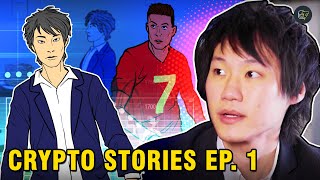
Top Jiryu built Thailand's leading crypto exchange from a spare room, surviving regulatory investigations and a $1.2M seed round at $60M valuation. His platform now generates roughly 3 billion baht annually, about $100M in projected yearly income.
Questions this video answers
95%
1 April 2017
$1.2 million seed round at a $60 million valuation
First year: 3 million baht; Second year: 33 million baht; Third year: ~330 million+ baht; Most recent month: 400 million baht
About 3 billion baht (~$100 million) of income by year-end
Chapters
This is the inaugural episode of Crypto Stories. Here people tell us how crypto changed their lives. Our first protagonist is Top Jiryu. He is the founder and CEO of Bitcup, Thailand's leading regulated cryptocurrency exchange which accounts for 95% of all cryptocurrency transactions in the country. He is also the co founder of Thailand's first and largest bitcoin wallet company. A few years ago, Top's parents asked him to shut down BitCub because they were afraid that he would go to jail. And six years ago, he was nobody. So how did he become one of Thailand's crypto tycoons? Keep watching to find out. But before that, don't forget to like and subscribe.
When I was a student, I was a very bad one. I didn't like studying. Studying was the last thing I wanted to be a footballer. You know, Cristiano Ronaldo is my idol, childhood idol. I was not a good student. I always got into fights. At one time I broke my friend's arm. I was almost getting expelled by the headmasters then. That's when we realized that we could not get into any of the Thai universities because our grades were so bad. Luckily I love football, so I decided to explore universities in the uk. Ended up putting in middle ranks once, usually football teams. Manchester, Liverpool, Newcastle. Luckily, Manchester University accepted me as a student and my favourite team was Manchester United. I was super glad that I have a second chance at life. You know, when you have a second chance at life, that's when you are willing to sacrifice anything just to make sure that you fix your regrets. So, you know, on the first day of the first year at universities, that's when I went into the library. That's when I realized what the library looks like. I started to revise. Four hours, five hours, six hours per day. And as a normal teenager's year, you would love to party, you would love to have a relationship. I sacrificed all those opportunities and I was reading harder and harder in second year, third year, and I ended up coming first out of all of the university at Manchester. And then I got into Oxford for my master's degree. I was the youngest in class to, you know, to have gotten into Oxford. A class of 50 students. I had no life at university. It taught me that, you know, if we really want something, we need to sacrifice other things. So after graduation at Oxford, I was lost. Like other students. Did not know what to do with my life. I tried investment banking in Shanghai for a bit, two and a half months. I tried Working in a financial consulting firm in San Francisco for less than a month, I could not get a job at Facebook, at Google. The best job that I could get that is related to economics was consulting. So every weekend I would drive to Silicon Valley campus. I would take photos with the like button in front of Facebook building. I would ride Goku bikes, I would visit the the Intel Museum. That's the best I could do. I decided to ask around. Does anyone know anyone working at Silicon Valley? Can you arrange a meeting? One of my colleagues said, I know a person called Dan Schat. He was an executive of PayPal. Would you like to meet him? I was like, yes, please. Can you arrange a meeting? So one Saturday I was meeting with Dan in a pancake shop. I was treating him pancakes and I asked him, dan, what do you think about bitcoin? And he was like, top deal, you know. The original vision of PayPal was not a payment gateway. They wanted to create a digital dollar. The best thing that they could do was a payment gateway. You are the luckier generation, he said. You have 4G Internet, you have cloud computing, you have blockchain, you have smartphones. Bitcoin is going to change the world. So that reinforced my belief about bitcoin. And after a few weeks I felt like I was wasting my time. So I decided to, you know, book a ticket back home and start a bitcoin company. But my parents already spent huge loads of money on my education. So I feel bad if I were to ask them for more money. And my parents run a small clothing shop in Birthday. So the only thing that I asked for my mom was could I use a spare room to set up an office. And my aunt, her sister donated a chair and a table for me. So that's all I had. That's how I started a very first bitcoin company in Thailand. So I was camping out in this spare room in a clothing shop for almost a year. For 10 months I could not socialize. I saved up every penny. My parents were feeding me every meal. I felt like a loser for the first 10 months. My parents were disappointed at their son because they had a very high expectation of me. I had to do everything myself. Operations, customer support, designing of the websites, accounting, legal companies, incorporation, everything by myself. I learned so much by the way in that one year. It was the best education. One of the happiest days of my life was when we moved out of that clothing shop into a co working space. We were a team of about 13 people. Then the anti money laundering officers sent me the letter, the investigation letter calling me in to their office. I tried to call my friend that graduated from Oxford University. They were working at a very big law firm. No one wanted to help out. They were like top, good luck. Even though I had the money to pay. Because imagine bitcoin like seven, eight years ago. It was really great. No right or wrong, no one wanted to risk their reputation to help. So from 10am to 7pm I was managing the team of like 13 people. And from 10pm to 3am I was reading up on all the anti money laundering rules, aml, KYC regulations, things that were not taught in universities. One of the most stressful times of my life. Eventually, you know, my dad drove me to the anti money laundering offices to defend to present to them. That morning after I got back to the office, half of my employees left the company after they realized that the company is being called by the anti money laundering officers. We had to rebuild, you know, we had to rehire. I was so stressed. But it's fine. We rebuilt, we gradually grow. We were able to solved that crisis. Then we moved to a bigger office. We got to a team of 30 people. We moved to a new office in Chitlom. That's when another crisis struck us. The bank of Thailand sent me an investigation letter. I showed this letter to my dad and he was like I thought you had enough with the anti money laundering officers. Now you're in trouble with the bank of Thailand. Are you really gonna go all into all the regulators in Thailand? Are you crazy? Shut the companies down now please. That's what my dad said. You know the happiest day of My life was the 1st of April 2017. That is when Japan announced Bitcoin is legal. Bitcoin is a legal tender. You can use Bitcoin to buy flight tickets, hotels, shopping. And that's when all my friends started to message me Top, I can't believe you were the minority that was right about this bitcoin thing. Whereas the majority was wrong about this thing. I exited the company then. I thought I wanted to have a gap year. It was a really tough four or five years. In 2017 the Thai SCC created this first ever FinTech challenge program. So I applied to participate. I named the team Privatechain. We created a Stock Exchange 2.0 where you can trade stocks tokens in a T0 settlement time. Then I came to the THAICC and said I am the winner of your program. I want to turn this into a real business now. And they were a bit shy and they said Top. You can't really turn this into a business. Because of the regulation, you cannot create a competing exchange with the Thai stock exchange. It's a legacy loan, my own law. So they started to create this sandbox so that we can have a second exchange in Thailand who was working with them. And until the end of 2017, that's when I realized that the first digital asset exchange license is about to come out. I was pitching to the board of the THAIAD CC on the top floor how to regulate this space. Then I realized that the license is coming out. So I decided to raise funding. I go around to sbi. They gave me a very, very good offer, high valuation. I was talking to other investors. So we ended up closing $1.2 million seed round at $60 million valuation. It was the highest seed round valuation in the Thai startup history back then. So I took over an IT company with a team of 20 people and turned that into Bitcap. And since then it's been three years and two months. We grew 1000% every year. We made 3 million baht in the first year. We made 33 million baht in the second year. We made 330 something million baht in the last year. And last month we made 400 million baht. So by the end of this year we would probably make 3 billion bahts or $100 million of income. So BitCub is on its way to becoming Thailand's first unicorn. So that's our journey so far. You know, this Steve Jobs statement made an impression on me. He said that we should not believe in the average life, right? Everything around us was created by people who were no smarter, like no smarter than us in the past. We can influence things around us. If we are passionate on something and we take action every day, even one person can change the world. That statement was very powerful. And I've been passionate, you know, fully passionate about cryptocurrency. And I took action every day in the last eight years. And we have come so far. If you look back, if we were to look back, we have come so far. I could not have imagined what we have achieved today by taking small steps every day, making impact. To be honest, I really enjoy my life right now.
Want to tell us your story or perhaps your friend's story? Email us@videoointelegraph.com Our next episode will feature tales from Nigeria and Singapore. If you enjoyed the video, smash that like button and share it with your friends.










