How VCs are preparing for a two-year-long crypto bear market | Avichal Garg interview
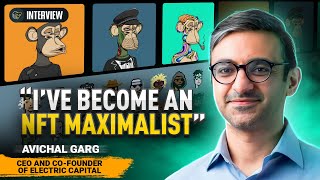
Avichal Garg from Electric Capital says this crypto bear market could last two years, similar to 2018. He watches inflation, interest rates, and innovation to gauge recovery, but believes innovation drives long-term outcomes. He's bullish on gaming infrastructure and NFTs as tools for digital ownership and creator monetization.
Chapters
Interest rates and inflation dominate in the short term when you're talking about a two to three year time horizon. But innovation is the one that dominates in the long term.
It could take over a year before we see the end of this bear market. According to the CEO of Electric Capital, Avish Al Garg, despite the rough times, venture capitalist money is still flowing into the industry. Earlier this year, electric Capital raised $1 billion to fund the companies with the best chances to emerge stronger from this crypto winter.
Why would you spend $1,000 a year on shoes? That makes no sense. You should take that extra discretionary money and move it into the metaverse.
In this video, we sat down with Garg to understand the current state of venture capital in crypto. We also discussed the industry segments with the best chances to explode in the next bull cycle. Before we start, don't forget to like the video and subscribe to our channel. I'm Giovanni, your host, and this is a cointelegraph interview. So, Avishal, you founded Electric Capital in the mid, the midst of the 2018 bear market. So now that we are in another bear market, how can you compare those two situations? The one we are now and the. The bear market back then?
Yeah, good question. This one feels not as bad to me at least. Maybe, maybe I'm just dead inside now because I flipped through two bear markets, one personally and one with Electric, and now I just don't feel it anymore. But if we think about where we are as an industry, all of the things that we would have hoped for in the bull market in 2017 have actually happened. The institutions are actually here. ETH is not a security proof of stake is happening. Merges here, L2s actually work. DFI is actually a thing. NFTs are actually a thing. There's IPOs happening from crypto companies. The rate of progress and evolution over the last four or five years just is just amazing. And so I kind of look at it like this bear market is better than the 2017 bull market. And when you put it into that kind of context, if you've been through one of those, it actually doesn't feel as bad. Of course, if it's your first one, it feels terrible. But that's sort of the nature of crypto.
Yeah, that's very interesting. If you look at just the price, you don't get the feeling of how the ecosystem has improved, how much the ecosystem has grown. As you said, in terms of fistication, in terms of use cases, you said that this bear market could actually last long for A long time. You mentioned two years, two years of bear market with the next year as a recession year. So can you guide us through this prediction?
Historically, since the beginning of the modern beginning of the space, let's say 2008 with Bitcoin, we've really only had macro tailwind. We've really had, you know, central banks reducing interest rates. You've had stock markets going up. And so we don't really know what happens in an inflationary environment. We don't really know what happens when central banks are raising rates. And that's not to say that it has to be the opposite. That doesn't necessarily mean that the Bitcoin or Ethereum or these things don't work. It just means we don't know. And so from an intellectually honest perspective, I think you have to look at that risk and say, okay, well, it could be that these things decouple. It could be that capital keeps coming in because this is a highly innovative area and we haven't gone up the S curve and it's early stage technology. And those things, you know, work despite what is happening in the macro, like 2009, 2010 was a great time to be investing in early stage technology. Or it could be that it behaves dramatically differently. It could be that, you know, everything couples, you know, doesn't move until the stock market comes back. And if that takes three or four years this time, then the bear market may be much, much longer. Now I'm not saying it is going to be longer. I'm just saying we don't know. Yeah.
Also talking to, you know, other analysts, experts, it, it really seems that the prices in crypto are fundamentally tied to this macroeconomic picture and that the Fed and the way central banks all over the world are managing these monetary policies are basically deciding where the crypto prices are going. And this macroeconomic picture doesn't change. It seems unlikely that we are going to see the next bull run. Would you agree with this kind of statement?
Well, yes and no. So I think when we think about the macro backdrop, I think you have to think about three things. I call them the three eyes. So one obviously is the inflation rate. And it has a real impact on people's lives. Food costs go up, energy costs go up. And depending on where you are in the world right now, if you're in the western democracies, let's say, you know, you're probably dealing with somewhere between 7 and 12% inflation, which is sizable. That's, that's, that's real. I expect that will come down over the next year or two. Right, but inflation is one consideration. The second is interest rates, as you're saying. Right. And as interest rates go up, that changes flow of capital and sort of risk reward. But the third one is innovation. Right? That's the third eye. And I actually think the innovation I is the dominant one in the long term. So interest rates and inflation dominate in a short term when you're talking about a two to three year time horizon, but innovation is the one that dominates in the long term. And so part of this is what sort of time horizon are you investing on? And so we're VCs and so we think about what happens seven to 10 years from now. And if you rewind seven years, Ethereum didn't exist. If you rewind 10 years, Facebook had just IPO'd. There was no Uber IPO. There was no Pinterest IPO. There's no Snap, there's no TikTok. The iPhone was only five years old. Ten years is a very, very long time. And so if you look at it through that lens and you say, well, how is this stuff going to compound on a fundamentals basis how many people might be using this? Can we go from 10 million people to a billion people using DEFI products? Can we go from 30 million people to 2 billion people using NFTs? And if that happens, then the innovation eye is going to be the dominant eye and frankly it won't matter what the inflation rates and interest rates are.
So now I would like just to move on talking about specific sectors in the industry you feel excited about. So $2.4 billion were invested into metaverse and gaming projects in 2022, which is a much bigger figure than what we saw in 2021. Do you also feel bullish about Metaverse and gaming? And why do you think they still see so much capital flowing in despite the bear market?
Yeah, so the short answer is yes, Very optimistic about gaming and NFTs and sort of that whole part of the ecosystem. The way that we think about sort of the most promising areas inside that umbrella term, whatever Metaverse means to you. Gaming, certainly we continue to see just a flurry of activity. We don't really invest in games, it's just not our area of expertise. But I probably still get cold inbound. One games pitch a day is remarkable. So, you know, If I'm getting one a day, then games investors are getting five or 10 a day. You know, it's just, I have to imagine there's so much activity, which means 1824 months from now, I think we're just going to see this, this onslaught of games which will be great. And these, these are, you know, they range from casual lightweight games to people coming out of, you know, Tencent and Epic and you know, AAA game studios that are going to spend tens, tens of millions of dollars to build really robust video games on top of new infrastructure. So that's, you know, the gaming side, we don't invest a ton there. The two other parts that are adjacent to this though, we do invest in. One is infrastructure. How are you going to run all these games? So there's a bunch of people playing around with what is the actual infrastructure that you need as a game developer to do this? And for example, do you need like layer twos as a service? Right. Do you necessarily want to run it on Optimism Arbitram, or do you want to sort of run your own layer two, your own validator set that's syncs out and you can tweak to your own, to your own tool sets or white label marketplaces for NFTs inside your video game. And so like Magic Eden works on some of this kind of stuff. And then, and then the third category is NFTs themselves, because I think the interoperability that you get with NFTs for video games is going to be really, really great.
I just wanted to jump into this because my following question was actually about NFTs. You said that NFTs, according to you, are the crypto category that is going to bring crypto into the mainstream. So maybe you can expand on why you think that specifically NFTs are gonna have that role that is gonna bring crypto into the mainstream.
Yeah, it's because NFTs are being used by creators. Creators like musicians, athletes, artists, writers. These people realize that this is an opportunity to have a relationship, a direct relationship with their fans. So those thousand people that absolutely love your art or your music can find you now and they can pay you. And that's actually stuff that normal people can understand. You can get your head around art, you can get your head around music, you can get your head around movies. And so all of these creative people, I think are going to make this stuff go really mainstream. Whereas when you start talking about defi, I think from a tan perspective, like a total addressable market perspective, it's going to be huge. But how many people really understand options, right? How many people really understand the Greeks? How many people really understand these defi protocols and the tail risks that you're taking with smart contracts like A lot of people don't. And so maybe that ends up being a couple hundred million people and many, many trillions of dollars. But I could imagine that NFTs are actually many billions of people because, because it's ultimately culture. It's. And that's, that's something that everybody can participate in and everybody can understand. And so I've increasingly become, in essence, an NFT maximalist.
We were talking about this time horizon that you as a VC investor look at. You would think that in 10 years NFTs will be all over the place in our lives.
Yeah, that's right. I think they'll be everywhere. I think it's a data standard. It's a, it's a, it's an interoperability standard. And if you think about, I mean, as we were talking about before, we already spend most of our time in the metaverse. And it reminds me actually of, with the Internet, there are these graphics that used to get passed around where you could look at the amount of time spent on the Internet versus the advertising dollars. And then you'd look at newspapers or tv and that time was shrinking, but the ad dollars were still really, really large. And so you could look at that really simple graph and you could say this has to fix itself. If you just look at where people spend their time today, especially if you're under 40 and especially if you're under 30, it's all in certain places online. And where do you spend your money? Like you're spending it in, actually other places, you're spending it mostly in the physical world. And so what are the use cases and the needs that you have that are being spent on the physical side of things that actually you could be spending digitally? And I would posit that it's a very, very substantial portion of the average consumer's discretionary spend. So, you know, it's something like 25 to 50% of the stuff that you spend money on. Clothes, shoes, purses, watches, even your car. You know, a lot of these things. Actually, once you start living in, you know, primarily digital existence, well, if you're not, you're not wearing shoes at home, like, why would you spend a thousand dollars a year on shoes? That makes no sense. Right? You should take that extra discretionary money and move it into the, into the metaverse. And then NFTs are the vehicle through which that happens. This time around, instead of ad dollars, it's going to be through NFTs.
That was a great insight in the way you make your decision in terms of investing crypto Thanks a lot, Avishal. That was a very cool conversation. I hope to see you soon on our channel.
Thank you so much. Thanks for having. Me.










