Introducing DIGIBLE: A unique NFT marketplace backed by physical assets | by Digible
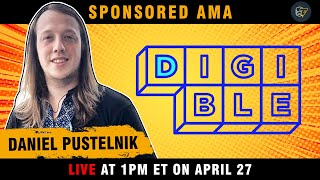
Dan, co-founder of Digible, explains how the NFT marketplace mints one-to-one tokens for physical collectibles like graded Pokémon cards. Each NFT is a custody voucher for items stored in insured third-party vaults called Digisafes. The platform launches with physically-backed auctions and plans complementary services like expedited grading and battle products.
Chapters
Hey everyone, what's up? It's Rachel here with cointelegraph and today we're doing a AMA with Dan. He is the co founder of Digible. Hey Dan, what's up?
Hey Rachel. So happy to be here. Super stoked, looking forward to it. Been a lot of hype coming up for this. Super excited to tell everybody about the project and kind of where we are.
Yeah. Well, I'm excited to speak with you today because obviously, as we know, NFTs are so hot right now. And so you're kind of the NFT expert, so we're going to get into all of that soon. But before we start, I just want the audience know a little bit about how you got into crypto, your background and if you've always been interested in NFTs or if this is a recent development because of the trend that we're seeing now.
Right, right. So to kind of unpack that. When I got into crypto back in like 2016, I was at a house party and someone told me about Bitcoin and Ethereum and I started looking into it kind of as an investment, as an asset class. And I started to buy up a little bit. Then I just sat on it for a little while, lost interest. And then in 2018, when the big boom started happening again with ICOs and everything that we saw my brother, who's an institutional trader his whole life and he was in forex markets and equities markets, he came to me and said that there's a huge opportunity here. It's a really undervalued asset class. We want to build a digital trade desk to help bridge crypto to the FIAT world. They understand the fiat, they understand trading. We're kind of starting to learn crypto. We want to really learn crypto and kind of bring the on and off ramps to crypto. So that's what we found Guibo Group, which is Institutional Trade Desk. That's basically the bridge between FIAT and crypto. And so we've been doing that since about 2018. And then as you said recently with the NFT boom, so we became aware of NFT. I became aware of NFTs back in 2018 when we were first flushing out all the different kinds of use cases and kind of concepts that you could do with tokens and non fungible tokens specifically and kind of how they could be used. And I saw the value of it as art. Right. Because I kind of understood how art worked and that it's kind of like perceived value. So as long as someone's willing to pay for it, then there is a value behind it. So there definitely is real value behind NFTs and there definitely is a lot that can be done with them because they're digital and they're kind of backed by blockchain. So there's a lot. At the time we were kind of working with some of our, like we have partners in the legal space who do like blockchain consulting and regulatory consulting for companies in the crypto space. And so they were talking a lot about tokenizing real estate and that was kind of the hot topic back then. And NFTs kind of came up as a way to be used as like titles for property. And so that kind of got my interest there. And then kind of it's been sitting in the back of our head since about 2018. And then when we saw with the recent OpenEAS and the nifty gateway opening up and kind of the huge explosion that we've seen of like retail and just the mass, like kind of just non crypto folks that were there before kind of jumping all in. Like Eminem posted his first drop I think like yesterday or the day before. And so like we saw that happening and we saw that that was a huge, a huge boom to the industry and that there's going to be a lot of overvalued assets. Right? Because that's kind of inevitable in these bubbles. And so we wanted to kind of come together and come up with something that would not only just have value in the digital space, but also in the physical space. And so that's kind of where like our hobby, like my hobby of collecting Pokemon cards and Yu Gi oh cards since I was a K. Kind of just like it just kind of hit us in the back of our heads like why don't we take everything we've seen with tokenizing real estate and the potential of having really, really liquid digital assets and then kind of combine that and create liquid physical assets that are backed by NFTs. And so that's kind of how we came up with Digible. And basically that is essentially the long story short of how I got from crypto to here over about three years. Process worried about all that. So yeah, there's a lot to deepack there. But I want to kind of get to your next question before.
Yeah, definitely. Yeah, yeah, no worries. So yeah, before we go more into the topic of NFTs and digibull, I just want to remind the audience, please ask questions. Dan seems to know everything about NFTs, so he's an expert here, subscribe to the YouTube because we do a ton of these AMAs, but just encouraging everyone to ask questions so you can answer those. Dan. Okay, so first question that I have for you, Digibull, is it's a really unique platform because it features collectible cards in nft. So can you explain that concept a little bit?
Yeah, sure. So I guess like the elevator pitch, like what I try to like draw an analogy if you will, is like a code check system, right? Like when you go to a restaurant or to a nice bar, you want to drop off your coat and so you get, or a valet, for example, you'd get a ticket that represents your physical asset. Then when you redeem that ticket, you get your physical asset back. And so in this case, the NFT is your ticket. The wallet holds your information, it's stored on the blockchain. And then anybody at any time, you can trade that to somebody else and they can go and redeem it. And just like a code check, there's a process to get you your physical thing in your hand. So in short, that's kind of how it works, is that it's a physical representation, sorry, digital representation of a physical thing. And then those are backed one to one, right? So you can't have duplicates, you can't have repeats. And as soon as it leaves the ecosystem, then the NFT gets burned, it gets destroyed, and then vice versa. Once it's entering the ecosystem, an NFT gets created to represent that physical item to be your ticket, your voucher for this physical good.
So with everything that you have featured on Digible, is it they're always backed by a physical asset as well as the digital nft, is that correct? With everything?
That's a good question. There's two markets. Essentially you have your traditional NFT markets. That's what you've seen with OpenEES and Nifty Gateway is you have purely digital NFTs. Those are unbacked assets and those are traded just like they normally would be. You can send them to different wallets, you can list them for bids, for auctions and so forth. And then you have the, the primary digital market, which is the physical backed NFTs. That's something we haven't seen before. That's the real differentiator of our platform is that there's two markets. Essentially you always have your traditional NFTs and you also have physical backed NFTs, which are super NFTs, if you will.
Got it. Yeah. I'm wondering because I think this is a really great concept. But why is it important, in your opinion, to have that physical asset with the digital nft? I mean, for me, I think it's great because obviously if I have a house, I would want to maybe hang a piece of artwork, but also have the digital copy. But what are your thoughts? Like, what inspired that idea?
Right. So it all has to do about with friction. So like in the, in the collectibles world, for example, like there, there's a lot of friction to be able to trade easily. Like just trading like sports cards or Pokemon cards or any kind of tradable item like comic books, stamps. There's, there's huge markets, like typically they're on ebay and by private websites. And so what happens is that for you to go into kind of like buy, sell quickly, you have to deal with shipping things, you have to deal with getting them, you have to deal with grading services. There's a lot of different kind of frictions that prevent the easy swapping of assets. So for example, in crypto we've seen how easy it is to swap between different kinds of assets instantaneously, algorithmically and high frequency. There's no reason that you can't do that for collectibles. The only problems that we have right now are the friction. The reason you would want to have an NFT version of a card is to eliminate that friction, right? If you're a collector and you want to hold onto your cards, then you're going to get, then maybe you want all your cards in person. But if you're a trader, if you're someone who wants to quickly be able to liquidate their cards or be able to have a huge collection of cards that they can potentially move within a split second, then you would need to have some kind of system to be able to kind of quickly facilitate those swaps. And so that's the point of Digable is to create a, a frictionless market for physical goods without actually having to constantly move around physical objects all the time. Just like. So you can kind of think of it like ebay, but better, right? Because with ebay, you have to still send in the card, you still have to send it to the person who bought it. They have to wait for them to get it before they can relist it. And so with Digable, that's all gone, right? I could sell you a card right now and then you can go and resell it, and then you could resell to Jackson and you can resell it to somebody else and then, and so forth. And so you might not necessarily want to have an NFT of a card to display in your house. If you really, really want the card, you can go and redeem it and then you can get it shipped to your house and then vice versa. If you want to have a card that you really value and you want to put it up for auction, you can submit it to the digital system and then you can auction it very quickly through the platform and find somebody around the world who would be willing to buy it.
Got it. So when you say rare cards, are those specific to one genre? So, I mean, are we talking baseball cards or Pokemon cards? Are we talking everything?
Yes, that's a big question. So we want to be able to support everything. The hard part with that is that every kind of asset class, every physical good, kind of comes with its own unique set of problems. So, for example, Digable is starting with Pokemon cards, mostly out of personal preference, because I love Pokemon cards and I think they're one of the best markets out there. But also just because it's very difficult to kind of like ensure authenticity on the platform. So that's like one of the biggest challenges that we have is being able to make sure that the people who are listing cards, there's a control process for sellers to make sure that the cards are authentic. So right now, the first kind of products that will be auctionable, physically backed NFTs that will be auctionable are going to be Pokemon cards, graded Pokemon cards, specifically because we kind of want to reduce the amount of kind of bad actors and kind of like fakes on the market. So that is something that we're highly acutely aware of, the fact that people might be trying to kind of take advantage of the system and kind of like put up cards that are not real. And so we've had to be very careful with how we kind of create the gates for people to list cards onto the platform. And so to answer your question, the idea is to have sports cards, trading cards, rare collectibles like stamps and comic books, as well as anything else that people think that they'd want to trade. So one of the things that I would like to ask everybody is just if you have an idea for something that you think could be on the platform, just please let me know. You can tweet us@digableio or you can just find me on Telegram in our, in our chat and then just let us know directly what you want to see on the platform. We've heard interest about comic books, we've heard interest about stamps, we've heard Interest about rare, like texts and documents and like books, for example. And kind of just. There's a lot of different collectibles out there. There's instruments. But we've kind of decided to start with cards first because there's already a huge market for that and specifically with Pokemon cards. And the idea is to add sports cards on very quickly after that and then kind of expand into the. The universe of all the rest of the collectibles once we've kind of established the model with the first case.
Got it.
Yeah.
Yeah.
Cool.
So that's really exciting. I'm going to take a question from the audience real quick because I'm sure everyone's wondering more about this. So this is actually a great question from Peng Lee. She's asking, or they're asking, how do you pay for the cards? Do you use Digi or ETH or others?
Right. So you can use Digi and usdt. I think right now is that the MVP of the platform is going to support basically if you. I think right now that you get to be able to participate in auctions, you have to hold some Digi, but you can still pay in ETH or usdt. I think we're actually working on expanding to some other ones, but I can't. I don't want to like promise anything that we. That isn't for sure. So the idea is that it's going to be more than just Digi, but there have been ideas floated of kind of rewarding users for using Digi to pay for the platform, similarly to how Binance does and so forth with their BNB coin. And so that's under consideration. Yeah, I think the idea is to make it as liquid as possible. So I'd want to support as many currencies as we can in the future.
Got it. Also, the Digi presale just took place. Are you able to talk a little bit about that, how it went? Did it go better than expected or just your thoughts there?
Yeah, I mean, I wasn't like manning the sale or anything. I think I was kind of like in the dungeon coding, if you will, while that was happening. But I did hear a lot of great news about it. I know that it got sold out very quickly. We were very, very satisfied with our partners. Everyone did a great job. Pinpoint Capital did a great job and our developers did a great job kind of speccing out the smart contract, getting audited, making sure there were no problems with it. Just all around great job from the team to kind of like, kind of have that go so, well, without it being really an issue, because from what I could tell, there weren't any issues. I haven't heard about any. So if in terms of how things go, usually if I don't hear about it, that's a good thing because I usually hear about the problems that happen. So the fact that I don't know too much about it tells me that it went great and now we're just moving forward.
Awesome. Great. I'm going to take another question from the audience. Madpitcher is asking, is it possible for large ebay storefronts to submit their entire collections to the vault while maintaining their stores on ebay?
Yes, that's a great question. So the way it will work, though, is that you would need to kind of submit it through a digisafe operator. So in the physical digibull ecosystem, you have the digisafes. The digisafes are like your custodians, if you will. So we know the problems of custody and crypto fairly well, and we were building Gebo. Basically, you usually want to have a third party as your custodian for a lot of different reasons. And so the digisaves work in a similar way. They're a third party insured custodian who holds onto your physical good for you. And so that way, once you give it to them, essentially you're relinquishing custody of it. It's still yours. You have the NFT that proves your ownership, but the physical good is going to be stored in their private vaults. And so the concern there is has to do with double sales. So as a seller on the platform, if you keep your ebay listings up, then there is a potential that you might sell in two places at the same time. So that wouldn't be. As a seller, I wouldn't really recommend somebody to do. Generally, you would want to be able to kind of ensure that you're not selling the same item twice. So once it's in the digital system, you really wouldn't want to sell it on ebay at the same time. Just God forbid that someone happens to buy it at the same time in two places. There's no way right now for ebay or digible to know that it got sold on one or the other platform and to remove it immediately. So we would want to avoid that for your customer. As a seller, you wouldn't want to sell something to a customer that you can't guarantee. So you would have to be careful about what you list on the platform versus what eBay listings you keep up Got it.
So you mentioned Digisafe, but can we also talk about Digigrade and Digi Dual? Because those are also unique features that I'm curious to know more about.
Yeah, I'll start with Digigrade, because that one kind of goes hand in hand with the Digisafes. It all kind of goes back to friction. So in the trading card world, in the sports card collectible world, when you have a good card, a card that you really like, or a card that you want to sell, usually you want to get it graded. And that there's various companies out there that I'm not going to mention, but there's a few of the top ones in the industry that kind of everyone usually goes to, and they're kind of nefariously been known to be backlogged for a really long time. So it could take upwards of six months to a year to get your card graded. And so if you just got a card out of like a fresh pull and you had a really good card and you want to get it graded and you want to take that card, you want to sell it, that turnaround process is going to take you well over a year probably right now. And so the idea with Digigrade is that, like, when you, when you submit a card to our, to the, to the Digisafe, if it's a raw card, if it's an ungraded card, then there is a perfect kind of, like, opportunity for us to take that card, get it shipped to the grader, have them graded for you, and then as soon as we get the grade, we give you the nft, which kind of removes that friction of you having to, like, wait for you to get it back from the grading service and then you have to relist it and then you have to resell it. So it's all in that line of just trying to remove friction. And so because we're only allowing graded cards to be listed on the pipe, there's tons of people out there who have, like, piles and piles of cards that they want to get graded, that they're waiting for the grading agencies to start opening up their slots to get graded, and they can't. And so we figured if we're going to be doing, if we're going to be accepting cards that are graded, we might as well take the cards that aren't graded and help people kind of expedite that process by leveraging our partnerships, leveraging our connections, to be able to expedite the process of having their cards graded and then remove the friction that comes with being able to sell them. So that's what Digigrade is for. And that's kind of like an auxiliary service to the Digisafe platform. It's for ungraded cards to get graded by the system and you get the NFT right away instead of having to wait for the card to come back to you and then you have to send it back to us. It's just removing that friction. And then the Digi dual product is a very cool product. It's essentially a way for you to battle cards against battle NFTs against each other and kind of in kind of like a winner takes all scenario. And it's kind of under wraps right now, so I can't get too into the deep about how it's going to work. But it is coming soon and there's going to be a bunch of news coming out about it pretty soon. So I'd like to just kind of stop there because I don't want to say something that I wouldn't want to be said on live TV just yet. And so I think the best way to think about did you duel? Is just like how you would duel in Yu Gi? Oh. If that's a familiar concept or maybe like a sports bet kind of scenario where you have people putting up their bids, their bets and then they would be able to battle it out via smart contract to see who wins and takes it all back.
Awesome. Yeah. I mean, what I love about this network is that there's so many social aspects and features that I think a lot of these NFT platforms don't have. So that makes this network really, really unique. But what are your thoughts? Because there's so much competition in this space and right now I saw Binance just launch NFT platform. What are your thoughts on the competition in the space? Do you ever worry about that or do you see it as healthy competition where it's like this is just a broad ecosystem?
Yeah, I see it as a true capitalist does. I think that competition is always good. It's going to help weed out inefficiencies, it's going to help kind of wean out monopolies and kind of like unfair shingle holds that certain industries have on markets. The NFT marketplace is huge. There's tons of competition right now. I think there's a new NFT Marketplace opening every day. So the idea with Digable was that Digible, we don't really want to kind of battle it out on who's going to be the NFT Marketplace. We figured we would let people sell NFTs on our platform. And our platform can accept NFTs from any platform. And you can go and you can relist your opensees or your nifty gateway, or eventually, once Binance launches it, we can list those in our platform. But we really wanted to separate ourselves and go into the route of physically backed goods because we saw that a lot of people were kind of avoiding it. A lot of people were like, this is too hard, we can't figure it out, we don't know enough, let's not mess with it. And we figured, why not? You might as well. To me, the thing that's going to really set apart the NFT platforms are the ones that have the real values, the real use cases. And so being able to swap NFTs and sell them and buy them is great. And a lot of companies do that really well. And a lot of platforms do that really well. But I haven't seen a single platform that lets you go in and be able to actually swap real items. You can almost imagine it like a stock market for Pokemon cards, or stock market for baseball cards or sports cards, or football cards, hockey cards, UFC cards. There's so many collectibles out there that people have been kind of like stockpiling for years, and there's no liquid markets for them. Right. It's very difficult as a collector to go out and try to find really, really rare items and buy them quickly. It's a tedious process. There's tons and tons of overhead involved and there's lots of private groups. And it becomes quite difficult if you're not in the industry to kind of go out and get a rare collectible for yourself. If you have something that you grew up with that you really want to go get, it might take you six months, a year, two years to actually find that product and find someone who's willing to sell it to you and then facilitate a transaction and then actually get it. And so the idea was, why don't we just remove all that friction and just take the concept of super Easy Liquidity with NFTs and just apply that to physical items. And so to me, if, if we do see competitors start to go into the physical space, that tells me that we're on the right track, that that's kind of like where the real use case lies, the real value. And so that's kind of my answer to that, is that I think there was just a lot of untapped potential. And like, I take competition as a sign of a good thing that Means that the markets are kind of aligning that this is where the future is going to be and it's going to help kind of push us to make sure that we're kind of like executing perfectly to stay competitive in the market. And if we fall behind in the market, will kind of naturally push us out. Right. Because the WHO kind of removes all of the friction for the consumer. The WHO kind of minimizes their expensive. The person, the company or the network that can do it the most profitably, most efficiently will in the end dominate. And so I see that as just like a natural process of any capitalistic market. Right. You're going to have competition and you're going to have people who try to push out other companies. And so I think there's a lot of opportunity for Digable and I hope to see some competition soon because I want to see what other people have. I want to see the ideas. I feel like we've kind of come together and really brainstormed a lot of different ideas. We have partners in the physical card space and they're kind of the ones guiding us to how we're going to be able to do it. Well, for physical cards because there's a whole bunch of kind of things, weeds and problems that pop up when you start thinking about physical cards and moving them around quickly and being able to trade them. It's one thing with digital, it's a whole nother thing with physical. And so. So we've had to really lean on those experts and it's been a really fun process to learn how that works and to understand how the collectibles market works and then realize that there's so many inefficiencies that are just waiting to be cut out. And so that's why I'm super excited about the project. I feel like it's not just about getting Pokemon cards into NFTs, it's a bit more than that.
Right. I mean, it sounds like you're solving a major problem here. And I want to talk about, in a minute, the inefficiencies and the problems you're solving with this network. But first I want to take another question from the audience. I also want to remind the audience, please keep sending the questions. We've got a ton of them coming in. So, Dan, I hope you're prepared to answer all these. So, yeah, so this question, this question is from Yang Ching Kin or they're asking what's the advantage of holding Digi?
The coin itself, I'm imagining.
Yeah, yeah, yeah, that's. Yeah, that's what I'm assuming.
So that to answer the question, it kind of goes into the tokenomics, which I'm not the best person to explain. I just want to kind of like preface that that I'm not the tokenomics expert. I'm nowhere near an expert on how that works. But from my off the cuff kind of explanation is the main advantages other than being kind of exposed to the price movements of Digi, just like you would be with any coin, you have the opportunity to stake it. And so that way by holding it, you can stake it and kind of receive the rewards that any kind of token that rewards the stakers would give you by getting dividends essentially paid back to you for staking the coin. And you would be able to essentially also be able to do auctions. So right now to be able to list auctions on the platform, you have to hold the Digi coin. And that's kind of built there to also ensure a certain level of buy in that people aren't abusing the system. Because you don't want to just have completely free auctions going on the platform. It doesn't necessarily cost you anything to list them, but you have to at least hold it to kind of help kind of feed out the bots and all the kind of scammers out there that are going to be able to just abuse the system if it was completely open. So this way there's at least a little bit of barrier entry to be able to creating an auction is you have to hold Digi. And so holding Digi kind of enables you to interact with the network in every way, whether it's from price fluctuations, whether it's staking rewards and farming rewards, as well as participating in kind of in being able to create auctions and buy cards with it, sell cards with it, and so forth. So it is kind of like your all access pass to the platform. Of course you don't have to. If you want to just go and buy a Pokemon card, you can go and do that with usdt. But the idea is that you would use the Digi coin to kind of interact with the entire ecosystem, whether it's listing cards, whether it's selling cards, whether it's having cards graded. Those would all be done in Digi. And so we probably reward people for doing that in Digi as well. To kind of drive.
Yeah, yeah, yeah, all of that makes sense. Yeah. So let's actually based on what you said there, someone is asking another question that's kind of related to something you mentioned. So David Staphil is asking, can you comment? Oh, wait, sorry. Madpitcher is asking, will NFTs created on different chains be able to fight on the platform? I don't know if you can answer that now, but it's an interesting question.
I would imagine so. I mean, obviously there's a lot of different chains out there, so it would kind of have to come one at a time. I could say that off the bat, the Ethereum ones for sure, that's kind of where we're usually starting with things, is that if they're on Ethereum, they're just automatically supported because the coin is on Ethereum. And so beyond that, I can't promise which chains are going to be supported because I don't know myself yet. But that would be cool. I think that would be the idea is that if you want to duel, you should be able to duel with whatever you have in your wallet.
Yeah, yeah, definitely. I agree. That would be awesome. So, going back to the inefficiencies, because I'm interested in this, it seems like you're solving a really large problem with connecting digital goods to physical goods and all of that. Can you explain just some of the inefficiencies you are solving within that space of digital and physical? And if I wanted to buy a Pokemon card, but I went to ebay to do it, why is this a better option, for instance, to do it through this network?
For sure, yeah. I mean, from first glance as a consumer, it might seem very similar. You would have to pay, you would have to input your shipping info and you would get a card in the mail at some point. And from that perspective, it's kind of similar. But what if you wanted to buy a card or maybe not just buy a card, what if you wanted to make an investment in Pokemon cards? Right. Because what we ended up seeing happening over the coronavirus and kind of the quarantine is a lot of people started getting into hobbies and the price of hobbygood, hobby wax, as it's called in the industry, which are like the unopened packs of baseball cards, of sports cards, of Pokemon cards. You've seen huge price booms because of kind of the influx in hobby. So it becomes an interesting investment opportunity. So you might be thinking, like, I could spend, I don't know, a thousand, two thousand, ten thousand dollars, and I'll just buy up some rare Pokemon cards. Some rare Pokemon or Yu Gi oh. Or sports cards. Just any kind of rare card that I want to hold on to as kind of an investment. And then I want it to go up in price and I want to be able to kind of quickly sell it. And so if you did that with ebay, you would essentially have to buy a bunch of cards and then you'd have to get them all shipped to you and then you'd have to like sit on them. And then potentially maybe you find a custodian for yourself, maybe you put them in your safety deposit box. You'd have to figure out some way for you to hold on to them. And then you'd have to figure out some way for you to later then somehow make your actually like realize your investment, right? Because at a certain point the price will go up, you'll want to sell them, and then you have to do that whole process again, right? You have to go and list them on ebay, you have to go and sell them, you have to ship them individually. So by having them in the Digi platform, they're just, you don't have to do anything. Once you've bought them, you're done. They're sitting there, they're already perfectly positioned to be sold at any given time, they're completely secured. There's a custodial relationship in place with the DigiSafe to make sure that it's not going to get damaged and there's insurance in place. And so your investment is secured and it's also highly liquid because then you can basically at any point, if there's a price fluctuation and you're like, okay, this is where I want to rake in the returns, list it on the platform, auction it, and then just have it done. And then you don't have to do anything again, you don't have to list it on ebay. Once someone buys it, you don't have to do anything again. The DigiSafe will essentially ensure custody of the new owner. And if the new owner redeems it, then the DigiSafe will be responsible for shipping it to them. So again, you kind of just remove all the friction of being able to quickly enter and exit the market. So like, as I was kind of trying to kind of explain earlier, if your use case is just to buy cards and have them, then it's very similar to ebay, but the DigiSafe kind of enables, the digital network kind of enables these new liquid ways of holding rare goods that just doesn't exist before. And so it's not so much about like reducing the friction of just buying cards, but more about having being able to quickly trade cards, being able to and swap collectibles. For example, so being able to kind of like have an entire lineup of Pokemon cards that you, for example, picked out are the ones that you want to invest in. And you have, let's say, 10 or 20 cards that you're invested in. And maybe you want to connect some bots to monitor the prices. And whenever the price goes above a certain point, you want it to list on the platform. And so because it's digitized, it's on the blockchain platform, you have the ability to do that. You can kind of create your own solutions to a lot of different problems out there that are very difficult to do with ebay right now. Right. It's very difficult to go and try to relist your entire catalog of cards if you have to constantly look at the prices and be on top of scanning the different kind of codes and looking up the card values and then putting them onto the platform. Essentially, it's a tedious process for one card. It's painstaking for 10 cards, and it's almost impossible for 100 cards and beyond. It just becomes so difficult so quickly just because of all the shipping that's involved, all of the kind of unnecessary logistics that are just involved in just buying cards and selling cards. So the true advantage of the Digi platform is, like I mentioned, that liquidity. You're able to just really quickly buy and sell and, like, it sounds like kind of not that much, but when you start to kind of, like, put into perspective of how difficult it is to actually go and, like, sell a card, sometimes they sit on ebay for months at a time. And you're not always, like, in the best position to, like, run over to your safe and then get it and then ship it to somebody. There's plenty of people out there whose business it is to kind of buy and sell cards all the time. And so that's what we're partnering with for the digisafes. And there's a lot of different partnerships opportunity there for people to kind of be able to help facilitate this network. And that's the coolest part for me is that it's not just a blockchain network that runs behind the scenes. There is a physical component to it as well, which requires real people, real stores, real hobby shops, real custodians all around the world kind of helping facilitate this liquid movement of physical goods. And so I think the problem we're really trying to solve is that friction. And the friction lies when you try to do anything in mass beyond just buying a car and holding onto it, right Right, Yeah.
And that's clear. And it seems like, I mean, it's so awesome to hear this because it's like you're recreating this entire marketplace using the power of blockchain. And so it's really great. It's a great problem that needs to be solved. And I think blockchain is definitely capable of solving that problem. Like I said, Dan, we've got a ton of questions coming in, so I'm going to take some more from the audience. I just want to remind the audience real quick to please subscribe to our YouTube channel. We do AMAs like this all the time with experts like Dan. So subscribe. I'm going to take another question, actually. This is kind of based on what we were just discussing. Dan, this is from David Stafel. They're asking, can you comment on the risks of losing cards or collectibles in the mail? Which I think is a great question because, you know, I feel like that's a risk.
Yeah, that's always a risk. I think it's. And at the end of the day, I mean, that's like a. I mean, that's why a lot of ebay shippers, sometimes, I know it's like very popular in the collectible space. If you're buying a really expensive card, if it's really, really rare, sometimes the shipper or the buyer will actually make the physical journey to go pick up that card in hand. Like, I know a bunch of people who will hop on a flight to go like across the country just to go pick up the cards that they ordered because. Because they're afraid that the carri going to lose them or damage them. And yes, there is carrier insurance you can apply for and there's caps to it and there's like a bunch of exclusion policies. And so it is a real concern. And it is something that's kind of like why you have to have shipping insurance. Right. It's just inevitable. Part of any kind of like, supply chain is that there's always going to be damaged goods. There's always going to be cars that get lost. And so the idea is that you back that up with insurance as much as you can, and if you truly want to kind of like maximize your chances of not losing it is you have to kind of make that physical journey. And so that's kind of like a challenge that we're still figuring out is how we're going to be able to enable people to do that. Right now, the model was going to be to ship having the digisafe ship the cards with insurance to the consumers because that's kind of like, that's the same problem that ebay has. The same problem that all the different platforms have is that there's always going to be an insurance, a shipping carrier risk level, just like there is with anything you buy on ebay or anything you buy online. There is always a chance it could get ruined. It can get destroyed before it reaches you. And so when it comes to rare collectibles, it's especially painful because you can't reproduce it, you can't reorder on Amazon that rare card that you just bought. It might be the only one left in the whole world. And so it's a major pain point for the industry, I think, as a whole, the problems with shipping. And so the solution there is, it is kind of the existing solution. It's shipping insurance. And if you truly, truly want it to be 100% guaranteed, then you kind of have to do it yourself right now, unless someone knows some other way of ensuring a good can be delivered that's not relying on a shipping carrier. I'm very interested to hear it. If you have some, please reach out to me if you know how to do that. But from what I understand, it's kind of on the shipping carrier. And so perhaps maybe sticking to the more reliable shipping carriers is definitely a better choice. As a seller, I think there is a lot of kind of concern there. You should take some time to kind of figure out who the best shipper is for you to make sure that in your area that they have a low loss rate and that they have a fairly good claims process and that the insurance isn't excluding rare collectibles or any kind of rare items. Because there are terms and conditions sometimes in certain shipping policies that will exclude collectibles, that will exclude certain rare items from their general coverage. And so you might have to apply secondary for secondary coverage and so forth. So it becomes a whole like insurance world problem more than like a logistics problem.
Yeah, I mean, I think it's really interesting. It really is a really great question because if you're using this platform, you're going to want to ensure that you get the physical product, which is, you know, in a way, when you, when it's digital, you know, it's just so easy to do that digitally. But because you've got the physical. Yeah.
I would also argue that if you mistype a wallet address when you're shipping nft, you're gonna lose that too. So there is always the option of user Error. There is always the option of a network failure, although in particular I don't think that really happens anymore with kind of like the mature networks that we have, the support NFTs. It's more usually the user era that's causing the issue there. And so the physical world problem is going to be one that is going to take some time to solve, I think. I think blockchain can help definitely from this perspective of distributed inventory tracking, making sure things don't get lost in the system. I think Amazon has really paved the way of how to manage billions of products in inventory across the world relatively reliably. We usually just follow the best practices set by the giants. There's no reason to recreate the wheel. We're not going to be figuring out new ways to ship things. At the end of the day it is. The reality of the industry is you have to be reliant on others, Right?
No, totally. And you made a really good point about the digital. I mean, that's something. Whenever I'm sending anything on a blockchain network. Yeah, you've got to be super careful. So it's just you've got to be super careful with everything when you're sending it.
Yeah, yeah. Test and retest and triple retest. That's my advice, is always compare the front four, the last four, the middle characters. Like. Yeah. And if you're moving any kind of large amounts of anything rare, definitely try to send a test first as that's always the best advice, I think. For sure.
Yeah, yeah. No, great advice for sure. We've got so many questions coming in, so I'm just going to take another one from the audience. So this is interesting. I didn't hear about this, but Dan, maybe you did. So, Brendan Higgotbottom is asking any more follow up plans with Steve Aoki or any other partnerships lined up?
Yes. So the partnership question, it's kind of going to be a boilerplate response there, but I can't reveal anything about partnerships until they're signed and announced. I would be remiss to try to allude to anything. I think that doesn't really serve the point of this ama. If I did have something I could say, I would say it. So I guess the answer is I can't really say much about any ongoing or existing partnership conversations. Once we do have news that is announceable, you'll hear it immediately on our Twitter channel, on our Telegram channel, as well as in our Telegram announcement channel.
Got it. So I'm just going to remind the audience if you're at because we're getting a lot of questions about who's next, the big names, this and that. So just reminding the audience that's yet to be revealed. So stay tuned.
I'm excited, just as you guys are, to find out who exactly we're going to be working with. I know that there's a lot of conversations, a lot of people going on, but any particulars I really can't mention because that's not my world, that's not my wheelhouse. Just so everyone understands, my background is mostly in, like, tech and kind of collectibles. There's a lot of different team members who handle different things. And so we have some great team members who handle our partnerships and negotiations and they're diligently working on getting us the best partnerships that we can get. There's a lot of talk photo to know about. We're partnering with the top grading industry, the top grading card services out there, and that's the one that I'm particularly excited about, is being able to kind of have direct relationships with those. I think that just goes hand in hand with what we're doing with the Digigrade service and the digital auction, the physical auction place itself. It just makes total sense on that front to work directly with the grading card services.
Right, right. And it's awesome to see that everyone's so excited to hear about, you know, the big names and the partnerships you're going to form because clearly this is such an innovative platform that has a lot of potential. So I get it, like, everybody wants to know what's next, but let's talk a little bit about NFTs in general, because you're obviously quite knowledgeable on that topic. One of the audience members, Michael, they're asking what are the top platforms to buy and sell NFTs, digital art, NFTs specifically. And can you tell us more about it and how that works? And then he says, thank you in advance.
Sure. So I guess I don't know if I'm properly situated to mention specific platforms. I'm going to avoid that one just because I don't want to step on any toes. But answer your second question. So how it works usually is that you would connect your MetaMask wallet. You would connect depending on the platform, depending on what wallets they support, but typically they support the ERC20 token wallets. MetaMask is almost always the industry choice. Most developers test with it. So if you have like a secondary or tertiary wallet, it might not work. And so I know that there's a lot of problems with exchange wallets. Generally you want to avoid using exchange wallets when you connect to the NFT marketplaces. They won't work directly. You're always better off using Metamask. So I'm going to shamelessly plug them because I think it's a great product and I think I pretty much use it exclusively for anything ERC20 related, anything Ethereum related and 720 as well. But the kind of like to me I think it really depends on what you're looking for in the art space. So I think like the best way to put it is like kind of like with real world auction houses it's like you want to go to the place that has the products that are kind of interest you, right? So if you're interested in like contemporary art, then you would want to go to a platform that kind of specializes or focuses on contemporary art. If you want to go on to kind of popular pop art, then you'd want to find one that suits you on that front. And so it's mostly about doing your own research and kind of finding those platforms that support the kind of artwork that you're looking for, right? So almost all the ones that I know of, they have like open collections, open galleries that you can kind of thumb through and scroll through and see the kind of like products that are on there and you can start searching for. If you have a particular artist, you might want to follow through them through their channels, like through their Insta. I know a lot of artists are on Instagram, NFT artists are on Instagram and they'll mention which platforms they're on. So it's kind of just like how you would buy art, right? If you want to buy art from a particular artist, you would ask the artist, where is your art being sold? If you want to buy a specific type of art, you would try to look for what platforms have that art. If you want to buy just a really expensive art, then you would look for the platforms that sell really expensive art. And so I would just leave it as kind of like you. There is no one stop shop for them. And I don't think there ever will be just because it's such a big space. I mean like there's even in the real world of art there's hundreds of thousands of art galleries that all have really unique pieces in them. And so the kind of the interesting thing about non fungible tokens, anything that's not recreatable, anything that's not just like fungible, right? Anything that's not. I can forget the word I'm looking for, but basically what we're trying to get at is that any product that can't be replicated, anything that's rare, anything that's collectible, there's going to be hundreds of kinds of shops to be able to buy that from. And so as a consumer, the challenge is on you to be able to find the shop that sells what you're looking for. And so the idea would be, the reason I think Digable has so much opportunity is because we can kind of act as a secondary market for NFTs. People can connect their wallet with any kind of NFT they have on it, whether it's from one of the bigger platforms or one of the unnamed platforms, you can connect them and list them directly there. And so I think you'll end up seeing a lot of secondary markets appear, even tertiary markets appear for really popular NFTs. I know, I think already there's a couple of them for top. For the top shots, ones which are like, I think the biggest collectible right now in the sports industry, like an NFT space. Because when the top shots came out, they were really, really oversold. And there's a bunch of problems I don't know if you're aware of with their site going down and there's just so much demand for them that they couldn't support the volume that they were trying. They didn't expect so many people to want them. And so now I think people are starting to get into the realization that their top shots are still kind of locked in that platform, in the dapper platform. And so I think quickly you'll start seeing solutions of people being able to get them out and then you'll have thousands of secondary markets for that to kind of float around. And, and it's kind of like an interesting nature of the NFT markets is that as soon as you start creating collectibles, as soon as you start creating rare items, secondary and tertiary markets appear almost instantaneously just to support them, to help kind of get people information about them, or if it's pricing websites or whether it's actual marketplaces that just resell the NFTs themselves.
Right, yeah. I just want to remind the audience, keep sending your questions, especially the ones related to NFTs, because I think that general knowledge is just really important to have right now because what we're seeing with NFTs, it's like everybody is creating an NFT. But I wanted to ask you, Dan. So I was recently at an art event In Marfa, Texas actually. And it was very. There were a lot of traditional artists there. And when I would speak or I would tell them about NFT is, a lot of them were kind of, you know, they didn't know, they were confused by it. And then a lot of them said, oh, well, you know, we aren't into NFTs. Traditional artists, we don't care so much about NFTs. So I think that there's a challenge that we're seeing right now, mainstream adoption. I want to get your thoughts on that, why we see that challenge and what we can do to overcome that, to get the entire art world or just people in general hooked on the idea of NFTs.
Yeah, I think that's a great question. I think to me the parable that I draw is kind of looking back at the start of the Internet. I wasn't particularly around for the beginning of it, but I did read a lot about it. And so I know that there was kind of like this in the art space. There is a huge kind of divide between physical print artists and then digital artists who started to become kind of the new wave of artists that grew up using different kinds of digital software to be able to create digital art. And so since the early 90s to the 2000s, you've seen kind of the advent of digital art of to the max. Right now we have so many sub industries of digital art that just didn't exist prior to the Internet existing because you had your print medium, you had your fine arts, you had your physical arts. And so once the digital art kind of branch became possible, there was obviously going to be always, there's always going to be friction of those kind of like last adopters, those holdouts who are kind of stopping the. They don't want it, they don't think, they don't see the value in it, they don't see the kind of use of it. Maybe they don't understand the technology all the way, so it's easier for them to stick to what they know. And I think that's normal and I think that's totally fine with any kind of new emerging market is that there's always going to be a spectrum of early adopters to mainstream adopters, to holdouts. And so I think the answer isn't how are we going to get all of the artists to make NFTs? I think the question is, does everyone really understand why? What is the point of nft? I think the first question that I got when I was explaining it to my parents was what stops me from going on and putting up a GIF or an image and calling that this thing? And there really isn't anything stopping you other than the fact that the way the NFTs work, the whole most important part about them is that they're linked to a blockchain network. And that's very important because it's all about proving who owns it. It's not about the mass production of it. Like anyone can copy paste an image. But why an NFT is important or why it has value is because there is a blockchain, There is a network that can say that this particular wallet address owns this nft, and this NFT was minted by this person or this account. And that kind of gives you breadcrumbs to look at whether or not you want to buy it or not. If it's just some guy who's sitting around copying and pasting stuff, then you can see that, and then that shouldn't. And the market should kind of like have competitive forces to push that out, right? Because you wouldn't want to buy art that's fake or made by somebody who says, who's not. Who says that they're not who they claim to, who's not who they claim that who they say they are is. I think what I was trying to say there, you wouldn't want to buy from them. And so the idea of NFT is more about linking that kind of web product, whether it's an image, whether it's a GIF, whether it's a sound file, whether it's a MP4 file, all those different kinds of digital assets, if you will, linking those to specific wallets is the purpose of an NFT just being able to create images. People have been able to do that before NFTs, right? You can go and you can create digital images. It's not a way of creating new images. It's not a way of creating new art. It's a way of linking art to wallets, linking digital assets to wallets. And so I think some people get kind of confused of thinking that NFT is like a new form of art. It really isn't. It's a new way of storing art, if you will. It's a new way of holding onto physical art. And sometimes it's not even just art. Sometimes NFTs can be used for a lot of different things, right? Sometimes it can be used purely for entertainment, sometimes it can be used purely for visual purposes, just to look at. And then sometimes they have particular use cases. I know a bunch of NFTs that don't really do anything other than get you into telegram groups. They can be used as key cards into different kinds of Internet societies, they can be used as game assets. I think there's, there's a huge conversation happening in the gaming world, which I'm really excited about, of enabling Ethereum on very big games. So you could take out your World of Warcraft item and kind of keep that in your wallet. Maybe you stop playing a game, but you still want to hold on to all the goods that you collected in that game. And having a wallet ecosystem would allow you to do that. You can collect all these items from all these different games and keep them in your wallet. And as a gamer, that's your gaming wallet, right. That's all the different achievements and unlockables and everything that you've kind of earned through your bonafides, through your gaming career, they're all stored in your wallet. And so I think the argument there is that it is about art and it is about getting art minted on the blockchain, but it's not a new way of creating art. It's more of a new way of storing art or holding onto it, if you will.
Right. First of all, I love everything you just said. That was such a great explanation. And I'll tell you why. Because I think a lot of the times, especially in the mainstream publications, when we read about NFTs, a lot of it focuses on how much money is being made. A lot of it is money focused or, you know, just, oh, it's digital. This is so cool. Because of COVID you know, this is the new. And yeah, I get it that that's all correct, I guess. But what I love about your explanation is that it's the blockchain and the proof of ownership. And I think we forget that a lot of the times when it comes to NFTs and these, you know, things in the crypto space where money is involved because we only see how much, oh, that one sold for this amount of money, or, you know, and then things like that. And so we really forget the technology side of things, which is what you just basically brought up. This proves ownership, which is. It's been so difficult to do that in the past, traditionally.
Yeah. And it's super interesting because I think, like, I think it's almost like a problem of the media now, maybe like with like clickbaits and like the way articles are written, because there definitely is a bubble. I mean, it's, it's, there's no way you can't not call it a bubble just because of like the sheer amounts of money that are being spent. And it's, it's not necessarily a good or bad thing. I think like all bubbles are inevitable and whether there's going to be a big crash or not, I'm not going to go out and speculate. But what I would say though is that at the end of the day it is like, I think you're totally right and that people, they kind of lose sight of the technology, they get kind of caught up in the numbers and like the get rich quick schemes and everyone wants to go and create an NFT so they can start making lots of money. But to me there's always going to be those people that are always wanting to get the quick dollars and then there's going to be a whole bunch of people behind that who spent many, many years coming up with the right way to do it. And so like NFTs. I don't, I don't want to like be quoted on this, but I'm pretty sure the first NFT was minted in like 2017 or something. And like, and the creators who created it first just realized that it's about proof of ownership. And then like what ended up happening in 2019 and maybe in the last two to three months really popularly is that a whole bunch of people started realizing that they can mint NFTs and sell them and start creating like artificial scarcity for themselves. Like anybody can, any famous artist can turn their user base into another revenue stream just by creating NFTs out of it. And so I think there was a lot of greed that kind of got brought up from all this. And it was important to help get adoption into the real world because you can't just have a bunch of blockchain developers constantly buying NFTs. You needed real people to buy them and you needed real artists to make them. And so you definitely have a lot of that happening. And then of course you have all the people who are trying to bandwagon, trying to ride that bandwagon, who are trying to like trying to catch a come up for themselves, who are, who are just kind of taking advantage of the boom of the, of the bubble and there will be eventually a correction and like natural market forces will kind of kick out all the, you know, the scammers and the valueless art and hopefully what remains is like the, in my eyes at least is the like property proper NFT markets of like. And that's kind of why I don't want to go into that, into the whole world, because it's like you start questioning like, like, what is art? And like, what gives our value? And that's very subjective. And so like, there's always going to be that aspect to it, which I think is why a lot of people get. I think it's why it's such a controversial topic these days, is because there's such a huge subjective element to like. Like, for example, like the Beeple artwork that sold for like, I think it was like 67 million or something like that. Like, of course the initial reaction is like, who would ever spend that much money on that? But then it's like. But then if you start to learn how long it took to make it and you learn like, why would people spend hundreds of millions of dollars on art in the real world? I mean, there's no real. As long as someone's willing to pay for it, then that's the value of it. And so it's not really your place as a consumer or anyone's place to question why did they buy it. It's more of a question of like, why do I think I can't buy that?
Right, right, definitely. Yeah. Cool. So I just want to remind the audience we've got six minutes left with Dan, so keep sending your questions. Yeah, it goes by fast.
So fast.
Yeah, so just send your questions. Subscribe to our channel. But Dan, we have another question from the audience that I'm going to ask because I was going to ask this question anyways. Towards the end of our chat, Anel is asking what's the next best big thing for Digi and win the roadmap? What's going on in the future, all that.
Yeah. So I mean, right now, the big push, as I'm talking right now, our development team is very, very, very eagerly trying to get to the launch of our platform. And so what that entails is essentially the NFT marketplace and the auctions for physical goods. I think, like you mentioned earlier, that we do have a lot of different kind of products that are interesting, like Digi, Duel and Digigrade and, and the related, like staking products. But really kind of like we're still in the early days of the physical, Physical goods marketplace. Digitally backed. Physical, sorry, physically backed, digital good marketplace. And so what we really need to do is launch that. We need to have that start to happen. We need to have people start buying and selling cards. And so I don't want to set a specific timeline because my dev team will kill me if I do. But the Idea basically is to launch the auctions as soon as possible, almost within this week, to go live, to be able to buy and sell physical cards. At least just starting with the Pokemon cards. As I mentioned earlier, we wanted to at least limit it to the first subclass of collectibles. Just kind of test the pipes, make sure everything works, see what comes out of it. I'm sure there's going to be some kink along the road that we got to solve before we can expand into the other markets. And so we don't want to be overly ambitious by saying everything's going to be listed all at once. We kind of want to take our time with it and like really launch the platform. Have it act as a marketplace for NFTs. Have it act as a marketplace for physically backed NFTs, which is kind of like the big, big release is going to be for that. And then from there we want to kind of grow into like a full scale network. Right. And so in our roadmap in the future is basically to. To automate the process of claims, to automate the process of being able to list cards, automate the process of being able to receive cards, expand the capabilities of the network, bring on a bunch of Digisafe operators and so forth. And so just like really expand the capabilities and throughput of the network after we've launched the initial ability to buy and sell an auction. Just so like. So it's still like early days in terms of our product roadmap. It's just the, the main use case which I mentioned earlier, which is like listing cards, auctioning cards, selling cards. Those are the ones that we're targeting right now. We do get kind of distracted because they're cool about the other services like Digigrade and Digidul, but the main push is still the primary use case, which is to become first of its kind physically back to the NFT marketplace.
Got it. Yeah.
Cool.
I'm going to take a few more questions from the audience if we have time. Like I said, we're getting a lot. So Vashina is asking, and you might have already touched on this, but they're asking what are the benefits of holding the token beyond needing it to eventually purchase collectibles? Otherwise I may only hold enough to purchase the collectibles that I want, but I prefer to go long.
Yeah, I mean the purpose would be again, like the typical tokenomics that you would get with similar kinds of tokens is you get the, the staking rewards, the farming pool rewards, kind of like the typical defi incentivized model of holding onto a coin, rewarding the people who hold onto a coin by giving them access to essentially dividends, if you will. If it was a stock, it'd be a dividend in the defi space. You get your staking rewards in the form of a token. And so I think it's nothing new on that front. It's something that people have seen before is if you stake the coin, if you. If you believe in the coin and you buy it and you stake it, you get rewarded for holding onto it and providing liquidity to the market for doing that.
Yeah, got it.
Cool.
Another question from the audience from Zabani tv. They're asking any centralized exchange listing plan.
Yeah, so in our roadmap, that is kind of the last stage of our roadmap, it is basically to get onto the centralized exchanges. I feel like I'm not the best person to answer that because I'm not really like the big trading guy. I'm more of like the operations trying to get this all to work, get the tech to work dealing with DDoS attacks and stuff like that. But the idea would be to get on as many exchanges as possible, I would imagine to be able to increase liquidity and kind of have it become essentially listed exchange. I know currently we're listed on Uniswap and there's talks of adding as well other marketplaces. And so it definitely is in the roadmap to expand the listings. In terms of which are coming when? I couldn't say because I don't know.
Got it. Got it.
Cool.
Good to know. So, Dan, unfortunately we don't have any more time for audience questions, but I just want to give you a minute just for any additional comments or how the audience members can get in touch with you if they want to continue learning and asking you questions.
Yeah, for sure. I would just mention that. Definitely. Follow us on Twitter igibleio. That's definitely the best place to get like up to date information. All of our announcements get posted there almost at the same time as our Telegram announcement channel. And then if you want to get into particular contact with me, if you have an idea, if you have potentially a problem that we haven't seen or something that you're concerned about, or you have a particular item that you want the platform to list, or if you have any particular interest in certain types of cards or certain types of products that you really, really want us to have, if you want to explore a partnership opportunity, if you want to potentially be in conversation about becoming a DigiSafe operator, please, please reach out to me on Telegram. My Telegram handle is Gibbodan. I'm also in the Telegram channel for Digi bul chat. You can find the link to that on our Telegram. Sorry, sorry. On our Twitter to the Telegram channel and on there you can pretty much. It's an open forum. Feel free to me, ask me anything that you want, anything that you think is a good idea, any kind of partnership opportunity. If you want to DM me, by all means DM me to kind of like have a private conversation if you need to. And then I would also just mention that if you have any other big ideas, any other big network ideas that might not be related to Digible. So Digible is part of the Starport launchpad program, which is something that the Gibo group created. Basically it's like your typical launchpad that you would see in the defi space. The idea of the kind of the mandate of Starport is to launch projects with real use cases in the real world. So if you think you have something that would be a good applicant, something similar to Digible or any of the other kind of related products that we've mentioned, please feel free to give me a reach out about that as well. I'll get you in touch with the co founders and the founders of Starport as well. And you can find that at.starport IO is the website you can find that on. And yeah, I think that pretty much covers everything for me. Follow us on Twitter and if you want to talk to me, I'm on Telegram.
Awesome. Thanks so much, Dan. It's been a real pleasure speaking to you and thank you to the audience for joining us. Remember to subscribe and join us for our next ama. Thanks Dan.
Thank you.










