Is 2020's "DeFi mania" the next evolution of financial markets? | Crypto Markets Live
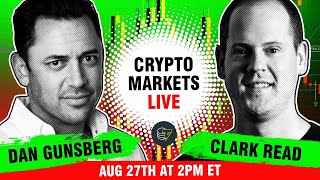
Jackson hosts Dan Gunsberg and Clark Reed to discuss the summer 2020 DeFi boom: liquidity mining, yield farming, and protocols like Uniswap and Compound driving growth. They examine the reflexive dynamics behind token prices, Ethereum's rising gas fees, and whether DeFi represents the next evolution of financial markets.
Chapters
Tune in now for the latest market update.
Market falls like a knife.
The weak hands are out, the strong hands own it.
If you think trading is easy, that's the fastest way you will actually get.
Rekt with your hosts, Jackson and Giovanni. This is Cointelegraph's Crypto Markets Live. Changelly is a suite of products and services that enables customers to have a one stop shop experience when engaging with crypto. Changelly acts as an intermediary between exchanges and retail users, offering over 160 cryptocurrencies that can be effortlessly swapped within 10 minutes on mobile or desktop. In 2020, Changelly branched out to accommodate the needs of traders with Changelly Pro. Pro is an easy to use platform that enables retail buying and selling of digital tokens and coins. Piggybacking the great support system found within changelly, Changelly Pro will provide simplicity, effective pricing, fast execution and 24. 7 live support. What's up everyone? Welcome back to another episode of Crypto Markets Live. My name is Jackson and I will be your host for this evening. Today I have the pleasure of welcoming to the show Dan Gunsberg who is the CEO of Hero, former CEO of a global proprietary trading firm and is the co founder of trading and investment fund Gordian Block. How are you doing today Dan?
I'm doing great. Thanks for having me on, Jackson.
Great. And also joining us is Clark Reed who is the head of trading and portfolio risk at Shapeshift and who also previously held positions in FX trading at Lehman Brothers, Barclays Capital, Credit Suisse and Nomura Securities.
How are you doing today Clark? Great. Thanks for having me excited.
Yeah, cool. So the theme of today's show is going to be exploring how the financial markets have evolved and how we got to this moment where we're having this kind of defi craze, this defi, this explosion of defi growth that's happening right now in altcoins and in the crypto market. So we're going to be taking a look at how we reach this point and also before we get to that, we'll do a quick breakdown of what happened in the markets today. So again guys, this is an interactive stream. So if you have any questions throughout the show about Defi or anything else, really feel free to write them in the chat. I'll be reading the chat and I can ask them directly to our guests. And if you enjoy these kind of live streams, please hit that subscribe button so you can support the channel. We have these shows every week and.
We love bringing them to you guys.
So without further ado, let's jump in to a little bit of market analysis. Guys, what do you, what's your reading on the market today? We're down a bit. Bitcoin had a quick spike and now we're down to I think like 11,100 somewhere around there. What's your take on what's happened in.
The market today, Dan? What's start with you?
Yeah, my take is a little bit more simplistic. I think that the last few months and especially in the last probably six to eight weeks, we've seen a dramatic rise in values across the board. In terms of that we kind of revisited that cycle that we haven't seen in a long time of going from stablecoin to bitcoin and Ethereum to the majors and then those rolling into alts and then kind of with this latest push in the defi space, really with the big push in shitcoins and kind of the opportunities that have been created there. And some things have had very quick, somewhat meteoric rises and when you're dealing with very cutting edge technologies and things like that and, and a lot of traders who are kind of hitting these things hard, it makes sense to kind of get a reset across the board. So it's just kind of that cycle, I feel it's just kind of that cycle of moving of kind of how capital is flowing in and out of various tokens and we kind of have come out of the shitcoin space moving back into bitcoin and people are probably moving back to more stable from there.
Cool, cool, cool.
Clark, what are your thoughts on all this?
Yeah, I certainly agree with Dan. I also think it makes sense to take a look at both the fundamental and the technical backdrop for the crypto space at the current time. Obviously we just recently had the Fed meeting. They're continuing to use more unorthodox and creative tools to try and generate some form of inflation. And so people in the crypto space naturally get excited about the fear of inflation. So maybe some people got overextended there and we're just seeing a natural bit of a pullback. And then on the technical side of things, as we approach month end, you run into derivatives expiry, both futures and options. And so just technically speaking, you'll see a lot of times the market will move in a bit of a disjointed fashion. You'll see some increased volatility as strikes unwind and people trade their gamma risk behind that.
Cool, thanks for that read on the market. So now I'D like to hop into the main meat of our discussion today, which is going to be talking about defi and where this kind of growth in defi has come from. So Cointelegraph recently reported that defi has experienced exponential growth in assets since this time last year. And many people have been calling these last few months a defi mania or a defi craze. So I'm curious to hear, what does that mean to you? Like, when. When you hear defi mania, what is.
How do you define that?
Which one of you would like to.
Take this one first?
I'll take it. I mean, I think on a small scale, yes, it's like, it definitely has this little kind of flavor of a mania, but albeit within the confines of the crypto bubble and even in a smaller scale, really people that are just more kind of boned up on what is happening in the defi space. So much of it, to me, just revolves strictly around kind of like number go up. And this idea that these financial experiments and these defi experiments, which have been incredible, are opening up opportunity for people who otherwise may not be able to extract edge from the market, and they're hitting it hard. And that causes valuations to pop, which has very reflexive properties and causes excitement. With that excitement comes gravity. And it will cause as much as it causes, like, excitement during the boom, it'll cause a pretty fast bust as well. And so I think we kind of have to take it for what it is. It does have these little kind of mania properties. I don't see it as being like what we experienced in 2017 by any means, but it would take probably many, many more kind of mini little boom busts and resetting. In order to make that happen, we'd also would have to really get. Get the whole defi experiment pushed out of just the crypto bubble and kind of into the broader global market.
And what does it mean for you, Clark?
Yeah, again, I agree with what Dan said. I think that we've got to remember that the crypto ecosystem overall is still very young and very small. The total market cap is what, 200, 250 billion? That's not even as big as a few of the stocks in the S and P on their own. Right. So as you see these waves of disruption, with each iteration, you're going to see many booms and busts. So, yeah, this is just the next in that wave as we continue on the trend towards digitizing finance.
I mean, yeah, everybody that, like, if you were here in 2017 and you were in the ICO craze and just kind of in the general altcoin craze, there's not one person who was active in that that didn't experience like an 80% pullback on their way to making, you know, 100x return. So it's just kind of the nature of like I used to call crypto very early on, like crypto pangea. Like it had these properties of, like, of the, of the crust of the earth just kind of forming and like it had so much volatility to it and chaos to it. And we're just seeing that in this defi space right now and kind of everyone's just getting, getting their sea legs under them. It's just kind of even too early to get your head around. So again, number go up and there's opportunity, people are going to come after it.
Yeah, I think that also speaks to the point of people like Dan and me working at Shapeshift and Hero, giving the average trader who's new to this space the appropriate toolkit to manage risk effectively. If you're long something that might go down 80% tomorrow. We thought you contracted 40%, 47% in a day back in March. You've got to really have the right toolkit and education to be able to attack that market and stay alive.
Absolutely. I totally agree with that.
Cool.
I just want to mention I see someone in the chat is watching the stream from the club. I'm glad that you have time to spare for crypto while you're out there having a great time. Unfortunately, I don't think we could speak up too much more without shouting, but hopefully you can find some headphones or something.
It must be a really boring club. Actually, he's checking into this.
But yeah, it's cool because you guys have already mentioned 2017 and it seems to me like oftentimes crypto eras, so to speak, can be defined by what happened in a specific year. 2017, you have that crazy bull run. 2018, you have the ICO boom and the crypto winter. 2019, you kind of had the thawing of that crypto winter crypto spring starting to build some momentum again. Do you think that 2020 could be defined by a sort of defi craze? Is that possible? Is defi big enough to have that sort of impact?
I could take that one. I think that when you consider what the crypto phenomenon is about, really what it comes down to is taking everything from the traditional financial world that was analog, giving it a digital representation that could mean any different Number of things, it could mean trading a Tesla share via a token in Indonesia, it could mean breaking up a mortgage into a billion different little pieces instead of having to trade a REIT in the equity markets. As that evolution continues, you're going to see these new waves. And so really decentralized credit markets are the next hot thing here. And so we're still trying to figure out exactly what that means in the context of new projects raising funds, in the context of users earning interest. All those things are really exciting to see play out.
Totally. Yeah. I think at the end of the day, just further to what Clark said is that this is the rise of another potentially massive financial experiment at a time when financial experiments, we need them, we need them more than ever in participating in these markets. It's almost like a privilege in a way, because it's it. We're really here to kind of, I don't want to say be the lab rats, but really to just be part of the experiment. And being part of the experiment means, you know, putting some of your crypto against it to see if these things work. Like, we're allowing the community. One of the amazing things about the crypto community is that it's allowing these projects to kind of perform these experiments, you know, what they evolve into. We have no idea yet. Like, these are. It could be years off, but we're going to see iteration upon iteration, and eventually this will work its way into the financial system in a way that hopefully is beneficial. That isn't. Doesn't kind of fall prey to the same issues that have been kind of transpiring for the last 15, 20 years, if not before that. You know, how they're going to work, how will these things work and kind of fit into our everyday lives? You know, I think we're so early in exploring that, and that's kind of what the most exciting thing is about this. The same way that, you know, out of 2017, 2018, there were so many casualties in the space, but some projects came out of it like they're just now kind of bearing fruit. So very exciting time. It's such a testament to the value of the crypto community and kind of the spectrum of, like, the importance of traders and speculators in it, alongside of the importance of all the technologists and the developers and everybody who is really doing the building aspects of it as well.
So I'd like to get a bit more into the nitty gritty. I see in the chat. We have some desire for more quantitative reasoning, as the guy put it. But I'd like to. Clark, you mentioned before compound interest. And this particular thing is very important to the success of Defi. And this summer I've been introduced to some terms flying around like Uniswap, compound protocol, yield farming. I've seen yield farming been called the rocket fuel of Defi. And I think I've been trying to learn about this, and it's a really complicated process. So I was wondering if you guys could shed some light on how these things are working in order to propel Defi forward and hopefully we can get a little bit more into what they are, exactly how they function and how they're contributing to the growth of Defi. Clark, would you want to.
Yes. Break it down in the most simple terms. I mentioned decentralized credit markets. That's basically what we're seeing form here. So if you think about when you put your money into Citibank or JP Morgan, they're taking that money and doing something with it to generate yield, Right. They're taking home the lion's share of that yield. And they're also paying you some interest, very little these days, but some interest into your checking, your savings account. What they do with that money, they're lending it out to people who want to take out a mortgage or want to start a business and take out a business loan. That's basically what we're seeing here. And so if you talk about Compound specifically or dydx, it's users who have crypto that want to provide their capital to earn interest. And then on the back end, technologically speaking, that pool is then being loaned out for other purposes. When it comes to Compound and DYDX or for uniswap, that capital is sitting in a pool to facilitate automated market making. So really it just comes down to borrowing and lending at the end of the day.
Anything to add to that, Dan?
No, I think he covered it. I think things like liquidity mining obviously are kind of like adding a lot of steroids to the whole yield farming constant concepts and really making, you know, creating more and more ways to kind of stimulate its growth. The big question for me is going to be like, to me, it just goes back to so much about, about the yield that a farmer is receiving ultimately. And you know, most of those yield farmers like, it's great until it's not. And like. And what's happening, I think, is that there's a lot of arbitrage that's kind of like that is being created and then closed and that market matures at lightning speed. What's really going to be the long term catalyst to me is how do these things evolve? And for right now it's going to have to be like new project on new project that has kind of evolved around yield farming. Otherwise you start to introduce elements of opportunity cost around the crypto that you're locking up in defi to capture that yield or whatever it is you're doing with it. And once those yields fall below kind of like a minimum acceptable return and the market is working its way through deciding what that is based on the risk and kind of it, you know, it's just like Clark said, it really is credit markets at the end of the day, like you look at what return should I be getting relative to the risk that I'm taking and the market should set the price on that. And right now I think a lot of these projects that have spun up like the ones that aren't just complete like scams to try to make a quick buck, they're going to go through these periods of like really being tested on like, you know, does the build that they're doing or does the concept work in a way? Like even when yields become compressed and like kind of the credit quality of the project or the concept goes up and yields get tighter because arbitrage start to close. Like does that, what does that do to the project? Does it give it, does it give it legs or does it just get like how does the team respond to it? So much is it. So much is going to be in question to me.
You said at the beginning of that answer, I think it was that it was in defi the yields are like steroids. I think you described.
Oh, I was saying that like kind of like things like liquidity mining and stuff like that really have kind of put the whole concept on. Really kind of really kind of like supercharged the concepts.
Yeah, yeah. Why is that? Why is, why is it so much more supercharged in defi and crypto than its equivalent counterpart in the, in traditional finance?
Well, I think that it kind of like when you're liquidity mining, you ultimately are creating this virtuous liquidity cycle that should have somewhat of a positive usage loop like that. The fact that there's usage that number again, it goes back to me so much about number go up as that goes up, as yield goes up, as price of the underlier goes up, it will attract more users to it and then it ends up with these reflexive properties which are constructs that have existed in crypto for a long time. And so liquidity mining has been one way to really kind of juice that.
Just to follow up on that. I also think that there's a certain dynamic going on in crypto because it is still so nascent, really. It's basically like in the traditional world. It's fairly easy for me to model out Dan's credit risk. For example, if I was going to loan him a million dollars, like I have a pretty good idea of whether he's going to use that to buy a house or use that to go to the nightclub and get bottle service. Right. And there are different prices associated with those different credit characteristics. In crypto it's not that easy. Right, because in liquidity mining, for example, that Dan mentioned, you end up getting some new token, whether it's yams or even the comp token. And there's no way really to model out what the fundamental valuation of that token is. That's where you get that supercharged effect, is that you have retail traders out there driving up the value of these things based on hope, based on about what the ecosystem might look like. And so all of a sudden you might be able to take out a loan on compound and the comp tokens that you earn are worth more than the interest that you're paying, which is just crazy to think about. So it's had all these weird disjointed effects because of that lack of transparency. Really.
Yeah, it's a distortion field in a way. And I guess the question I'll put back to you, Clark. Do you feel like what begets. What does price beget? The, the underlying tech around it that makes it cool and makes it exciting? Like if number goes up, you suddenly, do you feel that the crowd really suddenly becomes way more interested in something and kind of like they kind of drop their guard on the deep rooted technological or economic aspects of the token of the underlying system? Like what, what begets what? Does price drive it first or does the. Does the concept drive it?
It's a great question. I think it depends on the circumstances. But I think a lot of times in crypto we've seen empirical evidence that the price does beget more interest in a project, more scalability. Certainly it's de facto fundraising effectively for the project itself. I think Chainlink's a great example of that. We've seen those guys floating around the conference circuit for the past couple of years, obviously very interested in what they're building. But in the past six to 12 months, it's just absolutely exploded. A lot of that is due to people looking at the chart and saying, oh, there's a big green number. There's. Maybe I'll check this project out.
Yeah, without a doubt. I mean, that magic works on me, that's for sure. I'm a sucker for it.
Cool.
Yeah. So I've seen some comments in the chat from AJ saying DeFi is like the ICOs of 2017 lend platforms which are going to burst next month. William. Saying that the yield that the farm receives is just inflation on a speculative useless token. This kind of leads into my next question, which is like, how do you guys compare this defi craze?
Watch. At the very least.
Yeah, without a doubt. I'll share an old story too, just because we're both a couple of borderline boomers here in terms of our career experience. I traded through the whole Internet boom bust. I traded equities during that period. And I saw so many similarities in 2017 that I did to, to that like in, you know, kind of like the peak moment for me there, which is more of a trading related thing, was that, you know, we were trading on names that were complete hot air. They were being, you know, they were being green shoed by, you know, underwriting, underwritten by a, by a big bank. And like, I saw traders, I saw a trader once, you know, make over a million dollars in about five minutes because he had a name up on one of his level two boxes and he had another trade on that went bad and he took his keyboard and he smashed it over his desk. And when he did that, it locked a button that had him basically lifting everything in this random stock. And he was so pissed, so pissed. And suddenly he had hundreds of thousands of shares of this otherwise illiquid thing on. But it's, it caused so much madness and FOMO in it that he ended up making like a million plus on it. And I looked at that and was like, this is so fucking out of control with what's going on right now. And 2017 was the same concept, the level of euphoria that was going on and like the discussions that you saw, like, even when you're watching podcasts, incredible people, they, they couldn't help it. Money was literally raining and they suddenly thought everybody's head just got 10 times bigger than it actually was. And then we had that one day near the end of 2017, I think we were trading like we went from 12,000 to 19,000 or something like that. And I remember it because coinbase was trading $3,000 over Binance or something like that in the spot market. And you just the intensity and the level of euphoria that was going on in 2017 I thought really was very similar to what I saw in the Internet boom, bust. This is like, this is minuscule compared to it. I mean there's definitely a little excitement going on. We have, you know, we have a telegram channel called the Trading Pit that we kind of, you know, came up with this meme around apes and like kind of ape smashing, you know, because like an ape would smash a green button and it's happening on a small scale and you definitely saw the euphoria and can, and can feel the sentiment in that chat. I mean it's like 5,400 people in it all who you know, were actively trading on unis swap for the most part. And, and they, you know, you could definitely feel the, the euphoria and excitement and then like the deflation when something gets, you know, gets rinsed. So I think it's happening on a mini scale. But like I said in the beginning, like I think, I think we're going to need to see multiple cycles of this and then it's going to need to like hitch its wagon to something that can really pull it outside of just like the crypto only space. And that might be from like majors like bitcoin having a legitimate rally and getting up into I think Clark, you probably agree. I don't think the rest of the world really starts talking about bitcoin again till it's at or near all time highs. They're going to try for the most part are going to somewhat avoid the real global retail market. It's definitely happening on smaller levels, but I think that things like Defi are going to really need to hitch their wagon to something that is kind of known more globally in order to really expand and then get that real bubble that we had in 2017, 2018.
I've got a question for you following up on that point, Dan. Do you view crypto as more of at least innovation going forward, as more of a bottom up phenomenon with some of these decentralized protocols and unique regulatory arbitrage type things? Or do you view it as more top down with people like Politeter Jones getting involved and ETF potentially getting approved, all that kind of stuff institutionally?
I hate to skirt it by saying both, but I think there's, I don't think that somebody like Paul Tudor Jones is as big of a trader and macro fund manager as he's been historically can single handedly influence the growth of crypto. I think there's a You know, kind of a checking of the, like checking a box on saying that hey, like you know, there are people coming from the legacy world into this space. But Paul Tudor Jones as an example is also a trader and he's opportunistic as they come. So I think, I think he probably sees the long term opportunity that is there. I think I definitely know there's a ton of other very large macro hedge fund managers who are actively trading or have active positions in the crypto market. Are they getting into defi and slinging shitcoins? Probably not at this point, but really because there's probably just not enough money there to have it make a difference for them. But I think through some channels they are definitely getting into early stage products or projects and getting behind, you know, some of these very early stage experiments through, you know, through other routes, through crypto, through other crypto funds, through trading desks, things like that. But I really, again, my whole thing is like, I really believe that like the trade and like price and number go up is really what ultimately drives this space right now. There's no doubt, like I think that ultimately feeds the innovation and it gives, it gives projects Runway to work. It allows them to expand their development teams to work on more interesting things faster. It all goes back to that value creation and then how these systems, these concepts, these experiments ultimately get used as the rest of the world evolves. Like there'll be some tangent point on some of these technologies that will, that will kind of merge with what's happening in what we're doing in our, you know, in a kind of our little lab experiment here.
Cool.
I mean, Clark, you've got to have some thoughts on that since, since you were the one to ask the question, I imagine you were rebounding it off your own opinion.
Yeah, you know, I think it's both to be honest with you, just like Dan said. But to me what really sticks out is you see products like the grayscale equity based products that allow and of regular people to get access to bitcoin price exposure. The fact that those things still trade with a significant basis to the actual underlying coin they traded a premium leads me to believe that there's strong demand for people to get access to crypto using traditional financial channels. And so as long as that's the case, I think that that should definitely hopefully drive growth, exponential growth going forward.
What's the catalyst to unlock? I have a friend who is a financial advisor, works on a team at Wells Fargo for example, and I was with him a couple weeks ago. And I said, can you guys do anything in crypto? And I said, grayscale trust? Nope. And on top of it, if we invest in crypto ourselves and don't disclose it, we're out, we're done. And granted, that's Wells Fargo, it's one of many banks or institutions, but it's, it's really, it's really aggravating to hear things like that because it just, it doesn't make sense because it's so. It's such a limiting fact. Like they're not seeing, they're seeing, they're, they're just seeing, like they can't see past their own nose effectively and kind of seeing what's, like, what's on the horizon. I think one thing in our space, like we've been, we all have been able to pretty much nail, like ever since the genesis of bitcoin, like what's transpired in the financial world. And I think that crypto, the crypto space as a whole, has become a better proxy for finance than anything in the world.
Yeah, that's an important point that you bring up. I think that a lot of these banks now in traditional finance feel like they can ignore it for now because it's still so small. So it is a little bit of a chicken and the egg, right? Because everyone's saying, well, if Wells Fargo offers bitcoin, then more people would buy it. And Wells Fargo is saying, well, it's not big enough. None of our customers actually want it. And they're so slow moving and conservative that ultimately they'll probably be a little bit late to the game, the more traditional institutions out there. That being said, I think there are flywheel effects that just kind of naturally happen as some of this macroeconomic climate continues to evolve. If inflation actually rears, its. The thing is going to be worth a hell of a lot more, right?
Exactly. Now it's worth it. On a relative basis, I think the value of Bitcoin at 100,000 means that the. A gallon of milk is probably going to cost you $11.
Right.
So, I mean, that's the likely effect. We obviously would like to have some asymmetry there relative to real inflation, but I think that's probably the reality of it. But what it is ultimately will do, it will give you the ability to at least maintain parity to, you know, to your cost of living everywhere else.
Cool. So we got a couple fun, interesting questions from the chat. SNH is wondering when you guys got into cryptocurrency. Maybe, Clark, when did you first get into crypto.
Sure. So Having been an FX trader for about 15 years, the concept of it made sense to me. I actually suffered from what Dan mentioned where I was way too scared to touch it. Once I figured out what it actually was, in fear of losing my job, my career, any of that kind of stuff. But the more that I dove in and started to network and educate myself, the more that I realized that it was really a tsunami coming of digital innovation for finance. And then I wanted to ride the wave rather than get run over by it.
Oh, yeah, Cool. What about you, Dan?
Yeah, so I was. I actually wasn't CEO of the prop firm that you had mentioned. I was the chief operating officer.
Oh, I thought I. Yes.
Oh, did you say. Yeah, okay. I was COO for whatever it was. So I had actually. I'll give kind of the full story. I had hired a high yield index trader into our company, and I was having drinks with him one night and he had said to me, do you know anything about cryptocurrency? And I was like, what the hell are you talking about? This is in 2013. It turned out that he started telling me about his brother, who was an early developer at Ripple Labs. And I went back to Chicago and talked to a guy that I worked with, very smart trader. He was actually working on the ops side of the business for us at the time. And I said, what do you know about cryptocurrency? He said, oh, man. He's like, I've been spending my weekends basically arbitraging exchanges on bitcoin. And he had been in it since 2012. And I was like, okay, you got to send me down the rabbit hole here. And he took a lot of time with me and really walked me through everything. And I looked at it. I think at the time bitcoin was maybe like, you know, 1200 bucks or something like that. And then as we were going through all this, Mount Gox happened, and I'm like, okay, this thing's toast. And I kind of forgot about it for a while and then started to read about it again like late 2014, early 2015. And I started watching price and I. I remember like that. I think in like August of 2015, the price was like hit like 150 bucks or something like that. And I was like, oh my God, this thing is like almost at zero. There's great optionality here, like I'm gonna buy. I'm buy a few bitcoin and obviously didn't buy enough. And you never do, right? And I Have good optionality here. Worst case, it goes to zero. And like, I've made way worse investments. And as I started to learn more about it, I really started to kind of believe in what was happening with it and just seeing what was going on with Brexit. And like, just in the market. The market in general was getting wonky. There was tons of, like, the volatility in the legacy derivative markets, especially like in the, in the spoons, like in The S&P 500 and stuff was like, it was like trading like an 8 volume or like a 10 volume. And literally like the market, just the local market got bigger than the commercial market where, like, it was like a choice market when you were trading options there. And like, you had to take massive amount of risk in order to make a small amount of money. And it just, I was like, God, things are changing here. And so I got into Bitcoin and then eventually got into Monero pretty early. And then once that started to take off, like, it just sent me down the rabbit hole. And by late 2017, I was like, I'm going at this full time.
Cool, those are some great backstories. And before I get to our next audience question, I like to remind everyone who's watching, if you guys have a question for either of our two guests or both, make sure you write in the chat and I can ask it directly to them about DeFi, about crypto markets in general, whatever you guys want to know. Our next question is from our man at the club, John Smith, who is asking, is there an ethical way to gain exposure to weapons companies using Defi? I thought that was an interesting one. Either you guys have a response to that?
I'm not sure. Yeah, I'm not sure I can figure it out. Or watching the stream, rather.
What kind of weapons is he referring to?
John, please clarify. Love to hear some backstory to that question, honestly. But yeah, so we can move on to my next question, actually, which is, according to Glassnode, on June 10, someone spent $2.6 million to transfer half an Ethereum, making it the highest fee ever paid in crypto. And also, according to a different report by Arcane Research, daily Ethereum fees are almost twice as high as those during the ico boom of 2018. And so much of Defi relies on the Ethereum platform to create their smart contracts and to just function. So how do you see this stress that's being put on the Ethereum network affecting the growth of Defi?
Go ahead.
Yeah, so that's something that's always Top of mind for us at Shapeshift because so much of what we do is to facilitate self custody for our users. So every time you trade with Shapeshift you've got to deal with on chain fees and that's becoming more and more of a problem, especially as we start to think about turning on functionality for people to engage with defi platforms. So, you know, there's a variety of ways to potentially skin that beast. One way that I'm really excited about is derivative markets spinning up around market like network congestion and fees, but is doing some really interesting things on that front and institutional level that we're exploring. In addition to that, there's some actually more native blockchain potential solutions there. Obviously everybody's waiting on pins and needles for Eth 2.0, but in the background the teams from Cosmos and Polkadot are working on some really interesting stuff that could help potentially drive network fees way down. When you talk about putting small amounts of money into earn, yield, anything to.
Add to that, Dan?
Yeah, not much because I know that's really like, you know, so much of Shapeshift's business when I look at Hero. I mean we, we wanted to do everything on chain initially and just the Even, even in 2018 that when you calculated the ETH costs it became so cost prohibitive for us to do it. We, you know, in hindsight, obviously we're like, God, we could have been like the first ones to be putting these kind of unique derivatives on fully on chain. But our approach has been kind of very much like a wait and see, see where technology is moving and which kind of projects or protocols are potentially pointing towards things that would work for us and then exploring those. And we are starting to explore those. We have a couple interesting announcements that are coming out in the next few weeks around that. And yeah, I mean he mentioned Polkadot said very exciting stuff going on there. I know Cosmos as well and I think just organic competition. It's the biggest issue with Ethereum, at least from a financial perspective, is obviously the gas costs and it's a real problem that has to be solved.
And so yeah, it's funny, for a minute there it almost looked like Ethereum was going to end up being Bitcoin's layer two, right? Everybody's talking about wanting to earn interest on Bitcoin. So now you've got tbtc, you've got Ren, btc, you've got Right. But ultimately if Ethereum gas costs end up costing the same or more as bitcoin costs and other than a marginal Speed advantage. You've kind of defeated the purpose of it. Really fascinating.
Totally. I agree with that.
Cool.
John Smith has clarified. He's saying lasers for peaceful protests.
Ooh.
Any connections you see there between lasers and Defi?
Laser Coin started up, John.
Yeah, Laser Club Coin.
It's a new market. Get in there. So we've got a couple interesting questions from Crypto Messiah, actually. He's asking, do you believe that the Defi movement has staying power?
Dan, Go for it.
Yeah, absolutely. I think it's not going backwards, I can tell you that much at least. I think in this kind of latest round, the last couple years of development work that's going on and leading up to this first kind of sprouting of a seed, it's going to evolve and it's going to evolve upward. There's no doubt the space is going to get bigger. It's going to become a more dominant part of our everyday lives in crypto to the speed at which it compounds and becomes all consuming. I don't know, I just think that we're in that phase where there's just going to be a lot of rapid iteration. I think one thing that's come out of it is just I'm even seeing the ways that when you start working with some of the more defi focused projects or people in the space, the speed at which people work is amazing. There's kind of this trustless relationship. It's like a lot of what they're building and you kind of think about the psyche behind it is all moving into. I've done fairly large transactions with people in a matter of an hour, you agree on terms and you go. And there's this concept of, of kind of like you want to say your first thought is to call it trust, but it's really trustless. And I was like, God, so much of this kind of is what's embedded in what Defi really is about. And I think there's going to be this merging of the actual technology and kind of what, you know, how we're all interacting with each other in a very positive way.
Clark?
Yeah, I think when it comes to DEFI and credit markets, you got to take a look at volatility because generally speaking, volatility is kind of anathema to credit traders.
Right.
If you're earning 5% annualized yield on an instrument and the thing is swinging around 20% a day, it's just not a great investment risk. Reward characteristics. So I think as the ecosystem continues to mature and as volatility starts to Come down for more of these crypto tokens, then you're going to start to see defile scale even more rapidly. Cool.
We have another question from Cryptomassiah, which is, is Ethereum the next, the next Ethereum? I guess maybe he's referring to Ethereum 2.0. Will cross chain interoperability enable a multi chain future led by Ethereum? Or will we see new layer one solutions take Ethereum's crown? So is Ethereum going to stick around? I guess is the question. What do you guys think?
Art, Go for it.
Yeah. So, you know, I think interoperability is critical. However you end up accomplishing that, whether it's on layer two of Bitcoin with lightning, whether it's, you know, smart contracts in Ethereum, all that kind of stuff, or whether it's something new like Polkadot or Cosmos, these problems have to get solved. You know, there's a reason why some of the most successful projects in crypto overall are only Ethan ERC20. It's because it's just much more efficient to operate that way at the moment. So I do think regardless of what the answer is going to be, there's got to be an answer and there's got to be one pretty quick if this thing is going to continue. Need to scale, Dan?
Yeah, it's just going to be interesting to me. Along those lines is like, are they. Part of me thinks that the answer is yes, that Ethereum will be the next Ethereum. And I think what Messiah is trying to say is like, have they grown large enough? Has it grown large enough and become so ingrained in the network that by the time a potential competitor comes up with a new technology that could displace it and be like the ETH killer, are they, are they still able to iterate or take some of those concepts or have already developed some of those concepts that then just continue to keep ETH in like this hegemonic position? And I would say the answer right now is probably yes. But I mean, there are some really smart projects out there and some really smart protocols and really smart people behind them. And the question is, are they solving a problem that can't just readily be solved by eth? Because at the end of the day everyone will just continue to migrate back to eth?
Yeah, I think that ties into what we were discussing a bit earlier about Ethereum scalability issues and the network fees. If they're not able to solve that, you know, problem and someone has to spend $2.6 million on a, on a transaction fee, well, that could be an ETH killer in and of itself, you know.
Yeah. And it could be because of the way the development team, you know, collectively is working together or the way governance works there. Like, and it could be kind of these like meta issues that, that are solved in other protocols that say, hey, like we can deliver something that has way faster throughput with way lower fees and like you're going to get the same effect. But can it scale and can it get the traction of the users? Again, some of it is the flywheel we keep going back to. And yeah, if the price of Polkadot outperforms the price of Ethereum, or it might make Polkadot more interesting to a larger group of users. You just can't deny that. I think Amazon kind of had that same reflexivity case. I think it gets talked about quite a bit. And the very price of Amazon is what attracted people to Amazon in many ways or made it known and thing was hemorrhaging money forever. I think so much of it is just those types of outstanding questions, but I think it is in a position to do it and to kind of maintain its position on the pedestal right now for the future.
Yeah, thinking about it as a trader, as an investor, obviously ETH has a great first mover advantage and has a lot of market share at the moment. So in the same way that Amazon you brought up Dan looks to invest in competing companies with their technology and then potentially build that business themselves. As a trader, I would think about it as ETH has a great lead right now, it might not last forever. It'd be foolish not to at least have a small position as a hedge in some of these other more innovative newer projects.
Totally agree.
Yeah, Crypto must say I see that many people suspected that $2.6 million fee of being a form of money laundering. But the point remains is that from 2018 Ethereum fees have doubled essentially. So it's on the up, even though that one specific case is an outlier. But I actually wanted to touch upon your next question, which I also think is really good and I think Clark, he'll be excited to answer this one. He asked if either of you guys can comment on the concept of leverage as it pertains to defi. Will hyper liquidity instant borrowing enable a sustainable bull market? What do you think about that, Clark?
Yeah, you know, actually I might want to toss that one over to Dan as the resident leverage king.
That may be the resident degenerate or the resident leverage king, believe it or not. We don't. We don't run leverage on hero yet. So we took a much more conservative approach to it because the, you know, I was going to say something an old joke about leverage but I don't think it's probably correct to be saying it live. But it's killed a lot of people, let's put it that way. And like, and I see it just fueling. You get leverage in the hands of the wrong people, it can be like jet fuel. And I see that on the retail end of the spectrum it needs to be monitored very closely because it is a very dangerous way to make and lose a lot of money very quickly. I think at larger scale. I'll relate it really back to trading purely. I spent years dealing with banks and Clark, you're familiar with this and the concepts of risk based margin financing. And this is a problem that in crypto I think when you talk to trading desks they all confront. You have this concept of like okay, you know, I'm an active trader, a big active trader on an exchange. Like that exchange generally will lend me some level of credit which, which is great. They're not going to generally lend the, you know, the small time, the small trader who you really don't know about his credit quality or anything about him. They're not really going to lend. They'll give him leverage which is great. But it's a little bit of a different kind of game being able to solving ways to use leverage in a way that like I only have to. I only have like a haircut or like a certain amount of capital that I have to post somewhere that can give me the ability to like. It can give a system the ability to see kind of every trade that I have on in my book and then distill it down to some type of haircut. Like basically lend to me on one exchange or lend to me on another exchange and then utilize leverage on that exchange as a way to prevent me from having to like constantly move, you know, tokens or value one way or the other. I think there's things around that that I know some projects are kind of spinning up around that as well. I think that is the way to scale leverage within the defi construct in a positive useful way. Will it end up filtering down to the retail world and will there be 500x leverage, synthetic euro, Swedish Krona crosses? Probably it. It's unavoidable. And will there be people that will be crazy enough to. To utilize it? Sure, there, there always is. And that's, that's the degenerate part of of being a trader that most people don't, you know, will never be able to avoid because it's just ingrained that their humans are programmed for it.
So yeah, I think the people who just kind of poo poo like the idea of leverage at a retail level are kind of naive and is paternalistic to a certain degree. I'm very much in favor of leverage. The entire world financial system runs on a lot of leverage the way that we can have nice things. So there are lots of good things about leverage when used appropriately. I think it's just really important, especially because crypto is so young and there's so much leverage inherent in the ecosystem for there to be the right educational tools out there that people know how to use leverage with the right kind of risk profile.
Overall, totally agree. And I know that shapeshift's doing a lot around that and we're developing a lot of, a lot of stuff around that. And even though we kind of like embrace the degenerate kind of aspects of the marketplace, because I think now more than ever, like the trading world markets are becoming these kind of more skill based casinos. I don't want to call it a pure casino. I don't think that's totally correct because it's not really based on random number generation. And you're not walking into it where the edge is completely stacked against everybody. No matter what you do, unless you're going to cheat. There is skill to it and there is like, you know, more than your share of people across the planet that are, that make exceptional livings at it and know how to extract edge from it. So introducing. And even at the retail level, so introducing leverage to those people in a way that is, you know, where they have proper education and they know how to use it effectively and when to use it and when not to use it. And what the real risks of it are, I think are kind of a precursor to having it be a successful part of the defi concept.
The gorilla in the room really is.
Regulation when you think about it. So it'll be really interesting to see how the ecosystem continues to evolve. As in the early days of crypto, a lot of projects were just focused on pretty raw regulatory arbitrage. So as the ecosystem continues to mature, there's some more real fundamental value driven growth there. But everybody's still afraid of the big bad wolf, right?
I know I am.
Yeah, exactly. All this talk about retail leverage, it just reminds me of Robinhood and the bonfire of existence that is R. Wallstreetbets. There's a prime example of what happens when people don't really know what they're doing. But I'd like to give you guys an opportunity to kind of talk about how, how DEFI can affect the landscape of the financial market. There are some really interesting things going on in DeFi, like MakerDAO and projects like that that are these decentralized credit lending facilities.
And.
How have you guys seen DEFI come about? I mean, what place does it have in the financial market of today? And how do you see it reshaping, potentially reshaping this landscape? Go ahead Clark, Go on Clark.
One of the most powerful things about crypto really is the fact that you can disintermediate middlemen. And financial regulation and oversight is so tight and these guys have such long track records and big first mover advantages there. It's a pretty oligopolistic system. So I think something coming in technologically to disrupt that and produce the cost structure for everyone is a great thing. That's kind of my.
I totally agree with that. And this is like Defi again going back to the trading side, like DeFi, ICOs even. Well, ICOs, you know, the kind of the old boys network got ahold of a lot of that quickly before everybody else. But one of the cool things that I saw with like Uniswap, like one of the elements that I noticed was like these guys, everybody's really, although it's at a smaller scale, some at a larger scale, they're not doing much different than what a VC does. And a lot of very aggressive VCs, especially the ones in crypto, they lay down tons of small bets and a few are going to fly and a few aren't or many more aren't. And that's just kind of for many that's the model and they're able to do it in a way that is like I can get my money in the pot in this experiment and if this thing works, I'm going to have make life changing money out of it. And if it doesn't, like, I've just got to be willing to say, you know, I shit the bed and this is. And take my loss, take my lump. And like that to me is like the first step. The bigger picture that, that Clark is, you know, is, is discussing around the disintermediation. That's something to me that like, I mean we both came from the regular, you know, from a highly regulated, you know, very seasoned communities of, you know, in the commodity space and the FX space. These are very, very, very Developed marketplaces. And there are certain entities in those marketplaces that have a strong grip around certain aspects of it that you can't avoid. And you would be shocked. Like, I'll give you one that a lot of people don't think about the cost of data. So the cost of data in legacy markets, like if you want to go get the direct raw feed from NYSE, last I checked, and I haven't checked in three years, I think it was of the order of $50,000 a month to take that feed in. And that's just one feed. You want to go get a B pipe from Bloomberg, minimum like 5,000 bucks. Every user that's using it has to have a $2,000 terminal. Like, they just had monopolies over these things. And in many ways, like if you were going to participate in these markets, it was the cost to entry. So it was ridiculous because it just was. It just limited the amount of participants that can get in. And it shut people out by just saying it's too cost prohibitive for the rest of the world. And that's how they kept their edge. But like you should be. These things should be opened to everybody at base layer for the most part. And if you have the ability or you're willing to take the risk to get in and play, then you should be allowed to. And things like that to me, are the things that need to go away. And I think some of like defi really can provide just outside the idea of just like credit and things like that that are kind of happening now, just general decentralized finance. It should kill a lot of those strongholds in certain parts of the market that really prevent people from entering it.
Yeah, I think you hit on a really important point there. In addition to just cost savings via disintermediation, there's also an element of democratization. So if you think about, I don't know, did you guys see the statement that Hester Pierce put out yesterday about the change in the accredited investor rules? So they're opening the door slightly to accredited investors, which, generally speaking, you have to prove you got a certain net worth, certain income in order to be able to invest in more sophisticated instruments. So she really eloquently lays out the case of why effectively. That's kind of BS really. There isn't necessarily a tie between sophistication and your level of wealth. So I'd encourage everyone to go check that out. I don't have a link for it, but she just wrote it, I think yesterday it was released. It really, really Forcefully puts forth the argument for democratization of investing overall.
Agree, agree.
Yeah. I mean, one of the things that's standing out to me from what you guys are saying is just like defi has the ability to provide access to different protocols, different markets and information that you wouldn't have had access to before. And you've already mentioned data. I mean, are there any other areas that you see that defi can really transform how people get involved in those, in those markets?
I think data is a big one. I think, I mean even if you look at like the Chicago Mercantile Exchange, which is an amazing kind of duopoly I think now with, you know, with ICE and whatnot and nyse, but they're really a gigantic data service at the end of the day. But to really like get in and be able to trade actively, you do need to have a middleman. You have to end up at an FCM or you have to buy exchange seats. And you're talking about the difference of trading retail, where you're a retail user of an S&P 500 futures contract. You're paying probably what works out to be about 20 to 30 times the amount that you would pay if you were an exchange member. So it's like little things like that that you want to know why the bid ask spreads are so tight and you want to know why a Guy can buy 1900s and sell 1900 and a quarter over and over again. It's because he's trading for a fraction of the cost that you are. There's a lot of these types of things that I think market makers, to provide the liquidity that they need to provide, they need to have those incentives in place. It's unavoidable. And you're talking about markets that are mega, mega, mega, the size of what we deal with in crypto right now. But I think a lot of that is going to permeate over into crypto and you're going to see these kind of like defi elements come into it and say we did it at hero with how we set up our liquidity producer pool. And granted we're not a full DEFI platform, but a lot of the elements of our, of our, of our mechanism is really around that. And really the beauty of it is that anybody can get into it. It's, it's not, it's not blocked out, it's. And we're, we're, we're now working on ways to make it even more accessible to a wider audience. So I think, I think some of those kind of ancillary elements of the market you're going to start seeing get attacked through decentralization. And there's a lot of cool stuff that's coming up in terms of ways to solve it.
So.
Yeah, and I'd like, I'd like to bring up a little discussion that was going on in the chat as well that I think is kind of interesting is that Crypto Messiah was saying that regulation, not regulation, but these protocols are essentially unstoppable. They, you know, you can, you can prosecute, you can prosecute the dev team, but the protocol itself, you know, it still exists. So no matter what, if, as long as the protocol exists, you can still have access to it. So. And that's like the beauty of it being decentralized.
Exactly.
So I saw in the chat that we were having a lot of people asking about different tokens and stuff like that. I don't really want to get into a lot of different tokens too much, but what I will do is I will pose a different question. So which projects do you guys think have the most potential for transformative impact in the DEFI space? That's my sly way of putting it.
Serum.
Sure. Yeah, The FTX guys are doing some really cool stuff.
Yeah, they're awesome, man. I really love what they're doing.
Yeah. We're partnering with Staked us to bring some DEFI connectivity to our user base. Tim Ogilvy and the team over there are doing some great work kind of algorithmically allocating funds across different DEFI platforms to generate as much yield as possible. I know there are some other projects out there working on similar kind of things. We've had calls with them as well. We're really just focused on anything that can bring simple and easy user experience to this whole space because it's so challenging. You have to be so technologically complex just to interface with something like Uniswap and understand all the risks associated with it. And so our mission really is just make it as simple as possible. Simple and easy.
Yeah. And anything you'd like to add there? I know Cosmos and Polkadot were being thrown about a bit earlier on the stream.
Yeah, I mean, we're talking to a couple of, you know, a couple of projects, like some that are building on Cosmos and, you know, there's a lot of cool stuff that's shooting off of Polkadot. I don't really, I don't really want to talk about, like, my speculative aspects of, of which projects are going up or down because I think it's, it's so early and it's so unknown and, and you know, I, I, I really learn about these things through actual, like, you know, talking with the teams and trying to like, say, like, does this really fit? Is there, is there something interesting for us at Hero to be working with as opposed to like, you know, other than that I, I'll hop in and out of stuff because it looks great on a chart, to be totally honest. So, yeah, that's kind of where, that's where my head is right now.
Just on a personal level, I'm really excited about some of the gaming aspects of Crypto. I mean, it's so oligopolistic. Same kind of thing. You got Ubisoft and Activision and EA Take Two. It's the big guys, right? And they make the economics work for them. I'm stoked about projects like Gods Unchained and Decentraland. All these things are really cool. It's the future of gaming. I'm a gamer, so I'm so, yeah.
I always, you know, when I first heard about like Eth Verse as an example, I was something that I was like, is this really going to like, they're using the, the Minecraft narrative and stuff. Like, is this something that's actually going to take off? Because that actually, that was something that brought back 2017. Like PTSD was like, wait, they're using, they're talking about being like this layer over Minecraft or this kind of like, you know, totally decentralized version of it. And I'm like, oh God. You know. But turns out so far that there's a lot of legitimacy behind the project. But yeah, the gaming space is going to get really interesting for sure. But I think across the spectrum, like when you're talking about just like MMORPGs and you know, the things that are going on there, there's some really cool builds and all the way over to skilled gaming and some of the things that we're dipping our toes into and really cool.
Great.
Well, I think that's an awesome note to end on. I really appreciate you guys coming out on the stream and taking the time to discuss these really deep topics and get into all the nitty gritty of Defi and how it fits into the whole financial system. So, Dan Clark, thanks so much for being on the show today.
Thanks guys. Really appreciate it.
Yeah, thank you. Hopefully everyone enjoyed it.
Yeah, big shout out to the audience who is watching. We had some great questions today. Crypto Messiah for our man at the club, John Smith, SNH and William. Yeah, we had some great questions from you guys, so I really appreciate that. If you guys enjoyed the stream, please make sure you hit that subscribe button. We have these kinds of streams every week, so you at the same time every Thursday at 2pm Eastern. So if you want to tune in for the next one, just make sure you're around next week. My name is Jackson. I am your host.










