‘Kafkaesque’ regulation could ‘choke off’ U.S. from rest of the world — Ripple’s David Schwartz
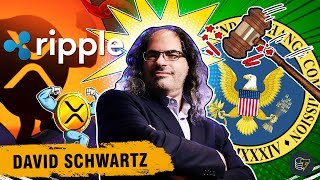
Ripple's CTO David Schwartz says fragmented US regulation across 50 states and multiple federal agencies is pushing crypto builders overseas. The SEC sued Ripple in 2020 alleging $1.3B in unregistered XRP sales. Schwartz argues legacy payment systems are obsolete and digital assets could replace them, but only if regulatory clarity improves.
Chapters
The biggest success case for Ripple that I could imagine would be for us to be completely unnecessary.
David Schwartz is the CTO of payment protocol and exchange network ripple. In December 2020, the SEC filed a lawsuit against Ripple. The lawsuit alleges ripple raised $1.3 billion by selling XRP in ongoing unregistered securities offerings. This is not Ripple's first run in with US regulators. In 2015, the company reached a settlement with FinCEN for 450,000 DOL dollars. Ripple was fined for selling XRP as an unregistered virtual currency and not adhering to anti money laundry requirements. The lack of unified regulatory clarity in the US has left Schwartz frustrated.
I would love to be able to go to regulators and say this is the principle that you should enact into this is what's good and this is what's bad. And of course I would hope that like XRP would fall on the good side. Otherwise I wouldn't be happy advocating that.
Standard with all that is happening. There are even rumors that Ripple may move their headquarters overseas. In this interview, Schwartz explores the future of payments, hypothesizes the usefulness of NFTs, and discusses whether exchanges will relist XRP. Cointelegraph writer Turner Wright brings you another exclusive Cointelegraph interview.
So let's just jump right into it. Both Brad Garlinghouse and Chris Larsen have implied that they see the future of the company, like maybe outside the US or at least opening a different branch. I know they're expanding into Asia. They've expanded different markets. How would you personally be affected if they were to relocate their headquarters from the Bay Area to Japan, let's say?
Well, I wouldn't necessarily have to go there just because the company relocated their headquarters. And there's sort of a distinction between what could be like you could imagine one scenario where just certain Ripple owned entities become based in Japan, let's say. But like, you know, the physical headquarters is still in San Francisco where it is now. Or you could imagine like those operations shifting overseas. And all of that is kind of in flux right now. Like we are a US Company, we would like to be able to stay in the United States. But it is true that right now most of our business is overseas. It's not entirely because of the regulatory environment. It's because a lot of those markets are just explode, are just, they're exploding. They're just fantastic markets to be in. And you know, if you're in a remittance business, like, you know, the outputs aren't in the United States, that's just not where remittances go. But I don't, I don't expect. I, I honestly, I don't know. I mean, it's, it's still in, still in flux right now. We're keeping options on the table. My hope is, is that the regulatory environment in the United States improves and we can just stay here. Like, we're a U.S. company, we want to be a U.S. company. It's, you know, it's the biggest problem with the United States from a regulatory compliance standpoint is that it is not one jurisdiction, right? You have 50 states and, and even like at the federal level, you have a number of distinct regulators. Like you have FinCEN, you have the SEC, you have the CFTC, you have all these distinct regulators with overlapping areas of jurisdiction. And it's just very difficult to sort of please them all. I'm hoping that the United States can maintain a competitive environment. I will say one more thing, which is I go to the Internet a lot as an analogy. The United States embraced the Internet early. And as a result, I think that's one of the reasons that the biggest companies in the world like Amazon and Microsoft, they're Internet companies and they're in the United States, at least in part because the United States embraced the Internet. And you could imagine a sort of alternative world where the United States said people are using the Internet to trade child pornography. They're using the Internet to radicalize terrorists. They're using the Internet to steal secrets from government computers or break into private companies and sneak them across, across countries. We're not going to allow the Internet to flourish in the United States. And at some point the United States would have faced to take it or leave at choice. And I don't think those companies would have been. I don't think Google would have been a US Company in that world. And I also don't think that the Internet would reflect American values the way it does. I don't think people realize that, like, early proposals for the Internet included things like mandatory tracking of where all information comes from and goes to. And those were rejected by people who share, you know, liberal values or values about things like freedom of speech and openness. And we got an Internet that's very open because of that. And countries are forced to accept it because what are you going to do? You're going to build your own Internet and be cut off from the world? You could imagine a scenario where the United States chokes off this development from the United States and faces that kind of take it or Leave it situation in a world where those systems don't reflect the values that we have and don't contribute to our economy. So I think there's an opportunity here, and I think regulators need to do something about it.
Do you think Ripple has been treated unfairly by regulators in the U.S. i mean, even state by state or on a federal level?
Well, I mean, there are. There. I don't. I don't want to. Unfortunately, right now, as you, I'm sure you know, there's SEC litigation pending. So it's difficult for me to. For me to comment on this. But I will say one thing that I've heard from people that I've spoken to. Like, I speak to a lot of people in the industry who want to build things on the XRP ledger and on other platforms, and I constantly hear them saying that they don't want to build in the United States. And it's not because the laws are bad. That's not the reason. It's not like this law is bad and it needs to be changed. The problem is it's very difficult to figure out which laws apply and how they apply to something new. And that's true in a lot of places in the world. And there's always the risk that if you do something new anywhere, the regulators will say, you need to stop, because we don't have the regulations in place to handle this. And to be fair, there are legitimate threats. The ICO craze, there were a lot of scams and regulators were not prepared to handle it. And it makes sense for them to say, like, this needs to stop until we can figure out how to protect consumers from being harmed. That makes a lot of sense. But one thing that I think is unique to the United States. Well, two things. One of them are these weird overlapping regimes where it's a currency in some situations and maybe it's a security in some situations, and maybe it's neither or both. And so the CFTC is going to say, well, we're going to regulate the exchanges, but the SEC says we're going to regulate issuers. And, like, there's this mess of what is it and who's regulating it that you generally don't see. Generally in other countries, there's some entity that makes the rules and at least you know that you're talking to the right party. Like Ripple worked out a settlement with FinCEN. Were we talking to the right regulator then? Now it looks like maybe we're not talking to the right regulator. Right. And like FinCEN described it as a Digital currency and so on. And the other one is that the United States is one of the few countries where there's this very palpable risk that the regulators will turn to you and say that thing that you would doing for five years in public in complete light of day, well, you should have known it was illegal all along. That generally speaking doesn't happen in other countries, at least from people I've spoken to. They don't have that kind of fear that that will happen. And I was saying this long before the SEC action against Ripple and even before any of the SEC actions because we have these huge legal opinions. And one of the things they'll say is there's a risk that we don't think that this regulation applies, but there's a risk that the United States, that some regulator in the United States, we can't even tell you which one, so you don't even know who to ask, will tell you that you've been violating this, that you obviously are violating this regulation and should have known it all. We don't think you are. And here are the reasons we don't think you are. But there's a risk that they'll say that you definitely should have known that you were. It's like, well, how do you. It's a cough gas situation and that from what I understand that generally doesn't happen in other countries. That seems to be a rare exception in most other countries and people are very afraid of that in the United States. And one thing that I hope does not happen, that I worry about is I've seen proposals among United States regulators that essentially slam the door shut on new projects. What they say is like, yeah, we'll grandfather in all these digital assets that have been around for a long time because we don't want to hurt the people who hold them. And it's hard to say that you've been doing this for so many years and it's suddenly bad. But we'll create very onerous burdens for new projects. And the problem with that is I don't think the best technology is here. And if we pass regulations that slam the door shut on innovation and say, well, we're going to grandfather these other products, it's going to make it very, very difficult for new projects to compete with them. That's great for XRP in my capacity as like a Ripple employee and a Ripple stockholder and someone who holds digital assets, that's great for me. But as a human being who wants the best solutions for the world, that's not A good solution, the best solution creates a level playing field that doesn't benefit, that doesn't overly preference the past. Like, the thing that I found great about bitcoin is that I didn't have to use the systems that like, enrich the incumbents and I could build something new. Well, if we take that away and we say, oh well, let's just build a system that enriches the incumbents, but they're different incumbents, you know, meet the old boss, same as the new boss, same as the old boss. Like I want, I genuinely want innovation, even if those are not the innovations that personally benefit me because I believe that I and everyone else can best thrive in a marketplace where people can get the best experience, customers can get the best experiences. That'll be the biggest marketplaces. Then I'll get the business when the solutions that enrich me provide the best results.
The problem with some of these privately owned firms, even those based outside of the US I believe is while they may just be responding to the US government, they're probably just looking out for their own business interests. I mean, you've gotten 13, maybe 11 exchanges that have delisted XRP following the decision and others that are saying, we're not going to do business with them at all or restrict trading, do you see that trend reversing before there is a decision? Like saying, hey, we have the ultimate authority to do this, we don't have to, but there's just too much controversy surrounding it.
Yeah, it's very difficult for the industry to sort of cooperate and work together to achieve results that benefit everyone. This is a drum that I've been beating for a long of we're all in this together drum. Part of the problem is if you're a bitcoin enthusiast, you're going to be like, yeah, of course the XRP guy is going to say that. Like he wants as much of Bitcoin to rub off on his project as he possibly can. And if you're the Ethereum guy, you're going to make the same argument that like, well, the US government has sort of semi officially blessed Ethereum, so of course he's going to want to put his project in the same bucket as our, as our project. And then on the other side, like, if you're an ico, that's kind of sketchy and maybe even a scam, you're going to be like, yeah, we want to be in the same room with the XRP guy and I don't want to bless those projects because many of Them are scams. And so what's happened is everybody has tried to draw the line just at their preferred project. If you're a bitcoin person, you want to say Bitcoin is perfect and Ethereum might be okay, but everything else is just crap. And if you're an Ethereum guy, you want to say, yeah, Bitcoin's fine, Ethereum is fine, but I don't know about all that other stuff, right? And like everybody wants to draw the line. And I'll be completely honest, like I would love to be able to go to regulators and say this is the principle that you should enact into law. This is what's good and this is what's bad. And of course I would hope that like XRP would fall on the good side. Otherwise like, I don't know, I wouldn't be happy advocating that standard. But like I would like to have, at least then everybody would know whether what they're doing is okay or not. But it's very difficult to draw a bright line standard. My number one recommendation to us regulators is like, look at the rest of the world and don't get out of step. Like at least remain competitive because if these businesses are going to become massive multi billion dollar corporations, they're going to be the new, you know, the new Internet companies. Don't fall out of step. Don't drive innovation over. Yeah, you can't, you can't fix the problem overnight. There's not one bill that's going to just, you know, make everything better immediately. I wish there was. That's not realistic. But what is realistic is to say don't fall out of step, don't drive innovation overseas. Like it's obvious what you shouldn't do. At least to me.
There's no telling what the digital economy is going to be like 2, 5, 10, let alone 100 years down the road. But do you see that going completely digital, whether it is CBDC digital dollars or do you see us turning completely towards cryptocurrencies rather than central authorities?
I do think that newer systems are going to pretty much completely replace old ones. Now what the characteristics of those newer systems are is a different question. We have payment systems today that date back to the days where the bank's computers had giant reels of magnetic tape and you couldn't communicate with other banks during the day because the reels were on the computer that that bank was using and someone had to carry them across the room or across the hall to the computer that communicated with the other banks. Like we still have standards to this day that are based on operating in that day. That's one of the reasons why when you make a payment at a bank, they don't know the path the payment is going to take. Typically, they can't tell you the fees, they can't tell you the rate you're going to get because their systems are just not built that way. A lot of people don't know that. The companies like Amazon, Airbnb and Uber have hundreds of payment engineers whose job is to keep them plugged into these ancient payment systems and hundreds of different payment systems. So it's a long winded way of saying, like, digital assets are here at the right time because those systems could be built on blockchain technology. They could be built around digital assets. Now the next question is, of course, will they? And that's a harder question. I think part of it is going to depend on what the competitive landscape looks like. If Central banks embrace CBDCs and inject, technologies that people like and want to use, then I think they can cut out big market share. And I think there's also a sort of marketplace for liquidity. Another problem that happens right now is if I want to make payments, I typically have to pre place the money in the destination market or my payment is very slow. I'm sure you know that companies like Seagate have millions of dollars spread throughout the world. So if they need to pay somebody, a vendor in Thailand, they can that payment from money that's already in Thailand. That's going to change. It makes much more sense to have a market where any person or business who just happens to have money in Thailand that doesn't particularly need to be there could make the payment for Seagate, and Seagate could pay them in some other asset like that marketplace for liquidity. There are companies that provide that liquidity as a service, but they don't provide a marketplace. And so you can't take advantage of the person who has the lowest cost of capital or the most. Like, like Apple has billions of dollars stuck in Ireland, it just happens to be there. They could make payments into Ireland for people and get money out of Ireland and make money in the process, but there's no marketplace for them to do that. So I think digital assets will compete in open marketplaces that are the way these technologies are going to be.
I think those big firms have all those assets, the ones based in the U.S. anyway, have those assets abroad just for tax purposes rather than any indication for payments.
Sure. Right. And yet though, if they could make a Profit, maybe Apple might not be the best example. But if you could make a profit, like let's say Apple wanted to get, repatriate that sum of that money, they could do it at a profit if they allow other people to pick the timing. Like if they don't particularly care. That's the core of market making is like the market maker doesn't get to pick the timing, but they get to make a spread because the other party picks the timing. So like if Apple or anyone who has money someplace it doesn't particularly need to be, could easily offer that as liquidity for someone who needs money in that place. That would be a marketplace that would be beneficial to everyone. That was the first vision that I had in the early days, was these global pools of liquidity that anyone could contribute to and draw off. Of course, we're not there yet.
You see more of the future as people going to, for lack of better words, popular payment provider, at least ones that has the means and ability to do so. Rather than establishing their own systems. Even as the technology may become easy to understand that we may get, rather than the old school firms looking to just develop their own payment systems rather than ones that are starting off the ground to develop their own, you still see them going to a central firm like Ripple.
So what I'm saying is that I think things like liquidity will be commoditized and sort of input and output endpoints will be commoditized. So if you think about a company like, imagine you're a large remittance company. You might have 5,000 places where people in the United States can hand cash over the counter. But I can't use those unless you also have the cross currency capability and you have cash out or some payment in the place I'm making the remittance. You have to be able to provide all three pieces because that's not commoditized. So essentially if a company that had 5,000 cash in locations in the United States offered that as a piece in a marketplace, then you could go to any provider that hooked you up to that market. It's like a stock market, right? You can go to any broker and you get access to the same stock market. But there's features, there's distinguishing features between brokers and it's nice that they compete with each other because that gives you better access to that sort of common resource. So I think I see that kind of two layer approach where there are these commoditized components that everybody has access to and then there'll be Service providers who will be providing people access. But I will say one other thing, which is, I think like the biggest success case for Ripple that I could imagine would be for us to be completely unreal, necessary. Like if Ripple didn't need to do anything and everybody could just use the assets that work best for them without, you know, already because that technology existed. We're building technologies not so much because we want to build them, but because they're necessary for our success case. Most of what we're doing is creating markets. Most of what we're doing is enabling people to access these technologies. And we're not doing that because that's the specific thing that we set out to monetize. We're doing that because we need the world where there's that target market so that the real, like, the more the real exciting things can happen. So I think this is kind of like the precursor to the next phase.
On a lighter note, changing course a little bit. It's like NFTs got to talk about them because everyone else is everywhere at every single time. And I see that you've taken advantage of that space yourself by selling, what, a picture of your $65 million solar panels.
Yeah, Some ridiculous amount. So I'll share the story on that and then I'll tell you more about how I feel about nft. So the story on that, I had a bunch of Ethereum that I bought at the very, very first opportunity. I knew Vitalik, we had discussed some of the ideas behind Ethereum, and I knew that he was a very brilliant person. And I was excited to buy into Ethereum at the earliest opportunity. And I did. I think I paid something like 25 cents per unit, per ETH. And then three years later, ETH hit a dollar, and I sold all 40,000 ETH to put solar panels on my house. And I thought I was an investment genius. I mean, a dollar for a 20, you know, couple cent investment. And the other thing that was like it was bouncing between 80 cents and a dollar. And so I figured the next time it hits a dollar, I'll sell, and the next time it hits 80 cents, maybe I'll buy back. Well, it didn't hit 80 cents again. And you can do the math, that would be worth about 40 million. So I, I sold as an NFT, a drone photo of those solar panels. You know, they're a part of, you know, cryptocurrency lore, I guess. And it sold for $250, which I thought was, you know, kind of cool. And, but the reason I did it wasn't because, you know, I wanted $250, although, you know, I'm not going to complain, but I did it because I wanted to sort of explore the NFT ecosystem and get the experience from cradle to grave of creating one and see what that experience was like. And there were some interesting, like, hiccups in the experience. One interesting hiccup was the person who bought the NFT had to pay about $140 in gas fees to transfer the NFT on Ethereum. And the interesting thing about that, I think, and I don't know if this is because of early days or if this is going to be a key characteristic, is like, the NFT ecosystem doesn't seem to care about decentralization and censorship, resistance, and people don't even care what blockchain their NFT is on or if it's on a blockchain. Like, if you look at the biggest participants in the space, NBA Top Shot's a good example. They have a fantastic user experience. But I don't think anybody knows or cares like, exactly how They've implemented the NFTs. It's the complete opposite that this is a target market that's not super concerned about how the technology works. To some extent, that's how it should be. If I'm offering you a product or service, you might be interested in how the technology works as curiosity. But if that's my pitch to you, if you should buy a Tesla because the technology is amazing, that has to be because the technology is amazing and that translates into concrete benefits for you. It can't be that. It's, it's cool in some abstract sense. That's not a good way to sell a product to a mass market. They have to see tangible benefits from that. Now, my opinion on NFTs right now is I do think they're going to be a big thing and they're here to stay. I just don't know exactly how. Right now they're tapping into the collector vibe. So typically a person who buys an NFT is because they want to have something nobody else has. And it doesn't matter too much what that something is. It could be a connection to something historical, event or some person they respect, a sports figure, an artist. That seems to be what it is now. But I will say I do think that there are huge practical problems that NFTs could potentially in the future solve. And I'll give you my favorite example. I've bought movies, like on my cable service and I bought movies on Netflix and I Bought movies on Amazon prime, and I bought music on Spotify, and I bought games on Steam. But what happens is, like, I have this massive portfolio of digital rights that's just spread out through all of these services, and I have no ability to manage it. And that hurts the developers, the people who create that. If you're an artist or if you're a distributor of a movie, you have a couple of weeks in which your movie or song is hot, and you need to make as much money during that time as possible. You don't want me to rent it in the hopes that maybe a year from now I'll rent it again. You want me to buy it for 1799 because it's never going to get $17.99 again. But one of the things that's a drag on that purchase is I'm thinking, well, Hulu is 70 bucks a month. If I decide I don't want to keep pay 70 bucks a month, I lose this movie. So maybe I'll just rent it, because I don't know that I'm gonna still be subscribed to Hulu next year or two, in two years when I might want to watch this again. That's good for Hulu, because Hulu knows that I lose. If I stop paying them 70 bucks a month, I lose all these movies I bought. But that's bad for me because Hulu might not support my devices, they might raise their prices, they might not have the best user experience. And it's bad for the movie. The people selling the rights to the movie, because they want me to spend that 1799 with no fear. And I'm worried that I won't be able to access it in a year or two. So you could imagine if we had an NFT marketplace where instead of me going to Hulu to buy the rights movie, I bought it in the marketplace, and then I took that right to Hulu. That's better for me. That's better for the person selling the rights. And it might even be better for Hulu because Hulu will get the customers who get the best experience on Hulu. And if Hulu can attract new customers who can then take their existing. Like, it makes the marketplace more competitive. That same commoditization I was talking about before, it commoditizes the reach and gives the customer the ability to pick the service that's best for them. So I think you could see NFTs solving real problems maybe in the future. So I'm optimistic that it's a new technology, it's early days. It's having trouble finding product market fit. It has found a few spectacular ones. But I do think that there is something there.
All right, sir. Well, I've taken up enough of your time. I think that's got a lot of clarity today. And, yeah, thank you very much for speaking with me.
Oh, it was an absolute pleasure, Turner. Thank you so much for interviewing me.
May the Schwartz be with you.
Cointelegraph. Like subscribe and Hodl, Sam.










