Koii AMA: The blockchain project built for media
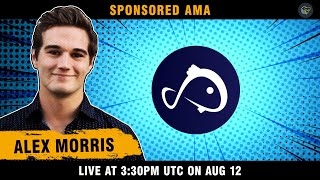
Alexander Morris, founder of Koii, describes a blockchain built for media creators using decentralized storage and permanent on-chain content. The Finney Wallet lets creators mint and store media as atomic NFTs, while a daily attention-based reward system distributes KOI tokens to creators based on observed traffic. Koii uses gradual consensus and lazy execution to cut energy use compared to traditional blockchains.
Chapters
What's up everyone? Welcome to another cointelegraph ama. I'm Giovanni, your host. Today we're going to talk about koi, which is a blockchain protocol that helps creator own and earn the value of their content permanently. Today I have the pleasure to be joined by Alexander Morris, the founder at koi. How are you doing today, Alexander?
Hey, Giovanni. Doing great. Thanks for having us.
Cool. So before we start the conversation, I would like to remind our audience that this is an interactive show. So if you have any questions regarding Koi and any curiosity about the project, just don't hesitate to write them down in the chat. And I'm going to pick the most interesting questions and ask Alex about it. So if you have any curiosity, just don't hesitate and write them in the in the chat below. So let's get into it, Alexander. So can you give us first a brief overview of what KOI is about?
Oh yeah, sure. Basically, the idea with Koi, and this is a bit of a sweeping concept, but we are trying to build using decentralized storage instead of a traditional blockchain. So while most companies that launch cryptocurrencies tend to do it with an Ethereum smart contract or they have their own custom blockchain, our approach is to program decentralized storage, which makes a lot of things a lot more efficient and it also makes them a little bit more eco friendly because there's not as much proof of work involved and you have a lot more lightweight architecture. Does that give you enough insight?
Yeah, I mean, I want to add so that our audience understand better what the project is about, that this is about NFTs. It's about being able to publish your own original content and make it your own in a permanent way through blockchain technology. Am I correct, Alex?
Yeah, sorry. I should say we're working on building this bigger picture architecture, but our first really successful product so far has been the Finney Wallet, which lets you kind of mint NFTs in your browser right into the wallet itself. So it lets anybody self publish. We cover your first 10 or 20 NFTs that you want to create, but all the media files also get stored permanently on the blockchain, which is really unique to our platform.
Right. And just to give a bit more of background information. So I think that koi, as far as I could understand, is based on the concept of the attention economy. So for people that don't know about this concept, would you mind to explain what is the attention economy and how does KOI plans to improve it so.
The attention economy is. It's actually how we all spend our time, right? Like every day we wake up and we do something for roughly 12 to 16 hours and then we go to sleep. And that pretty much defines our existence. It defines our whole society. It's the whole economy. More recently, Google and Facebook have figured out how to capture this attention economy and to channel it to do the things that they want it to do or that their advertisers want it to do. And what we're doing at KOI is to build a blockchain that's purpose built to replace those systems. So instead of traditional blockchains like Ethereum or Bitcoin, where the node operators accrue all of the newly created tokens, like mining the tokens, we actually give out all of the newly created tokens to the end users of the platform. So if you run, if you are running a coin node, you get tokens for doing tasks, but if you create content in the network, you get newly created tokens that are generated each day depending on how much attention your content gets.
Okay, that's cool. So let's say that I'm a content creator and I just created a piece of art online and I want to register it on your blockchain. Can you guide us through what would be the procedure to do that?
Oh, sure. So you can do it a few ways. You can go to CO Rocks and you can just upload the file on the website. Or if you want a bit of a faster experience and you're going to be doing it more often, you can use the Finney Wallet. So to get the Finney Wallet, you just go to our website, you install it with one click from the Chrome Store. It will install into Internet Explorer, Chrome Brave, I think most other browsers. And once you have it installed, it'll generate a key for you so that you can sign all of your transactions and then it will allow you to drag and drop any file on your computer onto the Finney Wallet and instantly turn it into an nft. We'll mint it for you on Arweave. And then we're actually also working on bringing a number of bridges out so that you can then take them from the Finney Wallet and list them onto things like OpenSea or Rarible or other marketplaces.
That's cool. That's cool. So we're going to dive more in depth into the Fini Wallet concept a bit later in the map. First, I want to still remind our audience again that especially if there is any content creator among you guys, you might want to explore these new possibilities that KOI is opening up. So if you are curious about how to publish your NFTs and how to own and earn rewards Based on the NFTs that you publish, then write your questions in the chat and I'm going to ask Alexander about the most interesting questions. So, of course, Koi works thanks to a reward system, right? So what is the reward system that you offer? How does that reward system work?
So every single day, we count up how much attention each piece of content gets, and then whoever created the content that got the most attention gets that share of the reward. So if you got one out of a million views, you get one out of a million of the daily tokens, and that basically runs every single day. So we just, we sit there counting this up in the background. We have a kind of reliable proof system that we've invented called Proofs of Real Traffic that allows us to reliably track the amount of traffic coming through. And we use this to hand out these tokens specifically for content creators, but also so that if you have an application that you deploy on this network, you can earn tokens that way as well. And our idea here is that you earn the tokens for the attention you bring in, which incentivizes more people to then go out and bring more of the their friends and their family and their followers into the network and to start using these KOI ecosystem apps. And our goal is really to unlock, you know, a new level of ownership, because when you register your content, you know, with an atomic nft, you are basically creating a copyright of that content, which now you've permanently registered it, it really does belong to you, and we want to pay you for that ownership, for bringing in all those people and like, you know, for the real value that your content is creating.
And actually, reading through your blog, I was noticing a very interesting concept that you were explaining, which is the fact that nowadays on the Internet, there is an abundance of content, but our attention is still very limited. So the concept that you are focusing on is basically rewarding this limited amount of attention that we can actually give to this disproportionate amount of content that the Internet is offering us. Am I correct?
Yeah, yeah, exactly. We find also that information is basically like the quality of the information is basically determined by how much time people spend looking at it. So if someone who's really, really smart about something spends a long time looking at a piece of content from that space, then we can say that that's probably really reliable information and that more people should probably look at it. So it's a way for us to like, as a group, as our whole species, look at all this content on the Internet and be able to actually have a transparent way of seeing which content is reliable and which content's not so reliable. There's a lot of industries like affiliate marketing, spends most of their time basically falsifying content that then gets people to buy products because they think that they're going to get an experience that's not real. And that's a whole industry, like a giant chunk of the Internet, which is kind of terrifying when you think about it. So this is possibly a way forward so that we don't get stuck with all this information that we can't decipher.
And so in order to give us a bit more of your background, it would be interesting to know how you got to the point when you decided to found this protocol. And I heard a podcast, I was listening to a podcast earlier where you were mentioning that initially you wanted to create something. You wanted to create a technology that would enable to detect misinformation online and kind of fight against the huge quantity of disinformation that we can find nowadays online. Maybe. Can you add some more information about how that process went?
Yeah, of course. So I trained as an engineer originally. I really, my whole life, I always wanted to build something that would improve people's lives. And I went into robotics originally because I thought that that's where the real improvements would lie. The thing I realized after working in robotics for a little while is that actually it's not that we don't have the technology to make everyone's lives better and to make the world a better place. It's that we're really bad at talking about it and sharing information. And it got me really interested in the idea of making a more reliable format of the Internet that rewarded people for helping each other find better information. And so I spent probably about the last five years thinking about that problem, looking at different ways to do it. I worked for one of the co founders of Ethereum under a company called we teach blockchain, basically studying different blockchains and putting together the different components of each of them to build products. And the thing that I noticed in a lot of cases is that decentralized storage is really the most important part. And that's kind of what led us to this point where koi is even possible, because we started looking at the storage side of it. And then really, most of the really incredible technology that we've been able to build with Koi. We started with some stuff that worked reasonably well, where we had an idea of where we wanted to go. But we've had the benefit of talking to some of the really smart people in the space, like Sam Williams from Arweave, a lot of the team at Outlier Ventures, and a few other of our mentors who enabled us to build this new, completely new, revolutionary platform, which is sort of ahead of the curve because we've been able to go and talk to all of these awesome people and get their, you know, their one insight and add it to the pool.
That's cool. So let me understand better this topic regarding NFTs. So it seems that with your project you aim to change or to improve the technology at the foundation of NFTs themselves. So what is not currently working in terms of how NFTs work and how do you think you can improve that? Because NFTs are already something that aim to solve this problem of ownership. Right. But you seem to add some more advantages.
Well, so there's this thing that happens, unfortunately in crypto where there's so much money to be made that often we're racing to create products before we actually have the underlying technology completely figured out. And so if you look at kind of the people that were early on involved in NFTs, we've talked to a lot of them, they didn't really expect the industry to turn out like this. They started working on one idea and then another one, and then they kind of what we now see as NFTs is sort of something that has been accidentally created over time. We started with 721, then we moved on to the 1155s, and now we're kind of gradually building out more technology stacks around this. The thing that all of them missed, though, is that if you store these on decentralized storage, then they actually can't be deleted. Whereas most of the time right now, if you go to OpenSea or Rarible, the media assets are stored on an Amazon or Google server. 90% of the time, if you right click an image on OpenSea, it says google.com in the URL. That's where they are. And so that means that if OpenSea stops paying their bill or you decide to take your product off of OpenSea, your image assets might not exist anymore, or they might just never have existed in the first place. They might have only been on that one server. And basically what you're doing then is you're paying a lot of money for A contract to own a JPEG in someone's database because it's not even really on a decentralized network. And so what we've really tried to do is to make it possible to own not only the contract, but also the image file itself. And that makes things a lot more scalable because it means that now we can talk about the whole picture. We're not just talking about having one contract that points to a particular file and says, I own this. And yes, I wrote it down. We're saying now you can actually own the media as it exists inside of an application. And every time that that loads somewhere we can track who saw me about.
This NFT concept, the idea that you might own this certificate on the blockchain. But what if the object it points at get compromised in some way? Like, what are you left with? You're left with just like that contract on the blockchain. But if the object it's pointing at doesn't exist anymore, or for some reason it's not the same anymore, then probably what you bought doesn't really. It's not worth it anymore.
It's like the difference between an apartment and a house. So if you have the keys to your house, somebody can't come and bulldoze your house or change the locks. You give the keys to your apartment, your landlord can come and kick you out anytime. And the whole point of blockchains is supposed to be that we would have houses and not apartments. Right.
Right, right. Actually, I think that it's a good time to start with some questions from the audience here. I see that there are already a few. So someone is asking when we can sell our NFTs. So a lot of people, I guess, are interested not only in how they can store their NFTs safely, but are they also interested in, like, how they can then sell it for profit? So is there anything new you can tell about the process of selling NFTs using your platform?
Yeah. So Koi is working on a direct peer to peer selling feature. So you'll be able to sell your art without having to pay a sales commission through an exchange. In the meantime, though, there are a couple of exchanges that support our NFTs. So you can go to the Verto Exchange, that's Verto V E R T O Exchange. And they'll actually, I think, currently have your NFTs listed if you have uploaded them through Koi. If you don't see them there, contact our support team. We can help you actually list them on Tiverto. We are working out some integration details. You know, we've just come up with this atomic NFT standard recently, so we're working on kind of making sure that everybody's playing by the same rules. But definitely within the next couple of weeks we'll have a lot of exchanges that will list them. And then hopefully within a few months we ideally like to be able to let, you know, sell them peer to peer without paying commission.
Okay, that's, that's cool. So basically you're going to offer a marketplace for foreign NFTs.
Sort of like a marketplace. We see it more like a, like a barter economy. So you can come in and sell your NFT to other people directly without actually having to go through a marketplace at all. Typically a marketplace would have like one contract that officiates the marketplace, whereas what we're looking at is adding the marketplace functionality into the NFTs themselves. So the NFT can adjudicate its own auction, so it doesn't need an auction house.
Okay. And I was actually scrolling on your website and I saw that you already have a list of NFTs that have been created through your platform and they all show the views and the tokens that were paid as rewards for those views. So the more views they get, the more KOI tokens of reward you get.
Basically that's exactly how it works. I think we've all. We've got just under 3,000 people that have submitted NFTs now, or 3,000 NFTs that have been submitted if you want to create one and you don't know what to do. A lot of people have been making memes, which is super fun, and those actually seem to get a lot of traffic. So I know there's a few people in there that have made like almost a thousand dollars in on an nft, which is pretty cool. And it's just an NFT of a meme that they made on some like meme generation website. But it's original content.
Right. And now later I'm going to ask you more about how this token work in the overall economy of koi. But first I would like to get more information about the wallet. So everything seems to be around the Fini wallet. Can you maybe give us more information about how this Fini wallet works?
Sure. So I mentioned the top of the show that the point of KOI is to use decentralized storage to bridge all these different blockchains together. And so if you're going to bridge a bunch of different blockchains, you need a bunch of different keys and you need a wallet that can handle all these keys simultaneously. And so that's what Finney is. Finney is meant to be your cross chain NFT wallet personal companion that does all these different things that you need to interact with Koi apps. Right now Finney is just a really, really good NFT app because we haven't got a whole ecosystem of Koi apps out yet. But you can use Finney right now to drag and drop an NFT or drag and drop any file, make it into an NFT and start earning those Koi rewards on it. In the future we also hope to have Finney also support bridging functionality, so it'll be also your hub for moving your assets from one chain to another. And hopefully we'll start to include other functionality as we kind of extend the Koi marketplace. One thing we're looking at right now, for example, is being able to track attention across other apps and systems. So if you were to for example, cross post a video NFT onto YouTube, we're working on a way so that you'd be able to tag that with your Koi ID for that asset and start earning attention rewards even when people watch it on YouTube.
Yeah, yeah, that's a good point because actually what I noticed is that you are planning to allow people that are creating NFTs through your platforms to post those NFTs on different social media, different other other platforms. So to maximize the visibility of those NFTs.
Right? Exactly. As long as the asset is atomically registered, then you can use your atomic NFT and you should be able to track attention to it. We only currently support Koi enabled and Arweave enabled platforms right now, but in the very near future we'll enable you to publish to almost anywhere on the Internet, hopefully.
Awesome, awesome. So I think that we have a lot of questions coming. That's great. So a lot of engagement. Keep the questions coming. We get one here that asks when can we purchase tokens and where? So I guess here they mean the Koi token, where can you purchase it and when.
So by the end of September we'll be listing on a handful of exchanges. I can't say who right now because that announcements will be coming soon, but you can sign up for the whitelist on our website and we'll get you in first. I think there are just over 4,000 people on the whitelist right now, so get in there quick and we'll get you on the priority list. We also have a couple of competitions going on right now where if you are in the competition and you fill out all the steps. Then we'll get you priority access to make sure that you get in at the, you know, the start price of the sale.
Okay, that's interesting, but now I would like to understand better, like what can you do with these tokens? So why would people be interested in participating in this token sale? What can you do with the actual token once you buy them?
Sure. So the Koi token, very similar to Ethereum or most other utility tokens, is used to pay for compute credits from our network. Our compute system is a little different from most blockchains that you might be familiar with. So the thing that we implemented from a compute standpoint is called coitasks. This feature is in development right now, but we're using it for a few kind of internal projects to test things out and it'll soon be taking over the entire attention tracking system. Basically what coitasks does is a thing called gradual consensus that we invented. And gradual consensus is basically a slow proof of stake network. So it's a lot more efficient than most proof of stake networks and it's really, really good for things like web scraping or if you have a bunch of information you want to gather, like an Oracle network. It's also very efficient for doing things like cross chain bridging because of some of the internal tech that we've developed. And so really what you're doing with these compute credits, these toy tokens that we have, is you're enabling yourself to purchase services from the coin nodes and to access this cross chain network of decentralized storage based apps that we're going to be building. We're also releasing a whole bunch of app templates and a variety of things like that which will allow developers to deploy apps using COI tokens. And so really the value of these tokens is that you as an early investor in the coin network or as an early Participant, by uploading NFTs, you're earning tokens that someone else will eventually want to buy from you so that they can deploy their app onto a decentralized network in the same way that people buy Ethereum tokens in order to deploy something like Chainlink. Except that the apps that can be built on Koi are things like Facebook and Twitter, fully decentralized versions of these incredibly large scale apps. And so that's really, you know, that's the intention of the network is we want to replace the whole Internet. And the only way to pay for the hosting costs from our network in order to do that is with this koi token, right?
And now, of course, people that want to buy the token needs to wait until this token sale happens. But at the same time, if you want to earn those tokens, you can already do it, right? You just need to mint an NFT and wait for people to watch it. And then you can already earn the token, right?
Yeah. And then once you get your tokens too, in the very near future, we'll be allowing you to run a node locally. And so you can run a node and they're very lightweight on your phone or your. Or on your computer. And once you have your node running, you can stake the koi tokens you've earned. So get in now, get your NFTs in there so you can earn lots of koi tokens. Because then the next thing we're going to do is set you up to actually run a node and earn some ROI on those. So you can earn like, you know, 5 or 10% interest.
Right. So the token has also a function in terms of governance. Right. So people, the more you, the more token you earn, the more you have like some decision power on the future of the network. Is that the way it works?
Yes, exactly. So we're actually in the process of setting up a nonprofit foundation at the moment that's going to manage the entire network. And actually within five years, our core team is ideally going to not even be really running that foundation. We want the community and the people that are going to build apps on this network to have full governance control. We really ideally are just here to kind of get things started, get all the tech built, and then hopefully we get to go build some products ourselves.
Awesome. So now let's pick another question from the audience. So people are asking regarding the promotion side of your project. So that's a very important side for any starting project. So how do you plan to promote it in different countries wherein English is not spoken? Well, do you have local communities for them to better understand your project?
Yeah, we're working on that. So we actually have a really big Russian community and Turkish community on our discord right now. We also have a few kind of growing areas. Chinese was a really big one for a little while, and then it looks like we got blocked by the great Chinese firewall recently because our Chinese traffic went from like a couple thousand hits a week to zero almost overnight. So that is unfortunate. But I think the main thing that we're trying to do to make things more international is to provide resources in every locality. So we're really interested in paying people to do translations of our content. We are implementing at the moment a tool that will allow us to have fully internationalized versions of all of our web pages. So if you're interested in helping us with the translation effort, or would like to be an ambassador in your area, we have lots of koi tokens available to help you do that.
Awesome. So now I would like to discuss another issue, which is basically the concept of your NFTs. So you claim that your NFTs have some advantage in terms of energy efficiency. So we know that NFTs are energy consuming because they are based on Ethereum. And so far Ethereum is working on a proof of stake system, on a proof of work system. That means that there is like an energy consumption going on here and the carbon emissions. So your NFTs are claimed to be 99% more energy efficient than those builds on other chains. So how is that possible?
This is something I'm really passionate about actually. Before I got into the robotics side of things, I was really interested in working renewable energy. I didn't see a lot of change happening the way that I wanted to in that sector. So I wasn't able to kind of go into that full time. But I really wanted to make sure that Koi follows through on our goal of being green friendly. And so that means two things. The first thing is when you look at a 99% number, we're getting that because we think that we are 100 times more efficient. You know, that's one out of 100. We are 100 times more efficient than the other platforms. And the reason for that is two things. The first one is that we are using the gradual consensus model, which means that we are actually intentionally slowing things down to make them more efficient. We're not trying to have high transaction finality. We're not trying to do millions of transactions per second. Right now our goal is just to be able to maintain information with the most efficient process that we can. The second thing that we do is with the lazy execution of our smart contracts. And this is actually a property that we've inherited from arweave. The smartweave contract ecosystem requires only one user to actually go through and execute each transaction. And we've implemented that alongside gradual consensus to make it possible so that only a couple of nodes need to execute each transaction with each smart contract. So instead of all of the nodes in the network executing all of these, we've already basically implemented a stake based system where only a couple of nodes need to do the computation. And that might sound like, oh, it's very similar to Ethereum's proof of stake, yada yada. But what we've intentionally done is also made that compatible with things like Oracle networks. So our goal is to build not only a more eco friendly version of NFTs and Ethereum, but also of things like Google, which currently wastes a ton of energy. That's one of the reasons that the coin node runs on a smartphone or a personal computer, because really we don't want to add more computers to the Internet, we want to use the ones we already have more efficiently.
Right. And do you think that these strategies that you have in place now to minimize the energy consumption of those NFTs could, can be maintained even when your network is going to scale at a global level?
Yeah, so that's one of the best things about lazy execution of contracts is that it's basically it scales proportionate to the number of users in the network and the number of nodes in the network not proportionate to the computing capacity of each individual node. So we're intentionally not incentivizing somebody to set up a server farm, for example.
Okay, that's cool. That's cool. I think that a lot of initiatives in the blockchain space should focus on this energy consumption aspect because it's one of the main concerns surrounding the space today. So let's move on maybe to another question from the audience. I see that there are a few more. So it is assumed that assets can exist only in the blockchain. Can my content be protected if someone uses it without my permission? Oh yeah, that's a good one because I actually wanted to ask you the same question. So I know that you have a system in place that is working for making sure that anyone who is posting a new NFT is actually the owner of that piece of art.
Yeah. So there's kind of two sides to this problem. You can't really stop somebody from publishing copied material from someone else, but what you can do is you can make sure that nobody else looks at it, which in our case means that no one will get paid attention rewards. So it kind of defeats the purpose of posting it. And people who post things and don't get attention rewards, you would imagine over time will realize that they're just wasting a bunch of money on uploading all this content. And so what we do is we lock them out of the client side. So if you go to quote out rocks, there's a number of pieces of content that we're filtering out of that view. So that you're not seeing them in the website. And the reason for that is that we've deemed those to be copyright infringing in whatever capacity. And so if you see somebody's content that you think is copyrighted, like if you see a friend of yours content or you see your own content on Quadot Rocks, you can contact us with the form and the footer and we will respond within 24 hours and go into a triage of the situation. It's actually usually really easy to tell if someone's been copyrighted or has had copyright infringement in this kind of a situation, because you can usually, you know, most people publish online. Most people have like an Instagram that they've been publishing to for a while. So if we go check your Instagram and it shows that you have that post from two years ago and then somebody just uploaded a quote rocks yesterday and it's not you, then we would take that down pretty quickly.
But at the same time you're saying that you don't actually take that NFT down. It's more that the NFT doesn't get any rewards. But it's still going to be there. I mean, the NFT is still on the blockchain because it cannot be removed by definition. Right, but it just doesn't produce any income.
Yeah, exactly. And there are, within the arweave ecosystem, there are some things in place to be able to delist it, for example, if it was something malicious or if it was content that really was going to hurt somebody by being up there. The thing that we're noticing though is ultimately you can't police what someone uploads because that's kind of a form of speech. But you can just police how we handle it when they upload it. Right. So I could just copy everything that my next door neighbor says. I could steal all of his talking points, I could steal his commentary on sports, I could just follow him on Twitter and I could retweet every single thing that he says on my own Twitter. But everybody would know that I'm a fraud and people would probably not follow me and I wouldn't get much recognition for it. And I think that that's probably like, that's the social context that controls these kinds of situations more so than the technology itself.
Yeah. Actually that makes me think about new policies that were implemented by social media. There is also this problem on whether social media should be allowed to take down contents because that's also a matter of freedom of speech. Right. But they should also exert some sort of controlling authority on the content that is being publish on their platforms. And so they started putting these warnings underneath specific, specific statements that might be dubious in terms of how they are, in terms of how real they are, how truthful they are. And for example, with this Covid misinformation going around, you see this disclaimer underneath certain comments regarding Covid that says, go check the real information on a specific truthful source so that people don't take all the comments about that can contain some misinformation about COVID too seriously. And this is a very important function that the platform works. So I thought that that was similar to what you do. So basically you keep the content is there, but you make sure that people understand that that's not the original one.
Yeah, I think that's actually one of the most exciting things about the Web3 context in this case is that in Web3, instead of Facebook having an internal list of all the stuff that they've vetted that they think is possibly bad, that list would be public and everybody would be able to access it and everybody would be able to add to it or kind of comment on it as necessary, which I think is really, really important. Especially when we're talking about like election fraud or things where, you know, somebody saying this might not be true because we can't always trust some large company to make that decision. You know, it's really got to be more of a public process.
Yeah, that's a fascinating topic. So we have Rambo X asking. There are many projects working on same ideas, blockchain projects for media. Explain why KOI will be better than others and why users should adopt this rather than others.
I think it's really the integration of decentralized storage. As far as I know, there's no other blockchains that natively run inside of the storage layer. And so in any other blockchain, what you're doing is you're creating a blockchain that talks to the storage layer. We don't do that. We don't have a blockchain that talks to the storage layer. We just have the storage layer and the storage layer stands alone with our contracts inside of it. And that's really. It's always going to be more efficient to have one thing than two.
Okay, and now maybe switching a little bit angle to. We've been talking about the users. Now I would like to maybe explain, explore a bit the opportunities for developers. So any new blockchain project needs good developers to attract good developers. And it should offer some incentives for the best developers to work on the project. So what is your incentives? What are the incentives for developers to build on your platform?
So I mentioned this a little earlier. I came from an engineering background, so I've designed everything from marshmallow catapults through to industrial robotics and everything in between, autonomous cars, all kinds of stuff like that. Every single, every single time that I built something that was at the edge, it always, every single time was just a painful process of debugging a bunch of libraries that nobody had thought to document properly. The same is true of Blockchain. For the last three years, I've spent an enormous amount of time writing documentation on WeTeachBlockschain.org explaining how to use a bunch of these systems. The purpose of KOI is to make that whole thing basically trivial. It should be simple enough as a developer to download a JavaScript module the same way that you do for Google Cloud or Amazon Cloud, and use that to deploy applications. Ideally, what we're hoping to provide is an out of the box framework that not only deploys the app template with a React ui, but also deploys the smart contracts via Koi tasks and provides all of these in one box that can then talk to the Finney Wallet. So out of the box, the developer should be able to build an entire application, deploy the application to decentralized storage, and then start mining attention based on how many users they're getting. We really see this as being like a comprehensive suite of tools that ideally can be written completely in JavaScript without ever having to learn a custom programming language.
All right, I just want to take the chance to remind our audience to continue asking questions because it's very exciting that there are so many comments and questions regarding koi, so keep them coming. Also, I want to remind everyone that didn't like the video and subscribe to our channel to do it now and be tuned for following AMAs and other cool videos that we're going to publish next. So moving on to the next question, I would like to come back to the overall vision that you have for the Internet. So you mentioned the fact that you aim at changing the Internet as it is. This is like a sentence that I actually been hearing quite often from Defi startups. So maybe you want to give us your vision of the Internet for the Internet of the future?
Sure. Of course there's a document on our resources page called the Canonical Record, and this is probably the closest thing to the core vision of KOI that we've ever come to. And basically what it spells out is a system where the entire Internet is made up of atomic NFTs, where every piece of content that anyone publishes is owned by that person, and where every single time that someone looks at your content, that process is recorded transparently so that it can be used to identify the quality of the content and also pay you as the creator for driving that engagement from all of those people. And this is not too far off. It's actually kind of fascinating. We've built all of this technology like the HTTP protocol, JavaScript browsers, all of these pieces have been built up over the last 30 years. And really all we're talking about doing now is changing the attention infrastructure and kind of the incentives for people, which that isn't really that hard. It's basically a matter of just swapping out one package for another one and then keeping the same audience engaged. A lot of these things that we've developed socially, like making memes of things or using social media to communicate about current affairs, all of those things will be the same. The only difference will be that you'll actually own what you're doing and you'll probably have a democratic say in how these platforms handle your information. That's really exciting to me, at least.
Right. And maybe it's worth to point out that this doesn't have to do just with NFTs. It's something that it's a copyright system basically that is going to involve all sort of content on the Internet. So I guess from books to websites to films, videos, blog posts, anything. Right, right.
And the comments on them as well, though that's the really exciting part here. My first app that I ever built was called breadcrumbs in 2015 and breadcrumbs, basically the idea was you could leave comments on websites. And I thought this was really cool at the time because it meant that if I was on a news article, I could see if somebody else had commented. And it was really exciting to me. And I think that ultimately that's where we're headed. You know, we'll have this contextualized experience when we're browsing where you're not just watching a video, you're watching a video with every other person that's ever watched the video and seeing their annotations. Or similarly, you're not just looking at a meme, you're seeing a meme plus a decentralized comment section that includes 7 billion people. And that's a totally different experience to just like a 2D image.
Right. We have another question here, which is a more specific one. So they ask when will the search NFTs by author be entered? And so on. So I guess they mean like how there is a search engine for finding these NFTs as far as I understand.
So we're actively working on indexing them. One of the first KOI tasks we'll be unveiling will be basically a task that allows you to, with your node, go and index NFT information and then allow it to be searchable. That probably won't go live for a couple of months, but I think in the meantime we have a few kind of cool features that will help to make artists more discoverable. So one thing we'll be doing is making it possible for artists to have their own custom collections, which I believe is coming out next week. And so that'll allow you as an artist to have your own custom portal that you can send people to. It'll be able to be customized with colors. You can pick which NFTs you display in it and then every time somebody goes to that page, you'll earn a bunch of attention rewards. In addition to the collections aspect though, the really kind of important part here is being able to have filtered leaderboards, I think, so that people can find content that they actually are looking for. That's kind of interesting. And so we've looked at doing kind of keyword specific ones where we let people tag them. We do have tags in the current model, so you can tag your content and other people will be able to find it based on the tags pretty soon. But the thing in the meantime that would be even cooler is if somebody wants to make like a topic specific version of our leaderboards, we'd be happy to sponsor them. And so if there's somebody out there that wants to make say a Coidot Rocks leaderboard for photos of trees or a Coidot Rocks leaderboard for photos of cars or something like that that might be like a little bit more topic specific. We could pay you to build your own indexing functionality. Really what we're trying to do ideally is that we don't want to be the only structure in the system. We want to hire lots of people from outside to build onto the network and then get it, get to own a kind of a piece of it as well.
Awesome. And regarding hiring, are there any, is there any information on your website regarding these positions that you might want to fill in terms of jobs?
Yes, we have a number of kind of grants open right now. You can fill out the grant application on our website. As far as hiring actual People, we so far have been pretty lazy about hiring. We've had a lot of people come to us and say that they want to work on things. We are always looking for developers though. So if you have experience building with solidity, or if you have good UI UX skills and you want to come and try it out in a new way, very open to kind of retraining you on the coin model. Similarly, on the kind of building out the Koi Tasks infrastructure side, if you're a really solid JavaScript or TypeScript developer and you just want to try building something crazy, what we basically do every day is we come in and we try to think about how to rebuild the entire blockchain from the ground up. So it's very, very exciting work. It's a lot of fun and if you're talented and you like working hard, it's the best kind of work to be doing.
Awesome. So I guess that this is the perfect opportunity, if there is anyone being a developer in the audience right now, to reach out and try your luck with this new exciting project. Now moving towards the end of this ama, I would like to actually ask you one more thing which is not clear to me. I saw this new concept on your website which is called proof of real traffic. So as far as I understand, it's a system that you have in place in order to guarantee that the attention that is given to a specific NFT is a real attention and it's not just some sort of manipulated. Maybe you can maybe explain better what this proof of real traffic is and how it works.
Sure, sure. So this concept actually comes from dids, decentralized IDs and the concept of attestations. So really all that a proof of real traffic is an attestation that you viewed somebody's content. The only difference is that rather than storing all these attestations on chain, we just count them up each day. So we take all of these attestations from all these different wallets saying, hey, this is me with my signature saying, I viewed this piece of content, we count all of them up and then at the end of the day we're able to release the rewards based on that. The thing that we're implementing, which is kind of exciting on that front though, is the ability to have what we call a bellwether node, which is somebody that's a trusted member of the community. Somebody has uploaded a lot of NFTs, they have a lot of collections, maybe they're holding a large coin balance and running a node, and we can trust that they are actually a real person and that we can be 100% sure that they're not a fake address. And so this is how we get around Sybil attacks and other kinds of like spoofing a bunch of IDs to fake the system out. So there's kind of this combination of like a small proof of work, some attestations, a digital signature, combined with being able to trust specific people in the system. So it's not 100% trustless, but it does work very, very well at a large scale.
Okay, cool. So maybe now it would be cool to go through the status of your project that is currently, what's the status of your project right now? Because of course, people got a lot of information from this ama, but sometimes it's difficult to distinguish what has been achieved and what still needs to be achieved. So maybe you want to go through the major milestones that you hope to achieve in the next few months and what is the status of the project right now?
Sure, sure. So right now we are in the community building phase. So the goal at the moment is to get as many of our supporters and people who are ideologically aligned, some of the koi tokens, because we want you to have tokens so that you can participate in the governance, so you can run a node, and also just to keep our community filled with really vibrant and kind of passionate people. So right now, number one step is let's get everybody in the door who wants to be part of this and let's give them all some tokens so they can participate. Step two is really launching this network. That's probably going to happen in about a month when we really launch the network. What that means, we're going to list the token tokens going to start trading publicly, we're going to start letting people run nodes locally, which will allow them to start earning even more koi tokens and to start participating in koi tasks. And around the same time, we're also ramping up developer relations. So we're basically opening up a series of hackathons. We're going to teach people how to build on the platform and that's hopefully also going to drive some demand for the koi token. So if you are running a node, you'll be able to sell your tokens and you also have lots of things for your node to do because there'll be lots of developers buying tasks from the network. The final stage after those two is really that probably about a year or two from now we will have a large group of trained developers who will be really excited about building these kinds of decentralized apps. And there will be a fairly large community of people running the Finney Wallet who can go and try out those apps. That's really what we're dreaming of right now. Because when we get to that point, then we get to move into the third phase, which is where we replace the whole Internet. And that's where we basically start giving out grants to top developers to be able to build decentralized, user owned versions of the apps that already exist today. And you know, they did a lot of hard work for us because Google and Facebook have these huge teams of UX people that do research on what the best user interface should look like and they've gone ahead and built all those. So we can just go and copy paste that content, learn how to design these kinds of systems that really make people's lives better, and then give the ownership back to the users. And that's basically the mandate over the next five years is let's just start copying everything that's on the Internet right now. Build it in a way where people actually own their own content. It might seem a bit disingenuous to kind of take the designs that they've built, but really that's how design works. Right. A lot of these big technology platforms have become more systems of oppression than freedom. And we'd really like to try and take that up a notch by letting developers take all of our toolkits that make it really easy to build apps and use them to build things that reward the people that are actually there using them.
Yeah, it's very fascinating. Sometimes I wonder how the Internet will look like in five years from now. And if projects like yours manage to succeed, there's going to be definitely something interesting to look forward to.
I hope so. A lot of blockchains and probably a lot of bad numbers in the stock market, but that's good for us.
Yeah. So I think that we can wrap this AMA up. So I would like to thank our audience to be so engaged in the conversation. We had a lot of interesting questions, so great job guys. And I also want to thank you, Alex, for coming on the show.
Thank you, Giovanni. It's really nice being here and also thank you to the audience. Really appreciate all of your attention today. And please try uploading some NFT so you can get paid for the attention.
Of course. And if you want to check more about the project, you just need to go to Koi Dot Network and you can find all the information that you might have missed on the AMA there.
Yep. And that's Koi with two I's.
Yeah, right. It's K O double I Dot Network. So thanks a lot again to everyone watching. I'm Giovanni, your host. See you next time.










