Korea’s Rising Crypto Generation | Cointelegraph Documentary
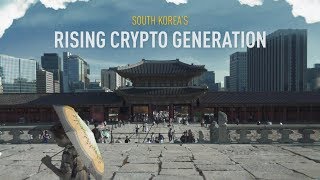
Maxwell reports from Seoul on why young South Koreans are drawn to crypto. High housing costs and limited job prospects push them toward startups and trading, while cities like Busan experiment with blockchain-based digital vouchers. Local firms like Hasht and Ground X are building the infrastructure.
Chapters
Are you young and bold and willing to start your own crypto business? Do you see digital currencies as a path to a better lifestyle? Are you ready to build the future of blockchain technology? Korea has quickly become one of the most technologically advanced countries in the world. But how exactly are young blockchain entrepreneurs adapting to this rapid development? So first, I want to show you the most memorable moments that will be in this film. This is the Vice Mayor of Busan. This is Ground X. This the major blockchain subsidiary of the number one Korean mobile Messenger. This is a major crypto investor. This is my former student. And this is traditional Korean food. And now, let's get started. Hi, I'm Maxwell and I'm here in Seoul, South Korea. After I graduated from university in 2012, I moved out here with a friend to teach English. While we were here, he told me about this crazy thing called bitcoin sometime around 2013, when there was a bunch of price movement. Well, he was showing me the graphs and trying to explain the technology, but unfortunately, I didn't take his advice and I didn't buy at the time. But anyway, it's been four years now since I left Korea, and in that time, crypto has blown up. So I decided to come back here to try to see what's been happening with crypto and who's involved in the space. Four years. And during that time, a lot of things have changed in Korea, such as the candle protest, which was a series of protests against corruption that occurred all throughout South Korea. The former President Park Geun Hye was impeached. On March 10, 2017, the Winter Olympics were held in Pyeongchang. These Olympics were a record for the number of participants. The leaders of the DPRK and South Korea first met in the border village of Panmunjom on the south side. This meeting was the first time that a leader of North Korea set foot in the South. And South Korea, meanwhile, has become the third largest cryptocurrency economy in the world, after the US And Japan. I'm not joking. Here are the graphs that show it. To begin with, I decided to meet with those who I already knew, my former students. Hey, man, what's up? How are you? Yeah, dude, good to see you. Yeah, for sure. Four years or something. So maybe five years.
Here.
Saint is in university now. He's studying software development. In 2017, he was investing in cryptocurrency with his pocket money. At first, his mom and dad didn't know about it, but later he did end up telling them, and his father said he was crazy. And here we see the first characteristic of cryptocurrency and South Korea. I don't know like other countries, but.
In Korea, like we know like we don't afford to have a like good house, good like job. So it'll be like being a way.
To be upper class. You know, the modern pop culture in Korea, like K pop and the commercials and shows and movies, they all create among young people this idea that their standard of living should be very high, but only few are able to actually achieve it. And by the way, the most popular South Korean track in the world, Gangnam Style, is all about this luxury lifestyle. Thousands of young people who were looking for money in cryptocurrencies ended up going broke. But there are those who have succeeded. So this is James. He started his first e commerce business at the age of 19, which didn't go very well. In 2011, he founded Gameberry, a digital marketing company that focused on targeted advertising. And in 2017, the company reportedly made $3 million in sales. And consequently, James was selected as a Forbes Asia entrepreneur under the age of 30. Last year, he launched Blockcor, a blockchain investment firm. Can I ask, how old are you in global age?
I'm 27 now.
Oh, I forgot. There's a global age, international age, and Korean age.
Yeah, in Korean age, I'm 29.
Wait, let's digress for a second. For hundreds of years, Koreans have used a different method of counting their age than most of the world. It's sometimes referred to as a lunar age or as a nominal age. But pretty much a person's Korean age goes up on the New Year's Day, not his or her birthday. And this is important because when you're talking to someone older than you, or if you're talking to someone younger than you, you have to use a different vocabulary, I guess. In your generation, do you see entrepreneurship? Is that something that's very strong in the Korean youth?
Yeah, in Korea, especially Seoul, it's already.
Mature city and it's quite hard to get a house for the upcoming generation like me. So it's like for example, in order to buy one apartment, it requires like.
1 million or 2 million USD.
So for young generation, there's not much way to get money and have a house and become rich. So crypto became quite a lot. Very good method to having a house in this kind of society.
We're in Gangnam. This district is the symbol of success with rich shops and a very high cost of living. Gangnam is famous for its luxury. And this is where most crypto companies in South Korea have their offices. And here's the office of one of the largest South Korean crypto funds. This is Hasht, managed by Simon Kim. He founded Hasht in mid-2017, but before he formally started the fund, he'd already begun investing in ethereum. In late 2015 he said that it was really good timing to start this kind of investment company.
In the space we are always long term investors even in the bear market. In 2018 we still invested lots of projects such as Terra Clayton. These days we are focusing on two sectors, mainly in the application sectors. The one is defi decentralized finance and the other one is blockchain gaming.
In Korea it's like the number one place for dapps and it's the number three market. Why do you think it's so popular here in Korea to be involved in cryptocurrency?
Actually Korea is a great place not only for the cryptocurrency and blockchain. From late 1990 at the beginning of the kinds of Web 2.0 ecosystem, there were so many innovative applications on web born in Korean market. Such as the world's first MMORPG game. Born in Korea. Yeah. The esports market came from Korea. And also the number one game item exchanges come from Korean market as well.
Let's meet Jake Junho Kim, the managing director and founder of Skytail Capital. After graduating college, he started his career as a developer some 20 years ago as a systems engineer at a joint position between EDF in the United States and LG Group in Korea. And in 2013 one of his close friends gave him the white paper for bitcoin.
I read the white paper a few times because it was not easy for me to understand at first glance. And I realized they're quite innovative in a way that think that computing power can be a measure of wealth. So I like the idea of bitcoin, but I didn't want to do something related to that.
But Jake's interest in blockchain and bitcoin sparked a little bit later when he started a new career as a venture capitalist in 2014.
And one of the reasons I became more closer attracted to this space is 3 of my portfolio companies, they decided to pivot their business to blockchain. I recall the time when I was a programmer 20 years ago when there was a huge venture boom because of Internet technology. Yeah, that come bubble right. I didn't really understand what business is nor about entrepreneurship at the time. And the environment in Korea 20 years ago was not so friendly to the startups or entrepreneurs.
It was more of the kind of larger corporations. Okay, wait, let's slow down again. A chaebol is a large industrial conglomerate that is run and controlled by a single owner or a family. In South Korea, the top 10 chaebols own more than 27% of all business assets in South Korea. In the 1960s to the 1980s, chaebols played a key role in developing new industries, markets, and export production, helping make South Korea one of the four Asian tigers. Yet chaebol's oversized influence and cozy relationship with government have cast an intense spotlight on the web like conglomerates, as many of them have been struggling with generational transitions. So we've been spending most of our time down in Gangnam, the newest kind of most technologically advanced part of the city. But in fact, Korea hasn't always been so technologically advanced, and it's only been in the last 30 or 40 years that Korea has become what it is today. In the 1980s, there was a time of hyper modernization, and because of this quick change, it's left a pretty big impact on the Korean mentality.
Korea is one of the fastly developed countries, so generation gap between the generation is really huge. We call it a compressed development. Compared to the advanced countries such as European countries or United States. We have done the development in just six decades. Right after the Korean War. The country was. There was nothing in 1950, and we have built everything since then.
Jay acknowledges that his generation was a privileged one and that young people are having a much harder time succeeding in business.
Most of them are very young compared to me, and I still respect them because they are young, they are passionate, and they're more into the original idea of those technologies. Young people who really like and share those ideas still grapples with the real implementation of those technologies in the real world.
So we've heard from a few different people about how densely populated Korea is and how interconnected the blockchain space can be. And well, while we were interviewing one of our last guests, Jake, he said, oh, hey, you guys might be interested in checking out this place down the street. They have this really cool use case about fractional ownership and art. And so we decided to come over here to Pro Rata and check it out. Here we are at Pro Rata, which uses a blockchain based platform to tokenize pieces of art, allowing you to invest in or own a percentage of the artwork's value. So currently Pro Rata has three different pieces of art that are available for fractional ownership. These two that are here in the viewing room and a third one by Banksy. The Banksy, however, isn't here because it's at an exhibition right now, still in Seoul, but to gain some awareness and to spread the word about this new type of investment scheme. So if anyone's interested in saying that they own a little bit of a Banksy piece, maybe you should check out pro rata. So this guy is the most famous crypto blogger in South Korea, Spunky Hwang, aka BitGosu. He's been an entrepreneur for over 10 years and has invested in several startups. Spunky has a very cynical point of view, or a realistic one, as he would say, about how the crypto industry is evolving in Korea and in the rest of the world.
People are greedy. People are very greedy. People love shortcuts. People want to escape like whatever miserable life that they're living when they see a chance, you know, I mean, and cryptocurrency has proven multiple times that it made like really normal people a next level person financially. So people just want to get on that ride. And that's how the bubble was created. It's not just in crypto where 90, 95% plus of all these coins are dying and disappearing and failing. That's how the world works. You know, even in the traditional field, like all these startups, they all go bankrupt. They all fail. Like, they all fail. People see people succeeding like Facebook, Instagram, Amazon. Yeah, that's like the, that's like the 0.00001% out of how many companies you know?
Well, Spunky has a point. Most crypto startups are struggling to emerge in the very competitive Korean market. However, some of them can count on the supports of the country's biggest brands. For instance, groundx, which is the blockchain subsidiary of Kakao, the number one mobile messenger in Korea.
The name of groundx comes from Playground. We want to make some playground for blockchain people or some people who want to change this world. With blockchain, the first product is blockchain platform itself. And then we are providing some developer tools and also we are developing crypto wallet. Actually this wallet will be embedded into Kakaoto, so it is very different from existing crypto wallet. So it changed the blockchain user experience totally. So we are very interested in this new type of user experience.
From our perspective as a startup doing business in this field, the biggest challenge seems to be for the blockchain to prove its industrial value first. That is why groundx has focused on that. If the blockchain sector can prove its value industrial wise, I think the regulators can be persuaded to harbor more positive views for this field.
This is Michael K. Jung. He has a background in finance and computer science. After working in Paris for international organizations and then six years at Cisco, he founded his own blockchain company. Given his experience working in the public sector, Michael is very much aware of the challenges that Korean regulators are facing when they deal with the crypto industry.
The Ministry of Finance and Ministry of Law. I mean these are the jurisdictions, these are the structures where we have in Korea to build a public policy. They need to have consensus mechanism to be able to come up with one policy. However, the challenge that we have is not from the technology area but. But it's not like you cannot buy bitcoin or so it's just not to ICOs because there's all too many scam projects. People are losing money.
Despite their tough stance on SEOs, the Korean authorities have started supporting the crypto industry and have even implemented blockchain technology in the public sector. The best example is Busan, the second biggest city in Korea. Here, the local administration is working on a local cryptocurrency which will be used in people's everyday life. Jae Su Yoo, the Vice mayor of the metropolitan city of Busan, heard about bitcoin for the first time in 2008. Yes, 2008. That was actually quite early and not long after the White Paper was first published.
The bank of Busan is pushing for the issuance of local currency which we call digital vouchers. This is a special purpose digital currency and will only be used in the Busan area. A pilot version of the digital voucher will be used in the Busan city's blockchain network related to logistics, tourism and public safety. Although there are a lot of government regulations now, we will make Busan a testbed for many young people in Korea to be able to fully expand their capabilities in the cryptocurrency sector and lead to the fourth Industrial Revolution. Helping young people realize their dreams will provide a boost to the Korean economy.
So people of Korea are very aware of cryptocurrency. They know what it is. So if someone makes something useful, a useful, they provide some kind of a useful service, a useful platform, something useful to use as cryptocurrency. Since people already know what it is, the adoption can come quicker for sure. So this is something Korea is kind of ahead of most countries because so many of the population of are aware of what this is.
Actually, in Korea, probably more than anywhere else in the world, the future of cryptocurrency and blockchain is in the hands of the new generation. Even though the memories of the crypto crash are still fresh, these young entrepreneurs remain ambitious. Will they be able to bring blockchain technology to new highs and lead their country into a new era? So we came to South Korea to figure out what's going on in the crypto space and what the future might be. It's huge here, but everyone's involved for different reasons. It's a complex ecosystem with a lot of moving parts. But actually, Korea is just one piece of a much larger puzzle. And whatever happens isn't just going to affect Korea. It's going to affect us all, no matter where you live. So if you want to see the future as it happens, be sure to join us and follow our YouTube channel, Cointelegraph. Like subscribe and hodl.










