Kyle Samani: “Bitcoin will be irrelevant in ten years time” | Interview
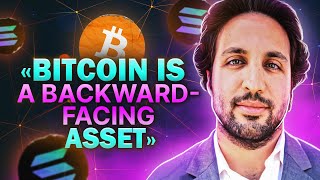
Kyle Samani from Multicoin Capital predicts Bitcoin will be irrelevant in ten years, though not worthless. He expects one dominant blockchain to emerge eventually, but sees Solana and Ethereum thriving near-term. Games like Axie Infinity will drive adoption, while social tokens and NFTs reshape the creator economy.
Chapters
What's up everyone? It's Giovanni here from Breakpoint in Lisbon. I have the pleasure to be joined by Kailey Samani, the managing partner at Multicoin Capital. How are you doing today?
Hey Giovanni, it's a pleasure to be here.
Yeah, it's a pleasure. So I wanted to ask you your thoughts about Ethereum. So from a long term perspective there is this ongoing talk about which of the two protocols will prevail or Solana or Ethereum. Some people say that we coexist peacefully. What is your thoughts about it is Ethereum is going to be able to compete with Solana in the long term.
Generally trend towards there being one chain over many chains in the long term. So I think 10 plus years. But in the next two or three years it's very clear that both ecosystems are going to be thriving. How things play out three to six years from now is pretty hard to reason about at this stage.
Talking about the concept of the Web3. So we know everybody's talking about Web3, you have your thesis at Multicoin Capital regarding Web3. We know that there are incumbents that will kind of fight against the emergence of Web3 stuck. So, like incumbents of banks, institutions and so on, how is this confrontation going to play out? How can the DEFI ecosystem compete with such huge monopolies in terms of economic power, influence and so on?
Yeah, you know, I think it's you. You don't compete head on, you compete asymmetrically. So for example, one way I think you kind of popularized Defi is look at Axie, for example, and these play to earn games. All these people playing Axie, they now have a wallet, right? And they can now receive value and they can send value and they can borrow and loan and do these other basic financial primitives because they have a wallet. I think using stuff like Axie as a way to get crypto wallets in the hands of a lot of people is very interesting. I would not be surprised if five years from now there are a billion people in the world who their primary electronic money is a wallet and they got onboarded to that crypto wallet via a game. It's a great way for them to start receiving value, receive their paycheck, so to speak. And if you start receiving your paycheck somewhere, then that kind of naturally becomes your primary bank account, so to speak. I think that will be very, very, very large for onboarding people in the crypto.
And so how are the incumbents going to react to these disruptions? Are they going to adapt or are they going to be extinguished?
They're not going to be extinguished. Framing these things in a binary fashion is never really helpful. It's also going to vary a lot by country. The United States, I would think the financial institutions in Western Europe are a lot more entrenched than they are in Latin America, Eastern Europe, Southeast Asia, so it's going to vary a lot by country. I'm by no means an expert in the US financial industry, let alone elsewhere, so it's hard for me to make too many comments. But I don't think US Banks are going anywhere.
Part of your thesis regarding the eventual victory of The DeFi ecosystem, Web3, and so on, is that people should care about their data privacy and people should care about decentralization, the ownership of your own data. Those are the main offer points that this new system is creating. So are you sure that most people really care about data privacy and data ownership? And if they don't, then how is it supposed to. How is the DEFI ecosystem supposed to prevail at the end of the day?
Yeah. So I don't think people care about that stuff. Or at least not most people. Maybe 1, 2, 3% of people care about that stuff. But not 30 or 50 or 80%, certainly. But I think that's the wrong way to think about it. The right way to think about it is what do developers want to build on? And there's a large, large, large swath of developers who want to build on these technologies that respect individual freedoms. And the users don't need to know that these systems are built on Web3 systems. The users, they can get built on Web2. It doesn't really matter. And so the, the right constituency here is developers. And I do believe that there are a large cohort of developers, many of whom are here at Breakpoint, who hold those ethos and those ideals to be true. And they're going to build on these new systems. The other really, really cool thing that happens in these new systems is you get some interesting new coopetition effects. So if users own their own data and the data is built on an open data standard, then you can have 10 different applications reading and writing from the same piece of data. And it's not that one company will dethrone Facebook or Twitter or Google or Microsoft or whatever, but if there's an army of 500 developers who are cooperating with each other over an open set of data standards, that could in fact overthrow the incumbents. And so that's really the things we're most excited for.
Yeah, but so what is the incentive for this big amount of developers to focus on web 3 instead of web 2 if it's not for ideological purposes? Because. You said that it's not because of ideological purposes. Right.
I mean, they don't want to depend on. No one wants to depend on Google and Apple and Microsoft and Facebook anymore. They're not trustworthy. Building your business and depending on any of the large tech giants is a way to kill your business in the long term. The only way to not depend on them is to allow the users themselves to own their own data.
Okay. And it's interesting to me also to ask your opinion about this concept of digital gold, because you said that this kind of borderless money that we are creating, global, borderless, Defining it as digital gold is a too narrow of a definition. So what do you mean by that?
Yeah, I mean, in most of human history, gold was the most scarce thing in the crust of the earth. In fact, it still is the most scarce chemical atom or molecule in the crust of the earth. But gold is heavy, obviously, and you can't carry it around easily. If you do carry it around, it's actually a security risk for your own health and well being. So there's lots of pretty obvious problems with gold. Despite these problems, the market cap of gold today is about 10 trillion or so around the world. It just kind of stands to reason that if you can solve a lot of these problems, divisibility, portability, carrying it on your own body easily. Right. That should make the market cap larger, potentially larger for digital gold than for regular gold. The best recent example of this in history is Uber. The world used to perceive the market, total market of all taxis rides as whatever a billion dollars, whatever the number was. And one of the most amazing things about Uber is it can increase people's consumption of taxi rides, right? By like a lot. Like, I don't know, probably 3x is conservative, maybe 10 or 15x is the right number. And that increased the total market demand for Uber or taxis by a huge number. And I think similarly here, when you change the nature of the system and the properties of the system from being in the physical space to being in the digital space, you can increase the amount of demand and consumption for that asset.
Cool. And when we talk about the digital gold, do you refer to Bitcoin or in general to cryptocurrencies in general? What's your thought about Bitcoin? Because in this conference you heard quite actually little about bitcoin. It's more about centralized finance. Solana Ethereum and so on, but bitcoin is kind of taking the sidelines. What's your thought on that?
I mean we're at Solana Breakpoint so I would hope we're talking about Solana. I'm not very bullish. Bitcoin, we don't own any. I don't own any. I don't ever intend to own bitcoin ever again. Bitcoin was useful to bootstrap this ecosystem and this industry and get it to where it is. But bitcoin is a backwards facing asset and I want to have my capital in innovative, productive things that are building the future.
Do you think that bitcoin will eventually disappear and we'll take a back seat compared to all the other protocols that we are seeing emerging Again, these things.
It'S not helpful to frame them in a binary light. Bitcoin is not ever going to go to zero, but I believe bitcoin will lose relevancy. Some good recent analogies that are BlackBerry. In 2010 BlackBerry was king of the world with the BlackBerry phones and today BlackBerry is around the market cap is like 10 billion or 20 billion. I don't know, something like that. It's still a meaningful number. It was 100 billion. Obviously it's down 80 or 90% over the last decade. But they've lost relevance. Clearly IBM used to be very relevant to the future of computing and you know, in the 70s and 80s and whatever. Today IBM is not relevant to the future of technology. MySpace was relevant in social networking. Today MySpace has 30, 50 million users. I quite frankly don't know who these people are but like they're out there, they're doing something and. But MySpace is clearly irrelevant relative to Facebook. I expect in 10 years time Bitcoin will be irrelevant.
Interesting. So Ethereum has a more long term perspective than Bitcoin in this sense.
Solana.
Okay, Solana first, Ethereum second, Bitcoin third. We can put it in this kind of hierarchy.
That's one way to frame it.
Are there any projects or sector in the industry that you are particularly focused on in the moment in terms of investing? So we saw the merge, the emergence of NFTs, we saw the emergence of new DEFI projects, wallets. Can you name like a specific technology that you're looking into as like the 2022 big thing?
Yeah. An area that we're really, really excited about is the growth of the creator economy. And so we've been spending a lot of our own time recently diving really deep into social tokens and NFTs. For creators to issue. We've made a number of investments in those sectors, and I think that's going to be one of the breakout sectors in 2022.
Awesome. Thanks a lot, Giovanni.
Thank you.










