LinkedIn’s Co-Founder Talks Blockchain And Crypto | Eric Ly's Interview To Cointelegraph
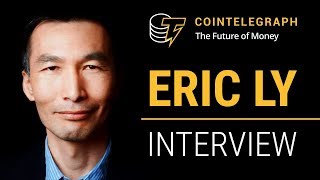
Eric Ly, LinkedIn co-founder, describes Hub, a blockchain protocol that lets people carry their reputation across marketplaces. The system uses staking so trust cannot be bought, builds a scoring history like FICO, and includes dispute resolution for ICO reputations.
Chapters
How about we just sort of start out with. Can you just describe your company Hub in a sort of like, you know, simplified, quick, quick explanation way?
Sure, I have many simplified versions. Trying to pick the best one. So Hub is trying to put reputation on the blockchain. And so what we believe is that trust and reput are really valuable to people. And right now they're all locked up in centralized databases. And what we're trying to do is basically put that information onto a blockchain so that people can control that information. They can bring it from one marketplace or community to another, make it portable, and really derive the economic benefits from it. And so we believe that in the coming years, billions of people around the world are going to be creating trustworthy relationships with each other using a blockchain.
Okay, so is it similar to a social network in that sense, like creating interactions?
It's sort of like a meta social network, if you will. So our project is building a protocol. So it's underlying many different kinds of applications, both new and existing. So we're not necessarily building one social network. We're trying to enable a trust layer that can work across many different social networks and many different marketplaces so that people can use their reputation across multiple of these networks or communities.
Okay, so you're saying that kind of interaction where you need reputation, that could be a consumer interaction, like I need to buy something and you're selling something. What are the other interactions that you're seeing?
Yeah, so we definitely see a lot of use cases around buying and selling, and that exists across, of course, many different industries and different domains. But we believe that transactions actually start with just interactions, people interacting with each other and basically sharing information and engaging with each other in conversations. And there you need also to have a trust and reputation as well. How do you know that the information that you're reading or somebody that you're interacting with is a trustworthy source? And we want to solve that problem as well, because that is really the basis on which people make sometimes very important decisions about what they're going to buy and what they're going to sell. So the whole process starts much sooner than just the transaction itself. And so that's why we want to cover the interaction part of it.
Okay, so I'm assuming it has a native token. So can you talk about how the token works in this trust establishment?
Yeah, so our token is really designed to incentivize trustworthy interactions and the building of reputation data on the blockchain, which hopefully further creates trustworthy interactions and one of the design goals that we had for our token was that it's impossible to buy trust. We really wanted to design that in. You can't buy the tokens and have more trust. So what the tokens allow you to do, it's a staking mechanism for various kinds of interactions that people might have. And we define interactions very broadly. But you can imagine a buyer seller scenario or people sharing information with each other. But across all of this, the idea is that people can stake tokens on the interaction. It's almost like a bond that says, I'm going to act in a trustworthy way in this interaction, and if I do that and the other parties agree, I'm going to get those tokens back, I'm going to get my bond back, and I'm going to get rewarded with some additional tokens that I can take for some future interactions. But if things don't go well, then the tokens that I have staked might be at risk and might be given to somebody else who sort of lost out on a certain transaction, for example. And so that's how the token works.
So what is your reputation measured in? If it's not in tokens, you can't buy more tokens.
That's right. And it's a very important point that you cannot buy your reputation, otherwise the whole purpose of a reputation system is defeated. So the way that we measure reputation is really on all of those granular interactions that are happening with the staking going on. So we remember on the blockchain, all the different interactions and transactions, and that builds up a reputation history, basically, that can be scored by different kinds of scoring systems. So imagine a FICO score in the US that is designed for credit worthiness. Now, we can have scores across the multiple domains, even beyond credit worthiness, in all the different domains where reputation and trustworthiness make a difference.
That's like. Yeah, it's amazing. You already have that protocol established for how things are. People are rated, sort of.
So we have the. Yeah, so we have the initial protocol implemented, we're about to release it, and we're working on finishing the first proof of concept on the protocol, which will be a reputation system around the ICO ecosystem. We figured that was a really great place to start and, you know, provides a really great opportunity for us to kind of showcase the value of the protocol itself.
That's so cool. Okay, I'm glad you brought that up. I didn't realize that. Can you do a very brief sort of walkthrough like you did with the Panel of person A and person B interacting. And, like, just give a concrete example of how they might interact and what they would do with their tokens. I know you already explained it abstractly.
Absolutely, yeah. Absolutely, yeah. So one of our favorite scenarios is kind of a service marketplace where maybe somebody is a designer and they're offering website design services. And then there's a client who wants to find the right designer to build up their website. So we can capture this transaction in a smart contract that records the participants and most importantly, records the outcome. So at the beginning of this transaction, both sides stake their tokens and say, we're going to act in a trustworthy way. So for the consultant, it's like, I'm going to do a good job. I'm going to successfully deliver the design, and then for the client, the promise is I'm going to pay for that. Once I believe that this is a good outcome, the participants will go through the process and the project and they'll come up with the results of the design. And if everything goes well, both participants acted in a trustworthy way. Somebody delivered, somebody paid, and they both get their tokens back. And a little bit more from the reward function that's built into the protocol. When things don't go well, there's a dispute. And in this case, it's maybe not clear which side was correct, maybe the design was delivered correctly, but the client just wasn't happy for, you know, for some reason. And so we have a mechanism where disputes can be handled by an arbitrator, which can basically decide and as a trusted source for both parties to figure out who was in the right. And the arbitrator might actually have a reputation themselves in the protocol itself. So however it gets decided, whether it's the vendor, the consultant, or the client, they get the tokens that have been staked on this transaction, and there's one party that basically loses out on their tokens. So there is basically an incentive that's built into the overall process to incentivize people to act in a trustworthy way. And the reputation comes out of, again, that history, that interaction and the outcome. And that actually goes on to both the consultant and the client in terms of how they interacted. So in the case of the consultant, if they do a lot of great projects, then they build up a really great reputation for themselves that maybe can reflect very effectively for them and get them new projects in a marketplace. Right.
And losing, like losing tokens in a dispute is clearly going to affect your reputation negatively.
That's right. That's right. And, you know, maybe not. People might not always be able to perform perfectly, and that's fine. And so the scoring algorithms and so forth will take that into account and make sure that people have a fair chance to improve their reputation over time if, you know, in some cases, you know, they didn't do it perfectly. So we believe in designing a fair system that works in a fair and maybe even, you know, slightly generous way for people.
I wanted to ask more about from your capacity as Co founder of LinkedIn. Co founder. So from that role, with your experience, a very large social network. I don't know exactly how LinkedIn is defined.
It's a professional network, but it falls into the broad category of social network.
Okay. So with that perspective, I want to ask about the recent bans by the social network and Internet giants, Facebook, Google, Twitter.
I believe there will come a time again when advertising of this nature around token sales and so forth will be repermitted on these platforms.
I mean, because. So you think it's mostly a protective measure in terms of, I don't really know how they are being involved if they're advertising things, but in terms of like Facebook being able to go and say we didn't allow the advertisement of this scam that comes out or something?
Right.
Is that what you're saying? Or like. I'm just wondering if there's any other, like, potential reasons or motivations behind this for them.
I mean, yeah, this is the only one that I can think of because, you know, back in the, I believe, early 2000s, there was this Digital Millennium Copyright act, which basically allowed all of the online platforms to disassociate themselves from the responsibility of the content that their users would put onto their platform. So it was a very key act that made it possible for Web 2.0 to really flourish. And so advertising really should be covered under, regardless of whatever domain is advertising. But I do believe that it's fundamentally around just kind of a conservative protective measure, that these platforms have to not have to be entangled with the sec and to answer potentially interesting questions which they don't have to deal with. I'm sure they're busy enough with their own priorities as it is. Yeah, so that's what I believe, but that's the only theory that I can think of right now that seems to make sense.
Well, yeah, they would say they're protecting the consumer. I find that to be questionable.
Yeah, yeah, I agree with that.
Is there any, or actually, let me rephrase, this is LinkedIn a platform that gets a lot of ICO advertising or crypto related advertising and is LinkedIn considering similar type of measures?
So I don't believe LinkedIn has yet made a decision, you know, like the other social platforms and, you know, remains to be seen whether they will, you know, go in that direction. But, you know, I wouldn't be surprised if they made a similar decision based on maybe a similar, you know, reason. But at this point we're just conjecturing, you know, what the reason might be.
But do you happen to know if there's either been, well, has there been an increase in related advertising since this ban was instilled? Like, is LinkedIn getting more market basically, or not?
I don't, I don't, I don't, I don't know that. Sorry. Yeah. Okay.
Well, that's, yeah, okay.
All right, thanks very much. Appreciate it.










