Nicholas Cary: "Within a year, half of the world's billionaires will be crypto billionaires"
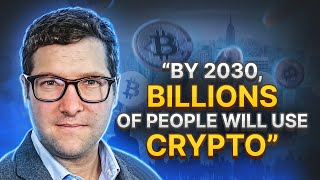
Nicholas Cary of Blockchain.com predicts half the world's billionaires will be crypto billionaires within a year. He discusses what's driving adoption: NFTs, institutional money, and macroeconomic conditions. El Salvador's Bitcoin move and crypto's struggle as a payments system also come up.
Chapters
Hi everyone, I'm Giovanni from Web Summit 2021. I have the pleasure to be joined by Nicholas Carey from blockchain.com. how are you doing, Nicholas?
Great, thank you, Giovanni. It's great to be here today.
I would like to know your perspective on the current status of the crypto industry because we know that you have been in the crypto industry for a very long time. Blockchain.com was one of the earliest companies founded in the crypto space. I guess that this year it was its 10th birthday, right?
Yeah.
So congratulations. And so since then, the crypto sphere has been trying to fix the shortcomings of the traditional financial system. What do you think are the achievements that we reached so far?
Yeah, Giovanni, thank you. It's incredible to celebrate this today because right now, just in the last minute, basically it's an all time high for the digital asset currency class as an asset class. So we're at $2.86 trillion worth of value creation in a very short period of time. While we've been basically building things for about a decade. To me, I just feel like we're getting started still. If we just pulled the audience, about one third of the audience now admitted to holding some crypto, which to me is an incredible achievement. If we were to do that five years ago at Web Summit, you would have had one or two people shyly raise their hand. So we've made great progress, but we still see how much more room we have to go. This is a really tech forward audience and just about one third of them hold crypto. So lots of stuff to celebrate though. I mean, if you think about how far we've come, just@blockchain.com, we've had over 80 million people sign up for wallets in the past decade. Those users have conducted over a trillion dollars worth of on chain transactions. And our users still broadcast roughly one third of worldwide on chain bitcoin traffic to the bitcoin blockchain. So I'm really proud of all those achievements. The team has done some great work and we just announced on our 10th anniversary, we've had over $1.5 billion worth of revenue in the company this year. So the cryptocurrency businesses that have been around for a while, and even some new ones, are starting to build very, very viable, very enduring companies. And so we've started to put the foundations for another decade and many more ahead of that, of the work that will be necessary to bring a better financial system for the world.
In terms of mass adoption. You said that you are surprised by the amount of people that at this conference this year are into cryptocurrency. I am surprised too, because I guess that two years ago there would be, as you said, much less people involved in crypto. So you said one. One third, more or less, according to your perception, is now involved into cryptocurrencies. What do you think? Maybe next year we're going to have maybe 2/3?
Yeah. So there are three major themes happening simultaneously at a macro level that are sort of driving adoption in crypto today. So, number one, you've got the cultural zeitgeist of all the content creators, the artists, the musicians, the videographers, people in the film industry looking at NFT as a viable way for them to create property rights, for their creativity, for their music, and for their art. And this is a big deal, because when the people that create the things that we can ingest and consume for our entertainment are working in creative new ways, it's something to pay attention to. And so I'm really excited about all the stuff happening in that space. You have a very concerning macroeconomic climate, though. You have negative interest rates across many of the largest financial markets in the world. So, meaning if you store your money in a bank account, in a savings account, you're actually losing wealth. And so many people are starting to turn to alternative assets as a way to maybe protect themselves against this downside risk. And even if you're not sure about cryptocurrencies or you don't know which one you want to participate in, you can actually buy stablecoins that earn better yield than the currencies you hold in your bank or savings account. And then finally, it's really interesting, and it's really true that the institutional adoption of crypto is happening. The large financial service providers, the traditional financial service providers, who we've been trying to disrupt this whole time are, are actually leaning in, and they're building products and services for their wealthy clients, and they're also innovating in the space as well. And to me, this is all welcome. And these three things happening simultaneously are conspiring to drive millions and millions of new users into crypto every single month. And so I think next year, when we have another reunion and we can do an update on what's happened, there'll be many, many more people in the world that have access to cryptocurrencies, and that'll be a good thing.
The things you mentioned so far are mostly related to cryptocurrency as a sort of store of value, as far as I understood, because you mentioned the fact that now we have negative interest rates. So people are interested in finding new assets that can preserve their wealth. But what about cryptocurrencies in terms of actual currencies? So, like, not as a store of value, but as a means of payment. Are we maybe a little bit behind in that sense? Or you think that even that aspect is being actually well implemented right now?
So we have not done enough, I think, would be the answer. But here's the good news. There's always been sort of this, what we call a chicken and egg problem. You sort of need to have some wealth created first before people decide how they spend it. And you need to make spending it very cheap and very reliable. And so there's still sort of an issue, I think, from transitioning from digital payments to buying things in the real world. So the good news is the major merchant processors Companies like MasterCard and the people that build the point of sale systems like Verifone and worldpay are looking at how to adopt cryptocurrency at the merchant terminal, meaning at the small business, at the store that you shop at to buy your groceries. So I think in about a year or maybe two, we'll have the payment rails from all the software that's been built actually deploying into the merchants around the world. And then it won't just be a store of value or just for online payments, but we'll be really able in the real world to buy things with it too. And to me, that's actually really important. I think a store value argument is a good one. But I also want to be able to use my crypto to buy movie tickets, popcorn, sardines, or whatever I want to buy for Christmas or anything else. And so the good news is I'm very confident that in the next few years, all of that infrastructure will be tooled to catch and accept digital currency payments and cryptocurrency payments. And then I think, you know, the final capitulation of cash in some of the fiat currencies will occur.
I'm curious to know, what is your opinion about the experiment of El Salvador? So you mentioned the fact that, yeah, we need the capability to use Bitcoin as a means of payment. We saw that now in El Salvador there is an official backing of Bitcoin as a legal tender, but there is a lot of criticism around it too. So apparently there are some glitches. The wallet sometimes is not working properly, people are skeptical, and so on and so forth. What is your evaluation of this unique monetary experiment that has been carried out in El Salvador?
Yeah. So I think the work happening in El Salvador is very interesting. And I'm generally supportive of more countries adopting cryptocurrencies. I do think how they do that matters. You want it to be done through an organic, democratic process. You want people to voluntarily accept and consent to these systems. And so I always think it's probably better if that happens in a more sort of progressive way. However, the proof will be in the pudding. And so far, cryptocurrency is getting adopted in El Salvador. We've seen anecdotally an increase in the number of people downloading blockchain.com wallets in El Salvador. So I'm hopeful other countries see how they've done the rollout there and continue to improve on getting more people to use cryptocurrencies, and especially ones that are enabling for people that don't have access to traditional financial services in the first place. El Salvador is a very specifically interesting example because so much money gets remitted from family members that are working abroad to send money back home to their families to feed them. And now we have corridors that make that possible to happen, much more efficient and much cheaper. And so the people get more money to spend at home. And also they have access to a financial system that's embedded in the Internet that doesn't care where they came from or the circumstances of their birth, and treats them all the.
As you said, we are at all time highs. We just touched them a few days before. Now we are just retracing a little bit, but very not significantly. So what is your perception of the situation in the market right now? Are we going to move forward in this bull market before year's end? What is your point of view on this?
Well, I think that trifecta of macroeconomic conditions is a very powerful force that creates a very bullish sentiment for me. Institutional adoption. A whole new community of people advocating and sharing content and supporting cryptocurrencies and digital collectibles in the gaming world that is leaning into using blockchain technology for new forms of entertainment online. I'm excited about all of that. And then I think really from a wealth preservation perspective, it is one of the safest places you can store your wealth today, depending on how you manage your risk. So if you're a young entrepreneur or young employee at some large company today and you set up your bank account and you try and save a little bit of money every month, if you live in Europe all of those savings are actually deteriorating your purchasing power on a month over month basis. And so you'd be better served by signing up for an online cryptocurrency service provider, holding some stable coins, maybe buying some other things, but being very cautious about how you do that too. I don't think anyone should be overly risky with how they deploy their wealth. But without a doubt there are some options for how to earn yield in a stable way that are just pegged against even stable coins like the euro, stablecoin or digital dollar. And there are interesting ways for them to protect their wealth.
But what about concrete price predictions like, would you like to express a point of view on that for the end of 2021?
So Giovanni, I've been asked this question many times over 10 years and I have never been accurate in predicting price, but I am generally accurate in predicting long term trends and the digitization of financial services. The easy for anyone in the world to sign up for these systems, they're becoming more reliable and there are new ways for people to earn yield and gain access to investments that are, you know, otherwise they wouldn't have access to continues to make me excited about the industry, but I think most importantly is the communities themselves that support these projects that are building fantastic tools enabling more financial inclusion around the world. All of that speaks to a very humanist dynamic to this work, and it's something I'm very excited about in the long run. So here's a prediction. I think by 2030, you will have billions of people in the world using digital currencies and cryptocurrencies to make payments, to invest in the future, to fund startups, to create new types of token systems and new types of economies that are going to be vastly different than the things we relied on in the past. I also think even maybe within the next year, half of the world's billionaires will be billionaires because of cryptocurrency. And they're not going to slow down how they think or how they work. They're going to invest more in their startups and their communities. They're going to fund all kinds of cool projects. Some of those things will be successful, some of them won't. But we're recycling talent in the industry. You're seeing more startups in any point in the history of crypto. I think we're just really at the beginning of the next sort of final adoption curve. You had a bunch of early adopters that came in, you know, in 2011, 2013, some more in 2015. Some people showed up in 2017 and they had a very bad day because they invested in some lousy ICOs. But there's a whole new cohort now and there's a whole bunch of new learnings and everyone's learning about everything that happened in the previous waves too. So I think the whole economy is getting smarter.
Yeah, I totally agree. I mean the kind of atmosphere that we can breathe here is something completely incomparable compared to what was going on in 2017 with all this ICO and it's so much more legit now.
It's very different when you have mainstream brands like the largest sporting franchises in the world partnering with NFT platforms to build new unique fan experiences to gaming companies dealing with online collectibles, to institutions building, you know, risk managed products for their wealthiest clients and high net worth individuals and then thinking about the retail adoption, you know, word of mouth that's occurring in the space. To me, we're in very, very good macroeconomic conditions to continue to see success in the space.
Awesome. Thanks a lot.
Thank you Giovanni. Cheer.










