Occam AMA: A liquidity solution for Cardano tokens
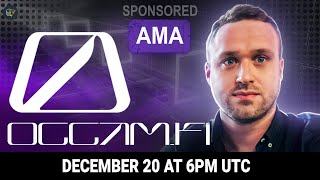
Elliot Hill explains OccamFi's three products for Cardano: Occam Razor launchpad (averaging 4 IDOs monthly since April 2021), an accelerator program, and OccamX DEX launching Q1 2022 on Milkomeda. OCC token staking grants IDO access starting at 150 tokens; OCX will power the DEX.
Questions this video answers
Around April 2021.
Around 18–20 projects (to date in 2021).
About four IDOs per month.
Q1 2022 (public testnet soon; Milkomeda-based rollout planned).
Starly.
Chapters
Hey everyone, what's up? It's your girl Rachel here. Thanks for joining us today. Today we've got an awesome AMA as usual.
And.
And today I'm speaking with Elliot Hill. He is the head of communications at occamfi. Hi, Elliot, how's it going?
Hey, Rachel. It's a pleasure to be here. I love that little intro that you guys have got. We need to get something like that. Occamfi.
Yeah, yeah, we're good with our intros. Elliot, thanks again for joining us today. We're all really excited you're here. I want to remind the audience. Please send us your questions in the chat. Elliot is here to answer everything for you guys during this time time that we're chatting. But before we get started, Elliot, I'm going to ask you a question. What is Occam Phi and you know the goals behind the project there?
Sure, yeah, that's a great question. So Occam Fire is a whole decentralized finance ecosystem built for Cardano. So we have three core verticals. The first core vertical is our launch pad. So it's a decentralized launch pad that launches the most promising blockchain projects launched for Cardano. We have the accelerator incubator program which we'll get into a little bit later, but that's essentially like an accelerator for brand new projects building in the Cardano ecosystem. We also have our OCMX Dex, which will bring unparalleled liquidity to Cardano native tokens. So a little bit like uniswap functions for ERC20 tokens. We're going to play that role within the Cardano ecosystem for Cardano native tokens. So we have these three main product verticals. We've been launched since around April 2021, so we're still fairly new. It's been a really eventful year. We've had loads of successful IDOs. We're just getting ready for the launch of our Dex, which I'm going to talk about a little bit later on in the interview.
Got it. Cool, thanks. There are three different verticals here. Let's first start talking about Occam Razor. What is this and why is it important?
I think we've had this evolution of launchpads and how we start crypto projects. So just for people who maybe aren't necessarily aware of what an IDEO is. So we had back in 2017, which is when I sort of entered the crypto space, the rise of the initial coin offering and initial coin offerings were really interesting for a number of reasons. They bought in new ways for projects to raise funds. So they were like a traditional ipo, like an initial public offering that a traditional company would do with stocks, except it enabled companies and crypto projects, which maybe wouldn't have found funding through traditional VC routes to raise funds directly from investors. The problem with this fundraising model, if anyone watching is, is, you know, long enough in the tooth to remember 2017, is a lot of these projects would actually turn out to be, you know, less than honest. There was a lot of, you know, scams in 2017. A lot of investors, investors got, got burnt. A lot of the project teams would just basically take the money and run. And so then we've had this, this evolution of, of fundraising. So we had the security token offerings but again they had to comply with like very rigid securities laws. And that's been a problem, particularly in the USA with the sec. And now we have this, this new fundraising method which is initial decentralized offerings. So initial decentralized offerings or IDOs come through a launch pad like Occam. So we do all the due diligence on projects. We make sure that their teams are legit, we make sure that they have technical audits in place, that they have, you know, robust smart contracts on which they operate or robust technology. And we also make sure that they're going to have some longevity in the space. So we take on some amount of counterparty risk in how we deal and do our, you know, due diligence for these companies that we launch. But then we reduce the risk to our participants. So any project can apply to do an IDO through us. They make the tokens available for sale on the Occam Razor launchpad as a Cardano based launchpad and as we have links with IOHK through their C fund and Demurgo who won the founding entities. Cardano, we do have a mandate to only really launch projects which have a clear view of what they're going to build on Cardano. So we've launched around 18, maybe 20 projects to date this year. We're averaging now around four IDOs per month. And all of these are projects that have some plan in their roadmap to build components out on Cardano. So it's a really exciting time and we've launched some great projects like Ardana, who, you know, really big defi protocol building for Cardano. We launched DFire which is like order router, decentralized order router router like Changely and they're actually backed by Changely and a number of other projects which yeah, it's been very exciting and we've got some great projects coming up as well. We've got Starly who are like an NFT backed project and they're backed by Animoca Brands and we're also about to to announce Arenum as well and they're going to Ideo with us early in the new year. So yeah, we're really excited for, for what's coming up on the launch pad.
Cool. Yeah, that, that sounds awesome. So Occam Razor sounds like a really good platform for companies wanting to do IDOs within that Cardano ecosystem. Now I know Elliot, that the Occam X decks is launching soon. Can you provide more details there?
Yeah, it's a really good question. So the Archimex decks and maybe again like just before we did some background on Dexes. So Dexes are needed because centralized exchanges, you know, such as the likes of Binance, obviously they do have a Dex component but a centralized exchange often, you know, there's a lot of hurdles required in order for like tokens to actually list there. Usually tokens have to have a certain amount of token holders or, or they have to pay a fee to list. Whereas decentralized exchanges allow any token that launches on top of a protocol, a supported protocol to launch and find instant liquidity for their token. So as I mentioned briefly before, we've got Uniswap for Ethereum tokens which is obviously like one of the de facto decentralized exchanges and probably what most people think about when you hear decentralized exchanges. And we've got pancakeswap for Binance Smart chain. So we're going to be like the Uni swap or the Pancake swap for Cardano. So Cardano native tokens were introduced through the, through the Mary Hard fork last year on Cardano. So it became possible to mint native tokens like you would mint ERC20 tokens on Ethereum. You can mint CNTS on Cardano now and they're going to have a role in the Defi ecosystem on Cardano and they already do. So we're really excited to help these tokens tokens find liquidity. There's a number of other Dexes that are building on Cardano and you know, some of these quite interesting, but we're really looking to become like a complete solution whereby you know, projects can enter our ecosystem through accelerator, they can get funding, they can come through to the AAM Razor launchpad and do a successful idea with us and then they can find instant secondary market trading liquidity on the Occamx Dex. So we're going to have like this funnel for new projects building on Cardano, which is why we call ourselves a complete defi ecosystem for Cardano. So we're really excited to see how this evolves and how projects come through and find liquidity on the decks.
Got it? Yeah. Want to remind the audience, please send us your questions. This is really, really interesting. Elliot, are you able to hint as to when the Occam X Dex will launch?
Yeah, absolutely. I mean we're gonna, I'm gonna deep dive into it a bit later. I know that we've got some, some questions lined up around Milkomeda. So that's going to be in Q1 2022, so just around the corner. We've always said since we launched, well, since we announced that we would launch the decks, we've always said that we were going to make MLP rather than mvp. So we're going to make a minimum lovable product. We really do want to get it to the point where it's highly usable, where we deliver on everything that we've promised for users. Obviously that means taking some time to reiterate what we've built. We've released a couple of demos on what the front end interface will look like, we've got the landing page set up and we're going to have a public testnet very soon. So yeah, Q1 2022 is the, the tentative date at the moment. Cool.
And then how is Occam x Dex different from other decentralized exchanges out there? I know you mentioned that there are a few others that support Cardano. So how is this one different?
Yeah, so I'd say that ours is different by virtue of the fact that it's also attached to the launchpad as I mentioned before. So rather than trying to get tokens to come and list and people to provide liquidity, we'll be in that unique position to just take the tokens that launch through our launch pad, instantly list them on Archimex Dex to provide instant liquidity for the projects. And also as a feature of that, we're going to enable liquidity provision within our own interface online. So our users and holders of the OCX token, which is the token that powers our Dex and and also holders the OCC token, which is our Ockham Razor token, can go and provide instant liquidity to these new projects that launch on Cardano. So we're going to have a range of liquidity mining incentives and that's going to be like a self sustaining ecosystem within our own Occam suite of products. So I think that you know, obviously there's, there's first mover advantages and then there's all sorts of advantages on UX and UI that we could bring. And our advantage is the fact that we'll, we'll have this end to end ecosystem where we can take projects from a very early stage all the way through to finding liquidity and a secondary market trading ecosystem.
Right. That whole end to end ecosystem is so important here. That's, that's a really great differentiator. I'm going to take a quick question from an audience member. Lewis is asking how many incubated projects can we expect on quarter one? 2022?
Yeah, so the first is a great question. The first project that we've been incubating that is going to launch in Q1 2022 is starly. So as I just said, they're like an NFT protocol but they've got some really big partnerships already. So they're backed by Animoca Brands which is one of the biggest VCs in the space and they already have some like class acts on board. Some of the other incubated projects are arena. So actually it's a bit of a spoiler for our community. I realized there I had, I had leaked a little bit of news. So any of our community members watching this? We're going to have a PR tomorrow about arena doing an ideo on our platform but it's a great, great way to announce it here on, on cointelegraph. So arena, as we mentioned last week, we have a partnership. They're one of our incubator companies. They're going to be an esports tournament blockchain project. Obviously esports is super hot right now. We actually just launched another Cardano esports project called Cornucopias. We were one of the launch pads they used to launch. So esports, that's one of the trends we're seeing right now in the market is esports is becoming incredibly hot and a lot of esports brands are now looking, they've been in maybe stealth mode and they're looking to launch. You know, they're, they're like either Esports Marketplace or Esports Platform or something like that. So arena are going to be one of those projects, they're an incubator project and another esports company as well that is going to launch in hopefully Q1 22 next year is Colesium. So we actually announced these a while back but they've been getting ready and building their components out. So they've got a really cool platform which is actually linked to one of the games they've already developed and has a million downloads on the Android and iOS stores. And that's called Contest of Heroes. So we're really excited for them as well. And then just thinking about some, probably our, you know, last Occam accelerator project we had Centurify. They're like a ticketing platform so they move tickets for events onto the Blockchain so you can have programmable smart contract interactions with a ticket, for instance, so it stops hawkers and resellers from profit. Enough tickets. And we also had Meowswap last week, which are an early simplistic Dex for Cardano.
Cool. So you mentioned a few interesting use cases like NFTs and esports. Esports. Are there any other projects that you're seeing that are making really good use of the Cardano blockchain?
Yeah, so I mean, obviously NFTs and esports are the big ones now, so just we don't have any affiliation with them. But one of the projects which, you know, I've been following quite closely and they recently like pretty much broke the Cardano blockchain with their NFT Mint is, is Hosky. So they're like, I mean obviously Charles Hoskinson founded Cardano and Hosky, little bit of a play on words on Charles Hoskinson and Husky the Dog. So they had like a, an NFT Mint and they've also got Husky tokens. So that's pretty interesting. In other, you know, other projects that are building on Cardano, there's just everything you would typically find on Ethereum or on, you know, Avalanche Polkadot is now being built out for Cardano. So all of like the Defi apps, all of the yield generating protocols, all of like your compounds and your, like uni swaps, they're all at the point where they're being built and developed for Cardano. So I mean we've got all of these projects that are, you know, I guess tried and tested. But what I always say is because of how Cardano is implemented, so it's built with Plutus smart contracts which are based on the Haskell programming language. We've got this real opportunity in the Cardano ecosystem to build things very differently so we can build things in a way more secure manner. And I think that's what we're seeing and we're seeing a lot of. And we've been, you know, on the receiving end and not in a bad way. And maybe some people can Watching this will see how it relates to current events. The Cardano ecosystem is, is very exacting in the standards of what they want built on Cardano which, you know, I'm ex Cardano Foundation, I used to work for Cardano foundation around a year ago and I think Cardano is unlike any other ecosystem in that it really demands excellence. And I think that that is going to is what is going to set it apart in the long run or probably even in the midterm now that smart contracts are here, is that the Cardano ecosystem always demands excellence. So even though the DAPPS might look the same as what we've got on Ethereum or what we've got on Polkadot or Avalanche, I think they're going to be much more robust. I think they are going to offer cheaper transactions and I think in time they're going to become like the de facto blockchain based dapps or at least we're going to have a really cool, you know, interoperability, you know where people can port over to Cardano and transact cheaper than they could on Ethereum. So maybe the same D apps. I know we deviated a little bit from your original question there. Maybe the dapps will sort of look the same but I think on the back end they're going to be much more robust. They're going to be far easier for institutions to trust seeing as Haskell is the programming language that powers things like in flight computers and banking apps in the traditional financ world. And I think that's going to welcome a lot more people into the DEFI ecosystem as a whole.
Right? Yeah. So that's interesting and we're talking a lot about DEFI here. But we've got an interesting question from the audience. Bitdano is asking any partnerships with Metaverse projects, any NFT involvement for Ochemfi. So obviously the Metaverse is huge right now. So that, that's a great question.
Yeah, actually, I mean we have had some Metaverse projects that are again they're NFT based obviously NFT the thing now and NFTs are probably going to power the Metaverse, there's no doubt about that. But we've had some apply to come through an ideo. Aram, we can't share any details on that just yet, but we are seeing some Metaverse projects in actual fact, Cornucopias I would say is, is sort of a Metaverse project in that they've got this awesome, really feature rich blockchain world. So they built like a blockchain game. It's like a farming game, you can buy plots of land in it. They're a super, they've got massive following and it's a really good looking game as well. So I don't know if anyone watching is is probably worked in blockchain or been in blockchain long enough to remember but blockchain games used to, used to suck. So you would have like, it would take absolutely ages to buy something in game or the graphics or like the actual playability would be really poor but you'd have this NFT element. We're now at a point and I think Cardano as well is, is powering it to some extent because the fast and cheap transactions where we can make the metaverse accessible and cheap while also offering that playability. So Cornucopias does that. Another interesting project that actually one of our community managers is heading up is Cardano Warriors. So Cardano warriors again is sort of like a, sort of like an old school, sort of like Zelda handheld game or like you know, you Pokemon. So it's like a top down, a very Japanese style but that's got awesome playability. But then it's got NFT in game items on the blockchain and on the Cardano blockchain as well. So I think that the metaverse is going to be powered, you know, by blockchain and by NFTs. But in order for that to happen it's going to have to be on a blockchain that facilitates these fast transactions and is sufficiently decentralized so that players know that, that their in game items are protected through decentralization and that scalability that comes with it.
Right? Yeah, you make such good points. I mean right now we're hearing so much news about the metaverse, but I think what we need people to understand is how this relates to blockchain and how important the technology is here for powering the metaverse because obviously it extends far beyond just Facebook and the social media network. So understanding what the Cardano blockchain's role with the metaverse is is really important.
Yeah, and I'm way more excited for the metaverse that's community driven rather than big tech moving into the metaverse. I mean it sort of feels like an after, an afterthought for big tech. Realistically, blockchain based projects have been doing this since you know like 2016. I mean the first NFTs were minted in like, you know, we think it's a new phenomena, but they've actually been around for like four or five years. Now basically as soon as they became available on Ethereum to mint non fungible tokens. So it's ERC721 I think but you know they're not a new thing and a lot of projects have been doing them for a long time and you know, even traditional gaming, you know, like I mean World of Warcraft, is that not a Metaverse? You know you've got traded of gold in there and trade of items so I'm less excited about, you know and obviously it's great for adoption and it's great if they explore other blockchain solutions other than Facebook Libra which I'm not all that keen on but you know it's, it's going to be really interesting to see I think the community led Metaverse rather than the corporate led Metaverse.
Right, for sure. And also connecting the digital to the physical worlds and all of that's going to be facilitated through blockchain and digital identities. So I think there's a lot that we've got to look forward to. I want to remind our audience, please keep sending us your questions. Elliot is super interesting so just send us those, send those questions our way. Elliot, I want to ask you, can you share more details about your development on Milkomeda? You mentioned it a little bit earlier.
Yeah, for sure. That's a great question, I'm glad you asked. Milkomeda is a layer 2 protocol for delivering Ethereum virtual machine capabilities. So the EVN is EVM, sorry is basically what powers smart contracts on Ethereum but also a lot of other blockchains have basically took that and you know, copy pasted it sort of and deployed it for their, for their blockchain. So like Binance smart chain you can use Ethereum based tokens, you can easily port them over to, to bsc and that's why you know, if you've got an Ethereum address you'll have the same counterpart address for BSC tokens on the Binance Smart chain network. This is all powered by the evm but non EVM blockchains like Cardano, they're not based on the Ethereum virtual machine. So although Cardano does have some, some EVM capabilities and they've built into its roadmap from the start. It's powered, you know, by the Ouroboros proof of stake protocol and it's been written from scratch from the ground up and as such like there isn't that interoperability there between you know, Solidity smart contracts on Ethereum and Plutus smart contracts on Cardano. But if we want that interoperability, you know, which is really important we're seeing now. I don't think there's, you know, I love Cardano, I've been in the ecosystem for a long time, but I'm not sure that, you know, one blockchain is, is going to win. There's going to be room for loads of different blockchains. So we need to focus on interoperability and how these blockchains can talk to each other. And that's been like a discussion for as long as I've been working in blockchain. How do we promote interoperability? So Milkomeda are one of the companies working on interoperability for not just Cardano but also any, pretty much any non EVM blockchain. They're built by the guys at DC Spark. So Sebastian and Nico are co founders and they were instrumental in the early days of Cardano working for Emurgo, which is one of the founded entities of Cardano and sort of like the VC arm and the business arm of Cardano. So Sebastian, Nico, Spanoff and set up DC Spark. They're working on some really interesting projects. One of these is Milkomeda. So Milkomeda would allow us to build out our Dex in a much faster way than we could if we were to deploy it all on Cardano native smart contracts through Plutus. But at the same time it also allows us to use ADA as the base currency for gas. So it's like a wrapped version of ada. And it will also allow us to offer Cardano native tokens on a Dex platform so that you know, these projects that are just waiting for that liquidity can find it through a Milkimedia version of Adex. So I mean, probably to give some context to this, Occam razor as it currently stands at the moment is built in solidity smart contracts. So we originally launched on Ethereum because we launched pre smart contract environment on Cardano. So all of our current smart contracts are built in solidity on Ethereum. We just launched BSC capabilities so you can also contribute to most IDOs coming through a platform in Binance BNB on the BSC network. But then secondary to that, obviously we want to start accepting ADA because we are like a Cardano based launchpad and we want to start bringing utility for ada. So when we launch our Dex, we want it to be a Dex for Cardano native tokens, not a Dex for Ethereum tokens, not a Dex Finance smart chain tokens. We need something in place to help us do that. But in order to scale and make sure that we can bypass the concurrency problem, which is a big topic in Cardano right now. We need to use probably a layer 2 scaling solution and Milkomeda lets us do that. We're actually going to have a really interesting interview coming up with the founders there at DC Spark. We're going to talk about this in a little more detail and then they're going to help us basically build out our Dex on top of the Milkomeda layer 2 protocol and then we can take rapt ADA in return for Cardano native tokens. Finally kickstart some of the liquidity on top of Cardano.
Cool. Awesome. I'm going to take a quick question from the audience Louis is asking. I'm currently staking OCC and was thinking of was thinking of providing liquidity. What's the benefit of doing so? Well, liquidity OCC count towards IDO tiers. Now I'm assuming OCC is the Occam Phi token.
Yeah. So OCC is our native token for the Occam Razor launchpad. It's a really good question, Lewis. So there's two different things you can do at the moment with OCC tokens so you can stake them for participation in in Occam Razor idos. And obviously, as you know, because you're asking the question, the Occam Razor IDO is required to stake a certain amount in order to get into the tier and enter into like IDOs through our like like draw system. We have five different tiers and then there's providing liquidity. So liquidity will offer a much higher APY return than you would get on staking if you just staked your OCC tokens. But they don't count towards IDO tiers. So any tokens that you basically would have to exchange them on Uni swap for liquidity tokens. So they'd be uni swap liquidity tokens. And then you stake those Uni swap liquidity tokens within launch pad to provide liquidity. And at the moment we offer liquidity on a number of like trading pairs. So there's the OCC token that you can provide liquidity to. We also do it for Defi theos and you know, any other accelerator project that comes through our launchpad. We also offer a liquidity mining as a service there. However, what I would say is every single IDO that we do, we randomly pick from the pool of liquidity providers and, and we'll pick usually 3 or 4 depending on how many participants and how many registrants are in the ido, we'll pick three or four, maybe even five liquidity miners at random and promote their address for an ido. So basically, although you, you know, it doesn't count towards your tier, you can still sort of increase your chances of getting selected by providing liquidity. So I would say if you were thinking doing that is say, keep the minimum number of OCC that you need to get into at least one tier. So that would be 150 occ. You could keep that on stake through Razor through our normal staking contract and then you could use the rest of your OCC to provide liquidity and then you would have, you know, increased chances by potentially getting selected through the liquidity mining draw. And you'd also have enough OCC left on state to be in in a tier for, for participation.
Awesome. That's a great explanation. Thanks, Elliot. We're getting a few other questions for the audience, so I want to remind you guys, send us your questions and I'm going to take another one really quick bit. Donna is asking, will we be able to bridge from other chains direct from other chains directly onto Ochem decks and win? I mean, you talked about this interoperability, so you just want to add to that?
Yeah, sure. So we just announced the partnership with Everscale. There was a few things going on, so we haven't really had the chance to talk about what that's actually going to entail at the moment. So Everscale is like another like scaling blockchain. So they offer their own blockchain which ports into loads of different blockchain protocols. And through that you can swap tokens in an interoperability, interoperable manner. And we're gonna basically link Everscale and the decks that we build on Milkomeda to build sort of a bridge so you can move tokens in and out of that bridge. And I don't know if anyone watching this remembers our early Cardano to Ethereum bridge. It's going to be similar to that and that you can, you know, take Cardano native tokens and then sort of wrap them on Milkomeda and trade them through a bridge and then trade them through the Dex and then move them back to the actual Cardano main chain through the bridge. But we're also looking for ways through Everscale to make that functionality available for say Binance smart chain tokens or Ethereum tokens. So you could take an Ethereum token, wrap it on Cardano or something like that, trade it on like the Milk media layer, two based decks and then swap it out. So yeah, it's going to be like a bridge functionality and that will eventually extend to other blockchains, not just Cardano.
Yeah, awesome. Let's talk a little bit about this incubator program you mentioned earlier, Elliot. So it's called Accelerator. Can you go into some details there?
Yeah, sure. So Accelerator, it's a, it's a play on words. So we've got, it's the Occam Accelerator. Accelerator. And basically what we do is we make funds available and also support for like really promising projects building on Cardano. So we have like a few different types of projects that, that come to us and approach us to ido. So some of them, they're really along, you know, they're really down the line with their development. So they might even have all of the, you know, like a fully working project, a fully working product, sorry. And they literally just want to launch a token through us. A good example of that would be Open Rights Exchange. So they had already been going for three years before they even thought about launching a token and they approached us and said, can we do an IDO together? They had IDO signed up with a couple of other launchpads or Adana as well. They already had like a massive development team. They built loads of really cool components. They just wanted to launch their token with Accelerator. What we make available is for maybe small dev teams or even individuals who have a really great idea to build on Cardano, but perhaps they don't have the technical know how or the capacity to say build out all the, the legal requirements that come with establishing a crypto company or getting the communications guys on board or getting the marketing set up ahead of their ido or maybe even if they need a little bit of help with development. So we can help connect the dots with the people who they need to actually take and elevate their project or we can help them with get set up in a legal jurisdiction, that sort of thing. So if you're small, like for small dev teams or maybe you're an individual who's a developer and you've got a really cool idea that you want to see built on Cardano or perhaps you've come through, so I'll just maybe give a brief background on it for watchers who aren't Cardano natives. So Cardano also has this like similar, it's like an incubator called Catalyst and that's a community led decentralized governance voting platform. So the community can actually vote using their ADA stake on which projects get Funding. So this funding can be quite significant if you get voted on through multiple voting rounds. But if you've, you know, had a little bit of funding through Catalyst, just enough to validate your idea so you know that it's a good idea because it's been voted on, then you want to take it to that next level. Then you can contact us at Accelerator Apply to become an accelerator project and we'll help you with all the next steps so we can take you through from like inception, just a good idea with some validation all the way through to a successful launch. And we've done this so far with Defier. They had quite a good team behind them, but they needed just that extra step to come into the Cardano ecosystem, which is where our expertise lies. We've done it with Theos, which was an NFT project that was one of the first projects to launch with us. We've bought centerify, who I spoke about earlier, and a whole host of other projects have come through as accelerator partners.
Very cool. We're getting a few more questions from the audience, so I want to focus on those real quick. And just a reminder, keep sending us your questions. Deco is asking a really good question. He's saying, he's asking. Occam was among the first to claim to solve the concurrency problem. Was it solved via in house devs or through a partnership with Milkomeda?
Yeah, that's a great question. Yeah. So I was hoping we could talk a little bit more about concurrency. So MIL are going to help us to launch, you know, more quickly than we would have just by writing out our own Pluto Smart contracts and deploying that entirely on the Cardano main chain, that is absolutely still one of our core goals. So the concurrency problem, the concurrency solution that we showed on our YouTube, that was developed entirely in house by our own devs, we're still working on that. It's still going to be a core part of the Occamex Dex and but this is sort of like a. The partnership with Milkomeda is just to bring it here quicker so it'll be fully functional and it'll be fully scalable. So just to give some context to those watching who maybe don't know, so Cardano is built on a UTXO transaction model. So just like Bitcoin is UTXO unspent transaction model, so is Cardano, which is great because it's, it introduces a lot more user security and fund security. There's absolutely no risk of double spend. And also it means that tokens that are deployed on top of Cardano use the same token logic as the underlying blockchain, which means there's way less likelihood for smart contracts to be exploited. However, it does introduce some, you know, overcomeable limitations to scalability which when you're trying to build Dexes, which obviously require a high throughput, it does limit how many transactions you can get per block. So, you know, blocks. On Cardano we have blocks and slots just like you'd have a block on Ethereum and typically with a utxo and on Cardano it's the extended UTXO model. It makes it somewhat more challenging to get, you know, multiple transactions through per block. But with a layer two solution like Milkomeda we can take the, you know, we can still do the settlement on the Cardano main chain, but we can do the execution and the, you know, the, the actual throughput of the transactions on a layer two. So the scalability issue isn't there. We can build a high throughput decks and still offer codon and native tokens for trading. However, that said, and going back to Deco's question, we are still, you know, our core focus is still building out the components for the Cardano mainnet and as soon as we feel comfortable that we can offer a high throughput Dex that that offers a good user experience and a robust and safe to use product, then obviously we're going to launch fully for the Cardano mainnet. One of the challenges there has been obviously because Cardano is implemented in Haskell and it's got Plutus based smart contracts. There's not as many audit companies as there would be for say Ethereum smart contracts. It's been around for a lot longer, but this is becoming less problematic. There's more and more Plutus development houses and Cardano is gaining in popularity. So we're really looking forward to being able to bring these components as quickly as possible. But Milk Ometer is going to be first so you guys can see the front end of our decks and get good user experience sooner basically.
Wonderful. That was another great explanation. Thanks. Elliot. I'm going to take another question from the audience. Bakri is asking, can you explain the difference between OCC and occasionally ocs?
Yeah, so it's ocx. I think he probably meant there is, that's like Cardano Dex token. So the Archimex Dex token is ocx. So fundamentally, I mean the difference is that they're for two very different products. So OCX is the Dex token that powers our decks. It's a bit like The Uni Swap token that powers Uni Swap. So it'll be used for cheaper trading fees if you're a holder, you know, pay, make, take fees, that sort of things. Also it'll be used for providing liquidity to projects and you know, trading pairs on the decks. And we've also got some other functionality planned for it in the future. Whereas OCC is the token that powers our launch pad. You can get OCX at the moment because we didn't want to make it available for sale and therefore undermine the value of occ. So we moved OCC to a deflationary model. We've already burnt half a million tokens from OCC circulating supply. And the only way that the only ways that you can get OCX is by staking OCC token, providing liquidity to OCC trading pairs, holding OCC as a cardano native token or by staking, well delegate an ADA to our Occam stake pool. But OCC is going to be used in the future for the governance of the protocol. So we're moving to a DAO based model. But we've just introduced stake weighted voting through Snapshot so you can use your OCC tokens to go to Snapshot and vote on proposals like community led proposals through the OCCAM5 forum. So any OCC holder can make proposals on protocol level changes and we move those to state based voting. So OCC can be seen as like a utility token for the Occam Razor launchpad and it also has governance functions and OCX is very much a Dex token for providing liquidity and that sort of thing.
Awesome. Great. We've still got a few minutes left so just want to remind the audience, send us your questions, subscribe to our YouTube channel. Do all of those things before we end the show here with Elliot. Elliot, I'm going to take just one question real quick. Marcus is asking, can you disclose something about your partnership with some Swissborg?
Sure, yeah. So Swissborg is a, a Swiss obviously digital asset bank. Well, digital asset app, sorry. And they're one of the largest digital asset apps in the, in Europe. I think they are like moving into the American market. So maybe some of the, the guys across the pond will be familiar with them. So oc so like Swissborg have listed occ, so there's trade in pairs available there. You can buy OCC through the Swissborg app and also you can. We're going to make available certain, certain components of what we do on Arkham Razor available through Swissborg. It's still early days. But the plan functionality and integration is that you can essentially participate in idos on Occam Razor through the Swissborg app. You would still need to hold a number of the OCC native tokens, but it would remove the need for interfacing with Web3 technologies. Right now, to participate in an IDO on Occam razor, you have to use Metamask or you have to use Metamask for Binance Smart Chain. Through our partnership with Swissborg, we're hoping to provide a way easier way for maybe people who are less tech savvy or they don't want to use Web3 technologies because it does come with some risk, the slippage and it's hard to get the gas prices right and that sort of thing. We would remove that hurdle for users and they can participate in IDOs directly through the Swissborg app. So we're really, really excited to work with Swissborg. Obviously the first thing that we've worked on is, is the OCC listing. And I was also on with Cyrus there, who's a really great guy, Cyrus Faisal. And we did a, a pow wow, which is one of his like interviews on Swissborg. So I just recommend anyone went to the Swissborg YouTube and check that out because we talk a lot about what we're going to be working on there.
Great. I think we have time for one last question, Elliot. So Mr. Mo is asking, can we expect Milkomeda IDO on Occam Phi?
Yeah, I don't actually think they have any plans to do an IDEO at the moment. We have. That's not something we've discussed. We've just discussed, you know, launching Dex components through Milkomeda. As I say, we're going to have like an interview with, with Sebastian and Nico there coming up very shortly. So that's hopefully going to expand on a little bit about what we're doing together. But at the moment, no, there is no plans for, for an ideo.
Okay, I'm gonna take one last question because we've just got so many coming in and then, and then this will be the last question. So thanks again, audience for being so interactive with us. Adamos is asking any plans for making the staking and razor cheaper and more accessible? I'd like to add up over time, but the ETH fees are killing dcaing. Love the switch to the BSC for IDOs to save fees for users.
Yeah. So I mean, this is one of the reasons why we introduced BSC functionality. That's just to bring the gas prices down. Obviously that was quite easy for us to do because as we discussed earlier, smart contracts are already solidity based. So switching over to another EVM blockchain was quite easy. And it just made great sense because although we do require users to participate in BNB now rather than eth, the gas price is just so much lower and the claim is so much easier that most users are happy to do this. We have looked at making the tiers more accessible. We're looking at ways in which we can include token holders with fewer tokens. So at the moment it's 150 occasional. But yeah, we're definitely looking at ways that we can let other users participate. Cool.
Elliot, before we end the AMA here today, do you have any plans that you can share with us about, you know, what's going to happen moving forward with Occam Phi?
Yeah, so the next major milestone for us is obviously like the launch of our decks on Milkomeda. So I would say that's probably the biggest thing we've got to look forward to at the moment. And then I've already leaked a bit of news there about arena, so we're going to have some more news about that tomorrow as well. And a number of other idos are going to become available in January.
Very cool, Elliot, thank you so much. If the audience wants to get in touch with you, I know that your email was listed earlier, but do you have a telegram or anything else where they can reach out?
The easiest thing would be on Twitter via the official, like I can find by the official lock and fi Twitter. So we read all the messages we get there and yeah, you'll, you should get a response via that or just at us on Twitter. So yeah, happy to take any questions.
Cool, thanks again, Elliot. It's been a lot of fun chatting with you today. Thanks again to our awesome audience. You guys have been so interactive and great. Just want to remind everybody to pleasure, please subscribe to our YouTube channel. We do AMAs like this all the time, so don't forget to do that. And yeah, Elliot, thanks again. It's been a pleasure.
Yeah, thanks Rachel. It's been really great talking to you.
Yeah, thanks. Bye.
Thanks. Bye.
Bye, bye.










