$OM Collapse—Rugpull or Market Panic? | Mantra Team Responds
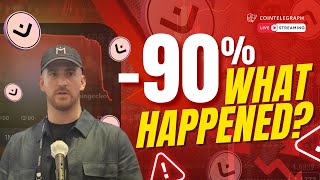
John Patrick Mullen, CEO of Mantra, says the OHM token crash was forced liquidations on exchanges, not a rug pull. The team and major investors haven't sold, and he promises on-chain transparency reports and possible legal action against exchanges. Critics point to large transfers to exchanges and claims Mantra controls 90% of the token supply.
Questions this video answers
Hosts stated OHM fell from about $6 billion market cap to around $485 million at its lowest (during the 24-hour collapse).
Mullen said he was in Seoul, Korea and was woken by his hotel around 5am local time after landing the previous day.
Chapters
Foreign. Good afternoon everyone. Welcome to the Chain Reaction. This is actually the first time we've done the Chain Reaction here live on a video. Very, very big news coming this Monday. But if you are here for the first time, welcome to the Chain Reaction. This is Cointelegraph's daily Show. My name is Gareth Jenkinson. I'm the head of multimedia here at Cointelegraph. I'm joined of course by my co host Robert Baggs. And you've probably been listening to us for the last six weeks. If you haven't, welcome to the show. We've got a very big guest with us here today, John Patrick Mullen. He is the co founder and CEO of Mantra. And of course, probably not the best circumstances to be joining us. John and I were in Paris last week, actually at Paris Blockchain Week in Cointelegraph's Longitude event. And we had some great conversations last week. And a week later, I don't think either one of us would be sitting here thinking that we would be talking about a massive collapse in token price of Mantra's own token. But of course we're going to try and get to the bottom of this and ask some hard questions and really just set the scene because this is definitely one of the biggest stories we've seen in the last year and there are a lot of questions left to be answered. First of all, John, welcome. Thanks so much for joining us. I'm sure it's been a crazy 24 hours. Can you tell us where you are and how you've reacted to the situation in general?
Yeah, I mean, first off, just want to say thanks for having me on to at least let us explain, you know, our side and what's been going on. We want to say thank you to, you know, the supporters and everyone who's reached out to check on us and whatnot. And obviously it's really important for us to, you know, share our side of the story and really what went down. So I'm here in Seoul, Korea right now. I arrived, you know, midday yesterday on Sunday. I think there was a tweet that went around saying, you know, I was on a flight, I was, I had already landed and effectively when everything went down overnight, I was sleeping. I went to bed around 12 midnight or so, Korea time and was woken up by my hotel calling me at around 5am because of the events that transpired while I was in bed. But the team was up and saw what was going on and tried to get me awake as quickly as possible so we could put out, you Know, a degree of a statement and you know, start communicating, communicating to the market what was going on or at least what we knew what was going on as quickly as possible. And obviously we've continued to work throughout the day to figure out more details, you know, try to get as much of a plan of action in place as possible and obviously appreciate the ability to come on and you know, answer some questions and you know, share our side of what's going on. So thanks for having me. Obviously not, not amazing circumstances and yeah, let's just dive into it.
Yeah. So just to set the scene for any viewers that don't know the story, the ohm token plummeted over the past 24 hours. Obviously during some low liquidity weekend trading. It went from $6 billion market cap to around $485 million at its lowest. There have been a number of speculatory rumors floating around X and other social media platforms. You know, some people called it a straight up rug pull, other people said it's, you know, down to some, some trading on centralized exchanges. Can you just tell us from your side what happened from the side of, of mantra and how your team has dissected things to this point before we get into some of these allegations that have been made online?
Yeah, I mean fundamentally I want to categorically deny that this is any sort of, you know, rug pull or some sort of scheme. Obviously I wouldn't be doing this if, if it was, you know, I'm, I'm, I'm, I'm here, here to face the music and, and tell our side the story. And you know, I'll be going on a number of different other AMAs and channels to talk about what's going on. And the team is here, we're committed to being fully transparent. We're going to be putting out detailed reports of everything that went down with on chain verification and specific details. We've been in contact with our investors, we've been in contact with all major centralized exchanges. We've been contact even with, with our regulator that we work with in Dubai with FARA and our key partners as well. So you know, we're not running, we're not hiding and we'll continue to communicate as much as we can, but maybe just to kind of give the rundown of what happened. So you know, again overnight I was woken up and you know, we had seen this kind of precipitous fall of the token price as you just described. We were able to see basically that there had been major liquidations on centralized exchange which we found out later were effectively forced liquidations of leverage positions that utilized OM as collateral. And I think there's been people pointing towards tokens getting put on exchanges. As you know, this is selling but in actuality I think this was being used as collateral to support the position. We have spoken to our core group of investors as well as, you know, who we believe is the third parties that have been involved in this and we're exploring all actions on how to remedy the situation, including legal action. But that being said, effectively what happened was there was, you know, leverage positions utilizing almost collateral with little notice from our understanding. Again this is just, you know, talking to our, to, to investors and in hearing from, from their side, but little, you know, notice and warning, we were able to effectively, they were able to effectively take over positions, force liquidate them and cause this massive cascade of selling. So what happened was basically the token, the positions were taken over by the exchange. They then took the collateral, took the, took the ohm and started selling which caused this cascade of cell pressure forcing more liquidations. Obviously it was a low liquidity environment overnight on a Sunday evening, in the middle of the night basically and you know, half the team was asleep. So it caused this massive, you know, downward fall in ohm price. And, and yeah, I mean that's, that's really what caused everything.
Look, you mentioned your exchange partners. If you go onto the mantra website, you've got binance, Bybit, Kucoin, OkX, Kraken, Bitget, Gate, IO, Crypto.com and Ascendex as your major platforms. I take it that you've spoken to a lot of these exchanges. You're making some serious allegations about exchanges being responsible for the drop in token price. Who have you spoken to and you know, how forthcoming are the exchanges with information and how hard is it to point a finger at someone in particular? Because at the end of the day there's thousands of own holders that, that really want an answer and we would love to give it to them.
Yeah, I mean we have been contact with all of our major centralized exchange partners and parties. You know, some have been more supportive and helpful than others. You know, to be honest, we, like I mentioned, we are exploring with our investors, you know, any and all legal ramifications that this, that this may include. So I won't be pointing a specific finger and saying a name, but it is something that we're looking into actively and you know, we are willing to take a stand on this one. We feel like, you know, our investors mantra, our community, our token holders, were wronged here and we will do what's right by them. We do feel fortunate that many of the exchanges have been helpful and supportive and we have been in constant communication, sharing updates, telling what's going on, speaking to senior management where possible, and just letting them know that we're here and we're not running from this. And we'll continue to communicate as transparently as possible going forward.
Obviously, a lot of tokens were moved on chain. We found a list of some Whale wallet transfers. Chief among them Laser Digital, Shen Shin Wallet, a couple of unknown wallets, mainly moving tokens to OKX and Binance. Can you talk a little bit about your investors? I know that you probably can't name them by name. There's also been, you know, widespread allegations that mantra holds 90% of the token supply, which in. In true honesty is. Is ridiculous to the wider market, you know.
Yeah, yeah. So I mean, let's take those two questions first and then second. So the first question is about specific investors. So both Laser as well as Shahrukh Shane is the partner, is the partner at Shoruk, have come out and categorically denied that there was any for selling. I just want to make sure that we put out and say that the team, the Montre Chain association, our key investors, our advisors, no one has sold om and we are going to, you know, categorically deny and also provide verifiable proof, onchain proof, that this is the case. So if you look at the two sides of Ohm tokens, there's ERC tokens and there's mainnet tokens, you can see that at least on the mainnet side where the team holds tokens, we've actually put out a transparency report last week that shows all the various different wallets. It's all still in custody, it's all still being enforced with vesting schedules with qualified custodians. No tokens have been moved from that. On the investor side, you know, Shrug actually put out a. Well, both Shrug and Laser have put out statements. Shahrukh has verified and shared the wallets already. Laser is also in the process of doing so. But effectively the. What we believe is the wallets have been mislabeled by Arkham. And I believe both parties, the investors, are in contact to make sure that these get remedied, to make sure that it's rightfully proven who's. Who's actually used these, these tokens as collateral. But we want to again officially and categorically deny that any of these investors have been putting Tokens on exchange to sell.
Yeah, I'm glad you say that because. Sorry John, just to jump in there, obviously a lot of people were pointing fingers at Laser Digital and, and me and Rob were talking beforehand and Rob can probably jump in here but you know, it's as simple as publishing a token address, you know, and if there's a lot of people out there that have labeled these wallets and they're saying hey, this is the wallet it moved tokens to OkX. It's, it's hard to refute those claims.
Well so I think it actually is easy to refute the claims if you can prove which wallets you own and that these tokens were sent to other wallets. Right. So that's in process and I know the investors are, are working on communicating with, on chain analytics firms to make sure that this gets remedied because it is not true. So that's the first thing. Sorry Rob, if you may want to.
I, I just wanted to just for clarification sake. Obviously these tokens have moved to exchanges. They may not be Laser Digital, but we still, we still saw 41 million move and we saw, I don't know the final number but I think it was estimated to be around $200 million worth of own tokens moved to exchanges in the days leading up to the crash. So just to confirm, this is absolutely nothing to do with the, the investors, this, these people that are moving the tokens aren't insiders, this isn't some conspiracy.
That's exactly correct. So effectively those tokens were being used as collateral on an exchange and again the exchange decided that this was not the position they wanted to maintain anymore for whatever reason. Didn't you know, I'm not going to say why they may have thought that or whatnot. I don't want to speculate. And they decided that it was something that they would forcibly close and that's what they did.
So can I just.
Again. But I'd. Oh yeah, go ahead please. Sorry.
Sorry. So my financial background is very, very limited with these collateralized loans. Are they. Are the parameters not preset? I. I guess what I don't understand is the. You used the word reckless. How can it be reckless? I think that's my question.
Yeah. So generally what happens if you're taking a leverage position is you post collateral and you can post collateral in any number of assets. You can post it in stable coins, you can post it in Bitcoin ohm in certain cases and you have a leverage ratio or margin ratio of how much you can use as collateral against a certain asset. So investors would use different sorts of assets to put up a collateral position to maintain a leverage position. And when leverage gets unwound, you're either taught you're either required to top up collateral or change types of collateral to something that's more, you know, respectable or, you know, usable on whatever venue you're taking leverage on. Right. And generally what we've seen is when this has occurred in the past or, you know, when there's ever been, you know, times to unwind leverage, you get margin called right, or you get asked to unwind the position, remove leverage, add collateral, do whatever. And generally this happens, you know, in the span of a day or more. And you, as long as you're continuing to communicate, as long as you continue to act, then you're able to top up and move positions. So I don't know exactly how that went down because obviously this was with third parties that are not, as you quote and said, insiders. These are, you know, from what we're aware, groups of people who had OHM positions, OHM leveraged positions with multiple different types of tokens as collateral, including ohm. And these got taken over by a centralized exchange and unwound. And when you unwind that, you take those positions and you sell. And that's effectively what happened is we had all this spot selling of OHM tokens that caused this drastic reduction in price. But then also the collateral value goes down too, if you're using OHM as collateral. So if the price increases, decreases, then your collateral decreases as well. And that's when liquidations happen.
John, if I can jump in there. Yeah, sorry. If I can jump in there very quickly. I mean, obviously everyone is looking for some sort of accountability. I guess one of the questions would be, could you have preempted this? I mean, could you have kept better tabs on the amount of OHM tokens that would be being used for, like, you know, collateralized longs and shorts? You know, and at the end of the day, the reason that I think it's important for you don't want to point a finger at someone, but you put a lot of pressure on the third parties if you say, hey, guys, this is where all this happened, we shouldn't be held accountable. You should, because if it wasn't for your actions, the token price wouldn't have dropped off a cliff.
I mean, I agree with that. Obviously, I'm not saying that there wasn't leverage in the token or particular potential risk in the system, but Generally speaking, this was an activity that was allowed. Right. It wasn't anything nefarious. You know, I think generally speaking, we, you know, we want to make sure that we're doing what's right for our community and that's why we've published transparency reports about Team Holdings. We did that even last week before all this happened. We will continue to publish more reports. Both of our main investors published, you know, reports publicly categorically denying any implication or involvement. And they'll continue to show more transparency as well. We will have a full postmortem and detailed response about everything that went down as we're able to collect more information and share it publicly. But yeah, I mean, effectively our stance is, you know, we didn't actually have anything to do with this. When you're taking leverage on a centralized exchange, you don't know what I mean. No one can see that. And frankly, that is a reason to have a transparent blockchain based system for this. This wouldn't happen on a Dex.
John Ohm is obviously a massive token, particularly over the past year or so. The growth you've seen is phenomenal. So I have two questions. One, how do you stop this happening in the future? And two, why aren't other tokens at risk of this happening to them? Or are they?
I mean, I'll take the last question first. You know, I think generally it is a risk that could happen to other tokens. I mean, and you do see it sometimes, right? You see these precipitous falls where there's leverage and, and, and whatnot and positions get liquidated. And you see this like these massive red candles going down. You know, I think there's something to be said about, you know, implementing even risk limits or, or, or like circuit breakers of sorts going forward on exchanges. But that's, you know, a bigger, you know, wider industry consideration we need to talk about later on. And so, yeah, I mean, it really can, it really can happen to anyone. It's an unfortunate situation that's happened to our community. And again, we'll do what we can to remedy the situation. And I do want to talk a little bit about that, but maybe. Could you just repeat the first question again? Sorry, since I started with the second one first.
Yeah. Just how can you prevent this happening again? Let's say you get the dream recovery. How do you stop it from happening again?
Well, I mean, it's, you know, mantra's been around for almost five years now, right. And we had a point in our history where we were down, you know, over 95% and I think at a low, we were 1.7 cents in October of 2023 and everyone thought we were dead. And we went from outside the top 800 to top 20. Obviously this has been an unprecedented situation and the size and the scale is significantly bigger. But the team, myself, our investors are here to, you know, face the music, so to speak. We're not going anywhere. We're here to make sure that our community gets taken care of. We're going to put together as best as possible plan of recovery. That could include buybacks, it could include token burns, it could include a number of different initiatives that we're exploring. So we're willing to do whatever is possible to make sure that our community is supported here and do what we can to reinstall trust in our market, reinstall trust in what we're building. Frankly speaking, the foundation hasn't changed. The business itself is solvent. The business has capital. It will continue to, to survive. We've had significant interest of, you know, institutional support looking to, you know, buy more loan tokens, loan dollars, whatever, to really be helpful of, of this. And it shows that fundamentally we have a very strong core and that we have been building something of substance. As I mentioned, you know, we, we are a regulated platform. We've been in contact with, with our regulators and we'll continue to share information with them as transparency as possible and, and we'll continue to share information with the community as much as possible. I'll be on, you know, multiple different other AMAs and channels and, and, and you know, trying to get our side of the story out there as much as possible. And I just want to emphasize again, I mean, we're not running from anything. This was a very unfortunate situation. It has been an incredibly tough day. You know, my, my heart does go out for the people impacted. It was, it's not been easy. But you know, our team, our supporters, our investors have put a lot into this and we're not going to roll over and die. So we're here and we're going to continue to build and continue to, you know, execute on our vision that we believe RWAs are multi year and multi cycle endeavor. And you know, we do feel like we are just at the tip of the iceberg of what can be accomplished in this space.
John, I just want to take it back to mantra's control of about 90% of the token supply. This has been heavily criticized on, on X. What do you have to say about that?
Yeah, I mean, I think it's baseless we have, we have posted a community transparency report, you know, last week and it shows all the different wallets. It shows effectively what people have been pointing to is this mirror bridge wallet. So again what you need to understand is there's two sides to the OHM tokenomics. You have the Ethereum side and you have the main net side. And we launched our main net at the end of last year in October. At that time OHM was a Roughly I think 92, 93% in circulation. I think it's almost 98 in circulation right now on the Ethereum side. Our Ethereum token is a hard cap token, right? So it has 808,808,808 ohm, 90ish percent in circulation right now. This token has been around since August of 2020 and has been trading in the markets that's on exchanges. I mean the biggest holder of OHM on exchange is Binance. You can actually go look on Etherscan and it has all the different wallets of people who have tokens. We only have three smart contracts that even are distributing tokens anymore which are all again verifiable. In our transparency report I think what people have pointed to is we have this mirror bucket and effectively what that allows people to do is bridge their ERC token into a burn address which I think is now like there's 100 plus million tokens that have been burned and then it spits out a token on the other side. And what we did when we launched the chain was we pre minted the entire supply of ERCs in a bucket that's held there that then over time drips feeds into wallets. It drip feeds wallets, sorry it drip feeds tokens into an automatic dispersal wallet and then a manual checking wallet. And effectively what that means is any tokens that are any size less than 30,000 ohm instantly gets moved over the bridge. So you burn and then it verifies and then it instantly spits out whatever the same amount one for one on that site. So under 30,000 then there's a manual one that anything over 30,000 needs to have a multi signature approval to make sure that this is a real transaction and that's done for you know, for security purposes. Bridges and you know these type of, you know they're basically honeypots and we wanted to make sure that you know, this hasn't been gamed or exploited. And I do want to say that we 100% have checked on chain and there has not been an exploit, there hasn't been a hack of wallets. Everything, again is transparently on chain. And we have a transparency report that we put out last week that shows all this. And we'll be more than happy to continue to dig into that and give more information on specifics if there's anyone who has questions. There's nothing that we need to hide from on this. It is public, it is transparent. And it's been something that we have talked about since the beginning of our tokenomics shift, which is at the beginning of 2024 when we merged these two ideas for the ERC version of ohm and this new mainnet token or coin, which initially were going to be run as two separate things. And we're able to bring those through together. Back in the beginning of 2024, John.
In January we had a very interesting conversation about, you know, how OHM token had been holding up against the rest of the market. And I remember quite clearly there was a chart that had all the tokens that were trading and it was literally bitcoin and OHM that hadn't dropped by more than 10% in that month. And when we spoke about that, you spoke about having a bunch of investors that you, you trusted, you know, that, that were had a vest, you know, mantra delivering on what it wants to do and being a viable business. Obviously we have on chain data, you can see a load of tokens moving to exchanges. Are you having conversations with people when you see that happening? Because logic would kind of suggest that they're going to do something with the tokens when they're moving them to exchanges. You can't tell if they're going to sell them or use them as collateral. But when do you step in and say, guys, what are you planning to do with the tokens? Because perhaps you could have preempted this if you'd had a conversation with some of the wallets that were moving huge amounts of tokens on chain.
I mean, I don't know who the wallets were. So we had exchanges reach out and, and, and show some of these, you know, transactions. And I don't know who those wallets belong to. I know they don't belong to Shoruk. I know they don't belong to Laser. I know they don't belong to our key institutional partners. And we've obviously had, you know, active, ongoing conversation with them about the recovery plan and they will continue to put out information that publicly shares their wallets and what they can, you know, put out in the market to, you know, deny these acquisition ac accusations, you know, categorically and, and, you know, transparently as possible. So we stand by our, our, our partners. We appreciate their support during this tough time, but we will, you know, we will stand by them during their, this tough time as well. But I can't say without a doubt, you know, they have been incredibly supportive and strong partners to us and will continue to be so going forward. And, you know, I know it's a, it's a tough time for everyone, but right now, you know, we know what happened. We believe the facts are on our side, and we believe we have the evidence to prove it. And we'll make sure to continue to show that to the market. 110%.
John. I also remember having a very good conversation with you and Amira Sajwani, who's the CEO of dimac. And if you're watching this speaker broadcast and you're wondering who that is, I mean, damac is the biggest, one of the biggest real estate companies in Dubai. They signed a $1 billion partnership with Mantra to tokenize a variety of their asset holdings, chief among them real estate. And at the time when we had this conversation, she, she had expressed to me very clearly that she'd done her due diligence and that she had studied a number of different blockchain protocols when they, when demac, you know, the company started exploring bringing some of their assets on chain. She's a very smart individual. Their family is full of very smart individuals, very well educated people. And you said to me the same thing. You know, you got in her office and she grilled you for an hour before, you know, she, she decided that they wanted to partner with you. Have you had a conversation with her? Because I can imagine they're very concerned by what's happened.
Yeah, I mean, we have had conversations with all our main partners and we're grateful that they understand the situation is unprecedented. Obviously, we're in constant communication with them, just like we are with our exchange partners, just like we are with our investors, market makers, regulators, etc. It's a time to not duck and hide away from the accusations. Sorry, I've been up for a very long time. But we're here to communicate with all of them, just like we are here to communicate with you that, you know, we did nothing wrong. We're here to show that. And we will continue to prove that we, you know, are a team of high integrity. We're a company that's been here for years, has been building through ups and downs, and will continue to continue to build. And the fundamentals and, and the foundation that we built over the years with these partnerships, with this licensing, with these key institutional backers is significant. It's real and it's, it's not over just because of this situation. It's obviously a very tough time. We don't take this lightly at all. But we will continue to move forward and we're grateful the support of all these people and all these supporters who've reached out, checking on us, checking on the team, making sure everyone's okay. We are okay. And you know, we're going to continue to rebuild and continue to put together a plan to make sure that our community can rebuild as well. That's the most important right now. But we are supportive and we're grateful for the support of people like Amira. I've spoken to her this morning and we'll continue to communicate with them on the, you know, developments of the situation as we know. But they're aware of what's going on. But I have talked to the family and they understand the situation and have our back and support.
I think community sentiment is obviously a big part and we talk a lot about price because that's, that's the story here really is, is the drop in price. But yeah, although price isn't everything, that's what hurt the community. Of course they're obviously worried, but you've talked about ways to kind of make them whole or at least to help rebuild the sentiment in the community which is naturally soured over the last 24 hours. You mentioned buyback. How might that work?
I mean, to be honest, we're still in the early stages of putting together this plan for potential buyback of tokens as well as a potential burn of tokens which I would treat separately. So you know, we're, we're, I would just say wait, please wait for, you know, a little bit more in depth plan. But we're actively working on putting this together so we can make sure that we do what we can to support the recovery of the, of the token, support the recovery of our investors and token holders. This is our preeminent and primary concern right now. Obviously right now it's, let's get in front of the communications, tell our story, make sure we're not ducking or hiding from anything and then we want to make sure that we can also continue to put together the plan to, you know, support the people who are, you know, behind us and supportive and we'll do whatever we need to do to help that happen. So we're, we're actively looking on what we can do and we'll continue to, you know, talk publicly about that with our community and maybe that's something that we can talk about, you know, even later this week or whenever we have that finalized. But we will be publishing that, you know, program and plan asap.
John, about a week ago, Mantra launched the Ecosystem fund. It's like $108 million fund and that was supposed to help growth and adoption of projects within the ecosystem. What happens now? I mean, if the token prices drop considerably, I'm not sure if this fund was specifically in ohm tokens and that drastically reduces the actual amount of capital that some projects might get. Have you thought much about that yet?
I mean, obviously we. Well, it's not great timing. Of course that was a big announcement and you know, it's unfortunate that, you know, now this, this traumatic event has, has occurred. But we're still obviously going to be investing in supporting our ecosystem builders. The fund itself was comprised not just of OHM as, as you know, as the makeup, but, but dollar commitments and dollar contributions. And we'll continue to invest and support the ecosystem as part of this recovery plan.
I want to just follow up on something. So look, when something like this goes wrong, fear, uncertainty and doubt is everywhere. And you, you've had a very difficult 24 hours and hours is nothing to compare to that. But one thing we have to deal with as journalists is trying to disseminate the information out there in the wake of something happening. Like right now, now we've jumped on this within 24 hours from the crash. So we're going through sources and trying to verify stuff. It's very, very difficult. I think even Zach XBT said that getting the information you need right now is very, very difficult and it's going to take a little bit of time, which is what your team are up to. But I was hoping I could bring you a few criticisms or worries that I've seen that have cropped up a lot and perhaps you can just explain them away. Perhaps, you know, maybe there's something more concerning than that. So the first one I wanted to say is I've seen multiple people reference a change in your airdrop dynamics that you did. MANTRA originally promised a 50 million ohm airdrop with 20 unlocked immediately. That was later reduced to 0.3 daily unlocks and then changed again to 10 in March with the rest vesting until 2027.
Yep.
So if we could start there, you know, was there into that because they're basically, they've painted that you controlling the supply a bit more so you can dump. That was. That was their suggestion.
Okay, well, I'm not sure about that one, but I may be first. Amen is obviously, I have been in contact with Zach and we're working through this, and, you know, I'm doing what we can to support him in whatever activities he's looking at. I think there was a tweet that went out that said they weren't able to get us for comment. And that was just because, honestly, it was the middle of the night where I was, but I reached out as soon as I saw it and have been in contact. So I just want to make that clear. We're in contact with. With him and we'll do what we can to support two in terms of the airdrop. So I just want to again paint the picture of what happened. Basically, In February of 2024, we produced this new tokenomic plan that was again merging those two token projects. It was meant to be a separate chain token versus the existing erc, emerge those together into one unified tokenomic plan. As part of that, we had announced a 50 million ohm airdrop in early February. I think this was roughly, I think, five to ten million US dollars at the time. And then at the time when we were supposed to actually launch this airdrop, it was several hundred million dollars. This was effectively earned by farmers, community members, people who deposited tokens into some of the various different pools, but also people who had shared tweets, had done galaxy quests, had done other things. So effectively, there was zero cost basis for these tokens. And it was critically important that given the price appreciation that we had seen, that this wasn't just going to be a free for all selling episode. Right. And this did involve us having to change the vesting schedules for these tokens. It wasn't an easy decision, but it was something that we did publicly as well. And we took some flak for it, to be completely honest, I took a lot of flak for it. A lot of very unhappy people. But we did what we thought was right for the community. And I think that decision at the time was the right one. And I still believe today that it was the right one. We then went through and did a very active review of the activities of people who were participating in these airdrop campaigns. And we found that there was a lot of, I don't want to necessarily say nefarious, but commingled activity of people using hundreds of wallets, thousands of wallets, or different ways to effectively farm tokens to just dump on our existing token holders. So we did a civil reduction that reduced the airdrop amount relatively, I mean significantly. It cut it in basically half because we're able to see that there was these massive clusters of farming accounts of people who were claiming on Twitter, claiming on X, claiming on telegram that they had all these accounts that they made all this free money. So we worked with multiple different third parties to verify that there's was bots farming activity that was nefarious or malicious in nature. And we went through to reduce that. We actually did the airdrop several weeks ago, the first 10% and that has gone through without really any major issue. And we'll continue to do this going forward. So the airdrop at this present moment is. It's following the existing tokenomics as we've, as we put forward and the rest will start linearly vesting in September.
Okay. Yeah. I mean as I say, everything looks worse through the lens of a recent crash. So there is going to be a lot of fud around everything, even completely innocent things. But you know, it's our job to ask about them. I have two more that that stood out. One is sure. And again, like I say we can't, we can't really verify these very well at the moment, but the onchain Lens posted that two hours ago. The Mantra DAO Staked wallet sent 38 million OHM tokens to the Binance hold wallet which obviously immediately people, oh, they're gonna dump, they're gonna start dumping tokens. Can you just explain why you did that?
So it wasn't us, it was actually Binance. So basically what you can do is go look on that. It was a staking pool of ohm that Binance had their tokens on their exchange that they were using as, as a staking program. So they just returned them because the staking program ended.
Right.
Okay, so it's literally Binance. It's literally Binance Exchange users tokens that had been staking and earning rewards and move them back to the exchange.
Yeah, simple enough. Okay, the final question, and I didn't really get to see this happening, but they were meant to be telegram issues. There's. This is one of the first allegations that were thrown around that you deleted your telegram, which didn't look to be true, and that you blocked people from the telegram. Can you just explain what happened there? Yeah.
So I think there was like screenshots going around on Twitter overnight that like were showing this dead telegram community that had like 60 people in it that was deleted or whatever. Obviously that's not the case. The telegram is active, the discord is active, Socials are still here, I'm still here. You know, we never took anything down. We have a community bot called Rose. I think a lot of crypto communities use this Rose bot. And effectively what she did was there was so much flurry of activity overnight that she shut the joining activity down so new users couldn't join it. Obviously, once we figured that out, we told the bot to not do that and turned off that feature. So effectively people are joining in. But it was, there was a short moment in time where I think people who are trying to enter were not able to. But the telegram itself was never deleted. We never left. Obviously it's still there. And it was an unfortunate timing because again, I was asleep and we were then able to rectify that as quickly as possible. But yeah, that was basically where the FUD started.
I think I'll jump in from there. John, obviously one of the biggest criticism or one of the first things people said was this is, this is all insiders. Are you and some of the, the biggest token holders willing to, to be very transparent about their holdings and share these addresses online. Because I think the more transparent and honest people are, the, the better it is. And I think that it would, it would definitely bring a lot of clarity and a lot of calm to the market if, of course, people with very large holdings were open and honest about it. I mean, obviously it's a, it's a risky thing to do, but the industry could do with a lot more of that. So that would be my challenge to you as a journalist, is to say, hey guys, I'm the CEO and co founder. This is how many tokens I have. This is when I've sold. You know, you look at someone like Vitalic every time he moves tokens. Now everyone knows about it. You know, you're, you're under scrutiny and people want to know why. Um, so that was my first question to you, if you're willing to do that and if the rest of the team would do that.
Of course. Yeah, I mean, I mean, my wallet on mantra is, is a public wallet and people know it already and have known it. So I actually even had someone ask me a few days ago, like, why did I unstake from the association validator? And it was because I moved it onto the liquid staking protocol, Fluxtra. And I did that literally like yesterday. So you can see that all of the tokens that I own are all staked, right? And I did that last night, like before all this happened. So more than happy to, to, to share those addresses for myself. Obviously on the transparency report we have published all the team and token community and sorry, the team, the company and, and you know, the various different vesting wallets that are in circulation and more than happy to provide as much information as possible. Shrug has already gone out and put their wallets public. Laser, I believe, will be doing the same. And you know, we're not shying away from anything here, so yes, we will be more than happy to do this.
Absolutely. I think it's, it's, it's best if you're, if all those involved, you know, pinned it on their X profiles and stuff like that so people can start verifying this information. I guess my, my other question to you. Obviously we, we spoke a bit off air and you know, I think you've been pretty honest other than not pointing a finger at a specific exchange for not playing ball.
Yeah.
When are you going to know more and when can, when is the public going to find out sort of more details about what has happened there?
Yeah, that's a, that's a tough question. I mean, honestly, I don't know. Just because there are, there are legal ramifications and regulatory ramifications here. We will be as forthcoming as possible, but I can't answer that question with any, you know, timeline or specific timeline because I just don't know the answer. So yeah, I mean, we'll do what we can, but right now I'm just not able to answer that question from.
Sort of listing perspective and you know, partnership perspective. Do you think some rules were broken by the exchange in question and the way that they were managing your tokens? I mean, do you have a legal leg to stand on here and would you chase it up through courts if it's possible?
I mean, we are actively looking at the legal ramifications of this. Obviously, you know, the, these were not our tokens. All of the team tokens are in verified wallets that are locked, invested and you know, have not been put on exchanges in this particular situation, obviously. So we will have to see what our investors want to do with this. But we are in contact and exploring all options, including legal ones.
I guess my last question is, obviously a lot of investors and token holders will be really upset about just the complete crash in price and not everything is about price. What is a fair value of an ohm token? I mean, have you ever considered that? And what is the real road ahead here? People, I'm sure want some assurances that this protocol is going to keep going and you are going to tokenize real world assets and stocks and bonds and real estate. Yeah. What's the road forward?
Yeah, I mean, obviously this is a, this is an unprecedented scenario for us. It's a tough situation but you know, we are foundationally strong, the business is solvent. We've had significant institutional interest of supporting the, continue to support the business. I think right now our plan of action is, you know, come up with this burn and buyback mechanism that we want to, you know, communicate with our community to make sure that we support them first. You know, that's the most important thing right now. We're in constant communication with our exchange partners to make sure that we can continue to provide liquidity with our market makers so we can continue to provide liquid markets on, on the ELM token. And we're constantly giving them updates about, you know, what's ongoing and, and you know, what we're doing about the situation. Obviously a big part of that is, you know, talking to people like you guys and getting our side of the story out. We want to make sure that they understand that we're here. It's a tough scenario, but we will, we'll make will, it will come through. We're grateful for the support of our investors, for the community, for everyone who's reached out. But you know, it's just another bump in the road of our multi year journey and we'll do what we can to continue to build on from this. And that includes, you know, working with our institutional partners. That includes, you know, building out the ecosystem and continuing to develop things like the ecosystem fund and this RWA accelerator we have with Google, et cetera, et cetera. Right. So it's a tough scenario, I'm not going to lie. It's been a long day, but it's just beginning and we'll continue to communicate as directly and publicly and transparently as possible. So, you know, again, I appreciate you guys having me on to share a little bit of our side of the story and not, you know, not shying away from asking tough questions because these are questions the community deserves answers to and we're more than happy to answer them as best as humanly possible and as transparently as possible to everyone. So we are committed to that.
John, thank you very much for your time. I know you've got back to back media appearances now for the rest of the day. We appreciate you answering our questions and once again I hope the team can be as transparent as possible about Token holdings, who moved, what, where and who stood to gain from that. And yeah, we do wish you luck going forward. We will be asking hard questions. We will be doing our blockchain analytics and our research as well. But we appreciate that you took the time. I know it's been a long day. And yeah, we wish you luck going forward. And yeah, hope to see you soon, I guess, token 2049 in Dubai. Hopefully in a month's time we can take a look back at the situation and it might be different or we'll at least have a lot more clarity about what happened. So thank you so much. If you've just joined us, welcome to the Chain Reaction. We've just chatted at length with Mantra CEO and co founder John Patrick Mullen about the crash over the weekend. If you're joining us here for the first time, we are live every day on X. So please do go ahead, like retweet this video. We'd like to get the information out there and at least, you know, share Mantra side of the story. I think Rob and I definitely touched on a few of the criticisms that were out there over the last 24 hours. And yeah, we appreciate our audience and we will be back tomorrow on X. That's it for now. Thank you very much, John. Thanks, Robert. Have a good day, everyone.
Thanks guys. Thanks.










