OpenSea CEO explains why gaming is the most exciting use case for NFTs | Interview
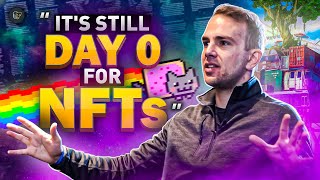
OpenSea CEO Devin Finzer says the NFT market has grown from $1 million to billions in volume but is still at day zero. Gaming and virtual worlds hold the most potential. The biggest barriers right now are user experience problems like wallet setup and gas fees.
Chapters
This year we've seen insane market growth. We've gone from about a million dollars in volume to billions of dollars in volume. And so it's really just fun to see it get to the next level. But also I think important reminder is that it is really day zero for the space. And despite this crazy, insane market movement over the last year, we've got a long way to go for sure. Foreign.
Here today with Devin Fenzer, CEO of OpenSea. How are you today?
Doing well, thanks for having me.
Excellent. We're going to jump right into things with one of the latest headlines. There was an employee that, that was flipping NFTs and listing them on the front page of OpenSea. What are your thoughts on kind of like what happened there, what transpired? And then how can we kind of prevent those things from happening moving forward, not only on your platform, but other NFT marketplaces?
Yeah, well, I think the thing to remember is it's a brand new space. People are trying to figure out exactly what's happening with NFTs. And I think we have an opportunity at OpenSea to really set policies and standards around sort of of how do employees use confidential information. And in this case we have an opportunity to really strengthen those policies so ensuring that we provide a level playing field for all users of the platform. So it's an opportunity for such an uncharted territory. We're the largest marketplace and so we view this as really an opportunity to start setting more rigorous policies around that so that employees at OpenSea can engage in the NFT ecosystem, but in a way that builds really strong trust with our community. And for us, trust is really central to the marketplace. Right. And so we view this as an opportunity to do that.
Now, NFTs on OpenSea are organized into nine different categories. What are some of the most popular and then what are some of the fastest growing categories that you're seeing?
Yeah, I mean, I think the biggest one right now is sort of this pro profile picture phenomenon. These collectibles basically where people are interested in developing a tribe around a certain type of thing and there's artwork associated with it. So sort of a weird mix of a lot of different things. But the categories that are up and coming are things like game items, virtual worlds, projects like decentraland and cryptovoxels, where you can own virtual real estate and build structures and museums inside of it. So we're really excited about kind of the diversity of NFTs expanding over time. And the these collectible projects are blowing up and getting a lot of people Excited and a lot of developers interested. But long term, we think there's going to be more and more interesting utility around NFTs, both in the virtual metaverse world but also in the real world. So event tickets as NFTs or physical items that have NFT representations of them, those sorts of things are really cool too.
And what are some of the disruption powers that you're seeing with NFTs kind of transitioning from a traditional sense in the music industry or art industry? What's that disruption power of NFTs from, from where you sit at OpenSea?
Yeah, well, I think it's, it's, you know, it's disruptive but also really symbiotic with the existing art community. Right. So Christie's and Sotheby's have been embracing NFTs. Right. They've done several high profile auctions. So I think, you know, we don't see this as kind of like, you know, getting rid of older industries. We see it as complementing them. Right. And even if you think about sort of the existing web infrastructure, Twitter and Instagram have been these amazing vehicles for NFTs to really spread virally. So I think like, you know, disruptive for sure. Like, you know, people are going to build. I think the products that are most successful are going to be the ones that come kind of from the grassroots as opposed to from the top down. But I think, you know, ultimately every single brand and every single platform is going to get really excited about this. And we're already seeing that in the art world. And gaming is another one that's interesting to look at. We haven't seen huge game developers come into the space yet. We've seen a little bit, but, but mostly it's been kind of grassroots efforts. And I think we'll see both over the next while we'll see the grassroots efforts Axie Infinity really grow and then we'll see traditional game developers and bigger companies start to dip their foot.
And so what does that look like, especially in the gaming industry, the power of an NFT inside of that ecosystem?
What does that look like? I think what's really exciting about with gaming, I don't know if you're familiar with the Loot project, but basically there's this idea that you could have a game item that transcends any single game. And with Loot, it's just, it's literally just a game item that you, that is, the idea is you build different games around it and it can mean different things in different contexts. Right. So you can imagine just Having a sword and you know, you go play that sword, you go use that sword in Fortnite. So you don't really use swords in Fortnite, but like, you know, then you take it to World of Warcraft, you take it. Maybe these are new crypto games, but you can kind of like take these things around with you and own them in this like sort of generic way that works on all sorts of different applications. And then the other thing about games is typically they're sort of closed, centrally controlled economies and this is a way to have a free market economy for a game. Right. So if you look at projects like Decentraland, which is a virtual world with virtual real estate, it's an entirely free market economy. Right. And that's a pretty new phenomenon. Some game developers in the past have tried to create marketplaces, but typically it's hard to run a successful marketplace. And crypto really does bring this like sort of free market dynamics from the beginning without the developer having to kind of implement everything themselves.
That's powerful stuff.
Hell yeah.
I'm super excited about that because I'm a gamer myself. Right, Good stuff. Now which, which use cases of NFTs are you most excited about?
I think gaming, to be honest. Yeah. And I just think it's like, it's so metaverse y and I think the cool thing about gaming is it's not just like, it's not just taking existing games and applying NFTs to it. It's really thinking about like what are the brand new things that we couldn't even maybe imagine before this existed. And I think that's happening with projects like Loot, you know, just where it's like super weird and you know, who knows whether that particular one will take off. But like to see the sort of iteration cycles really happening is, is a lot of fun.
Yeah, it seems like like NFTs are going to impact like almost every single industry for sure. And it's going to be very, very interesting to see like how that shakes out in the next year or two once kind of people get this, this knowledge base of what the power of an NFT actually is. So what kind of insights can you offer in regards to the evolution of the NFT market over the last year? Kind of like what you've seen.
Yeah, I mean this year has just been really exciting for the NFT market. Right. You know, people started building NFTs 2017 way back in the day and just started kind of tinkering, building a standard around it. Cryptokitties obviously kind of Made a splash and like got, you know, some builders excited about this and sort of momentum built up from there. But now we're sort of seeing the fruits of those labors start to come and really get the mainstream audience excited about it. And it's crazy. Like, it's still a really rough experience. You still have to kind of get a wallet, get cryptocurrency. And so all these new users are really jumping through a lot of hoops to try this out. Right. So I think this year we've seen insane market growth. We've gone from about a million dollars in volume to billions of dollars in volume. And so it's really just fun to see it get to the next level. But also I think important reminder is that it is really day zero for the space. And despite this crazy, insane market movement over the last year, we've got a long way to go for sure.
Now, what's going to make that user experience and reduce a lot of those barriers to entry? What are some things that OpenSea are maybe working on?
Yeah, for sure. Well, a couple things. One is we just launched our mobile application which allows you to, you know, explore NFTs on your phone and we'll be layering in buying and selling to the mobile experience soon. We have some integrations where you can buy crypto directly on the site through some of our partners. Those are still work in progress and you know, a lot of different, a lot of iterations we need to make to have that be more accessible to all users. But those are a few things and then probably the biggest one is going cross chain. So right now or currently we support Ethereum and Polygon. Polygon is a layer 2 on top of Ethereum with much lower transaction costs. And then also we've sort of re architected how the marketplace works and so that allows for an experience where users don't have to worry as much about gas costs and all of this mental overhead. And we're going to be expanding to additional blockchains in the future. So really trying to just kind of have a better user experience around buying and selling on the site is I think going to help a lot for sure.
Now, are NFTs a bubble? Like, what are you kind of seeing here in like the next, like six months before the end of the year, I guess.
So difficult to predict. Yeah, I think, you know, for us we always, you know, we don't look too closely at the short term because it's just, you know, not a, not necessarily a good use of energy, but we look really closely at kind of like what's the long term trend here? Right. So for example, you know, we started OpenSea in 2017. There's a mini hype cycle, nothing like the one today, but we just sort of kept on building and you never know when it's going to explode again. I don't think anyone would have predicted the exact timing. And similarly, who knows whether it has more room to grow in the next couple months or we see a die down. But overall, the long term trend as we've been talking about is just so strong, so it almost doesn't really matter. And obviously when you're running a business, you have to sort of plan for these sorts of things. But we're very well capitalized as a business and we can kind of weather whatever storm happens and really be around for the long haul.
So no concerns about upcoming bear market.
At all for opensea? Yeah, no concerns. Yeah, yeah, yeah, it's quite possible for sure.
But greatly appreciate you chatting with us today. Nice to meet you. Devin Finzer here, CEO of OpenSea. Thank you very much. Yeah.
Sam.










