Play-to-earn games in the Metaverse | AMA with Evan Luthra
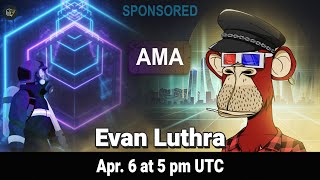
Evan Luthra, who sold a company at 17, discusses play-to-earn games and metaverse opportunities like real estate and Move-to-Earn. He argues newcomers should focus on adding value and joining communities rather than chasing quick profits in crypto.
Questions this video answers
About 30 apps.
17.
About 250 private-sale investments in 2021.
Over 100 NFT-first projects in 2021.
About 2 million active users (in India).
Chapters
I never really started by thinking about doing business. I started when I was pretty young, I was 12 years old. But one of my father's businesses failed which was a call center. He had 200 computers lying around. So I was a cool kid who used to go to the office every day and play with his computers. And yes, here I am today in Berlin at luxury Cointelegraph talking about my experience and work in the blockchain space. Apple announced that they were coming out with the app store and they invited people to make apps for the iPhone. This is a time when people were using BlackBerry phones with buttons and nobody really gave a shit about touchscreens or phones. And the next four years I built 30 plus apps which had millions of users. And then When I was 17 I sold my first company for a few million dollars. And this I started investing in various other business. Well, what we do is we work with non tech entrepreneurs and we invite them, we give them money, we give them resources and we actually work with them as a co founder to build a company up from the ground. These small things make a huge difference. So that I know a guy when we set up Almora, which is a crypto investment bank that I'm a founder of, we work with, we help and advise people where to deploy capital in the crypto markets and we helped founders raise capital via the crypto markets having already done five successful ICOs. We did India's biggest ICO, Kasha, we did Gaze Coin, we did Lockchain. Co was the first project we did with the former president of Bulgaria. Eventually my own company started reaching out to me and said hey, can you help us with blockchain? And that's how I got in my current focus which is blockchain and cryptocurrencies. For me, crypto is all about community, right? What we can give back, that's what really matters. What I tell people is I don't invest in speculation, I don't invest in hype, I invest in people. If somebody is good and he's done something great before, I can go behind that person and back him. I'm always backing the entrepreneur. Money is a byproduct, creating value. See what you can do for people and eventually you will make great money if that's what your goal is. My goal in life is to make a positive impact. I don't measure my success based on how much money I made. I measure my success based on how many lives I've changed for the positive. That's the way I work. I believe that people are what makes this world move around and that's what builds businesses. And that's the same with cryptocurrencies. It's not the money that matters. It's the mindset of the entrepreneur, what drives the business forward. And open offer to anybody, if you're interested with any ideas or if you have anything in mind, you can always reach out to me. I'm very, very approachable. Evanluthra.com is my website. You can email me at evanvanluthra.com and I will always see what we can do for you. We're always looking for great entrepreneurs to invest in to back, and we also always open new partnerships.
Hey, everyone. Welcome to a very special AMA today. My name is Rachel. I'm a senior reporter with Cointelegraph. Good to see everyone today. Today I'm here with Evan Luthra. He's a serial entrepreneur, Forbes 30 under 30, and a blockchain expert. Hey, Evan, how's it going?
Hey, Rachel. It's going great. Thank you for having me. It's a pleasure to be here today.
Yeah, thanks for joining us. I'm sure everyone's excited to hear more about your background. I just want to remind the audience to please send us your questions in the chat. Evan is here to answer those. And yeah, let's get started. So, Evan, you're a serial entrepreneur and investor. Can you kind of elaborate a little bit on your background start?
Yeah, definitely. Hello, everybody watching. My name is Evan Singh Luthra. To give you a small background about myself, I got involved in the technology space since pretty early on. I was one of the first hundred guys to develop and make apps for the iPhone. I did that when I was 13 years old. I built about 30 apps before I sold my first company at the age of 17. And the money I made, I started to invest that back into technology as technology was what I understood best. I came across Bitcoin first in 2014 when Coinbase announced that they were going to give out $5 to revenue users to Coinbase. So I had already, during this time, during my processes of building my companies, I'd already gained a few hundred thousand followers, already spoken for Ted, had already spoken for top universities and different corporates. So I was like, hey, this is something really great. So. And I started referring people to Coinbase. Each of these people that are referred to Coinbase that got paid $5 in referral fees worth $500 today because it's paid in bitcoin. So that just tells you the exponential power that bitcoin has. So yeah, that's when I first invested in crypto but didn't really get involved in the space deeply as an active investor and entrepreneur until late 2016 early 2017 when I started investing a lot more and I was an early equity investor in many companies. The video that we played at the intro was like a three year old video and I talked a little bit about that time as I was an early equity investor in companies like Hedera, Hashgraph, Ripple Labs, many more token investments over the last few years I've been very active in the blockchain crypto space, trying to push the movement forward and educate as many people as possible. I've spoken to hundreds of events live in person about blockchain and cryptocurrency in over 25 different countries. I've written articles about tier media companies right for Forbes, Entrepreneur, Cryptonomics, even Cointelegraph here where I talk about metaverses, Playdoh and gaming before the trends really took off. In 2021 I made about over 250 private sale investments in different crypto projects and majority of my investments have been around the Metaverse and Play to earn space, having invested in over 100 plus NFT first projects in 2021 advising over two dozen of them personally which I helped take them to market and deliver insane 50-100x returns for our investors.
Wow. Very impressive Evan. And yeah, I think we met at Block show back in 2018 so that was a really good conference and it was good to see you there in person. Evan, you mentioned the Metaverse a few times, so Grayscale views that as a trillion dollar opportunity. So I want to get your thoughts on the Metaverse if you agree with that and where you see it going.
I 100% believe that it's much, much bigger than a trillion dollar opportunity because eventually we are living in the Metaverse. And during my experience over the last couple years I've come to realize a lot of the things and how our world is changing and how I think the new world order that we will live in will be very different than the world we live in right now. Like I'm pretty sure most of you already heard about how Facebook changing its name to Meta, right? Facebook owns WhatsApp, they own Instagram, arguably two of the most used apps on the planet. Facebook works around the attention economy. Facebook makes money by getting your attention. Now why would the largest social media company in the world change its name to Meta? Because that's where our attention will be in the future. Most people think that the Metaverse is a virtual place, like in the movie Ready Player One. But I don't think they're wrong. But at the same time, I don't think it's not a place, it's a time. It's a moment in time. It's like in the artificial intelligence, you have this idea of the singularity. It's a moment in time when AI becomes smarter than human. Artificial intelligence is stronger than human intelligence. The Metaverse is a moment in time when our digital life is worth more to us than our physical life. To understand why Grayscale thinks Metaverse is going to be a turn on opportunity, you should understand that this is not an overnight change or invention by some Steve Jobs type of individual. It's a gradual change that's been happening for 20 years already. Every important part of our life is going digital, right? Work. From factories to laptops, boardrooms to zoom calls, friends. Where do you meet like minded people? Before you was neighbors. Now it's your followers on Twitter, on Reddit, etc. Games. More kids play Fortnite than basketball and football combined. I think we touched about this more later in the conversation. But identity filters are the new makeup. Stories are your personal billboard to broadcast to the world who you are now. What matters more, what you look like in real life or what you look like on Instagram? As everything goes digital, your friends, your job, your identity, and now with crypto, your assets are also online. Boat apes are the new Rolex. Fortnite skins are the new skinny jeans. If everyone hangs out online all the time, then your flexes need to be digital too. So if you play this forward another 10, 20 years, we will cross into the Metaverse, that moment in time where digital matters more to us than the physical. Our attention used to be 99% on the physical environment. TVs drop then down to 80%. Computers drop down to 60%. And now with phones, it's half the time is basically on the phone and half the time is in the real world. Our attention is being sucked from the physical and being put to the dish. And that's where our attention goes, our energy flows. If 50% of our attention is going on the digital screen, then 50% of our energy will go to the digital life. And today it still takes some effort to take our phone out of the pocket and look at it. Soon some company will make smart glasses that sit in front of our eyes all day and we will go from 50% attention on screens to 90%. And that's the moment in time when the Metaverse starts, because at that moment, a virtual life will become far more important than a real life. Now, is this a good thing or a bad thing? Like anything, it's neither good nor bad. It's just a thing, a very different thing. Nobody will call it the Metaverse in a few years. That's like in 1997, people used to call the Internet the information superhighway or the cyberspace. It's going to become a normal part of lives for many individuals around the world. If you ask me personally, I would not personally spend too much of my time in the Metaverse, reason being because I like to enjoy my real life. But I'm also very blessed and fortunate to be able to do that, and I understand that. I'm very grateful for that. At the same time, I also understand that most people in the world are not as blessed, and that's why the Metaverse is such a big opportunity. I come from India, where there's 600 million people in India who got access to the Internet for the first time in 2017. These 600 million people come from poor villages, and they don't make the few hundred dollars a month. With an income like that, they cannot go out and enjoy the real world of what it all has to offer. What they can do is they can plug it in the Metaverse at any time and get access to the opportunities not available before. Another interesting segment. So, you know, so that's. That's like. Another interesting segment would be like to see how these opportunities would not be available if you. If you were not having access to the metaverse. A good example. I'm in Miami right now. So, for example, I went to Romero Brito's art gallery here. Now I'm his art collector. I'm also working on his NFT projects. So Romero Brito is the most licensed artist in the history of the world. He's very famous around the world. He has millions of followers. People want to go to his art gallery, but you can't unless you buy his, become his private client. But now he's building a art gallery in the Metaverse that you can use, that you could access just by buying his NFT ticket. So that's. There's this. There's potentially amazing opportunities the metaverse brings to us that were not possible before, and that's why such a big opportunity.
Right, Evan? That was such a great explanation, and it really sums up. You know, you've really defined what the metaverse is, and I think you do such a great job of just Explaining that to the audience. I'm going to take a quick question from an audience member and I just want to remind you guys, please sending us your questions. Evan is a great expert here. Andreas is asking what are your thoughts for the existing peer to peer games once big game companies are forced to join the space.
So I think the player to earn space is very, very exciting when it comes to the metaverse, especially because. What do you think happens to kids who are born these days and by the age of five they're playing games in the metaverse and earning NFTs that they can trade for cryptos in the real market? This is already happening at a very large scale in developing economies around the world. If you know what happened with Axie Infinity, you already know how massive the impact is of play to earn games. Hundreds of thousands of people in the Philippines are playing Axie Infinity all day earning in game assets that they then sell to the more fortunate people in developed countries like the US and the Europe. And that's where you see a big potential of how play to earn games have ability to change the way how the world is run. Right? So what's different with the blockchain? What the blockchain is doing in this space versus what was not happening before in the gaming industry was that the games were all very centralized before the games were built around the developer. But when you look at the play to end game model, the economic model is built around the user, right? Initially you had, you earned assets in the game that you could now trade or they were not usable. You would play a game for five hours, you would earn a skin on a weapon, they decided you don't want to play it anymore. But those weapons and those skins become unusable because they are part of that game and a developer centric ecosystem. So only the developer could use them. With NFTs, what's happening is all these skins and all these assets you're earning in game, they're liquid and you own them. It's a Web3 concept, right? So you own them and you have ownership on that and nobody can take it away from you. And you could sell that in the marketplace to a third party who could also be interested, who could also get value from this, right? So and then you just, you just made, you just build an economy around the game. And what's going to happen is when you see these major and all these big gaming companies are already looking at these because the biggest growth of blockchain in recent times came from player to earn games. A big reason of the bullish sentiment that we saw last year in the markets came from the trend that was bought with a lot of play to earn games coming to market. Right. So now all these big studios are watching them and they're seeing how they're being done. Games take a lot of time to develop. So we also got to remember that games are not easy to develop and bring to market. They take significantly more time than normal apps or normal decentralized solutions. Games take a lot more effort to build and bring to market. So I think we're going to see a lot of these big gaming studios. They will be forced to join the space. And as they're forced to join the space, they are also forced to innovate. And as they're forced to innovate, we see more disruption happening and more growth.
Got it. Cool. Good to know, Evan. So we were talking also a bit about the Metaverse in depth before that question. So I was just wondering what companies in the Metaverse or that are doing things related to the Metaverse are you most excited about and why?
So the companies that I'm most excited about in the Metaverse space right now is obviously there's the big ones that are already open for the public that you guys can use. Deserlan Sandbox, they're doing really well. There's a couple of the companies I advise, Nakamoto Games, they're coming up with the Naka verse right now. These are companies I'm really excited about that already out there. But I'm somebody who what puts most of my time in helping seed and help very early stage companies get started. So most of my, I mean I'm right now working. The companies I'm more excited about working with is maybe Zana Labs. Right? Zyna Labs is building a safety metaware solution. So you know, when you're doing safety training for something like an oil rig, you can't really have that experience in real life or because you can't make things go wrong. But now Zana Labs is building safers which allows people to build these safety solutions in the metaverse and they've been doing this already successfully for Fortune 500 companies, for governments. They're doing it for German government already for multiple years. But now that they now they have a way to build a safety word surround it. So I think that's very exciting. Zion Labs is one company that I'm really excited about. Another one is 1 to 11. 1 to 11 is another company that I'm also very excited and bullish about. 1 to 11 has is a player to earn Metaverse gaming ecosystem. So they have 2 million active users already. I wrote about them on Forbes about a month ago. A recent article where I talked about they already have 2 million active users in India. It's a social fantasy gaming product and it allows you to play earn money while you play games. It's a very simple concept, but they have a lot of options and very interesting ways how they're doing it. Then obviously this AMA was sponsored by Whitley. Thank you, Whitley. Shout out to Whitley IO this is the company that I'm extremely bullish about. I think Whitley is going to do an amazing things. The founding team is very, very solid and they're working on a space that's really, really big. I mean, you know, Whitley started to build a platform to buy and sell digital real estate. Right. And I think this is going to be a very big market in the future. I personally am already investing a lot in the Metaverse real estate. And I have so many people who come out to me and say, hey, they also want to invest in this. How can they invest in the Metaverse real estate? And I think that Whitley is going to be that solution that they're looking for when it allows real estate agents to train as real estate agents for Metaverse Properties and then creates this whole economy around. Because, end of the day, why do cities and why do properties have value? Right? Because people want to be there. That's why properties in London and Paris and New York are going up so high. Because people want to be there. It the same applies in the Metaverse, but there's no limit on how many people can be there. Right? So it's even more exciting. Maybe Decentraland or Sandbox could be the first metaverses to have 100 million people live. There's no city that has that many people. Right? So that's also very exciting. If you look at it from that angle. The land and Decentraland Sandbox and maybe in the future some other platform could be worth more than the property in Paris or New York, because there can be more people at the same time in these metaverses. So Whitley's allowing people to find that land. That's what I'm extremely bullish on them. They have some great advisors behind them. Michael Gould from GDA Capital, who GDA is one of the largest land Metaverse land buyers. I think they purchased the largest piece of land in Decentraland for 2.4 million. Then they have Jason Gerling from Exp Reality. Exp is one of the largest Real estate companies in the world. They have 70,000 real estate agents, multibillion dollar market cap. Jason, the CEO, is also advising Whitley. They have Jason Stone, Mentor, 8 million followers, top influencer. So I know the Whitley team is really solid, so I'm extremely bullish on them too. Another new trend that I saw in the Metaverse space recently is Learn to Earn. I think it's going to be picked up even more. We already saw how in the last couple or so weeks, Move to Earn really picked up. And that's why a couple of projects in the market have done extremely well, like Step in is over 100x. But now what I'm seeing also is Learn to Earn is going to be a big, big focus also in the market, where I think people would be motivated and the community would be motivated to learn tasks, verify that they have completed those tasks and learned that skill, and then you earn tokens to do that. And I think a great product that I came across, Meta Mentors, is a great one that's trying to do that, where they're trying to build a Metaverse University of sorts where you would earn. There's an ecosystem around the university in the Metaverse, and the more things you learn, the more you stand to earn. And they're already doing really great business. A few hundred thousand dollars a year in traction the last couple or so years before the Metaverse side of things as a webinar business. But so I think the Learn to Earn is also going to be exciting space. But this space is very exciting. Like I said, I invested in 250 companies last year. I'm looking at new companies every other week, every other day, I'm looking at new companies and deciding which ones to go into. And there's so much opportunity in this space.
Got it. Yeah. Just out of curiosity, Evan, so the Metaverse is exciting and it definitely is a big opportunity. And I know, especially with real estate in the Metaverse that's generating a lot of revenue right now. But do you think that these concepts apply to the mainstream as of now, and do you think that they will if they don't apply as of now to the mainstream, if they don't resonate with the mainstream now, will they eventually resonate with the mainstream?
100%. Right. I mean, that's one of the limitations of Web3 is that to use it, you need to have a little bit more technical understanding. It's not as convenient right now to set up a metamask, secure your passphrase and not get phished, because there's so much scams on it. So, yes, we are going through that phase. I mean, you got to remember these technologies are not, they're new. You need to give them time to really dwell up. And once they dwell up, then you get to know more. So we're in that phase where we're seeing these technologies come in and they get more and more growth and they get more and more adoption, and then I think they become mainstream. Right? I mean, that's what solutions like Whitley allowing the normal average person to find the Metaverse piece of land for themselves. I think eventually everybody will own land in the metaverse. I think that's going to happen for everybody. So 100%, I think we're in that phase where we are for sure we have that opportunity where because we are early, we have that upside. But at the same time, I don't think we're going to be the only guys in this space. I think this space is going to be has massively adopted because it has so much value to be created. Like I said, Metaverse really has a positive impact on the less fortunate because they get access to tools and services which may not have been possible before. And now with crypto, your assets are online, you own them. And that's a very exciting space, right?
And you bring up a good point, Evan, about your assets being online and you own them. Which kind of leads me into my next question for you. What are the differences between Web two and Web three that we're seeing?
So just to understand this, right, Web one was when there was a lot of content created, you could just consume the content. Then Web two came where you had Web two, like where you can also now the content. You could also create content, right? You could publish blogs, articles, like the videos that we are publishing. And now Web three, is that when you actually own your content too? Right. So it's not a centralized entity. So the main differences that we are seeing is that this is better for the society, it's better for the people when they actually own their content. They own their data, they own their assets. So this is a very big change in how things are being done over the past. Before the tech companies used to own everything, and now it's very different. It's not the case anymore. Now the people have the opportunity to own the assets and the content they create online. So I think the differences are there's limitations, upsides, there's downsides. But I do see a world full of Web3 products. What's going to happen now is most of the applications that are built on Web2, like social medias, different applications. We're going to see a web three versions that come up and take over market share. That's what is eventually going to happen. Like I said in the beginning of the chat, why do you think Facebook changed its name from Facebook to Meta? Because they realized this is the stuff that are happening. And the major difference is that the user owns the content, not the entity that is hosting the content. Because anyways, in a web3 model you use blockchain, right? To host content. Everything is decentralized. So it's not a centralized server anyways. So those are the main differences is that actually the user owns the content. And I think that by itself has massive implications on how everything is done online.
Right. Wonderful audience. Keep sending us your questions. Evan is here to answer those for you. So Evan, I have another question just based on what you were saying, because you mentioned Facebook changing their name to Meta. I mean obviously they see the metaverse as this huge opportunity. But I want to know your thoughts on the difference between a Facebook metaverse and a blockchain based metaverse like Decentraland.
So Decentraland is still centralized to some extent, right? Facebook is completely centralized, Decentralized, semi centralized. The eventual goal is to be decentralized, right? And the most exciting thing about blockchain is that it gives the idea of decentralization, right? It gives the idea of distributed system and distributed governance that's possible only through the blockchain. It was not possible before. It gives us the idea of giving power back to the people in a Facebook controlled world. Facebook controlled metaverse. Facebook still holds that power, right? They still hold that data. They still know what you're doing, how you're doing it, even in their metaverse. Like I said. But that's not the goal here. The goal is to build something that's in a completely decentralized manner. So not only do you own your data in Facebook's metaverse, but you also actually own it across all metaverses, right? It should be interoperable. That's how much control you should have on your data. And that's what Facebook is starting right now. Grasp away is that they claim that they have their own metaverse. You should own your data inside their metaverse. That's not true. What we need is we need interoperability where we want actual ownership. Where we. In a metaverse like Decentraland, yes, you could have NFTs that are tradable in that platform, but eventually you would want to. The goal is to have NFTs that you have not only in Decentraland, you could buy NFT avatars that are actually also usable in different metaverses. Right? But Decentraland at least, is not a standardized institution. So not every. All the decisions on how it's being built are not made by one individual. And it's done through a governance system where depending on how many mana tokens you hold, you can stake them and you can vote on how the product is built. Further, I think this is going to be a big trend in 2022. It's going to be the year of daos. I wrote an article for Cointelegraph about this. Actually, 2022 is going to be the year of DAOs and how the next step on how new systems and processes are built around governance are going to be built in a DAO structure.
Got it. Yeah, no, you bring up a good point. Daos are really interesting, decentralized autonomous organizations. Can you just kind of go into a little bit more detail why you think 2022 will be the year of the DAO and how that relates to the metaverse?
So to give you a good. Give you a very layman example, right? So let's say right now, the current way the business is done in the world, right? Let's say somebody comes and asks me, what's the best car to buy, right? Or ask Rachel, what's the best car to buy? We both would say buy a Lamborghini or buy a Ferrari or something like that, right? But then Honda and Toyota come out with their tokens and I buy a bunch of Honda tokens and Rachel buys a bunch of Toyota tokens. And then we get a claim of the revenue of that, of that company. So now if somebody comes and asks, what's the best car to buy? I would probably say, buy a Honda. Rachel would say, buy a Toyota. Because we are a part owner and we get some cut when every time you end up buying the car, so we become a part owner of the business. For in a business, there's three stakeholders involved is the user of the business, the manager of the business, and the owner of the business. For a business to be really successful, you need the incentives of all three stakeholders aligned, right? You need the owner and the manager and the user to think in the same way. Right? Now, that's not the case. The user wants the cheapest product, the best product. The owner wants to have the most money, and the magic wants to keep the user and the owner happy. When you make the user a part owner and a Part manager, you align incentives. And that's what blockchain does, and that's what DAOs allow us to do. Now, right now we're just using blockchain technology and tokenization. We just made ourselves a part owner for Honda and Toyota, right? And now the next step is, let's say Honda makes $10 billion a year in profits. And right now the board decides where that billions is going to be invested or how that's going to be spent. But in a DAO system, the token holders get to decide how that money is going to be spent. So I like to go on yachts. I would say invest their money in building yachts. Maybe Rachel likes to go on planes. So she would say invest some money in building planes. So the user becomes also a part manager. And once the user becomes a part manager, part owner, that's when you align incentives, allow for exponential growth, which is a big part of why technology companies grow so fast. And now we're seeing how this concept of DAOs borrowed on from technology companies can amplify and exponentially grow most other organizations if they are able to implement the DAO concept. And that's at a very simple level, how DAOs are basically, it's organizations that are not controlled or run by a single entity or a single board, but run by the community and with the idea to help and grow their community. And now how you see this going to the metaverse is what we see is because this is done using technology, it's done using tokenization already, we are building an economy around it. So once you have the metaverse, you have the ability to build an economy around that token itself, which is already out there in that metaverse.
Right. I also think like. So when I was at NFTLA a few weeks ago or last week, there was discussion around DAOs being governance models for NFT communities. So for instance, the apecoin dao, can you kind of go into detail there? Do you believe that we're going to see more NFT communities like Apecoin for instance, have DAOs associated with them?
So I think, yes, 100, like, like I said, right, These communities, I mean these NFTs are basically anyways community run, right? They're, they're not like traditional businesses. The founders of some of these projects are the biggest holders, right? So some of the biggest holders are people who have actually collected these NFTs. So for those people to have a say in how that community grows and further grows, I think it's very important. And I think DAOs allow you to do that, it allows you to have a stake in how your community grows. The Apecoin dao was structured very well. Each of those members or holders got significant Apecoin airdrop to them. And depending on what their choice was, if they actually want to be part of going in the community, they could stake it and they could make, they could have claims on how they want to make those decisions. So I think definitely what Apecoin has done is a great example. And I think that we're going to see a lot more of these NFT communities have daos around their products. And I think it's already coming, we're already seeing it happen. I'm already in a few other projects where I've seen this. They're trying to build a dao using a token model. And what we've seen in the past, Yuga Labs is great at what they do, right? And that's why they have had success after success after success. And I think they have literally made a model of how an NFT community should be run. And I think we're going to see a lot of other projects try to copy this model because it works. And if it works, why not, right?
Definitely. Audience, keep sending us your questions. We still have time with Evan, so drop those in the chat. We'd love to answer those for you. Evan. Just kind of changing gears a little bit from the metaverse. What are your thoughts on the crypto market today?
I don't really, I don't trade crypto, so I don't check the markets every single day. I don't look at the price of bitcoin every few hours. But I'm very, very bullish on crypto. I'm heavily invested and as a full time investor entrepreneur in the space, my task is mostly growing the space forward. And what I see is that I see the smartest people in the world coming and being attracted to the space. And every day there's more and more smart people who get involved, who join the space. And most of the times anybody who comes across the space normally ends up becoming very, very interested and sees that this is the future. And it's very, very rarely would you come across somebody who's like, hey, this doesn't make sense, or I don't think this is going to be the future. So we're definitely growing, we're definitely going in the right path and we're going very, very fast. Technology grows exponentially. We all got to remember this whole industry is only around a decade old. It's not even just Been a decade since bitcoin's been around, so we've got to give it time. The other technologies and industries have been out there for centuries. So I think it's definitely the market is doing really well. And there's a lot of people who probably are wondering, when Does Bitcoin cross 100,000? I can't tell you that. But what I can tell you is the best way to predict the future is to go build it. And I see that a lot in the crypto and blockchain space. A lot of cool people are building every day I'm here right now. I mean, it's at a point where I'm at NFT a week in Miami, in Bitcoin Miami, 2022. And I go to dinners and out of 10 people on the table, four are building their companies in the space. Right. Obviously, my network is a little bit more biased, but it's still. Whereas I would have dinner before, I was going to call crypto conferences for many, many years. Right. And I would go to conference in 2017, I would have dinner with 10, 15 people. There's only one person building a project now. You have dinner. There's. Out of 10, four are building their own project. So this just tells you there's a lot of development been happening, there's a lot of innovation happening. And you're going to see results of that. I mean, eventually going to see results, and results take time to come. But when you see those results, you're going to see this massive bull run that we're all waiting for.
Awesome. That's exciting. Okay, we've got a question. In the audience, Edwin is asking, are there any new hardware developments to help the masses adopt the Metaverse?
So obviously, Facebook itself spent a couple billion buying Oculus. The goal was to make the Oculus headset more adaptable to the masses. There is, there is the, the, there is this barrier again. To use really good VR and really good Metaverse experience, you would have to invest in the hardware. There is. But the, the upside is there's companies investing every day to make the hardware available to the people and to the masses. So I think that's happening a lot. I personally don't read too much in about the hardware development, the VR headsets, but I use Oculus myself and I think it's a great product already. I think most people should try to use it. Most people actually have not used it, and you can see how further along it has already developed. It's a really, really immersive experience. When you wear The Oculus headset. It works out to be really nice.
Got it. Wonderful. Just based on that question, Evan, I mean, in order to get Web3 to the mainstream and have them adopt it, what other challenges? You know, hardware is one thing. I was in decentralized for their Metaverse fashion week and in my opinion, the resolution still needed some work. So can we ensure that web3 and the metaverse develops quite well as we move forward?
I mean, we have, like I just said, we have thousands, hundreds of thousands of smartest people working on this right now. Right. Everybody wants to make it better. Everybody wants to make it more cleaner, the resolution better, a more immersive experience, a more interactive and more engagement experience. Right. Everybody's working towards that. How can we do it? We can go and add value the best way we see fit. Right. What are the values that you can add? Can you help in building community? Go and help build community. Can you code? If you can code, then you should try and build actually the code base. But there's different ways to get involved in the space. And I would recommend find your passion and see what you like doing best and try to go behind that because end of day it's very important to do what you love. If you do what you love, you would always have great value. So that's what I would also recommend, is to do what you love. But yeah, I mean there is a lot. There's this, like I said, we're still early. There's a long way we have to go. I have invested in, like I said, Over 100 play to one and metaverse projects in the last 2021 and we're going to see a lot of these coming to market. And the next one is always better than the last one. At least that's what we hope for. And Decentralized and Sandbox have been out there, they're the oldest, they've been out there for the longest, they were the most development in, but they are also not with the most latest technologies behind them. So we're going to see more cool products come out with much better resolution soon.
Got it. Cool. And as an investor, I mean you've invested so much time and energy into these play to earn and Metaverse companies. So I'm just curious to know, we're seeing this influx of NFTs. Everyone, everyone I know, and we're not talking about just crypto natives. Everyone seems to be launching an NFT right now. Like I was at the Grammys this year, people were talking about NFTs there. It's going mainstream. So as an investor, how do you find the companies? How do you determine which ones are worth your time and energy? Because with so many people doing this innovation, how do you pinpoint which ones you actually want to sell? Spend time with investing.
So, yeah, this is a very hard question, right? I mean, end of the day, if your goal is to invest in NFT as something you like, as an art, so obviously invest in what you like, right? If your goal is to invest it as an investment, hoping that it goes up in price, there's a few things you need to look at. You need to look at how big the community is. You need to look at what the community is behind and you need to look at, do you think that community is strong enough that the floor price of the project will keep going up? Do you think there's more people interested in acquiring this project that you, that you're looking at? So there's a few things you need to look at and decide what is the goal behind buying that NFT? But yeah, that's true. Everybody's getting into NFTs right now. Everybody's talking about NFTs for sure, at least. But again, there's challenges to Web3. When I meet people who don't have NFTs, I normally end up gifting them an NFT just so that they download a metamask and get used to it. But what we are seeing is that right now there's still only a few million people in the world who actually have an NFT wallet, right? But we have all these celebrities talking about NFTs. We have all the biggest celebrities in the world using photos of bored apes as a profile pictures because they believe in it, right? It's a culture. And the current culture is to be using NFTs and playing around with NFTs. But when it comes to investing, you want to be extra careful. You don't want to put your money into something that NFTs are obviously very, very high risk, obviously very high growth that comes at very high risk. So you want to be careful. But I think this is a very exciting space. And the key is NFTs retain value by back of the community. So the community holds, the value holds and the price goes up. The community doesn't hold, the price goes down. So look, look at the community is that that's the most important look at the community before anything else.
Got it? That's really great advice. Okay, we have a few more minutes with Evan, so I just want to encourage everyone, if you guys have questions, please, please Send that our way. Evan, just random question for you. What is your background? I've been wondering about that. The background behind you. I've been wondering about your background. What is it?
Oh, yeah, I'm in the Gucci house right now. So that's got it.
Okay.
It's very cool piano here.
So nice. Awesome. Okay, random question, Evan, So I know that you, you know, you're at Bitcoin Miami, you're really busy. You've got to go soon. So final thoughts before we the AMA today.
Final thoughts. Get involved in the space, guys. It's never too late. It's still very early. Get involved in the space. Find a project you like. Join the community. If you don't know what to do, Add value as a community manager. Try to moderate, try to help something grow. There's a lot of opportunity in this space. If you get involved, if you go in with a value focus to add value and others, you will have a lot of success. And that's it to the moon. Wish you everybody the best. If anybody's interested to reach out, they can follow me on Instagram at Evan Luthra or email me evanvenluthra.com so not an issue.
Evan, thank you. Thanks to our audience for joining us. And remember, subscribe to our YouTube. Have a great day, everyone. Thanks.
Take care, guys.
Bye. Thank you.










