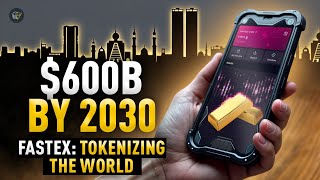
Dr. Violet Howard discusses how real-world asset tokenization is growing in the UAE, with FastX leading the way. The conversation covers market projections, regulatory frameworks, and how geopolitical events shape the crypto industry.
Questions this video answers
Approximately $7 billion.
Projected to reach $600 billion by 2030.
Ras Al Khaimah, United Arab Emirates.
The Bahamut blockchain using a Proof of Stake Activity (POSA) consensus.
VARA (Virtual Assets Regulatory Authority) and the CSA (presumably the Abu Dhabi or UAE Capital Markets regulator).
Chapters
With the total value locked at approximately.
$7 billion, the real world asset tokenization.
Market is projected to reach $600 billion by 2030. By enabling fractional ownership of assets like.
Real estate and commodities, tokenization improves accessibility and liquidity, unlocking significant value in traditionally illiquid markets.
We are currently in a stage where the industry becomes more and more regulated and compliance becomes the key for success. In a long term perspective, regulation of.
Asset tokenization was one of the topics discussed at the FastX meetup held in.
Ras Al Kaimah, UAE. During the 6th edition of the Harmony Meetup, innovators and industry experts came together.
To explore the Latest breakthroughs in Web3.
Here in the Middle East, I think there are some interesting tailwinds happening right now, especially around tokenization of real world assets. So because we sit here in the uae, we are a central hub in port for a lot of things. Remittances, commodities, energy trading, right? And we can bring all of that on chain.
We do a lot of tokenization of absolutely different processes on a government level, On a company's level, for example, we have a tokenization of the certificates in universities.
If you for example, have a trade between Latin American company and this region, you can sell that with stablecoins, which makes it much more frictionless and much cheaper.
One of the companies at the forefront of real world Asset tokenization is FastX, the organizer of the Harmony meetup. FastX is a web3 ecosystem driving decentralized.
Finance or defi payments and gaming solutions.
Whenever we approach any type of innovation, we always put practicality as top priority because everything we build needs to be easy to use. The very understandable and very straightforward FastX.
Offers secure, fast and low cost transactions.
Powered by the scalable Bahamut blockchain and its unique proof of stake activity or POSA consensus, users can create and trade NFTs on the FT NFT platform and explore defi services like lending, staking and.
Yield farming all within a seamless ecosystem. For digital asset management, first need for.
The customers is safety and security in my understanding, whereas flexibility and diversity comes next. The customers needs to be sure that their funds are safe, their transactions are safe.
The UAE is at the forefront of crypto regulation with frameworks like VARA and the CSA establishing a balanced environment that fosters innovation while ensuring investor protection. The country offers clear licensing for stablecoins.
And is actively exploring the launch of its own central bank, digital currency or cbdc.
I think regions like the GCC and the emerging markets are the future when it comes to the innovation activities.
On WebF3.
The demographic is quite young and it's a huge population and I think that's where the opportunity lies in playing that role within the ecosystem.
We are in the process of acquiring licenses in various states. We are targeting Latin America, United States as well. And the plan is also to launch new products such as futures and derivatives which will be available initially in some limited countries. But the plan is also to include all European customers.
The Harmony Conference also serves as a hub for planning ahead with 2025 set.
To be a groundbreaking year for crypto.
The election ofPro crypto US President Donald.
Trump and the ongoing bull market were.
Hot topics with attendees eager to capitalize on these developments to shape the future of the industry.
A lot of things are going to shake next year in the United States. Things are expected to be changed. MICA is getting enforced. This is the biggest shift in the regulatory framework globally in terms of crypto.
I think the cooperation with the traditional financial institutions that our customers could benefit end to end service both from financial part traditional finance and new or decentralized finance or Web3 environment is also the key for 2025.