Senator Lummis & SEC Commissioner Peirce: Security token regulation in the US | Fireside chats
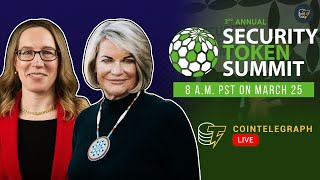
Chris Land outlines Wyoming's digital-asset framework including utility token law and DAO rules. SEC Commissioner Hester Peirce proposes a three-year safe harbor for security tokens during network development, arguing the Howey test doesn't fit how tokens work.
Questions this video answers
March 25, 2021.
Chris Land is identified as General Counsel for Senator Cynthia Lummis and former general counsel for the Wyoming Division of Banking.
Three years (a timer during which issuers develop the network; anti-fraud rules still apply).
Chapters
Thank you so much. And speaking of exciting, we're going to bring on to our next conference agenda panel for today. So the state of Wyoming has really been making headlines lately and as you all know, really in positioning itself as a true blockchain leader on the regulatory side of the sector and also paving the way for how the US Will interact with this revolutionary technology. So today we're going to showcase one of the true fighters who's really helping creating the Wyoming blockchain ecosystem. We have Chris Land joining us now in an exclusive Fireside chat accompanied by Julian Silviano from from the Security Token Summit. So enjoy.
Well, good morning, good afternoon or good evening depending on where you are in the world. Thank you very much for the opportunity Security Token Summit and Draper Goran home for this fireside chat with Chris Land. Chris Land is the general counsel for Senator Cynthia Lummis, the the freshman senator from Wyoming. He is the former general counsel for the Division of Banking of Wyoming and the architect of probably what was not probably what most certainly is the very first kind of digital assets regulatory framework which we're going to talk about in a lot of detail. I'm Julian Saviano. I'm a managing director at Promontory Financial Group and I lead our digital assets group. And I've had the privilege of working with Chris Land and team for quite a while now. So maybe we might jump right into it. Chris, your team and Senator Loomis have been strong advocates of bitcoin for quite a while. Senator Loomis is I think the first senator in history to actually own bitcoin and she has founded the Financial Innovation Caucus in the US Senate as well, an initiative to educate members of the US Senate and their staff about bitcoin specifically and about other opportunities for cryptocurrency and financial innovation and uses of blockchain. So clearly, clearly for your office, Bitcoin and digital assets are kind of a national priority. Can you talk about why that is the case?
Thanks Julian. And I'll also let everyone know that Senator Lummis was originally going to be doing this panel but but we had a couple votes called last minute. That has to be our top priority voting so decided to deputize for so one of the first things is China's testing their central bank digital currency right now in several cities. A lot of other countries are really serious about central bank digital currencies too. And also kind of the coronavirus pandemic's kind of hastened the adoption of technology and our financial system because people are nervous or not so fond of cash, or they at least see the advantages to not using cash now in a way that wasn't present before. So I think a combination of those two things has really kind of enhanced the focus of everyone on fintech and digital assets and security tokens.
And can you talk a little bit about why your office and the Senator specifically supported the nomination of Gary Gensler for SEC chair? And what do you think the impact, what kind of impact do you think he'll have on the digital asset industry?
No, that's a great question, Julian. Gary Gensler has a great deal of experience in the financial markets. First of all, we were quite nervous about his views on esg, environmental and social governance and shareholder activism because it smells a little bit like the politicization of regulation. But at the same time he is very, very pro innovation and pro digital assets, pro using blockchain and distributed ledger for settlement and for tokenization. So that was kind of where we ended up was his commitment to innovation is the reason why I think Senator Lummis was so committed to ensuring that he has a good start at the SEC and can hopefully help the US catch up to the global race and fintech that we're seeing now.
And Mr. Gensler obviously has a technical background in digital assets, having taught a course in MIT on blockchain. So he's very familiar with the technology. So hopefully he'll be an ally to the industry.
Yeah, very hopeful. Senator Lummis and Gary Gensler, if he's confirmed, will hopefully be working very closely together and interacting a lot. And we'll be engaging in a healthy dialogue between our agencies that's appropriate and hopefully we can shape a regulatory framework that's both, you know, enabling innovation and promoting responsible, you know, and safe and sound operations in the market.
And there certainly has been a lack of guidance. And how do you think that lack of guidance on digital assets has impacted the development of the digital assets industry?
No, I think it's definitely had a negative impact on the industry. Let's call a spade a spade at this point. You know, I think it's kind of restricted the development of, you know, securities and distributed ledger technology probably by several years. And you know, that's, you know, the SEC has been very happy to engage with industry, but it's typically a one way conversation where they're collecting information about what they're seeing in the market and not providing anything in return in the form of, you know, rulemaking, no action letters, guidance and that kind of thing. So we need to, we need to move From a one way conversation to a more inclusive conversation where both parties are engaging and, you know, sharing information and working together towards a common goal where we can responsibly integrate this technology into the market.
Fantastic. It couldn't come anytime sooner. Obviously other countries are ahead. And for example, the first Bitcoin ETF was launched in Canada and we're working on a couple of other projects for ETFs also being launched in Canada. So we'd be curious about your thoughts about how the US can catch up.
No, no, as you mentioned, I think you're spot on. I do think other countries are ahead, but I also think the US can definitely catch up. Canada, as you mentioned, just recently approved the first exchange traded product for Bitcoin. And the European Union's working on a new comprehensive market regulation. And everyone knows about Switzerland too, right? Zug and Switzerland's integrated digital assets, including security tokens, into kind of every aspect of their financial system. FINMA is a very, very regulator that's focused on innovation and that's good to hear. And China of course sees this as a way to kind of undercut the US's leadership of the global financial system. They want the banking industry and the finance industry and securities industry and commodities markets to come to China because the US has it now. And we're kind of in a global race with China in a lot of ways. I don't think many people really understand that, especially my generation. We grew up with Wall street controlling the global financial system. It's not our birthright. It's a privilege we have to earn and we have to work hard to maintain that privilege for the future. And that means innovating in a responsible manner.
Yeah, Chris, I mean, I couldn't agree more. And honestly, this technology, blockchain technology in a sense lowers the barriers to entry so significantly that, that those competitive advantages can disappear quite quickly. So let's talk a little bit about your state in Wyoming, your home state of Wyoming in contrast. Actually not your home state of Wyoming, but your adopted state in Wyoming has been extremely forward thinking in developing a sound legal and regulatory foundation for digital assets. There's a lot of attention on Bitcoin now, but this hasn't happened overnight in Wyoming. You know, you've been working on this for quite a while now. We see other jurisdictions following your lead. You know, for example, my hometown mayor Francis Suarez of Miami is making a big deal about using the Wyoming framework to support his own digital assets foundation in the state, in the city of Miami. So tell us a little bit you know, what got all of this started? You know, what, what got you and a small group of other people in Wyoming thinking, you know, this. We have to invest a lot of time and energy in building the right framework. And can you talk a little bit and share some details on the foundation that's been put in place in Wyoming for digital assets?
Thanks. Someday a movie might be made about this. Probably a B movie, not a particularly good one, but it is pretty interesting. Wyoming is pretty much the only U.S. jurisdiction that really has a more comprehensive and fully built out legal framework for digital assets. And the reason why that's so important is, you know, when you lend someone your money, you want to be able to get it back, right? Like you're not going to lend someone your money if you think, you know, you would. You don't have some kind of legal rights against them. So, you know, that's kind of the building block for everything else we've done. You know, Wyoming's legal framework again recognizes responsible innovation. And, you know, it's a good place that, for, for people that want that legal clarity and want to comply with existing laws. Wyoming's legal framework just provides that kind of nexus between distributed ledger technology and digital assets into existing banking, commodities and securities laws. As you know, Julian, Wyoming created kind of a new bank depository institution where it served as a custodian for digital assets. Custody is one of the big issues, as we've heard from some of the other panelists today. Custody is one of the big remaining issues and it's critical to the approval of an exchange traded product and all the other fun stuff that everyone wants to do. It's that building block that can't be ignored. Banks, unlike trust companies, there's plenty of trust company custodians out there now and they're doing good work. But banks have certain exemptions under the Exchange act and the other securities laws that trust companies just don't have. So it's important to have a bank in this space. Wyoming thinks Wyoming's also done a lot with providing regulatory clarity around what is custody. We have a utility token law. That's everything. That kind of started Wyoming's project in 2017. That was what kicked off all the attention. We even created a DAO, a legal framework to allow DAOs to be incorporated in Wyoming, decentralized autonomous organizations and lots of other stuff. It started, started three and a half years ago and here we are still working on it. So it's a never ending project. But Wyoming's trying to diversify its economy right now and get away from the extractive industries and kind of build a financial services industry. South Dakota did it in 1981 with credit card banks and trust companies. And there's no reason why Wyoming can't have a strong, vibrant, healthy financial services industry in Wyoming. It's a beautiful state. Yellowstone and Grand Teton are there. So for those on the panel in Wyoming, please Google Grand Teton National Park. You'll see some beautiful photos.
It absolutely is. I've had the benefit of driving across the entire state of Wyoming, so I can attest to that. And we've got Kraken and Avanti, I guess were the two, the two banks that have already been approved as PDs. And there's a very healthy pipeline, I understand, of other applicants. And so we'll be hearing some really interesting news coming soon from Wyoming, I'm sure.
Yeah. And from other people too, hopefully. Hopefully the federal government as well.
Yeah.
And I guess that brings me to my next question, right? What do you see as the biggest regulatory impediments to the growth of digital assets, specifically digital assets custody and token issuance? Has, has the recent guidance been helpful?
So again, it all begins and ends with legal clarity. You can't get around as much as people want to. You can't get around things like the Exchange act and the Custody rule. Like for, you know, we think the responsible people in the space are looking for a way to comply. They just need signposts on how to do it. And that's what Wyoming is really focused on. The devil really is in the details. You know, nerdy regulators like me love examination manuals and policy handbooks. And because, you know, if you think about the hierarchy of law, you have like the Constitution up here, you know, you have statutes below that, you have regulations, but no one ever remembers to think about that fourth level of abstraction below regulations. And that's like the manuals that bureaucrats use to check boxes and determine whether you're complying with the law or not. You know, those aides that there's more practical, you know, owner's manual that people use when bank examiners go in to examine a bank or look at a broker dealer or something like that. So that's one of the cool things Wyoming done. You know, they do important things like, you know, ensuring people are complying with aml, BSA requirements. And you know, how do you approve exclusive control of a security token? I know the SEC is obsessing about that. Wyoming had just actually completed a 771 page exam manual for bank Digital asset activities that covers everything you can think of. So you know that's kind of the next step. The SEC hasn't even taken that step. We need to get them there and hopefully they're working on their examination manual and documents in the background. But that's kind of the next step we think is getting that grander level of detail and providing that legal clarity to the industry.
Yeah, I mean that's a great point, Chris. And I mean, you know, a lot of people look, talk about regulation in the digital asset space as a negative and oftentimes, you know, I always think about it slightly differently in terms of the right level of guidance and guardrails and if they're given with the right level of prescription, they can actually really enable growth in digital assets in a way that regulatory uncertainty. You're providing more certainty to the market at the end of the day.
Agreed. Yeah, it's really important. We want right sized regulation. As my friend Albert Forkner, the banking commissioner in Wyoming says, we want right size regulation that does its job and no more.
Yeah, absolutely. And so that brings me to some of the other regulators that have been issuing guidance on digital assets recently, such as the occ. National banks can now support digital assets activities. I'm sure you welcomed them to the party last year after Speedy's had already been around for about a year or so. Such as. And so they can issue, they can hold custody, they can manage stablecoin networks but as of yet they really haven't issued a lot of guidance on safety and soundness expectations. Which leads me to my last point. How do you think traditional banks will approach these new powers?
I think they're going to be. Banks are typically very cautious because it's a heavily regulated industry and they're dealing with billions or hundreds of billions or trillions of dollars in many cases. So I think we'll see some cautious adoption. They're waiting on the regulators. I think they want more legal clarity from the regul before they even dip their toes in. And in many cases the federal regulators aren't completely up to speed on the nuance that Wyoming has done already. So we think we have a good answer in Wyoming right now. But the federal banking regulators and securities and commodities regulators are catching up.
Yeah, and several digital assets firms have also applied for OCC national bank licenses, either de novo licenses or conversions from state trust charters to national trust charters. I think there's even one application which is for a full national bank license as well. How do you think this is going to impact the banking landscape. Will they be competing with national banks? Will they be partnering with them? And what are your thoughts?
Well, I'm not completely convinced we're going to see another OCC charter. It depends a great deal on who's nominated to be the OCC comptroller. That's one of the disadvantages of having a banking regulator that has, you know, someone who is appointed by the President because they have to be, you know, the President's going to put his person in, whether Democrat or Republican in any administration, they're going to put their person that they want in there and that they trust. So, you know, Comptroller Brooks is no longer there and he was responsible for the two charters that were issued largely. And so I think we'll just have to see how that plays out. There's a lot of uncertainty at the OCC at the moment. I don't think existing banks should fear special purpose charters. We have a very healthy and vibrant banking industry at the moment in the US and no one should be afraid of competition. These banks are all subject to the same banking regulatory standards as the large national banks. Just look at the details. It's not regulatory arbitrage. It's just wanting to have a level playing field in the market.
And so finally you alluded to this. The Fed has been very silent in all of this. Any thoughts on their point of view on banking and payments activities for digital assets?
Yeah, great question. That's the million dollar question, as it were. The Fed has dozens of folks at both the Kansas City Federal Reserve bank and the Federal Reserve bank of Boston and the Board of governors here in D.C. working on innovation, digital assets, faster payments. So they're taking it very seriously and they're very thoughtful and knowledgeable and they do a great job. You know, I talk to them a lot. You know, Wyoming's been working with them closely over the last two years too and you know, we think developed a pretty robust supervisory framework that you know, kind of fits digital assets into the banking system in a pretty elegant manner and you know, guards against some of the unique risks that digital assets posed.
And.
I think the Fed's going to be issuing some thoughts on all these issues in the coming months and we'll all have to stay tuned. I'll let you know shortly after. I know.
Yeah, I'm waiting as well. And finally I'll put you a little bit on the spot here. Wanted to ask you about, I mentioned during the introduction about Senator Lummis initiative to start the Financial Innovation caucus of the U.S. senate. And maybe I Might ask you to talk a little bit about more broadly speaking what is your offices and Senator Lemus offices kind of objectives. She's part of the Senate Banking Committee. And so what are your all objectives as it relates to digital assets? And we know that you're leading voice and the industry is very much looking towards your leadership for help and a lot of the things that we've been talking about crafting and driving responsible and innovative regulation to enable growth for this industry and to provide regulatory certainty.
Thanks Julian. That's an amazing question. You know, kind of the same way I mentioned with the regulators, the learning curve for digital assets and distributed ledger technology is very steep and you know there's a million things going on in Washington and it, you know, it before now there's a lot of factors that played into this but before now it wasn't kind of as high a priority as it should have been. And that's the primary mission of the Financial Innovation Caucus is going to be to educate our fellow senators and staff and the other regulators for that matter on how you can responsibly integrate security tokens and digital assets into the financial landscape. We're going to be doing a lot of activities at the member level and at the staff level and we're also going to try to do some more practice, practical hands on experiences with security tokens and digital assets. The whole GameStop saga that happened a couple months ago has given us an opportunity to talk about how security tokens can lead to faster settlement in equities markets and provide more liquidity. We're talking about innovation as much as we can, but it's really about just FaceTime, making connections and educating folks on trying to provide a balanced perspective and educating folks on why fintech and digital assets and security tokens can both promote financial inclusion and create new markets and help maintain U.S. leadership of the global financial system.
Yeah, that's a great point Chris. And focusing on the innovative aspects of blockchain and technology and digital assets that help drive transparency, that help drive efficiency are really not necessarily what people talk about in the front page of when they think about digital assets. So that level of education is very, very much welcome. So I want to thank you Chris for taking the time and for your leadership in this space. Not just at the Senate thankfully, but in the last few four years as you mentioned, in the state of Wyoming as well. We really appreciate it. I'm sure that everybody on this call is very much looking forward to what the future holds in terms of regulatory guidance in the US in order to kind of continue to enable the growth of, of the of the security token and digital assets industry as a whole. So thank you very much.
Thanks Julian. It's great seeing you. And I guess we'll turn it back over to the hosts.
Yep. Complicated. A crew lets you focus on what is really important life invest in premium.
Commercial real estate for as low as.
$1,000 without hassle and worry.
Accrue, making the exclusive inclusive.
Well, some really valuable insight there from Chris and thank you so much for Julian for some great questions. Now our next guest is no stranger to crypto. We all know her in the industry as crypto mom. A really resilient figure for finance paving and a crypto friendly voice for us all. So leading one of the most crucial financial departments in the US Government, our next guest is Commissioner Purse, who will be sharing what's in store from the regulatory side of digital securities for 2021 and also beyond that as folding her insights and asking some pressing questions. We also have Andrew Dix from Crowdfund Insider. So take it away for the next panel.
Hello everybody. My name is Andrew Dix. I am the founder of the crowded media group that publishes Crowdfund Insider and I would like to thank SEC Commissioner Hester Purcell. Here today, everybody knows Commissioner Purse, also known as crypto Mom. She's become a favorite of the fintech and digital asset sector and this is due to her ability to embrace innovation in financial services. Commissioner Pierce, she is originally from Ohio. It's my home state, so I can't hold that against her. She's a graduate of Case Western University and she went to Yale Law. Commissioner Pierce, thank you for joining us today and thank you for participating in the Token Security Token Summit.
Well, Andrew, thank you for having me here and thanks to the organizers of the summit. It's a real honor to be here. I do have to start with my standard disclaimer, which is that my views are my own views and not necessarily those of the securities and Exchange Commission or my fellow commissioners.
Awesome. Thank you very much. So, since we have very little time together, I want to jump right in and ask you a few questions about the digital asset industry. First of all, recently speaking to the British Blockchain association, you asked an interesting question. You said, when is a digital asset a security? And I'm going to read this so I can get it right. Despite the frequency with which this question is asked, clear answers are rare. The breadth of our statutory definition of the term security and the complexity of the guidance Commission has provided contribute to this lack of clarity, people planning to distribute digital assets have to determine whether the federal securities laws apply to those distributions. The SEC staff has provided guidance to help people make these determinations, but the guidance is difficult to apply. So is Howie broken? Is this 70 year old rule unable to adapt to the fintech era?
Well, as a general matter, I would say we need to have something like Howey. So we need to have a concept like investment contract that captures things other than stocks and bonds, which are typically what we think of when we think of a security. You need to have a way to capture something that when someone says, hey, I'm trying to build a company and I want to raise money to build the company, will you buy a part of that? Will you buy some of these things that I'm selling so that I can build my company? We need to have something that captures that. And so that's the purpose of investment contract and then Howey, which is the Supreme Court decision that interpreted what that meant. But I do think that Howie has had its challenges over the years, not just with respect to crypto, but in other respects as well. And I think we've really had the chance to think about it a bit more in terms of crypto. And I myself have had a bit of an evolution on that and really think that it hasn't worked that well in this area because we've almost used it to turn. So Howie was about orange groves, the sale of orange groves, along with contracts to take care of the farming of the orange grove so that the person who bought it didn't have to do anything. In this case, we're sort of treating the orange grove as if it is itself the security. And I think that that has led to all kinds of really complicated problems when you try to apply that to a token which is functioning in a token network. Because if you're treating that as a security, there are all kinds of rules around how it can transfer from one person to, to the next and who's allowed to do those transfers. And you know, it really, it really implicates all kinds of securities laws. And so it does matter how clear how we think about this and how we apply it. And I think that's why my complaint has been we need to provide more clear guidance. And my ideal would be if we could come up with a safe harbor along the lines of the one that I've proposed, which would allow people to kind of not have to ask the difficult questions at first while you're building a network, and then maybe later down the line we can Think how the securities laws apply, but sort of addressing some of the concerns underlying the securities laws, which are we want to make sure people who are buying these things are getting good information and that they're not being lied to. But we do want people to be able to build these networks. So it's tough.
Yeah, so it is tough. I think everybody in the industry would agree with you there. And I want to get to your proposal, the safe harbor proposal, in a second. But first of all, the previous panel mentioned Switzerland. So earlier this year, Switzerland made some amendments to legislation or regulations to facilitate effectively, digital securities. Now, they didn't mention blockchain or DLT within the rule changes, but obviously this was at the top of their mind. Is this something that the United States should be pursuing? Should this be bespoke legislation, or should we do this as a rulemaking process at the Commission? I have to be honest with you. Every time I think about Congress creating legislation around digital assets, I get kind of terrified about it. I'm a little bit, you know, leery as to what could be created. So which direction should we go? And is. Is Switzerland kind of heading in the right direction?
Well, I understand your concern, because some of these things are very technical, and so when you try to have Congress work on them, it can be difficult. So sometimes it is better for the regulator to try to take an existing regulatory framework and apply it in a way that works for digital assets or digital asset securities. And, you know, we're trying that. We're taking baby steps toward that. At the end of last year, we put out a. It's sort of like a pilot program so that broker dealers can engage with digital asset securities. Now, it's limited to digital asset securities. And that's a pretty important limitation because a lot of people who would want to do that would also want to be able to have people pay with Bitcoin or perhaps other crypto. So it's limited, but I think it's a start down that road. What we have to learn, though, from Switzerland is they've been thinking about this. I think very strategically, the answer is not we just throw up our hands and say, you don't have to be covered by any regulation at all to say, no, let's craft a regulatory framework that we think will work so that the rules are clear and people know what they need to do, and then they'll come here and build it here. And that's kind of the message I've been trying to give here in the U.S. you know, I tend to be a Pretty deregulatory type of person. But I also realize that, you know, you're going to want to have a regulatory framework in place. And actually, what people are asking me for is not hands off, they're just saying clarity. And so I think that's where Switzerland is making a lot of sense. And they're putting this framework in place. They're thinking about it from a clarity perspective. And Congress can help to push us. They can do that by either adopting some pretty broad legislation that kind of draws clear jurisdictional lines, what belongs at the sec, what belongs at the cftc, and so forth. And they can direct us to do rulemaking, which is one way to approach it. But we might learn from somewhere like Switzerland or Wyoming for that matter. You just had Chris on talking about work here that he's doing here in D.C. now, but he did a lot of work in Wyoming to set up a framework that was specific to digital assets, which is something we can learn from.
Okay, so that's interesting, and I like your answer. I'm kind of curious. I don't know how much digging around on this you've done. Have you looked at what the French have done in the whole ICO utility token thing, or have you had a chance to review the proposed legislation at the European Union level? I'm curious if you have any thoughts on any of that.
I'll be honest, I haven't spent as much time as I should thinking about those, what they're doing in Europe and France, although France specifically, I think, has taken a really interesting approach, because they are wanting to build something that allows people to do these token distribution events in a way that does do some of the same kinds of things I'm trying to do with my safe harbor, which is get information out there, but also make it clear that you can do this kind of thing. And then I think the European Union, again, I looked a little bit at what they're trying to do, and I think they're doing this. They're taking the approach of we need to have something in place so that people have something to grab onto. And I think the initial reception that I've seen is fairly positive to the fact that they're trying to do something like that. We'll see how the details play out. I don't know how it will all play out. And again, I have a lot to learn from what's going on in Europe. Also, what's happening in Asia, what's happening in the Caribbean. You know, there are a lot of places that are taking much more forward looking approaches than we. And by forward looking, I mean really trying to provide some clarity.
Okay, so that's interesting. Now you just mentioned your safe harbor and I'm going to ask you to kind of explain it. You know, my recollection is there's like this period of time where you can figure out whether you've created a network and the token may not be a security or it could be a security later and maybe you can give a brief explanation of that. But does your safe harbor have a chance of becoming part of the rules?
Yeah. So just briefly, the idea is that at the beginning, when you want to take advantage of the safe harbor and you want to start distributing your tokens broadly, you say, hey, the timer is starting. Now I'm providing this information about what my plans are for the network and providing information about who's behind the network and what, you know, you get a little bit of a picture of what's going on and then you have three years to develop the network so that the token is actually usable or the network is decentralized. And at that point it's clear the securities laws don't apply. And everything that you say will be covered by the anti fraud laws under the securities laws. So that part of the securities laws will apply during that three year period. We're thinking about how, if at all, we need to refine it. But it is something that I plan to talk to Chair Gensler with if, if Chairman Gensler gets confirmed, as he's expected to get confirmed relatively quickly, it's something that I'll talk to him about. I'm not wedded to the particular safe harbor. I think the French approach is kind of similar, but maybe even more open and less prescriptive than the safe harbor would be. But I think something along those lines would be helpful. So that's what I'm going to advocate for. We'll see if I'm successful.
Okay. Should we anticipate a version 2.0 soon? Are you going to update this?
Yeah, that's the plan. And I mean the plan is again, I'm most, I believe in crowdsourcing things. So the idea is to put it out there again, get some more feedback, see how we can improve it even more. And obviously if it were to go into place, it would go through a formal notice and comment rulemaking process. Probably that's the most likely form.
Okay, I like that. I think that's a good idea. So I'm going to switch gears here a little bit. NFTs so recently we had a securities attorney provide some insight. Lewis Cohen, who you may know, he's focused on the blockchain sector because first you have Elon Musk selling a tweet of a song, actually it's a song as an nft. And you have Jack Dorsey selling his first tweet. And then Beeple sells a work of digital art for $69 million. And I think when everybody saw that he's selling art for $69 million and it's digital, that kind of made the world stand up and take notice because now you're starting to talk about some real money here. In my discussion with Louis, I like, well, when does something like this kind of, you know, cross the line into becoming a security? And in brief, he said, well, it doesn't have to be a security to be a thing, but it could be an investment contract, which I thought was interesting. Is this something the SEC is taking a look at? Do they have an interest in this booming market right now? What are your thoughts on NFTs?
Well, we have an interest in anything that could be a security, so we're paying attention. But I mean, the whole concept of an NFT is supposed to be non fungible, so it's supposed to be unlike anything else, which means that it's, I think in general less likely to be a security. But you could certainly, I mean, people are being very creative in the types of NFTs they're putting out there. It's a wonder what some people will pay for. And so I think given that creativity, as with anything else, you should be asking questions if you're doing something where you are saying, I'm selling you this thing and I'm going to build this, I'm going to put a lot of effort into building something so that this thing that you're buying has a lot of value. I mean, that's going to raise the same kinds of questions that these ICOs have raised. And so you've got to be very careful when you do something like that. You also have to be careful if you decide, you know, you're going to take a bunch of these NFTs and put them in a basket and then break them up and sell fractional interest. Or even if you take one NFT and I mean if they're selling for $69 million, you might want to break them up and sell fractional interest. And then you better be careful that you're not creating something that's an investment product, that's a security. So you've always got to ask those questions. I Think as we've seen, the definition of security can be pretty broad.
It can be, that's correct. So, yeah. So thank you for that. So I'm going to shift back to. You mentioned the incoming chairman of the sec, Gary Gensler. I think everybody assumes that he will be confirmed soon, any day now. I would, you know, and looking at his history, I would say that he's probably the most sophisticated chairman in regards to fintech that we've ever had. And fintech's relatively new, but he obviously understands this stuff. He has researched it intensely. He taught a class at MIT on blockchain. I mean, he knows his stuff. I'm not certain if you've had any chance to interact with him yet. My question is, do you. Do you see areas that, where you think that the two of you, I mean, you've been the most innovative commissioner, I think, you know, ever, at least in recent history. Are there areas where the two of you agree? Do you see areas of possibility where the two of you can work together and kind of forwarding this innovation sector of securities?
Yeah, I do. So I've known Gary for quite a few, quite a while now. I knew him when I worked on the Hill. He was heading the cftc, the Commodity Futures Trading Commission, and so got a chance to know him then and then have kept up a bit with him since then, including, I went up to MIT and actually did a conversation with him at an MIT conference on crypto. And that was a lot of fun. And he has been thinking a lot about this stuff. He sees the talent in this area and I think he sees the potential of the technology. And he's also someone who really appreciates the importance of a good regulatory framework. Having had this chance to run a regulatory agency before and build, frankly, he built a whole regulatory framework around derivatives after the financial crisis. He and I had our differences about that framework, but I think he's someone who knows how to build a framework from scratch. And so I definitely see areas where we're going to be able to work together and try to build a framework that works, that achieves the regulatory objectives, but is effective. I think he'll be someone who's going to look to what other jurisdictions are doing and learn from that as well. So I'm enthusiastic about his arrival. I think the important, most important thing is to have someone who's coming in who doesn't take a lot of education. I mean, I think Chris was just talking about in the last segment how important it is to build that base of education and with him, I don't think you're going to have to do that. You're going to be able to jump right into conversations with them. So I think it's a really a positive thing for the agency and for innovation.
Yeah. So I think that that's good to hear and it's nice to know that you have a, you know, a rapport with him too, because I think that's always helpful. You know, he's known quantity, so that's exciting. I mean, I think this is an opportunity for him to kind of make his mark on an area that's not only innovative, but it's fascinating. And so that'll be cool to see if that develops. Any thoughts or comments, I should say.
Too, you know, and I think it's always important to say this to audiences in the digital asset space. He's going to come in and there are a ton of things on his plate plate that are going to be are going to slam him on the first day he comes in. Because anytime you're running a regulatory agency and one that deals with the capital markets, there's always a lot going on. And so getting the bandwidth is always going to be an issue for any chairman. But I think it is something that he and I will certainly be able to talk about. And so I'm optimistic. But I think people also need to be realistic and a little bit patient.
Yeah, understood. Any thoughts on the broader Biden administration and what's coming out of the White House in regards to interest in FinTech and digital assets or not so much.
I mean, it's still early days. We'll see what happens. There are some things that could be done coming out of treasury or the White House in terms of thinking about fintech more broadly and what can we do to cultivate an environment in which fintech can thrive, in which maybe we have cross agency sandboxes or something along those lines. So there's certainly work that can be done. I think this is going to be an important moment for the administration and for us as the American people to think about issues like privacy and the importance of having regulatory barriers low enough so that new competitors can come in to a space and thinking about what are the trade offs between privacy and security. Those kinds of issues are conversations that we really need to have and this is a moment, a natural moment for us to have those. So I hope we'll take advantage of that as well.
Awesome. That's really interesting. So now let's jump back to Wyoming because you mentioned it just a few minutes ago. That Wyoming is doing some really innovative work in regards to digital assets. And other states have looked at or are looking at doing similar things. And there's always a bit of friction between the states and the federal government. What are your thoughts on what Wyoming is doing and how it gels with, you know, the federal regulatory environment when it comes to securities and digital securities?
I think that's an important question to ask. You know, the states are laboratories of democracy is what we always call them. And they're places where people can try different things. And Wyoming has certainly been at the forefront. Others are now trying to get into that game as well. You see places like Miami where the mayor is really trying to encourage a community to develop their. So I think that that's important. One area where we saw a little bit of a clash. And this is natural because the states have a role in financial regulation. The federal government does, too. So recently, Wyoming took a position with respect to what a qualified one of their entities, whether it could be a qualified custodian under the Investment Advisors act, which is something that we administer at the sec. And so the staff at the SEC came back and said, well, not so fast. You know, you gotta remember that we're the ones who run the show here with respect to qualified custodians. And while that's true, I think that it illustrates maybe a broader question than just crypto. It's a broader custody issue, and it raised some new questions that I'm not sure this was the right context to raise those questions in. And so I think it's. That's one example of where we really do. We really need to provide some guidance so that. So that things can move forward. It's very helpful what the states are doing, but sometimes the onus is really on us to do something.
Okay, so that's interesting. Another topic that I believe you've commented on before in the past is kind of the whole regulation by enforcement. It's one of those things that the industry tends to criticize. They don't like it. It can establish some actual guardrails. So people have a sense of whether they're doing something wrong or not. I don't know, maybe you can share your thoughts on. On that commentary. And also, I've got to ask you, you recently tweeted something out about the digital assets custody. And I think every response following was from the XRP Army. I mean, do you read all these tweets from those people that are very committed to this digital asset?
Well, look, I welcome feedback from anyone. And so I'M always happy to hear there are some issues I can't see speak to. And one of those, which I know has been frustrating to some of those people who have tweeted at me, I can't speak to Ripple and the XRP litigation because that is. That's ongoing litigation right now. And so I just can't speak about it. But more generally, enforcement is sometimes a tool that we use, and it's a necessary tool for the agency. So I'm supportive of using it. But I always underscore, and not only in this context, but every context first. We're a regulatory agency first. And what that means is that we're supposed to write clear rules so that people know what to do to comply with them, and they know that if they don't comply with them, they might be facing an enforcement action on the back end. But good government means that you spell out what the rules are before you start enforcing them. And I think that this is an area where we haven't done a great job at spelling out those rules in advance. And so we have provided some clarity through our enforcement actions. I think people have been watching them quite closely to see what, you know, what we might and might not find to be acceptable. But why not just take the much more positive and proactive step of putting something out there and saying, all right, look, we understand what you're trying to do, and we don't think it's bad to try to do a token distribution. We think we understand why you need to do that to move forward. So here's how you need to do that to move forward. Now, if you don't comply with what we lay out here, you could be facing enforcement action. And I think the fact that we've done this through enforcement actions, many of which are settlements, as opposed to actually going in front of a judge, further complicates matters, because what people agree to in a settlement may be driven by a lot of factors. How much money they have for lawyers, their, you know, desire to move on and move forward. So it is good that I guess, that we've gotten some judicial opinions in this space, although I have some, you know, I've expressed some concerns about the way the judges have come out as well. But I really do hope we'll at some point, provide clarity through a means other than enforcement.
Okay, that's interesting. Another hot topic in the news right now is Coinbase and its looming ipo. And I don't think you can really comment on that per se, but we recently published an article where Lee Schneider, who's. Who's a GC of EOS Block 1. He said he posited that this is going to define the digital asset industry going forward if and when the offering is approved. Do you view this as kind of a seminal event? Is this not something you can comment on? I'm kind of curious as to what your thoughts are on this first digital asset company with this enormous ipo.
Yeah, I mean, I can't really comment on any specific IPO or company, but I think that it is an interesting moment for the industry because you're seeing traditional finance and decentralized. I mean, we're not defi specifically, but you're seeing traditional finance and crypto sort of meet, and that was inevitable that that would happen. But I do think it's. It's sort of symbolic of this broader trend of institutions around and saying something going on here, and maybe we want to participate ourselves or get our clients access to this new asset class. Again, I'm not advocating any particular asset class, but that's what I'm hearing and seeing from institutions. And so I think it really is symbolic of the moment and I speak that we're going to have a really interesting 2021 where we're going to see more of those moments where traditional legacy institutions are looking and saying, yeah, we want to get involved in this in some way.
Yeah, that's interesting. Some people in the industry have been frustrated with the lack of clarity in securities law in regards to digital assets, be these securities or not, believe that the United States has fallen behind or is at risk of falling behind. In regards to some other jurisdictions that we've already discussed, some industry participants have made a decision to set up shot in other jurisdictions. Is this a problem for innovation and financial services in the United States? Is it something that because the market's so big, we can just bounce back immediately? What are your thoughts on complaints from the industry on this?
Well, I mean, we do take for granted that we have the best capital markets in the world and we have the best atmosphere for innovation in the world, and we take that for granted. A lot of people want to come here and want to build things and want to work with other people here, but we do need to be nimble, and we need to be nimble from a regulatory perspective as well. And we need to accept the fact that change brings with it experiments, some of which work, some of which don't. And it's sometimes a bit messy, but that's okay. And so I really hope that we can do a better job at cultivating that environment here. My piece of that is to try to build rules for our capital markets that make them as dynamic and as innovative as possible. And that's something that I really am committed to doing. There's so much more talent in our country that could be tapped, and so getting capital to those parts of the economy, to those people. And there are people who should be participating in our capital markets who aren't. And so I'm excited about both of those things. I think it's a real opportunity for us to rethink our approach. Hi, everyone. To try to be a little bit more nimble.
Awesome. I have one quick question for you because I think our time is up. Will all securities eventually be digital? And I'm not saying using blockchain or dlt. Is that an inevitability? I kind of assume it is. I'm curious as to what your thoughts are.
That's kind of my assumption, too. I don't have a time frame, but that is my assumption. Great.
So I believe our time is up. And I want to thank Commissioner Purse for joining us and sharing her perspective, her unique perspective. And I think that the industry is very fortunate to have your voice on the commission. And I hope that someday we'll see you as the chair of the commission. So thank you very much, Commissioner Persh.
Thanks, Andrew. This was a lot of fun, and my door is always open, so come talk to me.
Thank you very much.










