Should you hold Bitcoin or Ether in the long term? | Interview with Mati Greenspan
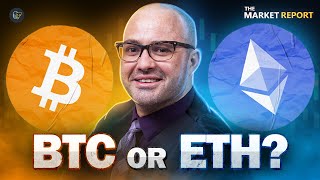
Mati Greenspan from Quantum Economics explains why he holds Bitcoin and altcoins long-term instead of trading. He's skeptical of current institutional adoption claims but sees ETF approval as a real catalyst. Day traders mostly fail; he runs roughly 50/50 between Bitcoin and Ethereum.
Chapters
All right.
Matti Greenspan is the founder and CEO of Quantum Economics, a firm for analysis, advisory and money management that focuses on fintech and the digital asset space. He's the former senior market analyst of Etoro. Mattie has a deep passion for understanding the financial markets and discussing the best trading opportunities to invest in. Fun fact, Matty actually wanted to be a musician up until his late teens and early twenties. How are we doing today, Matty? Thanks for joining us.
Good. I just had a good gym session yesterday, so that dream is back alive now that.
Right on.
Now that we've seen several bull cycles in the crypto market, I have a little bit of time to dedicate to that stuff.
I do want to open up our first question today. So, like, how did you go from wanting to be a musician and going to music school and having now a career in finance? Like, what was that that like for you?
So I, well, I met my wife and she said, well, you're not making any money doing music, so you better go get a job. And so I found a job. I had a friend of mine that lived down the street and he says, oh, well, you speak English really well. In Israel it's a commodity apparently. And they had me selling, selling stuff on, on the telephone. And it was, I was at a company called dsnr. We were selling green card lottery tickets and it was kind of like, it's kind of almost a scam, but not really because kind of legit because they were doing, doing kind of like this processing for people. But basically after six months, I had enough. I was like, no more. And then I got a job at AVA FX in 2008 and I've been inside the financial markets, online brokers ever since.
So, like, a quick follow up question for you here. So like, what was that light bulb moment for you, like, when you realized like, holy, like, crypto is my future? Like, what was that like?
So March of 2013, I was working for eToro and the CEO Yoni Asia, send out a blast email going, look at this. It's a new form of money that lives on the Internet. And I was like, whoa. As somebody who's been watching the financial markets, the 2008 crash and the subsequent bailouts and everything like that, I was extremely excited instantly upon seeing that we now get to control our own form of money and we don't have to rely on governments and central banks to do that for us.
So it seems like, like the institutions have kind of been kind of dabbling in crypto since your company, Etoro did back in 2014. I know you mentioned it earlier in the pre show. Do you think that institutions are getting more involved now and what is doing that or what do you think? Is it just kind of hype behind the Bitcoin ETF and institutions?
So that's a good question, Jordan. They think there's no shortage of crypto analysts out there who are ready to say that institutional adoption is happening. But I haven't seen the evidence personally. Maybe I'm not an insider enough or whatever, but I'm just looking at the publicly available data and information, which is grayscale volumes, for example, and CME volumes, and I don't see any sort of massive ramp up in institutional activity. So not that I can tell. But I guess if and when we see a Bitcoin ETF approval, I think that'll be the ultimate test. Right.
So Maddie, on institutionals, we've seen negative interest rates over the world for the past couple of years. And even by having negative interest rates, institutionals failed or barely entered bitcoin and cryptocurrencies markets. So what do you need that, what do you think that needs to happen for institutions to re embrace it?
I think it's just a matter of time, really. Right. Because the natural properties of Bitcoin on paper should be extremely attractive to fund managers. Right. The fact of asymmetrical risk, for example, the uncorrelated aspect that allows people to use it as a hedging tool in their portfolio. Portfolio managers can use it as a real tool. So they're constantly looking for uncorrelated assets. But I think there's also that kind of stigma that came out in the early days as far as financial media was concerned and especially financial brokers. I can tell you, I know somebody who's extremely wealthy and he's like, I don't really like all that Bitcoin stuff. Well, how do you know? Because my broker told me, and his broker doesn't offer Bitcoin. I happen to know that. So of course they're not gonna, they're gonna be downplaying it because they're not selling it. And then as soon as they sell it, then they can, you know, they can kind of talk it up. That's a process. And I think that over time, you know, building new bridges, building new derivative products, ETFs, those type of things are helpful. But I think it's just, it's just a matter of time really.
Now that financial news organizations view Bitcoin as almost like any other financial asset. What do you think brought about this shift in point of view for bitcoin or crypto in general?
Yeah, well, we're still waiting for Bloomberg to add a BTC and ETH ticker at the bottom of their screen. Right. They've become more comfortable with it. And the thing to point out about the news and the media and people often get wrong about news and media is that it's an extremely decentralized industry. Meaning that Bloomberg has more than two and a half thousand analysts and reporters from around the world. So each one has obviously their own opinion. And I think that slowly but surely we see more and more of those reporters and analysts coming Pro Bitcoin. Mike McGlone from Bloomberg, famously, I think he's probably, probably been beating this ETF drum the loudest out of everybody. And then everybody's like, well, a Bloomberg analyst is saying it, so it must be true. Right? I think we'll, we'll see. We'll see pretty soon.
Go ahead.
No, I was just going to say. So, like, when it, when it comes to news coverage of bitcoin in particular, like, how big of an impact do you think that has on the actual markets when it comes to mainstream coverage?
So you're asking how much of an impact does price have on, on, on the news or does news have on the price? Because actually, I think that there's significant impact on both. Right. Because people who are buying, they look, they read the news to figure it out. And people who are writing the news, they look at the price to see what they're going to write about.
What do you think it would take to get to like that broker you mentioned to get into bitcoin? You think it's going to take regulatory clarity from the government or, or like Bloomberg actually putting that ticker on their sign, like, oh, okay, we can get into it now. Is it something like that?
Well, I, I actually spoke with the broker as Morgan Stanley, their private investment bank, and they said that they're working on it. So in the meantime, they're, they're, they're feeding him, telling him, no, no, no, no, no, no, it's not a good asset. As soon as they come out with their product, and they will, then they'll, they'll get him in, involved.
So is that a way to kind of keep him from going to other houses that might offer it or.
Yeah, but, but to answer your question, Benton and I just sent a tweet about this, really, this, this market, it really goes from hot to cold and cold to hot pretty instantaneously. It doesn't spend much time in the middle. I mean, the, the chart I used on my tweet was really the fear and greed index. And you can see it just goes from extreme fear to extreme greedy in like a week. So I mean, and that's, and that's, that's really a process of, you know, how, you know how people wake up in the morning and there's, there's a lot of speculation in the market. So if there's, you know, some positive news out there, people might be, you know, more enticed to buy and then that'll cause the price to go up and then there's like the snowball effect. And the snowball effect works in reverse on the way down. Not much you can do about it.
Now when it comes to that volatility, do you think in the long term that swings from fear to greed will kind of fluctuate less once it becomes kind of a more mainstream asset for institutions and that kind of thing?
Yeah, and I think that anybody who is planning on buying the rumor and selling the news on the ETF is kind of a fool. Right. And who wants to pay capital gains on that crap just a whole long term. And if the market dips a little bit, you could buy more, but selling. And what are you going to do? Hold cash? What are you going to do with it? Right, right. If you need to get cash to buy a house and you're just waiting for the 20 TF, you know, fine. Bless you, Honestly. But everybody else, I mean, if this is a store of wealth, what are you doing? Trading?
Right.
I have a tough one for you. I know that the answer is not, but if the ETF gets approved, what do you think happens to altcoins? Are they going to underperform, outperform or why?
Yeah, I think that this narrative of alt season, not alt season, bitcoin season, I think that it's a bit overrated. And I don't think that it's predictive in any way, as we know. And you know, I have a financial broker's license and one thing that the regulators make me do, anytime that I show a picture of a chart, I need to say past performance is not an indication of future results. And I think that anything that any kind of analysis that we do and this whole alt season, not alt season, originates from what we've seen in the charts, particularly the bitcoin dominance index, for example. I think that we've seen the bitcoin dominance rising lately, which was interesting, even though some of the altcoins were going up, the entire market was green. But bitcoin was just outperforming just by a little bit, even while the stock markets were actually going down. So we saw a nice healthy atmosphere in crypto against a more shaky atmosphere on the global stage, which was interesting, but in my mind, I think that chart is a bit less relevant. I think that at the moment we can think about total market cap of all cryptos is about 2 trillion. Total market cap of Bitcoin is about 1 trillion. So, you know, it's about half. And that's how I keep my portfolio. It's about half bitcoin and half altcoins. And I'm pleased to say I actually, I thought about it the other day and I was like, for the first time in probably in my entire life, I don't have exposure to any traditional assets. At the moment I'm, you know, 100% in the crypto market.
That is awesome to hear. Love to hear that. We're obviously all crypto nerds here, but so it looks like we have a question from the audience from Ben Matty. Do you encourage day trading or simply buying and holding?
Yeah. So I think that, Ben, that's a great question. And I've seen throughout my career thousands of newcomers, people come into the market, not necessarily crypto market, but all markets. And when I first got in 2008 in the forex market, it kind of blew my mind. But I did the research and I found out that only about 2.5% of people who try day trading are actually successful and the rest end up losing most or if not all of their money. And I think that what's incredible, especially you know, right now in bitcoin, I think that probably 94% of all addresses are in profit at the moment, or some ridiculously high number. We basically flipped that on its head. Head. But that doesn't work if you're day trading and it doesn't work if you're leveraging, because if you're leveraging, you're going to get liquidated. And that's always a possibility. If not probability, if you're trading with leverage, you lose the assets. But if you're just holding, the price can go down, but you still own the asset. Nobody can take that away from you. Once we do see a new bitcoin all time high, that number moves up to 100% of addresses now in profit, obviously, and we've basically been able to flip that on its head. But not if we're foolish, if we're foolish, if we go back and start day trading and thinking that we can predict what's going to happen every day of the, every day of the week by what's happening in the news or what the charts are telling us. There's nobody, I've never seen anybody in my entire. Of the thousands of people that has been able to consistently, day in, day out over the course of more than a year, make profit day trading.
And I think that that brings up like a very important point where it's like, I have friends that are newbies trying to get involved with crypto and they're like, hey, what, what should I do? Should I do trade trading? I'm just like, buy and hold, buy and hold. Like it's, it's very easy and it's, it's, there's simple steps to, to get involved with it. And buying and holding is, is obviously one of the better ways to do that.
Diversification. Those two rules, you can go wrong.
Exactly right. So I do have a question regarding you receiving your first bitcoin as a gift. And so would you say that this is what started your journey into crypto or was it more of that experience at Etoro that really kind of opened up the door for you to get involved with the industry?
Yeah, so it actually, it's the same story really. Was first that email that I received from Yoni Asia and then a few months later he's like, well, I want our employees to get more involved. So he called a meeting about bitcoin where he had an expert come in and tell us about it. And then he said at the end of the meeting, well, whoever creates a bitcoin address, I'll give you one bitcoin. And bitcoin was like $30 at the time. And I'm like, yeah, I want to try it. So that really helped me and especially that, you know, that $30 worth of Bitcoin in 2013, you know, by 2017 it was, you know, was worth significantly higher. And that helped me to have more hands on experience. Especially with, you know, when it came to Ethereum and you know, the DAO organization that I was able to be involved in because I had that bitcoin on the side, I was able to convert some of it and actually invest and get that hands on experience. So I would say that, that it was extremely helpful from that side. But as you know, somebody who was doing market analysis and then suddenly you stumble on something like bitcoin. You know, it was something that I fell in love with right away and was doing my Shifted focus of my analysis quite quickly.
And you've mentioned the volatility and like not really encouraging day trading. Are there any technical analysis points or things like that that you actually apply in your crypto management?
Yeah, sometimes I do look at things like Fibonacci retracement lines are moving average and the golden dead cross type of scenario. Certainly volumes are important because they tell, they give you the momentum. But for me it's not about you know, like buying and selling on a daily basis as far as, you know, trying to speculate on the price, but rather more during the course of regular business. Right. I have clients and contractors so sometimes I'm receiving money, sometimes I'm paying money. And let's say when the price of bitcoin is particularly high, if it's, you know, or let's say if it's trading it, if we were at 70 or 80k, I'd rather be selling, you know, sending payments in bitcoin and then on reverse, you know, if it's we're trading at 30 or 40, I'd much rather be receiving the bitcoin on the receiving end rather than receiving fiat money from a specific client. These prices, I'm pretty ambivalent. I'm comfortable paying and receiving at 55, 60K. It doesn't make much of a difference to me.
And do you have an opinion on the bitcoin versus Ethereum battle and which one is a better long term?
Yeah, man. I mean NFTs are the future. I don't know if you've been following what I've been doing. I bought a stoner cat. Last night was my, one of my first large NFT purchases. I mean look, Ashton Kutcher, Mia Kunis and Vitalik Buterin are all involved in the same project. I have to be part of it, honestly. And you know, owning the ownership of the token is actually utility and that you get. I don't know if it's bonus content or actual content that's not available to the general public. Like I have to have a ticket like the bitcoin Miami conference, right where people showed up but they're like, didn't have a ticket, you don't get in. So I, I just felt I had to. But I think that we can see Ethereum flipping bitcoin. I don't know if it's going to happen this year, next year or sometime in the future, but I think that bitcoin has, and I think Marcel was, was kind of hitting at this that bitcoin has all of the Financial institutions, the bond markets and stuff like that, that it might be able to slowly displace. And it's not a one to one, but I think that also, and what a lot of people might be missing is that institutions who are thinking about yield, right, and how do you obtain yield, I think that they might be a lot more attracted by a market like the defi market where you can actually earn yield. You can earn yield on Bitcoin these days as well. So they might be looking to maybe hodl Bitcoin in places where they're going to get a bit of extra yield from that and that can maybe subsidize, but I think also within the stable coins, right? So let's say if you're able to get 5% yield on, you know, by holding USDC, for example, in a defi protocol, suddenly we're talking about something, and especially if we add more risk mitigation factors and due diligence and things like that, we're talking about something that can be seen as a competitor. But that's for Ethereum is the sideshow, right? The entire third level of the Internet. Everything that we're talking about right now we're using mobile phones. We don't know what's going to be next. The Oculus, it's a nice game or whatever, VR headsets. But when we have some kind of device that's not necessarily handheld, but probably we'll wear it on our face or whatever, something that provides augmented reality. That's all the area of Internet of value. That's all the area of, you know, the metaverse and everything like that. Bitcoin has no place there, right? It does. It just doesn't even. It just doesn't even compute. I mean, people will, you know, you know, a bag of gold or whatever. But look what happened to gold. I mean, it got out. It got out phased.
Yeah. Excellent insights. I'm in the camp that Ethereum is going to outperform Bitcoin in the long term. So I guess we shall see what, what will happen in the future. But we, we really appreciate you joining us today on the show, folks. This is Matty Greenspan. Make sure you like and follow him on Twitter again. We look forward to hopefully having you again in the future.
You got it, man. Thanks a lot for having me.










