Swell AMA: Maximizing Your ETH Yield Post-Shanghai
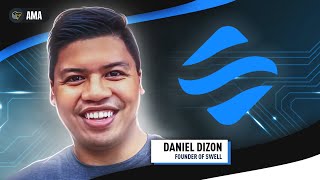
Daniel Deason, founder of Swell, explains how the Shanghai upgrade enables Ethereum staking withdrawals and reduces risk for liquid stakers. Swell's sweETH token lets you earn yield while keeping your ETH liquid, with plans for a governance token and a path toward full decentralization.
Chapters
Sam. Foreign.
Hello everyone and welcome to Cointelegraph's AMA Live. I'm Giovanni, the YouTube host at Cointelegraph. In our AMA's we introduce you to fascinating projects and ideas that shape the present and the future landscape of Web three people and the massive teamwork behind it. So today we we are going to talk about the long awaited Shanghai upgrade which is supposed to happen today, what we expect from it and how it will affect defi and liquid staking in particular. We'd also love to hear thoughts on the subject from our audience, so please share your thoughts in the chat during our conversation. Joining us today is Daniel Deason. Daniel is the founder of Swell, an Ethereum liquid staking protocol that has gamert support from prominent figures like Mark Cuban, Bankless Framework and others. So before establishing Swell, Daniel successfully launched and exited a Web2 startup and provided advisory services to government on emerging blockchain technologies. Hello Daniel, how are you today?
I'm doing really well, thank you for having me. It's a very exciting time for Ethereum and the broader crypto ecosystem and it's great to be chatting with cointelegraph today.
For sure. And before we go any further with our conversation, I would like to remind our audience that this is an interactive show. So please send your questions in the chat and we're gonna answer them during the live session. Also, be sure to like the video and subscribe to our channel so that you don't miss our next AMA sessions. So before we start with a question, I would like to show our audience an introduction video about Swell. Let's see. Okay, cool. So Daniel, let's get started first with a bit of your background. So tell us more about yourself, how you got involved with crypto and specifically in terms of Ethereum staking and also how the situation is in terms of blockchain situation. The blockchain landscape in Australia. I know that you are from Australia.
Yeah, sure thing. So I'm the founder and CEO for Swell, which is an Ethereum liquid staking protocol. I've been in the space for the past several years now and originally what drew me to the space was really the sort of the philosophical roots behind the original crypto, thinking about promoting freedom, self sovereignty, open finance and really presenting a promise for what would likely be the future of the Internet. And the most sort of logical place for that to be was in the Ethereum blockchain. In terms of my specific background prior to Swell, was a Web2 founder and also provided advisory services on blockchain digital assets to various Government agencies insofar as Australia is concerned. The blockchain situation in Australia is continuously evolving, but generally I'd say that the interaction between industry regulation and policy has been quite supportive of crypto developments.
Okay, that sounds good. We know that for example, in the United States lately, it's not experiencing the best of its times. I mean the cryptocurrency industry. So it's nice to know that in a place like Australia, the situation is a little bit more the environment is friendly and it's supportive. So yeah, just to remind our audience again, if you have any questions for Daniel, just write in the chat and we'll definitely address them. So talking about Suelle, specifically your company. So what was the inspiration behind developing sul, which is a non custodial ETH liquid staking protocol? And what are some other innovative features or functionalities that make Swell unique compared to other liquid staking solutions in the market?
Yeah, good question. So in effect, Swell Labs is a major contributor to Swell Dao, which is responsible for developing the non custodial liquid staking protocol. Overall, like the inspiration is really about trying to achieve a particular mission. And our mission is to deliver the world's best liquid staking experience, simplify access to defi and also attempt to secure or help secure the future of Ethereum. And really what we're trying to build here is a compelling way for people to liquid stake their eth. I think what makes Swell different and a better proposition for people looking to stake their reef is that we really prioritize the simplicity and ease of use for our DApp. We've had a lot of positive feedback on our UI and the overall staking experience. The second thing that we do that I think is different and better is the fact that we really push for accessibility to DEFI for the average user. So through our in app native vaults, people can access the defi strategies in house and in effect create a one stop shop which is much more convenient for the user. And finally, I think the thing that makes us sort of different is that we present another alternative solution that I think is important for people who are looking to stake, given the current sort of competitive distribution in Ethereum staking at the moment, that there does need to be more competition and innovation in the space generally.
And so let's talk a little bit about the Shanghai upgrade, which is probably the main event in Ethereum in 2023. We saw last year there was the merge in the autumn. The Shanghai upgrade is like the second part of the merge which will make Ethereum fully proof of stake system. So how do you expect the upgrade, the Shanghai upgrade, to impact the Ethereum ecosystem and its gas fees? What new opportunities could arise for defi integrations and how will it influence the liquidity and trading dynamics of staking related assets in the defi market?
Yeah, sure. I think overall the Shanghai capella upgrade is a net positive for Ethereum. In effect, what it's doing is reducing the perceived and actual risk around things like liquidity, things like technology delivery, around staking eth. In the short term we would expect to see some flux with some sell pressure, although that sort of stands to be quite minimal in the grand scheme things. And so I'm personally quite optimistic about Ethereum and in particular the stake industry to grow materially as a result. You mentioned gas fees. In terms of gas fees, we would expect to see a bit of a spike in activity following the upgrade and the corresponding rise in fees. But over the medium term we're going to see more and more upgrades on the Ethereum roadmap, which will in effect reduce gas fees. And we're seeing more innovation and activity happening on layer 2 scaling solutions which will in effect help to solve for the gas prices on the main chain. And then so going back to the core sort of functionality enablement for Shanghai, it's really about the withdrawals. So in effect what's happened is the risk around staking is effectively reduced and the rewards effectively stay the same. So, so what you have as a result is a much better sort of risk reward profile and more staking participation to come through as a result. And then in terms of DeFi, what we're going to see is really a Cambridge explosion that is going to be powered by the liquid staking tokens, which are in effect receipt collateral for the actual staked eth on the Ethereum blockchain. And we're starting to see this materialize within the ecosystem on crypto, Twitter and the like with trending narratives and hashtags like lsdfi. And then in terms of the specific impact on the ecosystem at large, we'll see greater liquidity provisioning. There'll be more and more Dex innovation to really drive that liquidity for the LSTs. And overall I'd expect to see an enhanced sort of training experience for users and more and more adoption of LSTs in various protocols that are composably building in interacting with the LSTs.
Yeah, it seems that your outlook is sort of matching what I was discussing with other experts not long ago about the potential outcome of the Shanghai upgrade. So as you said, the reduction of this risk reward profile which will bring more capital into the ecosystem is something that I also heard from other experts. So yeah, it seems that it's a very bullish event for the future of Ethereum, especially long term. And now discussing the relationship between the Shanghai Upgrade and Swell. So what potential benefits and challenges does the Shanghai Upgrade pose for Swell? And do you anticipate any changes in the user experience of your product?
Yeah, sure. So I think Shanghai presents several benefits to Swell. You know, the primary ones are the fact that there's going to be greater confidence in the Ethereum ecosystem. We will effectively have the withdrawals finally enabled and in effect subvert a lot of the negative sentiment around Ethereum not being able to function withdrawals at the native level. We'll also have a higher staking participation rate as a result and overall we'll see this particular event as being a catalyst for liquid staking protocols like Swell. And we'll look to grow our share of market within this, within the liquid staking sector, which in and of itself is, you know, proving out to be the most popular form of people to stake their eth. Generally speaking, the challenges are, are, are sort of challenges that will impact all liquid staking protocols. Really the, the primary challenge will be about sort of managing the subsequent shakeout and the sort of the, the performance around withdrawals and queues and getting a, a sense of how that will play out and then trying to interact and provide the best in class user experience around withdrawals and timing for withdrawals. And so for us at S' well it will be about prioritizing that on our roadmap to enable the unstaking feature following Shanghai and other priorities within our roadmap.
Cool. And now I was just wondering regarding the potential collateral effects of this, of this event. So how do you plan to handle the potential fluctuation in staking rewards and token prices after the upgrade? And how will you address the potential for front running and other forms of manipulations that might happen following the upgrade?
Yeah, so generally we'd expect to be like a minimal fluctuation in staking rewards overall and on the token pricing side, you know, where we expect to see some upward price action in the medium to longer term with Shanghai being fully implemented. So overall that's quite positive for the protocol in terms of front running and other forms of manipulation. We at SWELL adhere to best practice on this front where there are several measures that we employ. These include establishing and actively managing liquidity on DEXs and AMMs, implementing technologies such as flashbots with our node operator partners as well as employing and working closely with some of the leading cybersecurity firms that specialize in smart contract and these sorts of vulnerabilities within the overall protocol architecture. And yes, overall we're quite confident that we'll be able to provide a very fair, open and transparent user experience for our users.
Yeah, and we know that user experience is very important aspect that DEFI should actually focus on if it wants to really replace the traditional financial system as we know it. But also an important aspect is security. So we know that DEFI last year was subject to several exploits and so a lot of people might be interested in knowing the level of security that your product is providing. So can you elaborate on the security measures and the risk mitigation strategies that SWELL implements to ensure the safety of users assets?
Yeah, it's a great question. So sort of philosophically and by design our number one priority is the safety and security of users funds. You know you can see this in our design choices. SWELL is fully non custodial and so what that means is the user's assets are effectively their own. We have no control over it. So that provides greater assurance around the core principles of self custodying one's assets. In addition to that we're audited by leading cybersecurity firms that are are effectively best in class in the sector. Additionally to that, we'll be opening up a bug bounty on our open source smart contracts in due course that will serve as a further mitigation mechanism. On top of that, there are other risk management measures that we are employing as well, including our selection process and management process for our node operator partners, many of whom are institutional and have been in the space really since the inception of the Beacon chain and when staking actually went live, as well as our staking pool design and a whole host of other measures. But overall safety and security is part and parcel of what we're building.
Okay, great. Yeah. Before we move on to the next question, I just want to remind again our audience that Daniel is open to answering any questions that you have concerning the functioning of swell, but also in general about the Shanghai upgrade and what that means for the future of Ethereum. So please don't hesitate to write your questions in the chat. So moving forward I would like to talk a little bit about the governance and the community in your in your product. So what role do governance and community involvement play in the development and decision making process for your protocol? And what initiatives or programs do you have for the SWELL community.
Sure. Overall, from a governance perspective, as well as implementing a path of progressive decentralization of the protocol, we're quite early in that stage, but we are committed to progressively decentralizing. Ultimately, the DAO would like to be fully community owned and directed and the terminal state will be something that's fully ossified and functions like a DAO should function. So far, in terms of the community side of things, we're very fortunate to have a very ardent community of SWELL supporters, or Aquanauts as they're affectionately called, that have been quite pivotal in helping to drive awareness for our protocol and the various sort of updates that we're pushing out to the community to let people know about SWELL and our soon to come mainnet launch. In terms of initiatives, we have several in place at the moment, including Ambassador programs, and we've recently also announced an ecosystem Council which we're forming together. So encourage people to really just join our discord and follow us on Twitter for the full sort of breakdown on how you can get involved in svel. But yeah, we're at dao, so we're very open to having people jump in the community and contribute.
Okay, so just to make sure I understand correctly, is the governance of SVEL already led by a dao or it's like where you are going currently? But yeah, it's like an ongoing process.
Yeah, it's an ongoing process. It's a process of progressive decentralization. Over time, we'd like to see more and more important feedback from the community. But initially, when we're designing Swell, there needs to be quite an opinionated set of design choices that we need to make and eventually we'll hand over a ownership and direction over to the community in time. But we've tried to be a DAO from day one with these sorts of constraints in mind.
Okay, sounds great. And now I would like to discuss a little bit how Swell is interacting with the other DEFI protocols. So we know that composability and interaction among different protocols is another variable, very important feature of the DEFI ecosystem. So if you can tell us a little bit more on how SVEL interact with other DEFI protocols and what kind of partnerships or collaborations you have established to enhance the utility and reach of your protocol. And also, how do you see the LSDFI space evolving?
Yeah, so Swell's core product is to provide liquid staking, and we do that through our liquid staking receipt token, which is Swell ETH or sweeth. In effect, what sweeth is, is really designed to serve as a receipt for the state eth on the Ethereum blockchain. So in finance terms, what it is is rehypothecated collateral which can be utilized across the entire spectrum of DeFi, much in the same way that ETH can. So the partnerships and collaborations as a result of that design is quite broad, which is great. So the partnerships and collaborations that we're focusing and prioritizing include decentralized exchanges or liquidity pools, boosted yield products, options, derivatives, collateralized debt position protocols, borrow lend protocols, also layer two scaling solutions, wallets, exchanges, and a whole host of other bits and pieces of defi and layers around it. In terms of lsdfi, I would expect that to really take off. Following Shanghai, we're starting to see more and more players entering the space within liquid staking generally and also in those protocols which are building off the top of liquid staking tokens like synthetics and indexed products as well. And what we'll see here is just continual innovation and more growth in the sector powered by the LSTs or LSDs.
Mm. Okay, and so you mentioned your native token. So the Swift native token, as you said, this works as sort of a receipt that users can get in exchange for their staked eth. So can you discuss a little bit the tokenomics of your platform, specifically the native token Swift, and how it is used for incentivizing participation and securing the protocol itself?
Yeah, sure. So Swift is effectively, as you mentioned, our liquid staking receipt token. And so when people stake ETH with svelte, they automatically receive suite in their wallet. In terms of our like a traditional native governance token, our current status on that is that we're still pre token, but we will have a token coming live in the coming months and we are looking to firm up what that tokenomics approach is. We're calling it swell nomics and we'll be effectively doing a survey and research deep dive into what works and what doesn't work within tokenomics and some of the criticisms that other protocols have had around their token, including things like governance, utility, incentive and disincentive and a whole host of things. So yeah, there'll be more information coming on that in due course.
Yeah. And now I would like to know more about your plans for the next future. So of course the Shanghai upgrade is taking place today and we're going to see how this is going to play out in the next days, weeks and months. But first, but I would like to know from you, so how do you plan to measure the success of your liquid Staking protocol compared to other competitors as well. And what are the key milestones that you aim to achieve in the following in the months and years? Like some sort of roadmap?
Sure. I think ultimately the success of Swell is really based on the feedback and adoption that we get from the ecosystem, firstly starting with the stakers and then other protocols and the like. From a measurement standpoint, it's the standard primary metrics, such as, you know, tvl, the growth rate thereof, as well as the driving as much liquidity and integrations as we can to our Liquid Staking token suite. And overall, what we're trying to do is bring as much utility as possible. We're trying to make it as accessible as possible and also as liquid as possible. And then so in terms of specific milestones over the coming months and years, it's about getting to mainnet, driving as much of those integrations as possible, driving accessibility through layer 2s, and then ensuring that we're appropriately interfacing with our then soon to be launched Swell Governance Token to provide as much utility and governance around that, and then to continuously push for more and more sort of innovation in the space and continue to grow and really drive it as a community effort.
Yeah, that's exciting. I mean, everything that you told us is also going to happen together with the development of Ethereum itself. So Ethereum is going to go through more upgrades in the coming months and years and the roadmap is still long. But of course the Shanghai upgrade was a major, is a major event. So yeah, Daniel, I think that we could wrap up here the ama. So before we finish the conversation, I would like to really thank our special guest Daniel for joining us and sharing your valuable insights on the Ethereum liquid staking Shanghai upgrade consequences and the expansion of the DEFI ecosystem. So your expertise has been enlightening and I will surely be beneficial and it will surely be beneficial to our highly experienced crypto audience. So before we sign off, I'm certain our listeners would be interested to know how they can get in touch with you or with your team if they have any questions. So could you please tell us the best way to connect with the Swell team and your community?
Yeah, the best way would just be to follow us on Twitter and also join our discord. So yeah, if you just Google spelled network, you'll find it. And yeah, we're always so happy to have a chat and we welcome as many people as possible into our community.
Awesome. Thanks, Daniel. So I want to also thank our listeners for tuning in and participating in the conversation. So if you found today's discussion interesting and you want to see more of these AMAs, please make sure to subscribe to our channel and put a like on the video so that you will receive the updates about the following AMAs. You can find us on Twitter, Telegram, Instagram and of course, YouTube. So, once again, thanks you. Thank you for listening. I'm Jovan, your host. We'll see you in the next video.










