The dark side of the metaverse and how to fight it
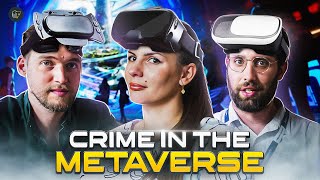
Panel discussion (Cointelegraph; Dublin) led by Christine Lucretia Corner with David Taylor (NextEarth) and Tomer (Active Fence) about trust and safety challenges in the Metaverse and Web3. Speakers define the problem as an ongoing fight against entropy and opportunism, describe concrete incidents (fraudulent token listings and liquidity pools, fake launchpad sites, offensive or arbitrage land purchases, in-world sexual/trauma events), and argue responses: continuous education, intelligence-driven moderation, platform design limits, and product-level mitigations. They also discuss psychological effects of immersion and predict large mainstream adoption requiring silent gateway experiences.
Questions this video answers
July 21, 2022.
Within 10 minutes.
Approximately $100.
~7 years ago: 5 million wallets; today: >300 million; projected in 5–7 years: ~1.5 billion wallet holders.
Chapters
Hi everyone, I'm Christine Lucretia Corner, editing chief at cointelegraph. We are in Dublin and we have a quarter of our before we are going to the oldest bar in Dublin to talk about very important issues of trust and safety in Web3. David Tomer, can you please introduce yourselves and explain what is exactly your role in making this world better?
Hi everyone, my name is David Taylor and I'm the token architect at NextEarth. We're an Earth based metaverse company where we are creating true digital ownership within the metaverse. We created a replica of the Earth and selling virtual land and turning the next Earth into a platform as a service provider to make all metaverses interoperable and basically allow true agency and decision making for people over their digital avatars.
Like an Earth based. So are you planning to scale to Mars based?
No spoilers.
Okay, let's move to.
But yes, we are to Tomer.
Sure. Yeah, so I'm Tomer, I'm at Active Fence. Active Fence, you know, is not a native Web3 company. We actually started primarily working with Web2 platforms when they came to us and said, we're deploying a lot of AI, we're throwing armies of moderators, but bad actors are just able to circumvent and evade detection and really just keep poking at our defenses until they get around them because they have strong willpowers, whether financial or ideological or sociopathic, they have strong willpower and they continue to get around us. And what we add is essentially the element of intelligence, not only building defenses and better guns, bombs and protection, but actually going beyond defense, hence our name, finding out what bad actors are saying, how they're trying to exploit, what they're sharing, how they're evading obfuscating their steps and so on. And I guess in web 3 a lot of those problems exist. A lot of those problems are more severe, some of them are less severe or even completely mitigated. And we're super excited about this space just because it's kind of just a whole new playing field for bad actors.
Yeah.
And it's a different playing field. So you know, when you play in a different field, you have to learn, especially in our space of intelligence, how do we adapt and how do platforms adapt?
So how should we tackle these problems? Like bad actors are always trying to be smarter than anyone else. How do we protect this new Web3 space from the problems that we had in Web2? And how do we as a community actually empower the goodwill and protect it from the evil?
Yeah, it's basically a never ending fight against entropy, right? If you stop upholding whatever little measure of order you created, then it just all crumbles down. So this is again, as we keep telling people and we've measured it. Like, if we stop reminding people to only focus on what we tell them and only click on official links, if we stop saying that the amount of support tickets that they create because of scams, it just skyrockets. So I think there's one aspect that we as like platform providers we can do is education. And just constant education. It will never be, it will never be enough. We will always have to find more and more ways to educate.
How exactly do we educate, like those who are good or neutral in order for them to be protected from bad actors? Or can we also educate bad actors, like those people who don't try to.
Fix fraudsters or Nazis or terrorists? Right. They will remain. They existed before the Internet, they'll exist after. What you can do is to not give them a platform, right? Help not, don't allow them to manipulate and radicalize kids, not give them the.
Platform or like prevent them from entering.
The platform if you can catch them once they enter.
If you can be able to ban.
Someone from the web3 space, you cannot ban them. But with the right measures and the right strategy, whether it be actual tools or moderation or intelligence or education, you can make it incredibly hard for them to be productive, to propagate, to sell.
To groom whatever they want to do. You can limit them as much as possible. Yeah, right. And again, like you mentioned, it's impossible to like, yes, we got the last, you know, pedophile off the platform. You never will and they're always going to be there. But it's that fight of continuing to limit.
Can we get into some examples? Like in Metaverse, for example, have you already encountered some concrete cases? And what are these cases? I think it's really interesting for the viewers.
I have two very specific examples. One example is that when we launched our token, anybody can list any token on a decentralized exchange, right? So the moment the token was launched, somebody listed our token on Uniswap and put in $100 liquidity. And they started selling their own token. Because then people were like, oh my God, NXT is liquid now, it's on Uniswap, so let's start trading. And they just shot up the price and they started selling immediately. And we needed to get in and take active measures to basically empty out the fraudulent liquidity pool and then basically wipe it off the Face of Earth or the face of nature.
Did you identify it quickly?
Yeah, it was like, within 10 minutes. Because we were already deploying our own liquidity pool on Uniswap when it happened. So it's like. And you can take some measures, but you can never completely erase that. Once that was done, the same thing happened on Quick Swap, but then by that time, we've already educated the community. Right. And actually there were not too many people who were trading that. But that was a prime example that it's not necessarily malicious actors. It's just opportunistic actors who are trying to make quick bucks. Not even by scamming people, just by. If I'm the person that lists a token on uniswap, I'm gonna get all the trading fees and that's it. But then it all goes sideways and it doesn't really work. There was also. We could also find, like, fake launchpad websites that were claiming to launch nxt.
Like the example you gave from the satellite image before.
And there is that example that we started identifying harmful. Like, if you buy land on next Earth, you get like 10 by 10 meter tiles on the. On the map of the Earth, but.
You decide you can, you can, yeah.
You can create your own kind of collection. You can buy a land that's like a square or rectangle, but you can also, like, buy any sorts of. Any sorts of shoes. So obviously, when we really quickly started seeing that, you know, people were buying land in the shape of a swastika in Poland, and all sorts of harmful messages, they just started popping up. But also, what was really interesting, which was not necessarily, like, harmful things, but it was harmful for the community and for the entire ecosystem when people were buying just one tile every kilometer in an area that was highly sought after, which means that I cannot buy the entire stadium anymore because somebody just bought that one tile. Because if you want to buy the whole thing, you need to reach out to that person who owns that one tile, and they arbitrage it and arbitrage it to hell. Right? So then we're like, we got into the product.
Is it like malicious or smart?
In Europe, it's more of the opportunistic, Right?
Opportunistic. And that is. It's like water, right? If there is a crack, water will flow through it. And this is with opportunism as well.
You mentioned interesting cases of crime in the Metaverse. I think one of the most interesting ones. As you know, there's part of the Metaverse and the video gaming, I guess Branch of the Metaverse is kind of co created games and kind of the fact that there are many platforms today that enable users to pretty much code anything, any kind of game and let other people play these games. And I felt like one of the more interesting cases and I can't, you know, as I mentioned to you, can't mention any company or any identifying detail about the work we do. But essentially people were creating games on the platform that if you got an invite link and you were on the invitation list, both of those, then you would enter this game. And this game was very, very much against their community guidelines, right? And I was talking to the head of trust and safety at this company and they were saying, hey, maybe you guys can get yourself on the invite list and then walk around in these games. And essentially, you know, which there were types of parties, let's call them and walk around the party and try to see who's organizing the party. And for me it was like this look into the future of crime in the Metaverse where you actually have the platforms themselves are powerless. They don't have a God mode that they could just, you know, go in and, and see everything and do everything. Because you kind of want that, right? You want encrypted spaces, you want, yeah, as a creator, as a platform to provide your users. Just like you don't want Facebook looking into, you know, group WhatsApps, right? Because you want that privacy from the platform. But it creates these huge issues, right, beyond just words in a WhatsApp group, right? This could actually be, you know, they've seen a reenactment of the Christchurch shooting and you know, different horrible events like this.
This is what I keep saying about the Metaverse, that large companies tend to make bets on the Metaverse being this VR phenomenon. And I think it's really a mistaken approach because what's really happening, in my opinion is that the Metaverse is not a place, it's a point in time, right? Ever since we invented the telephone, we were aiming to digitize the human experience more and more so we can break down physical boundaries. And we invented the television and we started looking at screens about 10% of our time. Then we invented computers and started looking at screens about 30% of our time. And now we have smartphones and we're basically spending half of our awake time looking at screens and being in like a digital world in our head. And this is when your digital life becomes a lot more important to you than, or at least as important to you as your physical life. Right?
Because, well, it's one of the same, right? Like, people don't see the difference between you cursing my avatar and you cursing me.
Exactly. Because it's an extension of you. It's an extension of you and your brain. Like, psychologically, your brain just basically like blurs the boundaries. Like you actually emotionally, mentally, you feel what's happening to your app.
My Twitter handle is an attack on me.
Exactly right. Reading all those slurs. You could just log out, but you keep reading and it still hurts like hell.
I guess to your point about harms, when, you know, that's everything we've been saying around blurring this digital line and having your actual physical, you know, your identity online. That's why harms, I think, in this topic of trust and safety is so important as we march to the metaverse. Because, you know, what is, you know, radicalization or all these different things or grooming or sexual harassment in the metaverse? It's just that much more real, right? Just like your beautiful experiences are going to be more real, right? Your video game experiences are going to be real also. Harassment and, you know, different forms of abuse are gonna be more real.
Just look at what happened in Horizons.
Within a week of launching, within a.
Week of launching, there was the first, first rape. And then all the radio hosts and the TV hosts were like, debating, how can you rape somebody in the metaverse? But like, if you would look at the therapist's notes, I guarantee that the trauma was real.
It was even a few weeks ago, like someone account, there was an account takeover of a girl's Roblox account and her friends were with her. Then this person who took over the account did very obscene things with the character. And the friends which were there were kind of witnessing it and traumatized by it, right? They went to their psychologist in the school afterwards and they were saying, like, why'd you stop playing? But people don't get this generation generally that is born into this metaverse.
And not just that, not just that, but an immersive experience is a two way street, right? The moment you get into the immersiveness, you start forgetting that you're not here, but actually here, right? It's just when I remember the video games that I was playing 20 years ago, my memory shows me, like, as if the graphics were Unreal Engine 5. As if, like I was in the game. And then I. I have this sense of nostalgia. I load up the video game and I'm like, oh my God, Red alert.
Really was not that good graphics.
It was not that good. I remember it Being, like, completely indistinguishable from real life. And then it's just really bad graphics. Well, top notch for the time, but because your brain fills out the blank spots, and that is a really powerful tool for the human brain. But it's also very dangerous when it.
Comes to research, and it's not well researched yet.
I mean, and it's not. Yeah, definitely not.
Well, now we are still not mainstream at all. And, like, it's still a small community that the majority of which is sharing the same values.
Yeah.
Etc. Like, when do you think we will be ready for mainstreamization?
Like, I think it's not a question of whether or not we're ready for it.
So we'll just go mainstream and then we'll solve problems.
When I got into crypto seven years ago, there were 5 million wallet holders in the world. Today, there are more than 300 million. Within the next five years, next five to seven years, we're probably going to reach one and a half billion. And just imagine that there are a billion people five years from now who are going to be Everyday users of Web3 technologies who know absolutely nothing about this today. The values they bring, the preferences they bring, the needs and the desires they bring, we just cannot know it yet. And we are not really controlling whether or not they're joining because businesses are being built and new products are being created. And I have this notion, what I call the gateway experience, like most marketers right now are salivating over the idea of just putting their brands in front of consumers in the Metaverse. But on the other hand, consumers have no bloody clue what the metaverse is. Right. So this is this disparity. And I think those brands that will be able to create experiences within the Metaverse without their consumers knowing that they're participating in the Metaverse or having to do anything differently, those will win in this game from a commercial standpoint. But that means that my grandmother will be in the metaverse in 5 to 10 years and she will know nothing about it. Just like she has no idea about Facebook Messenger. She doesn't care what platform she uses if she gives me a video call, all she cares about is that she wants to see her grandson. Right?
And that is why my grandma clicks on fraudulent Facebook ads all the time, right? Oh, yes, because she is not used to consuming the information, this type. And I think that when we get into the world of the metaverse and web three, even folks you know, my age, in my mid-30s, are suddenly not used to consuming information this way. And I'll get tricked and hoodwinked easier. Right.
So I, I'm inherently, I don't think.
We'Re ever going to be ready or not ready.
It's just going to happen.
It's going to be a gradual and I feel like, look, I can tell you today versus five years ago, I'm a better consumer of information because of the lessons learned over the past five years. Right. And so it's a gradual thing like, and we're probably going to get hurt and we're going to get burned and there's going to be another, you know, 2016 election crisis and there's going to be a lot more of these Crisis. Crisis that humanity will undergo.
Important that we move forward.
Yeah. But it's not going to stop us moving forward. Right.
So it's basically like we keep this fight against entropy going on. We keep fighting the good fight and then we just, we know that we're expecting to be hurt. We're expecting to make mistakes and just basically screw things up. And we're just basically hoping that we're not gonna die in the process.
Yeah. That it's not gonna kill our democracies or, you know, create hate groups that are uncontrollable. But I do think that these past seven years have taught us a ton in Web two on how we better prepare for Web three. I think there were necessary lessons. Whether you take Christchurch or you take the March of the Right in Charlottesville in the US and you take cases like ISIS putting beheading videos on YouTube. It's all these horrible things that happen, but they teach valuable lessons on, you know, the pitfalls of user generated content. And that's kind of the core of Web3. It's user generated everything.
So like evil and good are part of the same.
Our world is built on duality. You can never get rid of one without getting rid of the other.
Well, let's move forward then and okay. The. The bar is calling, I guess.
Yes, looks like it.
Thank you so much guys for this thought provoking and very important discussion.
This was really deep and I really enjoyed it.
Thank you.
Good luck with your projects and thank you. Let's talk in a few years.
We'll see where we are. Hopefully we're all still optimistic and alive.
Yeah.
Hope dies last. Thank you so much.
Thank you. Thank you, Dublin.
Thanks, Dublin.










