The Truth Behind Cuba's Bitcoin Revolution | What it Really Looks Like
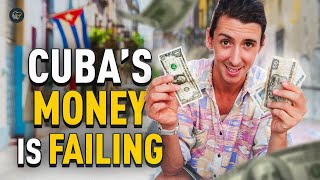
Joe Hall and Paco de la India travel to Cuba to document how Cubans are adopting Bitcoin as the peso collapses. They show peer-to-peer trades on Telegram and Lightning, visit businesses accepting Bitcoin, and attend Cuba's first Bitcoin meetup where locals explain how it lets them buy food and pay suppliers when official salaries are nearly worthless.
Questions this video answers
September 18, 2023.
US$12 per month (minimum salary).
About 4,000 Cuban pesos per month (roughly US$23 per month as stated).
Two years earlier $1 ≈ 25 pesos; later $1 ≈ 120 pesos (supposedly); the on-the-ground rate cited ≈ 200 pesos per USD, and four months later cited as ≈ 250 pesos per USD.
Chapters
When was the last time you had fish? I don't remember. You don't remember?
Oh, no.
And when was the last time you had lobster? No.
Never?
You've never had. There's lobster everywhere.
It's not for Cubans.
It's not for Cubans. It's for tourists.
Rampant inflation, communism, and a struggling economy. A dystopian combination for such a picturesque location.
I'm in Cuba, a Caribbean island known for its cigars, rum, music and fun, as well as getting stuck in huge conflicts between international superpowers. It's also the most fertile ground for bitcoin adoption that I've ever seen. My name's Joe hall, and I'm a reporter for cointelegraph. Joining me on this trip is going to be this guy, Paco de la India.
We flew to Cuba to investigate the growing Bitcoin community I'd read about in the book Check youk Financial Privilege by Alex Gladstein, the CSO of the Human Rights Foundation.
Plus, I wanted to attend Cuba's first ever bitcoin meetup.
But before we get there, there's one more thing Cuba is famous for. Nuclear Armageddon. Yeah, you heard that right. The Cuban Missile Crisis occurred in 1962 during the Cold War, just one year after Cuba became a communist country.
Thankfully, that crisis was averted, otherwise we wouldn't be here. But the Communist state of Cuba endured.
Even today, the Cuban economy is centrally planned, which means it's run by the government. This is Cuba.
Let's go on a bitcoin adventure.
Is so old, man. No. It's all red. It's like Marxism, dude. I was so scared. They stopped me for like 15, 20 minutes.
Every checkpoint, he got stopped. I sailed through. Paco was. Went into a separate line, was quizzed by other people. What were they saying?
He's like, what do you do here? Why are you here? And I'm like, I make videos. He's like, on what? I'm like, bitcoin. He's like, so you give advice on Bitcoin? I'm like, no, I make travel videos. And then he was like, show me. I'm like, here? I don't have Internet. He's like, even I don't have Internet. True story. They didn't have Internet.
Welcome to a beach district. How old is Ibar? Like 30 something.
I am 33.
33. Okay. Yes. This cold is older than us. And yet he has a garment at the same time. And there's a lovely fake apple sticker just to have. You got your seat belt on?
No, there's no seatbelt. They didn't think about safety back then. There's no seat belts.
There's no bloody seat belts.
Do you have a seatbelt?
There was no danger in the 50s.
Wow.
Life is better. Thanks. Econosis de bitcoin. How long before bitcoin? We are online in Cuba. Check the download speed. Apparently we've got 0.06 download 0.04 upload. Bitcoin doesn't need it to be any faster than that. So this will work for lightning. This will work to pay for stuff and this will work to send money places. We just linked up with two of these sort of louder voices in the bitcoin community. We're gonna go for dinner with them at a place that accepts bitcoin. It's called El cuarto de Tula. So my friend here, who doesn't want to reveal her identity is showing me how to buy bitcoin. Peer to peer with telegram gear.
Fruits.
Please, bro.
So Cuban pesos. Okay. Now she's doing the transfer of Cuban pesos. So that's how you buy bitcoin. Peer to peer in Cuba. Telegram groups over lightning. Almost zero feet or basically zero fee. Pretty quick. And you just post it and share on telegram. So the government doesn't know that they're sending Cuban pesos to each other for the purchase of satoshi. That's wild. So cool to see. Blew me away how much people are putting into bitcoin here, how much they're educating themselves, how much they're realizing they need it. And one of the girls we're talking to, she's putting pennies into bitcoin. She knows in 10 years time, 20 years time, 30 years time, Bitcoin will still be there. While the Cuban peso might not be, you know, using all these digital tools to find a way to build for her own future. How phenomenal is that? Also, she says the groups are growing. There are more and more people interested in this technology. The other thing is they don't care about bull runs. They don't care about bull runs in bear markets. Because when the peso is so bad, bitcoin can crash from its highs of 69,000 to 4,000, and it's still doing better than the Cuban peso does over time. Never seen a use case as strong as Cuba for bitcoin adoption. Just absolutely wild. So this morning we've come to Mr. Navi's to sell a little bit of bitcoin for some Cuban pesos to have some cash in hand. However, he's told us that it could take some time because we have to count out a lot of paper money. Yeah, you'd give wads of cash for like really small items. It's such an inconvenience. Such an inconvenience. I guess that's what happens when your, your currency is hyper inflated.
And that's 1,000. That 1,000 is equal to $5. So this is 20 meal.
So venti meal. How much is that in dollars?
100 bucks.
100 bucks. And it looks like that.
Yeah.
1, 2, 3, 4, 5, 6, 7, 8, 9, 10. 300.
This is only $400. And look at all this paper. So it reads the invoice and I press send. I say, yep, sure.
Yeah.
You got it so fast. Yeah, yeah.
I really love bitcoin. I really love it. This is something terrible.
$400 monthly salary of three or four professionals. Doctor, engineer, atomic engineer. Can make $100 a month.
Something like that.
Oh my God. And that's what it looks like just down there, $12. So the minimum salary is US$12 a month. And the average salary is about 4,000 Cuban pesos, which is roughly $23 per month. That is frightening. As my friend Katria explained, the average salary for a Cuban is peanuts. I have literally no idea how Cubans live off this amount of money.
A study by Columbia Law School concluded that despite the direct and indirect government subsidies, the cost of living in Cuba is completely disproportionate to workers earned income. According to the study, a Cuban's average salary covers just 12.5% of their living expenses. But as Catria explains, Cuban salaries are lower still and they cover something in the order of 3 to 8% of projected living expenses.
I try to explain to you what is going on with the money here. You're familiar with an American dollar. Okay, so two years ago, one of those was worth 25 Cuban pesos because the currency has devalued so much nowadays. Supposedly it's worth 120 pesos, but the official rate and the rate that we pay is actually 200 pesos. Okay, 200 pesos. So we've gone from $1 being worth 25 pesos to 200 pesos in just two years. It's devalued eight times.
Four months later and the peso has crashed even further. $1 is now worth 250 pesos or 10 times less.
I'm in Dine. So I'm here with Vitalio, who's the other co founder of the Cuban bitcoin community. Vitalio was saying an interesting phrase earlier about how bitcoin could be the salida or the exit. The government controls the majority of the means of industrial production. Agriculture, energy, manufacturing, telecoms, banking, telecommunications. You name the industry, it's likely they control it. Price controlled goods can be bought in these places called tiendas or shops, a network of government run stores.
However, in these government run stores they accept the mlc, whereas if you have pesos you can expect queues and worse quality products.
To find out more about the mlc.
Which sounded a lot like a CBDC or a central bank digital currency, I reached out to Eric Garcia Cruz, the founder of Cubapay and Bitramasas. He has been a little critical of the regime of late and is now on Cuban humanitarian parole in the us.
What is the MLC in Spanish is Moneda Luimente. Convertible is a shitcoin that is paid with dollar like Luna.
It sounds like ust.
Yeah, you give me your dollar and I give you a shitcoin. And you can use that shitcoin only in the stores to buy food.
So this is the MLC card. So basically you're spending dollars, but in reality it's spending mlc, which is what the government tells you is dollars. The government issuing MLC in return for USD is a way of the government collecting or stacking or saving USD.
There is a reason for that, because the government, the only way they have to trade with some country is using fiat physically, you know, using the dollar bills and not using a digital transaction like any other country could do.
Cubans are also given a predetermined amount of subsidized food on a monthly basis. There are often shortages for Cubans of basic food stuff that you probably ate today. When was the last time you had fish? I don't remember. You don't remember? Oh no. And when was the last time you had lobster?
No.
Never?
You've never had. There's lobster everywhere.
It's not for Cuban.
It's not for Cubans, it's for tourists. At any point in Cuba you are always 30 miles or 50 miles, I think from the coastline. And yet this is the first time my friend is eating lobster. How cool is that? But also, how sad is that? It's supposed to include things like chicken, eggs and milk. But if you ask my friends here, the last time they had some eggs, Just think about how easy it is to get a glass of milk in whichever country you're in right now.
While these price controls help maintain affordability for essential goods, they also create distortions in the market, leading to shortages, black market activity, and disincentives for production and investment. Meet Julian, my new Cuban American friend, who's one of the lucky few able to set up a business in Cuba. Following a series of protests in August 2021, the communist government of Cuba relaxed laws allowing the creation of small and medium sized businesses. While it might seem like a step forward for Cuba, there was also a lot of red tape and, and bureaucracy standing in the way of creating a business. But for my mate Julian, it was a bit easier thanks to being born in the US to Cuban parents. So Julian and his dad run a tourism business as well as Mr. Navi's, a bar and restaurant that sells goods. It's hard to get your hands on in Cuba, like consumer electronics and even sex toys.
You pay in pesos, but you can accept bitcoin.
Yeah, yeah, you can pay in pesos, but we can, you can, we can.
Also accept bitcoin as well.
Dude, let me just say this. $1 is 200 pesos.
Yeah.
$1 is 200 pesos.
That is $0.25. Yep. Miami people, South Beach.
Yeah, right.
What were you doing to us? I paid $6 for a bottle of water.
We make our own snacks as well, our own coffee, our own chocolate powder for your milk.
And you, and you. And why do you make it all yourselves?
We make it because it's somewhat difficult to. In order to reach people like the Cuban people. You know, there's not that many. There's not like a, like a supermarket here in Cuba.
There is no Walmart, McDonald's or big chains. And you can absolutely forget your Starbucks Fenty latte.
And that's what we're trying to have here. We're trying to make a supermarket for the Cuban people. And that's what we don't charge in dollars, we charge in pesos. So then the Cuban people could afford it.
Nah. Pesos. Or satoshis, right? Or satoshis.
Yeah, yeah, yeah.
So this is five cigars. We have two Partagas and three Romeo and Juliet Churchills.
These ones are nice.
Thanks so much. It wouldn't be a bitcoin documentary about Cuba without buying some Cuban cigars with bitcoin. This is probably one of the coolest purchases I've ever made. Let's go. It's almost like being Cuban is risky. Why don't you use exchanges, crypto exchanges in Cuba? No, I mean, it's kind of interesting, right, that because you can't access exchanges, you have to use bitcoin and lightning in a Peer to peer way, which means that you learn how to use it better. Which means that you learn about custody, self custody, how to use bitcoin peer to peer. It's kind of cool.
Cool in a way.
There are no exchanges in Cuba as unfortunately it's very hard to register as a Cuban citizen due to the embargoes. However, bitcoin finds a way with peer to peer transfers on telegram groups, signal groups and in person meetups. Bitcoin always finds away. We're going to do a peer to peer trade using Telegram and the Lightning network and Kateria is going to talk us through it. Cuz this is one of the things that she shows Cubans how to do. I'm going to create an offer and Cat is going to buy it off me, slash sell. Create a sell order. It's going to ask me how many selling sats for. So how much can I sell? Like right now? Let's do 20. Enter the payment method so you have cash even. I'm selling you SATs. Your offer has been published. That was done automatically. That's cool. Yeah, that's me. That's my offer. Wow. So it's just come through on mine saying hey, somebody wants to buy you 389 sats for $20. No, 20 pesos. So I'm going to copy that, I'm going to open it in a wallet and then I'm going send. So it's sending, sending, sending. It's already got there. Okay. I guess it's lightning, right? Oh, thank you. There you go. I can tap on release sending. Your sats have gone through you super happy.
A growing number of private bars and.
Restaurants in Cuba accept bitcoin.
We visited five of them in the.
Capital spending satoshis for mojitos, frijoles and Cuban sandwiches.
I asked the owners why they choose to accept Bitcoin.
Why do you accept bitcoin?
Here we started accepting as another way to accept money with the problem that we have in Cuba, the economic problems that we have with a lot of different currency.
You are accepting Bitcoin because you are dealing with a private coin. The government hasn't access to the transactions. You do it and you have the freedom to do whatever you want with that.
So I was speaking to my friend here and he talked to me about the law of Cuba. If you're a private organization and you accept crypto, you're on your own. There's no law that prohibits you from accepting crypto.
What does that mean? If you're on your own?
That means the government doesn't interfere into it. That's the positive thing.
For example, you are a foreigner and you come to Cuba and with Bkin you don't need to bring cash. It's a lot safer. It's an opportunity to connect to the world and to have a currency that actually means something to people in any.
Part of the world.
There is a big problem for all the business in Cuba and the problem is how do you pay to your providers? You can't pay to your providers with COP or mlc.
So the suppliers you're talking about here are foreign suppliers, presumably in the US or Mexico.
I am orange peeling those suppliers.
I am very excited for Saturday, which is going to be Cuba's first ever bitcoin only meetup on the island. And it's going to be a place where people like Katria and Forte come together to discuss how to use Bitcoin on a daily basis and how to avoid this financial apocalypse which is affecting Cubans all over the country. It's really heartening, actually. It's, it's cool to see. Good morning. We ordered a taxi today using Cuba's version of Uber, which is another sign that Cuba is opening up. It pretty much works like Uber but with some slight Cuban differences.
You can get this car also on that.
Yeah, I mean you can technically order one of these on La Nave, but again, this didn't exist three years ago. It's wild how fast it's changing here. You walk into the meetup and there are just people sending people sats, people learning how to use the telegram group, people generally sort of asking questions, being curious about bitcoin and it's men, women, children, elderly people, young people. It's not like the bitcoin meetups in countries in Europe for example, where it tends to be a lot of white middle aged men talking about the fall of death of fiat currencies. It's a happy vibe and it's yeah, optimistic, hopeful, just very fun really.
I'm saving bitcoin for my own retirement. I'm self administration of my retirement fund.
But how old are you?
I'm 24.
And you're saving for your retirement at 24 with Bitcoin?
Yeah, I can do it in Cuban pesos and USD dollar. All that is kinda shitcoin. So I have to use bitcoin.
W.
The meetup was the culmination of months of hard work, stress and anxiety. Forte, Catria and Vitalion risked the scrutiny of the Cuban government to organize the event and to see such a wonderful.
Positive response from the local community was a lot to bear. We are about to get into a pink Cadillac as a little gift to the Cuban bitcoin community organizers because they've never done it before and, you know, can't live in Cuba and not do this sort of thing.
First time, bro. First time for them.
First time.
First time.
Very, very wow. While using bitcoin might not be illegal in Cuba, using a drone definitely is. No gu.
How was the meetup? Meet.
When Samahanu.
And people are really happy. They didn't just come there for food or drinks. They just came. They sat there to listen. So congratulations to another bitcoin meetup next.
Month and to getting home safely. Remember, don't start.
And thanks to Cointelegraph for this car.
Yeah, Cointelegraph. Cheers. Cheers, bro. As I look back on a week spent in Cuba, I can't help but feel more optimistic and more joyous about the future of bitcoin adoption in Cuba. There's one big thing standing in the way, and that's the risk of the government cutting off the Internet. They could do that, and they actually did that last year during the protests. They turned off the Internet for over a week, leading to blackouts and inability to communicate and to connect online. Bitcoin is, of course, digitally native currency. It lives on the Internet. It's magic Internet money. But even if it were to to go offline, the Cubans that have already stacked sats or saved in bitcoin, it would stay in their wallets until the Internet comes online again or they find a new way to access their Internet. So, yeah, the genie is out the bottle here. Bitcoin is here. And bitcoin is like a mushroom. You know, you can leave it in the corner, you can throw shit at it, and it'll still continue to grow. Turn the lights off, whatever, it will still grow. And I've never seen a country like this in all the countries I've used bitcoin in, which is so fertile and so ready to take bitcoin and run with it. It's lightning native, it's peer to peer, it's easy to use. And with a population that's educated higher than any other country I've seen in the world, everyone here, the taxi drivers to the waiters, they all have degrees in engineering, medicine, lawyers, you name it, they are far superior educated to anyone you meet in the US or Europe. There's a bright orange future for Cuba, and people are grabbing it and they're seizing it with their hands. That fills me with hope, fills me with optimism. Optimism. And this has been a really moving experience for me. But I know that there's now Bitcoin as a salida, a Bitcoin as a way to resolver or to solve the problems that people face on a daily basis. A hyperinflating currency, difficulties in transacting, difficulties in receiving remittance, and difficulties in starting businesses. Bitcoin resolves and fixes all of these things in a smart, easy to use and digitally native way. That is a message of hope, Cubans. That is a message for the Cuba of the future. This has been Joe hall reporting cointelegraphy.










