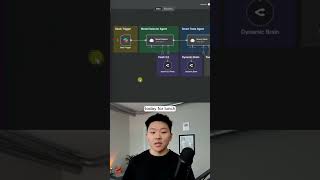
Dr. Violet Howard shows an AI agent that picks the right language model for each task to cut costs. A joke gets Google Gemini 2.0 Flash, a calendar event gets GPT-4.1 mini, and a blog post gets Claude 3.7 Sonnet plus web research. Every choice is logged so you see why it picked what.
Chapters
If you've ever wondered which AI model to use for your agents and you're tired of wasting credits or overpaying for basic tasks, then this video's for you. Because today I'm gonna be showing you a system where the AI agent picks its brain dynamically based on the task. This is not only gonna save you money, but it's gonna boost performance, and we're also getting full visibility into the models that it's choosing based on the input, and we'll see the output. As you can see, we're talking to this agent in Slack. So what I'm gonna do is say, hey, tell me a joke. You can see my failed attempts over there, and it's gonna get this message, as you can see. It's picking a model, and then it's going to answer us in Slack as well as log the output. So we can see we just got the response, why don't scientists trust atoms? Because they make up everything. And if I go to our model log, we can see we just got the input, we got the output, and then we got the model which was chosen, which in this case was Google Gemini 2.0 Flash. All right, let's try something else. I'm gonna ask it to create a calendar event at 1:00 PM today for lunch. Once this workflow fires off, it's going to choose the model. As you can see, it's sending that over to the dynamic agent to create that calendar event. It's going to log that output and then send us a message in Slack. We click into the calendar real quick. There is our lunch event at 1. And if we go to our log, we can see that this time it used OpenAI's GPT-4.1 mini. All right, we'll just do one more and then we'll break it down. So I'm going to ask it to do some research on AI voice agents and create a blog post. Here we go. It chose a model. It's going to hit Tavily to do some web research. It's going to create us a blog post, log the output, and send it to us in Slack. So I'll check in when that's done. All right, so it just finished up and as you can see, it called the Tavli tool 4 times. So it did some in-depth research. It logged the output and we just got our blog back in Slack as you can see. And if you're wondering what model it used for this task, let's go look at our log. We can see that it ended up using Claude 3.7 Sonnet. If you wanna watch the full breakdown, click on this button right here and I'll see you guys over there.