"This isn't inflation. This is currency devaluation." | Interview with Mark Yusko
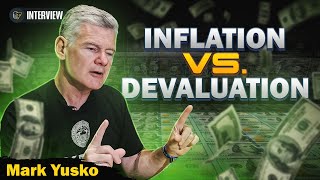
Mark Yusko argues the Fed's money printing caused currency devaluation, not inflation, and that rising rates can't undo it. He recommends investors move out of bonds and into bitcoin, equities, venture, gold, and commodities, and warns central banks will eventually reset debt through monetization.
Questions this video answers
April 13, 2022
He said 50% of all US dollars in history (256 years) were created in two years.
He described prior cycles as roughly 40x (2013), 20x (2017), and ~10x (most recent).
He estimated network value around $10,000 and noted price reached about $20,000 in December 2017.
He suggested monetary-gold equivalence around $5 trillion (said some estimate $10–12 trillion).
Chapters
I'm very happy to be joined by Mark Yusko. Many of you know him from Morgan Creek Digital and Morgan Creek Asset Management. Nice meeting you.
Nice to see you. Yeah, great to get together, listening to.
Your work and reading your work for a long time now. So it's finally good to actually get to sit down and talk to you for a bit.
Absolutely. And what a great environment to get together.
It's quite something, isn't it? Yeah. So I know you've always taken a long term view on Bitcoin, right? About the Internet of value and everything like that. Are you surprised with how the price has performed recently? I mean we never hit the lofty forecast that many of us expected. Right. How do you make sense of all that?
Well, look, I think a couple things. One, the four year cycle is real, you know, it's built into the code. The halving enforces that in the sense that if you're going to cut the block rewards, the price has to rise otherwise a whole bunch of miners go out of business. So it's a beautiful thing. The challenge of that is the value of the network. It's pretty simple to estimate based on the number of participants, the number of nodes and all of the fundamentals. The problem is price. As I like to say, price is a liar. So the price and the value don't have to be correlated. And so go back to the last cycle, 2017. The value of the network sometime in 2017 was around 10,000. We blew right through 10,000 because what happens is the price is below value and people say, okay, I'll buy it cause it's on sale. But then it gets overvalued and then the momentum people come in and then the leverage speculators come in. And so December 2017 it got to this crazy level, 20,000 versus 10,000 of value. And then the futures market allows people to go short and boom, you have a bear market. So same thing happened here is the price started to rise with the halving and the anticipation of the halving. And what happened is as the halving reward decrease gets smaller, the price increase theoretically should get smaller as well. So that first move in 2013 was huge. 40x, second move 20x, this one more like 10x. And it makes sense mathematically. But people wanted the big 100,000 or 200,000 move. And I think ultimately the value of the network, as we saw Peter Thiel talking about, we've seen other people talk about Brian Estes from Off the Chain Capital, the value of the network is going to move to Gold equivalents and whether that's the full gold equivalence of 10 to 12 trillion, I really think it's more like the monetary gold equivalent of 5 trillion. But from 800 billion to 5 trillion, it's a big move. Then the next potential move to me is whether or not we become a reserve currency. Ultimately, could we be the reserve currency then? You're talking about 86, 90, 100 trillion. But then we have to think about, well, 10 years from now, what's the value of fiat going to be? Could it be double that? Sure.
That's interesting. So looking at this cycle in particular, what role do you think the Fed has played and the, you know, the liquidity shortfall now that we're getting? I mean, they now have a mandate to go after inflation. And I've always been skeptical about their ability to tame it. You know, they'll hike rates, then they won't do it anymore. You know, there's only a certain limit they can go. What do you think the Fed's role has played in kind of, well, look, I'm wearing it.
You know, keep calm. We'll print more. And look, it's a very insightful question and an even more insightful point that the insightful question is what role did this monetary stimulus post the lockdowns have? Now, if you think about it, 50% of all the dollars in the history of the Republic, we're talking 256 years, was created in two years. So it shouldn't have surprised anyone that the value of bitcoin would rise 50, 50% over that period. Right. Shouldn't have been a surprise to anyone. Now the challenge, though, is that it moved beyond that because of the speculators and the leverage. And so as that stimulus started to be withdrawn, not reversed, but the rate of change of the money supply, growth started to shrink. And to your point about now, the Fed says, oh, we're going to get serious on inflation. No, there is no inflation. There's only currency devaluation. People say, what's the difference? In fact, Greg Foss and I, and I love Greg, actually differ on this. He's like, well, no, they're the same thing. No, no, no. Inflation, demand, pull, right? There's more demand than supply or there's a restricted supply of a good or service. This is not that. Right? This is not like the 70s where there's, you know, lots of growth because the boomers are spending. This is currency devaluation. One Bitcoin equals one Bitcoin. Bitcoin didn't get better. It didn't grow, it didn't become more efficient. Fundamentally it grew a little bit. But what happened was the dollar that we value it in went down. And that's what people miss sometimes is that we always talk about Bitcoin in our local currency. Like in Venezuela, there's never been a bear market in bitcoin price.
Right.
Because the Bolivar just got trashed or in Turkey in the lira or in the ruble just made new all time highs in ruble. So when we talk about it in dollars, what we have to step back is I said the more insightful point that you made is the Fed says, well, we're going to tame inflation. No you're not. You can't change the devaluation that you already did by suddenly raising interest rates by 25 or 50 basis points. You can't do it. You can't do it. And so what's going to happen is that inflation number is going to go down. Why? Well, because most of the increase in the CPI was oil prices which trebled over about a year period. And used car prices because of the chip shortage, both of those things, used car prices are down three months in a row. They're going to continue to fall as new cars start to, to be created again and oil prices aren't going to double again from here. I will argue right before the election we're going to cut a deal with Saudi or magically we'll release the spr because there is a perfect inverse correlation between presidential popularity and gasoline prices. If gas prices are four bucks at the election, these guys get crushed. If gasoline prices are 250, they got a chance. I still think they get crushed because they're just horrible. But, and that's not a political comment, they just, the policies right now are just horrible.
Absolutely, absolutely. So if you're an investor right now, I mean the 6040 thing is really not like who, who in their right mind is holding bonds right now? Right?
Only central bank, Central bank. Right, it's right here. Look, the buyer of last resort is the central banks, the Fed, the ecb, the bank of Japan. That's the only buyer of bonds. And so now that's not 100% true. 65 to 85 year old people buy bonds and every single day in this country, 10,000 people for the next seven years, 10,000 people every single day. And 10,000 people in Europe every single day for the next seven years will turn 65, 65 to 85 year old people, they're perfectly nice people. They're not productive, they don't spend a lot and they buy bonds. And so that's one source. Now the problem is though, the Chinese don't want to own their bonds, right? They have a trillion plus. The Russians certainly don't want to own them, right? So they're not going to help. So that's going to be a source of pressure. And that's why you're seeing rates kind of tick up as people are selling. So the only way literally is to print money and buy our own stuff. And what the reason I know this is going to happen is we've seen it happen. In Japan in 2007, they said they were going to stop QQE and they're still doing it, right? Why? Because they have to. They have 256% debt to GDP. The only person who would buy a JGB is the bank of Japan. But here's the cool part. When you get to 85, 90% of the outstanding bonds owned by the central bank, you do a debt jubilee and you start over. It's what the UK did in the 1860s. They basically canceled all the debt and started over. And that's exactly what's going to happen first in Japan, then in Europe and the US and it doesn't destroy, but what it does is the empire shifts from being really, really powerful to less powerful. And ultimately it sows the seeds of the demise of the ultimate hegemonic empire.
So if you're an average investor right now and you're looking at, you know, my dollar is being destroyed, its purchasing power is being destroyed, bonds, you know, what am I gonna get? Less than 2% on a 10 year treasury. What am I gonna do there? Stocks? What am I gonna hold other than an index fund? What do you do? Like, how do you position your portfolio?
Well, the first thing you gotta do is you gotta get off zero. Now most people around us, you know, 25,000 of our, of our closest friends here, many of them have so much. I always talk about this, the digital dividend. Ask anyone over 35, who's your broker? Oh, Merrill Lynch, UBS. How much gold do you have? I don't know, 3, 4%. How much Bitcoin do you have? Oh, are you kidding me? It's a Ponzi. Haven't you heard Warren Buffett, it's rat poison. Jamie diamond, it's a fraud. How often do you use defi? What's defi? All right, ask anyone under 35, who's your broker? What's a broker? You mean my Robinhood account? I got one of those, how much gold do you have? Are you kidding me? Boomer rocks. Zero. How much bitcoin do you have? I don't want to talk about it. Why not? It's a really big part of my net worth. I'm kind of embarrassed. All right, how much. How often do you defi. Every day. Why? So that digital divide, that digital native movement has already happened. But the average boomer. I'm a boomer. I'm the second to last year and my brethren and sister need to get off zero. I did a speech to the largest group of of corporate pension funds on Tuesday. 120 global pension funds. Trillions and trillions of dollars under management. I asked them five simple questions. So the first question, how much exposure to digital assets do you have? 0. 0 to 1. 1 to 3. Over 3. 83%. 00. Like how can you have 0? How can you have still the 6040 portfolio? How can you have this much in bonds? You've got to get off zero. So that's the first step. Second. Second, you have to look at equities. There's still opportunity in equities. More importantly, there's opportunity in venture capital that's creating the new equities, the innovation as an asset class in terms of moving out of bonds and out of risk parity and these crazy strategies that worked in a bond bull market. You've got to start shifting into deflationary assets like bitcoin and protect that portion of your wealth. Gold works, other hard assets work commodities. But ultimately, whether you want to have 5%, 10%, 20%, depending on how old you are or young you are, I'd say the younger you are, the higher that percentage should be. Like to me, if you are under 65 years old, I actually believe it should be against the law to own bonds. Right. If you're got your 401k, you can't touch the money till you're in your 70s. If you're in your 20s, should definitely be against the law. You should be only in equity, in digital assets, in real estate, in commodities. And so to answer your question succinctly, none of these people own bonds and people watching this don't unbox. So have your digital assets. And I know it's a bunch of bitcoin maxis or bitcoin conference. I'm not allowed to say the E word, but I like the base, right? Like bitcoin. I like Avalanche, I like Solana, I like Ethereum. Then there's some other stuff that I think is really interesting and I said on stage yesterday, the upside of those projects is higher than bitcoin. Bitcoin's a 10x from here, easy. Like super easy. Could it be 100x? You know, Peter Thiel was talking about today. Sure, it's possible. In order to do that, we have to subsume all of global M2 and be the world reserve currency. It's possible. In fact, it's probably even likely. But not tomorrow.
Not tomorrow.
If I look at a new project in gaming or in social tokens where I think I could make 20 times or 50 times or even 100 times my money as a venture capitalist, why wouldn't I do that? And yet people are still chasing these super overvalued public stocks they think are a play on digital assets. Just on the digital assets. And beyond bitcoin. I love bitcoin. I'm wearing my orange pants to prove it. But I think you need to move beyond that and have a diversified portfolio of digital assets for the future.
And do you have any outlook on where the market's headed the next 12 to 18 months? Or is it very difficult to say given everything that's going on?
It all depends on. Which is crazy. It all depends on a bunch of pale, stale mail guys getting together in a room full of PhDs eight times a year, right? Eight times. And here's the crazy thing. They've predicted GDP and CPI like 257 times. They're over. Think about this. If I flipped a coin, I'm right half the time.
The dot plot chart, right?
They're over. So why would I think that they are going to have a good idea on what we should do with rates? And look, price fixing of any kind, minimum wage fixing, interest rates is a bad idea. Price fixing is wrong. Markets should determine the price of assets. And anytime there's price fixing, it's a bad idea. And what we have with interest rates today is price fixing. We have a pale, stale male group of people who set interest rate policy. Why? Because their cronies also pale, stale male guys running the banks. Because people forget the Fed was created in 1913. Not to help us, the little people, was to make the bankers super rich. And every time the bankers get in trouble, what happens?
They run to Daddy.
They run to daddy and the Fed. And remember, I love this, right? What is on the genesis block of bitcoin? The chancellor bails out the banks for the second time. Of course. Because it. And it's not. Look, it's not a coincidence that the birthday of Bitcoin is in the middle of the global financial crisis. It is not a coincidence that Satoshi Nakamoto's birthday is 4575. 45 was the day that gold was made illegal. 75 was the day it was made legal again. So from 1933-75 was illegal to own gold in the United States. So those are not, you know, coincidences. This is all about financial sovereignty and getting away from, as Thiel called it, the Gerontocracy, the boomerism. And look, entitlements is the problem. And entitlement is a promise you make to yourself that you don't fund and you ask your kids to pay for. And we, the boomers, love that. Yeah. And look, it makes perfect sense. If I could say, I'm going to get Social Security, Medicare for free because my kids are gonna pay for it, I would do that. But here's the problem. When they were set up 80, 90 years ago, there were 17 workers for every retiree. When I get to retirement age, there'll only be two. And I used to have two kids, so they were out of choice. My wife wins, I lose. So I was gonna have to have another kid, which I did.
So, anyway, Mark Hill school was a pleasure.
Yeah. As always. Yeah. Probably went too long. Too much.
Oh, it's all good.
It's fun. I appreciate the time.
Google the dot plot chart and take a look at how wrong the Fed has been, and you'll see what we're talking about.
Thank you.










