Tim Draper: One Bitcoin Is Still One Bitcoin | Interview to Cointelegraph
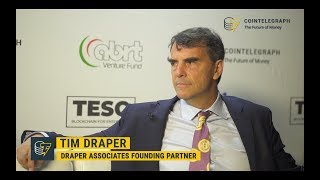
Tim Draper argues blockchain will transform healthcare and retail, warns that heavy-handed regulation from the SEC and FDA is driving entrepreneurs to Kazakhstan and Japan, and defends Bitcoin's volatility by saying one bitcoin is still one bitcoin.
Chapters
You were just naming like different industries that are potentially going to integrate blockchain for the better of everyone. Is there one like healthcare, government? Is there one of those that you think needs it the most?
Anything that's tied to data or the individual. So I think identity will be very important because the people who are, everyone's going to, anybody who's affected by data is going to have a much improved situation because that data will be on the blockchain permanently there, tied to each individual. And once that's the case, that can help with all sorts of other industries, whether it's health care or consumer commerce, or improve retail experience. It could be any number of different things that could be helped just because they will have better data on you.
And what do you think needs to happen to push this kind of adoption to make it happen faster? Is it the competition that you were talking about? But what do people need to do to push it?
Well, that's great that you asked. I think that we are pushing. We who are in the industry are pushing as hard and fast as we possibly can. I'm sure every entrepreneur that was in that conference was really driven, pushing, making something really interesting happen. And it's just that there are all these uncertainties created by these governments that are run by like the grandparents of the people who are creating this new industry. And they don't get it. And it's very frustrating for the people who are creating the industry. So you have these regulators who are 70, 80 years old and they are the ones telling these 20 something year olds what they should be doing. But they're the same people who have given them huge education, debt, poor education, not appropriate for their work life. And now they're trying to tell them not to do something that is actually creating a whole new economy. I mean, if I'm a millennial, I'm looking, I'm deeply in debt, I have an education that's not appropriate to the jobs that I have to go find. And I'm kind of, it's like I'm lost. But there's this big opportunity all of a sudden. There's bitcoin, there's crypto. There's a whole new world out there that hasn't been destroyed by the regulators. Now the regulators are coming in and they're making it very difficult on people. But any, any country that gets highly regulated gets poorer, more poverty, and any country that's free gets richer. And I think the US is trying to figure this out. I know Japan has figured out, make it free, make us rich. Japan thinks I have to control and regulate. I mean, China says I've got to control and regulate. And they're going to create a bunch of poverty and it usually takes 20 years. So by that time they've moved on. But they are ruining the lives of many, many people by putting in too many controls or too many restrictions or too many regulations. So when you see the FDA or the SEC or fasb, any of these big institutional regulators come in heavy handed, they are destroying the potential for growth and wealth in their country.
Let me just ask you about Kazakhstan.
So you asked the question, what's keeping this from happening? It's the uncertainty created by all of these regulators that is slowing down progress. It is not allowing enough of this creativity to flourish. And they're in competition with all the other countries and regulators of the world. And so the lighter touch, the more likely you and I are to move to those countries or to work with those countries or to be a part of those countries.
Right, right. Just to clarify, you have brought up Kazakhstan as an example. Can you explain that choice? Just because given in light of the recent sort of threat to ban exchange.
Right. I've asked about that because I talked to the prime minister of Kazakhstan and I told him about Estonia and all of these interesting, this virtual governance thing that can happen. And I said, and Kazakhstan means free and this should be a free country. Right. It's the Kazakhstan, it's the free country. And you want this to be free because you'll end up with a wealthier, more prosperous country. And why not have a certain number of Kazakhs, but then a billion virtual Kazakhs and have them all be a part of your world and compete with all those virtual countries for them. And he was all for it. So I thought that was going to happen. Now some lower down regulator has now tried to heavily regulate crypto and that was, it's a proposal, it's not law. And hopefully he'll just be slapped down and, you know, sent on his merry way. And you know, he's like the old world regulator who doesn't get that. You've got to have a very light touch when you're regulating an ico, for instance. It shouldn't be the equivalent of an ipo. An IPO affects hundreds of thousands of people. The companies are worth tens of billions of dollars. The this is an ICO is usually two girls and a dog getting something started. It's not like we have to protect everybody from themselves. It's just people just kind of getting going.
Okay, so I'm Curious. Since you've mentioned now some US regulators, I'm curious what you think about the next step with regulation in the US maybe specifically for ICOs. Like what do you.
Yeah, well, my advice to the SEC is go ahead, regulate them all, but make it a one page document that anyone can fill out. Don't make it so that, so that these two girls and a dog have to go hire a million dollars worth of legal work to just get approved. It makes no sense. Just have them go ahead and register so you have the data that you need, but then let them go. And then if they start affecting too many people, they become a problem. Then go ahead and come in and say, okay, now you have to go our next level of regulation or something else. At least some easier in, but easier in. Let's let these things flourish. Who knows what creativity is going to come out of these ICOs. I mean when the Internet came along, the governments were trying to shut it down. All of a sudden think of what's happened with the Internet. All of our lives are so much fuller and more interesting and more dynamic and they, you know, I remember I'd spend hours and hours waiting for somebody to come pick me up when my car broke down. Now if your car breaks down, you leave it on the side of the road. You go, boom, I got an Uber. It all happens so quickly. That never would have happened if the Internet hadn't happened. So this is. And if we hadn't let the Internet go, let it be free. The freer the richer freer. Freedom equals prosperity. Regulation equals poverty.
Have you seen in your personal experience, businesses moving away from the U.S. that's something.
Oh, tons. Yeah. Oh, and moving away from California, that's why I want three Californias. I want a fresh start. Everybody wants to leave California. Anybody in business wants to leave California because even though the weather's awesome and their friends are probably here, all of the incentives are to leave and also to leave the U.S. but that's different set of incentives.
Blockchain wise or in general?
You're saying in general the taxes are higher here. The services are worse, education's worse, the roads are poor, all of that. You go to Texas, they have no personal income tax. They have great roads. They have a free. Government encourages innovation. You need that New York where you guys are, they have the problem that California does. They are over regulated. They're on top of each other. They don't let anybody do anything without filling out forms to do it.
Yeah, it's another complicated thing about the states is that you have like this micro.
But it's a good thing about the states because they have to now compete for us. Used to be pretty much all the states were competing and felt that way. And they worked hard to provide good service to you. When was the last time a bureaucrat said to you, what can I do to make your life better? How can I improve your business environment? How can I improve? They used to do that 25 years ago. I remember I walked into a government office with my father and they said, how do I improve your business environment? How do I make your home life better? How can I improve your child's education? That was the attitude that government had. And that's why my father has such great feelings about the government. And the reason I don't is because I saw that switch. Like all of a sudden it went from what can I do for you? To what are you gonna do for me?
When Was that?
About 20 years ago. About 20 years ago. All of a sudden it was like, have you filled out form 12 CB? Sorry. Oh, and I think you have to talk to this regulator too, because I don't think we're going to allow you to have a party there.
My question is. Yeah, there's a lot of like, what I agree is sort of like false separation of these two things. You'll have countries being like, yes, blockchain, no, crypto. Like China kind of. I mean, that's a good example. But China's not the only example. So what do you, like, what would you say to that? What is wrong with that approach?
What's China's new. China's old government under Deng Xiaoping was free. They said a few of you will get rich first. Let's create a harmonious environment, let's grow, let's have free markets, that kind of thing. That was awesome. And, and it created 40 years of prosperity. And China is like one of the most advanced countries in the world now. Well, now they have the opposite. They have a control freak government, or at least the guy at the top. And that permeates the government. They're not letting money out, they're not letting people use crypto, they're not letting people use bitcoin to pay. And what that does is it pushes out all the best entrepreneurs, pushes them to wherever and it creates more poverty there because all of those people then are constrained. If you're constrained, you're poorer. If they say you can't move, you're going to starve. And that's pretty much what, you know, too much regulation will do for you. And so that's China. The.
But the separation of blockchain and like this artificial. I feel like separation. Can you talk a little bit about that?
Well, it makes no sense. I mean, if you're going to run something on the blockchain, you're going to need bitcoin to do it. If you're going to do something in bitcoin, it's using the blockchain. These are intertwined. Now there are some other blockchains being created, which is great, competitive blockchains. I'm a believer in having competition because I, as a consumer end up with a better service. But somehow trying to separate those and say, oh, we're going to allow all the technology in, we're just not going to let you use it.
Right. That's what it is.
What are they thinking? They're basically saying, yeah, go, keep creating stuff. We're not going to let you use it and we're not going to let you have money, leave our country. So, you know, where's the benefit for an entrepreneur there? That's why they're all buying houses in Palo Alto. All the Chinese are saying, well, let's get out of there. Or they're moving to Japan, where they're welcome. All the young people are moving to Japan. They're saying, well, wow, this government accepts bitcoin as a national currency. I want to be a part of that. Right.
And has just more clear setup for regulations, guidelines. Yeah, exactly. In terms of different cryptocurrencies. Because you mentioned competition recently. Edward Snowden, whistleblower.
Yeah, right. Yeah.
He criticized bitcoin's blockchain for being. What he said was. It was devastatingly public. I'm wondering, like what.
Who's listening to him? This guy just. This guy just opened up. He opened up all that information. He made it dangerous. That information. He just opened it all up. Right. So wait, this is totally counter his, what I thought would be his philosophy, which is, hey, we're open, transparent. We're, you know, this is the way the world should be. It's open and transparent and decentralized and whatever. Bitcoin's perfect for that. So he's, I don't know. Why are you even listening to that guy? It's a little like, you know, do we listen to the guys, guy who runs the biggest bank in the world when he says we shouldn't use bitcoin? Why listen to that? Because the guy is realizing that people are taking pieces, 1%, 2%, 5% of their money out of his bank and Putting it into crypto. So he's totally disinterested. He's very interested in this and he is very nervous that he's going to lose all those customers. And he will over time. He will. There's no reason. It just feels like crypto generally will replace all Fiat because it's just better currency. And all the best engineers in the world are working on that. They're not working on how to improve services for the dollar.
So I'm curious based on that, what you think, what you just said, that Fiat will eventually be replaced by crypto, Is that what you see as like.
By the way, that's a hundred trillion dollar market. So that means that we have a long way to go in the crypto market. We're now in the hundred billions. It's like it's got a thousand times on what it is now to go.
Yeah, yeah. But in terms of like, like how that happens, do you see it being important that like one currency kind of emerges like it could be bitcoin, it could be another?
No, I like competition. I think it's great. I think bitcoin is clearly the leader and it will be the standard by which all the other currencies will have to compete. It'll be the equivalent of Microsoft in software, you know, that kind of thing. But it could end up being Yahoo for search, you know, where Google came and got a bigger share. So things can happen. But you know, when you have that front position and whenever there's a new technology, you add it to that currency, it's very likely that bitcoin will be the largest and biggest currency because they have a network effect. It grows as the network grows.
Right. So you don't see there being any need for a universal. Like it doesn't need to be one currency that becomes a universal.
No, no, no, no. I like the idea that they'll all have to compete with each other and I like the idea that they'll all be tradable into each other. And, you know, now they're tradable into Fiat too. But I think that'll be less important over time. I think more important once more companies like you can get a Kentucky Fried bitcoin bucket, which is only available to be paid for in bitcoin in Canada. It's a Canadian thing. And then there are all these houses and yachts and whatever that are all. I get these emails only available in bitcoin. You can't like pay dollars for them. I think more and more that'll happen and we'll be in a position where people laugh at you if you try to pay fiat currency for your coffee.
Right. What about the volatility of cryptocurrency? How do you see that either being stabilized so that it can be used as money more easily? You can buy coffee and not worried about how much you're spending tomorrow, for example, or is it going to be something that we sort of like we have a currency that we use as money and a currency that we use to store value, you know, like separate out the use cases of money.
Whenever I hear this volatility question, I think, okay, well, one Bitcoin is still just worth one bitcoin. It is very stable. All these other currencies, these fiat currencies, are volatile against it and falling away over time. And so when they say volatility, I think, yeah, they're panicking. They go up, they go down. Bitcoin. One Bitcoin is still one Bitcoin and it will continue to be. And so I think I'm not really thinking that it's volatile. I'm thinking, you know, it's Bitcoin and it should be spend as you need to spend it.
That's great. Thank you so much.
Good. Yeah, my pleasure. Give you a fist bump.










