Trading the Spot Market Vs. Trading Derivatives: Live AMA | Sponsored
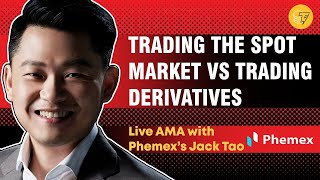
Jackson and Jack Tao, CEO of FEMEX Exchange, compare spot trading and derivatives. They cover leverage risks, perpetual swaps, FEMEX's zero-fee spot membership, and why the exchange operates from Singapore to navigate US restrictions.
Chapters
What's up everyone? Welcome back to another Cointelegraph live stream. My name is Jackson. I'll be your host this day. Evening, morning, whatever time zone you're in. This is going to be a sponsored livestream sponsored by femex. We're doing a live AMA with our guest Jack Tao, who is the CEO and co founder of FEMEX Exchange. How are you doing today, Jack?
Hi Jackson. Really excited to be here. I'm the co founder and CEO of mex.
Yeah, it's great to have you. So since this is a live AMA chat audience, anyone who's watching, I encourage you guys to be asking questions throughout. This AMA is here for you. So anything you want to know, just throw it and write it down in the chat. I'll be checking it out and we can get those questions straight to Jack. I also have some questions I would like to ask him. And the theme of this AMA from my point of view is trading the spot market versus trading the derivatives market. So I have my own few questions to just kick things off. But really this is here for you guys. So get in the chat, write down your questions and we'll be asking them to Jack. And if you enjoy this show, please make sure you subscribe to our channel and make sure you check out the FEMEX website. There's a link in the description below. So let's get into the first set of questions. Well Jack, actually tell me a little bit about yourself. Where are you coming from and how did you get to where you are right now?
I worked for Morgan Stanley for 11 years, so I resigned in 2019 and formed Femex in the same year. So FEMEX officially launched in November 25th last year and since this seven months we're being like top 10 the retraining exchange in the world.
That's really awesome. So let's get into trading the spot market versus trading derivatives. Then my first question, maybe this is a little bit obvious, but let's just get this out there. For any of the newbies, when you trade spot versus trading derivatives, which is riskier and on top of that, what is the risk versus reward reward ratio like?
Yeah, I would say trading in crypto market is always risky because more volatile in general and obvious that the rotate is more riskier and the reward is better. But I have to remind everyone that I don't want to give the wrong impression that it's non linear. Right. So riskier. Sometimes you have to make sure that you understand how to trade. That's very important. Even you Trade in a spot market, you have to understand what's your target and you have to understand some basic concept. What's the limit order, what's the market order? Otherwise it's still riskier for you. And derivative definitely is a more powerful tool. And the reward, as we can see that for lots of investors in general is greater than the spot market.
Yeah. So like if I had really not traded cryptocurrency before, I was kind of new to this, I didn't have a lot of money to work with. What kind of options would you suggest I work with? Not derivatives options, but like, yeah, like would you suggest I maybe start a little bit with the spot market or takes more time to research derivatives and see what I can do there.
There's no golden rule or best practice here. And for trading, spot market and direct market, they're similar. And for my personal experience that I start to learn, to start to learn about blockchain and I start to like Bitcoin, Ethereum, and I say that's a cool idea. And obviously I started from spot markets. And various markets really get popular I think since 2017, later 2017 and 2018. And because it's so powerful tool, we see that lots of new users, even they never traded in spot market, they will use the purchase market as well. And a lot of traders from traditional market, they all start from diverse trading. Because diverse trading is easier to buy and sell. But for spot market, it's easier for buy, but it's not easy for selling.
Could you just explain a little bit why it's easier, why it's easier to buy and sell in derivatives market and why it's not as easy to buy. Did you say buy in the spot market?
Yeah, it's easy to buy in spot market because yeah. Yes, you use credit cards or you have usdt, you can purchase the cryptos you want and be a holder. Right, but it's hard to sell. But because if you want to sell, you have to have the coin first. Right. So lots of exchange private service that you can borrow the. Borrow the cryptos and just sell them if you think the market is going down. But you have to pay some fees. Right. So there's less preference for people to sell because they have to cost more. But for derivatives, especially for perpetual contracts we offered and since it's a contract so you can buy and sell equally. And if you think the price goes up, you can buy a certain amount of contracts. If you think it's going down, you can sell the contracts. So once you have the agreement, then you can just settle based on the last price so you don't have to borrow anything from anyone and there's no cost upon that. So that makes the market more stabilized. Because if the market only have buyers, right, the price always go up, never looking back until it's fully crashed. We see this pattern in 2018 and if you have it's easier for people to sell, then it gives the opportunity for the market to discover the true value of the cryptos.
Thanks, thanks, thanks. So it looks like we've got a question from the Void that bites. And he's asking, this is not so much the topic on derivatives, but he's asking what is the regulatory framework for operating an exchange in China. Is your exchange located in. It's not located in China as far as I know.
Yeah. Actually located in Singapore. And for China, as we know that there's still a lot of exchanges running based on China and the local government. The local government didn't encourage the operation there. And they definitely have forbidden to trade cryptos against fiat currency, Chinese yen. And that's the rule there. And for the regulation that there's a lot of regulation and we can see more and more coming and we know the trouble rule I think since last year and we are expecting that local government will have more and more details about the regulatory to regulate the exchange to protect the customers.
Thank you. Thank you for that question as well. The void that bites. Appreciate it. If any of you guys have questions for Jack, please write them in the chat section. We can ask them directly to Jack. This is a lot ama. He has a lot of experience. He worked for 11 years at Morgan Stanley. He knows how to program exchange trading platforms. So please like give us your questions and I'll be happy to ask them to Jack. Thank you for that. Deploy that bytes. We've also got another question from Dimitri who says why did you decide to set up your exchange and what did you dislike about the existing ones? I think it's a good question.
Yeah, that's a good question. So I start trade since 2017. So I purchased my first ether from Coinbase and lots of users start from Coinbase as well. And at that time there are already many exchanges. But my background is I'm working for mobile Stanley brokerage business. I built trading platforms almost for global markets. So our trading engine almost connected with almost all the major exchanges globally. So we can see that at that time that the exchange, the technology wise, the operation wise, it's not perfect and to some extent it's horrible. Right. You don't have a price protection and the customers is terrible and you can never get it. Also when there's an outage and there's outages almost every month and at that time I think blockchain is a really cool idea and it's really a fundamental for freedom of a financial world. And it's a new industry. So how about building a new exchange and better than them. Even two years later we think about how to form the team, how to get funded and how to develop our products. So two years later we finally get everything ready. So that's how we started. And even for two years, even last year, even for now, that exchanges still have lots of issues. Because there's a challenge. It's a difference from traditional market for cryptos exchange, they all operate 24 by 7 nonstop. Right? That's already a big challenge compared to the traditional market. Traditional market they all closed down weekends and even for foreign exchange exchange to close on Sunday. And the operating exchange nonstop exchange is totally different. So you have to have to be very robust and you have your disaster recovery plan and the performance because all the exchange almost operated globally and you have to make sure the performance is acceptable in multiple different regions. Regardless their network connections. There's still a lot of challenges there. And we can see exchanges keep innovating their technologies. For Femex, my team and we have many developers from Morgan Stanley and another partners Du Yang, he also worked at the Farm Morgan Stanley then go to Hong Kong exchange. We have a lot of experience so we know exactly how to build in a modernized crypto exchange. But that's our advantage. And we also know financial products. We know how to make it right. And in terms of customer service that for financial customers, we think it's extremely important. In America people like to use. I think Chase Chase is one of the best. They have a very good app, they have very good UI customers feels good. You don't have to wait for a long time listening to a robot. This experience that is very unique and lots of other exchanges, the tech team and the leader team didn't have the same background as ours. So that's our big advantage compared to theirs.
I think it's a really good point. And I think we still see exchanges have these outages at often critical times. I mean Coinbase still has them more often than people certainly like so. And you were talking a little bit about how you were trying to help fennec separate itself from other crypto exchanges. I understand that you have some sort of zero fee trading, promotion or deal that is helping you differentiate your platform from others.
Right. So we start from diverse trading and as mentioned, our diversity training already ranked top seven. So CoinMarketCap, if we can look up the derivatives exchange section and sometimes we're top five, which is very impressive in six months. So one month ago that in May 15th and we launched our spot trading and we also offer that our premium membership, which offers zero fee. So it's only. You only cost less than $10. So you can get zero fee for all the sports trading. And we think this is revolutionary and we want to build this like a Netflix or Costco that people pay only little fee and get a full service. And imagine that if you purchase one bitcoin, one bitcoin at price, let's say 10,000. And for most other exchanges like Binance and other exchanges you would pay like 0.1% fees, which is $10. So for our membership that usually lots of users start to feedback to pay like hundreds, hundreds for the fees. But the in our platform it's zero. And what we want to do is we think for exchange, it's a financial service. Right. So exchange has this responsibility and has the resource to reduce the cost for the investors and the clients. And our goal is to put the clients first. And that's the thing that we want to say. We want to add more values to our customer service. And this is the very first step. Besides that, we're adding more and more data source. So I just signed a contract for a data provider company. They provided signals, they provide some instigator, blockchain analysis. They were all free to our members. Great.
We have a question, kind of a follow up from Kelly Turner who asks is the exchange can people use it in the US.
So we currently don't do full service for the US customers because of regulation purposes. And we are working on that to legally opening US market as well.
Great. So our next question is from Thomas Ripley who asks what are the main differences between traditional finance and crypto finance given your background in both?
Well, there are so many differences. I think the biggest one is crypto market is still young and the total market is relatively small. And I expect that I think it has more potential. Potential and also derivatives trading just set for two years and become more mature. And usually for traditional market, the spot market is one and the diverse trading market will be like ten hundred times bigger. And we think that for cryptos it will be the same and diverse trading will be more and more popular based on the volume increasing on the spot market. The second thing Is the biggest difference I think is the scope. So for most traditional financial services, it's all operated and serves locally. Right. The first and local. And imagine how many banks, how many exchanges in the world. Right? It's thousands, thousands. And they all main focus on the one specific region. And due to regulation reason it's hard for them to expand in the global space. I would say. Right. And for smaller bankers it's almost impossible for them to have the resource to oversee business. But for blockchain technology and crypto exchange there's no boundary. That's the best thing of this industry. And there's so many potential and we can imagine a lot of things, we can rebuild a lot of things to make a true financial freedom for the customers. For a lot of people that they either participant school abroad, travel around the world or work in different places like transaction values transaction their money for tuition fees for any expenses, it's hard for them. They will have waited for seven days for a while and they have charged like many, many fees. For cryptos it's faster, cheaper and easier. So that's also one total difference. And what else? I think that's the main thing. Basically it's oh, and for traditional market usually it's more stable. As we can see this year it's. I would say 2020 is a very dramatic year and so many things happen and the market is very volatile. Right. We see that price go crazy in 2017 and this year it's kind of like a monkey jumping around. Even for traditional market the the scale of the volatility is totally different in cryptos. I think for investors has to be careful that you have to use different strategies. Investing cryptos is totally different. Like investing in stock markets. Stock markets you can do analysis based on the company the performance of their quarterly reports. You have a lot of information to analysis. But for cryptos it's totally different. Lots of cryptos you have to be careful to invest those cryptos and you have to some technology is still evolving and there's a risk that maybe they have some bottleneck and they not get popular enough. And that's a lot of things we have to look into.
Great, thanks for that. I think those are a lot of good points to bring up. And our next question is from. Well, before I get to it, I want to remind everyone who's watching make sure you're writing down your questions in the chat. We've had some really good ones so far. This is an AMA after all. So I'm here to tell your questions to Jack So anything you want to ask him, please do it again. He has 11 years of experience at Morgan Stanley. He recently co founded his Exchange FedEx in November 2019. So still a little new, but very fast and it's growing very quickly. So yeah, please write your questions in the chat and we can ask them directly to Jack. So our next question is from Ebert Herrera, who says for a new blockchain, what do you recommend as far as getting listed on various exchanges? And maybe you can tell us, you know, what it takes for a blockchain to get listed on your exchange and what cryptocurrencies are currently listed on your exchange as well.
Yeah, so I think that's two questions. So in general, many exchanges, when they're listing cryptos, they look into the popularity and their technology and their teams. I think that's the three main things that all the exchange almost be all looking to that, but they also have that other things about the listing fees. But this thing is very basic even for general investors. You have to look into those things, understand their white paper and understand business model. And for our exchange, currently we just launched our spot market, we have four pairs, we're adding more and more pairs. I don't want to spoil the story from Cecilia, which she's our cmo, but I can tell that we are working on ada, Neil, Menorah and ont and many, many coins. So we have some pipelines. We will launch a lot of other coins very soon. So different from Exchange. So femax, we currently don't charge any listing fees and the reason we add in one more coin is the same Daxo. It's a free service we want to offer to our customers, our members, premium members. And listing more and more popular and kind of a mature cryptos is our responsibility. And we currently don't have any specific IEO ICO plan. But we do also look into this three fundamental whether their technologies keep evolving and active, they have innovation ideas and how to get how popular it is and how is their teams, is that team reliable and is that community reliable and those things that we are looking into.
Yeah, that's some good insight into the process behind evaluating cryptocurrencies to be listed on exchange. So we've touched a bit on derivatives so far and you said that you think the potential for derivatives is really huge in the crypto market. So could you take some time to explain what derivatives are available on your exchange platform and maybe you could give us some insight into how these particular derivatives are supposed to be used?
Yeah, the best Thing two things. One thing I already mentioned that in derivatives which the most popular one is the paper tool contract right now. The other one is the futures. So difference is the futures has a mature day. So you have to deliver the bitcoin based on the contract for perpetual contract. You have done mature date so you don't have to deliver. So your profit will be calculated based on when you close your position. So derivatives is easier to sell and you don't need to pay extra fee to borrow anything. You just need to sign the contract to say you are looking at the currency go up or you're betting the price go up or go down. The second thing is that leverage for sport market it's hard to give leverage to users. But for derivatives we offer usually lots of exchange offer up to 100 times leverage based on the capital the user has. And there's some protection on like a risk limit make sure that the users don't go crazy. It's kind of a protection and that's two main feature that makes it more popular for the use cases, right? So let's say you are holder, some holder, they hold a bunch of coins and they think the current market is going down. They want to protect their positions. They can use a little bit of capital to hedge their position in case of the last happen. And also there's lots of opportunities. Between spot market and the British market. Lots of participants will take advantage of different liquidity or pricing efficiency to make profits. So more and more those participants into this market and, and the prices become more and more efficient and hopefully more and more stable.
I'm kind of curious, why are perpetual swap contracts so popular? It seems like every exchange, you know, is like we have perpetual swap contracts now and they're trying to make big waves about it. Is there something comparable in the traditional financial world? And why are people so focused on this particular type of derivative?
First I give the credit to BitMEX. BitMEX is one of the exchanges that first introduced the perpetual contract into the crypto world. And this started from 2014. And there's one main reason, because that's almost the first derivatives. Maybe I'm wrong, but I think that's the first or maybe future. And the idea is simple, right? So one contract is basically agreement between buyer and seller. So the buyer basically. So at the execution price, I'm expecting that price goes up and the seller basically adds exclusion price, price goes down. And based on the price movement, we call the market price, right? The market price. And they will set, they can close the close the contract at any time and to collect a profit or stop loss. Right. So it's very easy concept just betting on the price and based on the external index. So you don't have to deliver any physical bitcoin like futures. It's all cash settled. And that's the beauty of it, it's very simple. So I think that's one of the reason that why it gets so popular.
And it's specifically the reason that barring the time limit that it's settled in cash, not in bitcoin. Right. I think that's one of the most important points. It makes it much more liquid. Right. Is that correct?
For futures you have to prepare for, if you're selling a contract, you have to have to obligation. Have the obligation to deliver the certain amount of the bitcoin that you promise. Right. So that's things that make it a little bit harder for the beginners to understand and to operate. Cool.
So we've got a question from Tosh Burr who asks how has coronavirus affected your business?
Wow, that's a popular question. As I mentioned, this year is so dramatic and coronavirus impact, we're lucky, I would say that we don't have, as far as I know that we don't have any colleague or family member of getting impacted so far, which was very lucky. And we basically operate globally. So we have a developers in Singapore, BD in Europe and the US and almost globally. So always use Zoom as well. Zoom is our favorite software by the way and so our impact is minor dependent and we all like myself as a developer, so we constantly communicate through network so there's no problem for us and if we don't have to work in the office and we can all work from home. But it did cost a lot of effort, extra effort to communicate. So we just launched six months and and there's a lot of things going on. The communication is a huge challenge for us at the very beginning, but we believe that we sort it out. So in six months we delivered like six perpetrator contracts including gold versus nominal USD. So that's the traditional assets in our platform which is very unique. We also have an app launched and we have spot market launch. So we have many things delivered. So I'm very appreciative effort from our entire tech team and our BD team to make out to be successful like this. And that sets out my expectation totally. And we're actually the fastest growing company into 2020 in the crypto exchange. So awesome.
Thanks for that question, Tosh. It looks like we got a few more questions as well, which is always great to see. I just want to remind you guys, like, please, this is an ama, so be sure to write your questions in the chat below. I'll be reading them and asking them directly to Jack. So anything you want to ask, just write it in the chat. We've got our next question, which is from nrgskill, who asks which way is safer for risk management in crypto, futures or options?
Which one is safer for risk, safer for futures? It's hard to. Yeah, I think it's all based on your strategies. Right. So let's say that you can easily hedge. Easier for you to hedge for perpetual contracts, as I know that perpetual contracts has more liquidity than the futures. Right. But if you're looking for long term, you have a good analysis and have a signal. So you think your analysis is more correct for the midterm or long term future, maybe better for you. Right. And I really don't answer. I think it really depends. It really depends on the strategies.
Yeah. Figure out what you want to do and stick with it. I've heard that a lot from traders. As long as you have a consistent strategy and you have a reason for doing what you want to do, then stick with that. We have another question from Thomas Ripley again who says why are decentralized exchanges not as popular as centralized exchanges?
Yeah, that's a good question. So decentralized exchange has a great idea. Right. And because centralized service people have some concerns. Right. And maybe hacked security reasons and maybe manipulated or the exchange may just poof for no reason, for some other reasons. Right. So decentralized exchange, the problem of decentralized the technology is not ready, honestly. Right. And also liquidity is also a big problem. And I think Binance has operated a decentralized exchange for a while, but the liquidity on that exchange is still not good as well. The price is not efficiency enough. And from the design perspective, for lots of decentralized exchange, you can front run. For the miner, you can front run because you have the information before the other traders and it could have been manipulated as well, theoretically. So I would say. And the third reason is the order book. So for an exchange that you have, you need an accurate order book. And there's a lot of things that there's a lot of reasons for decentralized. We cannot offer an accurate order book. That's the further reasons. I know. Yeah. I think basically that I'm not saying that decentralized exchange doesn't have a future. I think it still have A potential. But I would say that in the near term, I don't think decentralized exchange will be as successful as centralized exchange and also for central exchange. And it can operate centralized. It's not always bad. And as we can see, most exchange right now is centralized. And a lot of places operate well and their respected clients. Every client has a loss if there's a buy with the other. They provide a very good customer service for incoming femax and centralized. And also they provide a lot of extra protection in terms of offering insurance to cover some disasters. And overall that centralized exchange, currently I think it's better than decentralized exchange, but maybe futures. I'm looking forward that technology can change the world.
Cool, thanks for that. Our next question is from Austin Schwepp who says is a 3500 bitcoin realistic or considered to fall in the category of utopia? What's your opinion? I'm not exactly. Yeah.
If I understand correctly, if he's asking if bitcoin will be like 3,500 again.
Maybe.
Yeah. So it's okay. I have my own understanding of. I think he basically asking. The incident happened in March 13, 1213, right?
Yep.
And I explained before in some other channel that I think this is because the fomo. Right. So we can see that the FOMO is very obvious in 2017 and people buying, buying, buying, pushing the price going up, up until the market can hold and the fresh crash. And that's what happened in 2017 and 2018. And now it's still same. There's a lot of fake news, there's a lot of emotional twitters, I would say. And once the price goes up a little bit, everyone spoils. Right. What happened to this is the capital is still limited in this industry. Like market makers and all the other participants, they don't have enough fund to take all the volume, especially on the price surge. Especially on the price surge. So what happened is all the retail customers, they think, oh, it's going to buy and volume keep up and everyone's buying. And then you have a huge selling pressure from the market makers, from hedger, other participants. Right. Then we see this pattern over and over and over and over and the price goes up and crash, goes up and crash goes up and crash. And we try the 10,000 for many, many times and the hopefully it can stabilize above 10,000. But people have to understand that because the developers trading people can easily sell. So we're not expecting 2017 to happen again. So the price will not go like a straight line rocket to the moon all the way. No looking back. It's not going to happen anymore because people I would more expected to the price go smoothly because of the technology innovation because new good coins are coming up and more research have a better performance to solve the PTCP and data scale those things should drive the price. So exchange truly reflects the emotion in this crypto because it's yummy and we can see and it's global, it's hard to control. Like Asia can pump the price, the US can pump the price, Europe can pump the price and there's so many activities and different opinions in this market. So that's why that we look we expect the price be very volatile and in March 12 and 17 and they were the extreme case. Right. Because the price surged so much and I think a lot of people started buying and even for many market makers as I know they got the liquidated because of that.
Yeah. But yeah and I think it's possible you know we could see another big black swan event like this in the future. It's possible. So yeah. I really appreciate all your guys questions so far. We've got some more coming up. Don't be afraid to write them in the chat and so I can ask them directly to Jack. He. He's. He's talking about Femex and we're also discussing spot trading versus derivatives trading. So you have any questions about trading, any questions about exchanges, make sure you're writing them in the chat and I can and I can tell ask him to Jack. So our next question is from Tash Bur again who asks what's your advice for someone who starts using perpetual swaps.
For the first time. For the first time to limit. I would say first to. So if you want to try and learn how to trade. Another alternative is we have testnet and also Adextion to provide a testnet simulation trading platform. So you can understand basic things. Right. But if you really think I'm ready and I want to try this out and limit your leverage. Right. So some people ask me that so what's the recommended leverage for beginners? I would say less than three or five times leverage. Don't use 100 leverage. But it's okay if you have $2 or $3, you can try that. You want to test the calculation, it's okay. But I don't put a lot of money because the market is still too volatile and risky. I would say treat it responsibly. And another thing is that it's actually. And another thing is that there's one Thing I also recommend to use is a stop loss. So stop loss order is basically saying you open a position and you have a target to get profit. But you also needed to think about if your decision is wrong. There's option for you is for the stop loss. So you set the price. Say okay, so at this price probably I'm wrong and I have to have to close the position to stop my loss. So you don't have to watch. This kind of order type helps you to automatically close your position without keeping watch the chart, watch the price. So this is one of the very first thing I would suggest people to look into to understand how to use the stop loss correctly. When you should use a stop loss market order, when should the stop loss limit order? And those things you have to look.
Into baby steps and research. Yeah, Tosh is on a roll actually. He's got another question coming at you. Do you expect the rising, do you expect rising demand from institutional traders?
Yeah, it's already happening actually. So as you can see, jump trading is one of the big players in the crypto world already. And for us that we're counting a lot of different market making and market maker and institution clients we have, they use our APIs trade and they are the main participants like I would say, I would say around half, around half volume in pharmaxis from institutional clients right now. So and we're seeing more and more coming every every week we have a meeting and with them to how to connect with us and we have to provide a customer service for them. Just to mention that we have two legs. One is that for the free membership is mainly for the retail customers and for the institutional clients we have other services. We have a specific team to offer them to do the customer service. Whenever they have a question, it's almost 24 by 7, they ask their technical questions and we provide a little bit higher rate limit for them and also a little bit discount for them because the treaty volume is usually large and that's our two different groups of customers. It's kind of half right now. Sometimes the retail use is even bigger.
Do you find that institutions trade more on the spot market or more on the derivatives market?
Yeah, different volume. Volume wise they usually trade almost all the exchanges because they can run different strategies. They can speculating, they can hedge some institution clients. They also have their own business OTC markets. So they need to seek liquidity in different exchanges. They can arbitrage between the exchanges as well to improve the pricing efficiency or capture opportunities. So as I know that most Institution clients treat both spot and the dates as well. Cool.
Thanks for all those questions, Tash. That was great. So our next question is again from NRGSkill who is saying regulators fear crypto market manipulation. Do you think the industry is sufficient, sufficiently mature and ready to self regulate?
Yeah, unfortunately I think it's not sufficiently mature. But you know, the bar is different in different standards. How we define maternity. Right. And self regulator. Maybe. Yes. As I can see that lots of change. We do put a lot of efforts to self regulate. We have insurance fund to help the liquidation in case of disaster happen. And some exchange provide a mutual fund, some production provide different insurance to. Guarantee the basic benefits insurance for the small capital participants. Right. But I think. I think that in some extent that government do need to involve to some extent in the sake of customers. Right. But this is new industry and technology can change everything. Because the problem for the Wall street is the regulations too much. Right. Which caused bigger become bigger. Like J.P. morgan. Right. J.P. morgan was one of the biggest bank in the world. And since after the financial crisis in 2008 they become bigger and bigger. That's the things people worry about. And people were talking about the financial crisis. Right. To be to fall. And still that regulation didn't solve the problem. And because there's so many regulations, so many compliance rules you have to go through and which forbidden innovation and discourage innovation. And for smaller companies it's hard for them to survive. Right now we have a blockchain. Blockchain has so many good features, low fees and easy to track. Everything's recorded. And I'm looking for the technology. Innovation can solve a lot of problems that the regulation cannot solve. Right. And give the freedom to people. That's the dream we're chasing for it's financial freedom. It's to have a freedom and a safe environment. Full control of our own money. That's thing we want to see. So yeah, back to that. This is. Back to this question that whether this is a mature enough or not. It's not. They're still worrying. And we still see theoretically if there's a big wave they have maybe let's say 1 billion US dollar it possible the manipulate market. That's possible. What they can do is they can start to sell, establish their sell position in some perpetual contract markets and then they start to sell. They start to sell a lot of bitcoins in some spot markets. So they can impact the index price. So that's possible. That's the thing that it's hard to prove. But theoretically it is possible. So I don't have a solution and that's the thing that everyone's worrying about. And what I can see, one solution possibly is all the exchanges united together and they kind of have some self regulation and agreement to work together to avoid this type of manipulation.
Yeah, that would be something but I'm not sure about the likelihood of that.
Maybe the third party can do something, I don't know. That's the beauty of this industry and that there's so many certainties.
Yeah. So our next question is from James Stevens who asks does Femex have any plans to evolve into a non custodial exchange in time?
Yeah, we're thinking about that but it's currently, I don't have a timeline for this and we have so many things already in pipeline already and that's something that we will look into. Great.
So I wanted to go back to something you said you were talking about earlier, how blockchain technology could be used and I guess given your history 11 years at Morgan Stanley, you're very familiar with the legacy finance side of things. I've heard that blockchain could potentially be, you know, an existential threat to the banking system. Do you, do you think that this is also a possibility?
Yes, but I don't think in five or 10 years. I think it's more likely in five or 10 years it will be coexisting with the traditional market and government exchange blockchain, blockchain technology. They probably need to figure out how to, how to make it work, how to make it into, fit into a better and build something new really true benefit for everyone. That's my personal opinion.
Great, thanks for that. Yeah, so keep the questions coming guys. Again this is an ama so anything you want to ask Jack, just make sure to write it in the comments in the, in the chat room and I'll be asking it directly to Jack. Our next question is from CW who asks can we expect more trading pairs on the exchange in the near future and also will FEMEX support Ethereum staking?
Yes, both. Yes for both questions. So we already. So I mentioned earlier that Ada Minor and Neo and ont those coins we are starting developing and we're connecting the blockchain starting our main node and this since we're hopefully in one or two weeks we will listing more and more coins. So that's the promise that we give to our customers, to our premium members to have more trading pairs and have better service and for staking. Staking. Yes. I don't have, again, I don't Have a timeline for this. So probably hopefully in the Q4 this year. I have to check so which one. There's so many things that we want to do and so many products want to offer other things like data wise, we want to provide more signals and the data analysis to our retail customers to help them trade to make a good decision. That's also one important product we want to offer. So staking. Yes, but I don't have timeline.
Great. So one of the themes of this AMA is spot trading versus derivative trading. And if you guys have any other questions about exchanges, be sure to ask them in the chat. So my question is CME famously came into the bitcoin market right at the end of 2017 when Bitcoin was peaking. And a lot of people say that derivatives are necessary to maintain a healthy market. Why are derivatives necessary to maintain a healthy bitcoin market?
Yes, derivatives is a powerful tool for people to join this market and it definitely help to stabilize because it's easier to buy and easier to sell due to the leverage people have. Little capital can open a bigger position. So it gives the opportunity for people to say some people, if there's more people to buy a less people to sell then the price will not be truly reflected to true value. But if you are equal to have the equal ability to buy and sell, the price is more likely to be stabilized for cme. The problem of CME is I think due to regulation and the products design, they totally fund the other exchanges like bmex Binance and it's not easier for retail customer to participate. The investment that's the bar still high for the retail customers and the liquidity and trading volume is not compatible to other exchanges. And they are not operating 24 7. That's another reason. So basically they're still traditional market. It's just a new trading pair for them, nothing new. There's no innovation upon anything else. But we like to see that bitcoin get recognized by those exchanges. It is the assets and it's extremely important assets now and in the future.
Thanks for that. So if I was just getting started in training, I'd never done nearly any trading before. Should I take a look at spot trading? Should I go there or should I take a look at derivatives? What do you think is a better place for beginners to get started?
You can start with spot. Since there's no leverage, I think the risk is manageable and it's more straightforward. Basically pay and buy and then sell whatever the coins you want. Right. But the same for exchange that we provide a lot of materials and there's lots of lots of good resources on YouTube, on Twitter, people globally that's a lot of people sharing knowledges, how to understand the charts, how to use those different order types and to teach you how to trade. And also those exchange, all the exchange including FEMAX they provide APIs. So I know that for this new generation lots of people know how to program. Right. And the Python is one of a popular and know the JS or JavaScript other people how to write a simple script or program to connect those exchanges through APIs. And that's another way that people really should look into. I can see that a different from traditional market and usually individuals there's no ability and there's no resource. They don't have the resource to connect to exchange directly. But the modern crypto exchange we provide those kind of the possibility and they make it access so easy. And then also there's app, there's webpage. There's so many different ways to kind of exchange to trade. So if you really want to start so you can look up a document YouTube tutorials and also look into those API connections and examples. So there are many ways you can start.
Great. Yeah Riley, Riley in the chat agrees with you saying most noobs will get wrecked by leverage. Unfortunately.
That'S true. Statistically that. Yeah, statistically that. Because obviously this is your game and zero sum game and you have loser and buyer, you have loser and winner and majority. It's like a poker game, right? If you go to casino, if your purpose is to get entertained, you have just relax, enjoy your Friday, enjoy your weekend trip and you just want to spend money and get some excitement and then your. Your estimation is to lose money. That's true. But if you are a professional poker player, you know how to make a decision, you know how to play with others and you're about to make money. And it's true for everywhere that always that the miner probably win more money that. But I said the data I see and it's kind of spread out institutional, not guaranteed institutional. They always win. And I can see a lot of retailers, there's one guy in Korean they post a recording Femex. He only had like $2 and end up with 2 bitcoin. He traded manually through webpage. That's amazing. Yeah, that's amazing. He treated, I think he treated like three months or something like that. He just catches every day may Twitter four or five hours. He definitely know how to do, how to do his work. He definitely do the homework and know how to trade. Definitely. So I hope he shared that. He shared his story in more details to all others. But. Right. It's sad. It's sad. Definitely people. No one likes losing money. Right. But I would say there's still opportunity. The pricing is not efficient enough. Sometimes we can see signals lasting for like couple seconds compared to traditional market. It's huge. You almost can see that different exchanges have different price gap and later they merge it together. So it's still very common in cryptos.
Great. I think that's some really great advice and I think that's a great note to end on as well. I want to thank you, Jack, very much for coming on the show once again. He is the CEO and co founder of Femex Exchange. If you guys enjoyed the livestream, please go and check out his website. It's in the Femex website. It's in the description below. This was sponsored by Femex.
Yeah.
If you guys enjoyed the show, please also subscribe to our YouTube channel. I'm your host, Jackson and once again, thank you for coming on the show, Jack.
Thank you very much, Jackson. See you next time. Great.










