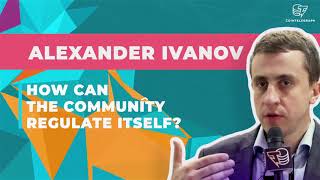
Alexander Ivanov, CEO of Waves Platform, says the blockchain raised 30,000 BTC in its ICO and hit a $600 million market cap. A mid-December update will push it to 100 transactions per second, making it one of the fastest blockchains for token issuance and asset tokenization.
Questions this video answers
30,000 Bitcoin.
$600 million.
December 15, 2017.
Mid-December (shortly after upload); up to 100 transactions per second.
Since approximately 2013.
Chapters
Foreign. Off. I'm Waves Platform CEO and founder. I'm in Bitcoin since probably 2013 and we've done an ICO almost two years ago. Before the hype, we raised like it was the second biggest SEO at the moment after Ethereum. We raised 30,000 Bitcoin and now we have market capitalization of $600 million. So what we are, we are a blockchain platform where we can do many things. You can issue tokens, you can do ICOs. Also, we have very cheap transactions. Very soon, in the middle of December, we'll have a major update and we will have up to 100 transactions per second on our blockchain. So it's going to become the fastest blockchain in the world. Yeah, we want to have a platform that can be used by real business right here, right now. So it's not so futuristic. We are focusing on like real use cases. So you need to have cheap transactions, you have to have scalability and you have to have like normal user experience. So you need to have good interfaces. We want to have web client interfaces similar to online banks so people don't have to learn anything new. So the learning curve is not stable. So you just use this technology without understanding how it works. This is our goal to make blockchain technology accessible to normal people. Probably at this stage it's not so bad if government regulates it because when you invest in SEO you invest essentially in startups and most of the startups fail, as everybody knows. So probably we need some regulation to protect people from investing in bad things. So I don't know if it should be government regulation or maybe some kind of self regulation, but there should be some regulation. Otherwise ICO market can really crash. I think because you need to have some mechanism that protects people from bad investments. There can be some kind of, you know, decentralized mechanism where you can vote for the projects. There can be some kind of decentralized rating agency in which case people just evaluate the project, vote for, and you have some kind of rating for the project. And people can see that this project is vetted by the community and they invest in it. So it can be some kind of decentralized solution and the governments don't know what to do. So you need to propose some kind of guidelines for them which they can use later when the regulation will be in place. I think it won't be any different from any other country. You know, all countries have their own, own path towards regulation, but the end will be the same. So it will be regulated as everywhere. So probably Russia has its own way. There can be some kind of crypto rebel project that can connect, like Russian crypto, which works according to Russian laws, to, like, international crypto. That's possible. But I think within half a year we'll have some kind of regulation in Russia. Probably next year will be the year of tokenization of real businesses. When you have some kind of commodity or some kind of asset and you issue tokens backed by that commodity. So it can be used for many businesses, for manufacturing, for loyalty programs, for example. Because a loyalty thing probably is the next big thing in blockchain. Because, for example, you can do loyalty programs on waves, you can send many transactions and loyalty programs need this. So it's quite easy to do a loyalty program on blockchain now also voting, some kind of voting. It's not for business, probably it's for like, government services. But the next big thing in the blockchain space is voting systems, in my opinion. So we'll have two major use cases, new use cases in upcoming years. It's going to be tokenization of real assets and voting when you can really vote in a transparent way for. For, you know, on maybe on like municipal level, on regional level, and it will escalate to state level maybe in couple decades.