Web3 Gaming: What’s Next? — with Sebastien Borget from Proof of Talk Paris
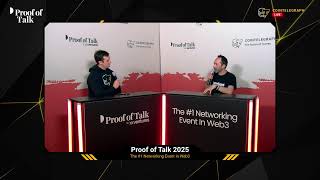
This is a live interview (Proof of Talk, Paris) where Gareth Jenkinson speaks with Sebastien Borget (The Sandbox) about the present and future of Web3 gaming. Borget argues Web3 gaming is active but fragmented across multiple chains (Telegram/TON, Avalanche, Ronin, Ethereum, Polygon), estimating “~300 million” wallets connected across games. He highlights improving infrastructure (wallet UX, marketplaces, cross-game tooling) that lets developers focus on gameplay, and proposes a metric — return on reward spent — to measure token distribution effectiveness. For Sandbox specifically, Borget describes a move to more frequent seasons (from annual to ~three per year), free avatar/quest onboarding, brand partnerships (Jurassic World, Bruce Lee, British Museum), creator-focused tooling (no-code + “vibe coding”), and plans to increase interoperability and AI-driven creative features. He also gives product/community metrics (roughly 30% of landowners active / ~27,000 creators/players; ~57,000 avatar holders; ~370,000 on decentralized exchanges), notes 28 SIPs (Sandbox improvement proposals) since launching the DAO one year prior, and says Sandbox has offices in Los Angeles and is engaging with U.S. regulatory groups.
Questions this video answers
June 10, 2025
Approximately 300 million wallets
Roughly 30% of landowners — about 27,000 — are playing or creating
Approximately 57,000 avatar holders and about 370,000 on decentralized exchanges
28 SIPs have been voted since the DAO was introduced
Chapters
Life. No.
Welcome back to Proof of Talk right here in Paris. My name is Gareth Jenkinson, I'm the head of multimedia here at Cointelegraph and we are live streaming from the event. It's been a fantastic day so far. We've heard from the likes of Barry Silbert and a number of high profile individuals from the cryptocurrency space and really just enjoying this venue. I'm joined by man I know quite well, Sebastien Bourget from the Sandbox. A lot of our viewers out there will know Sebastian, and we're going to be talking about Web3 games because it's been a topic I haven't been covering a lot in the last year or two. I mean my job has changed a little bit, so I'm doing a little less writing these days. But it does feel like a lot of attention moved away from Web3 gaming. And as someone who's built one of the most popular Web3 games out there, what's your general take on Web3 games at the moment? Has it been in a lull? How do you get out of this?
It's always good to see you here, Gareth. Well, let me put it straight. Web3 Gaming is kicking and alive and it's been more alive than you ever saw before. The only thing though is it's also more fragmented than it was a few years back when there was only one main blockchain, essentially Ethereum and all the projects were on Ethereum. So nowadays like most of the Web three games, like Successful one, let's talk about like off the grid Pixels or like the new Mapple story, they are on different chains. Like on one side you have a whole telegram tone ecosystem which bolster a lot of games and gamers. You have on Avalanche, you have Ronin, you still have Ethereum and Polygon, but they take like a smaller portion of the attention. And so you have all those pools of silos of gamers and successful games, but they are not interconnected. There is no like liquidity across those. The token don't easily flow across those. And so you have actually an impression that web3 gaming is smarter. But I think like Overall there's probably 300 million wallets that are connected across all those different games. At Sandbox, we also noticing with the different season we've launched like more engagement, more spend more time by user into our metaverse season and experiences. So we get good signals that actually games are here and growing. Like the right games with the right fun and engagement formula can actually kick off into large success at speed. We've never seen before. But it's hard to get the big picture if you're not. If you're just in one of those ecosystem or you don't really oversee it from the top.
For those of you listening, please do drop your questions for Sebastian if you have some burning questions about the sandbox, some burning questions about Web3 gaming, where the trends are going, what chain you should be building on, what's good, what's bad. He's the man who knows. So please drop the questions. And as this conversation goes on, I'll pose some of these questions to Sebastian. My next question to you is how much is developing infrastructure playing a role in Web3 games? I know the guys from Olympics, I've spoken to them quite a lot. But pudgy penguins are now building on their infrastructure and it's making it a lot more accessible for people that are not blockchain native to build games and then plug in the blockchain infrastructure and be able to tokenize that in certain ways. So you and I can play a web 3 game, let's say Wordle on Telegram and I challenge you and I put down 2 USDT and if you can solve the wordle faster than me, you get the money. I think that's a fantastic use case for, you know, sort of a peer to peer like more more engaging, more socially interactive approach to gaming. And now the infrastructure is there. Have you seen a large change in the last year? We can talk about ton and what happened there a little bit as we go along, but how do you feel about the infrastructure at the moment?
Well, I do absolutely believe that game developers are usually choosing an ecosystem or chain for the audience that it has like the user and also the whole developer toolkits that's available. Like you absolutely do not want as a game developer to reinvent the wheel every time. You do not want to build your own marketplace, you don't want to build your own wallet or cut abstraction. You don't want to build your like peer to peer matchmaking system. And so once now like you have like more developed solution with wallets like sequence or even metamask improve largely their UX once once we have now system where users can actually put their user generated content on the marketplace available and sell across and avatar system and marketplace that can be sold across many games with player zero protocol or wagering system where you can challenge one of your friends for a very small bet and whoever wins into the skill based game that's Olympics, I think it's definitely valuable. So then Game developers can actually focus on the one thing they should be the best at, which, which is like making fun games and all the rest. The tool sets like the tags infrastructure should actually be like older team which are better at this, that provide them. Very few are the team that will be good at focusing on both. And if as a game company, as a startup, you have to prioritize on your go to market, let's start with the game rather than the tech.
I remember this time last year at Proof of Talk, Hamster Combat had just come out and it was like, I think it was a month into the launch, they already had like 100 million players on the tapping, you know, the tapping game. It really fizzled out after the token generation event. I think a lot of interest just waned. But the way that they approached doing it made me pretty excited about like web3 games again and you know, like blockchain based games. And it didn't have a native token then when it launched the token, I think that they failed in many aspects to do something that, that would keep people playing. Sandbox has been around for a long time. How do you keep people playing? How do you bring the monetization elements into what you're doing and like how difficult is it to solve that problem? Because I still think that no Web3 game has completely figured it out.
Well, nobody in Web3 gaming has actually figured out like the successful recipe that anyone else can copycat. Like we're searching to an early stage of experimentation and sometimes failure. But there is a learning curve and like definitely we are seeing progress. Like what Amsterdam Combat has demonstrated is basically a good network here. Like the Telegram network can essentially allow to bootstrap the user acquisition, to grow the community and to grow games to level of audiences we've never seen before. Amsterdam Combat is so simple in the gameplay, so accessible. Thanks to Telegram Network and the wallet. It was fantastic. Now tokens are great to provide value to the community, but game developers also have to focus on something I would like to push as an industry metric, which is called the return on reward spent for every single token that's being distributed to a user in form of claim reward or airdrop. How much of that token is going to go back into the game economy? And to make it come back into the game economy you actually have to build great features, fun gameplay that people want to spend time to keep enjoying that we've been doing at Sandbox. So typically you were asking me like how do we keep Sandbox entertaining? Like we launch once a year, but now we accelerate to three times a year, a new season that lasts a few weeks and people enter by like just creating an avatar. Everything is for free. They progress quests as they complete and they earn points as they complete different quests into the various games and experience with top brands partner like Jurassic World, Bruce Lee, British Museum and others. And then they can claim their rewards. And we've been able to increase by forex monetization and prove that we can reach a point where we almost earn more sands or just as breakeven sand than the amount of reward that we distribute through NFTs that have real utility battle pass avatars and equipment that actually improve your skill through gameplay. And I think it should be just the natural part that every gameloper thinks about. Like there's one side like the trading and other competing mechanism we could call like the meta gameplay and then the real core gameplay as well that people want to enjoy.
I've got two questions coming through from the live stream. The first one, why haven't Web3 Games had a hit like Fortnite and Minecraft yet? And I think that's a pretty good question, right? Like Breakout, Big Web 2 games I think there's a very simple answer to. But at the same time it does make you wonder like why isn't there a Web3 game that everyone is just playing and they can actually earn some money from playing it?
Well, there's a few reasons but like there's some titles like off the Grid, on Avalanche with like something like 15 million wallets and before the main net which are on the verge of like showing like actual quality gameplay fun can actually break through. Why it doesn't yet is like because most of the team, like they are a new game developer, they are, they haven't come back from a traditional gaming background and the way they've been approaching it was maybe a little bit too much skewed toward like the blockchain as a feature and a core functionality. They didn't think about like the complexity of like user education to like how it. All the effort it takes to like build and to bring an account with a wallet, credit, fill it with like the gas token and so on and all of that. When you compare to platform like the App Store, Google Play Store, Switch or Epic Store, all of that difficulty is actually removed because the platform already have like the user data on them. So for them it's like three clicks away from the download toward the game. Yeah, we're getting much better ux, we're getting better gameplay, we're understanding better the tokenomics and gameplay mechanics. So I'm confident that there will be a moment like a Fortnite or Roblox on chain will appear. I don't know, we will still call it pure web3 gaming. It's an abbreviation of like web2.2.53. Yeah, but we are not that far from that moment.
I've got another good question from the live stream here. What percentage of Sandbox users actually come to play and not just buy land? I think it's a pretty good question.
Well, it's a great question actually. The fact is most of landowners are just holders and believe in the vision of the platform, but not creators or players. I think roughly 30% of our landowners, 27,000 of them are just playing or creating, but all the rest, they are sitting on their land. So actually I will reverse the question like how do we keep engaging and attracting the other 70% on a good side, I think the success of Sandbox is we have different audiences. Some are just players enjoying the season, starting to spend more than they actually earn back to that return on reward spend. We have creators who are the most of course creative, engaged, passion audience who are ready to buy land, who purchase assets and to build and enjoy participating in our builder challenge and Game Jam. And we have the whole subset of like landowners, avatar holders, 57,000 of them and more than 370,000 on decentralized exchange and maybe more on centralized exchange that we need to keep building a platform that deliver value to every single of those audiences. And that's something like based on the launch we're planning this year, we hope to gather. Let's talk about the future of the.
Sandbox and maybe some of the other games out there that you really like. I don't know how much time you spend looking at what all the other Web3 builders are doing, but is there anything that really excites you and what have you guys got on the roadmap for the next year that's going to keep the sandbox kicking?
Of course it's very important to stay away from what's happening in the industry and keep benchmarking to understand what works, what doesn't. Like you were mentioning Telegram Games, Olympic, Absolute Combat and a Fjorder. Of course we're looking at that. Off the grid from Avalanche Pixels is a great game and recently Mapple Story from Nexon is a great title to look into as well. That's inspiring for the future of gaming. What we are working on is how do we expand Sandbox to become and really be perceived by everyone, not just the current virtual world without no code game maker that it is, but to become a whole ecosystem with different apps and games that people can enter, play for free, no wallet required. But if they do have an account on Sandbox, they can connect and use their san, use their land, use their avatar on them. More interoperability, more creative possibility with AI. So Vibe coding will be the next phase of like the no code movement. It will produce exciting experiments of games for players and for creators and something that empower every creator to monetize even more through on Chain dynamics. Something we are working on and hope to announce big news soon.
This is a good question from Nicholas Perrier. You call the Sandbox a decentralized Metaverse, but it's run by a company. Isn't that just Web two with extra steps? I think it's a very poignant question.
So it's a great question and I think we are aligned with the plan. We put in the white paper like over five years we described that we will go into progressive decentralization, starting with a company that's running and operating, building the core product, bringing the brand and so on. And then last year, it was exactly one year ago we introduced the DAO. We celebrated that one year anniversary. To date we have 28 SIP sandbox improvement proposals that's been voted by the community of both landholders and landowners to support various initiatives from like education and academies, sponsorship of events and launching and building new tools. So you can create on Sandbox without our own tool made by our own company. So for me it's a great example of how the committee is starting to take a stronger involvement and power into the decision making that will lead to full decentralization and I'm really favorable to that. One day Sandbox might become fully open source and basically the future development is built on the contribution from like people outside of the company while we focus on core aspect like Sand Token and the brands and the lands.
I think you answered that really well. My final question to you, I mean a lot has changed in America, in the United States. I don't know if the Sandbox has ever had an office there. Do you feel like it's a lot, a lot safer place to play now that the SEC has dropped lawsuits against OpenSea and all of these other companies that are involved in NFTs and metaverses and having a lot more positive regulatory environment? Do you think it's bodes well for the future of Metaverse and sort of NFTs?
Absolutely. Sandbox does have offices in Los Angeles. I'm really excited like the change into like the regulation landscape in the US is actually allowing much more like engagement for us like brands like typically it's been the bread and butter of Sandbox. Sandbox is a home of brands in Web3. Most of our brands, specifically entertainment are in the US like now that brands can launch again, their token can deal with NFTs, they can do activation in Web3 and there is a lot of clarity around that it's going to be a catalyst for adoption. We're also participating to discussion group such as a digital chamber or blockchain group as well at Washington like Capitol Hill. So to shape the future of regulation around NFTs, what is and what is not possible for blockchain gaming. So we are glad to be invited part of those discussions again and hopefully shape a future that promotes adoption indeed.
Sebastian, thanks so much for your time. Once again, thank you so much for watching the live stream. If you have more questions you can find Sebastian online on X. You can't miss his username and handle. He's got way more followers than I do. So go give him a follow, drop him some questions. He's pretty active on social media as well. And of course you can continue to watch Proof of Talk live on Cointelegraph's channels right here on X and on YouTube. We will be back live again tomorrow with a full lineup of interviews with a number of different people. I'm really excited for a bitcoin focused conversation tomorrow morning and a host of other big names from the industry. You can catch up all the details. If you missed anything here from Proof of Talk, check out cointelegraph social media channels. We'll see you tomorrow. Thank you very much.
Thank you.










