Web3 security made simple with Web3 Antivirus
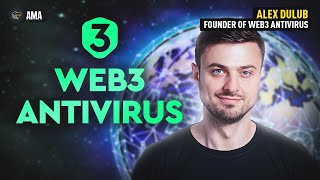
Alex founded Web3Antivirus, a free Chrome extension that scans smart contracts and domains for phishing before you sign transactions. It simulates transactions in the background, flags honeypots and malicious contracts, and shows exactly what permissions you're granting. The tool has indexed 1.2 million suspicious sites since launching 1.5 months ago.
Questions this video answers
About a month and a half before the interview.
Over 1.2 million suspicious sites.
They stated they have audited "thousands of smart contracts."
Currently supports Ethereum (ETH); BNB chain support is in development; plans to extend to other EVM-compatible chains (Polygon, Binance/BNB, etc.).
Basic functionality is free; a premium subscription is planned later but basic features will remain free forever.
Chapters
Hey, everyone.
Hi, everyone.
There's noise here. Hi. Hi, everyone. Thanks for joining us today. It's Jessica here with Cointelegraph. And today I'm joined by Alex, founder of Web3Antivirus. Alex is a leading expert in the field of blockchain security with a strong background in computer science and CyberSecurity. He funded Web3Antivirus, a pioneering company that specializes in developing antivirus solutions for Web3. Under Alex's leadership, Web3 antivirus has become a trusted and respected brand known for its innovative approach and commitment to security. Hi, Alex. Thanks for joining us today. How are you this afternoon?
Yeah, hi, Jessica. Thanks for the intro. Yeah, I'm doing good. Happy to be here and share a little bit of information and maybe shed a light on what we're building and why we are so excited with the project that we've built so far.
Absolutely. Well, we're excited to have you here. But before we get started, I just want to remind our audience to please send us your questions in the chat and make sure to like the video and subscribe to the channel. I'm really excited to be here with Alex. But first, here's a quick video introducing Web3 Antivirus. As we saw from the video, Web3 Antivirus is a type of software that is designed to protect against security threats in the Web3 space. Alex, can you share how Web3 antivirus works to identify and protect prevent attacks on blockchain systems and networks, including malware, phishing attacks and other types of cyber threats? And how does Web3 antivirus differ from traditional antivirus software?
Well, yeah, so Web3 antivirus is not an antivirus in the conventional sense, but we have named it so that people can more easily understand its mission and purpose and to pay tribute to antivirus software that has been protecting us for decades. In web 3, safety is a must have, and we believe that it can and should be accessible to everyone. And after a rather turbulent 2022, crypto enthusiasts are more aware that their assets need to be protected. And this is why we created Web3 Antivirus. It's an autonomous chrome extension, something like a protective layer between a user and dangerous that may encounter in a Web3 space. And it guards users from signing dangerous transactions or messages and helps not to engage with the malicious websites. Like. Yeah.
Amazing. And you know, what are some of the most common types of threats that Web3 Antivirus is designed to protect against?
Yeah, So I would say there are two main type of threats that the extension protects from. Speaking about phishing, the first one is the phishing website, and the second one is a malicious smart contract. So if we talk about the phishing website, let me briefly explain how it works. So phishing is a classic example of social engineering. And fraudsters impersonate legitimate businesses or individuals and their goal is to obtain sensitive information such as passwords, credit card numbers, personal contact details, or in case of crypto scams, your private keys or recovery phrases. So often scammers will create websites that almost perfectly resemble their website or legitimate business. There are often cases when crypto scammers are advertising those websites so they, they get on top of search results. And the way to combat phishing is to stay vigilant. Bookmark the website you use for your crypto transactions to be sure you access the original resource every time. If you get an unsolicited email or chat message, supposedly from Exchange, Crypto Wallet or maybe support team of a crypto project, be careful about the links in it because they could contain malware or lead you to a malicious website. So Web three Antivirus here provides an additional layer of protection. It underlines a vast database of non fraudulent, dangerous and blacklisted websites. It uses AI similarity validation to check domain names and shows real time and shows you in real time if a user should stay away of that website. And yeah, and like I said, another one especially for Web three Antivirus is scanning smart contracts for potential suspicious, like suspicious and malicious activities and other sorts of scam.
Amazing. You know, that makes me recall like a meme that I read recently, something the only thing that grows faster than technology is actually scams. Right? So, you know, being very diligent and aware and being able to protect ourselves is really important. I just like to remind our audience that this is an interactive show, so if you have any questions or comments, please make sure to feel free to send them in the chat. And I'll ask Alex the questions so that he can answer them directly as we move on. Alex, can you tell me more about the smart contract analysis as it relates to Web3 antivirus and protecting against those scammers like we mentioned before?
Yeah, of course. To tell like the first. Yeah, if it's the first. Important thing to understand is that in general, any smart contract, like any transaction on a blockchain, is controlled by smart smart contracts. And scammers can exploit vulnerabilities or they can create their own smart contracts with malicious logic. So crypto scammers attempt to have users sign malicious transactions on messages and then drain their wallet. And for example, you might be tricked into thinking that approving a transaction would result in your coins being staked to earn yield. In reality, the transaction or message you approved would take all the tokens out of your wallet and send it through address controlled by a scammer. So most people don't have a technical knowledge to tell a malicious smart contract by looking at its code. And even, yeah it's even for me it's. It might take hours to deep dive into understanding sometimes quite complex logic of a smart contract. So as a rule of Sam, we recommend to stay alert about social engineering attacks. And it's often a way that scammers use to involve users in interaction with malicious like we have with malicious activities, contracts and unsolicited invitations or promotions. To register on a website, send a message for transaction should be viewed with extreme skepticism and caution. And to cover the smart contract part and to cover this auditing part, we have created our extension and it works like this. So every time a user is about to sign a transaction on a, on a different, like on the marketplace or it could be a swap or a different project. So WTA activates and we post the transaction, put the transaction on post like briefly to run us through our auditing algorithms and we search for all sorts of red flags. It could be malicious logic, suspicious functions, compromised information, slow transaction volume and other. And it's not only about detecting those flags, but it's also like combinations of those detectors because sometimes. Good functions could make worse, could make worse things and in parallel. So what we do is we simulate that transaction on, in our back end in the background and check every single smart contract, every single piece of code that is interacted with this transaction. And in a few seconds we present a risk report and users can decide whether they would like to proceed with the transaction or not. So it's kind of two buttons, the proof of the client and. Yeah, so in a nutshell, this is how the smart contract putting in works.
Absolutely. And you know, I'm curious, like one of the major things that we saw last year is a lot of scams with like NFT drops and things of that nature. And then like the smart contract that if you receive something and you went and then sold it, then you would lose all of your like your assets. Is this something that web3 antivirus could help prevent and kind of scan through and kind of flag?
Yeah, of course. So web3 antivirus here is to keep you informed about what is happening with every transaction, like what you are going to sign. And it's kind of like doing your research in the background and providing with extensive results. So you can understand what is going to happen if you sign this transaction?
Absolutely. So in layman terms, it's almost like providing that blue check mark to confirm that, hey, we've done our due diligence, we've reviewed it, we've put it through our processes and you should feel safe to go forward and sign the contract like there are no major red flags. Amazing. Well, does Web3 Antivirus offer benefits to Web3 projects from the perspective of blockchain security and risk management? Can Web3 platforms benefit from Web3 antivirus extensions just as private users do?
Yeah, of course. So at the development stage, we kept in mind the possibility of integrations with Web3 projects, crypto wallets and and blockchain to support the ecosystem. And so, yeah, Web3 Antivirus can offer substantial benefits for projects, their dev teams and community. We propose a verification system, one of them. It's like a verification system which allows to add unique information about the project and digital assets, visual and textual details for from the project team, along with verified status like we just talked like that blue mark and kind of a status that we display within the Web3A interface. It will not only give users more insight, but will also work as additional confirmation of project originality. Obviously, scam projects and copycats will not receive such verification. And we hope this will prompt users to carry an additional research. Another one. It could be like integration with the Wallet, when we talk about. So we can provide the similar report for the users, but not through our interface, not through our extension, but through the Wallet or marketplace. So. So we can do that research in the background and deliver the results to the project. For example, when WT8 is integrated with the Wallet, so we can detect poison, attacks, addresses and tell about this. Because this type of scam is really common and nowadays and anyone can be a victim. Yeah, so. But it's only just one of the examples of integration with the projects and we can discuss individually what we can support and how we could deliver a value for those projects. And of course I would like to mention like integration with other protocols. Not integration, but let's say supporting other protocols. And we plan to expand and extend our algorithms beyond the Ethereum blockchain. We will cover range of protocols, starting with the most popular ones like Polygon Binance. It's where all this scam happens. And with EVM compatible blockchains, conceptually there will be no difference. So Web3 antivirus will operate with all such blockchains actively protecting users from the suspicious interactions, malicious interactions like this.
Amazing. Awesome. We do have a question from the chat. How can the Web3 antivirus be used? So I think this question is mostly about application, how they may be able to integrate it onto their everyday servers and so forth.
Yeah, okay. So it's a very easy, very easy setup. So actually there is no setup at all. So what we need to do is, what a user needs to do is just get to the Chrome extension store, Click, install our Web3 antivirus software and that's it. So we don't ask any integrations, we don't ask for seed phrase, we don't ask integrations with a MetaMask or any kind of a. Like any kind of other details.
So.
And we activate our protection right from the installation point.
So it's just as simple as start supporting widget.
Yeah, so it's a browser, it's like a widget, it's a browser extension and it starts checking every transaction so on every website. So it's not just some specific website or some specific project. So every time we see like interaction with a metamask or other wallets, so we literally post that transaction. So we, we do not allow that transaction happens until a user sees a report from. Yeah, from, from our extension. Like what, what we found.
Amazing. And then I have here, it's currently. So it has ETH and BNB chain support, is that correct?
So currently we support ETH and we are working on deliver our solution to BNB chain as well. And it will happen quite soon because what we would like to do is to deep dive as much as possible with one chain and then just copy to others when we quite succeed with Ethereum as of now.
Amazing. And moving on, how is web3antivirus evolving to meet the changing needs and threats of blockchain space? And what can we expect to see in 2023? And do you plan on rolling out additional features for Web3 projects?
Yeah, of course. So Web3 is going through difficult times now. We know this and there is lots of talk in its future about its future potential evolvement. And we believe that infrastructure projects and valuable solutions that really solve problems will be fine and remain in demand. At the same time, I do not expect the activity of scammers to decrease. That is why the W3A team is focused on constantly improving the extension functionality and building the community around it. Ultimately, our main goal is to provide users with tools and knowledge to take back their safety in web 3. So to do this we monitor threats and security threats so that web3 antivirus can be as up to date as possible to detect the most dangerous scams. And for example, soon we will be able to warn users about additional honeypot attacks that are still on the rise and cost millions of dollars in losses. In addition, we are also expanding the list of supported wallets and protocols like I said before and in order to give protection to as many users as possible that are still regardless of regardless of which wallet or protocol they use. And also there is a big trend on transparency. Users want to know more about the projects and products they engage with and it's perfectly understandable. And we try to be as open, as transparent and transparent as possible in our work from like social media to GitHub repositories. That's why actually we rolled out the code to GitHub so everyone can check and verify by themselves.
Yeah, you know, I'm sure you come a lot of like scenarios of scams and things of that nature. And something that we as the community are always very intrigued by is like the level of detail that these scammers go into to really like scam users out of their assets. And I'm curious what are some of the most tricky or elaborate scams that Web3 antivirus has detected or can detect?
Okay, so yeah, we can talk a lot about this because everyday scammers present something really new. But yeah, let's maybe outline some of them. So yeah, I would say the most something that still works and we can see it on everyday basis is efficient and malicious sites. It's a very common scheme, rather easy to set up and with a great potential to expand. Another one is a messages like eSign. So it's a dangerous scheme and yeah, it's easy to fall for. Phishing sites will trick a user into assigning a message saying it's a falsification or for example signing up for a whitelist. And since it's not a transaction and there is no gas fee, many users sign that message without a second thought. And after that it's highly likely that their assets will quickly disappear from their world. So yeah, another one is there are also various schemes that result in user losing their assets by unknowingly granting access permission to them during the transaction. So it's more common to NFTs and then after that selling on an OpenSea for example. And these scams are hard to avoid and can be masked by seamlessly okay, transaction to prevent that, Web3 Antivirus shows detailed information about permission requests and assets that users are granting to access to the users. They will get clear messages explaining what they will Receive and what they give and what they receive as a result of this transaction. And yeah, some other good examples could be poison attacks and they really trending now scammers create the impression that the user made a zero value transaction to the same address as a few minutes earlier. So the from address is exactly the same but the recipient address is different only with first four and last four digits like symbols. So yeah, imagine a user who received a push notification from their wallet. It could be myether wallet, it could be metamask, it could be different all kind of wallets and from where the user just sent a transaction and so the user receives a push notification that tells that another transaction just got through and so but he didn't proceed with the transaction. So what would you do? So first thought would be that my wallet has been hacked and I have to quickly transfer all my funds to an exchange account or some other account and that would lead to errors as users will send the funds to the wrong address. And that address could be like the one that was poisoned that is similar to the one that I just sent. And so yeah, we're currently developing a solution to alert users and we'll share more details early next week. How to like how to stay protected from these kind of scams. And yeah, and if you look like the most popular scams in general, I also can like tell that I say that it's a honeypots because a honeypot prevents a buyer of a token from reselling it and this inability to sell causes the token's price to only increase for as long as scammers would like. So it creates the appearance of a mooning token and thereby tricks even more users into binance. And so yes, this is why honeypots are far, far the most popular. I would say they allow scammers to both manipulate their users and the token price. Yeah so and as honeypots evolve web3antivirus Follow to help users avoid by enticing assets and they will not be able to resell. So yeah it's and I can continue because it's like different combinations of these scams together with a phishing website and all of them lead to lose your assets.
Yeah, I mean this is absolutely amazing and we hear about these scams and we read about them all the time, but now we're talking about Web3 where you're tying in your identity, your wallets, your assets and risking all of that. Just seems it's very nerve wracking to consider and the scammers are getting a lot smarter so I'm wondering what is one of the things most eye popping scam web3antivirus has spotted today? And how much do you think would have been lost if Web3 antivirus wasn't there to help?
Yeah, when it comes to numbers, W3A launched just a month and a half ago. To date we have sourced over 1.2 million suspicious sites into our database and we audited thousands of smart contracts. I can't remember, I cannot mention specific high profile cases of fraud that we have prevented and that have made headlines but I guess that is a good thing. The headlines usually describe the cases where scammers succeeded and it's. Yeah. So it's impossible to name the exact amount of safe assets because we don't have access to users wallets and don't collect such information. But for many fraud schemes such amount can be abstractly described as all assets that were in the user's wallet. For example, we have run into scammers who targeted digital creatives on dribbble like web 2.0 platform. The scammers were offering a job to redesign the NFT project's website on the site. They offer it to connect the wallet to their platform to see all the functionality and details like images, descriptions of all the NFTs. If someone connected a wallet and there were assets in it so they started offering to sign a message it was not even a transaction and as a result all assets would be transferred to the scammers. This is just one example of many and here alone web3 antivirus saved millions of dollars in assets. So yes, there is some numbers.
That's incredible audience, just want to remind everyone if you have any questions please send them our way. I know this is a very exciting topic. I'm very intrigued. Alex, can Web three Antivirus help investigators when trying to identify hackers and scammers? I know you said you had a list of suspicious sites that's in your Rolodex but how can you help investigators like help identify these hackers and scammers and potentially help retrieve some of the lost assets if anything.
At the moment we don't identify hackers ourselves. We directly monitor suspicious activity. But we already working on algorithms to uncover fraud schemes and gather information about hackers and deeps. In the near future we will roll them out. We are ready to cooperate with other companies and projects, share the data we find and work out new solutions. And our goal is to make web3 more secure and this will not be possible without the corporation within the Web3 community. Yeah, and in the Meantime, we reveal scams on our social networks and report them on projects like Chain abuse where everyone can read more about them.
Amazing. Now I know people in web3 community are usually very cautious about new projects and instruments. It's hard to gain trust and for good reason. How does this influence the way Web3 antivirus works? Or how does this influence the way that you engage and develop communication strategies with the Web3 community?
Yeah, so I would say transparency is a key to trust and as I said before, that is the reason we are open to the community. You can find information about me, talk to me on Twitter, on LinkedIn, look at my experience and previous projects to make your own opinion. Because we value transparency, we have made Web3 antivirus open source. You can visit our GitHub repository, check the code, build a copy and make that the extension operates. And make sure that the extension operates precisely as described. Another important aspect about trust is users data. W3A doesn't have access to any user data or assets like as simple as that. So we are not a custodial wallet. So we're not keeping the funds. So we're not touching anything that belongs to the user. And besides being open ourselves, we try to foster transparency and safety in this field. We welcome cooperation with Web3 projects that carry about security and its further development. And we also have plans to build our community of validators to scrutinize our analysis even more. In addition, we actively audit all instances of suspicious activities to be useful as data providers to analytics like for data providers and analytics companies. Yeah, I can note we have a really great team of professionals with deep experience in blockchain solutions, protocol development and smart contract audits. They know firsthand how crucial it's to ensure security. We know how to like, we know why we are building this product and we are very motivated to build it. Solid.
Amazing. Now I know you mentioned using web3 antivirus is just as simple as downloading a Chrome extension and going on your way. But I'm sure there's a lot of questions from our users and audience. Is there any fee affiliated or associated with using the Chrome extension?
No, it's absolutely free. So you can we plan to add a premium subscription on a later stages, but all the basic functionality will be free forever. So we are not going to charge users to keep them secure.
Amazing. Final question. What role do user education and awareness play in the effectiveness of Web3 antivirus?
Web3 is a wild waters and many people know very little about security when they first come to Web three. And even experienced Users are often covered by fraud. So we are all aware of basic safety rules such as security case storage, no cloud software, backups for your wallet, no photo seed phrase like checking different sources and so on. But every day the number of schemes is increasing, they are getting more elaborate and basic is no longer enough. Another factor is that people often don't have skills or time to do background check on a new project. Also, as the FTX case showed, even the big players in the market are exposed to risk and no one can make guarantees. So I believe the most valuable things, the most valuable thing projects can do is what they can do is to invest in educating users and help them increase their chances against scams. There are teams that do this pretty well already and I'm sure it pays off. And we are at web 3 antivirus prioritize this goal as well. Explaining the most common dangers in Web3, describing new scams, how they work and how to avoid them in a simple and clear language. And of course the essential our product is to provide users with one more instrument to stay safe and enhance their research.
Amazing. Well Alex, I think I've learned so much today. Thank you so much for connecting with us today. Today We've learned about Web3 antivirus. We've learned that it's a type of software that is designed to protect against security threats and blockchain and crypto space. Web3 it works by identifying and preventing attacks on the blockchain system and networks, including malware, phishing attacks, HoneyPots and others. Web3 Antivirus differs from traditional antivirus software in that it specifically designed to address the unique security challenges posed by decentralized systems and application. It's a simple as a 1, 2, 3 going on Google Chrome and downloading the application absolutely free. And it may be used by organizations and individuals to protect their blockchain assets and transactions and may be integrated with other security measures to provide a comprehensive approach to blockchain security. Before we sign off, I'm sure that the audience would like to know I know you mentioned you're available on Twitter and so forth but if they wanted to reach out to you if they had any questions about web3 antivirus, can you share how can get in touch with you or connect with your community?
Yeah, so it's a we have a Twitter account like a Web3 antivirus account. They can also can send me a direct message either on LinkedIn or Twitter account and yeah I would be happy to help and advise on every question or help with scamming investigation or like if they just. If anyone would like to share.
Another.
Sort of scam or, like, suspicious activity, we would be happy to discuss and see how we could, all of us, how we could improve our product and make Web3 a safer place.
Absolutely. Well, Alex, it's been a real pleasure. Thank you so much. I just want to thank you again for joining us today for the ama. And thank you to our audience for being interactive and sending along your questions. I also want to remind everyone to Please subscribe to Cointelegraph's YouTube channel. We do AMAs like this quite frequently. Thanks again, Alex, and thanks again to our audience. We'll see you next time.
Thank you. Thank you.
Sam.










