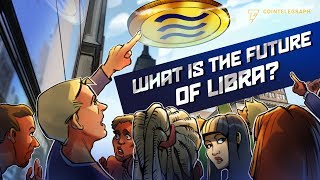
A short YouTube interview (June 20, 2019) between Giovanni and Matthias Weissel (CEO, Verm Capital) about Facebook's Libra project. Weissel frames Libra as a consortium-led stablecoin aiming to ‘bank the unbanked’ (citing 1.7 billion unbanked people), notes 28 founding members each contributing roughly $10 million, and discusses regulatory, licensing (asset manager, AML) and security challenges. He describes the blockchain as initially permissioned with a roadmap to transfer ~20% control to non–cofounders after five years, and notes the white paper’s openness to third-party developers.
Questions this video answers
1.7 billion people do not have a bank account.
28 founding members.
Roughly $10 million each.
After five years, 20% of control of the consortium coin will be in the hands of non co-founders.
Permissioned blockchain (closed environment of the 28 founding members).
Chapters
I'm Giovanni and today we will discuss Libra, the Facebook cryptocurrencies everyone is talking about. We reached out to Matthias Weissel, CEO at Swiss based VC Verm Capital, and asked him what he thinks of Libra and the many challenges it is likely to face. Matthias, what is Libra Project and why everyone is talking about it?
Yes, the Libra project is, in my opinion, the first project in the world, one of the largest companies in the world, the gafa. In this case, Facebook is actually taking a lead and seeking exposure towards the blockchain and trying to really create a currency, or a stable currency in this case, to bank the unbanked. And I think in this world today, with 1.7 billion people that do not have a bank account, and this is exactly the intention of Facebook. But in my opinion, it's not only Facebook, it is the consortium in reality that they're trying to solve. Why is everybody talking about this? Because this is a first in the blockchain space that one of the top five companies in the world is actually entering into this market.
Okay, so if successful, can you give us an estimate of how big, in terms of money or capitalization, can Libra become?
That is a difficult question. Let's start with where it stands. Today you have 28 founding members. They each spent roughly 10 million to be a part of this network. So you already have a significant amount of money and backing here. If you then take the transactions that are being done by Visa, by MasterCard and so on, the Facebook can take a significant chunk here. Visa has hundreds of thousands of transactions per day or per minute, sometimes even. And this is exactly where Facebook is.
Tackling into talking about Libra's goal.
So.
So do you think that Libra can be a solution for the problem of the world's unbanked? And do you see any challenges ahead?
Challenges that this project will definitely face is from a legal perspective, especially around financial markets, regulation. Because since this consortium, I would call it, will issue the investment coin, they will also invest in assets. And for this you need an asset manager license going forward in a variety of jurisdictions. Of course, this will be different from jurisdiction to jurisdiction, but to hold an asset manager's license, but also to have the appropriate resellers in place that also have to adhere to the AML procedures underneath that they will be working with very closely, I think these will be some of the legal challenges that the project will be facing.
So according to lawmakers around the globe, with Libra, Facebook is continuing its unchecked expansion and extending its reach in the life of its users. And US regulators even issued a moratorium asking Facebook to stop developing the coin until some checks will be carried out. So how funded are the regulators concerns?
A lot of people in this world, they have obviously issues with Facebook and they have publicly expressed them because Facebook is a monopoly. They have so much data and they have been in negative press of course, but with the approach that they're taking, I'm not so much concerned about this because we have to go away with the thought that this will be a Facebook coin, this is a consortium coin and they have clearly put a roadmap into place that after five years, 20% of the control of this coin, of the consortium coin will be actually in the hands of non co founders. Meaning that right now, yes, it is a permissioned blockchain. It is rather in a closed environment of these 28 founding members. However, we're going towards a decentralized system. And then they even have stated that after seven years they want to even put more, even a larger percentage of control in the hands of non co founders. So this shows me that yes, we do start with a permissioned blockchain. However, we are going in the right direction of a decentralized system.
So according to the white paper, the Libra blockchain will be open to any developers who want to build products on top of it. And according to some observers, this kind of openness rises security risks as shady developers could potentially steal money from users. Do you agree with these concerns?
In general, I do not agree with these concerns. We see that the openness of a network in the blockchain is more of an advantage to people because they come up with, with very exciting solutions. Yes, there is a risk factor to it. However, they have a consortium of 28 world leading companies that will, I bet, will actually implement some sort of verification process. So this is not in place as of today and this also implies to me a few risks that could come up in the future. But I'm pretty sure there will be a very clear onboarding and verification process here around the developers.
Thank you very much, Matthias. So guys, everybody seemed to be very excited about Libra. What do you think about it? Let us know in the comments. And as always, don't forget to subscribe to our channel for more interesting content. Cointelegraph like subscribe and Hodl.