Who is better for the crypto industry - Trump or Kamala?
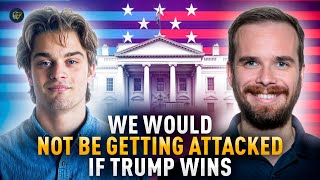
Pierre Rochard and Dylan LeClair discuss how a Trump administration would likely benefit bitcoin and crypto mining compared to Biden/Kamala's approach. They argue Trump's policies on the dollar and tariffs would be macroeconomically bullish for bitcoin, while the current administration has actively opposed mining operations.
Chapters
Did you guys watch the HBO documentary? Does it matter who Satoshi is? And did they answer the question?
So I didn't watch the documentary. I saw people were saying that the documentary said it was Peter Todd. So obviously he trolled them into doing that, which I thought was pretty funny. It's on par with kind of just what goes on in bitcoin. In particular, the forum post that they pointed to on bitcointalk was Peter Todd being contrarian or pedantic and correcting Satoshi. And they thought that was an indication of, oh, well, Peter Todd must be Satoshi. He accidentally posted under the wrong pseudonym. But Peter Todd was being Peter Todd. I don't know why people are reading so much into that. I think it's a great mystery. I think that it brings adoption that we don't know who it is. If it is Peter Todd, I give up. I'm not doing bitcoin anymore.
I think you're both well placed from different perspectives to talk about the US Elections and the potential it will have on bitcoin in particular. Pierre, maybe you can chat about the mining perspective and what it might mean for the bitcoin mining industry if Trump were to win the elections. And then, Dylan, maybe you can just chat about the macroeconomic kind of perspective and what happens to bitcoin if Trump wins or if Harris wins. Pierre, you go first.
Yeah. So the Biden administration, which, you know, Kamala, in interviews, she said that she stands behind everything that Joe Biden has ever done and she would not do anything differently. So we'll take her word on that. And what Biden has done, and thus Kamala has done, is attack the bitcoin mining industry at every opportunity that they get. And so I think that with them out of the White House and with Trump administration, that the bitcoin mining industry would not be getting attacked anymore. And we're not asking for any special favors or anything. We're running great businesses, we're employing lots of people, creating jobs, and, you know, that's what American free market economics is all about. And so on top of that, of course, we're helping balance the energy grid and all of these benefits. So what we would expect out of a Trump administration would be to start thinking about, okay, how do we build up a strategic stockpile of bitcoin, how do we get people using bitcoin, using lightning payments so that we can move away from the Visa and MasterCard monopolies.
I think a Trump administration would be great for bitcoin. I think also, you know, interestingly kind of tangential to that is the fact that, you know, that with the Trump administration, particularly J.D. vance, kind of echoing some of the problems that, you know, a lot of it's more niche kind of macro insights on the fact that the dollar has like hollowed out the US Manufacturing base. And this is like a big geostrategic importance as we're kind of enter this multipolar world. So you know, the idea of okay, let's, let's increase tariffs instead of levy taxes on the US Consumer and corporations increase tariffs reshore manufacturing and you know, bitcoin will kind of serve as this liquidity sponge if you will, as we're running deficits, as we're weakening the dollar. I think that's, you know, that's an extremely bullish and also very savvy political or you know, kind of a policy framework that they have built out. So I'm excited about the prospect of it. We'll see how the election goes. But it'll, I think it'll be a fun, fun 12 months ahead.
Just from the perspective of institutional investment, obviously this year has been massive with Bitcoin ETFs being launched. I found it really interesting that people were sharing BlackRock's pitch deck for their Bitcoin ETFs recently. And like one of the main advertising, advertising points there is the, the, the weakening spending power of the dollar since 1920, 17, 1927 and where it sits now and them telling institutional investors that you need to understand that the dollar is just constantly being weakened because of the way that our economy runs. And here is an asset class that can save everyone from this. Do you expect hyper bitcoinization in the next two to three years?
Well, with Larry Fink going on TV and saying that bitcoin is above governments, it does feel like hyper bit has already arrived. We're there and then it's just a matter of getting the word out. So that's the great part about cointelegraph and this conference. I think though that this is a pivotal shift to have a firm that large, trillions of dollars and then a leader like Larry Fink speaking positively about Bitcoin and earnestly too. I don't get the impression that he's just trying to sell a product. I get the impression that he's actually orange peeled and you know, he's, he's on board with it.
Yeah, I mean it's quite, it's quite something to behold when you know, the blackrock pitch decks and you know, some of the, you know, The CEO going on CNBC echoes the, you know, the talking points of anonymous bitcoin maximalists for the last decade. I mean, read what this guy wrote on, you know, on the Talk forums and his own blog in 2014.
Right.
And now that's being echoed by, you know, industry titans of finance. Right. So I think it's. It's definitely an exciting time. It's still remarkably early, somehow.
Yeah, I mean, for how early we are. I still think that from a global wealth balance sheet perspective, bitcoin adoption is still less than 1%. And so while people look at the historical price action of bitcoin and they think, oh, all the gains are in the past, you know, now it's a boring asset, I think that's a very misleading narrative and that they're going to be caught. Surprised.
We watched, like, with keen interest, Bitcoin 2024 in Nashville. I couldn't help but think that a lot of politicians were there just pandering to this audience in particular. Did you feel like it was slightly captured or did you think that it was kind of a seminal moment to really just have really big politicians being there and actually finally agreeing with everyone that bitcoin isn't important?
I think that it makes sense for politicians to want to understand it at the very least, if not to differentiate their political campaigns from their opponents. When your opponent is basically promising centralized digital bank currencies or central bank digital currencies, whatever they're called. Whatever they're called, CBDCs, that offers an opportunity to attract voters, because Nobody wants these CBDCs. What they want is sound money. And so I think that Trump was very smart to catch on to the fact that there's lots of votes to be gained here. And it's frankly shocking how myopic the Democratic elite class has been with regards to bitcoin. They definitely need to be pushing back on Elizabeth Warren, distancing themselves from her, kicking her out of the party if she doesn't, you know, learn to love bitcoin.
It's interesting, some of the criticism of, you know, whether it's Trump or the politicians at Nashville or, you know, just the recent, like, GOP position on bitcoin is that they're just pandering for votes or they're just pandering for, you know, lobbying dollars. And it's, you know, like, newsflash. That's what politicians do. So we're now a significant voting bloc. I think bitcoin crypto industry broadly has a disproportionate amount of capital and so, you know, this was unimaginable four years ago and it's not going anywhere. And, you know, the next, next election cycle will, you know, have even, you know, there'll be more capital and we'll have more muscles to flex. So I think that's, you know, it's a clear, it's a clear pivot inflection point, if you will. And, you know, I think by 2028, it'll be bipartisan consensus that bitcoin's going nowhere. We need to embrace this and never mind all of the, you know, the geopolitical game theory that, that stems from, you know, just even the rhetoric or, you know, Trump truth social posts. Right. There's, there's a lot of second and third order effects here. So exciting times.
Yeah. I think the biggest second or third order effect is how many people actually listen to Trump and when he says that bitcoin is good, then they actually go do some research. They might have heard about bitcoin before they heard about it from their kids or their nieces and nephews. And now they have that social validation from the top. And I think that's going to accelerate bitcoin adoption. It.










