Why You Need To Understand Identity Solutions Live AMA | Sponsored
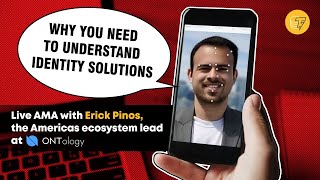
Eric Binos from Ontology explains decentralized identity: how blockchain cryptography lets you control your own data instead of trusting companies with it. Use cases range from travel and healthcare to DeFi credit scoring and supply chain tracking. The system uses verifiable credentials and zero-knowledge proofs so you prove facts without exposing private keys.
Questions this video answers
August 26, 2020
Eric Binos — America's ecosystem lead at Ontology; president of the Blockchain Education Network; MIT alumnus.
W3C Decentralized Identifiers (DID) and Verifiable Credentials (VC) standards.
A dual-token model: a gas/payment token for fees and a separate ONT network token used for staking/consensus.
Chapters
What's up, everyone? Welcome to another cointelegraph livestream.
My name is Jackson.
I'll be your host for this evening and I am pleased to bring to you a sponsored livestream by Ontology, which is an open source blockchain specializing in digital identity and data. My guest this evening is Eric Binos, who is the America's ecosystem lead at Ontology, the president of the Blockchain Education Network, and an MIT alum. How are you doing today, Eric?
Good. Thank you for having me. Really great to be here.
Yeah, it's awesome to have you. So the theme of today's livestream is we're going to be talking about identity solutions and how identity solutions work together with blockchain, and we can also expand the conversation a little bit to broader defi topics in general. So I'd like to encourage you guys throughout the course of the stream to please ask questions in the chat. This is an ama, after all, so any question that you do have just is right in the chat. I'll be taking a look at it and I can ask it directly to Eric. And if you enjoy these streams, make sure you subscribe to this channel. We have live content every week. And if you're interested in learning more about Ontology, you can check out their website in the description below. So, without further ado, let's hop into the first question, which is mine by coincidence, just to get the ball rolling a little bit, and then hopefully you guys will be interested and be writing your question in the chat and we'll turn it over to you. So I'd like to keep it simple. To start off, what exactly are identity solutions? It's a pretty basic question, but the fact that there are solutions implies that there is a problem to begin with. So I'm kind of curious to hear what you identify as the problem that needs to be solved and how exactly that is being solved and what these identity solutions actually are.
Yeah, well, I'm glad that you asked. So the identity problem that we're really seeing right now is really related to data privacy, right? You see all of these big companies that are taking your data, they're stealing your data. There was a whole big tech hearing that just happened recently because of all of the data misuse has been happening between Google, Facebook, Apple and Amazon. So what we're really trying to change here is the way that data is stored and the way that data is held. You know, when it's held in your own wallet, it's held in your own personal local storage. That's really when it's the most secure. But otherwise, you know, on a cloud storage, you don't really know what's happening to it, especially if you store it on company servers. So we're taking the application of blockchain and we're really thinking about how you can take blockchain and use it to store data locally while also being able to authenticate it and also being able to verify it so that it can still participate in these data economies. Because what we don't want is we don't want to close off all the data. You close off everyone's data. That's not going to end up as a good solution because we do need this data. We do need to be able to parse data, we do need to be able to analyze data. It's how we train machine learning algorithms, it's how we look for cures to cancer. So it's very important that data stays open and that people are willing to share it. We're just trying to figure out better ways to preserve privacy and preserve anonymity while still allowing these data sets to be open and accessible.
So would you say that blockchain is the optimal method in which to preserve this privacy?
I would think so. So the thing that's really interesting about blockchain is that you're able to use the cryptography elements of it. You can encrypt data if you want. You can sign it and verify it. So if I sign off on data or my own certificates with my private key, then I can prove that it actually came from me. So it helps a lot with data forgery too. So for example, if you have an issuing institution that's giving a certificate, like say a diploma or a legal contract, if I'm entering a legal contract with someone and I just sign it with my name and just ink, whatever, anyone could copy that. But if I sign it with my private key now, it's cryptographically secure because I can prove that this came from me or that it didn't came from me just by looking at the hash. So the really cool thing, right, is that you don't have to expose your private key at any point, but you can mathematically prove what data is real and what data isn't real using all the hashes that are generated, because it's a one way function that'll work every time and it'll work and it'll verify, but you won't actually have to reveal your personal private key. So you won't risk your own, you know, exposing yourself.
Gotcha, Gotcha So again, for everyone watching, please, if you have any questions about digital identity identity solutions, how blockchain digital identity work together or defi in general, make sure you write them in the chat. I do have a follow up question to that. I mean when you, when, when I think of identity solutions, one of the first things that pops into my mind is travel. You know, one of, one of the things that can really be improve because everyone's had that experience. You know when you go through an airport and you have to, you have to get there two hours early just to go through all of the different checkpoints and being able to just breeze through that as a potential use case for these identity solutions is really interesting. But I'm curious to hear like what other areas can these privacy solutions be applied to that may not come to mind at first?
Yeah, well, I think one of the most interesting ones is with medical data and with healthcare data, so. Right. So one of the things that we're doing now as a society is like we're training machine learning algorithms on these big data sets and especially researchers are training going through all of this genomic data to figure out what DNA does. Most of us don't know what the majority of DNA like, we as a society don't know what the majority of our DNA is like. We consider it junk DNA. And there's no way to figure out what all of that DNA does unless you're able to have just so much of a, like a big data sets to work with. You need a lot of data sets to be able to parse through just brute force. Go through each data set with your machine learning algorithm and so you could piece together it's like, oh, this gene controls this, this gene controls that. But we need those data sets, so where do we get those data sets? So you know what's interesting is that you're with blockchain and with data privacy and using like cryptographic keys and zero knowledge proofs, you're able to volunteer to share your genomic data without tying it back to you or without revealing it back to you. Because you know, that's not something, that's something that's very personal to ask of people is like would you willingly volunteer your genomic data if you knew it was being used research for cancer? Maybe some people volunteer like that, but I don't think there's enough, we really need to be able to incentivize that in some way and to be able to say like, well okay, you can volunteer your genomic data to be parsed and to be analyzed without. And then you have all this genomic data you can analyze across the whole population without any individual person revealing their own personal genome. That's kind of like a selfless example, I guess, as a more personal example, you know, when you go and you use your driver's license to kyc yourself, there's like, a lot of information on there that the other counterparty doesn't always need to know. The classic example that we use when describing decentralized identity, especially for blockchain, is, you know, when you go to a bar and you give your id, your driver's license to the. To the. You know, to the bouncer, there's so much information about there on there. That's your personal information that they don't need to know. They don't need to know the address. They don't need to know your state. They don't even. They don't need to know your, like, eye color and your. Your hair color. They just need to know, like, the age, and they don't even need to know the age. They just need to know the binary. The answer to the binary question, are you over 21 or under 21? So if there was a way to deliver that answer in the form of a, of a. Of a hash and a proof with a cryptographic proof attached, then you could just look at that and say, like, oh, okay, you know, it's a binary, like, yes or no. And you can trust it because it's mathematically. It's a mathematically valid proof. And then you don't reveal all of the other personal information about yourself that you normally would. When you have to give someone, like, you know, your entire thing just so that they can, like, go and verify that one. That one statement. It's the same thing with the Social Security number. Like, there's so many instances where you don't really need to give your Social Security number, but it's really the only identifier. People keep coming back to it. And so people start putting their Social Security number everywhere. And everyone asks for it is like, oh, what's your Social Security number? We need your Social Security number for this, for this. You know, for this doctor's appointment. You got to put your Social Security number on there when really you don't. And it's. It's putting you in danger of identity theft by putting out your identity everywhere that needs to be. So if we're able to compartmentalize and only give out what is needed for each individual case, people would. People's identities would Be a lot safer.
Yeah. What I'm hearing from this is that it's really about control, you know, being able to totally control how much about yourself you're willing to reveal at any point. And I like that example of the binary over, under a certain age, like just giving the minimum amount of information that you need to. And I think that kind of speaks to the nature of this whole stream, which is why you need to understand identity solutions. I mean, this is a great reason why need to understand how this works. If you're really meticulous about your privacy, then you should really take the time to understand this. But I would like to give you the chance to convince people, I guess, as to the name of the stream, which is why you need to understand identity solutions. Why do I. Why is this so important?
So I think why you need to understand identity solutions, why we all need to really understand. Because a lot of the services that we interact with form a profile about us, whether we're aware of it or not. And, you know, one example is the. The credit score. So, you know, credit score isn't a system that you opt into. You don't decide that you want to have a credit score. It's created for you and it's created about you by all of these people, you know, all these banks and institutions that track you and analyze you and then assign you a number, and then they charge you to see that number, and then they charge you even more if you want to fix that number. And then they penalize you if you don't happen to have a good number. Right. So it's like it's all decided for you. You don't really have a say of that. It's the same thing as how Facebook, even if you don't have a Facebook profile yourself, Facebook has a profile on you based off of all of the people, all of your friends that have posted photos that with you in it, they have a profile of you like a ghost profile of all of the images that it thinks is faces you, but no Facebook account has been created to claim those images. As soon as you create a Facebook account and upload your first profile picture, all of a sudden all these pictures pop up and say, hey, are you the person in this photo? Are you the person in this photo? Because it knows who you are already before you even create an account. So there's a lot of that consent taken away. Right? So that's why it's important to have decentralized identity solutions. That's why this thing is important. And speaking of the credit score, applying that to all the stuff that's happening in decentralized finance. I think one of the interesting things there is decentralized finance for everyone who's been keeping track of what's been going on over the past couple of months in the decentralized finance space. There's a lot of lending platforms and a lot of decentralized exchanges, which is really cool. But one of the issues is that it's all still based on an over collateralization model where you have to put up the collateral and then you borrow less than what you put up, which is good for some use cases like you're trying to get exposure to a different asset or you're trading so you think you can make more with the borrowed money before you have to give it back. But it's not good for most use cases in which you would think lending would be used for like for borrowing money to start a business or pay off tuition or get a car or get a mortgage. Those things in decentralized finance you have to already have the money to put as collateral to then take it out. So what's the point of the loan? So really we need some kind of credit score. We need to kind of go back to that model where you're going based off of people's reputations to then decide whether or not they're worthy enough to likely to pay back a loan. Therefore you could give them a loan through this decentralized model. But we don't want to go all the way back where we're just creating scores for people and we're just like creating profiles about them without their consent. So you know what Ontology is really working on is we designed an opt in system called oscore where if you want access to better credit lending rates and you want access to better, more financial services that are for trusted parties that have proven themselves to have been good at lending and giving back like paying back their loans on time. You're able to opt into that system, the O score system, it goes through your transaction history and goes through your balances across different chains. There's a cross chain integration and it's able to pull your balances from all your different assets that you gave it permission to, able to pull your total liquidations and your total debt that you've taken out and how many loans you've taken out and how quickly you've paid them back and it creates that score and then you can use that on lending platforms to get access to better rates or put up less collateral, maybe no collateral at all. There's a lot of use cases for that. But the biggest thing is that it's all opt in. So whatever data you don't want to show, you don't have to show. And you know, at the end of the day it's, it's a trade off. So like some people will want to. Okay, yeah, I don't mind giving my, I don't mind showing my credit score, I don't mind showing my history. It's going to give me access to better rates. So that's something I want to do. Other people, you got the other crowd of defi people that are everything I want fully anonymous. I don't want it to know what I am. Okay, fine. Then you know, you have to go with the over collateralization model. There's really no way around that because if you're going completely trustless then you can't be trusted. So you have to put up the collateralization. But what we're really going for is really going for a hybrid system that makes use of both. So defi can really evolve and really grow to cover all the typical, all the traditional lending use cases, everything that the average person would take out a loan for.
That's really interesting and I'd like to share our first question from the audience from Tash Burr who asked how to prevent identity fraud and identity theft. So maybe you can explain how these identity solutions, how they are secure, you know, how do they keep your data safe?
Yeah, well just. Well first in general, right, like how do we protect against identity theft and identity fraud now you know, you put in your information in as few websites as possible and you use two FA and you know, yeah, the two factor authentication as much as possible. So not the SMS based or not the text message base because especially in the crypto space, what's been happening a lot is what's called SIM jacking where someone will call at&t pretending to be you and have you have them port your number to a different to their phone and now they have access to your phone. And so if you have your websites and your accounts set up to be text message based recovery, like text me a recovery code and I'll go in and change my password. Now they have access to all of that. The better security solution is using an app. That's a 2fa app. So the app you scan the QR code and it'll generate the code and you have to go into the app when you want to recover your account and you put in that code. So that's just a Much better cryptographic solution. A lot of people that get phished online, there's two other main ways. One is just they get their password hacked. Like, they put their password in the wrong. Like, you know, they get phished, it's like a fake looking site and they think it's a real site. So they put in their password and now they have their password. Or they put in their credit card info. Now it has their credit card info. Really, like, there's people that say that, oh, just you gotta have a really secure password. You gotta really make it like all these numbers and letters and special characters. But I think really the biggest thing is just compartmentalization. So using a different password for every website, you know, only not putting in your last name unless you like, need to. Unless it's like some official document or official form using. You might want to have a separate email for like all of your online activity and then have a separate email for work, a separate email for social media. It really depends on what your risk profile is and how at risk you think you are and how willing you are to trade convenience for that security and for that privacy. With regards to the blockchain solutions, what we're aiming for is for more in the direction of where being private is more convenient. Through verifiable credentials. We have a data wallet that you have your information in. And if you choose to share your information with someone, you have to select what you want to share with them. So within that ecosystem, everything is locally stored and everything is secure. So there's no leakage of data unless you're the one that actually clicks and sends it over. But it's just a matter of time as more and more systems adopt these best practices and more and more companies decide to take that into account.
Thank you for that. I just want to take a moment to remind our audience, if you guys have a question, please just write it in the chat. This is an ama, so if you have anything you want to ask Eric, please feel free to go ahead about Defi Identity Solutions or anything else in the crypto space. Our next question is from Damian White, who asks, if the government comes to you and asks you to share your identity developments, what will you tell them?
Ooh, okay. As a company, well, I think that if they come to us and ask us to share our data elements, we'll point to it. All the data developments that we do is open source, right? So it is auditable. Our DID framework, which is Decentralized Identifiers, Our Decentralized Identifiers framework and our verifiable credential system that's open source and that was approved by the W3C, which is the World Wide Web Consortium. So they approved it and it's in there. You can go and see that in the registry, like how it's laid out. And in fact, as an industry, we really, everyone's trying to move towards those open standards so that all of our decentralized data frameworks are interoperable and they work with each other. That way we can really accelerate the progress of a decentralized Internet where people own their own data. So, you know, at the end of the day, everything is stored locally, so. Or on a trusted server. Like if you have a trusted server. So even if, like government wanted you to turn things over, it'd be really difficult to do because everything is stored locally. Like there's no way. It's like having the decentralized storage, right? Or like trying to take over the Bitcoin network. It's really hard to do. But the actual code itself is all public, so you can see it and you can go and audit it and you can see that there's no funny business. There's no like weird back doors like hidden in the background. You know, that's one of the great things about open source. So people are always trying to, people are looking at it and checking it all the time. People are always trying to hack it. So it ends up being some of the most secure technology that's out there. And I think that's a big important piece. Like we would not be able to build this decentralized identity future if it was not being built on open source technology or open source frameworks and protocols.
So I mean, you're open source and decentralized. Do you fall under any sort of government jurisdiction? Like what happens if the government, if a certain government wants to acquire some of the data you have for legal purposes or something like that, what happens then?
Yeah, well, the thing is that we don't store any data, so there would be no way to, like we can give them the code. Like, here's the, here's the code. Right, but anyone could access the code because it's online, right? So there is no, there is no data stored. Like we're not the app store locally on the phone for our data wallet. And then, you know, the blockchain is the blockchain. So yeah, here are the nodes, and here are the nodes running the blockchain. And here's a copy of the, you know, here's the file, here's a Copy of the whole blockchain, here's all the hashes and everything. You can have it. The government asked for is like, sure. What, you guys want to run a node too? Like, you can, you can do that. Go ahead. There's really like nothing to hide there. The, you know, the data is stored in the person's phone. So like, I guess if, I guess the question is like, if the government went to the person and said, like, you know, show me all of the data on your phone, you know, they could take your phone, they can make you unlock your phone and then they can make you put in your password or whatever thing you do. I mean, but that's a different issue, right? Like, can the government go to a person? I guess maybe they have to have this, the warrant thing, if they have a warrant. And can they have that person forcibly reveal all of the verifiable credentials that they have stored locally? Yeah, that's a bigger question. I think that that's, you know, that depends on precedents. There's a lot of arguments about that, you know, whether the government has a right to go through your phone if they suspect probable cause. You know, when is there the reason to suspect probable cause? But I mean, yeah, technologically, like if they get your password or if a hacker gets your password. Yeah, they could unlock your phone. You know, that's why having the backups and having the two FA is always good. But yeah, those are definitely things to think about.
Gotcha.
Cool.
So we've got another couple interesting questions from Tash Burr again. Thank you, Tash, for the great questions, by the way. He says, will it take forever for the world to adopt decentralized digital identity? What, what about vulnerable populations who don't own a lot of tech?
Yeah, I think that's a good question. I think that there's a lot of areas where people don't have Internet access. A lot of people are coming onto the Internet for the first time and there's definitely a lot of parties that are ready to take advantage of those people. One is in like unskilled labor. Right. Like you can outsource your as a company, you can outsource your labor to these really, really low income areas. You can pay them like really, really dirt cheap. So that's causing a lot of issues. The other thing is like, yeah, just mining data and kind of owning over them. Right. Like how Facebook did the Internet.org initiative where, oh, it's supposed to be altruistic. We're going to beam down Internet from these drones. But the Internet is facebook.com and the search engine is Facebook search engine. Right? So like, and that population wouldn't know any better. That population to them, Facebook would be the Internet. So that's definitely a big issue technology wise. The thing about it on the technology wise is that I think a big part of this isn't just technology. A lot of this is regulation, a lot of this is policy. And just like all throughout the blockchain space, right? That's why there's a lot of regulators, that's why there's a lot of law students that are in the space, a lot of people that work at think tanks and research groups. Because a lot of it is lobbying and a lot of it is having these regulatory conversations. Like, I don't think that you can just tech your way out of these kinds of problems. I think a lot of it is also involved with how we govern ourselves and how we choose to accept to be governed and how we're willing to tolerate not only governments, but how we're able to tolerate the practices of not only governments, but the practices of private corporations as well. Those are all big conversations that need to be had to make the whole solution. The technology on its own isn't the full solution.
Thank you. And once again I'd like to remind everyone who's watching this is an ama. So if you have any questions for Eric about Identity Solutions or DeFi in general, please write them in the chat. We've had some great questions already and I'm hoping we can get some more from you guys. So I think I have a question myself Again, data as a right. I mean this seems like something that's been on the periphery of our discussion so far. Do you believe that everyone should have like a basic right to their data as if it's property?
Yeah, I think so. I think that there's some instances where I can understand where like it wouldn't be or at least it's co owned. The example that I can think of is, you know, if you have a doctor that takes X rays of you and you have your X rays, do your X rays belong to you or do they belong to the hospital? I think some people would say that, well, yeah, they belong to you. They're your X rays. I would say that they kind of belong to both because, you know, their machinery took the picture and it was their machinery that took the picture. It was their scan that made the picture. Right. Like their. They bought the machine. Well, I guess, I mean if you're paying for the service, I guess somehow eventually the money is coming from you, so that is debatable. But they put in the work to get that scan, right. And I don't think that as you know, practically speaking, hospitals and schools and all these institutions would be willing to just open up and just oh yeah, all the data is going back to people. I think that there's going to be a lot of compromise in a lot of these co ownership models. I think ideally, yeah, I mean all your data belongs to you. Everything that you do is you. Right. So you have a right to that and you have a right to decide how that gets shared and how your consent, what consent you give. But because a lot of data is relational, it's not always just about you. If a data point is getting a diploma, then that's an agreement between you and the school. So really it's not just like your decision at that point, like who this data belongs to, but it's something that you have to agree upon with the counterparty of what that data point is. And I think most data is like that, right? Like whether it's a diploma or a job experience or something that's issued a certificate, a badge or a legal contract or even like browsing history. Because you could say that, you could say that, well I own my browsing history, but a marketplace or the website could say like, well it's, you know, it's my website, designed the website so I own the, I should know, I should get to know how people use it. So you know, it's not, I don't think it's that clear cut. I think it depends a lot in the situation and it can be very contextualized.
Yeah, that does raise some interesting complications. Do you have any answers for what the solution might look like to how to go about navigating these relationships?
Yeah, well, I think the co ownership model kind of works out and is pretty interesting. So one thing that we've been experimenting with is like can you incentivize people to share their data by paying them for their data? Right. So like you know, the volunteering or genomic data, for example, if you could pay people for it, would people be willing to share the genomic data? Or if you were handling, doing surveys or doing research, say you wanted to do research to, you wanted your survey to go out to everyone who had a college degree, could you pay people to then give them that survey for them to fill out that survey? Right. It's kind of the model that basic attention token and Brave is doing now, right. Is that can you pay people to Watch ads like, hey, you're watching this ad. Rather than the company getting all of the proceeds from the ad is like, hey, you should be paid for your time. You know, you add the element of data to it. And now the element of data is saying like, well, targeted advertisement. Like if you're being targeted advertised, you should be being paid for having been targeted advertised, which is one step above just like a regular like advertisement. But the issue is that, you know, a university was the one that issued that data, so they could argue that they're the ones that own your diploma or that hospital issued the, the lab results that gave you that genomic data. Right, like your results. So they own it. So kind of what we're working towards is that co ownership model where like, okay, say, say you're a researcher and the researcher wants to purchase. We call this the decentralized data exchange framework. So if you're a researcher and you want to purchase a data set that has like people's genomic data. So you would do this like through ontology. You would do this through one of our marketplaces. We have a couple of marketplaces. One example is the Sega marketplace. So I think it's segamarket IO, but you could just go and you could purchase this data set, say it's genomic data, and that person would get paid for that, getting access to the genomic data because it's their data. And you could also set it up where the hospital or the lab that issued that results would also get paid. So then they're both happy because they're both getting paid. Every person on the chain that was involved in creating that data point gets paid to show that data point or to, you know, give access to that data point for the purposes of mining or analyzing or insight, you know, drawing insights and conclusions. So I think that gets people a lot more willing to share and institutions a lot more willing to share their data. Because right now there's all these data modes. Companies are very protective of their data because that's their business model. So if you can flip that and you can say like, well now, you know, you're, instead of making money by hoarding your data and keeping it a secret, you're, you're now making money by sharing your data and opening it up. That could help bring us more towards an open data economy.
That's really interesting and I hope that answers your question. Lilai, you were also thinking along the same lines there, which is great.
Oh yeah, I just see that now. Yeah. Monetize the data, attach your identity. Yeah, Exactly. I mean, you know, when you get targeted advertising, like you should be paid to see that. And when you participate in a study and you qualify for that study, or you volunteer your data, whether it's your genomic data or your behavioral data, or your traffic history, browsing data, you know, you should be able to get paid for that because that data is valuable for this machine learning algorithm to mine. So there's a couple of platforms out there that are working on this kind of stuff, right? Ontology is just one of them, but there's many of them out there. So, you know, if this is something you want to do today, like monetizing your data, you can just go and Google and you can find those places where you're able to sell your data for Cool.
So we've got another cool question from Wu Chewie who says Decentralized ID seems like it would require universal interoperability in order to avoid becoming centralized. How do you envision the future in developing infrastructure for these data bridges?
Yeah, so there's a lot of good, there's a lot of good organizations and governing bodies that oversee the standards of decentralized identity. So a couple of them, which ontology is part of the W3C, there's Napa in Europe, the Digital Chamber of commerce, there's ID 2020, there's the decentralized Identity Foundation. They all consist of company representatives and full time staff from these different companies and from these different decentralized identity companies or just digital identity companies. And they all create the standards. So W3C puts out, this is what a DID document looks like, this is what a verifiable credential looks like. And other companies publish their statement or their code to show that they're compliant with it or that they're interoperable with it. So I think that does a really good job of getting everyone to conform to a standard, to agree to a standard. And the point of agreeing to a standard is so that these things are interoperable and so that there's like those, it's easy to make bridges. So we just started an initiative that we've been going around and bringing on DID partners into our decentralized identity initiative. So, you know, we've partnered with near, with Celo, we built a bridge to Ethereum, we partnered with Elrond and Fantom. And what we're doing is just deploying this DID solution on each of these platforms and bridging it back so that you have interoperable did. So you know, if any of these blockchains Wanted if any project building on any of these blockchains wanted to access DID services or did solutions, they could just use the DID that ontology is providing because it's all interoperable. So ontology in that way becomes like an identity sidechain for any identity related operations that any projects on any of these other chains would like to use.
Yeah, it's really interesting and I like Wuxui's comment. There are just so many global organizations already working towards this new standard. I mean, I'm kind of curious, what does your vision of this future look like? I mean, you're obviously doing this work and moving towards some sort of goal, but you have a broader idea of how the landscape of essentially the way companies relate to each other, the way individuals relate to companies and each other. How do you see this landscape eventually becoming?
Yeah, well, I really think that there will be the separation of data from the application. So right now if you go to an app and you create a profile in that app and then you have your data on the app, you type in your info in that app. Now there's the app and there's the data in that app. Then you go to a different website and you create a profile on that. You create an account, username, password, or fill it up with data. It tracks your data as you're like browsing the app. Now you have another app with your data inside. You do the same thing for another app and you have another app with the data inside. Where we're moving as an industry is you separate the data layer from the app layer. So your data is a definable separate thing. Like this is my data, this is my email, this is my name, this is my records, my certifications, my history, like my transactions and all that. And as I browse the Internet and as I interact with different services, I can choose which data pieces and data points I want to share with that particular application. So imagine single sign on. You would log in with the same account on all the different websites and you could take your data with you from site to site. And when you don't want a site to have access to it anymore, you can remove access from that site from being able to access your data. And if it's creating new data for you, you now have new data that you can take with you to other websites. So I think that's kind of the vision that we're working towards is really creating a definable you on the Internet. Because right now there is no, there's no definable you like it's you are like what this application says you are. Here's your Facebook profile, here's your Instagram profile, here's your LinkedIn profile. Here's your Amazon cart, here's your doctor, like your medical profile. These are all just decided for your credit score is like it's all siloed and it's all separated and each one kind of owns they own that part of your life instead of you owning your life. So instead of that you have the data layer where you own all of your data. And when you go access Facebook, you only share your social data. When you go to LinkedIn, you share your professional data. When you go to the doctors, like the medical portal or whatever medical, you know, dot com, whatever site you use for the portal, you share your medical records that the doctor needs to see and share whatever they need to see. That way you're only sharing what needs to be shared with each particular website. I think that that's kind of where we're heading and I think that that's where these, these governing bodies are trying to push us towards. So I'm excited to see how that unfolds.
Yeah, I like the sound of that vision. And once again I'd like to remind everyone who's watching, if you have a question for Eric, who is the Americas ecosystem lead at Ontology, please feel free to write your questions in the chat and I can ask them to him directly. So I actually had a follow up question to that which was do you expect or do you already feel any sort of friction between the way that you're trying to push data control and big companies like Google and Facebook who already have so much data and who rely on kind of like hoarding this data in order to supply these targeted ads and all this kind of third party data manipulation. Do you expect there to be some sort of conflict of interest between what you're doing and what they're already doing?
Yeah, I think there's a pretty big conflict of interest there. And yeah, companies that have their business model based off of the aggregation and the hoarding of data, then they're not going to want to change that because that would mean a loss of revenue and profit. So there's two things. There is like one, either this data marketplace layer is incentivizing enough that it'll make them willing to share their data.
Right.
So they're willing to, oh, like I'm making, I'm only making so much money off of owning this data, but if I lease it out, I can make more money, right? Right. So then they're more willing to share. It's like you're selling, you're leasing out the data. The other way is that if you get other companies to agree to share their data and you're the only one that's not sharing your data, now you're at a disadvantage because you don't have access to all the other companies. Right. If you're. I saw this happen in the, in the blockchain space. There was one network that was put together. I don't remember like the exact details of it, but I remember it was like different blockchains could choose to join this alliance and they would allow each other to mine each other's data sets for drawing insights and analysis about chain activity and like how everything's going on the blockchain and eventually, like enough blockchain is joined that it became a disadvantage to not be a part of it. So the only condition of being a part of the alliance is that you had to be. You have to open up your data set. It's like your disclosure, you have to disclose yourself as well. I think it was the flip side, crypto, they're the ones that they did this alliance.
Right.
So like, it got to a point where if you didn't. Yeah.
First.
At first you didn't want to join. A blockchain wouldn't want to join because, like, hey, they're going to mine. All the other blockchains are going to mine our data and they're going to be able to tell like, how we're doing as a blockchain. So we don't want to do that. But it got to a point where all the other chains that joined or most of the other chains that joined that if you didn't join yourself now, you were at a disadvantage because you knew so little, you knew so much less than everyone else about the industry as a whole. So that, that's kind of another way to kind of force people to be more willing to or companies to more willing to share their data. But you have to get some companies on board for that first. The final way, and I think that's probably the most likely way, is that we have to start over with like new data sets that haven't been built yet. Like, I think, you know, online browsing history and social media profiles, like, that's already owned by all these big companies. And I don't think know they're not going to give that back. But where we are on the ground floor right now, we're on the ground floor with regards to like genomic data. Right. Like there haven't really been big genomic data sets built up yet. There hasn't been really big companies that have been hoarding genomic data sets yet. So we have the opportunity there to kind of undercut that and say that, well, let's build this new industry up from scratch and let's build it the right way such that there's no, you know, because at the end of the day, like if I'm a company and I can, you know, why would I purchase. Yeah. Why would I pay you for your data, your, your say, like your employment history or your academic credentials or your financial score when I can just buy it from a data broker that sells like wholesale, like this data set with thousands of people on it. So it has to happen with data sets that don't exist yet and data sets that are very new. So like. Right, like, so medical data, like genomic data stuff, a lot of the blockchain data and like defi history. Right. Like that's, that's new and there's not as many data sets built up around that. So I think that's where the potential is here. Cool, cool.
Thanks for that. We've got a question from Dmitry Pishulin who asks where do you host your servers and what legislation are they covered by?
So, well, I mean the website. Website Ont IO is I think on Amazon Web Services. But Data Wallet is a blockchain, right. So it's hosted, there's a copy of it on all of the nodes that run the blockchain network. And all the nodes, the nodes are spread around throughout the world. So you go to Node ont IO you can see where all the different nodes are and where they're running it from. It's a proof of stake blockchain. So you have the nodes with stakes in them and they act in consensus and they participate in the consensus rounds. As for the data itself, like the verifiable credentials, the stuff that's not stored on chain but is verified on chain, that's stored locally on people's phones. So that's serverless. I mean we have, I guess we have some like websites like the docs and the GitHub and all that stuff which is stored like with the Docs and the githubs. But it's, it's for the most part, I mean it's all decentralized and all the stuff regarding to the decentralized identity that's all stored locally. So that, Yeah, I mean, so that's, you know, it's the regulations are like where you are, like if the government in where you live has the right to come and just take your phone and look through your phone and that's those are the regulations like where you live. There's not much that you can do about that, but I think for the most part, like it's pretty secure and it's pretty safe and private. Cool.
So you mentioned a proof of stake there and I wanted to ask you about the ontology token and what role it actually plays within this identity solution ecosystem you're building.
Yes, we actually have two tokens in the ontology network. We do a dual token ecosystem. So one is the ontology gas token and that's the payment token. So that's the token that's used for all of the gas transactions. So every time you make a transaction you have to pay gas and the gas goes to the stakers for the work that they do in keeping the network alive. So you know, you use that to make any transactions. You need to access our decentralized identity, to make calls to the decentralized identity, to register new identities, to verify credentials and issue new credentials. And that's just one example because the decentralized identity is just one thing that the ontology blockchain does. You know, we also have non fungible tokens, we also have decentralized exchanges, we have DEFI platforms on the ontology blockchain. So you would use the ontology gas token for payment for the gas fees for any of those interacting with any of those smart contracts. The other token is the ontology network token. So the ont. So that's used to stake with, so you stake those in the validators and in the nodes so they participate in the consensus mechanism. And so that's what keeps the network alive, that's what keeps the network secure and decentralized, is having those tokens and putting up the stake in those tokens so that there's that like that risk factor that well, if this token has this much stake, then it's in the best interest of that node to act in a way that benefits the network, otherwise their stake will be slashed. So those two tokens kind of work together to balance out the ecosystem and to also separate the economic effects of both tokens separately. Because you don't want a payment token or gas token that's constantly changing in price. And now you don't know how much your DAPP is going to cost to operate or how much it's going to cost to interact with these dapps on A day to day basis, you kind of want that to be level. So we separated the tokens so that you separate the economic effects of a staking token and a payment token into two separate tokens.
And how do you keep, how do you keep the concentration of ont tokens dispersed throughout the network so that there's never. So that there isn't like hoarding of consensus between just a few different parties.
Yeah. So in the consensus model, in the staking model, smaller nodes are rewarded disproportionately higher than larger nodes. So as a new node or as a new staker, you earn more. And that makes people when they want, incentivizes people to start their own node as opposed to running an already big node is if you don't know how to set up a node yourself. Right. But for the most part you would want to start your own node because you get higher rewards that way. And the other thing is that when you go and choose to stake with someone, you also want to stake with a smaller node because you would get a higher percentage of the rewards, whereas if you stay with a larger node, you get less of the percentage. So this way anytime a node gets too big, the people that are sticking with that node, at least the profit seeking ones, would sort of rebalance and try to like remove their stake from that node and put it into a lower one because they want a higher profit. And that just like keeps, it kind of keeps pushing it out. So anytime one node gets too big, it just kind of balances back out. So that's kind of the system that we built.
Gotcha. We've got another question from Tash Burr who asks what are major benefits for users experience Ontology's decentralized identity solution?
Could you ask that question again?
Sure, yeah.
What are the main, just like in general, what are the main benefits?
He's asking about the user experience of using the, of using ontology.
Yeah, well, there's, there's multiple ways to interact with ontology, right. You could either interact with ontology from the mobile wallet, which is on your phone. And you know, that's one experience because everything's on mobile and it has a data wallet, so you can store credentials on it. It's like storing certificates on it, like storing PDF files on it, where everything is signed and everything is verifiable, so you can verify it and send it to someone. You can interact with ontology on your desktop and your laptop. And that's a different experience because we have a desktop wallet and the desktop wallet, it looks different kind of is made by a different team, so it's got its own style to it. And then you have all the dapps that are built on ontology that utilize the decentralized identity and they utilize the tokens and they utilize, you know, the dexes and all the frameworks that are built. And each one, you know, being by a different team, it kind of creates a very different experience from platform to platform. So it really depends on which platform you're interacting with and what you're interacting with it for. Right. It's an ecosystem, so there's a whole lot of different products. Cool.
For anyone who's just joining the stream or needs a little bit of encouragement who's been here for a while, this is an ama, so if you have any questions for Eric, please feel free to just drop them in the chat and I can ask them directly to him. So don't be afraid. I with a quick Google search. I understand that the definition of ontology is the branch of metaphysics dealing with the nature of being. Why did you decide to name this blockchain ontology?
Yeah, that's a good one. So ontology is the study of metaphysics. Branch of metaphysics is the study of being and it's a study of the relational, the relations between different things, you know, so what does it mean to be this thing in the context of this other thing? And in a philosophy wise it's kind of like, you know, it's not just like who am I? But like who am I in relation to my family? Who am I in relation to my friends? Who am I in relation to the earth? Who am I in relation to? Like this, how are things related to each other? How are they different? What makes a thing a thing? You know, what are categories, what are similarities, what are differences? Just like all of these, mapping out like these differences. And so in computer science, ontology actually has a definition as well. And in computer science, ontology is a formal representation of different data points in computer science. So, you know, if you're searching a search engine, you're searching for a rock. How does the search engine know whether you're searching for like rock music or whether you're searching for like an actual rock? So giving computers the ability to understand what you are searching for contextually and giving computers the ability to understand what these words mean is a big part of what's known as Web 3.0, which is the semantic web and that's a machine readable web. Because right now, like, if you don't have that right now everything is just gibberish. So the reason we called it ontology is because we believe that, you know, the data can be contextualized and can be separated so that it's not just like all gibberish, but that it's actually intelligent and there's meaning behind it. So like your data point is your certificate. Like I have the certificate, this certificate. What is the certificate? The certificate is not just a PDF file, but a PDF file is like a dumb file, right? It's just like text on a screen, but there's intelligence to it. Like this PDF file is signed by me. So you know that this is linked to me. It's signed by the school. Say it's like a diploma signed by the school. So you know, it came from the school. It's not just like an ink signature, it's not just like the word like, oh, this is from mit because that's just dumb data, right? Like anyone could write that word. But it actually is provable that it is linked back and it was issued by that school. So these bridges between, these agreements between people, these data points between people, that's really what ontology is about. Both the study within computer science, both the study within philosophy, and then ontology as a company is the relation of things and the relation of data points between each other.
Well, I like, that's really interesting idea.
So we've got the only issue, the only issue is that we can't get good SEO on that because ontology is always going to come up first. That's the one issue people. And then people also confuse it with oncology, which is a medical study. So we've gotten that is like, oh. Some people have told me it's like, oh, ontology, did you join a cult? I think it's some kind of culture. So it's like, well, you know, I guess in a way, yeah, it does.
Have a little bit of that sound. You just gotta, you just gotta change like one letter, you know, and this is like just a little bit different and then you'll be great. So wuk Chewy asks how much has the protocol of ontology changed since its 2017 release?
So we've made some upgrades, we've launched some updates, we've made improvements to protocol and made it faster. We've added some new virtual machines. Initially it was the NEO virtual machine, which is pretty standard virtual machine. But now we have the WASM virtual machine which handles web assembly. So can handle a lot more complex transactions. Transactions at the same time a lot more complexity in what developers can build. So we've always been making improvements to the core protocol, but we're also focused a lot on smart contracts and tools that are built on top of it. So ont ID is something that's developed in house by the ontology team and that's deployed as a smart contract on ontology. So we don't just maintain the core code and make updates to the core code. We're also constantly adding these new tools and services on top of ontology to help make the, you know, the developer suite better for developers that want to build on it.
And where does the consensus portion of the proof of stake we were talking about earlier coming, do they the people who stakeholders have a say in the developments of the blockchain?
Yeah, so when we, you know, when we propose a change or where someone from the community poses a change, it goes to a vote for the, for the consensus notes. Right. So the consensus notes aren't only minting all the blocks and checking all the blocks and making sure that all the transactions are valid, they're also participating in the governance in that when there is a decision to be made, whether it's a change to the staking rate or to the transactions per second or to like a development decision or governance decisions or changes to the governance framework or whether we should accept more consensus nodes or accept less consensus nodes, changing the total amount of consensus nodes or changing the total amount of candidate nodes, those are decisions that are given to the community and then all the nodes vote on it. And so then we go with whatever the, the nodes vote on, so they have the power in that way.
And how is the voting power delineated? Is it the bigger the node, the more voting power or because you were talking before about how it's incentivized for people to join smaller nodes. So how does that work with voting power?
So it depends on what the vote is and what the nature of the vote is. Because in some instances, like definitely the large nodes are incentivized. Like say, put in a proposal to, if I'm a really large node, I'd be incentivized to put in a proposal that's going to change the sticking rewards to benefit me. So those kinds of proposals are more equal weighted votes. So it really depends on what the actual proposal is and what category that proposal is related to. Whereas in other cases it's more about the stakers and about the individuals and how users interact. Like changing the gas fee, we change the gas fee, which is the default gas fee. And so that's more of just like, well, everyone's affected by this, so there's an equal vote there. Right. So I think for the most part, it ends up being equally split, but otherwise, yeah, it really just depends. Cool.
Just a reminder, guys, we've only got a few minutes left, so if you have any last question for Eric here, please just write them in the chat and I'll ask them directly to him. In the meantime, I saw on your website that you guys have an automotive, like an automotive identity solution related to cars. Could you just explain how that works? Exactly?
Yeah. So autonomous vehicles collect a lot of data, and cars, just regular cars, collect a lot of data now. And that's something that I didn't really, like, realize because I don't ever. I never really, like, drove cars. Like, I. Immediately after graduating high school, I went right to college in Boston. And Boston's like a walking city, so it's very small. And then now I'm in New York. So, like, I never really needed to get a car and drive around a lot. But, you know, cars collect a lot of data. They collect the mileage, they collect GPS information. You know, coordinates where you are, like, what all of the readings and all the sensors are saying about your car at all times. And that data is very valuable for the car manufacturers to know. It's very valuable for resellers to know if you're trying to resell your car. Like, what's the odometer say? Like, what's the mileage on it? Like, what was the status of, like, all of the pieces of it? So a lot of the automotive solutions we're working on is capturing that data, you know, storing it safely and being able to package it and monetize it and sell it. So, like, you should be able to sell the data for your car, whether it's to the manufacturer that's trying to analyze it or whether it's to a reseller, where you're trying to convince them that your car is in good condition, you can prove how many miles the car actually has on it. Because if you have an odometer, I guess they're smarter now, right? But like the Ferris Bueller example, where to kind of wheel back the. You know, when they went and they played hooky for the day to wheel, they took out the car and they put it on a cinder block and they roll the wheel backwards to turn the odometer back to reduce the miles on the car. You know that example, right? It was like, you can fool that sensor because it's just a reading. But if you're constantly verifying, you're issuing it, attestating it to the blockchain. That's something you can't roll back. So you can use that to prove, prove the actual mileage of the car, therefore prove what the value is based off of, like what the real, you know, the real mileage is on it. And there's a couple of other things that we're working on with regards to that, but it is interesting, like how much data is being collected around cars and how much is being done around the supply chain of cars as well. Like just the manufacturing element to it. Italogy has a supply chain solution which we work on a couple of partners with a couple of like chemical manufacturing plants, couple of universities and hospitals that we've been working on supply chain stuff with. So, you know, cars is a natural extension of that because there's the supply chain element and then there's the actual car as a data collection. You know, the car itself is an IoT sensor. So it is a very interesting place for us to be in offering those solutions.
Yeah, it's curious that you would choose autonomous vehicles as the place to focus your identity solutions. It's a very like forward thinking kind of, kind of area of focus. Maybe it just, you know, Elon Musk Tesla pops into my head. You know, it's like the front end of that.
Exactly. Yeah. Well, it was like I was saying earlier, right, like the. Oh, sorry, I didn't get. Like I was saying earlier with regards to the data security, the data sets that don't exist yet, like how much data is there on autonomous vehicles and the data that they're collecting as they're driving around the city. Just like all the spatial data and all like the awareness data. Like you can't go to a data broker and buy a huge data set about that. But that's very important data to mine and to analyze and to study, to get the insight from so that you have, you can make smarter algorithms that are less likely to crash when driving these autonomous vehicles. So that's another, that's an example of these data sets that we have the opportunity here to collect in a more secure and more private way. And we should be doing that because ultimately that's going to create a better, more open data ecosystem where you ultimately have more data sets that you can train your machine learning algorithms on to create safer, smarter, better autonomous vehicles. Cool.
Well, I think that's a great note to start wrapping things up on. I want to give a big thank you to our audience for coming out and supporting the stream here, especially Wook Chewy and Tash. You guys had some excellent questions and I know you guys are regular, so it's great to see you out here. And Eric, thank you so much for joining us today. I really appreciate it.
Thank you, Jackson. Really appreciate it.
Awesome. So if you guys enjoyed the show, please don't be afraid to hit that subscribe button. Hit and tune in tomorrow. Actually, we have another live stream about crypto markets. It's going to be really cool, featuring Clark Reed and Dave Gunsberg. We're talking about this whole Defi Mania thing that's been going on for the past few months and what it means for financial markets. So make sure you stay tuned for that. If you want to go check out Ontology, the link to the website is in the description below. And I'll see you guys next time.










