Energy Collection and Production with Alexander Suma of IBIS Power
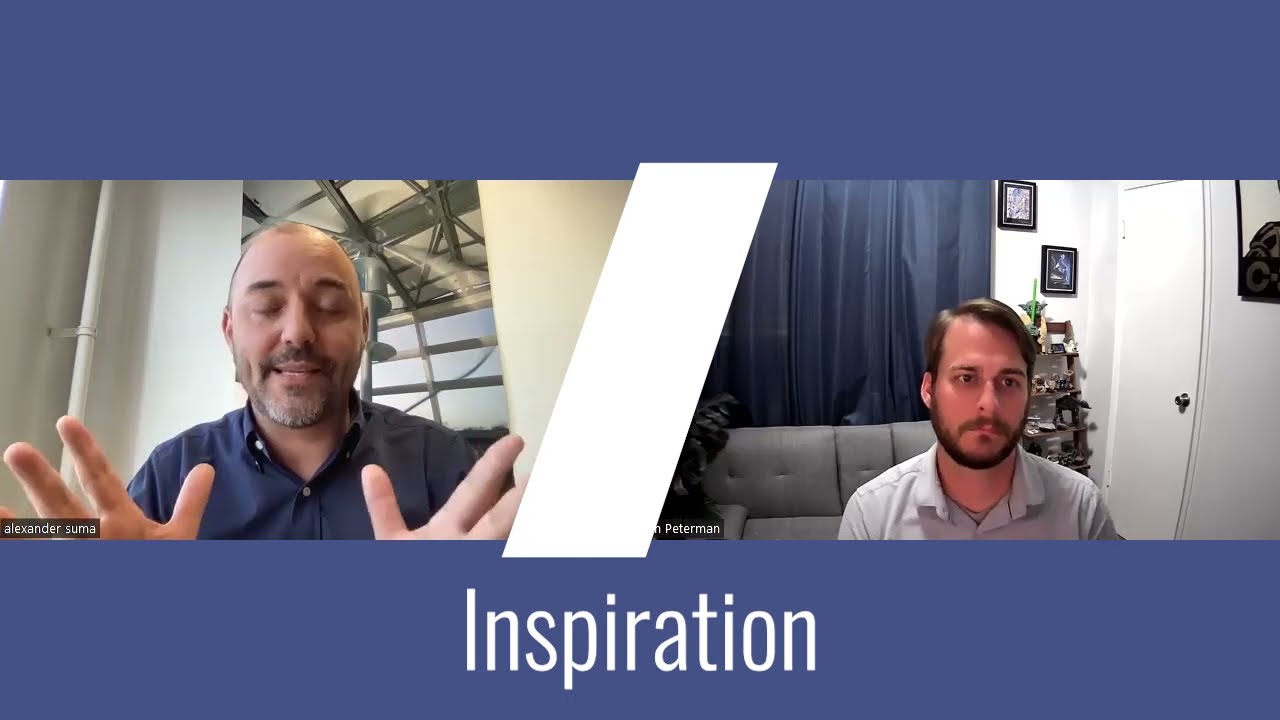
Alexander Suma of IBIS Power designed Powernest, a rooftop system combining solar panels with vertical-axis wind turbines and aerodynamic features that boost turbine output fourfold and cool panels for 10-15% extra efficiency. Installations in Rotterdam, Katwijk, and Eindhoven serve around 75 apartments, with a portable version available for disaster relief.
Chapters
Hello and welcome to this episode of Conscious Design. I'm your host, Ian Peterman, and author of the Conscious Design book. And I'm excited to have Alexander Sumo, founder of Ibis Power, on the show today. Welcome.
Yes, thank you very much, Ian. I'm excited to be here.
Yeah. Yes. So You guys, you've been developing for a while now a technology in order to capture all the energy that skyscrapers and other big buildings just haven't been collecting. Start by, if you could, how you started. Like, what got you into deciding to tackle this current— well, until recently, unsolvable problem?
Yes, it's true. Absolutely. Yeah. So that's basically what we do. We try to generate as much energy as possible on roofs. But let me tell you where it started, because it's over 10 years ago. It's a hardware product, and that takes a lot of time to develop, but it's also a big product, which making a prototype is just not very easy. Takes a while before you can test it on somebody's roof, right?
Right.
So how did it start? I was doing my PhD at the University of Miami in Florida. I'm Dutch. I came from the Netherlands and I was studying there for a year. And I went for the first time back to the Netherlands. So, you know, I turned off the air conditioning, got my luggage, got the taxi to the airport. And even before I got there, my landlady called me and she asked me if I was out of my mind for turning off the air conditioning. Well, I grew up in the Netherlands and what you do if you leave the house, you put it on 10 Celsius, the heating, right? Because you want to save money because you're not there.
Right.
Well, there is this in Miami, it's a very high humidity. That's why you need to keep cooling the house. Otherwise you get mold and other issues in the structure. And I didn't know that. But it did make me realize that when I was back in Miami after coming back from the Netherlands, when I was back in Miami and I was walking to the university, that all the air conditioning units were turning on at every house that I walked by. And all those people were at work in their offices, also in air-conditioned environment. And then you have all the university, you have all the restaurants, 6 million people in multiple buildings running air conditioning 24/7. And like I said, this was 10 years ago. So there were just a couple of solar panels in the whole United States at that moment.
Yeah.
And I thought, well, we have to do that differently because there's coal plants in the north of Miami. They were pumping all that energy. And I was like, this is not the way that we can go forward. We have to do something about it. And I completely agree, you cannot live in Miami without air conditioning. That's absolutely impossible, especially in the summer. But we had to find another way. from my background as an architect and a structural engineer, and my PhD was in civil engineering, I was sitting in the classroom and I was asked to do a project about sustainable construction. And I have to admit the class wasn't too exciting, so I immediately dove into it and started sketching. And I was combining wind and solar energy in a rooftop design because what was my goal is to basically get find a way to get all the energy in the vicinity of the building and exchange that with the building to make a self-sustaining building. And coming from the Netherlands, which is North Europe, we don't have as much sun in Florida. There is a lot of wind, but it's more in a coastal environment. And I saw how much energy there is available in Miami, and I wanted to make use of all of that. And that's how I integrated it. Now it's nice because when I look back at that design, it looks completely different, but all the basic principles are still in Powernest as we call it today. Now what happened after? I wanted to go to a conference in Hawaii, and there was like a sponsorship possibility by the National Science Foundation. I had to make a poster and then I could win the trip and they would pay all the costs. So who doesn't want to go to Hawaii, right? Even when you live in Miami, you still want to go to Hawaii.
Yeah.
So I did all those calculations. I made a poster and I thought, wow, these actually, these outcomes are much better than I expected. So I went to the vice provost of technology transfer of the university. I showed him the poster and I explained to him what it was. And he locked the door. He picked up the phone, called the patent attorney, the director. They had to come immediately. And he told He told me, what's going to happen now and what you designed, you can't share any detail, not even with your mom. And within 5 years, you're going to be a millionaire. About that, I still have to call him. It didn't happen in 5 years, but that's how the journey started. And so, I got like a team of researchers from the university. We were doing wind tunnel tests, all that fundamental research, patents were applied for, and 3 weeks later I was fully coached and was on the stage with angel investors to pitch the business idea actually behind it. And that's how it started.
That's fast.
It was really fast and it was exciting. And I was an engineering architecture student. If I look at myself, I was so blue, you know, if I look back, I was really a child.
Hey.
But I was there on the stage and I, you know, I went into this rapid learning of business, but also this fundamental technology and how to bring a product on the market. It still took a lot of time because this is more than 10 years ago. But like I said, it's very hard to— I think the first prototype cost between €120,000, €150,000, and that was only the hardware. So not the whole team that you need to actually do that and all engineering. And the most difficult part, I think, what took the most time is to get it on somebody's roof. A new product with a rotating turbine. And it wasn't really the building owner, they wanted it. The residents in the building, they're open for it. But especially the municipality to give a permit that we would put something on the roof that could be a dangerous thing, right? That's, that's hard.
Yeah, yeah, it's always, it's always the regulation that starts to, starts to slow things down. Once you, once you need a government signature, that's when it's especially— and the scale, right? You're talking about an entire building roof. Like, it's not a, it's not a small product, right? It's not, it's not something you can hold at all.
Yeah, it's, it's around 15 feet in height. So it's a little bit more than a floor level. So you're really talking about a substantial addition. If we would make it smaller, let's say less high, that would also mean it's going to produce much, much less energy, and then the economics wouldn't work. So you really need that height to— but that's why it's for medium to high-rise buildings. It's applicable for buildings of 5 levels or higher.
Okay.
It generates 6 to 10 times more than the conventional way of solar panels. But then it's also for high-rise buildings to really capture all that wind flow. Then that roof addition in terms of height makes a lot of sense. It falls into the ratio of the building height.
Does that have to do with power? Does it work better on taller buildings? Is there an increase in efficiency that is just Below 5 stories, it just doesn't, it doesn't generate enough.
Yeah, closer to the ground you have lower wind speeds and more turbulence. So from 5 levels or higher, we're above the trees, we're above the dwelling houses, so you capture the free wind that comes into the city. There could be high-rises around it, that's not a big problem, depends on what is the main wind direction. So that's how we usually communicate minimum 5 levels. But if it's really at the shore, like let's say at the beach where there's an open land or open sea in front of it, yeah, you can basically put it on a 1-level building, but 15 feet on a 1-level building is also architecturally challenging.
Yeah, that's a lot to add to one story.
Yeah, exactly.
So you mentioned it's wind and solar. So obviously the solar part, that seems pretty normal from everything I've seen. There's nothing radically different about the solar, but maybe there is something special you've put in there. But you also added these vertical turbines, which that's where I feel like people have been trying to figure out how to use vertical turbines for a while. And I actually talked to somebody else who's developing some different ones. to go outside, but it's been a long— like, it's been years since we've had them. So I'm curious about the technology, like, why is it a good fit for this particular application? How did you arrive in this combination?
Yeah, I'm really glad you asked because many people look at Powernest and they see a solar panel deck with a wind turbine under it. But it's much more than that. It's the secret sauce that we add. We're able to capture the wind flow, and I wish I could show you visualizations of simulations that we have. We capture the wind flow from the facade, and we capture that with louvers and a canopy of 3 feet over the facade. It's captured inward and then it's directed through a Venturi funnel. This funnel accelerates the wind flow between 140 and 160%. So the turbine produces 4 times more compared to being in the free wind outside the building.
Hmm.
And then we use the whole roof plus that 3-foot canopy. So we use more than 100% of the roof space fully for solar where the installations are under it. And what that wind flow that goes through that turbine also goes under the solar panels. And those panels produce then 10 to 15% more because they're continuously cooled. Because when solar panels get warm, their efficiency drops. So if you have a hot summer day, actually your panels are producing less.
Right.
We solved that. And then we have a 4th way, which is that because we have that 15 feet height, we have our horizontal plating inside, we make that white, and also we make the roof white. And then we use the internal solar reflections We use a bifacial panel that also has cells on the bottom. So on all those panels, we generate energy on the top, but also the reflections from the bottom. And that produces 20 to 30% more solar energy from all those solar panels on the whole roof. So that's how we integrate and really try to get the best of the solar and of the wind in one architectural integrated system.
Hey, it's Ian here. So glad you're enjoying this episode of Conscious Design. If you want the full scoop on Conscious Design, what it is, how we do it, how you can do it, then check out our book. We wrote it so creative entrepreneurs like you can code social and environmental responsibility right into your brand's DNA. You can download the first chapter for free. Link is in the description. Enjoy the rest of the episode. Don't forget to like, subscribe, and share. Yes. So you're collecting TopSun and any All the bounced light as well, which I would guess that would— I would assume that would help make, you know, like sunset and sunrise when the sun is a lot lower, probably collect far better. Because once you— Once, once you're— once you're angled too much, the solar panel doesn't really collect as much. So that means you're— I would imagine you're actually collecting longer for a longer period of time. The solar than just a fixed panel.
That's true, but we also have a glass panel which has a cell and there is glass around it, so the light actually also goes through the panel. And we have certain gaps in between the modules that also let the light in and we distribute that. So we have multiple ways to let extra light in inside and make optimum use of those reflections. It's only 20 to 30%, so we cannot make use of the 100% in the cells on the bottom, So it's 20 to 30%. Right.
But still, anytime you can get that much of an increase, that it all, it all adds up with, with the multitude of ways that you're, you're doing this. You talked about a prototype. So where have you installed and been able to start testing out this, this unit?
Yeah. So the, the first prototype that we had and that I was talking about was in 2016. We call that the Powernest 1 version. So it had a— it's different now because from there we learned how to make the Powernest 2 and increase the efficiency around 55%. So that was a really good learning prototype for us. And we were able to finally put it on the roof in 2017. So that first prototype, we put it on 3 or 4 containers in a harbor environment. So we could do all the testing and validation. Then we invited those people of the municipality who are giving the permits and the building owner, and we said, look, this is it, this is what we want to put on the roof. And then they immediately said, yes, we want this on the roof, let's test it. So that's in 2017 how we were—
Okay.
The first time able. And that was a very important step because it wasn't about as much about validating the electricity production there because that's what we already did, but more about the people living in the building not complaining or hearing any noise, vibrations, all those kind of things. So we could take away all those fears with the building owners.
All right.
So from here we designed Powernest 2, which was fully modular. We also went to steel and aluminum as a material, but that way we could use the whole roof for energy production. We sold and placed the first one in 2019. Then we placed another 2 modules, which we— and the first one we placed in Rotterdam on the Zuidkeen College, a school. Then we placed in 2020 2 modules for the Dutch public building owner in Katwijk on an office building. And then a full roof installation in Rotterdam on a new construction residential next to the river, full black. We're installing now and we're waiting for the crane permit here in Eindhoven, which is a full roof of 10 modules, sort of becoming bigger and bigger and bigger.
Awesome.
Yeah, and just to give you an example, so that installation will make 75 apartments fully run on green electricity. And we have, yeah, we have around 12 projects now in design and engineering phase, some in the end of the permit application or the permit process. We have around 4 or 5 of those projects prepared for installation this year. So it's—
Amazing.
Yeah, it's going quite fast now. And a lot has changed also. The regulation got much more strong for real estate in the Netherlands, in Europe, but also in New York, in Massachusetts, in Hawaii. There came very strong regulation. And actually today there was the news that the electricity price will go up another 30% in one month. And it already has gone up 270% in the last year for electricity, which is insane actually in Europe.
Yeah, yeah, that's a lot. That's a lot. That's a huge increase in cost. Is it— now when you, when you install this, you mentioned like one installation can support 75 apartment buildings or, you know, How, how much can— if you put it on a 10-story building, are you working to be able to make it fully powered, or are you still having to do a little bit of a mix between them, between the power grid and your system?
Um, no, we can actually, uh, fully supply buildings up to 15 levels. Um, so 10 levels is, is not a problem. Everything depends on the location, so the wind availability. There are also locations which don't have much wind, like Florida actually has the lowest average wind velocities. The building height, the surrounding objects are important, and the orientation of the building. So we look at all these aspects and then we make a calculation for that. But you can say that on average we can generate all the energies of 15 stories of a building. So we can also place it on a 30-story building and then we supply half of the building.
Got it. Okay, that's pretty— I mean, that's, that's a lot of stories. There's a lot of buildings that fall under, under that size. And it surprised me, I didn't realize how unwindy Florida is. I would have thought being on the ocean there would have been more, more wind than—
And, and, and the hurricanes and, and everything, right?
Right, right. There's plenty of wind, just not I guess not constantly enough. There's not enough nice, nice non-hurricane wind to work with. And is that— yeah, please go ahead. For that wind portion, is there, because of the solar, is there ever a place where it still makes sense to put it in if there's low wind, or is it Do you really need the combination? Kind of how do you judge that when you're looking at a location? And like, when does it become too not windy in order to make it worth the installation?
Yeah, because there is of course an economic evaluation that comes into play. Because if you have a non-windy location, And that's possible, right? Then we also offer an alternative where we take out the wind part. We lower the structure, but we keep on making use of the cooling effect of the solar panels and the bifacial panels.
All right.
So if it doesn't make sense to put those wind turbines, we leave them out, which means that reduces the cost of the total installation, but also the energy production will be less because you won't have the wind part. But you will have the cooling part and the bifacial.
Right. So you're still able to increase the solar efficiency through that then and take advantage of basically all of that technology and just remove the wind portion and have it still work. Yeah, that's great. Maybe you can install those in Florida.
Yeah, exactly. Well, if you look at the coastline of Florida, there's a lot of hotels and residential buildings and it basically goes from one line up from Miami all the way up to, well, the north of Florida, basically. And those locations are all windy. There's also locations where you're walking on the street and you think it's not windy, but when you're on the roof, you get blown away. So on those heights, you still have a lot of wind, and a lot of people don't know how much wind there is actually available on the roof.
Yeah, most people don't. Like those apartment buildings, you're not really Opening windows very much, or standing on the roof, standing on the roof, seeing how, seeing how windy it is. Yeah, yeah, yeah.
Or they put a facade or something. Yeah. Right.
You mentioned putting this initially on some containers and putting it in a kind of bay area. Are you— and I've talked to a couple other people that are looking at how, how to put, you know, barges or things out in the ocean Have you looked at applying this to other installations specifically for power generation outside of existing buildings, or does this really just work for a building?
No, this also works for other applications. We actually have a second product. So Powernest is for the buildings. We have Power Response, which is basically a portable version of Powernest. So it's, it's a, it's, it's like a 10, 20, or 40-foot container size. So it makes it very portable. It does have a smaller turbine because you can't work with a 12-foot turbine in a container size, just doesn't fit.
Right.
So it does have a smaller turbine. You can, how do you say that, like expanded. You have like 18 solar panels, and that makes it a very mobile way of where we could apply our knowledge of the solar and the wind and enhance that with those aerodynamics to get the optimum out of it. So we do have a solution for that. We call it Power Response because you can send it to, well, basically post-disaster areas where they ran out of energy or, you know, the grid cut. damaged. So then you have an energy source from solar and wind that can immediately help in the needs that is necessary at that moment.
And it all fits in about one shipping container, is that—
Yeah, it's, it's really, it's like a 20-foot container size, um, and it has even the, the interlocks of containers. It's, yeah, it's basically container frame with solar and wind inside.
Amazing. So you just set a bunch of those up together and now you have power generation. And they still work at a low elevation, not, I guess, not as efficiently though. Would you need to put it up pretty high, like put it on some supports, or is it still—
It's a smaller turbine, so it picks up the winds, lower winds as well, where it generates its energy from. So that works well. Ideally, you would say I have 2 containers stacked and you put that one on top. That would be the ideal case. On the ground, yeah, maybe at the coast, but you always need to put it at a certain height. You also need to look where you want to put it. You don't want to put it in the middle of the forest because then there is no wind in the forest, right?
Right. Yeah, yeah, you've got to be— got to think about a little bit, not just drop it in.
Yeah, but it does take wind from all directions, so the orientation is less important than with PowerNESS, for example.
And that's something about vertical axis turbines. They can take wind from any— you don't have to rotate them into the wind. They can take wind from whatever direction is blowing without any problem, right?
True. Yeah. And the horizontal axis wind turbines are more efficient, but they deal less well with turbulence. And in an urban environment, you have more turbulence. So your vertical axis turbine works better there and can take the wind from all directions. Totally true.
Awesome. Well, this is amazing. This is amazing technology you're working on. You'll definitely have to let your professor know when you actually hit the million-dollar mark. Let him know how off he was.
Yeah, we— I mean, we did. We did as a company. We're growing really fast. I have to say the revenues are growing fast. I think we made 300% from last year in terms of our revenue growth.
Amazing.
So that's a good growth. And I think this year we'll be around 500% in growth. So it's really growing fast and we're working with investors to supply that growth and support it. Well, not supply it, but support it. The growth comes from the market, of course. So Yes, that's how we're— we have the Dutch market, we have the European market. That's what we're focusing on. And we're making first steps in the United States. We're talking with a lot of project developers who are also very in need of finding solutions for their medium to high-rise buildings. And it's not only the legislation that is demanding it, but it's also the tenants of buildings who are demanding sustainable buildings. And I've noticed that there is a very competitive market between project developers. Who has the most sustainable building gets the tenants. So it's the tenant now demanding sustainability, and that's very interesting. So it's not only the government pushing for it.
I'm curious, are you looking— are you seeing more new construction, or are you seeing more retrofitting old buildings, trying to get them more green?
Actually both. If I look at also the installations that we did and the installations that we're working on, it's around the 50/50 of new construction and existing construction.
Yeah.
And it's, and it's not only in the retrofit process of a building, but it's also existing buildings where only a Powernest will be installed on top, as which is the whole retrofit of the building.
Okay, that's interesting. As interesting as it's a 50/50 split, I would have figured there'd be— it would lean one way or the other, but that's good. That's good that both need it.
In business school, you learn you need to, you know, you need to find your niche and focus on it, and that's what we tried. But we get the requests from, yeah, from all segments in the market. So office buildings, residential buildings, affordable housing, government buildings. So it's It's really a distributed market in that sense. Everybody needs sustainability. It's not only one segment.
Yeah, yeah. I feel like it's, it's more, especially with, you know, construction codes and stuff like that, regulation. It, it obviously there's some different regulation between commercial or industrial, but as far as like the green side of things, it's more of a broad, do you have a structure? Yes, no. That's your, that's your qualifying question. So now it's It's, yeah, not, not as easy as, as you mentioned, business school is all about niche down and as much as you can, but it's great. It's great that you're able to support so many buildings and just be able to work with all of them.
Yeah, you're right. It's— we only need the supporting structure. That's the building for us, and we need a power connection, and that's how we can do our job.
Well, it's not very much. That's just, that's pretty much every building made, which is awesome. You should retrofit all of them with it and we'll, we'll have a lot more power for it. Well, this has been, this has been super great talking to you. I really appreciate you taking some time. I know you're super busy, so I appreciate you being able to share and talk about this. Before we wrap up, I'd love to just make sure you have the opportunity to share anything else that you'd like to, and of course, how to get a hold of you for hopefully more people to get your product on their roof.
Absolutely. And thank you, Ian. I really appreciate this talk. And it is important for us to share that Powernest is a solution for building owners, because I believe that cities can become fully sustainable and run on their own energy, and we will not need power plants anymore in the near future. So that's, that's really our, our vision. So thank you for that. So people who are committed to sustainability, but also the benefits that come with it, is saving a lot of money on your energy bill, but also doing something good for your planet. And it's actually very pleasant to have your own power supply because you have a much more resilient building with its own power supply. Yeah, reach out to us. Our website is ibispower.com. You can find Alexander Souma on LinkedIn. We also have an IbisPower on LinkedIn, and our team is ready to answer any emails. The info account is info@ibispower.eu. So that's where you can find us, and please reach out. We have an office in New York and in Eindhoven, and we would be very happy to, well, take a look at your building and see how we can help you.
Amazing, amazing. Definitely do that, and we'll have links in the description for everyone to just click on to make life easier. And yeah, I really appreciate you taking the time. It's been great chatting with you.
Great. Thanks a lot, Ian. I enjoyed it. Thank you. Thank you.
More from Ian


You Didn't Know a Shampoo Could Do This #Shorts #shampoo #ecofriendly #haircare





The Biggest Misunderstanding About Bioplastics - Sustainable Materials Consultant Joanna Pool

A Polymer Scientist Explains the Truth About Bioplastics #podcast #sustainability #science



NASA is testing this on Mars… why not Earth? #Shorts #GreenTech #NASA #science