Green Ink: Good Judy Inc.'s Journey in Eco-Friendly Tattooing
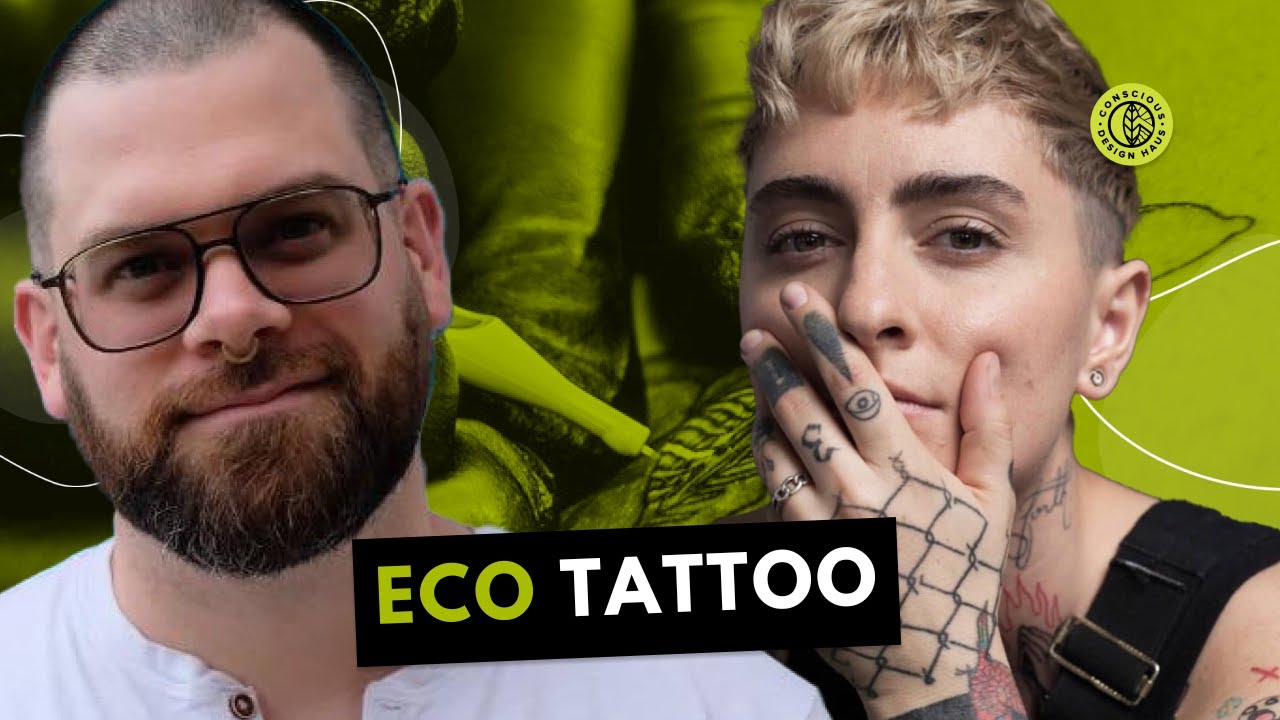
Lee and Ryan of Good Judy talk about building an eco-friendly tattoo supply company, from biodegradable barrier films to partnering with Workhorse Irons for machines. They've tested products against ASTM and EU standards and estimate shops can reach 80-85% eco compliance using their catalog.
Chapters
Hello and welcome to this episode of Conscious Design. I'm your host, Ian Peterman, and author of the Conscious Design book. And today I'm excited to have Lee and Ryan. They're the co-founders of Good Judy, an eco tattoo supply company. Welcome to the show.
Hey, thanks for having us.
Yeah, thanks so much.
So to start off, everybody loves a good origin story. What got you guys just into starting your own supply shop and how did you start?
I'll let Lee take the reins on this one.
Yeah. So we're almost 5 years old now. And back when we started things, Ryan was a client of mine. I'm a tattoo artist and yeah, we were just doing a tattoo one day and chatting about this and that. And I sort of mentioned that I was feeling really bad about the amount of plastic that I was using in my tattoo setup. And now that I had opened up a shop and there was more artists working under me, I, I was sort of really starting to feel guilty about the amount of plastic that we were producing every day. Yeah, I just told Ryan about how I was trying to like find stuff on Amazon. I was trying to do like weird hacks on my own to find biodegradable materials that I could use in tattooing and You know, how I wish if I had time, like, I would try to, like, start a supply company or it wasn't even that much of an idea at that time, but I just mentioned that and Ryan was like, oh, well, I'm an entrepreneur and I like that idea. And yeah, Ryan just kind of, like, ended up gently coaxing me into, like, a meeting and, like, sort of getting to the place where It felt like it could be a tangible thing that we do.
That's pretty much the way it went on my end of things. You know, obviously I was a huge fan of Lee's work and artistry, and when they, you know, kind of educated me on the idea, I looked at the industry and I, you know, I definitely saw some gaps. The tattoo artists are incredibly brilliant artists, and I found it really odd that also the supply companies didn't have a cohesive brand. And they all sold different products. And they all kind of sold their own products on their website and their competitors' website. And it just seemed like there was an opportunity there in conjunction to, you know, obviously the eco part of it as well, which is where we really shine. So Lee and I kind of mapped out what we wanted to do for a launch for close to about a year. And then like Lee said, 5 years ago, We were, you know, incorporated, and here we are ready to launch in Europe after doing a pretty good job in Canada and the U.S. Where did you guys start?
Because there's a lot of, as you said, there's a lot of disposable plastic things that go go into tattooing. What how did you go about deciding which was the most important, or you know those first products you decided to Start sourcing? How do you go about picking those?
Yeah, it was a very, very humble beginning. Like, in the beginning, I was trying to supplement my tattoo setup plastic with a film that was used in the floral industry, and it was being marketed as biodegradable. So one of the first things that we came out with, aside from gloves, which were fairly ready to go, was a barrier film in 2 different sizes. And We had this idea that using a barrier film in 2 sizes, you could reduce your plastic consumption the most because you could use that barrier film to protect your surfaces, your equipment, your bottles. Yeah, we tried to come out with a very multifunctional product in conjunction with these certified biodegradable nitrile gloves that I had been using for a year and loved them. And yeah, we just tried to like start with 2.5 products basically.
Yeah.
And to add on there, like to Lee's point, we thought that we were able to, yeah, use this cling wrap as multifunctional protection barrier that would take over a lot of different products. And it worked a little bit, but it gave us the insight that we couldn't stray too far from what products tattooers we're already used to. And that's when we just realized, okay, this is going to be a long haul. We're going to have to really come out with a lot of SKUs and make sure that we don't pay ourselves for several years to ensure we can just get up and running with the products that tattooers need and want as fast as possible.
Also, I'll just add one thing to that too. I think, I mean, I don't know if you use cling wrap in your daily life in the kitchen, but cling wrap, you know, has been used in tattooing for A very long time, but it also happens to be one of the products that just ongoingly, whether it's, you know, compostable or made of regular plastic, is just very unuser-friendly. So while it was like good to try and cover all the bases with something that gets rid of a lot of plastic products, it was really hard to base it off of that product because it's not super functional. So we kind of unknowingly went the hard route on that one and— There's a lot more stories about the challenges of barrier film, but luckily we got through it. And yeah, as Ryan says, now we just, we have so many more products to replace that.
And big shout out to our, like, our OG customers. I mean, they were so great and just, you know, trusting us and working through those initial challenges and really, really trying to make the cling wrap work for a lot of different products.
You guys have expanded a lot. You have way more products. You even have tattoo machines. You have the needles. You kind of— you have a really broad base of products. As you've expanded, has it gotten— I would imagine a tattoo machine's probably a little bit harder to source and make sure it's as sustainable as you guys are wanting it to be. How have you guys addressed that? Have you gotten into having to create customized products, or have you been able to work with kind of existing manufacturers to just find the best products out there that are already available?
Yeah. So in regards to the tattoo machines specifically, that was a pretty easy choice. Not too far from us in Michigan, there's a company called Workhorse Irons and they make In our biased opinion, the best tattoo machines in the world. They're made to last. They're made, you know, right there in Michigan. So they reached out to us, we reached out to them, and we started a partnership with them so that we could be their official distributor here in Canada. And they also took on our products to sell them in the States as well. So we went that route because, you know, these are machines that if there's an issue, if something breaks, or if anything happens, they've got you know, extended warranties and we just get them fixed versus the format we're used to in this consumables world where you just throw it out, you buy a new one.
A lot of like tattoo pens and sort of newer style tattoo machines, well, like pens specifically are pretty much made in China. So having a manufacturer that makes them in the States already comes with a very reduced environmental footprint from a transportation standpoint. So that's, that's why we feel really good about working with Workhorse and, you know, other local manufacturers.
Yeah, that makes sense. I love the fact that you can actually repair it. I think it's— I always point people to KitchenAid. I don't know if you've ever bought their kitchen equipment, but it's all— it's made to last. You repair it, you don't throw it away, you just keep it, use it for decades and decades. And just lasts. I love that idea for a tool, especially if it's something that you're going to use that much as a tattoo artist. You're going to use it a lot. So keeping it, I would imagine it makes it in the long run more cost efficient too, because you're repairing that investment rather than going and buying something new every year or something like that. Have you guys, as you've gotten these products, have you been able to find mostly companies that are already making sustainable products? Are there areas where no one is making one and, and it would mean a whole new product would have to be developed to be able to become an eco version of that for that specific application?
Definitely both. I mean, of course, when we started, we sought out companies that were making these products for different industries and we saw that it could be easily, easily applied to tattooing as long as there was a few tweaks. We're manufacturer agnostic because we believe that we should always be going with the manufacturer that has the best and most up-to-date environmentally responsible either materials or manufacturing process. And that allows us to not just get into the old habit of just buying from the same manufacturer because it's easy to do. Now that we've grown quite a bit and we've got a lot more support now, we have started to get into a packaging company to help bring everything together so that we can have kind of brand new products for the industry.
I feel like the big thing like that we sort of bring to the table that other tattoo suppliers don't is the Mark of a certification. Like there are other tattoo suppliers in the industry that have their own brand of 1 or 2 products that they're saying are biodegradable. Or compostable, but nobody is offering up certificates or having that conversation about materials or end-of-life cycle. And so the big part of what I personally love about our company is that we're trying to make educating tattooers on these topics interesting. And it's been really cool over the years to see tattooers online, like, refer to terms properly, like, to actually see someone in a DM talk about biodegradable and know what composting is, is pretty neat for me. So yeah, so a big part of what we do is like vet manufacturing partners, whereas other suppliers might not be.
And we learned too that, you know, not only getting these third-party certificates is important, but also testing the products ourselves. You know, that's been a key part of Ensuring that everybody's held accountable.
I looked through your guys' certification page and all the different certification things that you guys have on there. How has that helped you with your business? Obviously, it helps the customer, right? They need to know that these things are, are there. How has it helped you? And how— you mentioned getting into Europe. I would imagine some of that certification process is why you're going to be getting into Europe, right? They're a lot more strict than the US is. How has that journey played out for you guys?
Well, there's like 2 main certifications, like the EU standard and then like ASTM International. And they both have to talk to each other. Like there's one that's— the ASTM one is used in North America, and then the EU one is for Europe. And they both have to adhere to the same test method and standards. So even though they're, they're different labels, they're the exact same test. But we also partner with the Compost Manufacturing Alliance, and they're in the States. So what we love about them is that they do field testing, but they also do certification. So not only are you getting to prove that it breaks down in the same place, but you're seeing the reports as to like the soil testing and to confirm that it's not just degradable. I don't know if I answered your question.
So that, that's cool that you have those testing partners. Are these all products? Do you get them tested yourselves? Are these things like you buy the product, you get them tested, or is this something that the manufacturer has to get them certified? How does that work for you guys?
That is a huge can of worms, actually. It's pretty interesting. I wish, you know, Ryan and I can go on about that, because we actually just are dealing with a situation right now where we're trying to get certificates and information from a potential manufacturing partner that's made some claims. And often, there are a lot of manufacturers who do have certificates, and it's very straightforward. They'll send you the testing, and you're like, Great. But just as often, unfortunately, there are manufacturers that make claims, and then we end up doing a lot of the testing and paying for stuff to, you know, get to the bottom of it and be like, sorry, actually, you know, your product is just degradable. It's not biodegradable. And it can get a little tricky and uncomfortable. Yeah, that's a big— I would say that's one of the biggest things we've been dealing with this year. Right off the bat.
We certainly start out with you know, requesting the certifications from the manufacturer on their material. And then once we get samples, we do one layer of testing. And then once we get that information back, we'll do a field test as well. So yeah, like Lee said, it's probably the biggest headache in what we do, and definitely is what's, you know, caused us the most stress. And, you know, any entrepreneur knows that this is a roller coaster. And this specific piece of it is definitely the biggest roller coaster for us, because we can think we found a new product that tattooers are going to love and be really excited about. And then to find out that the manufacturer doesn't actually understand what true eco is, or not even true eco, just what eco products are.
Hey, it's Ian here. So glad you're enjoying this episode of Conscious Design. If you want the full scoop on conscious design, what it is, how we do it, how you can do it, then check out our book. We wrote it so creative entrepreneurs like you can code social and environmental responsibility right into your brand's DNA. You can download the first chapter for free. Link is in the description. Enjoy the rest of the episode. Don't forget to like, subscribe, and share. How do you handle that, right? You have a supplier that you really want to work with. Is there sometimes a path to maybe working with them to make adjustments? Or what does that mean? Is it end of the road? For you guys? What, how, how do you deal with that?
It's definitely case by case. Like we have a hard line, you know, if, if a product, like 2 years ago, we did not do this testing regularly, but we've had so many encounters now with wishy-washy claims that it's gotten to the point that we have our own internal system for how we validate something. So if a product claims to be PLA, we send it to the lab, they do a test to— a material test to confirm that this is PLA, and then we'll do field testing with it. And then further down the road, more tests could happen. But certifications are expensive. So sometimes when we approach a manufacturer with this issue, we'll say like, this product needs to be certified. They don't want to pay for it and they don't want to listen. And that kind of is the end of the road. But you know, sometimes companies are willing to sort of work with us. It's more on them really, because we just, we have a hard line. If something doesn't pass a test, then, you know, that's, that's that.
The bigger problem is too, that it's not like a lot of this stuff is enforceable yet. They're starting to get there in Europe where they're able to enforce laws and come out with penalties. But right now, specifically in North America, if somebody's greenwashing, there's no actual penalty And that's why we're doing the job that we're doing in trying to, you know, educate folks to the level of being able to detect greenwashing themselves. And until, you know, there's actual laws and companies can get in a lot of trouble, a lot of companies are just following the dollars that, you know, this green trend has, which kind of kills me to say because it shouldn't be a trend. But yeah, that's kind of— can be the sad truth of it.
Yeah, I'm definitely with you. It shouldn't be a trend to chase. It should just be what we do. That would make a lot of sense to just do it. But that's— so you guys though, you are actually validating all this. So when you put all these certifications on your product, you know, you're validating that so that you actually know when somebody comes to your website and buys it, if it's on there, you validated it. So, you know that these certifications are accurate then.
Even sometimes, like for fun, when we send a new thing to the CMA, you can send up to like 11 products at a time. So we'll just put in other products that we know are tested and certified, but it's just nice to get that report and see it break down in the field test. And Ryan just spent the better part of the week putting most of those reports on a little link from our website so our customers can actually see the photo, like the before and the after in the field testing, which is just another level of transparency.
That's awesome. That's awesome that you guys do that because it's like greenwashing is— it's funny, I had a conversation. Well, it's like funny sad. I had a conversation with— I think it was a North American Association of Retailers, and they're so it's basically basically the organization all the buyers join, and they were talking to the organization going, "Hey, we as store buyers are having trouble figuring out whether the product we're buying to put on our shelves is actually sustainable or eco-friendly." The greenwashing is so good that the expert buyers for major like this is we're talking about people that buy for Walmart. Kroger, the biggest stores in the US are having trouble figuring out what is actually sustainable or eco-friendly and what's not. So it's, what you guys are doing is probably one of the only ways you can do it is actually go test everything yourself and then go, yeah, this is actually there. It's real. We validated that it actually passes.
Yeah, it's a full-time job to stay on top of this. You can't try and do it part-time. You can't do it as a side project. It has to be the number one priority if, you know, this is the space a company wants to play in. We realized that early on. And that's why, you know, since then, there's, you know, there's no way that you can— we knew that you can, you know, kind of half-ass the process.
Right? Yeah, it's hard. It's hard to half-ass that. What do you guys Looking forward, right? You guys have, you guys have grown your list of products. You have a really wide range. Where do you guys see yourselves growing to? Is it just adding more? Do you see developing new products to be able to fill in gaps where just nobody's building it? What's your growth path for you guys?
Yeah, I mean, the dream for me personally is to get to the point where I'm doing a lot of product development for brand new things that the tattooing market hasn't seen yet to sort of combine refining the user experience with really cool new materials that aren't being used in tattooing yet, like mycelium, kind of some of the things that we mentioned to you earlier, just, just really fun, innovative products that are also like home compostable and to even move further beyond biodegradable or commercially compostable and use materials that are like, that don't require any processing to break down.
You know, jumping further into materials that can remove carbon from the planet in the process of making them. I mean, that's the fun stuff. That's the stuff where, you know, Lee and I have a ton of fun in dreaming all this stuff out. And of course, it's not going to happen overnight. It's going to take time. But a lot of that's already in our roadmap. And, you know, we just have to wait till we're at a scale where we can make it affordable for tattooers.
Right. That makes sense. For just a, just a curiosity, right? If somebody wanted to start a new, new tattoo shop, right, what percentage Maybe you hit 100%, but what percentage of a tattoo shop can be eco-friendly with what, what you have now? Have you— are you close to 100% or you still got a long ways to go before you can make the whole, the whole shop really sustainable?
We're close. I would guess at like 80% to between 80 and 85%. I think there Certain things that are particularly challenging, like bottles, because tattooers use a lot of different inks. So each one of those inks comes in a plastic bottle, and that's like a future project that we have in the works. But, you know, it's not gonna happen until the material, like Ryan says, becomes affordable enough that, you know, tattooers can buy it for the same price or similar to what they're currently buying other inks for.
Got it. What, what are some of the others? You mentioned inks is a big challenge. What are your big challenges left that you guys— to get to 100% sustainable shop, what's like left for you guys that is really challenging?
Yeah, inks would be a big one. Anything that has some kind of adhesive is very challenging. You know, adhesive is, you know, doesn't Like we haven't found any adhesives that would be able to be used in like a tattoo application yet. So that's, I'd say, yeah, anything liquid or adhesives.
Yeah, it's actually not like that many products, but the ones that are left are kind of like just these like inks, like they come in a bottle. It's so annoying. And then things that are adhesive, like adhesive bandages are pretty much Standardly used now in the tattoo industry. It's like that clear film that just sticks to you. And like, technically somebody could use our compostable barrier film to wrap a client's tattoo in that, but it's just so much less convenient that no one is really gonna do it. So it's hard to give like an exact percentage, but we're pretty high up there. Like, you know, I would say an 80% sustainable shop is is quite an achievement still, you know, someone's out there doing it.
We're not expecting artists to, you know, even necessarily start like if you're starting a shop to just start at that level. We've got a website for the folks who are 50% or more eco and it's called eco-tattooing.com. And we've created it for so that, you know, tattoo artists can interact with each other if they want to do guest spots. And eventually we want to build it into a resource where tattoo enthusiasts, clients can go and they can find an artist that's kind of validated from us that they're using environmentally responsible supplies. So it's, you know, obviously it's great if a shop's able to use all of our products and be 80% eco-responsible in that way. But we've kind of set the benchmark for get to 50 and then keep working your way up because just like how we started the company, we weren't able to start out You know, the way that we are now and you've got to kind of crawl, walk, run, so to speak.
Yeah, I think it's, it's important, right? The goal is always 100%, but being okay with taking your crawl first, take some steps and then get there is also okay to do. And you don't have to— I feel like there's a lot of pressure, right, to be 100% sustainable, 100% perfect. But that's really hard to do a lot of times. So I love your website idea, though, that you guys have that. If you're more than 50%, like that's a great way to showcase that you're being eco-friendly and kind of highlight those companies. So that's great. We'll definitely add that to the show notes. Awesome.
Thank you.
Yeah. Well, before we wrap up, is there anything that you guys want to add in? Resources for tattoo shops? I love the website. Anything else you guys want to throw out there for people, tattoo artists, tattoo shops who might be listening?
Yeah, I mean, I don't know. I guess I would say if like anyone is listening who is a tattoo artist or like a tattoo enthusiast, like it is impossible for anyone in their daily life to be 100% sustainable. Just because of the society we live in. And it's, it's really just about like doing your best and like trying to lead all of your goals towards the idea of sustainability while also being your authentic self and while also figuring out what it means to you and where you can find the joy of like connecting to this movement as yourself, you know, instead of trying to like— change your whole life and like make that really, you know, instead of like pushing against this huge boulder, just like trying to figure out like what works for you is a great place to start and a great place to keep going. Yeah.
And I would say anybody on a mission like this, from the start, this is a very significant mission for Lee and I. So anybody on a mission, even if it's not environmentally related, you know, put yourself out there, create something. And just when you put in a lot of passion and work, you'll be pleasantly surprised at how many folks, you know, will get behind you and allow you to create something incredible. So yeah, that would be my kind of closing thought is put yourself out there with something you're passionate about, and you'll find that a lot of other people are passionate about it as well, and they'll help you create something wonderful.
Yeah, it's very well said, Ryan. It's— I actually just started an entity called Conscious Design about Creating circularity through the design perspective, basically. And it's crazy, as soon as you start putting something out there that you really care about, you'll find those people that are very much, oh, we want to help you, we have the same thought, and now we can all kind of group together and head towards a mission. So that's very, very true. So yeah, well, you know, just to wrap up, I really appreciate both of you coming on and chatting. Ryan, Lee, this has been great. I love what you guys are doing. It's, it's impressive that you have been able to replace so many products already and you only have a few left to be able to make 100% sustainable tattoo shop. But yeah, I really appreciate your time and thanks for being on the show.
Ian, thank you. I mean, this, this has been great.
Thanks for taking the time to talk to us. It was really nice.
And that wraps up another episode of the Conscious Design Podcast. If today's episode inspired you to bring your product idea to life and turn it into a sustainable 7-figure business, Visit petermanfirm.com or click the link below. Your ideas have the power to change the world, and we're here to help make that happen. Thank you for joining us, and I'll see you on the next episode.
More from Ian


You Didn't Know a Shampoo Could Do This #Shorts #shampoo #ecofriendly #haircare





The Biggest Misunderstanding About Bioplastics - Sustainable Materials Consultant Joanna Pool

A Polymer Scientist Explains the Truth About Bioplastics #podcast #sustainability #science



NASA is testing this on Mars… why not Earth? #Shorts #GreenTech #NASA #science