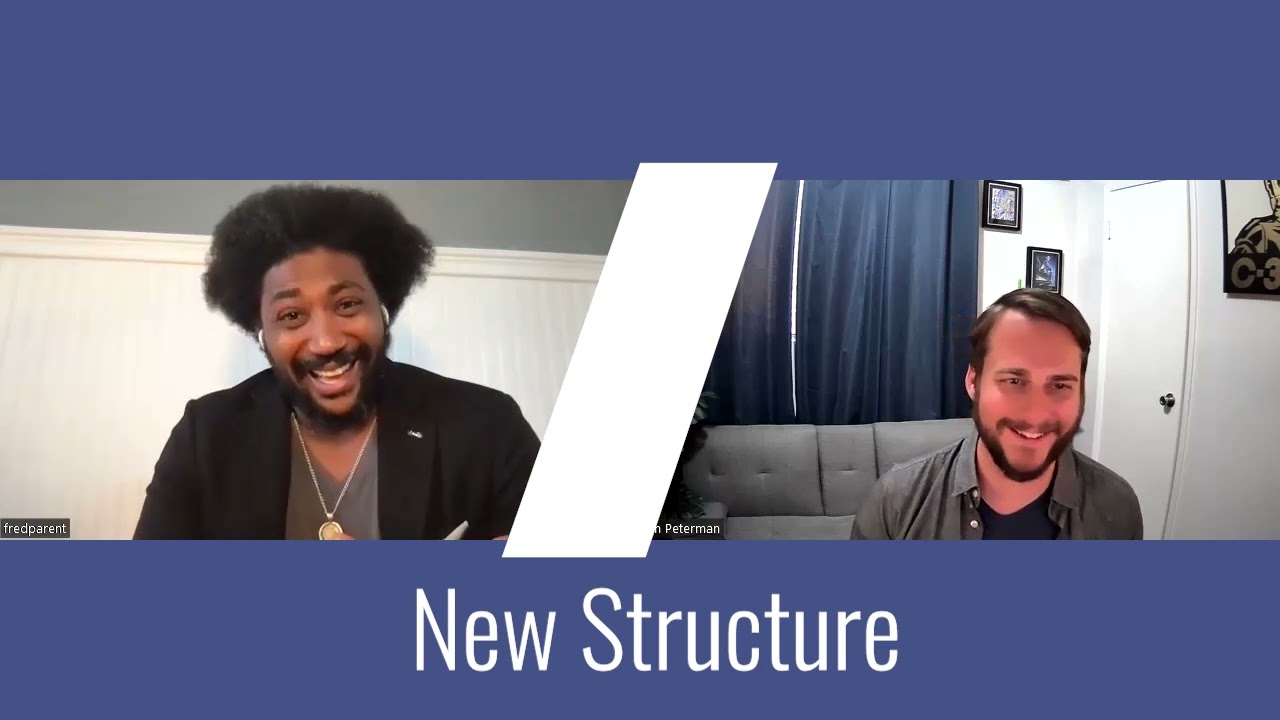
In this episode of the Conscious Design podcast, host Ian Peterman interviews Fred Parent, co‑founder and CEO of GoodPhoria, about the company’s mission to combat climate change through regenerative hemp cultivation. Fred recounts his personal journey—from career transition and a partner’s chronic‑pain relief with CBD to a partnership with a third‑generation wheat farmer—that led him to focus on hemp’s full‑stack potential. The conversation explores hemp’s regenerative farming practices, its extraordinary carbon‑sequestration ability, and the wide array of products derived from the plant, including CBD, fiber, hempcrete, nanopolymers, batteries, ethanol, biodiesel, and sustainable packaging. Fred explains GoodPhoria’s business model: a vertically integrated, collaborative ecosystem that supports farmers, ensures profitability, and aims to scale to millions of acres. They discuss the importance of normalizing hemp, educating the public, and building industry standards through conferences, media, and community outreach. A significant portion of the dialogue is devoted to leveraging emerging technologies—precision agriculture, blockchain, NFTs, and Web3—to capture real‑time data, secure carbon‑offset credits, and create new funding mechanisms. The interview also touches on market dynamics, consumer willingness to pay a premium for sustainable products, the need to incorporate environmental and social costs into corporate ledgers, and recent policy developments such as Idaho’s approval of industrial hemp. Throughout, both speakers convey optimism about hemp’s role in a circular, carbon‑negative economy and invite listeners to engage with GoodPhoria’s community.
Chapters
Hello and welcome to this episode of Conscious Design. I'm your host, Ian Peterman, and author of the Conscious Design book. And I'm very excited today to have Fred Parent, co-founder and CEO of GoodPhoria. They are dedicated to helping solve the climate crisis through regenerative cultivation of the hemp plant.
Welcome. All right. Thank you so much, Ian. So glad to be here. Awesome.
Yeah, I'm, I'm very excited about this. We share a lot of good ideas.
Yeah, I agree.
And yeah, so, so to start, and everybody has their own journey into deciding they want to solve world problems. So I'd love for you to share kind of how, how did you get into and, and Yeah. Why, why this particular— there's so many problems to solve, right? So why, what's this one for you?
That's a great question. Um, the key is really where to start, right? Because so many of our past experiences and jobs, skills, life experiences kind of added to this, but I'd say this started a few years ago, uh, when I was in between, um, I was transitioning careers. I was really trying to figure out what I wanted to do next. and made some new connections, made some great friends and partners. And we were kind of looking through and opining on different ideas for new businesses. One of those new businesses was exploring hemp for CBD and just like researching into the hemp plant. That was kind of where we got like our toe in the water, I suppose. But I've personally been very, very interested in sustainable things and different kind of mechanisms in that space most of my life. And I've always really wanted to see where I could use my skills and my different experiences to kind of work in that space. There were also a ton of practical reasons that kind of brought us into working with hemp in particular and CBD and some other kind of outputs of the hemp plant was personal reasons. One of my partners was dealing with some tremendous chronic pain and CBD actually was an incredible answer for that. So from a personal practical way, we got involved in working with it. And one of the early things we saw is that it was just a burgeoning industry. It was very young. we kind of started there, but very early on we saw a bigger picture, a bigger vision as we delved into our research and really spent time with the plant itself and spent time with the products that were being created that way and kind of started to put our own innovation and ideation into what we thought could happen based on what we were seeing. So that was kind of a general way we got started, but ultimately It all kind of happened organically, for a lack of a better term. As we learned more and saw more and connected with more people in the industry, started creating some things of our own, we saw an opportunity to actually start at the root, start at the base of farming, of permaculture and regenerative farming. And I was lucky enough to have a family member who is a third-generation wheat farmer, who we struck up a conversation and we started talking about some future projects he could do on his farm. At the time, we were really interested in him, and that's kind of grown into a great partnership. And one of our model and kind of our flagship projects at Goodphoria is our farm, our farm and facilities that we're building out in Oregon. So that is kind of a general start.
Yeah.
In short, it started for practical reasons. It started from a space of we'd like to do something different, and it was the research itself. that drove us towards these climate solutions and towards hemp in particular, and working with the industrialization of the plant from a strategic way to push the industry forward. And I know that you know, because you work with similar materials, that it's, for lack of a better term, it's a rabbit hole. You learn so much of this interesting information.
It is, it really is.
And you're like, how do people not know this? Like, you know, and It takes you down these different avenues. And with the group, we have a very small team, but a very, very powerful, passionate team. What we were able to do is come together and discuss these things and really work out our questions and opinions and pull together facts from all over. And we created a plan. We created a model in a way that we think expresses what we want to do at Good4Ya. But also, it, it was undeniable that what we're intending to do is profitable, and it's a great business, and it supports farmers. but it's also really geared towards some of the things that we need to change to mitigate this climate crisis that we're going through. And I wasn't intentionally— or we weren't intentionally connecting these dots. It's as our research progressed, it became more and more obvious that there was one-to-one solutions, or even sometimes more complex solutions, to current real issues that are making up what we call the climate crisis. So we didn't endeavor to to approach, you know, kind of this, this massive problem. It was, it was rather each of the things that what we were doing either solved or created a solution for, they were connected. Because our ecosystem is connected, because our issues, as it turns out, are connected to our behaviors as a society, as societies in the past.
Right.
Thus, we kind of came to the conclusion that our solutions should be interconnected and, and take into account the ecosystem itself, the ground we walk on, you know.
I know, it's such a novel idea that everything doesn't live in a bubble, right?
Exactly.
I feel like I've had a few conversations with people talking about kind of how society and how we operate is very bubblish. And even like, but it's all crumbled, the bubbles are all crumbling at the same time. Like you look at the corporate structure, right? Everything used to be extremely siloed. Engineering was here, marketing was here. They didn't talk. They existed isolated, still functioning as a business somehow. I'm not quite sure, but very inefficiently. And so, and that's been crumbling over the last couple decades, have been basically torn down at this point.
True.
And now we're looking at things like environment and society and going, oh, maybe they aren't isolated from each other. Maybe, maybe they actually, you know, connect. What an awful idea. It's amazing. You can't do one thing over here and have no repercussions everywhere else.
So true. And I think to your point, there's been people that have raised those flags for years, for decades, even, you know, for the last 80 or 100 years. Some people who saw the methods in which we were industrializing in the West especially, but That's now a global practice.
Everybody's copying the West now, which is unfortunately not necessarily a great idea.
Yeah, exactly. It's like we could probably have a whole podcast about those changes. But like what I'm seeing too is like what we were just talking about, those one-to-one problems, by disconnecting those different territories, avenues, by saying, oh, it doesn't matter what a company does in the environment around them. that community piece, that, that corporate responsibility to the community, not just the community they operate in, but the global community, uh, for the products they produce, the methods in which they cultivate them, produce them, etc., it's been ignored, uh, or, or intentionally even, you know, we've been asked to look away from it. We've been asked to regard it in a different way. And I know from a generational standpoint this current generation that's kind of coming into power, like people like ourselves, are entrepreneurs running companies. We're bringing a different level of corporate responsibility without being asked to do so. And I think that's a really important kind of shift that I think people in general, and especially communities, should be paying attention to for where their dollars are flowing. That's a really big part of it where it's like, we all know, especially those of us who have done the research into what's to come, know that what happened in the past was not right. It was incorrect, um, for lack of— yeah, that's the nice way of saying it, you know.
Yeah, I feel like that's a very nice way of saying it. You know, you're so polite.
And then, you know, as we progress, let's see if we stay polite. But ultimately, it's, it's an acceptance level of we have to accept what's come before. We're going to be angry about so many things. There's things happening currently that boil the blood, if you will.
Right.
And so much of it comes from ignorance. It just comes from ignorance, be it willful ignorance or, you know, systematic ignorance. But ultimately, there's this— there's a disconnect between human beings, the person, and our environment. That's like kind of like a general thing. But when we look at that on a societal level, it's becoming catastrophic. So it's bad enough if one person is disconnected from their environment and operates in that way. When 4 to 8 billion people do that, it— we're using more resources than we can possibly produce. We are creating, um, a garbage system that is not renewable. Nothing is, is circular. And that's been going on for so many years that our generation is now faced with fixing or being alert to the problems of all of these past creations while at the same time creating the future solutions. And I think that's where kind of what we do and why we were so excited to talk to each other, because what we're doing weirdly is a bridge to those 2 things. Like, it actually connects those 2 concepts where I hear a lot of people in the climate space saying, yeah, it's great to talk about regenerative farming and renewables and all these things, but we got to get people off fossil fuels. And I'm like, I agree with you. The way I propose we do it is by using hemp ethanol and hemp biodiesel and all of these incredible ways that we can use even the waste of our plant to create energy that is completely clean and can be a bridge to what we're doing. The same goes for hemp nanobark creating batteries. Um, I know that you've worked with incredible building materials like hempcrete and hemp wood pulp.
There's so much you can do. It's, it's kind of insane that, like you said, it's like, it is a rabbit hole, especially, especially once you get into hemp. And because it's just at the surface level, like everybody really focused on, oh, you can get high on it, cool. Now you legalized it, great. And then, and then it kind of like taper— tapered off a bit. And for the rest of us that started diving down the hole, you're like, well, actually, we've— if you go back a couple, uh, 150 years, hemp was a major material. Yes, we only built sailing without hemp. I don't know how good the sailing ships would have been like that.
That's true.
There's, yeah, there's a My business partner in, in, uh, Oda Materials, he, he talks about there's a French— I believe it's a French bridge that was built using hemp material. Still stands. It's 500— I think it's 500 years old, 400 or 500 years old.
So that tells you it stands the test of time.
I mean, it's biodegradable, but it also lasts. Like, it's clear, clearly it works as a material beyond just smoking it.
And that's, and that's great.
That has its uses.
You know, there's There's all of that, but totally, totally.
And this little tiny—
it's just a part of it.
Sliver.
Yes. You and I, that's why I think we were vibing, wanted to have this conversation, because once you open the conversation to, yes, that is just a part of it, but the other parts, the myriad of like what's happening, um, in each of the different outputs, that's what I'm super passionate about myself, is it's creative, it's interesting, um, the history we're coming across, that some of the beautiful canvases, some of the great paintings were painted on, were made out of hemp canvas. To your point about sailing ships, and it grows everywhere. Yeah, and it has, and it has arguably been with us, um, for millennia. You know, as human beings have walked this earth, the cannabis plant has come up in lore and come up in stories and come up in history for all these different uses. The one real travesty is this last modern prohibition of it. Um, to your point, it's like why people have the wrong concept about cannabis or hemp or any of the other kind of cousins of that, that they know of. And it's even crazier because like the disinformation is tough.
Yeah. And it's, and it's even crazy because the US, like we, we banished it and a lot of countries followed. Like we're not We weren't the only one.
Sure.
But flip it around, industrial hemp, like France and Italy and China are the top 3 exporters, I believe, of hemp.
Yep.
They never stopped. Like, they still—
They never stopped doing it, to your point.
Okay, weird Americans, whatever you're doing, great. We're still going to use it over here. We're going to produce—
It's a valuable resource.
Industrial level.
Sure.
And, and so they've been working on it. So we're like also at this point playing a little bit of catch-up. Like we're, we're like, oh, it's new. No, it's not. It's not.
Right. And it's—
Go to another country. They produce industrial-level farms as a crop. And, and you even get into, I keep learning more and more stuff. It sequesters more, like we're using building materials. So it actually sequesters more carbon than the trees. And it regenerates the soil when you plant it right. Like, it's just—
It keeps building. Yeah. And it keeps building, and it's a rabbit hole in some ways. And then it keeps building building blocks at the same time too, because a lot of the information is so positive. Like, for lack of a better term, it's just very optimistic. And the science is optimistic. Like, the science is incredible. And what you were saying, not only does the plant, when you plant it right with these regenerative practices, continue to biosequester a tremendous, tremendous amount of carbon, arguably more than any other plant or tree. And I think we're working on getting that data really solid. But as a product throughout its product life also continues to biosequester carbon at much lower levels.
Yeah, it keeps doing it.
But it keeps doing it. I mean, what a magical concept that not only could we potentially replace plastics, with hemp nanopolymers, but that those nanopolymers not only will biodegrade and not clog up our oceans, lakes, and rivers, that potentially it can pass along that carbon neutrality or negativity. Same with hempcrete. So those homes or those giant buildings and roads that are creating so much more heat, even in cities, being trans— transferring these materials to that not only lowers the footprint and how we're growing it, how we're processing it, but the products themselves To your point, last and can last for, for a lifetime, but more so can continue that carbon negativity or neutrality. I think that's so important for people to know, uh, is that's why we're so passionate about when we say circular. Uh, vertical is a really popular word, but I'm a 3D guy, so I like circular, spherical, or being able to see for all the points. Exactly, it's a sphere.
Circle is boring. Let's Let's advance this a little bit.
Exactly. Let's bring this into the 3D, you know, or into that more tangible understanding. And a big passion we have at GoodPhoria is that the hemp plant is not mutually exclusive. And what we foresaw and what's now currently happening, part of the reason why we launched a couple of years ago to really cultivate this, is to provide strategy and clear data that shows the value of each part of it. That we don't want farmers competing to grow CBD flower or grow fiber or grow for seed. It's like, if we collaborate and work together, we just need to propagate hundreds of thousands, if not millions, more acres of this crop, but also give farmers the tools that they need and different groups the tools that they need to do it correctly so they can get these incentives that, that also benefit the climate itself and, and their, their ecosystem.
Yeah, it's such a— yeah, we're looking at how to vertically integrate and maximize plant usage because it's so many. It's once you get it, it's like, well, now I can do this and this and the list. And it's so easy to like capture and reuse. Waste is really hard to—
Yes.
It's actually really hard to make waste.
So many things could be made out of it.
There's always some other material where you're like, well, we could— yeah, sure, we could use that. Let's do it. There you go. Right. And it's just not— from what we're looking at and creating the lumber side is we have— there's zero waste and it's carbon negative.
Like, that's that.
I don't know what we'd have to do to make that a bad thing. Like, it's just, it's easy. It seems easy to do. A little— it seems a little suspiciously easy.
I get that. And I, I think that actually— I'm glad you mentioned that. I think that's part of being in a new old space. Like, to what you were saying before, it's ancient. It's been with us for a long time. It's in our memory, you know, in our memory as people. But because we haven't been exposed to it, there is each of these pieces comes up and it's just like, wait a minute, there are so many different ways we can do that. Have we done this before? You know, have we used things this way? And when we dig back into the history, I mean, I know it's come up a lot, the Model T Ford. Uh, Henry Ford built the first Model T Ford, uh, majority out of hemp composite components and actually ran it on hemp ethanol, the very first car. And I think he was quoted to say, we can grow cars now, you know. I look at— I studied history in school. I look at a potential other universe where cars always were that, for example. How different would it be? Same with building materials and homes and things like that.
Cars are such a weird thing. The same thing applies to battery. They built battery cars before they built an internal combustion.
Right. We already had that technology.
That was normal. And then we created a fossil fuel car. And then, and then we destroyed the electric one, and then now, now they're new. Like, now it's just crazy when you do, when you do the little bit of history, you're like, wow, what is actually new under the sun?
Right? And I love that because we live in a society of wanting everything immediately, and there's still somehow supposed to be some originality to that, you know? Like, it's so interesting.
But new.
Right. Yeah. It's like, I need to be comfortable with it, but it has to be brand new. So we walk a line. And I think that's why I really love your podcast. And I love this opportunity because we walk a line of like really being educators. When you're in a new enough space that needs some normalization and some care, a lot of the people that are early adopters or kind of prime actors need to also include education for those who may not know. I think a lot of people who have worked in this, it seems so obvious sometimes. You're like, oh my God, there's so much incredible information. People have to already know this. And the more I do outreach, talk to people, connect with people, they're shocked to hear of it. And so I think, you know, spaces like this, these type of conversations are super important and continuing to like spread these types of conversations out to the greater public to— for them to understand.
Yeah.
'Cause I think that's where we'll get that wave that we've all been waiting for of people just to be like, oh my God, this is good for me. This is, this is a good thing for me or for my community, for my business, for my family, um, to invest in. Be it as a farmer where, hey, I maybe I have some land and I've been thinking about converting, uh, or someone who has like awesome skills that maybe they come from lumber or a different type of construction or milling or the paper industry. I met people that come from all walks. This is such a beautiful plant and kind of situation because There's no reskilling all the time, you know. It's like a lot of the skills that we all already had so deeply applied to this. It's almost like my call to action is like, anyone who's looking to change careers, come, come see us, come join us, because this industry is growing, you know, and we need— right, we need all of those different perspectives and skills to, to bring it to where it needs to be.
Yeah, well, and it's such a kind of once-in-a-generation Or longer opportunity to have a new or returning. There was, there was an industry before, but we brought it back. So now that, but that kind of opportunity, like you said, this is brand new. And I feel like there's also, we're kind of always wired. If we don't know something, we're afraid of it.
Like there's— Right.
We have that programmed into us to keep us alive.
Sure.
This doesn't, you know, threaten our lives, but still there's like, we have to get over that hump of, I don't know anything, so no, to, I know enough to be like, maybe, and then all the way over. And I feel like we're still, we're still in the maybe space.
Yeah, exactly.
But it's still, don't know yet. Let's, let's see what happens to the first person. Did they eat the berry and die?
Right. They put it in their mouth so far. Let's wait a little bit.
And then their brains will flip and be like, okay, he survived, we'll be fine.
And, and that's why I think models are so important. I think to what you were talking about, because it's a part of who we are. Like, it's a part of our natural systems to question things. So sometimes when we can see a model in action, or we can see a prototype of something, or we can tangibly hold or see a home that's built that way, or see a field propagating that crop. It's that subconscious, oh, it's happening. Okay, that's, that's there. That's, that's existing now. And I think to your point, it is kind of a scale where it's like, we're in that maybe. And to tip it, I think, I think it's happening. I think that this year it's going to happen for our industry in a major way on a national, international acknowledgement level. I think it's going to be impossible not to. Um, and that's just my belief, but, but I've seen the data to back it up, frankly. Like, well, I would share it. Writing's on the wall.
When I found out Idaho approved industrial hemp, and if anybody listening knows America and Idaho, you would know why that's a surprise to get that passed. So if that happens, I feel like there's some, there's some moving over in a direction to be okay with He isn't playing.
Big time. And it ultimately benefits everyone. It's a bipartisan kind of thumbs up issue, you know? And it's like, that's— we could use more of that. We can use more things that the country can come together on that also can give people a little bit more peace because we've been in such a cycle of fear, um, and uncertainty. And I don't think that hemp just in particular provides more certainty than other things, but as, but as a substance as a material, as an industry, like the groups of people that are involved, I think it does or will provide some of that good news, that comfort. Because I think a lot of the fear people have, they're hearing all of this stuff about the climate, they're hearing all of this crisis information. What they're not hearing is the Americans and other people all over the world working very, very hard to mitigate these things and educate people on it and bring these products into their market and bring these models into their communities so they can, they can look through it themselves. You know, instead of speculating or just reading an article, they'd be like, oh, did you hear this, this new thing opened in my town? Let's go see if we could check out the hemp fields. Let's go see if they'll—
Right.
You know, welcome us into their new CBD store or their new, you know, hemp operation. And everyone I've met in the industry is a lot like yourself and myself, like, we're looking forward to talking to you, you know, we want to share with people and bring this. And a big thing I say a lot is normalization, normalization, normalization. It is something that from the not only prohibition, but also the active campaign of what we call reefer madness against cannabis, that is still in— it's in the muscle memory and the memories of so many people because of their parents, grandparents.
It's been generations, generations. Once you get into generational level, it's a whole It takes a while.
It does. And so some, some patience is necessary. And I like to say we're farmers, so patience is part of, part of the remit. It's part of it. You got to be patient. You got to be accepting. You gotta, you know, kind of bring that in.
Gotta work with it. It'll happen.
You gotta work with it.
It'll just take a while, which is fine.
Exactly.
Yeah. Yeah. Well, that's And when you guys are looking at this, right, you guys are looking at all kinds of applications beyond just, you know, the surface level stuff like, oh, some building materials and CBD. Like you were mentioning being able to do nanoparticles, being able to do— like you're dropping the scale way down.
It gets interesting fast. And I try not to use— thank you for saying that. I try not to use words people might understand because sometimes we get deep in our reading. So please, if there's anything I mention, That listeners might want to hear more of a definition, I'm glad to go deeper on it, like on the hemp nanobark or those pieces, because I know that's stuff that gets written about, but I think there's still a lot of people who might have questions of like, how can a plant be a battery?
And I think that's just kind of the— where there's, like you said, there's so much research, but still, like, there's tons of medical research. How many people do you know read medical research papers?
Just me, you know.
It's like my wife, not too many of us. She's, she's in the medical field, like she's working on a doctorate, so she's like— but as far as like the average person, right, that we're talking about, average consumer, average, average person across the world does not sit down and go, let me read 500 pages of technical information that isn't part of my job.
It's real.
It's just not, not perfect. I feel like, and also so much there where it's, yeah, people have done the technical research. We know a ton of things, but it's bridging, it's bridging that gap between technical and like you're saying, common knowledge, like just normalize it, make it so that it's, you know, we can talk about Relativity, right? And right, an average person will be like, oh, I know what relativity is, that's great, I know Einstein, cool, right? It's a super complicated topic and they definitely don't read the entire theorem. They know— sure, I don't know anybody that's actually read through the entire— all of Einstein's calculations, goes, I could do that, I can do that too, right?
I checked it, it's great.
Right, I checked it, it's great, I approve, actually. But most people understand it and they know it so they can talk about it from, from like that general understanding level.
That's big.
And that, I'm right with you, like that's where, like, yeah, you're talking about batteries, which I hear that I'm like, great, let's— how long can we talk about the technical, how that works? Because I want to know. But from like an average person's standpoint, right? Like What do you mean plant battery? Like, mind blown. I think I saw that on Avatar or something. Like, how does that work? Is that—
I think, I think part of it is this organic media, you know, like getting both short and long format ways to talk and engage with people is something that our predecessors or people in history may not have had without the web, you know. We're in Web2 moving to Web3. The way to connect with people is more direct. Uh, the way to post and leave information is awesome. Um, there's some great podcasts, some great, uh, just websites and social sites that are just dedicated to hemp. I try and drive people to like Let's Talk Hemp and Global Hemp Association and podcasts like yours rather than— it's like when they talk to me, it's like, hear it from me. I want to talk to you about what my company does, what I'm passionate about, what we're doing. We have some of the coolest friends in the world, like the people we work with, uh, in the US and all over the world, be it certain associations, um, groups of people, individuals. It's just like the most robust, incredible group of people. And I really want to support the media that is putting out that information and kind of drive more people to their sources as well. Because yeah, of course I want to build traction on my group, my company, our brands. The things that we're doing, but it's like we can't do it without all of us. I think that was something that came up. I was at the NOCO Hemp Conference, which was just incredible. If you haven't been, you gotta go. It was my, it was my first one, and getting to meet so many people from all over the country that do so many different parts of our industry, it was just for hemp, and it filled up, you know, a hotel coliseum. It was really incredible to see it. And to see how many different people were talking about collaboration, cooperation, industry as a whole, how each of us can show up and kind of like help each other and bolster each other and communicate to create standards and support our media sources and support the companies, a lot of us who need to raise funds, because that's really the big thing in a burgeoning industry.
Yeah, working with a startup, it's It's a game, right?
And I think what's so— just to kind of stay on point about like the average person needs to know is investing in companies that are green, whatever they call us now, but I mean, we are sustainable, we are eco-sustainable, we're ethically, socially, ethically conscious. And investing in companies like that, we have the numbers to back it up. So we're not just saying flowery language. or saying, hey, like, we could save the world, because that's— I think that's a bold statement. I actually don't think the world needs saving. I think that humanity needs to acknowledge our place as stewards of this planet. And before we try to escape it, you know, billionaires building rockets, everyone's making jokes, but real talk, it's like, we need— this is our home. This is, this is the planet we know of. This is the planet that we currently live on. And there is a responsibility, not just by the leaders of our world, but by every man, woman, child. Every person on this planet has a responsibility to the planet itself, to the environment, to continue to, to live on it.
Right!
And I think the average person can grip that. I think the average person is like, you know what? There is a social responsibility that's not just person to person. It actually has to do with the environment, the animals around us, the oceans, the rivers, the lakes, our water supply. Our soil health, our food security, our building material security so that we can house people. So like when I see the news and they're like, article, interesting, all of these things, crisis, crisis, crisis, what I'm waiting for is for them to connect the dots. It's like these things are connected.
It might take a while.
It may, it may. Back to the patience piece, but—
Hey, it's Ian here. So glad you're enjoying this episode of Conscious Design. If you want the full scoop on Conscious Design, what it is, how we do it, how you can do it, then check out our book. We wrote it so creative entrepreneurs like you can code social and environmental responsibility right into your brand's DNA. You can download the first chapter for free. Link is in the description. Enjoy the rest of the episode. Don't forget to like, subscribe, and share. I'll throw— I forget where I heard it, but, but somebody, somebody made the point to the whole like, oh, it's, it's about us. Or, you know, saving, saving the planet. And, and so he goes, well, do you know how many extinction-level events have happened on the Earth? To this planet?
Earth is gonna be fine. Earth will always be here.
People don't have to be here.
That's correct.
How many planets are around that have no humans on them?
No life. Exactly. It's like the ability to sustain life is—
We haven't found one that has us, and yet they're still planets. So Earth is gonna be fine. The question is whether we're gonna ruin the environment so that we can't survive on it. Or not. Like, that's right, that's the level. So I, I use that like, well, now Earth is gonna be fine. Let's work.
Yeah, let's really focus on us. Yeah. And like, that's how we interact. Yeah, I couldn't agree with you more.
The problem, just accept it and then fix it. Like, it's totally fixable, but you gotta— but I think that's also kind of our mentality, right? Is just, well, it's not us, we have to fix the Earth, we have to fix the Earth, right? Instead of being like, right, how would I fix my behavior and how would we work as a society? Why don't we Why do we think about us? And I think that's still like, it's so human of us to do that, right? It's not me, it's them, right?
It is actually. And we've developed that over time through some of the comforts that were created that created this boiling pot we're sitting in. Yeah, you know, it's like through the comforts that were created. And that's why I don't— I try not to have judgment over it because I know it's hard to judge the past. But what I can see is what we can do in the present to affect our current and our current lifestyle and how we live in the near future. You know, like, that's the part I think people are not paying attention to, that this has been discussed for 30, 40, 50 years, the lack of sustainability. Longer, like, from maybe—
I mean, we have beginning of this century. I was talking to a data scientist and we have hard data showing climate change for the last 80-some years. And I'm not talking about like random dude with a thermometer, right, in Nebraska. I'm talking about scientific community building sensor sets and tracking. Not, not random, very planned, very much to track and see what's happening. And we have all that data. It's not—
Right.
It's not a mystery. It's not— and one of the things that that you were working on is that one of the confuses is again, that bridge of like, well, yeah, the scientific community is sitting over here going, yeah, we have all this data. Look, look, look. And then the average person goes, that's a really nice spreadsheet. However, what do I do?
Right. What can I do about it? What's the call to action?
Like, what is— I'll look at a spreadsheet, but really like, what does that tell me to do? How do I react to the spreadsheet? And that's where like they're focusing on like, how do we How do we take scientific data and turn it into an action item list of, yes, here's the problem, here's the proof, here's what you— here's the corrective action to the problem. And I feel like that's still like, it's just such a, like, we have it. We're very smart species. We have the information we have. And people even talk about like, oh, we need new technology. We're just not technologically—
We have the tech. We have the tech.
Absolutely. I love doing this podcast because I get to talk to all these people. I talked to somebody else that they created in like a 2-year study. They figured out how to feasibly replace all fossil fuels with hydrogen, including airplanes. Their focus was airplanes, which is like nothing can make an airplane fly except for fossil fuels, but not true. They're like—
Not true at all.
It took us 10 years and here's the people, here's the Technologies we need. It's all feasible. They did the research. They're like, 10 years, we could replace all fossil fuels in airplanes. Done.
Just done. I think it's possible. And they're like, we proved it. Like, here's the report.
We spent millions of dollars. Here is the— here's the action list. All you got to do is go do it.
I'd love to draw a line to that because— and to something you said before as well about how do we get from like the research paper or from that longer format of these, this incredible information to the people? Well, a lot of, I spent a lot of my adult life as a bartender, mixologist, and I was a brand ambassador in the spirits industry for a long time. Part of what I learned in that is engaging people, like in actually engaging people, like actually like meeting them at events. And I know, you know, post, pre-COVID, that was a different conversation, But like physically engaging people, engaging them online and letting them ask their questions directly to the people who have cultivated that information or people who are their representative. You know what I mean? Like, so there are ways, and I'm so glad you mentioned a little further back in the convo about how it used to be marketing's here and sales is here and operations is here and everything's disparate. But like a big part of what we bring to the table as a group is we have a lot of chops in brand marketing, marketing, strategy, creating brands, creating brand strategy. And that's something that we want to apply, that we also want to bring to the greater group. And I know we're not the only ones, but without marketing and without communication to the broader public, public relations, whatever people call it these days, but essentially just connecting with people, there is going to always be that gap. You know, there's always going to be that gap between someone who knows for sure, and it's like, I know this information, people need to know this, and that person who's like, I'm not sure, I need a trusted source, or I need it to be introduced to me someone by someone that I trust, or I need a brand that, uh, you know, is accessible and transparent, or all of the above. I think those are the steps that I know we as a group have been taking in real time to connect dots with where in the beginning we were launching, um, a skincare line, one that we actually are still planning to launch, and we hit a lot of pain points, hiccups, and issues because at that time we hadn't cultivated our farm or our processing facilities.
I worked in that industry.
You know, it's tough.
Journey.
And yeah, that is— yes. Yeah.
I had someone tell me that when I worked on a few projects and they're like, well, this is— just be prepared. This is a journey. And then after going through, like, this is a journey. You said it wrong. You need to emphasize the journey part. This is a lot.
It's so accurate. It's so accurate. And actually, even just 2 years ago, we were building that out on that journey that you're talking about. We weren't being demanding, but we knew the research on hemp paper for, you know, replacing packaging and even hemp plastics, uh, for bottling and for doing that part of the packaging.
They all exist.
They all exist. And we— more people need more material, they need more funding. And, you know, to Make it more robust so they can compete.
Yeah.
Just in the packaging space, I've met some really incredible people, and I know we're hoping to partner with some groups to actually make that a reality because it's so necessary. It's low-hanging fruit. In the cannabis industry, they're using plastics and tree paper and, you know, not, you know, sustainable inks. And it's not 'cause they don't want to use those things, it's that at the volume in which they're doing things, Those things have not been accessible. But what we believe as a firm, it's like, well, let's connect the dots. Let's bring these people together. Let's bring these different situations together and consolidate them so that we can actually produce enough material for it to be a viable model. And so I think you understand that from the building side deeply, that you just need to— you need to be able to show your model, and then you need to kind of be able to show people, and yes, and we'll be able to produce this much more Um, so that we can compete on price and for projects and, yeah, that kind of thing too.
Well, and I, and I worked in product development for almost 20 years, and just in the last— like, it used to be hard to get sustainable materials. Like, it did actually, actually used to be hard. And now at this point, uh, they're all over the place. Like, it's— yes, it's not— availability is not the problem. It's Being aware, being aware of it, finding it, and then just being okay with whatever the price is. Like, if you're, if you're committed to it, just, just do it. And I, I did a whole, whole presentation, um, actually make some of my clients go through, uh, and I did all this research and it's all consumer, like 80% of consumers will spend more for a more sustainable product. Absolutely sustainable. And like greenwashing doesn't, doesn't work. So don't—
it sure doesn't.
But yeah, they will pay more and they're willing to because it just— more and more people are just willing to— they're like, we want to have something to do their part.
Yeah. And they won't do their part. They don't want to feel guilty about what they're consuming either.
Yes, it is. It's now at the point where when you buy something crappy, you're like, ah, I wasted my money. But there's no other options. So sure. I'm stuck. And that, like, if you can produce a product that'll go with— not to, you know, don't make it 3 times as expensive, but if you can make it within 20-30%, that's a viable option. I, I— the average consumer will go, I'll feel better.
It's true.
Done.
And I would even challenge—
there is no question anymore.
I would even challenge, or just, just add to that, to say that if they make that purchase, they are supporting that group or company. who is making those sustainable choices. And I think that actually compounds to like, I have not met a single person in our industry that has a red, a red line on their budget. It's like everything in our industry is going up. It keeps going up and it should, you know what I mean?
Yeah.
So also what I want those people to understand is if you continue to support us now, like if you, if you support us now, groups like ours now, we won't be needing any help in the future because our products and processes are profitable. They are so profitable, um, yeah, on themselves, um, to the point where I believe with scalability we will be able to compete on price with some of our major competitors.
Oh, absolutely.
Once we're out that gate, you know what I mean?
Absolutely. And it's all— and I was talking to someone there, uh, he's helping to change— add sailing to ships, going back to old tech.
Okay, yeah.
Use some wind, guys. Like, wait, I don't know, wait a minute, fossil fuels, we used to be able to do this. Why not now?
Wind works for us.
It works. There's even—
that's incredible—
trade winds. They're called trade winds for a reason. You can go from continent to continent with it. All you got to do is follow it. And but, but it's all like his— the way they're approaching it, right? Because people will be like, oh well, it's, it's more expensive. But if you actually break down even the real cost and you remove subsidies, suddenly fuel is—
Game changer.
Very expensive compared to a sale. Like now, right? And it's across the board. It's not just that. That's a great example, but there's others like these materials we look at and we go, well, how much is subsidized? How much is managed? And when you look at true, and then you look at environmental cost and it just blows. Blows the conversation out of the water and goes, well, that's an important cost. Here's fossil fuels, here's everything else.
And I love that you mentioned the term environmental costs too. I think it should be added to every company's ledger, actually. This is— I just think this should happen. I believe we constantly have to compare like how money is made and valued, and we need to include the environmental value versus the environmental cost in all of these matrices.
I think, yeah, I, yeah, I, I agree. I guess, you know, let's— we can keep the dollar, you know, whatever currency you want, right, as the baseline, because we do need like a standard number.
But stability is important.
Yeah, and I would, I would actually further add to that and say there's environmental and social.
Yes, I'm so glad you said that because they are connected and both are important. They have a relation.
Ruining one ruins the other. Like, it just doesn't It doesn't work. Imagine it, take all the resources off the planet. Imagine what society would be. Pretty terrible, right? So it's very, it's so tied in and we don't, you know, and people have talked about like triple bottom line and things like that, but it's been very etheric is how I would term it.
People need to see the tangibility of it. And I think a lot of people have made strides in our industry in particular to show it up, show up and show people these things. Like, in the last 4 or 5 years, I think that's been awesome, you know what I mean? Like, some people have just made major, major breakthroughs and they're shouting it from the top of a mountain, um, for the rest of us to hear, but also for that— the people to hear of like, hey, this industry's here, we're not just coming, you know, we're, we're here, we're ready to do this, you know?
Yeah, and I'll kind of looping back, one of the things that's unique about this industry is how collaborative. And kind of, you mentioned, you mentioned the space industry, which is funny because I'm, I'm also involved in that. And it is, in a weird way, it is, it's also highly collaborative, which I find very interesting because the space industry, it's new as well. Like it's not right pre, it was government only.
Now all of a sudden— People couldn't even participate before. Yeah.
All of a sudden it's been whatever, how long? I think SpaceX is like 15 years old or something like that. So it's been a while. You know, it's an overnight thing. But both of these industries are very new and there's not this old, like, space companies are working together. They are not—
Right.
Right.
They're not just competing, but they're launching each other's things on each other's rockets.
Like, they're not like—
That's a big deal.
You're that. Well, no, you can't touch my rocket. I know, let's launch it, let's go. And same with the hackers.
Mutual interest.
It's so much like, well, how can we build it? And it's kind of just interesting looking at the parallels and seeing them as new. Like, this is a new generation of people building these industries from the ground up. So it's just so interesting to look at it and go, This is not like the last industries. It's not like—
So different. It's built differently.
It is.
Oh, I love that. I'm so glad that that's the case, if I'm honest. It's much better. You mentioned it, without the social ethical aspect and also the environmental aspect, that's what's been missing. It's why we've had to spend so much time being solution-oriented rather than just being innovative. Um, I don't know how else to say that, like Yeah. You know, I don't have a judgment for how they did it other than they didn't give us as much time as we would have liked to have to do some of these things because these things are hitting a critical mass. The world's food security, the world's supply chain, the world's medicine and different things are under threat. They're not secure. And that causes people to be nervous. And what we want people to see is that there's options. It's like, yes, things have been very bad. These last few years have probably been the most trying years in modern history. But what came from it also was the birth of these new groups, companies, innovations, ways of thinking, new perspectives, new ways of raising money, new ways of connecting, uh, with your clients, customers, other businesses. Those things have actually, I think, had an upswing and actually gone into a new, really awesome space.
Yeah.
It's why we're going to continue to push the edges because we've done that from the beginning and things that we in the beginning were saying, is this possible? Now is like, let's do that in June. Let's do this in August. Let's do this in, you know, next January because now we know it's possible. To your point of talking directly to the people who are doing this thing and same for us when they talk to us directly about what we do, being able to connect those dots and, and open that collaborative notion of we can all benefit here. Like, we can all benefit actually with our technologies, our methods all being acknowledged. Then we can kind of, you know, they say the rising tide raises all ships, you know. It could really be that, that kind of watershed moment for this, this particular industry, industrial hemp, which, you know, I'm very passionate, we're very passionate about. Actually could be the moment for so many other technologies, which I'm pumped about. But the big one is that kind of what we're about. We're about marrying ancient and tested technology with future technology to create the present. You know, it seems kind of simple, but when you look at that concept, it really works. So if we look at permaculture and what permaculture does for the soil, and then we look at all along the supply chain process, I can be as bold to say is we could even build our buildings out of your hempcrete. You know, uh, when we actually— what we were doing in Condon, what we're doing in Oregon, we want it to be the playground of technology and innovation on this sustainable green piece. We have a lot of land, we have a lot of opportunities and innovation. We want to invite part— we need partnership and we need, uh, funding. support. Um, really, we have a great plan. I think right now, um, aligning our partners and, and getting some firm partnerships, getting commitments from some of the people, the big industries that have expressed, hey, we want to buy your hemp, it really helps us as farmers and processors to pre-sell and to actually get some commitments to get those plants in the ground and actually use that. But what I think makes us really unique, and what I'm excited to share with everyone, is we've been really Deeply looking into precision agriculture and precision ag tech and how that can directly benefit throughout the entire supply chain to give us all the data that we need. And not only to get the data, then what do we do with it? That's something that Goodforia has been looking at.
We have so much data, but so much, if you don't, if you don't translate it.
So, so picture me this, and this is still newish, but this is why this is so exciting. We launched our first NFT. at the beginning of April. It's still live, actually. There's still some for mint. And why we did that is we actually have been working with blockchain technology and working in Unreal Engine and working in some things that are translating to Web3 to take precision agriculture to the next level. And then NFTs popped and we were like, oh wait, some of the stuff we're doing could be translated that way. And what if we could show people directly to 2 industries that are burgeoning, which is both cryptocurrency and NFTs and Web3, Right. And hemp, industrial hemp, cannabis, right? What if we could step in and show people that these 2 things are both important and actually can work together to, to create a system not only to potentially, you know, bring interest and bring funds to, to startup, you know, new companies like ours, um, to let people directly get involved and, and have a piece of it, but in that space it acts as like, you know, a rookie card. Like, you know, our first NFT is kind of Good for You's rookie card. And that also could have some future value if we continue to meet our goals, if we continue to grow our business in the way that we said we would. People who are the original holders of that may have future value there. But also, we are working in the metaverse. We are working in Web3 to actually build a twin system, to actually be able to connect this real-life, really important stuff like regenerative hemp farming to people all over the world that may want to learn these things or access or communicate with our team in a different way. So we're not making any kind of promises, but we do have the technology and the partnerships to build all of this, you know, but it really does start why we call it the Seed is the name of the piece of art. It's a digital piece of digital art is because it represents the beginning. the seed being planted, the gestation period, and then what that seed opens up to and growing is this, this beautiful farm, these, these really incredible carbon-neutral, carbon-negative processing facilities. We are revolutionizing smart sensors and smart technology in unison to be able to capture real-time data, but also then be able to commit that to things that are secure, like the blockchain, to then be able to share transmute, sell, um, to other people, or even just— even if we use it to share just with other farmers or just with other industry people, we see a great value there. So part of just why I wanted to mention that is I actually think that there can be some deep connections between some of the technologies that are currently existing, like you were mentioning before. Like, we have the technology now, we need to translate it to show people, hey, If you're worried about how much carbon, you know, like a lot of people were worried about how much carbon crypto makes, specifically Bitcoin, but also Ethereum, we directly attacked, like went to it and said, no, we're going to use this blockchain because it's the blockchain that it's in the most use, which is Ethereum, but we're going to commit to offsetting any carbon footprint from our minting. We actually chose a minting style that was much more direct, that used less gas fees. And we also are dedicating that we are gonna plant enough hemp to offset that ourselves. So instead of this concept of you could share in these carbon credits, or you could share in this carbon and all this burgeoning stuff, we—
Right.
Because we have a carbon-negative operation plant, you know, what we do is carbon negative. We can, at the bare minimum, lower or reduce our footprint to, to nothing, and then possibly even be able to do enough of that to share that with other partners. who wanna be carbon neutral or carbon negative. That doesn't mean giving any of that to people who are polluting. And I think that's an important thing to say is that I don't think what we're doing to mitigate carbon should be given to people who are still creating necessarily, but it's a nuanced concept.
Right.
And so that's kind of what that piece is about for us is we want people to engage us in that conversation. We want people to engage us on like, oh, why would a hemp company be on the blockchain? It's like, yeah, that's where we begin. That's actually a really important part of where this is going, not just for our company, but I believe for the industry at large, for the agriculture community, for the greater community at whole— as a whole. We need to look at all of our options and their interoperability and see how we can use these systems and these different pieces to support our businesses, support our communities. So I just, yeah, I just really wanted to mention that because that is a part of the technology that I think will actually become part of our world. And when it does, we wanted to show up. We wanted to not be late adopters to a technology that could deeply help us in what we're doing, you know.
Especially how, how relatively easy it is to get into just working with it. It's not launching a rocket, right? You don't need billions of dollars backing you in order to dabble. You can just get into it.
Big time.
Yeah, it's such an interesting— Web3 and all that is going to be an interesting road to see how it goes because it's just like, this is such a baby technology and people still— I mean, I put it in like AR/VR where It's like, okay, it's cool. And there's a huge amount of potential, but we haven't figured out what— like, it's still in that novelty stage. We're like, well, that's cool.
Right.
Let's wait another decade and we'll know exactly what it can do. We'll know.
I'll tell you, maybe by the next time we talk, I might have some answers for that. We're interested in where those pieces cross over as well, not just in gaming, But in practicality. So I can give you a taste, but, um, that's, you know, maybe, maybe we'll save that for the next time.
We need to have another conversation too.
Exactly, exactly. I'd really like to. I think, uh, it's just the tip of the iceberg.
Amazing. Well, I, I think your guys's model, like, it's— I was thinking about when you're like, oh, we're creating this, this lab, this place where people come and develop technology.
Yes.
And what immediately came to mind is— and people don't necessarily realize this— but like Nikola Tesla invented all kinds of stuff. He was backed by GE.
Yeah, he did have sponsorships.
He had sponsors. Like, they were the reason why so much was developed at that time, was there was a little bit of a model where companies would go Oh, you started creating something cool. Let's pay your living wage, which, you know, whatever, $50 a month at the time, like that.
Yeah, nothing.
And, and now you're gonna develop technology. And so then you had people who could just develop, like you said, just create, innovate. That's all. You put all of your brainpower not towards like, well, can I eat this week? Can I—
Right.
Do I have a place to live? Do I need to go To a job and then spend my afternoons. It was such a—
It could just focus on that.
Please put your brainpower that's clearly able to think about these kinds of things to this, just do it. And not that it worked out well for all the inventors during that period, we'll also caveat that. So as long as we don't—
That's an important caveat.
The bad part of that.
I'm glad you brought it up. I, I could say definitively the bad part that they did— it was good that they were able to handle living wage. What they didn't do is share the spoils of the greater value of what was created.
I can say definitively that Tesla died in poverty.
That's that. And to that point, and why the world really lost something because of that, is that through patents and other things is how we have traditionally, you know, protected, but also, you know, But also limited and destroyed. Limited people. Exactly, exactly, exactly. So a big part of— I think what is so interesting is that I really got into Web3 because I was interested in smart contracts, because I've worked in contracts and contract building for a very long time. The content— content— the concept of being able to, to add royalties, add future components to it, is actually what I think can protect inventors and technologists and people's intellectual property when done correctly. And that's something our team's working very, very hard on with some of our partners to learn how to share our technology to where it benefits everyone involved. Like, there should be— no one should leave that situation if they're bringing something that's vital to the situation, they should leave with their fair share. And there's a way that I—
Yeah.
There's a way through smart smart contracting, Web3, and cryptocurrency technology to apply it even to how we would like things to go in the future, which I think we could probably spend a while talking about. But in our industries— Well, but in our industries, it's so important to track every metric, every detail. Um, and this may very well be kind of a beautiful marriage of ways to do that. And also, like you said, it's accessible It seems a little choppy at first, but once you get into it, it's actually quite easy to grasp, understand, and use. And so we wanna do that for the hemp industry, but simultaneously, and this may not have been the original intention, but as our research went and as we grew our way, it became a really important part of our business. So we saw a need to also bring education and kind of awareness to that space as well.
Right. Yeah, I— yeah, there's so much. So much.
Yeah, we might have to book another one because you and I, I think we could talk for a couple of hours.
I— oh, I think we could do— we could do hours and hours of this. So yeah, I will— I will wrap up. Okay, we're at a point where we should.
Got it. Got it.
Any last— at least on this topic— any last thoughts you want to share?
Sure. Um, Just in recap, I enjoy these conversations to talk about stewardship and the social component and the ethical component, uh, beyond mitigating climate change, but also the opportunity to talk about the people involved, the processes involved, the interesting things. Um, it's the people that make up this industry, you know, it's the hearts and passions of so many. Um, so I'd like to just you know, say a shout out to my whole team and to all of our partners for the support to get us to this point. Um, and yeah, having these conversations is, is a great pleasure and an honor. Um, so thank you so much for having me. Awesome.
Yeah, well, I appreciate it. I enjoy these very much as well. So I really appreciate you taking the time to, to share and discuss. And, and yeah, absolutely.
Let's do it again.
Have another one or two of these. This is great.
That'd be great. Yeah.
So last thing for anybody that's wanting to get a hold of you guys or find you, what is the best place to do that?
So it's Goodphoria is the name of the company. G-U-D-P-H-O-R-I-A. Goodphoria.com. And we are Goodphoria on almost all socials. @Goodphoria on Instagram, Twitter, Facebook, Telegram. Reddit, you name it, we're out there. Um, but also we are on Discord now, so I really, really want to tell people, check us out on Twitter. We do Twitter Spaces every Friday. I'd love to invite you if you'd like to join. We do it every Friday at 2 PM Pacific, um, on our Twitter Spaces.
Would love to.
As well as our Discord. So I'll make sure I invite you into our Discord. It's called The Good Verse. It's where we're, uh, sharing a lot of our stuff that we're doing with hemp and Web3 and our metaverse expression and some really, really cool stuff. So yeah, the Good 4 Ya on Discord as well is where our community is starting to kind of collaborate and kind of meet and share. So any of the sources, we'd love to hear from, from anyone who's interested.
Amazing. Well, definitely everyone check that out and join. And yeah, I really appreciate you being on the show, Fred. I appreciate your time.
Thanks again, Ian. Yeah, absolutely. Look forward to talking again. Have a good one.
More from Ian


You Didn't Know a Shampoo Could Do This #Shorts #shampoo #ecofriendly #haircare





The Biggest Misunderstanding About Bioplastics - Sustainable Materials Consultant Joanna Pool

A Polymer Scientist Explains the Truth About Bioplastics #podcast #sustainability #science



NASA is testing this on Mars… why not Earth? #Shorts #GreenTech #NASA #science