How This Company is Turning 40% of Wasted Food into Profit!
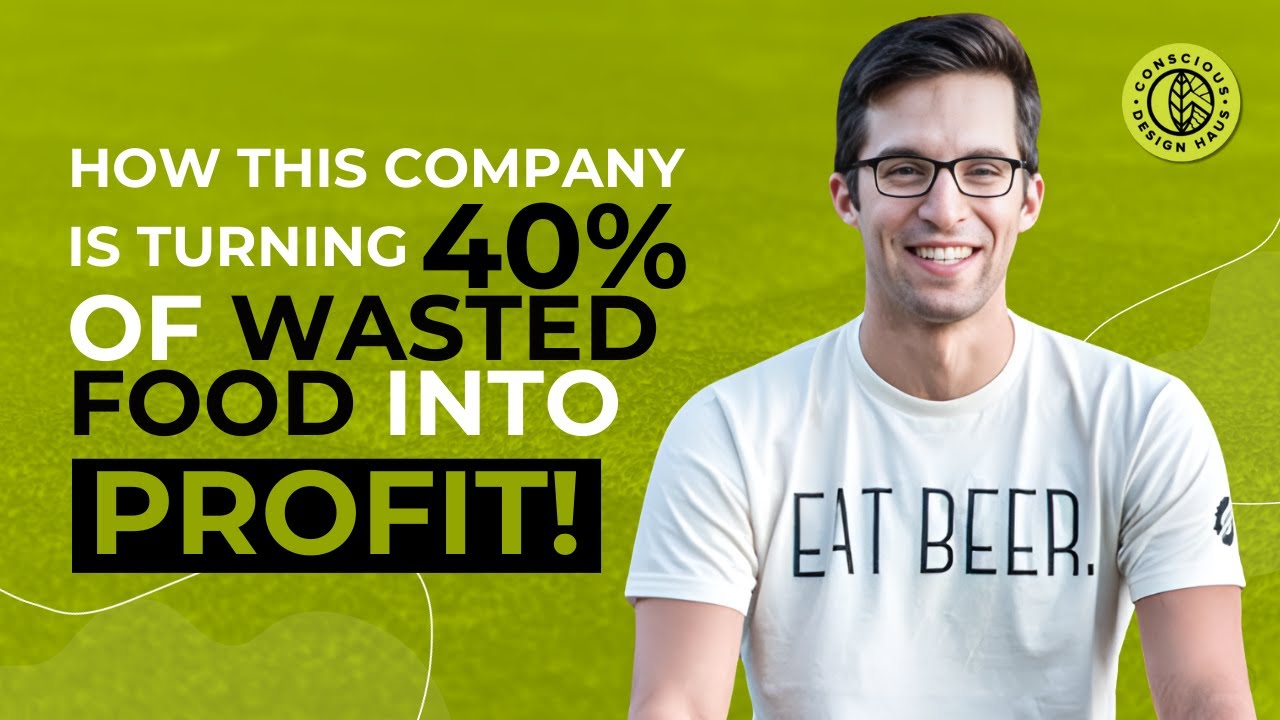
Dan Kurczak, CEO of Upcycled Foods Inc., turns brewer's spent grain into shelf-stable flour. The U.S. generates 20 billion pounds of brewer's grain annually, and 40% of all food produced gets wasted. His company sells the ingredient to food makers targeting keto and high-fiber markets.
Chapters
Hello and welcome to this episode of Conscious Design Podcast, where sustainability meets innovation and business savvy. I'm your host, Ian Peterman, CEO and founder of the Peterman Design Firm, hub for green tech and visionary ideas. Join me as we chat with Dan Kurczak. He's the CEO and co-founder of Upcycled Food Inc., where they're helping the food industry become more circular. Welcome to the show.
Thank you, Ian. Great to be here and great subject for your show. I'm thrilled to participate.
Absolutely. Well, food, food is a big problem to solve. So kudos to deciding that this was the thing that you were going to tackle. Let's jump back in time a little bit. What, what got you to decide, hey, food waste, food waste is the problem that I want to work on?
I got into the world of trying to play a role in solving food waste actually through a hobby of brewing beer underage as a college student.
Oh, amazing, amazing start to the story.
So I learned how to make beer when I was a freshman at UCLA, which years ago now, 2008, 2009 was when we started, started doing that. And absolutely loved the hobby. It was a lot of fun to be able to buy the ingredients and make beer. Of course, never drank any of it because that would be illegal, but nothing illegal about purchasing the ingredients and brewing the beer.
You could produce it, you just can't touch it.
That's right, that's right. And so we got into making beer every week, and really, have you ever made beer before, Ian?
I have not, but I have family that that makes beers and wines. And it is an interesting— I've always been fascinated with the chemistry that goes into making it work. It's fascinating. Yeah.
In a lot of ways, beer is food. It's a product of the land. There's really 4 simple ingredients in making beer. You've got your water and you've got your grain, your malt. It's typically barley-based. If you're making it in a traditional way. And then there's hops, which people who are IPA drinkers are very familiar with hops, and yeast, which is where the magic happens. And the beer-making process, you know, it's actually— you can get quite sophisticated in how you do it, but we've been making beer as a species basically since we stopped being nomadic, going way back to ancient Mesopotamia and before, where you're basically taking water and you're mixing it with the grains. homebrewer, it kind of looks like you're making a big batch of porridge, you know, for like a breakfast oatmeal. And in making this, what's called the mash, you then separate the liquid from that, and that's where you— and it's like the sweet liquid called wort. It's like a sugary liquid that gets fermented with the yeast. But you're left with this grain, the physical grain itself, that's been soaked in this beer-making process. And as a beer maker, you're done with this material after you've taken that wort the mash. And, you know, we're in this college environment where this is a hobby, where, you know, hobbies cost money, right? And it felt like we were throwing away some of our, you know, throwing away food, throwing away our ingredients. We couldn't use it to make beer. But I started wondering what could be done with this so-called spent grain that was an unavoidable co-product. And I don't like to use the word byproduct, an unavoidable co-product of the hot— the hobby of making beer. So after a little bit of research, I was pretty floored to learn of the nutritional value of it, but also that there's a pretty rich history of human consumption of brewer's grain in baked goods over time. Just nothing, nothing really commercially, but, you know, we weren't the first to think of, hey, what can we, what can we do with this stuff? And I'm sure we'll get into what the— at an industrial scale, what that, what that looks like, you know, today. But on a homebrewer's level, you know, in the college environment, we didn't even have a vegetable garden with a compost bin, you know, let alone chickens or goats or cows or whatever to feed this to. And when I learned that you can make bread with it, I thought, oh, okay, you know what would be kind of clever is if we made, made loaves of bread with the grain that's left over from the beer-making process and then sold the loaves of bread and then used the proceeds from that to invest in another batch of ingredients. And we could have this kind of self-funding—
Self-funded?
Yeah, exactly. So, so that's how it all got started, which led to a series of ill-advised and increasingly large questions about what's happening in the industry and the food system. And, you know, it wasn't until 2012, but really 2014, when we started getting a really good handle globally on like how much food we're actually wasting at a macro level. There's a landmark report that the NRDC put out called Wasted, that really helped open a lot of our eyes and realize that a lot of our efforts were actually a part of this broader set of solutions that we would need in order to, you know, be more— build a more resilient food system that was better capable of feeding, you know, our growing population and wasting less. You know, we came out in 2014 that we're wasting about 40% of all food that we're growing. I didn't know any of that when I started the business. What I knew was that every time I made a 6-pack of beer, I had a pound of grain and that that grain didn't have any sugar in it because— pretty much no sugar in it because the sugar ends up in the beer, which leaves protein and fiber, lots of good stuff. And then I had a pound of it for every 6-pack of beer that I was producing. And it just seemed like good common sense to do more with it than put it in a dumpster.
Well, you could just think about how many 6-packs were just drank on 4th of July alone. That's a lot of food right there.
It's wild. You know, when you zoom out, we estimate in the US every year there's about 20 billion pounds of brewer's grain that could be available for consumption, which is hard to contextualize. So if you like kind of do the back of the napkin math on that, if you like turn it into a flour, like a, you know, an ingredient to make bread, for example, which is a big part of our business today, if you were to do it with all the grain in the US, you could make— I forget what the exact figure is right now. It's been a little while since we've done it, but it comes down to like a I don't know, like 2 or 3 dozen loaves of bread per American per year.
2 or 3 dozen?
Yeah, like per person, just from the grain that's already been used to make beer. So this is a material that's been cultivated, right? It's an agricultural product. It has inputs in terms of water and labor and everything that it takes to grow food, right? It's been harvested. It's been processed to make malt. It's kind of like a sprouting process. So there's this value-added step that happens. Then it gets to the brewery, and breweries aren't wasteful. It's not like they're— they could be doing anything to not also have this grain when they're making beer. It is an unavoidable co-product of the beer-making process. And so we got really inspired to try to connect the dots in a new way and see if we can improve the way that we're valuing this, this, this resource that we saw to be very overlooked and undervalued by the status quo.
Yeah, the most I've heard about is like, oh, it makes really good feed for Animals. Like, I grew up around Portland, Oregon, and that was one of the things that some of the breweries there started to promote. Like, oh, all of our spent grain after we're done, we ship it out to the farms nearby. And, you know, it's good. So, as you described, right, it's really good nutritional value. So, it's great for feeding to the animals. But that was kind of like only a few breweries Did it, or at least talked about it, and it was never—
So now it's about 80%, actually, you know, approximately, of the breweries, you know, are sending their grain to different, different animal feed, you know, end uses. And so the status quo with this is, fortunately, in the US, it's not that all of this is ending up in a landfill, breaking down into methane, and, you know, contributing directly to, like, greenhouse gas emissions in the way that food in a landfill does. Although breweries around the world, we make beer everywhere as humans that we live, and we've spoken with breweries in parts of the world that are incinerating it, some that are landfilling it, some that are land applying it, which is basically Latin for spread it out on a field and let it break down over time, which does produce some methane, right? It's not like a municipal compost system or a directed composting service. There's a lot that can be done with it, and our whole thesis is that What we're trying to help do is move this status quo from going to the path of least resistance, which even if it's going to animal feed, that's the path of least resistance, but it's not the path of highest value, right? And the path of highest value for any food is feed it directly to people, especially when we're living in a food system where food waste does not cause hunger, right? But this is in the US, about 1 in 3 people between 1 in 7, 1 in 8 people are unsure of where their next meal is going to come from. Our food insecurity rates are really high. And if you look at nutritional deficiencies and gaps and things like that, one of the most striking is fiber. Almost no one eats enough fiber, for example. Less than 10% of Americans get enough fiber in their diet. And this is an ingredient where if you put it in a bread at 10%, 15%, you get to a good source or high fiber claim on a finished product. And so all signs were pointing to this kind of crazy idea of, hey, you know, the way that we've been doing things, you know, has some momentum, some, some inertia, right? You know, but that doesn't mean it's the best way to do it. And maybe we can create a new win-win, you know, for the stakeholders that are involved in this aspect of our food system. And now we've started to apply it to other stuff, which maybe we'll get into in this conversation beyond brewer's grain. You know, there's a lot of agricultural side streams and other—
Yeah.
food production and processing side streams that have similar opportunities where there's this overlooked and undervalued potential supply chain, you know, that's being handled as a waste stream by, you know, by conventional business.
Well, this dovetails perfectly into conversation about circularity, right? This concept of, right, a waste stream automatically means that you're linear process, right? There's a dead end rather than looking at it And you meant, you know, agricultural waste. There's so— the more I dive into different areas, like I'm part of a hemp company for industrial use, we're seeing other— we're diving into other fibers and there's like, oh, the sugarcane, they just burn everything that isn't turned into refined sugar. And it's just, there's so many of these different areas in our food system. Right? That it's like, oh well, we're burning it. Why? What else can we do with it? There's got to be something else besides burning it. Burning it doesn't really help anybody. It might be fast. It might be quick. Pour some gas on it. Burn it. Like yes, I get that. But it's not. I love how you put it. It's not. It is the path of least resistance, but it's not the highest value. And I think that that that shift of going, all right, it's waste. But is it really waste? Like what? And this is something that when I've talked to people and done some research, the idea of waste is really only something that's come into our collective consciousness in the last 100, 150 years. There was no— go back to the 1800s. There is no waste.
It's also only humans. Also only humans that have waste.
Yes, correct. There's no animals that waste. There's no— nature doesn't do it. We didn't even— we weren't really into wasting things. It was, you know, there's a lot of survival-based, and then we shifted this mentality over and now we're, oh, we'll just burn it all because we think it's waste.
And in nature, I mean, there's this principle of permaculture for anyone who is like a nerd about this kind of stuff.
Oh, permaculture.
On your class. Yeah. And where it's actually like the waste, you know, waste equals food. You know, it's this idea that Yeah, we're really bringing to light in a very literal sense. Not to yuck the yum of anyone, upcycled foods are absolutely delicious. And it's not like, you know, you're dumpster diving to get these materials. We can talk about, you know, get more into that. But this principle of, you know, hey, you know, like, where can we find inspiration from nature? You know, that's really a central tenet of circularity. And it's not just the food system that has this extractive model of take-make-waste, right, that would benefit from more circular thinking. And it's important to like, I think, I, you know, we feel it's important to really try to think more in— this gets very overused, I almost hesitate to say it in a recorded podcast, but like, like an ecosystem, right? I mean, it's literally what, you know, how we should be thinking, where there may be materials that come, that originate in the food system that are actually, you know, best applied, you know, in other, in other sectors. For example, this— we're recording this the weekend after the 4th of July holiday. I don't know when it will air, but, you know, many of us, you know, probably had Barbecues and things like that. We have these new plates in our household that are actually— they're dishwasher safe, they are microwavable, and they look just like a plastic plate, but instead of being made from— reusable, right? It's not a single-use thing. Instead of being made from like a petrochemical plastic, they're made from wheat straw. That's an agricultural side stream of what had been conventionally considered to be inedible. kind of valueless material. And so there's this shift in thinking that we really need to have around, like, what— to your point, like, what is waste, right? What, you know, and food waste and food loss, there's some nuance in the definition between the two. But like, the bottom line across all of it is that we should be finding as many opportunities as possible to put food to its highest and best use, feeding, feeding people. And that's what we're all about.
Yeah, there's, to one of your points about, you know, food and that waste going to something else, there is, I think it was 3M went and they, they found out they could use the fibers. I think it was from the agave plants that they use for tequila. And then all that fiber, right? They're making tequila with it, but all the fiber, they were actually integrating that into sponges that they made. They were able to make these cleaning scrubby sponge things out of tequila waste. And it was something they were burning it in the fields. And then they were like, hey, we like that fiber actually. Can we have that instead? We'll come pick it up and you don't burn it.
Yeah. And I think you're knocking on the door of an important point, which is that waste is food. Waste is also money. This is one of the areas of climate solutions where there's not necessarily the same trade-offs you might expect in other areas. There's plenty of challenges, and we can get into those too. But there's a very clear business incentive to take a cost center and turn it into a profit center, right? And in some cases, that can happen internally. So like a tequila company might be able to take some of their agave waste and work with a packaging supplier and turn up into the box, you know, that the tequila comes in, or, you know, or something like that. That's like kind of like an internal, you know, model of circularity, which I think is often how certain— for people who know of circularity, you know, think of it in that context of like, you know, kind of a closed, almost a closed system. And, you know, we take a little bit of a broader view of circular design principles in that we feel that, that, that kind of ecosystem metaphor is, you know, we're comes into play here, where there may be waste from one sector that is actually a valuable input for another. Sort of the one man's trash, another man's treasure type of adage commercially, right? There's a lot of examples of this. It's also just worth noting, Ian, that this is not a new idea. We've got some new language to talk about it. We've certainly got some new urgency around implementing these kinds of solutions with the direction our climate crisis is going and the pace of it. But The idea of doing more with less is old. This is an old thought. You look at, you know, our great-grandmothers and how they used to make, you know, chicken broth out of the, you know, chicken bones, you know, for example. That's like an old-school example of kind of the ideas that are captured by upcycling. Or chefs that are trained in the— Reuse the chicken. Yeah, or the whole animal, the whole vegetable, you know, anyway, like a French Like a trained chef in the French tradition, you know, knows all these different ways of using the whole animal nose to tail, root to stock, you know, type of thinking. You know, even on an industrial scale, you look at a product like whey protein, an animal protein, you know, that's derived from dairy. That's a coproduct of cheesemaking. It used to be a waste stream decades ago.
And now it's a really big industry.
Yeah, now it's actually— there's some cases where cheese is actually the byproduct of making whey. So, you know, this is— it's just there hasn't been enough of a vigorous proactive approach, we feel, to identifying where there's other examples of overlooked undervalued supply chains, and then collecting those dots and then connecting them through to commercial applications. And that's what we decided to build our business around, is identifying those raw materials, prioritizing them based on end market applications, and We're really trying to help the market do what it wants to do anyways, but is currently failing to do today based on business as usual.
Hey, it's Ian here. So glad you're enjoying this episode of Conscious Design. If you want the full scoop on Conscious Design, what it is, how we do it, how you can do it, then check out our book. We wrote it so creative entrepreneurs like you can code social and environmental responsibility right into your brand's DNA. You can download the first chapter for free. Link is in the description. Enjoy the rest of the episode. Don't forget to like, subscribe, and share. Yeah, I think the whole concept, Brave, of waste and the value chain— and this is— there's a guy out of Norway that he works in electronics recycling, just wrote a book that I helped contribute to. And his— one of the things that he repeats over and over because it's, people get it, but not everybody thinks about it is when you create circularity, you are adding value. And there's a lot of people I mentioned to you, I've been to DC. I've talked to people trying to explain circularity and how it's not going to ruin anybody's day. It's actually going to make more is it's taking, you know, that value chain when you complete the circle rather than just dead ending it. You're not— it's not like you're taking what's value there and you're spreading it out thinner. You're actually adding value. You're taking stuff that there's companies that pay, right? They pay a disposal company to come take their waste away. That could be an income stream instead of something they spend money to get rid of, right? So that there's, there's all these things. And when you think about it that way, you start to go, oh, I have these, I have these coffee grounds, I have these agave plants, I have All the spent barley from making beer, it could actually be— it can actually be useful somewhere else. And thinking— not everybody thinks about it though, right? They're an expert. I'm an expert brewer. They're not doing anything. They're not a baker. They're not over in these other areas. And I think that's when you talk about circularity, right? There's circularity locally and then globally. It's— we need to engage more of the global part because that's when you'll have somebody go, oh, I could use that. You don't touch it at all. It's garbage to you, but I actually need all of it over here. Yeah.
I'll give you a fun example of that. I mean, if you look at plant-based protein industry here in the U.S., pea protein has emerged as a leading protein that's traditionally been dominated by— in the plant-based space by soy. So, pea protein has gotten really popular. co-product of the pea protein production process is pea starch. Now, and then that's kind of a waste stream, you know, for pea protein processors here in the US. If you go to China and other parts of Asia, the starch is actually the primary product because it's used to make things like noodles. And the protein is actually a co-product, you know, that is, you know, handled as a waste stream, sold for animal feed, right? I mean, that's not to say I've never done the like global LCA to kind of net out like with, you know, ocean freight or whatever to get those two. But it's kind of like, I think I find it to be a pretty striking example of how in one part of the world something can be, you know, the same agricultural input can be, you know, going to a completely different primary product, like the inverse, you know, as elsewhere in the world. And it's this principle of like, you know, I used to, I really like to describe it as doing more with less. I definitely didn't coin that. But I have some friends who kind of shifted the way I think about it in the industry, the founders of the Spare Food Company, Adam and Jeremy Kaye. And they talk about, it's not about doing more with less, it's actually about doing more with more, finding ways to do more with more. And like, who doesn't want more, especially in America, right? This is—
More is better, right?
Yeah, more is more. And in a lot of cases, better. So that's a little bit as to how to think about it. And I think it might bear mentioning, especially given the focus of the show, Ian, that when we talk about circularity and about waste reduction on that side of it and food, when you zoom out a little bit and think about just like nature-positive design overall and the food, the Ellen MacArthur Foundation has a really lovely framework for this. And it captures also looking at the upstream solutions that we need around regenerative agriculture, for example. So upcycling and food waste innovation and circularity, this is all downstream, right? After things have already been made, trying to get them back into processes. But it's really most powerful when it's also a part of a larger system that is really thoughtful about the way that we're producing that food in the first place, and specifically to improve soil health, nutrient density. I mean, there's a lot that goes into that. You probably already have had a regenerative agriculture expert on the show, but I always like to bring up regenerative ag and upcycling together because they're really allies in the same mission of advancing solutions that are nature-positive for food.
Yeah, I think that's a good way to kind of explain that, right? Because we, as an average consumer, right, you just see the end product. You go, oh, There's beer and I know there's the spent grain, but also like we were talking about, right, there's the grain and then there's the stock that got thrown away before that grain even got to the brewery, right? There's, there's these waste points all along the supply chain and we're all focused at the end loop, like, oh, make this. But it's just one of a long series of events that can be Improved, that those wastes could go to be useful somewhere else. And it's not just one, you know, it's not just one thing we're throwing away. It's— there's a lot of value in—
Yeah. And even with what we're not throwing away directly, right, what I really— what we really try to help encourage people to shift the paradigm of how they're thinking about it, it's, it's also where the— there's the opportunity cost, right, of maybe it's not being thrown away, but What else could be done? Another— one example I like to share with folks is coffee. Do you drink coffee, Ian?
Yes.
Yeah, yeah, me too. Yeah, so in the production of coffee, you know, what we're really consuming, you know, to the framework you introduced in this last point, is like, it's the bean, right? You buy coffee beans, roasted coffee beans from the store, or maybe you buy brewed coffee from a cafe. But that bean, you know, actually started as the pit of a fruit. That fruit has potential value. It's got, you know, it's real value. It's got antioxidants, it's got caffeine, it's got flavor. The coffee berry, or the coffee cherry, also known as cascara in the industry, that's a co-product of the, you know, coffee processing. That fruit that contains the bean grows on a tree. Guess what? That tree has leaves. Coffee leaves also have wonderful flavor. Very rich source of antioxidants with a lot of beneficial health properties. And when you start thinking about the coffee plant as producing potentially 3 products, not just 1, that's a lot more opportunity for farmers too, who typically are only able to sell their coffee for a third of the year. And so there's just so— there's like this Russian doll effect of positive benefits that thinking in this way can produce. for people and planet and businesses, the triple bottom line, profit being the third one if we're doing the Ps, that yeah, we don't really understand why things aren't already working this way. We're delighted, I guess, to have the opportunity to try to inspire more action to that end.
Yeah, I really tie this kind of thinking, and I'm the same way, it's our systems seem to be very Well, they're extremely efficient if you look at it one-dimensionally. Like, if you want a coffee bean, we're really efficient at getting coffee beans. We're not really efficient at maximizing the value of all the work that goes into cultivating the land, growing the plants, harvesting, right? As you're talking about, you're harvesting a whole fruit and you're pitting it. That'd be like I don't know, taking a peach, throwing away 90% of it. I mean, like, I got a pit. I'm very excited about the pit, which is something we, you know, most fruit, we throw that away. That is not—
Actually, you can, you can turn stone fruit pits into alternative dairy solutions. There's a company doing that even. So I'm your guy for like examples from all over the world of any, you know, food that you can, you can think of. And yeah, no, I really appreciate the way that you're framing it. And, you know, for folks that are uninitiated to food waste more generally, the way to kind of like a heuristic that you can be thinking about is when we're talking about how much food is wasted globally, it's like the equivalent of leaving the grocery store with 5 bags of groceries and then just dropping 2 of them in the parking lot. And we're just like, yeah, it's fine. Meant to have 5, got 3. Okay. You know, like, who's okay with it? Who should be okay with that? Nobody.
3 out of 5. Yeah. Nobody considers 3 out of 5 a good record for any—
Especially not you with 6, with 6 kids, right? You know, it's a, every bag of groceries matters. Yeah.
Not a good way. Not a good way to run that. It's not, no one, no one would like that.
Yeah. Get them all home.
Yeah. Yeah. Only 3 of 5 kids made it home. We're good. That's all. That's all we need. Yeah. It's a crazy, crazy amount. And, and that's just the food. Right. And that number is just, you know, it's just the coffee bean. It's not the rest of the process. It's not the leaves. It's not all the other things that you could possibly do with it.
Well, so what we found is it's really difficult to get an accurate measure of these like coproducts that, you know, represent opportunities, you know, because part of this is like food loss versus food waste. And yeah, it really does Kind of blow up the denominator. So food— this might get a bit academic. To keep it fairly high level, if you think of a crop like coffee, this example that we've been using, you could argue that the leaves and the fruit are food loss, but they're not. Whereas if expired coffee would be food waste that's getting thrown out because it hasn't been used. So, yeah, a much deeper rabbit hole we could go down in that, but that's— I think that's one of maybe the easiest ways to think about it. If you think of like corn, you know, the cob is part of the food waste. Anything that happens to the cob, you know, becomes food waste. You know, but one of the great— for people who really want to like get nerdy about this beyond the confines of a podcast recording, There's a lot of great resources out there. One of the best for just like insights and analysis about— for slicing and dicing the problem in different sectors and everything is ReFed, R-E-F-E-D. ReFed as an organization has put together a food waste monitor tool on their website, and they even rate like how confident they are in the quality of the data for the different sections. You can sort things by types of food waste, by cause, sort by economic value, by tonnage of food that's lost. And there's just a huge amount of resources there for anyone that wants to dive deeper.
Oh yeah, and I know we could definitely dive really deep into those, but I always find it interesting and good to point out differences in language because there's One of the things that almost always comes up anytime I talk to a company or anybody about materials is like biodegradable, if you're familiar, right?
Yeah.
There's not just one kind of biodegradable. There's people who will market it as if it's all the same, but there's different grades of biodegradable and different ways to biodegrade. So it's those language pieces when you're, especially if you're making business decisions about it. Sometimes that terminology can make and break you if you don't understand what it actually means.
I agree. Yeah, language is incredibly powerful. And it's something that I think a lot of us in the sustainable innovation space broadly struggle with, because there's also this kind of countervailing force of companies— I'm going to use— we'll attribute this to companies, you know, are that do what is traditionally called greenwashing, right? Where they kind of take this term that is, at one point was like a pretty accurate way to describe what was happening, and then use it in a way that dilutes its meaning. And that, you know, for us really underscored the importance of third-party certification, you know, and the role of trust and transparency in ensuring the veracity of these claims. One of the things that we've been involved with, which we can get into if it's interesting to you, is maybe— Yeah, I want to talk about that. There's so many.
That's a whole other area, right, of going, all right, I want a third party. Which one?
Which— Yeah, and which certs, right? And they're not mutually exclusive, and none of them are free, right? But they do— and they shouldn't be free, right? But they do matter. In 2019, we got together with, with a handful of peers and competitors and co-founded a nonprofit called the Upcycled Food Association and Foundation, and actually worked together, you know, with some cross-sectoral collaboration as well, to define upcycled foods, give it a formal definition, and create a— use that then as the foundation to develop third-party certification standard, which has now been out in the market for 2-3 years. It's now being administered by Where Food Comes From, which is a third-party certifying body, you know, one of, one of the ones that you're, that you're referring to. And so companies now, you know, have the option to actually like have— and they should do this because this is what works for consumers too, you know, it's actually like ensuring trust, you know, earning trust by being transparent, right? And by ensuring that the veracity of those claims and matter in a world in which greenwashing is just a reality.
Yeah, it's really good not only to define it, but then the transparency part is not— it shouldn't be a secret definition that exists somewhere off. It's educating a customer, the average— whoever your average consumer base is, they have to understand it because otherwise it starts to lose meaning. I was speaking of food things and you'll probably want to have some thoughts on this. I was talking on LinkedIn or something like that about, you know, there's certified organic and then there's regenerative certified organic. Then there's a conversation just about like, well, what does it actually mean? And then I think someone was like, well, you can go through the certification, you fill out some forms and you're now regenerative. And so then it changed into like, well, what is, but what is it actually then if it's just a form? Is it really like, how does the average consumer tell the difference? Do they even care at this point? Is it, are we going into greenwashing? Like how? So I'm curious about your thoughts on like regenerative organic, organic, you know, there's, there seems to be more and more layers to this. Yeah.
Well, well, then there's nuance, right? And then nuance is not good for consumers, right, who only have a couple seconds to review a package. And in terms of the actual differences between the two, there's actually a lot of them and they matter. For example, conventional organic is— you could think it matters and you could think of it as being less bad than conventional food production. It's not using chemical synthetic pesticides and fertilizers, soil inputs, synthetic inputs. It's organic. It's better than that previous alternative, but it's not necessarily producing the most benefits. Regenerative organic is, as opposed to being less bad, is actually actively good. And it's true that there are a lot of organic farmers that are farming with regenerative principles. They're intercropping, they're incorporating animals with pasture grazing, they're farming for biodiversity. But by and large, we have this monocrop agriculture system that is set up to reward enormous agribusinesses driving yield efficiencies, focusing on yield per acre. And it's more similar to this extractive model of take-make-waste, and that can be done organically.
Right.
And you can farm organically in a way that doesn't— that does not, you know, take soil health into account. And healthy soil has tremendous benefits overall, but one of the big ones from an environmental perspective, which I know is the focus of the Conscious Design, you know, podcast, is that it's more effective at sequestering carbon, pulling carbon, you know, out of the atmosphere and storing it, you know, in the ground. So like decarbonizing, right? You know, it's like, think about like companies that are trying to reduce their carbon footprint, you know, soil is one of the best tools that we, that we have. So, like, the differences between regenerative organic and conventional organic matter, but the challenge of what that on a retail shelf and the confusion it can create is also real, you know, and I don't know, I don't have the answer, you know, for it. I think—
I think we're still looking for the answer, but it's an active, you know, I just see this happening in real time. And, it's one of those, it's just an interesting thing that I think we need to, I don't know, maybe do the same thing you guys did. Okay, this is the actual definition.
There is that. And, I'm going to get a little out of my lane of just true expertise, I guess, in this, but I'm very passionate about this stuff too. And so, if you look at regenerative food, there's 2 main sort certifications in North America. One is the Regenerative Organic Certification that you're referencing earlier, and it's ROC. And then there's also one through Regenified, you know, they're called. And they both have— there's also the Soil Health Initiative, which has, you know, its own interconnected relationship with the other, with the other 2. And so it's, um, these definitions exist, these certification standards exist, but the confusion also exists. Exists. And whether— and both for upcycled and regenerative, you know, I think there's a lot of power that a brand has in actually cutting through the noise and telling, you know, telling an authentic story. And there's, there's some great examples out there of this, both in the upcycled and the regenerative space, of telling a coherent and clear story and backing it up with the numbers, you know, where people can, can look up online and actually see what these these practices are and what they mean. And, you know, there are label readers out there. Not everyone cares about everything, but like, as we see it, like, someone cares about each of the things, right? And so you've got to— you certainly have to talk the walk, you know, but it's so that people know to look a little more. But you've got to, um, you kind of do all the right things, you know, do them right, and have that available for people to look for. That kind of transparency is what people expect, and they should. Because we've been duped before as the public.
Yeah, I feel like it's been a long string of duping and that's not really helping the marketing side. How have you guys— because I can imagine that when you say upcycled food, that can bring a lot of different ideas to somebody's head. How have you guys approached getting that terminology? And I know you built an organization around and everything. How have you gone about getting people on board And understanding this is what Upcycled is, it's not your kids' food going, it's these things over here. How's that journey been for you guys?
Yeah, I mean, maybe now that we're about halfway into the show or so would be a good time to actually share with people what our business model is. And I'll use that to segue into answering your question. So commercially, what Upcycled Foods Inc. does is We, we develop and introduce commercial ingredients, you know, so we sell food ingredients to food makers that are upcycled and can then qualify for these upcycled claims. Our first product that we did in the ingredients business is called Regrain Supergrain Plus. This is the brewer's grain turned into a shelf-stable powder that can be incorporated as a fortifying inclusion in breads and snacks and pastas. And anywhere that you'd see a carb, you can put Super Grain Plus into, and it's going to improve the nutritional profile, bring great flavor, and bring the sustainability benefits. And we work with food makers as well as retailers and different end market uses like food service operators as well, which is a really big segment, around creating Creating, you know, creating, you know, markets for these these products that are that are well the markets exist tapping into these these markets, you know, with products that are made with with upcycled ingredients, and we sell these upcycled ingredients. And then we also have an innovation arm of our business where we work as a as a partner with different people in the industry, helping them, for example, evaluate their own waste streams and try to enable them to do upcycling themselves, or we get with product development. You know, there's a lot that we do kind of a services model that we have that supports what we're doing as a, as an ingredients business. Part of our journey, though, to here today involved actually launching a consumer brand in the early days where we actually created our own finished goods and introduced those into the product. So we actually had firsthand experience getting products onto the retail shelf and testing different kinds of messaging. And—
You actually proved it out.
Yeah, we probably proved the principle. You know, we saw lots of challenges with that and realized we needed to focus, you know, on what stick to your knitting, you know, kind of thing. Focus on what our actual theory for change was for the industry and, you know, really double down on that, especially after the pandemic, which is maybe a story for another time. But the— what our experience has told us, and this is supported by, you know, all the various market research that we pulled together over the years too, we feel the upcycled message is quite effective in a B2B context, you know, where you're working with other professionals that may be working with an organization that already has made external commitments around food waste reduction. Something like 3 quarters of the world's 250 biggest food and beverage companies have made public commitments around reducing food waste. This language, like, resonates and it works in that business-to-business context. It can in a consumer-facing context as well, but we've learned that we don't need to be so heavy-handed necessarily with a finished good and how that's positioned in the market. Then it's actually a lot easier to meet consumers where they already are by helping— by focusing on claims that they're already looking for. So for example, low net carb or keto-friendly, you know, something that's really big in the industry right now. You can make products because of the nutritional profile of the upcycled Super Grain Plus ingredient that we have. You can get to a keto claim or a low net carb claim or a high fiber claim. And oh, by the way, It's upcycled, you know. So we're increasingly focused on how our ingredients can help actually like tap into existing trends as sort of like this macro enabler, you know, as a— for that.
Right, it's your cracked door entrance. Get it? Just get the foot in and then you're in.
Yeah, and let's get them with the by the way, and let's rely on it as a reason for loyalty, you know. But like, for reason for purchase, we don't want to rely on the altruism, you know, of the consumer. We don't want them to feel like they're buying a loaf of bread as a way of like making their donation for the week, you know, or something like that. We want them to buy delicious bread that is nutrient-dense, that's at a price point that works for their family, and they can feel extra good about it because that bread was produced in a way that is also better for food system, for, you know, creating a nature-positive food system, more sustainable, more regenerative. And there's lots of, you know, ways that they can try to understand that on their end. But, you know, making that available for that to be a reason for loyalty more so than relying on it for a reason for purchase has been, you know, something that we've, we've increasingly focused on and providing our customers, you know, so these are brands that you might find in stores like Whole Foods or Misfits Market, you know, for example, online with storytelling, like brand, brand assets. They have like a little seal on their pack that says, you know, powered by Super Grain Plus, you know, and that's a callout, just like you might see probiotics, you know, on a BC30, for example, you see on food products. And so that's another tool that we've given our customers that they can kind of signal, you know, that there's, there's a deeper story here for those that want to look into it. At the end of the day, we want to meet people where they are with great tasting food that's nutrient dense, that's at a price point that works for their families.
Yeah, it's interesting to hear you're coming from that approach of not selling the sustainability first because that seems to be just in the last couple of years, that's kind of, it feels like a trend for successful brands, more and more brands that were, oh, we're sustainable. And that's great, but their product wasn't as good, right? hanging your hat only on sustainable, that was your only differentiating factor and the rest was okay to not good. I feel like you could get away with that for a while and that, but those companies are starting to not do so well. And there's more of this trend towards tell us what your product actually does. How does it actually help me and my problems? And then if I can feel good about it too, then that's like that extra bit. To go, yeah, that's great. I have a really good food. It tastes really good. It has all the nutrition I want and it happens to be sustainable, even better. But it's not—
By the way, right? Yeah. By the way. Yeah. And, I think that basically my outlook on this is that we're heading also towards a reality in which on the flip side of that, if it comes to light that a company is not doing things in the most conscious way possible, they're gonna be penalized, right? And they're gonna lose brand loyalty. And so it's also— we hope that more brand leaders out there are both thinking of the positive opportunity to bring in, you know, the types of conscious consumers that practically care about this, but also recognize that there's brand risk that they need to mitigate in not doing the right thing, because it's gonna come forward in an age of just radical transparency that we're in today, where people expect to— people expect more. And even if you look at food waste specifically, like, some— there was a study that went out, and we can— I don't know if you can do links after the show, or, you know, how you like to provide more information. But, you know, there's a study that came out that 61% of those surveyed in this study, you know, wished that their brands or retailers, you know, were doing more to reduce food waste. And almost the same number, it was 57%, felt that actually they're disappointed that their brands aren't doing enough. People are thinking about this, and that's only going to increase with the variable of time.
Right. I feel like we're past the tipping point, and it is already— we're here, and it's going to be even more so an expectation that if you are a brand and you're producing a product, You have to have thought about this. If you haven't thought about— if it's not even been thought about, then you, at some point, someone will call you out. And that will be, if you're— especially if you have brand recognition, you will end up slightly tarnished, at least for a while, till you correct your wayward ways and get back onto it. And it's interesting because now we're— I feel like we've entered into Before it was kind of like more of a, just a carrot mentality of like, oh, we feel good about it. But now the stick is starting to come with customers. Like you said, they'll, they will be against a brand. There's actual consequences. And it's not just, oh, you might get fined or it's not just a government thing. It's the consumer base is now having a stick and a carrot. Yeah, we'll pay, we'll pay more for your product. We'll buy it. We love it. And if you don't, we're going to destroy you on social media or things like that.
Well, and that's where the, like, you know, kind of the collective consciousness of the consumer, you know, is actually going to create a rising tide for business, right? By necessity, right? Because that, like, what you're talking about is like, then, right, you know, we're ratcheting up the expectations. And I just like, I don't want us to be waiting for the consequences in order to change course, right? Like, we're dealing with some very urgent, do it now. Yeah, do it yesterday. And we have the tools, we have the tools we need to do it. We have companies that exist in the B2B space to help accelerate that transition. 2 of them are having a conversation on this podcast right now, right? And it's a shameless plug, you know, and like, we can do this and we're better together. So yeah, let's do it.
Yeah, I think that's such a good point. It's kind of been my internal philosophy for years at this point. I'm 1,000% certain we have all the solutions to all of our problems now. We just need to listen to the people that have those solutions and not be as afraid of making some changes. And it's a big shift, right? Even as you're talking about, The food industry. We just took coffee. Go back to our coffee example. There's two other products that could easily be produced. It's, but it's not what they know, right? If you know I make beans, you're not an expert in selling the fruit, processing the fruit, selling the leaves, process, right? You're not. You don't. And as soon as you step out of your comfort zone, we all get uncomfortable. Like that's that's a human. Human condition for most of us. I know there are all those people that they are very comfortable doing that, but for the rest of us, it's very uncomfortable. And so it's— but that step could 2, 3x your income. That could be a whole new industry for your coffee plant.
Yeah. And I just, I don't want to overlook though the demand side of this. So like what we're talking about is it's a market Right? The market has failed to produce the outcome that is producing the most benefit for the most people. And there's a very clear incentive for, like, say, a coffee, you know, processor to create 3 products instead of 1. And, you know, I think, you know, what you'll hear from them is, okay, well, but then who's gonna buy this, right? And so, you know, when we think of the stakeholders that are required in this, you know, this value chain or this ecosystem, Yeah. You know, it's really like, I don't know if any representatives from a retailer or from like a food service operating group, like a restaurant chain or something like that, is listening to this show. But they have, you have, if you're listening, like a lot of power to say, I wanna see more items on my menu that are made with regeneratively sourced, upcycled sourced ingredients. And then that will then, like, the supply will meet the demand, right? And so, you know, if you're a large, you know, chain of small cafes or something like that, ask your— commit to putting a coffee, cold brew coffee leaf tea on your, on your menu. And that, you know, that matters too. The demand side matters a lot. The end demand of the consumer, you know, that, that is It's like latent demand that's there, you know, but they need to— we need more of these options to actually be put on shelf, be put on menus. And that comes from the decision makers that are curating those mixes.
I think that's a good point. And I would add to that, you know, people don't— you don't know what you don't know. Like, I've never had a coffee fruit. Like, I've never— I don't even know where I would be able to get one. But it could be, it could be the newest fruit to sell like crazy. Like nobody knows. So I think there's also that level of like maybe just the rethinking. They go, okay, well we think it's waste right now, but what happens if we, we actually just, you know, cut the fruit up and, and ship it over to a store in Florida and see, see where it goes. Like do a campaign, like see what happens. It could explode. It could be Another coffee-level size. You have enough of them, right? And there's, for every bean, there's a fruit. So.
That's right. But you need the retailer to say, I'm going to give you shelf space for that. Right. And so it's, it's not, nothing can happen in a silo, you know.
Silos are bad.
Yeah, silos are really bad. Exactly. The show was good and the book series was pretty good, but the—
Yes. Yes.
But in general, they're bad now. And I don't want to live in that silo, you know, either. Um, but yeah, it's good television. You know, that's just— I just think it's so important that we think about kind of reaching across to other stakeholders, you know, and saying, you know, hey, if I had this, would you do that? Um, you know, and having those, those coordinated conversations Because I think that's where there's a lot of power in the triangle, you know, I guess is really what I'm getting at, of relationships in this. And that's, um, then I think that's a, that's a critical component of addressing the, the market failure that we're currently living in, you know, as it relates to these overvalued, undervalued, and overlooked, um, resources like, uh, you know, that are represented by, you know, the upcycle industry.
Yeah, it's, uh, I don't know, it almost, it almost sounds like maybe there's already an event like this. So if somebody listening knows of it, send it to me. But there's got to be— it seems like there needs to be a global— somebody that goes from a global level and just goes, hey, I have— let's actually list out all of these materials that we actually have. Because I, you know, I've, I've worked in product development a long time. I've worked in many different materials. I have nowhere near full knowledge of like all the different, let alone waste, right? I'm usually just familiar with what you're selling, right? Like what you're saying is I look at what's on the shelf space because I need it to go into a client's product. I need it available and I need lots of it for whatever volume we're going to produce. And there's this other layer of, oh well, there's that probably 80% waste that's just sitting back there that nobody's promoting, nobody's talking about. But if you start to connect those dots, maybe it'll be like peas where you find, hey, these over here, somebody using the other half that you were throwing away and they actually just want it. You just need to trade.
And to your point earlier, it's like we have, you know, we have the tools we need. You know, it's about talking to each other and putting them to work.
Yeah. Amazing. Well, this has been a great conversation. I feel like we could Probably have a few more of these just talking about food waste and what we can do with it. But to wrap up though, for anybody that is interested in learning more, wants to work with you, has a food waste idea they think that you could use somewhere else, what's the best way to find you and any closing remarks?
We'd love to hear from you. We're pretty easy to find. Our website's just upcycledfoods.com. So find us there. You can go to regrain.com. You can go to LinkedIn and just find me and reach out. I'm just dan@upcycledfoods.com. Email me directly. Big believers in just having those, those early conversations because you never know where they might, where they might lead. For those of you who, who eat food, which is hopefully everyone listening every day, You know, seek out upcycled products. Some of the ones that our customers produce are available in retailers nationally. One of my favorite retailers is Misfits Market, which is an online retailer where they started doing cosmetically imperfect fruits and vegetables, and now they've built a whole grocery store experience online. And so our customers like Atorius, they have a mini naan that's made with regrained. There's a Stone and Skillet has an English muffin that's made with Regrain, other items coming soon there too. So, yeah, go try some of these and let us know what you think. So, yeah, don't just think about it, chew on it, go do it.
Taste it.
Yeah, taste it. Tasting is believing. So, yeah, thanks so much.
Amazing. Well, thanks, Dan. I really appreciate you being on the show.
Oh, it was a lot of fun. Thank you so much for having me.
And that wraps up another episode of the Conscious Design Podcast. If today's episode inspired you to bring your product idea to life and turn it into a sustainable 7-figure business, visit petermanfirm.com or click the link below. Your ideas have the power to change the world, and we're here to help make that happen. Thank you for joining us, and I'll see you on the next episode.
More from Ian


You Didn't Know a Shampoo Could Do This #Shorts #shampoo #ecofriendly #haircare





The Biggest Misunderstanding About Bioplastics - Sustainable Materials Consultant Joanna Pool

A Polymer Scientist Explains the Truth About Bioplastics #podcast #sustainability #science



NASA is testing this on Mars… why not Earth? #Shorts #GreenTech #NASA #science