Innovative Solutions with Daniel Booy of Altum Engineering LTD
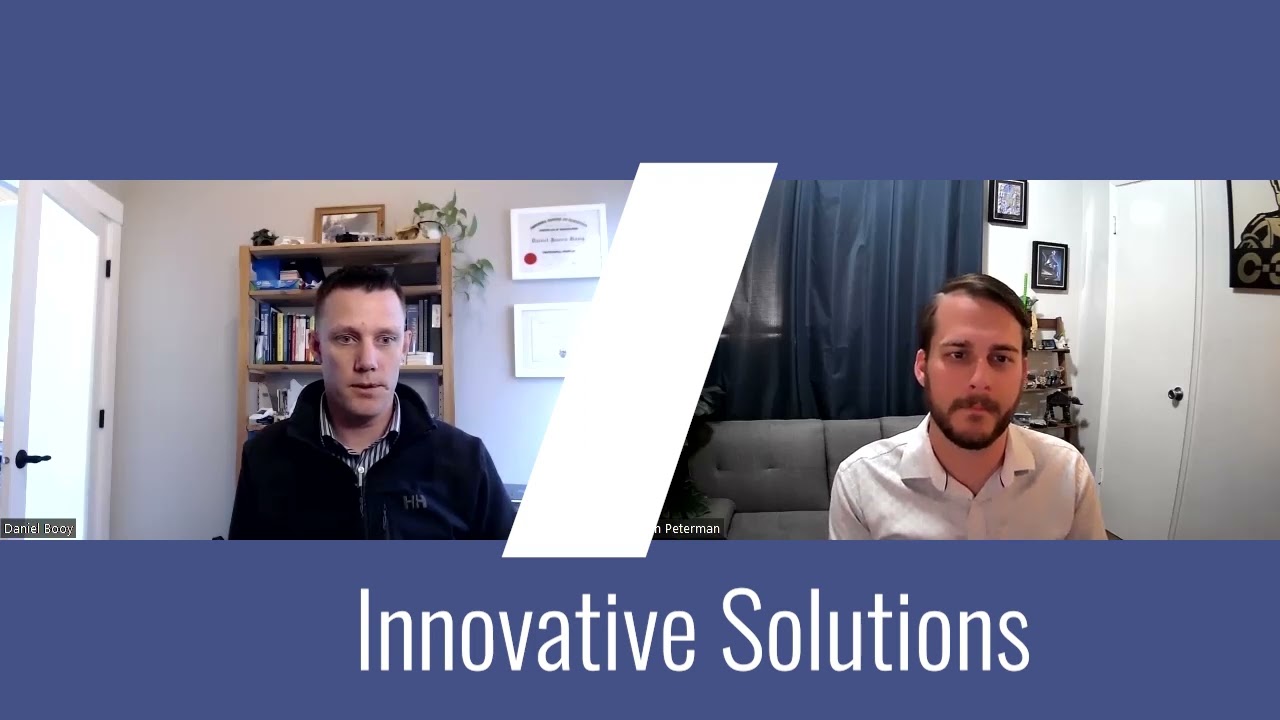
In this episode of Conscious Design, host Ian Peterman interviews Daniel Booy, founder of Altum Engineering, about the challenges and opportunities in decarbonizing heating, cooling, and industrial processes. Booy recounts his early fascination with a school’s geo‑exchange system, which led him to study mechanical engineering and specialize in ground‑source heat‑pump design. He explains the trade‑offs between air‑source and ground‑source heat pumps, emphasizing that their carbon impact depends on the electricity source and seasonal efficiency. The conversation shifts to the need for future‑proof control architectures that can respond to real‑time utility signals. Booy advocates for universal adoption of the BACnet protocol and a gateway that bridges BACnet with the Open Charge Point Protocol (OCPP) used by EV chargers, enabling buildings to receive separate carbon‑intensity and price signals from utilities. He illustrates how smart control can shift loads—pre‑cooling spaces, using thermal storage, and timing EV charging—to align with low‑cost, low‑carbon electricity, reducing peak demand and transmission losses. The discussion also covers practical concerns such as upgrading electrical panels for multi‑unit EV charging, reducing copper usage through shared feeders, and the importance of integrating building, grid, and charging stakeholders. Booy notes ongoing work in ASHRAE task forces on building decarbonization and grid‑building interactions, and calls for open‑protocol, plug‑and‑play solutions that allow mechanical engineers to implement these systems without deep networking expertise. The interview concludes with Booy sharing contact information (website, LinkedIn) for further collaboration.
Chapters
Hello and welcome to this episode of Conscious Design. I'm your host, Ian Peterman, and author of the book Conscious Design. And with me today, I have Daniel Bui, owner of Altum Engineering, and they help to decarbonize not only just heating and cooling systems, but entire industrial buildings.
Yeah.
loads and processes that need, need that as well. Welcome to the show.
Thank you.
Yeah, so decarbonizing is, is definitely something pretty much everyone at this point is aware of, is something we're thinking about, um, and how to do it. And you mentioned obviously the heating and cooling, people think about that pretty, pretty easily about, well, we want to make sure that All of that works well, but you do more of the hidden things as well, like industrial side, which if you think about it, there's way more industrial happening than just heating and cooling. How did you— those are a pretty big area to work in. How'd you get into specializing in, in this area and, and really starting this decarbonizing process?
I graduated from high school in 1995 from a school that had a geothermal system in it, or geoexchange system in it, and it was one of the first schools to have that. And I snuck downstairs into the under-the-floor area and crawled around and looked at what all the pipes and heat pumps and stuff, and then I got kicked out of there eventually by the contractor, and then, um, that stemmed my interest in it. And then I decided to go into mechanical engineering in about 1997 with the intent to change things, not from, uh, complaining about what's going on in the world, but from making better machines, because I think decided at that point that in general machines were wrecking the world and I could get into creating better machines and it would be a good path for me to take. So I would feel better about that.
Yeah.
And yeah, so then I took mechanical engineering and then the end of my degree I met a person who was heavily into geoexchange, ground heat transfer testing and modeling and and ground heat exchanger design, so for ground source heat pump systems. And then, yeah, I did a whole bunch of stuff in that industry and helped get it going commercially in British Columbia and North America and helped bring in people who were very experienced in it already and did appropriate design and training for people in British Columbia and Canada and all around North America, and then eventually helped other people in other countries with learning how to do it and got a lot of exposure to different things. Because it's— you can imagine there's a lot of heating and cooling in many different scenarios.
Right.
Yeah, that's a, that's a short background.
Yeah. And so obviously there's all these systems, there's so many different ways to go ahead and heat and cool and control these things. Now, not all of those are obviously very carbon friendly. A lot of them are not as good for the environment. So what my question is, what kind of technologies are you looking at? Are you looking at kind of new technology or a more systems-level increasing efficiency to be able to help decarbonize these pretty inefficient, not environmentally friendly options that are out there?
Well, it's a mix really. A lot like most things that are near ambient temperature, so in around Interior building temperatures is easy to hit with heat pumps, either air source heat pumps or ground source heat pumps. And that's not new technology, it's been around for a long time. The air source heat pumps have come a long ways in a short amount of time. The ground source technology has been around for a long time.
I think—
Better at both technologies and They're both driven from electric energy, so depending on where the electric energy comes from, we also have to look at the carbon content in the electricity that's being provided to the heat pumps.
Right.
So, right, yeah, for instance, you maybe have a natural gas boiler running on site at a relatively high efficiency. be looking at changing it out with an air source heat pump that may not be running at a high efficiency during the winter when it's cold out. And if the electricity being sent to that heat pump is from a very carbon-intensive source, you might actually be increasing emissions.
Right. Yeah, and that's something that we talked a little bit about before, is like, it's not just, right, your local, right? You can have a super green, really, really low carbon on site, but you gotta look at your, your transmission. Is it really far away? Is it really energy intensive to get the energy to, to the site? And, and really that holistic level. Are you— when you take on projects and you're looking at all that, kind of what are all the factors that you start to look at? In order to determine what is going to be possible, what you can actually decarbonize in a, let's say, a commercial scenario?
Well, in general, we're trying to get the control systems into the application so that the control systems can be modified later if we get the right signals from the utilities. Most utility structures right now are time of use, so it's quite prescribed. It's prescribed ahead of time and not so much spot market carbon signal coming to the building. Okay.
But it's—
the carbon and price signaling is by price scheduling. So a lot of people will charge their vehicles at night. It's cheaper at night for electricity. Do things with electricity at night if they can move heating loads to nighttime with electric-based heat and then store it for daytime use and use a less expensive energy at that point in time. But it really depends on the jurisdiction, and we have to approach it with the future in mind and trying to make sure that anything we leave behind us. is future-proof as much as possible, and that someone can add on to it and work on it easily. One of the things that's important with that is making sure that the control systems have BACnet, which is the American Society of Heating, Refrigerating, and Air Conditioning Engineers protocol for communications between control systems.
Hmm.
So that's an actuary And BACnet is a language protocol that you can talk to other controllers, and it's kind of a central language that's been developed, protocol that's been developed for integrating things. So then what I'd like to see eventually happen is that all utilities are mandated to use the same type of communication to the web so that we can get our building controllers in every building to be reading the carbon and cost signals, like separate carbon and cost signals from the utility. So if it's a low price, that's one thing, but if it's a low carbon content electricity, that's another thing.
Mm-hmm.
So you can— and then also being able to adapt the language that the car chargers speak with BACnet as well, because the car chargers speak OCPP language.
So is there— so it sounds like there's a bunch of different languages, and even though they're all— as an average consumer, right, we think of it as, well, there's power, right?
There's—
you plug it in, it's power, it's It's great, but there's actually more information with that, but there's not really— there's some language barriers between those systems in order to get that information. Is that—
go ahead. Sorry. What I really want to see is I want to see that we get our heads together And we all can figure out how to integrate the utilities with building systems, with the charging systems, all in one easy method. Because— so it would be a gateway between BACnet and OCPP and a gateway between the various languages that the utilities are using. But a standardization of how to do that securely through the internet without having to, you know, be a computer engineer or learn a bunch of programming to be able to do that. Because I'm a mechanical engineer and I have the ability to design all these control systems and mechanical systems and, you know, do all the right designs, except for when I go out and try to do that kind of networking, it's out of my league. So it would be nice for the building professionals to be able to just specify a piece of equipment off the shelf. Until that happens, at least we can make sure that the systems have BACnet-based in them so that we're future-proofing the building for when that does happen.
Right, because— and is there anybody really even trying to make that connection, or is that something you're You're just seeing as a, hey, this is a— hey guys, this is a problem. Like, we can't, we can't communicate.
There are a lot of people that are working on it, and I'm on the ASHRAE Task Force for Building Decarbonization and the Working Group for Grid-Building Interactions, and folks on that working group are very intelligent from different parts of the industry, including utilities, and have shown me in the short time I've been on the group, quite a bit of progress is happening around the world and in California in particular and other states. And so it's coming along and it would just be really nice to have a central standard that was developed where manufacturers could build to the standard, build all the gateways we need to do, and then have also a legal requirement for the utilities to have to be reporting these 2 factors on a real-time basis so that we can pick up on that and then do what we can on the demand side to reduce carbon use. So I'd like to Maybe give you an example if you like.
Yeah.
Okay, so let's say you have a 500-home development and everybody wants to put solar on the roofs and they're doing like a super green development and selling it to people that want to do heat pumps and solar and whatnot. And so when the sun shines and they have a lot of electricity and maybe a lot of surplus electricity, They might not be able to get it from that point, from that spot through the grid to other places where it's needed. So there should be, in that case, a— this is on a micro scale— signaling to the people around them in the local area network there. Maybe even off of that transfer station, depending on the infrastructure, to use up energy at that point in time. And if you have the right building system controls or process system controls, you could be— if it's in, say it's in summer, you could be pre-cooling different spaces or pre-cooling water in a tank. to use later and take advantage of that solar energy instantaneously instead of having it go up through transformers to a higher voltage and off down the line to other people. So that's also on bigger and bigger scales from that. So it's— that's the smallest scenario. Or in the wintertime, let's say, Sunny and the houses are all at a certain temperature and they've met their temperature, well then they've got to send the energy somewhere else. But you could also have discretionary zones in buildings where in the wintertime you're letting, say, a bunch of bedroom zones during the daytime drop their temperature to near 10 degrees Celsius or 50 degrees Fahrenheit. And then when, when that extra renewable energy is available in the area from wind or solar or whatever it may be, and the carbon and cost signals drop, then you might heat those zones right up to your 20 degrees or 68 degrees Fahrenheit using that energy when it's available. So, you know, using the thermal mass of the building as a storage And then as well, being able to talk to the chargers in a building and charge the vehicles at the same time when the energy is green. So that might be energy that's available when the wind's blowing hard or the sun's shining brightly. Right.
So basically it would allow you to really control down to a small scale where where energy is coming from and going to, allowing, you know, more— a more green solar power. Because once you— when you try to send it through long transmission line, like you said, it jumps in voltage. And that, if I remember correctly, that all ends up burning power. You lose— you end up losing some of that due to just transmission. So this kind of system would allow it to You don't have as much loss from transmitting the power then, correct?
Yeah, but also when you have peak demand at a later time in the day and you have to bring power in off of the grid, the grid can supply that peak demand right now, but it's not going to be able to keep up with all the electric being vehicles coming on and then people electrifying buildings. And particularly with a lot of the air source heat pump stuff that we see where the— at the coldest time of the winter, the air source heat pumps have a very low efficiency and a low capacity because they're trying to take energy out of cold outside air.
Right.
And then same thing in the summertime when they're trying to cool, they're trying to reject energy to really hot outside air. So they're Capacity is low. And furthermore, in the wintertime when they're trying to pull energy out of the air, they have to go into defrost mode, which takes energy out of the building and takes compressor energy to run the defrost. So, you know, the choice to go with ground source heat pump system versus an air source heat pump system may really be— it may matter a lot depending on where you are and how the peak electricity is generated. Because your baseload electricity may be clean hydro, for instance, but then if you max out on your hydro sources and you're bringing in coal-fired power from somewhere else, well, then that's not that green.
Right. You've lost your— people always think too, especially having lived in the Pacific Northwest, it's all hydro. There's dams on the Columbia. It's lots of hydropower. So people have this idea that it's always— if there's a dam next to them, they're like, oh, it's always hydropower. But not always. Not if you use it up and you have to bring in power from something else or a backup system of some kind.
Yeah. And so the other thing is peak demand on a building electrical panel. The electrical service to the building. So most electrical services were not built with electrical vehicles in mind. So if you have a multi-unit residential building and you have a whole bunch of electric vehicles getting parked there, and it's heated with natural gas and you want to decarbonize the building, you're going to be looking at perhaps a major upgrade on the electrical service. But if the utilities max out in that area for what they can provide on a peak demand basis, then you're not going to get an upgrade to your building system. So that's where we come in and we look at, okay, well, the peak demand is actually on the panel is actually for the peak time when everything's on, but that doesn't happen very often. So let's smooth out the load by charging vehicles at different times and Using thermal storage on the mechanical system and spreading out the energy loads on the mechanical system and domestic hot water heating and all that sort of thing. So make use of more of the amperage, the current availability on the panel for a longer period of time instead of having spiky loads. And then doing that on The larger level, right? So it's on the building level we can do that, and then we need to start thinking about doing that also on the substation level and the regional level, and then the grid level, and then further and further out, right? So if we're doing that, then with, with automation, it really needs to come from utilities, the signaling. But then you also have the part about people's vehicles. So, you know, I don't go out a huge amount. So if you had my charging profile would be one where I'd be willing to have the vehicle charged whenever.
Right.
And it could also, if the battery was capable of doing it, be able to discharge energy into charging other batteries in the same parkade. of other vehicles or helping out with the electric loads on the building. So when you look at the interactions that are required on a controlled system between the electric charging and the HVAC system, then that becomes an interesting thing as well because— You would, at the same time as creating a lot of peak demand with the electric vehicles and the electrification of buildings and processes, We also are creating a situation where we have battery storage already sitting there in all these vehicles.
Right, right.
So it's kind of the magic storm of good and bad. We just need to make it— we just need to make it happen.
Hey, it's Ian here. So glad you're enjoying this episode of Conscious Design. If you want the full scoop on Conscious Design, what it is, how we do it, how you can do it, then check out our book. We wrote it so creative entrepreneurs like you can code social and environmental responsibility right into your brand's DNA. You can download the first chapter for free. Link is in the description. Enjoy the rest of the episode. Don't forget to like, subscribe, and share. Well, and even I think as a Ford— Ford's truck commercials, they specifically called out that their truck battery is just— they designed their truck charging system to act as a battery for your house. It's like an emergency scenario. You can run your house off of your truck. But that's one company trying to do that. It doesn't mean that it's grid-wide doing that, which is— I've talked to a couple people that are looking at electrification and they're like, yeah, electric cars are really great, but But no one's really thinking about the grid implications of what— because you're basically taking all the energy eventually, right? The goal is to take all the energy that's transported via fuel right now through trucking, stuck in a gas station, and put that to the electric grid, which that's a lot of energy to shift over. into probably would be, I would consider an aging system.
It's not—
that's a leap, not something you can just evolve slowly into.
And if we are able, like, there are a lot of large-scale solar farms and wind farms coming online. So when they have the electricity available, I want to be getting that into the applications when it's available. And the way to do that is with automatic signaling to say, hey, this is inexpensive electricity and/or green electricity, and the controllers can decide what they want to do based on what the occupants or the users want to do, the operators want to do. And there's a lot of discretionary load in everything I look at where it's It's not quite needed all the time, so we can use those discretionary things as for thermal storage. Let them get a little bit too hot or let them get a little bit too cold and then wait for when it's really needed and then heat them up or cool them down when we have the green energy coming from the grid. Right.
So when you're doing that, I'm guessing that's going to be mostly at the commercial level. But is that possible at the residential level as well, being able to utilize that kind of thermal storage?
Well, we already have thermostats that people can get onto their iPhone with, and the technology, the communication technology is there. But what I see is that major suppliers of thermostats and electric vehicles are all thinking very independently in terms of how they interact with the rest of the world.
Hmm.
You can have all your preferences for your charging of your electric vehicle and your own house and whatnot with your own proprietary system on your iPhone or on your smartphone, whatever. And that is not what we need. What we need is that the chargers are talking to the building control system, and the building control system's looking at the panel in the building and knowing how much average is being used, how much it can use. And then people are logging into an interface where they can say when they want to be— have their vehicle charged. And then having the thermostats in the building also integrate with that. And it's not beyond our technology we already have to pull it all together.
Right. So you're, you're talking about the system that we really need to move towards is more of, you know, what we might have thought of as a smart home, you know, or a smart building. Before we just stuck an Alexa or whatever in the house and called it smart, but actually having a building management system that you as the owner-operator, whoever, manager, could be able to actually control the electrical system. Because right now, all I have is a panel in my house, right? And that's it. It's just a panel. I have no way to determine anything, any guidance whatsoever for how electricity goes in and out of my house, right? There's no interface.
In the simplest case, let's say you're living in a multi-unit residential building that's heated and cooled by a central heat pump system with chilled and hot water being pumped around, and you have a thermostat where you can decide What the— for during a specific schedule for a zone, you can decide what you would allow that zone to drop down to in heating mode or rise up to in cooling mode during different times of the day. Very simple thing to program.
Right, yeah.
So then the building system would look at those signals through the BACnet system In the building and say, okay, well, that's actually some zone that can help us, so we're going to let it float when the carbon signal from the utility is high.
And then when—
Or when we want to save money, like let's say, um, it could— it can be— it needs to be a financial and carbon thing because Sometimes it's just going to make more sense because you need to use the panel for its peak amount all the time, or as close to peak as possible all the time, so you can meet everybody's loads. So let's say you drive an electric vehicle as well. So when you're parking your electric vehicle and plugging it in, To be able to like get onto your smartphone and say, okay, I need this vehicle charged by this time. And then the chargers can actually read the vehicle's charge level and communicate with the building system. And then the building system knows based on what all the thermostats are doing in the building and what the temperature is, and they can even look now at forecasting weather. and build that into the algorithms. But the— so the key problem right now that I see is, and I think it's being solved, but I don't feel like it's being solved simply enough and quick enough. And I think it should be done really in an open protocol environment. So it'd be great if, you know, if there were some people who were into developing code and things listening to this and wanted to take it on as a challenge. Because really it's a matter of figuring out how to get that data from a utility easily and securely.
Right.
And then how to integrate the BACnet IP network with the Open Charge Protocol controllers or charge controllers. Because you also look at how much copper are we going to mine to charge electric vehicles in multi-unit residential buildings? Because I see a lot of new buildings having 1 or 2 chargers. It's first-come, first-served basis. Well, if you've got 100 vehicles coming home and they're all electric, you can't have 2, 3 chargers and people going down in the middle of the night to see if there's charge space or not for them to park their car.
Right.
It's not going to work. So when you start looking at electrifying arcades with large wires to get the peak loads to all these cars, well, then you're going to be coming off the panel with off the main panel with circuits that are quite large wires. You can have a— if you can have a feeder wire to, you know, 10 cars and then only be charging 2 at a time, then you save running 10 feeder wires of the same size.
Right.
Sharing feeder wires and cutting down on the copper. And like, if you've ever been to a copper mine, you'd see like how much is— how much energy and GHGs go into mining copper. Right. And producing copper. So thinking about things holistically and the embodied energy and like, what are we going to do, how are we going to do it, really it's somewhat frustrating because we see people working on all sorts of high-tech cool things that are good for the, you know, for themselves really, but not really good for the environment. And this relatively simple thing hasn't been figured out.
Right.
But there's way more complex things going on in, in the tech, in the tech sector.
Right. Yeah, well, I mean, it makes, it makes sense, a lot of sense to have a building-level system. I mean, that's— it just seems like we put it in everything else, right? Everything else has a system you can log in and access, but homes There's kind of the whole smart home started, but it wasn't really the home, right? It was just devices inside the home, not having anything to do with the actual home systems, which we just don't really think about. We're still like, oh, it's a home. You plug in, here's an outlet, you plug it in, there's always internet, there's always everything coming out of the wall.
Cable wires. It's also industry, right? Like, if there's all sorts of processes that you can look at where you could incorporate thermal energy storage into the processes. So if you're having really green energy come onto the grid, then you run the heat pumps harder, run more heat pumps to store service hot water, for instance. things like that. Or just direct electric loads that are appliance loads with motors that you can run more frequently, increase production when there's a lower carbon or lower cost electricity happening. Some grids have that signaling, but definitely like here in British Columbia where we have BC Hydro and we've got hydroelectricity, We don't have that signaling, but I build that capability into the systems that I design and build in the controls by making sure that they have BACnet capabilities. So should that happen in the future, we can take advantage of it.
Right. Yeah, future-proofing is really important, especially if people are working on a solution in any capacity. You want to be able to plug in. Is it— are grid systems, are any of those utilities looking at— is it something that they're starting to? Because I feel like there's pressure to track that kind of stuff more and more.
Yeah, everybody's looking at it. I think that the The real collaboration is required between the 3 parts: the utilities, the building, and the electric charging.
Right, right. Yeah, it's a complicated system for sure.
Even on the utility level, you'll see— like, I've heard about utilities who have a great deal of wind power or solar power available at certain times, but they can't get it off of that section of their grid because their transmission lines can't do it. They're maxed out on how much they can push out of that region. So if you had signaling within that region during those times to absorb energy into electric vehicle batteries or— discretionary zone or thermal storage in different plants or running more motors in plants where it's, you know, where you can change things. Or like, have you even thought of greenhouses where you could add more lights on it during certain times if it helped them out with more photosynthesis or whatever it may be, right?
Mm-hmm.
And if that energy can't make it out of that region, you should be using it when it's available. Right. Yeah.
So yeah, that's a great— that's a great idea. I'm hopeful that that won't take too long because it does seem pretty logical. Like, it's something that can— we have the technology to do it. We just need to get them all to communicate together.
And I'm asking people aren't doing it. It's being done in areas where it's not a new thing, in areas where they have time of use rates that are figured out ahead of time. But it's a financial signaling, not a carbon signaling.
Okay.
So when you've got off-peak rates that are lower, people will already be looking at using thermal storage and charging batteries at night when it's, when it's less expensive, and like a summer peaking utility kind of thing, right? So that's, that's happening already, but it should be more global in that If a utility is buying electricity from another utility adjacent to it, or even in another state or province, or even across the borders— we buy power from the states here in Canada and back and forth— so when that power is being purchased across the border of a utility or a country or both, and it's not as clean as people would expect, and that signaling should be coming to the building controllers, and people should be able to say, okay, well, I'm just not going to use energy when it's dirty. Then when it's coal-fired power being imported into a hydroelectric zone, well, that wasn't my intent in buying the heat pump. So, you know, if it's, if it's a high carbon content power, then I'm just gonna allow all the zones in, in my place to go down to 10 degrees C except for maybe my office during the day or my bedroom during the night. Well, it could set back.
Right. Yeah, it would give you the ability to actually pick and choose, which might accelerate some coal-fired going away and getting some new energy in if it's not being bought.
Yeah, the carbon intensity changes I think faster than on a prescribed schedule basis, if you know what I mean.
Mm-hmm.
There's— if you have a prescribed schedule for time of use rates, that's kind of not indicative of what's happening on the carbon— the carbon intensity of the electricity. Because it's pre-thought out. So depending on the mix of where the electricity is coming from at every moment, it could change. So having a preset schedule isn't the way to really be realistic about it.
Yeah, not when you're really trying to compare both cost and the carbon footprint of what you're getting. Yeah, no, that makes perfect sense.
Particularly if people are buying carbon credits for what they're doing.
Yes.
It's not actually saving carbon, then you have to consider the legal— like, legally, is that cool, right? Because then you're buying carbon credits so you can keep doing what you're doing somewhere else, but you're buying them from somebody who's not actually saving on carbon. Well, then that's It's counterproductive to the intent of the whole thing.
Right, right. It's not, not what it was supposed to be made to do. Yeah, no, this is, this is a super fascinating thing, and I've, I've touched on it before with a couple people, so it's really great to have your, your kind of this deeper dive on, on the grid system like this. And what hopefully what the future is going to be for being able to have smart buildings. And this has been super informative. I'd love for you to— is there anything else you want to kind of share or add to the conversation?
I think that's quite a bit for now.
It was a lot of information. Super informative, but we need, we need to have this part figured out too as we electrify everything. It's a, it's a need, I think, at this point.
Yeah. Yeah.
Awesome. Well, for anybody that's wanting to talk to you, get work with you, things like that, what, what is the best place for people to find you?
Our website.
Perfect. And we'll have, we'll have a link, link to that in the description for everyone, so it'll be easy to find. Yeah.
And yeah, people can pre-screen, see if they're a good fit for us or not. Uh, yeah.
Amazing, amazing. Well, really appreciate you taking some time to, to dive on this. I know you're, you're a busy guy, so appreciate it.
Yeah, and also connecting on LinkedIn is good too because I post stuff there and like people's things and put my thoughts out there as well. So that's a good place to get into the feed. I don't really do Facebook or Instagram or anything like that.
LinkedIn is good though. It's very business-focused, so which is great because you— that's more what you do.
Yeah.
Awesome. Awesome.
So, well, yeah, thank you for your time.
Yeah, of course. I appreciate you as well. I appreciate it.
More from Ian


You Didn't Know a Shampoo Could Do This #Shorts #shampoo #ecofriendly #haircare





The Biggest Misunderstanding About Bioplastics - Sustainable Materials Consultant Joanna Pool

A Polymer Scientist Explains the Truth About Bioplastics #podcast #sustainability #science



NASA is testing this on Mars… why not Earth? #Shorts #GreenTech #NASA #science