Interview with Daniela de Sá of Najha Fashion on How a Human Touch is Needed in Fashion
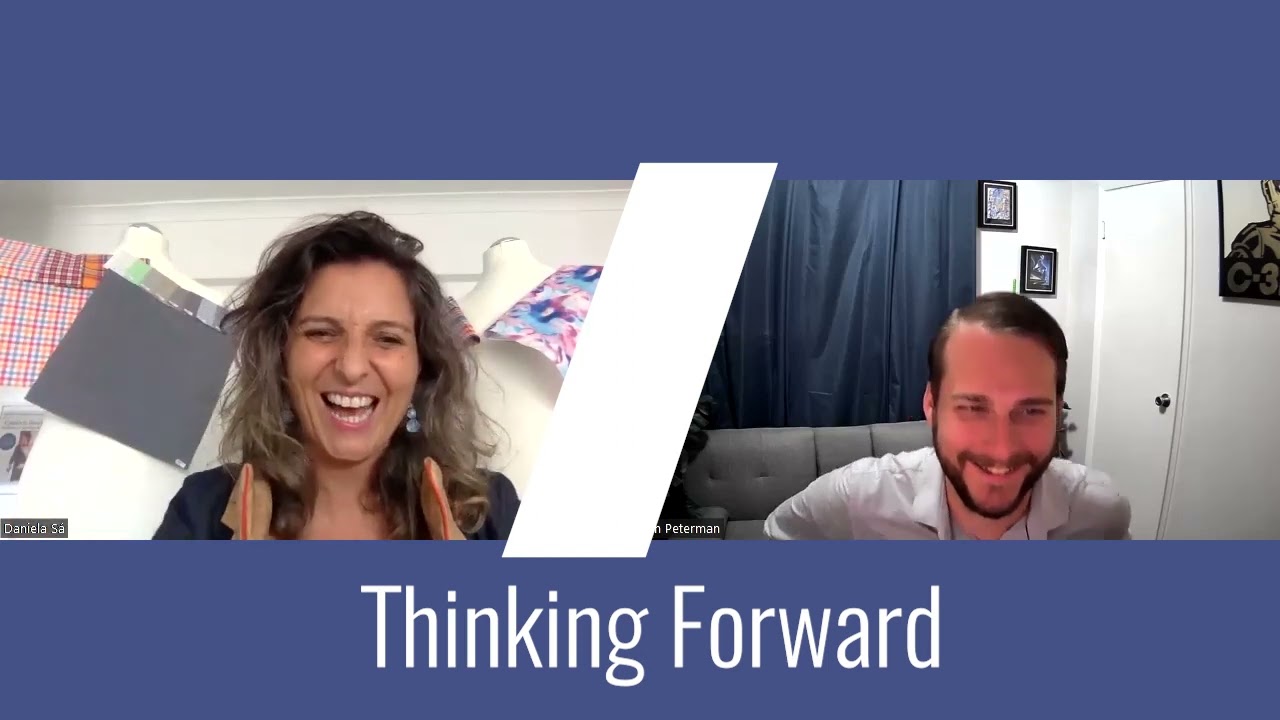
Daniela de Sá, founder of Najha Fashion, makes vegan shoes from cork, upcycled marine plastic, and recycled rubber. She uses ten plastic bottles per shoe and runs a take-back program to remanufacture worn pairs. The fashion industry dumps 1,800 trucks of waste per second, she says, which is why her brand focuses on closed-loop production instead.
Chapters
Hello and welcome to this episode of Conscious Design. I'm your host, Ian Peterman, and author of the Conscious Design book. And today I'm excited to have Dengela. She's the founder of Najah Fashion. They're focused on sustainable products in the fashion world, which is amazing. We need more of it. So welcome to the, welcome to the show.
Thank you. Thank you, Ian, for the invitation. It's quite exciting to be here and talk about sustainable fashion.
Yeah. So first, I'd love for you to dive a little bit into how— what has your journey been to get to where you are now running a sustainable fashion brand? Wow.
Yes. This is like a long way, but you know, when you believe and you dream about it, just keep going. And, um, I, I actually, I born in, um, I was born in a shoe family business, uh, so I, I already grew up in the middle of fashion related to shoes.
Wow.
And along the way, I was, uh, always seeing trends and fabrics and all these these things about around the fashion. I was in tune into that since child. And actually, I start to work in, in the shoe family business, and I realized that, okay, I need to do more because I realized how polluting was— is the fashion industry. And we have to change. Okay, I have to change this, this point. And I traveled to Italy to study about bags, design and patterns of bags. Then I came back, then I started this whole concept of sustainable fashion. And it's very interesting because I studied management, management and marketing, and along the way, as soon as I was working with the family business, the design started to, you know, I wanted to learn about design, and I spent—
I love that.
5 years working during the day and studying the night, all the way. Everything about fashion, creating collections, and it was quite amazing. And then I realized, okay, I want to go further with this concept because I was already vegetarian in that time. And I was realizing this is not me, you know. I, of course, I was liking to work with the family, but was not me, was not, uh, you know, in my— it was missing me something. Then I went to Italy and then I came back to Portugal and started all these concepts about sustainable fashion, which has been a long way because in that time was very, very few information, was so difficult to do something and work with the producers was so difficult because they don't understand the concept. They think that this is a strange girl coming talking about sustainability, you know, was like kind of boring for them. But yes, we just keep moving. And no, you know, uh, was these, these my 2 passions, fashion and planet, That keep this dream alive, you know. It was keeping like, I have to do this, you know, like it's my mission, you know, because we're not talking only about fashion, we are talking about the planet. And this is a point for me and for the brand, of course.
Right. Well, that's Really, everybody has an interesting story and how they get into it, and it's a lot of, you know, being driven. Like, yes, this is something I need. And it's not really like, oh, I feel like doing this. Most of the time it's just this need of, no, we need to make this industry, whatever industry it is, fashion for you, like, we need to make this better. We can do it better. And now here you are. You are doing that.
Yeah, and you know, let me just tell you one more thing.
Yeah.
All the voices, and for the people that are wanting to start a project or a business, all the voices around me were telling me, you are crazy, you know, you are crazy. And when you— when I shut up all those voices and listen to my heart, I was able to be sure, no, this is what I want to do, and just keep moving.
And yeah, that's a really good—
For all the entrepreneurs that want to, to start something and have some doubts, sometimes listen to people after the baby is already created. First, you know, just go inside your heart and And create what you want to create. And then, okay, start to listen to people. Just be careful and keep moving.
Yeah, that reminds me, I just talked to someone a couple weeks ago about their journey. They're in a pretty big company and they started the first sustainability kind of effort inside their company over a decade ago. And they also are told, oh, this is silly, this is— what in the world are you doing? This is not— how could you even do what you're doing? It's too hard, all that kind of stuff. And now she's built a really great sustainable roadmap and they're doing really great work. And now all the people who used to say, oh, you can't do it, you shouldn't do it, are now coming to her going, How did you do it? We need to figure out how to do what you've done.
Yeah, yeah.
And she's like, yeah, I have a decade of experience now doing something that now everybody is like, oh, could you show us? Could you show us? Tell us how you managed to do it. And it's the same people who 10 years earlier were like, oh, don't, you're crazy. Why are you trying to do that? So I think, yeah, it's that, Like we say, listen, if you listen to everybody else, then most of the time you're going to be told no or you're crazy and you shouldn't. You should keep going, going and listen to yourself.
And then actually, when people say you are crazy, that means that you are on the right path. You know, like, it's— yeah, when they say you are crazy, okay, I am in the right path.
Right, you're doing it.
Out of the box of what they know.
Yeah.
When we are bringing something new, people are not used to it, and then for them, don't fit in their minds, and they tend to push down. So yeah, you are crazy. You keep going.
Yeah, yeah, that's so that is so true. We are we're so. Yeah, we're resistant to change, even though everything is always changing, which is interesting. Definitely. It's such an interest when you sit and think about that. It's such an interesting existence for us. We're so resistant to what is always happening. But there's some of us who just keep going, which is good. We need it.
Yeah, definitely.
Yeah, I'd love for you to talk a little bit about kind of the materials and the process that you've gone through with your brand to bring in sustainability, how you've approached it, what kind of materials you look for, things like that. Because that's— even when I talk to people in my company about, oh, we can do this, people are still surprised that there's sustainable, eco-friendly, vegan options out there. That actually work. And so, you know, I would love to take the opportunity for you to share kind of how, how you've managed to do it so that, again, anybody that's wanting to start their own could go, oh, it actually exists, it's possible.
Yeah, yeah, it's possible, definitely. Yes, it's possible. And it was, was a long way to find the materials and to wait also the market to start to work these needs fashion. And I started— I have here a shoe— I started with cork. You know, cork is from a bark from a tree, the oak cork tree, which is sustainable.
Right.
It grows a lot in Portugal and the middle and in the south of Spain. And it's a tree that we only take off the bark, and when we take off the bark, it allows the tree to grow more. What I explain is that when people are growing, they can use size a size like a 5 in this, in the shoe size. Yeah. And when they are growing, the 5 will be short in some time. No, in, in some years we'll need the 6. And this is what happened with the bark of the tree. The tree grow and the bark don't grow and the tree just stay there like, this is too tight.
Oh.
And then they take off, will allow the tree to grow and grow another peel of bark. It's so sustainable. It's one of the materials more sustainable that I, I know. And, um, actually is, is healthy for all the Bio— um, how can I say— all the, the animal, the forests around is healthy for that, for, for all the, the lives living in the forests.
Okay.
And it's really, really, really amazing. And you know, we only can take the bark When the grow start— the tree start to grow, we take— can take the bark at the end of 25 years. 25 years you have to wait for to take the bark of the tree, and then the other harvests are in 10 and 10 and 10 years. Every 10 years we can take again the bark. So, to allow the tree to grow, to allow the tree to be strong, and only after the bark is taken off. So, this cork came from a tree with a minimum of 41 years.
Hmm, so it changes— the thickness of it changes as it gets older?
Yeah, and quality is much better.
Oh, okay.
Yeah, yeah, it's amazing. So amazing. It's so amazing, and it's so, so sustainable.
And you just keep harvesting, right? You just— there's not really an end to it because it's like—
And I can tell you that a tree that is harvested can live 200 years. Sorry, a tree that is not harvested can live 200 years, and the tree that is harvested can live between 250 or 300. Oh, wow.
So it actually lives longer. Yeah, it helps the tree live longer as well.
Yeah, yeah.
Because I never knew that about cork.
It's amazing. Yeah, the concept, it's amazing because we are helping the tree Okay. It's like so, so amazing. It's very, very interesting, the cork, about the cork and the way that is peeled and is after peeled, it has so much work to do to be able to be a tissue, a fabric, but it's in— and it's all handmade. There is no machines available to do the cord pattern. Yeah, yeah, it's all by hand, and that's why it's the same price as the high-quality leather. It's the same price.
Hey, it's Ian here. So glad you're enjoying this episode of Conscious Design. If you want the full scoop on Conscious Design, what it is, how how we do it, how you can do it, then check out our book. We wrote it so creative entrepreneurs like you can code social and environmental responsibility right into your brand's DNA. You can download the first chapter for free. Link is in the description. Enjoy the rest of the episode. Don't forget to like, subscribe, and share. Right, because you can't— is it because you can't— because just nobody's tried to make a machine? Is that Or is it just too— it's just too hard to work with and you need a person to actually know what they're doing?
Yeah, you need a person. People just try, and the companies just try to develop machines for that, but to get this kind of quality, it's not possible. It's not possible because when we take a uh, a bark of the tree. It has different qualities in the same bark, and then qualities have to be divided by squares, you know. First quality go there, second quality go there, and the third quality go there. And then—
Okay.
Each quality must be glue again. You know what this means?
Oh yeah, oh, okay. So yeah, you have to repeat, you have to piece it together to make whatever size you actually need.
Yeah.
Wow. Yeah, that's an— that's— I, I don't know of a machine that could do that. That sounds complicated to do with a machine.
Yeah, yeah, yeah, we have people, uh, for example, the, the, the The men that take off the peels, uh, to take off the, the bark of the tree, they have to have a lot of experience because you must be very careful. It only— we can only take it from, um, June to August because it's the hotter weather, you know.
Okay.
And between the bark and the tree, it gains water. And you can do this and the bark—
Oh, wow.
So you are able to take it off. What I explained to kids is that it's hot and the tree starts to sweat, and so she wants to take— yes, to take the coat off. You know?
Okay.
It's like that, it's very interesting. And this was the first material that I started to use, was the cork, while the other materials was not appearing or didn't have the quality that I want. The lining, I was using organic cotton, With— yeah, it's already— companies are already working in organic cotton for a long time, also hemp, and now, which this one is amazing, it's fabric upcycled from marine litter. You know, it's so— look, it's so comfortable.
Amazing.
And actually in each pair We have 10 bottles of plastic bottles picked in the, in the ocean.
Amazing, amazing.
And the soles are made from recycled rubber. For example, one company that produces soles, sometimes there is mistakes in producing because was not that reference. or there is a, I don't know, a mistake here in the design, and those collections used to go to dump in, in, uh, okay, and now they are picked to be recycled in a machine that we put the, the sole there and it's like Granulated.
Okay, okay.
And then that granulated is able to be, um, melt and make new soles.
Oh, amazing. So actually, so you're taking waste from other shoe companies?
Yes. Yeah.
And then recycling it into a good new sole. That's awesome. Are you, are you able to take, like, if you have one that has a mistake in it, are you able to take— can you recycle it a few times, or?
Yes, yes, you can. Yeah, for example, it can, can be recycled again. This is one, one of the things that we, we ask to our clients. It's at the end of the life of the shoe, send us back. They receive a Discount washer, and we are able to use this to recycle it again and make other products.
How much of the shoe can you recycle? Like, when you get one of your shoes back, is it— are you able to do all of it, or kind of how much?
Yes, all of it. It has—
Amazing.
Yes, we have to take the soles to one side and the fabric to other side, But it's able— we are able to recycle it all.
Wow.
That's impressive. Really.
Most shoes are not recyclable at all. So that is very impressive that you're able to do that.
My big question to find materials is because sometimes you can find vegan raw materials in the market, but they are produced in high-quality, uh, in high-polluent conditions. They are vegan but not sustainable, and we have to look at that, you know.
Right.
Because there are fabrics very, very, uh, similar to leather which are vegan, but if we check the production of those materials, it's high highly polluent because it has very much polyester and the dyings are very polluting.
Yeah, just to check, that's something that we've, we've been— because we've been researching different— and I— we do this for fun as a company because we have to keep up on sustainability. And we've, we've noticed, yeah, there's a lot of vegan leather options Yeah. But then when you dive into actual materials, it's like 30% plant, 70% some kind of plastic. And it's not, it's not as, it's not as green and as nice as, as it seems to be at the surface level, which is unfortunate. Hopefully, hopefully they get better. But yeah, there's like you're pointing out, there are other options out there like cork.
Like that's yeah yeah yeah but the tree there's nothing else there's nothing else yeah and we really have to be careful when we are checking because there are many vegan label products which are not sustainable yeah yeah and I think about the concept. We have to keep these 2 words together, vegan and sustainability. This makes sense for me, you know? Yeah, yeah, yeah.
Well, it doesn't— I mean, I guess you can, you can obviously make it unsustainable vegan or sustainable non-vegan, I guess. But still, it's better, better to put it together and make an even better, even better material. Uh, I'm curious, because you mentioned a couple things, but first I want to kind of jump back to is you, you talked about timing and the market being interested in this type of thing. So looking— because you've worked in the fashion industry, you've experienced more than the last couple years, you've worked in it— so is now— does it feel like a big shift has been made? Do you feel like there's more kind of— how are you seeing the market in terms of sustainable being profitable now?
Yeah, you know, it's— I think it's a work in progress, but the sustainable market is growing a lot, a lot, a lot, a lot. And if we do many searches in, in many countries— USA, Japan, even Emirates— it's growing, growing, growing, growing. And Europe, of course, is also growing every day. And I think for vegan and sustainable brands, this is a huge opportunity to grow because this is a changing point. The thing is the honesty inside the market to really being sustainable and vegan. Not only the label, which is the— sometimes it happens in some brands that it's only the label, the green label, but the concept, it's not green. The market growing a lot. The only thing that I advise and what I do is just to be more open as we can about what is in the back office of each brand. And when people is buying, just buy to those people that really are working in the sustainable market. But it's growing a lot, and for sure we'll be— we are in a changing point for the fashion industry, which is needed. It's the second most polluting industry in the world.
Right.
And we really have to look at that and, and, uh, take care of the waste that we are doing with the fashion and dyings and production and high production to have low prices. And we cannot imagine— just imagine, Ian, that it's better to produce 10,000 pieces and waste 50% of them and dump it in the landfills, deserts, because those 10,000 pieces will be cheaper if I produce only what I need. You know what I mean?
Yeah, yeah, yeah.
This is— Insane. This is insane.
It is. It's kind of a surprise. It always surprises me just how much, like, overage there is in production because it's coming from more of the technical hard goods and even high-tech waste. Like, lean manufacturing has been something that's been been huge and people focus on just-in-time manufacturing and things to reduce waste as much as possible. And not to say there isn't waste, there definitely is, but there's also been a lot of focus on it. And then the fashion industry is still figuring out how to do that. It's still, it doesn't have it ingrained as much in it. It's more of, well, We'll produce, like you said, we'll produce 10,000. It's fine if we only sell 50%.
Yeah.
Which is crazy. It's a crazy like model financially too, to me. 'Cause it's like, well, that doesn't, that doesn't really make sense.
Nope.
So it's, yeah, it's such a, it's, it's an interesting industry and approach that I just don't, I don't understand myself.
But anyway, this is, um, like I call it old economy way, uh, because it's just producing, producing, producing no matter what.
Right.
And, uh, it's— we are in this point at this moment in the world, in the fashion, fast fashion as you know it, and definitely Uh, we are the ones that have to look at that and start to change, start to change, you know. While we were talking, and we are talking for 30 minutes, um, while we were talking, uh, this is 30 minutes, is how many seconds? I, I don't know, but whatever.
1,800, I think.
1,800.
Yes. Yeah, yeah.
In 80— in while we are talking, 1,800 trucks of fashion waste were dumped in the, in the forests, on the, or in the desert. So per second, one truck is dumped in the forest with the waste from fashion.
So you—
Yes, it's, it's, it's incredible, the waste of fashion. It's incredible. And we— I think we have to start the way back, you know, just push all those materials and start to recycle them. Because why are they being dumped in forests and deserts? Why?
We can But it's still good material. It's usable.
And do new materials. Do new materials.
Right.
This is very urgent that we start to change this way of living in fashion.
Yeah.
I always say it's not about doing— stop doing fashion. It's only about doing it in a different way is the only thing.
Yeah, yeah, I think that there's— I think some of the pushback is, well, we don't want to stop making clothes, like we don't want to stop fashion. And yeah, your point is totally right, it's not— the idea isn't to stop fashion, the idea is to do it in a better way that is more sustainable and more conscious and more better for planet and people rather than just continuing on. 'Cause clearly the current path for the last few decades is not working. It's not the direction that we wanna go in.
Yeah.
I wanna also jump back to, you mentioned hemp as a material and here in the States, we had a ban on that until 2018. So I'm curious what your experience is from a European perspective of that material, how that's worked, how much you've integrated it, because, you know, for the American audience, we're, we're all still getting used to the fact that hemp's a material you use to make things, and yet the rest of the world is quite aware of it.
Yeah, and, and actually there, there is many, many people that that talk about the hemp and also bamboo, which is also quite polluting. And actually, I—
Yeah.
I use it in the beginning of the collections and I'm not using it anymore. And just because I wanted to stop using that kind of materials, but was one of materials, were both of them, one of the materials available in the market.
Right, okay.
And I stopped to use them and I don't use them anymore. It was in the 2 or 3 years of beginning of the brand. And I stopped to use them after knowing that producing of these kind of materials are not so... are not so sustainable. I was, okay, as far as I can understand, I will not be using this material, so I changed it.
Got it. Well, I mean, you found the cork, so that's amazing. Amazing material you found.
Quite amazing, yeah.
Awesome. Well, before we wrap up, I'd love to give you an opportunity to share anything else that you want to with listeners or how people can get a hold of you guys to talk to you, buy your shoes, buy your other items, and yeah.
Yeah, yeah, just be free to join us in our social media, which is @nasherfashion for Instagram, Facebook and Pinterest, and also the nasha.com, which is my website. There, there, there are my, my direct, direct contacts. So will be amazing talk about sustainability, anything you want. Also my opinion. Sometimes I talk with students also about entrepreneurship. With other brands, doing doing also partnerships with which I a partnership with a Portuguese water brand, which they have. Yeah, they they have the bottles are all recycled and recyclable, and we have a partnership which is Monchique the brand. The the Brand of the water, and it's it's quite amazing doing these partnerships and let this voice of sustainability go further and further. Very soon, they I will be launching two amazing backpacks with awesome to be connected with this kind of design. This is the the sneaker, and this is the spadril. with, you know, the details for design. This is like studying and drawing and it's quite amazing. And we'll be launching very soon 2 backpacks and also some pieces of clothing step by step and to showing also our concept. These are new materials, all From poly— recycled polyester and organic cotton. Everything is think in sustainability but also design. Be free just to contact me directly and have a chat, or any questions about brands and also partners. We, we are open to give voice to Not only the fashion or sustainability, and also the planet, which is very, very, very important.
Yes, our home. We need to take care of it.
Yes, definitely. Yes.
Amazing. And we'll— for everyone listening, watching, we will make sure there's— there will be links in the description for all the ways to contact Danielle. Well, I really, I really appreciate you taking the time to join me on this episode. It's been great. I learned something new about cork, which I never knew before, so that was great. I love, I love learning about— I feel like I learn a new material every week still, and it's just not going to end at this point. There's so many, so many great ones out there. So I appreciate that. I appreciate your time, and it's been great chatting with you.
Thank you. It was great to be here also, and I've this conversation about design and sustainability is so important. Thank you very much for your presentation.
Awesome.
More from Ian


You Didn't Know a Shampoo Could Do This #Shorts #shampoo #ecofriendly #haircare





The Biggest Misunderstanding About Bioplastics - Sustainable Materials Consultant Joanna Pool

A Polymer Scientist Explains the Truth About Bioplastics #podcast #sustainability #science



NASA is testing this on Mars… why not Earth? #Shorts #GreenTech #NASA #science