Interview with Eric Ressler of Cosmic on Making Brands More Impactful and Visible to Customers
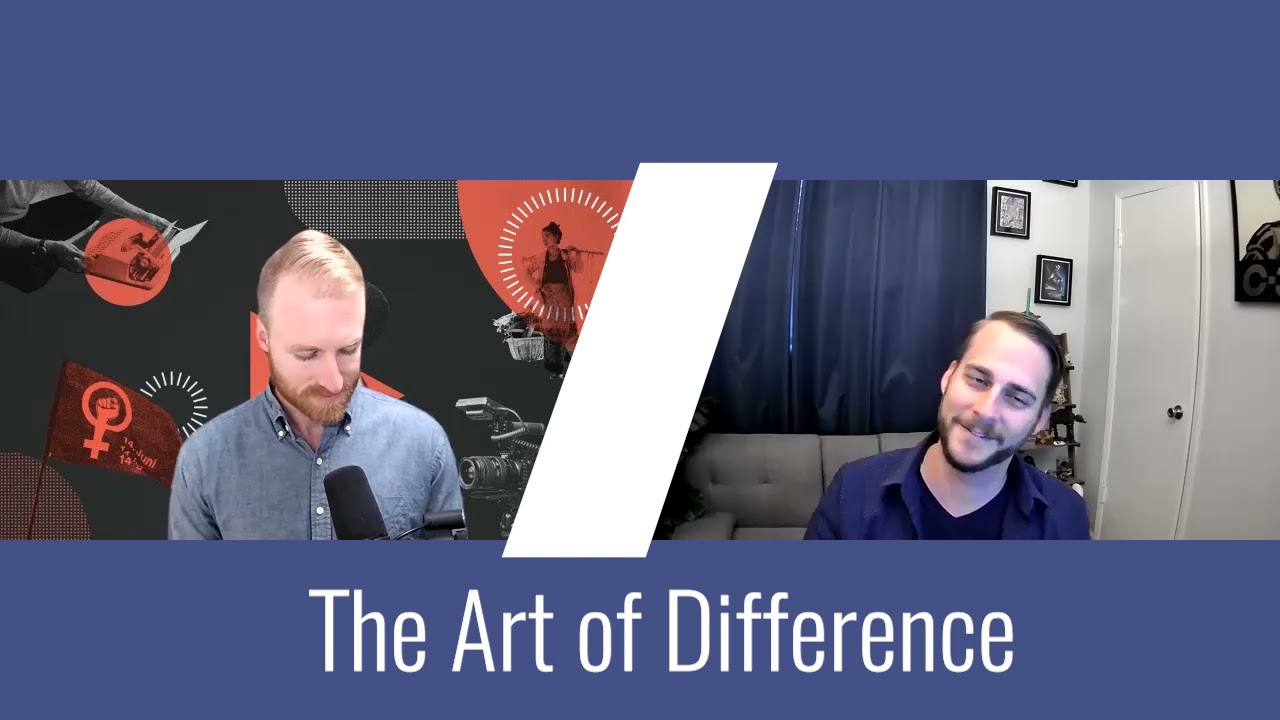
Eric Ressler, founder of design agency Cosmic, explains why his firm narrowed focus to nonprofits and social enterprises. He outlines a simple formula: commit to good work, do the work, tell the story, repeat. Effective branding unlocks revenue that fuels impact.
Chapters
Hello, my name is Ian Peterman, host of Conscious Design. And today we have Eric Ressler of Cosmic, and they are a unique agency that's focused on social impact, which is something people are more and more and more aware of. And I think we need a lot more of. So welcome to the show and tell us a little bit about how did you get into creating an agency around social impact? We all talk about it now, but you're actually doing something about it.
Yeah, thanks, Ian. Happy to be on the show. My trajectory into social impact is maybe a little different than other folks. I really come from a background Of creativity and digital media and design and started a design agency called Cosmic about 11 years ago now. And when we first started, we were really focused more on kind of just like the design and the discipline of design and not really specialized around a particular sector. We were working with a lot of startup organizations, B2B brands, and B2C brands based in kind of the Bay Area in California. And kind of cut our teeth doing the work with basically anyone who needed help with those elements. And over time, we kind of realized as an agency, we needed to find a niche that we could really own. There's so many different creative agencies out there. A lot of them are really good, and we needed a way to kind of differentiate and put a stake in the ground and deepen our expertise around a particular discipline or sector. When we started to look at All the work that we'd done over the years and the work where we felt like we got the most meaning out of the work and where we really saw an opportunity for our skillset to help the most, we really started to circle around this sector of social impact, which to us is really about organizations who exist purposefully to do good in the world. There are other organizations who exist for other reasons who also do good. And that's, that's great. We're behind that as well. But there's something unique about an organization that exists primarily to do good over making profit, and/or alongside making profit in the case of social enterprise. So that's really the sector that we focus on. You know, it's comprised mostly of nonprofits, social enterprises, which are, you know, B Corps, or businesses that have a market-based approach, maybe even make a profit, but they really value and prioritize impact. at least equal to, if not above, kind of the profit side of things. And then there's kind of the funder side. So this would be philanthropists, foundations, community foundations, and that side of things. So the folks that are investing in impact and not doing the work themselves so much.
And so you mentioned obviously that, you know, NPOs, nonprofits, is something that people think of automatically of, oh, who does good in the world. Um, so that's kind of what we all think about, but I know we've talked about some of your other clients that are in products and in other areas. Do you see— have you seen a growing number? Has your, you know, percentage of nonprofits to, you know, normal, so to speak, companies that are, that are doing, you know, there to make money too, is that, is that shifting? Are you— Growing— is there more growth in that sector?
I think there is growth in that sector, and I think that a lot of nonprofits are starting to look at diversifying their revenue streams and, you know, selling services through consulting, sometimes even creating products or bringing in revenue through other means beyond just gifts. I do think there's also a lot of organizations that 10 years ago maybe would have formed as a nonprofit choosing to form as a B Corp or a philanthropy LLC instead. There are some pros and cons to the different structures. To me, the lines are just starting to blur a little bit, and those structures are really mostly about how you file your taxes and your financial returns. Certainly there's a little bit more to it than that, but—
Right.
You know, I'll make a claim that not all nonprofits are doing good, um, and I think some nonprofits are actually formed as basically tax write-offs for folks who have a lot of money and want to find ways to not pay taxes on that money. So there's a whole kind of reckoning happening around what does it mean to do good? What does it mean to create meaningful impact? And being a nonprofit is not the only way to do that, and sometimes doesn't even necessarily guarantee that you're going to be doing that. So when we're assessing whether or not a client is a good fit for us, we're looking at all of those things and we're really looking at You know, how effective are they? What is their mission? How authentic are they in reaching that mission? You know, what does their staff look like? What does their team look like? And really just trying to look at it more from an impact perspective and less from a, you know, what is— how do you file your taxes perspective?
Right. And you mentioned— that's a good point. There's lots of reasons to start a nonprofit, not all of which are for doing, for doing good for other people. Sometimes it's just good for you.
Yep.
But you mentioned B Corps, and that's something that's growing in popularity, but not everybody knows about it. And it's still kind of, I feel, a little bit in its infancy. So when you look at that as a metric, like, how do B Corps, are they kind of falling into that same nonprofit where some of them are actually doing good and others are doing it purely for, oh, we have, we have a, you know, a green badge to stick next to our name where we look green, um, or kind of how do you see that as a metric for you and, and them?
I think the B Corp framework is great. I fully support it. And I think what's great about it is, so B Corp is actually run by a nonprofit, um, and what they're trying to do is to essentially come codify or certify basically starting a business for good, and what does that look like? And they look at it through a number of different lenses. Yes, in terms of money, but also in terms of equity, how the staff is treated, their sustainability scores, their supply chain. And so you can't just put a B Corp badge on and not actually meet a certain level of criteria. And I believe, I'm not an expert on kind of the B Corp framework, but I believe that you have to meet at least a B grade based on their criteria. And I believe you do need to be consistently improving your grade to continue to use the B Corp seal or badge. So I'm fully behind the B Corp. It's not the only approach to being a purpose-driven organization, but it's a really good step in the right direction because, yeah, we're seeing a lot of different brands essentially practice greenwashing or causewashing and using purpose-driven marketing language because there's this new, it's not quite as new anymore, but this growing kind of conscious capitalist segment of the population that is very purpose-driven in their decision-making around who they support, which brands they support with their wallets. And so, you know, you're seeing Causewashing campaigns from ExxonMobil, trying to talk about all the good green energy investment that they're doing.
Yeah. I've seen those.
Right. But maybe not mentioning all the environmental destruction that they've purposefully created for the last 30+ years. So I think we do have to be careful because the space is getting quite noisy and everyone's trying to figure out how to be purpose-driven. And overall, I think it's good because I think it's a conversation that is obviously really important to literally the the survival of our species. But beyond that, it's just the right thing to do and it's the right thing to think about. And I think that there's a reckoning happening around kind of like what are the drivers of capitalism in America, especially. And I personally believe there's a place for capitalism and that the free market does drive innovation. And I'm not someone who says that that's just all always bad all the time, but I do think that if it's unchecked and it's not carefully regulated and done with intention and done with the right outcomes in mind, then it can run away and cause some of the issues that we've seen around climate, around equity, around slave labor, and some of these things that you see in the supply chain. So I think it's a really good start to how we rethink capitalism in this country and how we kind of think about what are the things and the outcomes that we're trying to drive towards. And it can't just be growth and profit at the sake of everything else.
Yeah, I think it's— and supply chains, that's a whole conversation about the impact of them. But yeah, it's this growing, you know, what you said of conscious capitalism and conscious commerce and really just people The consumer has woken up a lot, a lot in the last few years, and especially the last couple years on the social side of things. So I feel like environmental has kind of just been humming in the background for the last 30 years, and it was stuff that I heard about in grade school. And so it's there, but it's just kind of been at a hum for a really long time where it kind of drones out. And now the social side is, I feel like, pop, you know, it's, it's been forced into our consciousness a little bit more. And now people are like, oh, remember environmental stuff? We should like think about that again and actually do something more than just hum along. Because it's not making enough of a difference fast enough. We're not, we're not doing it. So I think it's really important and A good point you brought up is the greenwashing of purpose-driven marketing, and people are using it. ExxonMobil is using it for their advantage. So how do you, when you're working with someone who says, we want to be purpose-driven, and you've already done the due diligence to know that they are actually, they're actually trying to do something good, not just Put a, put a nice pretty blanket over, over what they've been doing. How do you set yourself apart? How to set them apart? And, you know, how do you, how do you differentiate a real authentic, we have a purpose and we're trying to do some good here versus, you know, what looks good on the surface? Like, how do you help to guide them away, away from that potential swamp that no one will, no one will like you afterwards?
Yeah. It's funny because in certain ways it's actually pretty easy in the sense that people are pretty smart. Like, I think we really kind of understand pretty intuitively for the most part, which brands are authentic in their mission and their message around being purpose-driven, around being focused on social impact and which brands maybe aren't. I think pretty much everyone can kind of get the sense that ExxonMobil doesn't really care about the environment at this point. And I don't want to oversimplify it because I do think they have run very successful marketing campaigns to trick people into thinking they're better than they are. For example, like they actually invented the term carbon footprint, which is something that not everyone knows. So they've done a lot of work to really try to push kind of like individual action is the solution to climate when it's really more about large corporations and government. need to create the infrastructure and the systems-level change that's required. Not to say that we all shouldn't have, you know, good practices individually, but they've really done a lot of work to kind of reframe the conversation around the burden being on individual citizens versus these larger institutions. So I don't want to like gloss over the fact that this can work. At the same time, if you are a true social impact brand and you're trying to leverage that to reach a community of supporters, whether they're donors or their customers or their partners. To me, the word that always comes front and center is authenticity. If you really are living and breathing that truly as an organization in your decision-making, in your actions, then it's really just about how do you tell stories of that impact and your commitment to your vision in In an emotionally charged and engaging way and do that consistently. So you just need to tell stories to your community as they're happening around how all the good work that they're empowering you to do is actually leading to further impact in the real world. And so there's not really— you can get really creative around how you do that and certainly happy to chat about that, but I just want to kind of bring it back to the simplest form of this. The equation is simply make a commitment for good, do good work, tell your supporters you're doing good work, and then rinse and repeat. And if you think about that structure, certainly you can build on that in creative ways and start to look at, okay, what are the right channels? Like, how can we frame this story in a way that's accessible and interesting instead of boring? But that's really the core structure to it. And I think where we see most organizations fall short is in one of those elements. They may be very authentically committed to the work, but they're— and they're doing really good work in the world, but they're not doing a very good job of consistently telling their supporters that that good work is happening, or they're doing it, but it's in a very boring way, so no one's paying attention. So I think that's really the simplest way to distill it down into Kind of a playbook or an equation, but that's, that's the way that we think about it at a very basic level.
Right. Well, and it makes sense that communication, kind of the breakdown for most companies is communicating. And it's like the, it's like the little nonprofit that does amazing work and nobody knows about it.
Yep.
Except for, you know, the handful of people, it's changed their lives forever in a positive way, but You know, somebody 3 miles away may not, may not even know that they exist. So is that— I mean, is there anything else besides communication, or is really just communication at the core of just how you, how you get— which communication is, is a beast of an area to get into, obviously. You know, there's so many people doing it wrong and not being able to share it.
That's where we've seen it fall short most commonly. I think there's also situations where organizations are really good at communicating, but not actually making a very good impact. That's less common, but it does happen. And that's where you start to get into kind of like the cause washing world a little bit more. But I think one of the reasons we really dedicated our focus on this space is we saw Especially in the nonprofit space, but even in some of the other types of organizations within this sector, a real lack of capacity and expertise and ability to execute on the communication effectively. And I think that's because a lot of times these organizations just don't have a focus there. They're really focused on doing the work, and they are often You know, their background is in nonprofit organization management or academics, or they're literally scientists or researchers. And so they, they often don't build in-house capacity for communications. If we're lucky, you know, an organization might have a very small communications team of 1 or 2 people, even much larger nonprofits. Yeah, they might be a little bit more sophisticated and have a larger team, but they also have a lot more burden of, you know, telling stories about all the work that they're doing too. So it's just something that has been, in my opinion, not prioritized enough within this sector. Whereas if you compare it to, you know, the corporate world, marketing communications and brand strategy is really key from the very beginning to their overall growth strategy. And so I think that's usually the piece of the equation, so to speak, that we see lacking the most. And so the good news is that if you, if you really invest truly in that element of the whole equation, it starts to have this upward spiral synergistic effect with the work that you're doing, and it starts to grow your support and starts to grow your revenue, which is often kind of the ceiling or the cap for furthering and scaling impact within these organizations. And so I think that really, I would encourage any organization that's focused on social impact to really truly take an honest look at whether or not they're doing everything they could be doing around communication, because that's oftentimes where we see kind of the weakest link in the chain.
Right. And so you brought up profit. Is that— I feel like there's sometimes this hesitancy of, oh, well, if we turn And we turn away and we focus on marketing. And it's good, like they're really focused on their cause, but there usually is usually kind of this disassociation as well. Like, oh, we're doing good, so we can't be too profitable, or we can't— we don't want to focus— they don't want to focus on that. So do you, you know, when you're talking to people, do you, do you ever have to help kind of lay it out? Like, no, this— if you actually do this marketing, you'll get more money, and then you'll be able to do more good and help reconnect that it's living in isolation is not always the best.
Yeah. It's something that we run into sometimes, but I think generally speaking, these organizations are pretty aware of how important money is to making things happen. I mean, our system is built upon money, right? To hire people, we pay them like oftentimes. Nonprofits do have volunteers that are kind of critical to getting their work done, but their staff is usually paid and you know sometimes underpaid, which is unfortunate. I think actually kind of part of the problem sometimes with the sector being kind of under-resourced and kind of overburdened. But these organizations are pretty acutely aware of how important bringing revenue in, maybe not specifically profit in, is to the workings of the organization. So. Yes. Like the tax structure, you know, has some implications around specifically profit, but profit and revenue are not the same thing, right? You can be a multimillion-dollar organization and be a nonprofit. So I think the structure of our system is built on money. So money and revenue is an important— it's kind of the fuel that feeds the ability to do the work, because you have to pay people, you have to have infrastructure, you have to have— You know, overhead costs, you have to pay consultants to do this work effectively. So I think where we see communications really help with that is, you know, depending on the organization, growing their list of donors and supporters or connecting with other organizations that fund their work. So, you know, philanthropists or foundations that fund their work or major gifts, you know, getting wealthy individuals who care about this cause to write large checks to fund it. So all of that in our experience can be really improved through communications and just doing a better job of getting the brand out there. So building brand awareness, like really figuring out how to craft their impact story in a way that reaches people and speaks to them and activates them and gets them excited and activated to actually take action, which might be donating, might be volunteering, but supporting the organization in general. And then also using that as a way to really essentially kind of just grow and scale their impact, whether that means impacting a small community more deeply or scaling regionally and breaking through regional barriers. All of that requires money and, you know, resources. And so I think sometimes we do run into situations where nonprofits are concerned about marketing or communications feeling like it's, it's taking away from their core focus. And we do sometimes need to kind of retrain and reframe that conversation around, look, this is core to your organization's ability to grow and scale and do your work better. And it can be a really valuable tool and a really valuable strategy to do that. So we, we really believe that it should be one of the key pillars of an organization's overall strategy for growth and to just scale their impact and make a bigger difference.
Now, when you, when you work with these, are they, you know, they usually have small communications team. Is it, do they ever want to grow that or do they, is it better, is it better for them to stay super focused on what they're doing? And really just bring in someone like you and say, we're going to stick in our core competency. You help us with communication. You help us figure out all of these things, but allow them to keep specialized so they don't spread themselves out too thin. Is that—
Yeah, it depends mostly on the size of the organization. If you're a smaller organization and you really want every seat at the table to focus really on the work, then it might make more sense to hold off on having full-time in-house staff focused on communications for a while. I do think it's really helpful for us and for these organizations to have someone who owns that and who is able to focus on that and make that their primary responsibility. One of the biggest issues we see is that because there typically, or sometimes isn't someone whose full-time job it is to really focus on this element of it, it becomes 3 people's second job. And then it's just very piecemealed. And that's where we typically see a lot of problems. So, you know, we could come in and help with that and often do with our clients, but our preference actually is to have a small team within the organization that's focused just on this. Because they can really help, help us understand where there are opportunities and help kind of connect us with the right people on their team. It's a little harder for a firm like ours coming in from the outside to even just be aware of what the opportunities are if we're not in the day-to-day work. So if there's someone in-house that's focused on communications and marketing and kind of the brand side of things, we can really do great work together. I think. My opinion on this is that there's, there's definitely a value, even if you build out a team, to have an outside firm kind of partnering with you, because there's something that works really well about that collaborative nature around having someone come in with an outside perspective. I think one of the biggest values that we add, or that an agency in general adds, is that we're doing this work every day across multiple different organizations. So there's this This kind of deep expertise and learning that we build over time, and we can apply some of those learnings and experiences from other clients to each client that we bring on. And it's just really hard to do that when you're doing the work for one organization only all the time. So there's something about that broader experience and that broader expertise that adds a lot of value. So that's really, I think, the sweet spot, but I do think. that there's like, I don't necessarily think it's necessary or the right call to try and build an agency within a social impact organization versus having some staff that's focused on that. And then some external partners to help kind of broaden the overall capacity.
Yeah, that makes, that makes a lot of sense that it's more valuable for them to have somebody that with the ownership. I think that's a good way to describe it is, yeah, they actually own it and they think it and they're, but they're in, they're in the organization. So they know all the things they can—
Yeah.
Like, oh, we did this event over here. We helped in this spot. And they're able to be a lot more, you know, daily plugged into that to gather the information rather than you trying to have someone, you know, sit And hope they hear and listen and, and get told all the things that happen. So that's, that's a good point. It's something that, you know, works in the product world. That's pretty typical as well. There's a product owner, which really is— I mean, that's, that's kind of needed in this world as well, is who owns what you're doing, who can say, yes, we did this thing, we did this thing, and we're doing this right now. And that's Important because otherwise you can't, if you don't know about it, you can't communicate about it. And it makes, it makes your job far, far harder if nobody knows what's happening.
Yeah, exactly.
Is, is that, is that ever some kind of focus as well? Like even, even in bigger organizations of even knowing, like, do they synthesize all that information into one spot typically, or do you end up having to Do a lot of digging or interviewing, you know, with, oh, talk to these 10 people to figure out what we're actually doing. 'Cause no one person actually has a picture. Like, how does that, and what, how do you work with that?
Yeah, it's a little different every time, but we often end up doing interviews as part of our discovery work, which I think is just good. practice and best practice when you're doing anything kind of in the design world, right, is to understand the landscape, understand the audience. So oftentimes we mix interviews between staff and external stakeholders, so the people they're actually trying to help, or partners or board members, so that we can really get a holistic 360-degree view. Because sometimes there's blind spots within staff and the organization, and that's just Pretty natural, right? When you're, when you're in the groove and you do things a certain way, you start to have some blinders on around other ways that things might happen instead, or, you know, things that are happening that you might not be aware of. So we've, we found that to be quite helpful. And it's more helpful sometimes than others, just depending on how, how knowledge is kind of shared and transferred within organizations. But I think that that's a very I think that's again, like where an external partner can really be valuable. It's hard to do that for yourself. It's hard to see the forest for the trees sometimes. So I think that's a really important part of our process when we're bringing a new client on or we're working on a new campaign or whatever it is to do that discovery work, that basic research work, to make sure that when we're coming up with solutions and strategies that they're well-informed.
Yeah, it's always self-assessment only can get you so far before—
Yep.
You need, you need that third-party extra, the third-person view of, okay, this is, this is what I see, because I can, I can do a 360. I can look at what you're doing and, and know and see it from multiple perspectives, which is probably key, very key to all of the communication, because if you're You know, you're talking to the people that are actually providing services too. Like, that's a whole perspective that the organization probably can't even get 'cause they're providing the service. They're on one end of the coin, which is great to add in. Do you, you know, when you're working with, kind of jumping way back to the beginning, when you're assessing, you know, a potential new client, you know, B Corp is great, Like, where— what do you kind of metric-wise use of just determining who to work with and who can have a successful campaign? Because some things are harder to talk about or require different demographics. How do you help to assess that and say, here's— this is doable, or we have to move in this totally different direction that you wouldn't have thought about? To communicate your story?
Yeah. So it's kind of a mix of just organic conversation and some specific things that we look for. So, I mean, at a baseline, the way that we approach this when someone comes to us is, and I'm usually the one having these conversations, is do I think we can help them? Like, cuz at the end of the day, that's what they're looking for and that's what we wanna do. And so That's just about fit, really. Like, are the things that they need the things that we have expertise around and that we're well fit to help them out with? So, you know, sometimes folks are looking more for help in terms of how to like reorganize their team or how to do some very, very like niche campaign work that's like not our day-to-day work or something. I think that's really where I kind of start is A, can we help them? Are we a good fit to help them? Does our expertise align with their needs? Like, that's just very basic, you know, work in the service industries to assess whether or not you're a fit. You know, if you're a cabinetmaker and someone comes in asking you to do a bathroom, you're gonna say, I'm sorry, I can't help you. This isn't what we do. The same should be true for marketing and branding and communications. It's not quite as clear cuz there's less hard lines in the sand around, you know, how all the pieces fit together, but. That's kind of where I start. And then it is a little bit of a dance and it's kind of almost like dating when someone approaches you and you're trying to figure out, like, do we get along? Do we, can we like really get behind the work is a really important thing for us. So, you know, the social impact space is broad. There's a lot of different approaches to it. There's a lot of really good work that's being done out there that maybe we wouldn't be the most passionate about doing. And we're a small firm, we're 9 people. So. we can only take so much work every quarter, every year. And we want to make sure that the work that we're taking aligns with our mission and our vision and the work that we're trying to do, and that we're going to be able to make the biggest impact possible through our work with our clients. So we're super focused right now on anything that has to do with climate action, anything that has to do with equity and social justice. And so if we're choosing, so to speak, between different organizations and we see anything come in that's really focused on that, and we really think there's a lot of potential for it to make a real-world impact, that's going to really motivate us. And I know that our team is going to be really inspired to do that work, really creative around that work, and really give it our all. So that's kind of more where I come from. And there is a bit of a vetting process around, yeah, making sure these people are authentic because sometimes people do come to us saying, oh, I see that you're focus on social impact, we're purpose-driven and you dig into it and you're like, well, you're not evil and that's great, but you're also not really doing a lot of good for the world either. Your motivations do mostly seem to be about building, scaling your profit over making a positive impact on the world. At the same time, we're not the arbiters of truth around impact. I think There's— it's a spectrum and, you know, we need to feel good about doing the work, but we're also not here to point out all the ways all these organizations could be better because you got to start somewhere.
Yeah.
And, you know, you might not be as a social enterprise at the level of Patagonia when you're first getting started. So we can't hold people to that standard either. So it is a bit of a dance there. And it really, again, comes back to that word authenticity. If I have conversations with the leadership team, And I feel that they really have an authentic, passionate commitment to their cause, but maybe they're not very far along on the path, that is not going to be a reason for me to say no. On the flip side, if someone has done a lot of really good work in terms of building their brand, but I feel like their motivations are maybe a little murky, that might be a reason to say no. So it's a bit of an art, to be honest, but all of those things are kind of what we're thinking about when we're Assessing fit with a new client.
Yeah. Well, and I think one of the really important things you said is you being, you and your team being able to get behind it, which I think in this space especially really matters. You know, you're, you're going to know in the brand messaging and the campaigns, if the person behind it was just doing a job today, rather than I love this, this means a lot to me. I care about this. I want to make this amazing and help other people who also want to help with this or need this. So I think, I think that's something that, you know, not everybody really thinks about as well because they go, oh well, this, you know, this agency, they have a great portfolio, or they, you know, they look at, you know, other things and they don't— at least even on products that I worked on is they don't always have that communication of Well, do you actually want to work on this? Like, does your design team, are they excited about this product or about this service? Like, is there that connection? Because there's, there is in working in the creative world for 15 years. I can tell you there's definitely the products I've worked on that were a job. And I can, I can point out the difference between, between them and the ones that like, I absolutely love because it's a creative process and. Everything you do is heavily creative. You can't— creative on demand for something you don't enjoy is arduous and noticeable when you get to it.
Exactly. And I think that that's actually been core to our ethos as a brand, even before we were focused on social impact work. We've always really prioritized making sure that our team could get behind and believe in the brands that we're working with. Because like you said, yeah, if you don't believe in the brand and it's just a job and you're just kind of clocking in, that's not an equation for good work. You know, you might, you know, you might check the boxes, but it's a different thing. And it can be hard to do this work well. And there's times where it's a grind and really believing in the work really helps a lot in terms of like breaking through those tougher parts of the project. Or the partnership. I think it's especially important in the kind of social impact space, and we have our own beliefs and, and values as people and as a, as a, as a brand that we stay true to. And so that means that some organizations doing work that they believe is good is not our definition of good. So it starts to get kind of ethical and a little heady at times, even really assessing the fit. But it's all really worth it. And it's in service to the client too, because like you said, the client is really going to get more out of it if they find a team that's super motivated, that gives it their all, that's passionate and believes in the work. And so it's really kind of our professional responsibility to only take on work that we feel like we're going to be able to do that for. And it just makes the day-to-day much better for everyone.
Yeah, happy, happy designers are always better.
Way better.
Way better to work with. Yeah, I can, I can say that from experience. So awesome. Well, I really appreciate you being on here. This has been super great. And I want to give an opportunity for those, you know, and NPOs and other companies who are actually authentic in wanting to really grow their social impacts, which is what you help with, how, how can they get ahold of you, get in touch, work with you, all that good stuff?
Yeah. So the, the, you know, the home base of course is our website and our website is designbycosmic.com. And once you're on there, there's a great, there's a lot of great free resources on there, even if you're not really ready to bring a firm on. So we have a manifesto that we published that is a top tab on the site that really kind of encapsulates some of our perspectives around how this work should be framed and how this work should be done. There's also an Insights tab where we publish free articles and white papers and downloads and checklists and all kinds of great free stuff that you can get to help you get started along this path that I'd highly recommend people check out. And you can, you know, go to our contact page and fill out a form and get in touch with us really quickly. You can also just email me, eric@designbycosmic.com. That's Amazing.
Well, anyone that's listening who wants to make their social impact better, definitely contact them. Thanks.
Thanks, Ian. Thanks for having me on the show.
More from Ian


You Didn't Know a Shampoo Could Do This #Shorts #shampoo #ecofriendly #haircare





The Biggest Misunderstanding About Bioplastics - Sustainable Materials Consultant Joanna Pool

A Polymer Scientist Explains the Truth About Bioplastics #podcast #sustainability #science



NASA is testing this on Mars… why not Earth? #Shorts #GreenTech #NASA #science