Interview with Gavin Allwright on Scaling of Wind Propulsion Solutions in Commercial Shipping.
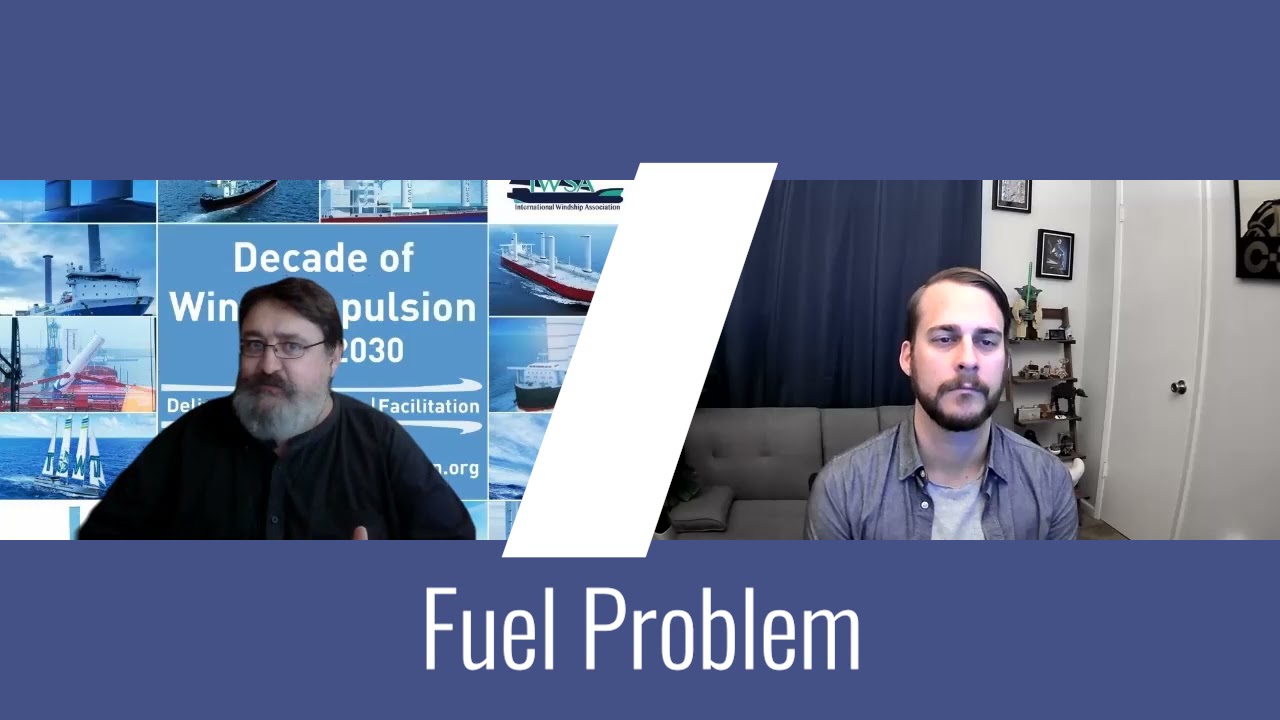
Gavin Allwright, head of the International Windship Association, discusses wind-assist systems already cutting fuel use by 5-30% on bulk carriers and tankers. The IWSA is launching an accelerator and test fleet to speed up adoption. Scaling wind propulsion to 100,000 ships could cut global emissions by 1% directly, plus another 2% through downstream effects.
Chapters
Hello, welcome to Conscious Design Podcast. I'm your host, Ian Peterman, and with me is Gavin Allwright, Secretary at International Windship Association, trying to get our ships that put all of our, our goods around the world into a more sustainable mode of transportation, getting sails or other technology on them. And so really excited to have you on, on the show to, to talk about that. It's, um, I enjoy sailing ships in general, so it's, it's great to see that someone's trying to bring it back with, you know, a modern, a modern approach to it.
Yeah, thanks, thanks for having me on the, on the show. Yeah, I'm looking forward to, uh, yeah, giving you, giving your, uh, listeners, uh, an overview of what's happening and, and the real potential here as well.
Yeah, and, and you're, you're in a little bit of a unique position because you have a sustainability background. You're act— you're not a, you know, you're not a sailor from the start, you're not a ship designer from the start, you, you have the sustainability. So what Kind of share a little bit about how you went from, you know, sustainability to what really caught your eye for— and there's many, many areas that we're all trying to work on to make sustainable, more sustainable options, reduced fuel. So what, what kind of drew you to ships and sailing as an option?
Yeah, no, it, it, it's It's a different pathway, certainly not the standard maritime career. I mean, I've always been surrounded by, you know, sort of nautical things. My father was Royal Navy. My wife's family actually over in Japan are all sort of shipbreakers and shipbuilders and fishermen. So it's been around quite a lot. But no, I got back in, I think it was 2004, 2004, something around there, I got involved with an NGO that was building sail and solar powered, or designing sail and solar powered small trading vessels for the developing world. And at that time I was also starting a master's degree in sustainability, and that was the kind of pathway we were going on. I'm also— another hat that I wear sometimes is as a natural builder. So we were building a kind of eco-center, naturally built house with a sustainability center in northern Japan as well. So those things were kind of moving along together. Then we had the Fukushima nuclear situation and we had to evacuate out. We were a little bit too close to that. And that sort of really Yeah, sort of brought it home. We needed to make some changes. And one of the critical things was that, you know, you could identify that shipping was a real pinch point in the sort of global economy and the sustainability issues. That it's a vast industry moving immense amounts of goods around the world. But also incredibly challenging for small island states and developing countries to actually afford to lay on services to those, those areas and really unlock a lot of the sustainable development in those places.
Yeah, that's an interesting point. The infrastructure and the access to shipping is so It's— they're, they're so big, you know, those ships are huge. So it's a— I hadn't thought about that as being such an undertaking and a limit, a barrier. It's a barrier to entry, really, between, between real, real shipping and, uh, not, not having it.
Yeah, it is. And, and when you think, um, you know, just to give you an example, and this is where I came into, uh, the field, when When you have a small island state, for example, that is paying for fuel usually higher prices than you pay at the big hub. So can often be double or triple the price that you would pay in Singapore, say, or in Rotterdam. Now, the problem is, is those island states are often, you know, every dollar is actually in their local economy. economy is worth 5, 6, 7 times that amount in that local economy. So in effect, they're paying 10 times what we pay for fuel simply to be able to get onto a boat to maybe move a relatively low-value agricultural crop or locally produced higher-value items to a marketplace, um, and it's just impossible. So, so looking at it from, from that point of view, it really brings the sort of unsustainability aspect into stark relief.
Right. Well, that's that, that kind of access too. I mean, our global economy for large countries are heavily dependent on Shipping. So it's, it's part of how we're able to grow, grow and have such large economies is we're able to, able to do that. So, you know, there's, there's obviously the burning of fossil fuels, but also this part is kind of a social, social impact of having such an expensive transportation method. Now, What is— obviously, just, you can't just throw some sails on a cargo ship and call it good, um, just haphazardly. So what's your— what is your process? You have an accelerator, you're trying to develop or help, help build more technology around it. So what— how's that pro— what is that approach going to like build it? Because shipbuilders aren't just putting sails on their ships right now.
Well, they are actually. You know, it's not large yet. We're not in the mainstream yet. But just to give you an idea, we already have 15 large vessels with wind assist added to those, and these are at the industrial scale. including the VLCC, which is the very large crude carrier, which is pretty much one of the biggest ships in the world, supertanker, with 2 large wing sails on her. Just recently, another one was launched with 5 rotor systems, which are rotating cylinders which catch the wind and then generate thrust, and that's just been launched in China and being operated by Vale, the big mining corporation. So there are actually ships coming through. But yeah, the association itself, we bring together those groups, that network, and do a lot of policy stuff, a lot of the regulation stuff, communications, of course, network development. But you mentioned about the accelerator program that we're in the early stages of launching, and this will actually have a test fleet at its center. So new technologies, new systems, new concepts can be brought in, assisted with sort of incubation, a standard sort of incubation process where engineering, business, advice, help with finance, etc., brought through to a prototype stage, then tested onto, on a multiple array of different types of ships, very quickly being able to validate that. That usually takes years, you know, quite often years to get a ship owner that's willing to do that, and then the process of validating it.
Right.
So we can accelerate that process. Results quite quickly. And then coming out of that would be a fund that assists with getting over that initial pre-market and early market stage of bringing some pretty heavy pieces of kit into the market that cost a lot, but, you know, are not going to be replicated quickly, or not as quickly as we'd like So you can bring those costs down. So there's always a lag of 12 to 18 months, which is pretty tough for the new entrants. So we're really excited about developing.
Yeah, well, having your own fleet, it means you don't have to convince an owner to let someone experiment.
And I've always wanted to be a shipowner.
There you go, you're gonna have a fleet.
Yeah, yeah, absolutely. And we also, I mean, don't forget we also have, you know, new-build vessels coming through as well, which, you know, the wind assist vessels that I talked about, sort of 15— sorry, between 5 and 20% reduction in the fuel usage, probably optimized out to about 30%, but that's when it's operating as a motorship. So they're not changing course to get more wind, they're not slowing down to increase the wind propulsive effect. That's pretty much, we're going to operate the motor vessel and put the sails on to help.
Got it.
But actually, new builds, you can optimize the design and, you know, just as in the days of old, you can have 100% wind vessels. That's possible today. Um, partly by harvesting the wind when it blows too much. You harvest that, collect that energy, put it into a fuel or put it into batteries, and then you use that energy when the wind isn't blowing. So these designs and systems are really starting to come through now.
So it sounds like there's a fairly— because when you think of like, oh, putting some sails on a ship, you think of old ships, right? You just You have some sails, but it sounds like there's a range of technologies that are around wind that isn't just, just putting a sail on it. It's capturing additional energy. It's being able to augment in more than just put a sail and hope that the wind is blowing in a good way for you at that time.
Indeed. We've moved on. I mean, there are still traditional vessels out there. There are still traditionally rigged vessels being designed and operated, which need people to operate those, of course. But actually, most of these systems, you know, we're talking about very much a 21st century, you know, design. They're fully automated, many of them, integrated into the systems on the vessel. So literally the guy will press a button and the operation will be automatic. But then you're also plugging in things like wind routing, so you can actually design your routes around the best wind data that's been estimated over the last 50 years. So you can actually plot your route. Is it, is it, is it better for You know, you've got a little bit more speed or you want to get to the destination quicker or you want to reduce your fuel costs, you can take a different route to get to the same destination.
Yes.
We've also got, you know, obviously forecasting has come a long way. We have a weather station on every ship, but also they're now testing LiDAR as well. So you can actually map the wind coming into the ship And then optimize the rigs, take the best effect of that. So that's just one example of where technology now is really boosting and optimizing an age-old system of wind. But you also have materials, operations, etc.
Right. Well, that's really interesting. It makes a lot of sense that route— the route that you take with With so much weather data now, knowing, hey, this is— you can, you can adjust your route based on what you're wanting to achieve and match it with wind, which is— I'm sure it would— it really helps the efficiency of what you're, what you're trying to do and making it easier, easier to achieve, say, a zero, zero carbon emission, uh, cargo ship going, going across.
Yeah, but interestingly, you know, just at present, you know, the legal structure around shipping is very much from the 20th century, very much from a fossil fuel, you know, cheap fossil fuel approach. So you have things like time charters, which basically specify pretty much the speed and the delivery date that you have to achieve. And there's a clause within those, you know, I can't remember the exact legal term, but with due dispatch, you have to go as quickly as possible to fulfill that contract. So we have some barriers there where you have to start changing that and say, well, actually—
Right.
Let's put into this agreement that, you know, fuel is 50% of the operational cost. So if you're saving half of that, for example, that is literally profit. That's cash in the hand.
Um, right.
So it's a big incentive to take another look at those legal requirements, and that's indeed what, what we are doing and what we will be doing even more, uh, in the coming years.
Yeah. And are there any roadblocks? And you just mentioned that. Is there any roadblocks Legally and, you know, contractually that you're having to navigate? Or— and you mentioned, you know, legislation and things like that. What, what's kind of a resistance point to being more fuel efficient with sailing?
Yeah, it's, it's a really good question. I mean, a lot— we've got a pretty good idea of the map of barriers an issue. And if we look at these, there's actually sort of 5 groups of these, but the technical side of things and safety, that's pretty much signed off. There's lots of little issues, there's lots of— we can do better, we can improve, and as we do, that raises up new issues, but this is a safe robust technology sector. So it's certified by classification societies who are things like Bureau Veritas or Class NK or American Bureau of Shipping. These guys certify that these kits, this kit is safe and it's operational and it's technically advanced. But some of the aspects, we have a very fuel-centric approach in shipping. We do elsewhere in the world as well, but in shipping it's very, very clear, you know, if you burn it, that's fine. Yeah, we've got the regulatory framework for burning stuff, but when you bring in a free energy source that's zero emissions, that's delivered to the ship at the point of its use, where you don't need any infrastructure on land, all of a sudden the structures don't quite fit. We have to get exceptions sometimes. So what we're doing is we're trying to make those regulations fit for purpose in a renewable energy form, not a renewable fuel form. And that takes a bit of time, but most of the regulations are not barriers, they're more inconvenient. I would say probably the biggest, biggest barrier is we don't have enough ships. We don't have enough reference points yet for the industry to be fully convinced. That's getting better, but it would be lovely to have, say, 3 reference ships for each technology in each segment. So roll-on roll-off ferries, tankers, bulkers, container ships, offshore vessels, passenger vessels. If we had 3 reference points for each of the 7 technologies in each of those categories, we would see this moving very quickly. We're not quite there yet. Right.
So it's more of a seeing is believing, and they want some reference points to make sure that yes, It actually does work. More than one ship did it. It's repeatable. And then, and then— Well, that's good. It sounds like it's not— there's not a huge— now that you have this, the safety is signed off, which is probably the most— the biggest piece that somebody could argue against. Everything else seems like it's just a matter of time and effort, not a huge roadblock boulder sitting there blocking this from moving forward.
That is very true. Probably the biggest issue right now is simply the economics around it. So, you know, as I'm sure you know, we live in a heavily subsidized fossil fuel situation, and most people think of subsidies as direct subsidies. But actually, I've just written an article about this, actually just talking about the contradictions around subsidies. And what I mean by that is more indirect ones. So for example, when you externalize a cost, that's a subsidy. So the climate impact is not internalized in the price of fossil fuel. You have an impact and society pays for that. That the fossil fuel doesn't. Things like security, you know, the infrastructure cost, you know, there are so many aspects. Health costs, for example, is probably one of the biggest. If you were to internalize all of those, you would probably add, say, $200, possibly up to $300 per ton of fuel. Sorry, per ton of oil, which would probably— oh, sorry, per barrel of oil, you'd probably be doubling, tripling, quadrupling the price of oil overnight. Now, that would be damaging in itself if it was done very quickly.
Right.
But some of this needs to be evened up. when we're coming in, we're competing against the heavily subsidized existing fuel, and also, uh, industry, uh, or countries are also looking to subsidize these new alternative fuels, which absolutely you need to do because they're in the same position as us. The difference is that we're actually free. So once you've put this kit on for, you know, it's— yeah, the wind isn't going to stop blowing, the ship may stop sailing, Because it's too old, but the wind's gonna always be there, right?
Yeah, it's, it's an interesting, uh, proposition, right, to move from something that has to be subsidized because the cost is too high in order to move something to something that is just free. It's just, yeah, you know, it's, it blows, the wind blows, it hasn't stopped since forever. And yeah, the day it stops, we have other problems.
So yeah. I'd say that's indicating quite a major problem.
Yeah.
So it's— but it's interesting what you're touching on there because, you know, probably the biggest barrier— I mean, that's a big barrier, of course, finance and bottom line issues— but probably one of the biggest barriers, at least up until very recently, has been perception. You know, if I say to you, think of a power generating machine on land from the wind, now you're probably thinking of a gleaming white electricity turbine.
Mm-hmm.
You're not thinking about an 18th century Dutch windmill, or maybe you are, but Probably not, right? If I say wind ship to you, a wind generating power unit on on the sea, you'll probably think of Jack Sparrow. You'll probably think of pirate ships. These guys, yes, and that perception is a really really difficult one. And the media's got something to blame there because of course the media will. media is always looking for the story, which is, ah, we're going back to the old days.
Right.
I actually, you know, I like to coin the expression, it's re-wind, not rewind. And that is really, really key to what we're doing, is we're looking to 2050, and that wind is an integral part of the shipping decarbonization In fact, we don't think we could do it without it, at least affordably without it, rather than parking back.
Yeah, it's free power. I don't see why we would not use it, right? I mean, the wind is blowing constantly. Why would we not use it?
Yeah, you'd think. I mean, one of the— it is interesting is when something's free. I always remember somebody talking about the water-powered car. car back in the 1950s or something they designed. And the fact is that actually, if that was actually possible and that caught on, that would destroy one of the major foundations of the modern economy, the fossil fuel economy. So when you're delivering free energy to something, you're not commoditizing So people can't invest in it. And actually, investment in energy is one of the key drivers to the economic model that we have. And whether that's fossil fuel or some other energy, as long as you can package it into a small little box and keep selling it, right, that's great. Right. You know, and we've seen that with water. We haven't quite seen it with air yet. So if somebody commoditizes air, I guess there's a go to an air bar.
There's actually a company out of I think Canada that sells fresh Canadian air in a can.
There you go.
And it sells it sells to China.
Really?
I don't know how many people buy it, but it's still around.
So I guess they got they got the march on me. You know, I've got to work out a way.
Yeah, we could bottle the wind. That would, that would be great. Yeah, it's, it is such an interesting— Tesla also had this similar— he was trying to create a free power system and his funding, his funding went away as soon as they discovered it was not something that you could sell.
Yeah.
There's no way to commoditize it. So it is, it is such an interesting idea, which is impressive that you're getting people to say yes to wind at such a, such a level, because it is not— you can't sell it. You just, yeah, put a sail out and it's there.
We're pretty much in that technology area. So, you know, we've still got, we've still got to roll out 60,000 to 100,000 of these units. Onto ships. So there's a revenue stream there. And then you've got the probably up to about 7 million small vessels. So there is a revenue stream there as well. But once you've saturated the market, then yeah, it is what it is. It's a mature market.
Maybe maintenance would be your—
Yeah, engine replacements and that type of thing. Yeah, absolutely. But it's interesting you mentioned Tesla. I actually use this as one of the examples on the perception side of things. Again, when you think of an electric car, you think of a gleaming, gleaming red, you know, gleaming red Tesla.
Right.
But actually, back in 1910, I think it was 80 or 90% of all the taxis in New York City were electric, and a third of all the cars on the street at that time were all electric as well. And it's amazing that it's taken us another 100 years, or probably longer, to come even close to coming back in full cycle. And we're still not there. I'd say we're another 10 to 20 years away.
Oh, we're definitely not 30%. 30%, that'd be a lot of electric cars now.
A lot of electric cars, yeah.
Yeah, that's— I forget about that. Yeah, that's electric cars were popular for a while, and then, and then I forget how, but gas, gas engines won out.
That's probably, that's probably another, probably another, another podcast to discuss that. But, uh, no, it's intriguing. And, and I, you know, I'm, I'm a, I'm a student of history, obviously. Uh, I love I love the way that we transitioned. I love seeing those transitions because I think we learn a huge amount from those. So we're actually coming into sort of Shipping 4.0. We went from sail to steam, so it's 1.0 to 2.0, then from steam to oil, or coal to oil if you want to say. And now we're going from oil into a hybrid mix of alternative fuels, wind propulsion, there's wave systems that are being developed, solar energy on ship. So it's this whole mix to bring us back to that kind of zero emissions that we had 100 years ago, 150 years ago. So it's—
Yeah.
A really intriguing time. And I have to say, if I was an engineer or a designer, a naval designer, this has probably got to be about the most exciting time in the last century to be in shipping.
Well, there's so many new things. It's not just stick a diesel engine and there you go, it's done.
A few pictures behind me. Yeah, absolutely.
Are you Familiar with Sunreef Yachts?
Sunreef, yeah, that name rings a bell.
Yeah, so they caught my eye because they're building solar sailing catamarans. They're yachts, they're multimillion-dollar yachts that are for people that have that cash. But it was just, it struck me because it's They've been working on it for a little while. They launched an Eco line that's— it's battery and sail is their— and solar panel, obviously, a catch, and wind. And they have some wind capture in addition to the sail. And so it's just, it's interesting to see that that's an option. They're actually building them and selling them.
Yeah.
And so that's kind of, I guess for boats, it's like the sports car of boats. You start with the really expensive ones and then you trickle down the technology at some point, but it's, yeah, it just caught my eye as something that's—
Yeah, we have some of our members designed and also provided the rigs for the biggest sailing yachts, mega yachts. in the world. So there's one called the Black Pearl. I'm not sure if it's named after the one from the movie. And also the— oh, I've forgotten the name now. It'll come to me in a moment. But these are sort of 100-meter-long yachts with DynaRig sails.
Absolutely beautiful.
But these, you know, these yachts are traveling 20, 24, 25 knots just under wind, and that's an incredible amount of power. But isn't it interesting that the rich— and, and I use that in a relative term, you know, even someone with a small dinghy is rich compared with, say, a fisherman on the west coast of Africa—
Right.
On the horizon, they can see a yacht going by using perfectly free energy, zero emissions energy, and yet they're stuck with a diesel engine that they have to pay that fuel for. That is such a contradiction to me that, you know, just raises so many questions around what we're actually doing and how we're doing it. So hopefully our association and our members Sort of turning that dial a little bit back towards that, that really sustainable way of living.
Yeah, that, that kind of brings us full circle back to originally the original point you brought up of, you know, developing countries or island countries that don't have— they don't have oil, they're not, they're not producing their own fuel. And so that kind of infrastructure is super expensive. They have to pay for the fuel to be brought in on a fueled tanker to then deliver it so that then they can fuel their, their own boats, which are— which is kind of crazy because it's— they're paying, paying double. They're actually paying the fuel cost to get the fuel to them, and then they're, they're paying more for the fuel.
And actually, actually, when we first approached a number of, uh, small island states with our designs for, for these small vessels which were zero emission, zero fuel. That was the first question, oh, could we use these for tankers? Well, that wasn't really why we got into this, but hey, if that's what floats your boat, you know, if that's what you need them for, then use them for that, you know. So we do, you know, we do have We have sales on oil tankers at the moment. That's a funny thought. But the way that we approach it in the association, we look at 3 trends or 3 waves of development that are happening. One is the tweaking one, which is sort of playing with the fleet that we have, try to extend or expand the carbon budget that we have left to invest in the transformation. So then we have the transition, which is really when new ships are built, then wind becomes the standard go-to. But also we start seeing those primary wind, over 50% wind vessels coming in and some hundreds And then we've got that transformation, which takes a lot longer. But actually we have members that are looking at even carbon-positive ships that as they're traveling around generate more energy than they use and would actually tanker that and offload it when they get to the other end. That starts to be a whole new paradigm.
Yeah, that was— That's mind-blowing.
Yeah, it really is. I mean, it blows my mind and I know about it, you know.
Right, you're working in it.
But this, you know, when we have those trends and when we— if we put this into, you know, we look at this through the lens of a climate emergency, you know, and we're looking at it from a 1.5-degree, trying to limit that 1.5 degrees. I'll be up in COP26 in a couple of weeks' time, but, you know, the— we have 9 years of business as usual carbon emissions left in shipping, and last year shipping emissions rose.
Hmm.
So if we're on an upward trend in emissions and we've only got 9 years left, we reached 9 years and we're pretty much plateauing at the moment. That means we go off, we go off a cliff in 9 years' time and we have to go to zero emissions almost immediately.
Right.
So there's a huge amount that needs to be done. But actually, as I think I mentioned, you know, if we rolled out wind propulsion across the fleet in this decade, the savings that would accrue over the next 2 decades would pay for the rest of the decarbonization work. And so you're basically looking at wind propulsion providing directly a reduction in 1% of global emissions, global man-made emissions, 1% just from wind being brought into a fleet of 100,000 ships, but facilitating another 2%. So actually In a sense, we could, we could take, you know, um, uh, we, we need 30 solutions like that and we've cracked it.
It's easy, right?
I'd be very fascinated. No, yeah, it's not easy, but, but it's a solution basket and a facilitation basket that takes 3% away. And actually, most commentators call shipping A hard-to-abate sector, if not the hardest. So if we can do this in shipping, that sends a huge message to the rest of the industry or industries. It's doable.
Ours was harder, we did it. What's your excuse?
Ours was much harder, yeah, come on. But it's interesting because shipping, of all the transport sources, has a unique access to wind and waves as direct use.
Right.
You've got— yeah, I, I can't see sails being put on a train, although hey, we're willing to try. But, um, you know, or, or a wave action model on a— I don't know, on a, on a, on a car. It's not going to happen. But with shipping, we've got that access. We also have the access to things like offshore wind farms. So there's moves to look at bunkering ships out at the farms where the electricity is generated. So, right, you know, so you're producing hydrogen or some other fuel there plus a wind ship, um, you're pretty much breaking the chain of emissions completely.
Right. Oh, that's awesome. That's awesome. I hope that everyone agrees to just put some sails on their ships and just, just do it. It just seems— I, I, I had the thought several times, even when I was younger, like, well, why don't, why don't we have sails on ships? And the excuse is, oh, well, it's too complicated. They get in the way. You can't, you can't, you know, unload your cargo ship. But obviously you're proving all of that to be Wrong, as the ships behind you.
Absolutely, but those are legitimate questions. You know, I mean, the project just above me here is Magnus, and they're a US-based project. Those rotor sails, they actually concertina down into the hull, so when you're loading and unloading, they're out of the way. Others, the ones to my right over here, are retractable as well. They collapse down to about a third of their height. These ones that are being fitted, you see, and the ship just above those two— oh, that side over there— these are hinged. So when you're going under a low bridge or you need to get them out of the way of the cranes, they're completely collapsible. So, you know, So these systems are all being developed now to kind of link in with the port infrastructure that we have today. So we're not asking for any changes. Right.
Nobody needs to build a new port or a new crane system just to interact with it.
That's right.
Awesome. Well, this has been amazing. Where can people find you if somebody wants to be involved, maybe get their ship, you know, give their ship to you for your accelerator? Uh, you know, free ships accepted, of course.
Yeah, yeah, free ships here. Yeah, yeah, absolutely.
How, how can everyone get, get a hold of you?
Sure. Well, we've got, we've got 2, 2 sites. So the actual association site is, uh, www.wind-ship.org. But you can just Google in International Windship Association or IWSA and we'll pop up. The other one is decadeofwindpropulsion.org. So earlier this year we declared this decade to be the decade of wind propulsion. So not just marketing puff but actually delivering on all the promises. And there's a campaign site there which has Just a couple of pages which just spells it all out. It's just, this is what the benefits are, these are the key USPs, and this is what's coming up in, you know, get the links to all of the research if you want, uh, pictures of the ships, etc., etc.
Wonderful.
Or you can just email me direct, secretary@windship.org. So windship.org. Perfect. Well, thanks. It's a free ship. I'll welcome anyone.
Yes, of course. Awesome. Well, thank you so much. I really appreciate you coming on and, and being able to share the really exciting work you're doing.
That's my pleasure. My pleasure. Come aboard.
More from Ian


You Didn't Know a Shampoo Could Do This #Shorts #shampoo #ecofriendly #haircare





The Biggest Misunderstanding About Bioplastics - Sustainable Materials Consultant Joanna Pool

A Polymer Scientist Explains the Truth About Bioplastics #podcast #sustainability #science



NASA is testing this on Mars… why not Earth? #Shorts #GreenTech #NASA #science