Interview with Neal Collins of Latitude on His Innovations in the Real Estate Market
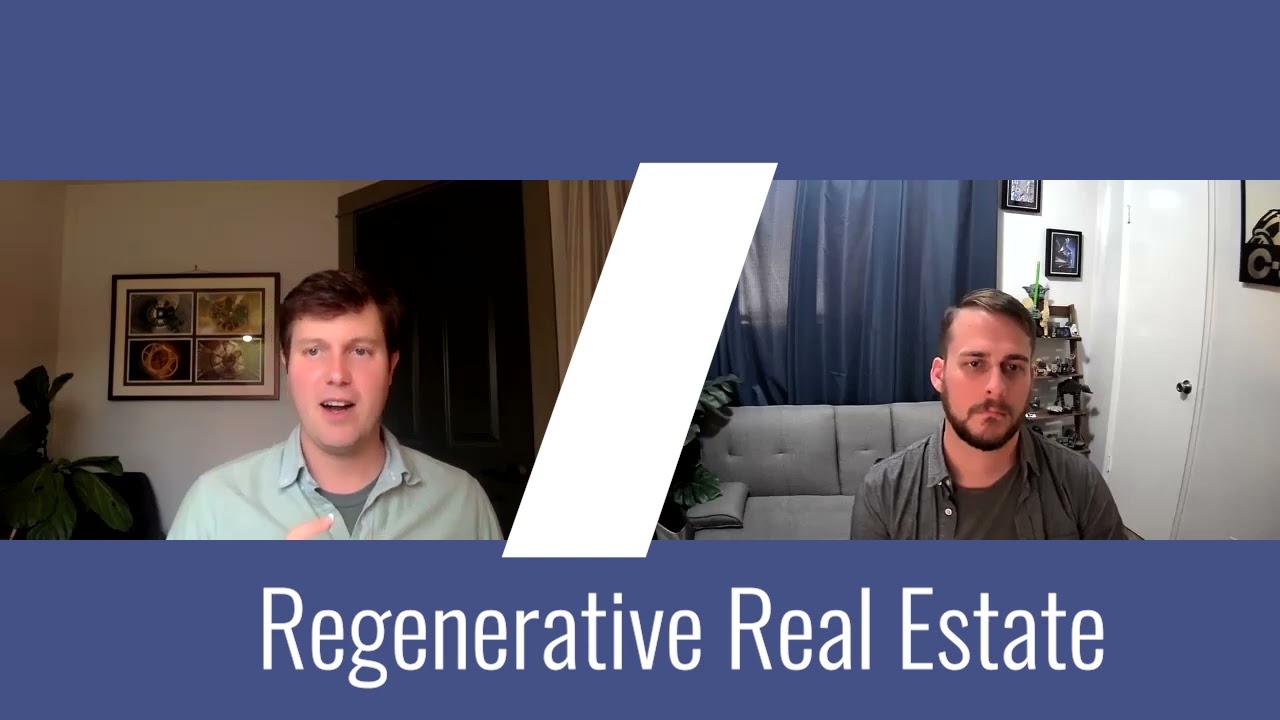
This content was created by Ian Peterman. This content was uploaded by Ian Peterman. This is a YouTube interview/podcast episode (published April 15, 2022) titled "Interview with Neal Collins of Latitude on His Innovations in the Real Estate Market." Host Ian Peterman (Conscious Design) interviews Neal Collins, co-founder of Latitude, about regenerative real estate — its origins, links to health, ecology and biophilic design, strategies for adapting existing building stock, and the evolving role of real estate professionals as land stewards. The conversation also covers movement-building, practical approaches (adaptive reuse, materials, indoor air quality, regenerative agriculture), and resources mentioned include Latitude's Instagram (LatitudeRegenerative), the Regenerative Real Estate Podcast, and chooselatitude.com.
Chapters
Hey everyone, welcome to this episode of Conscious Design. I'm your host, Ian Peterman, and author of the Conscious Design book. And today with me, I have Neal Collins, co-founder of Latitude, a regenerative real estate agency for North America. Welcome to the show.
Hey, thanks, Ian. It's a pleasure to be here with you.
Yeah. So I'm pretty excited. When we, when we first connected, you know, regenerative real estate, that's not something I've ever heard of before, but it sounds, sounds great. Could you kind of say a little bit about it and kind of your, how'd you get here? What's your, your backstory on getting into regenerative real estate?
Yeah. And for those listeners that, that aren't familiar, regenerative real estate, I think comes from a very similar discipline as conscious design. But in one sentence, an easy way to understand it is how do we form a relationship with place? And so that we are designing healthy, resilient environments that humans are an integral part of. And I got into this work, a long circuitous path, but the best way forward into this story is real estate was never on my radar. Out of college, I went overseas and I really started to enjoy an early career in marine conservation and international development. And we were talking about how do we— in the Maldives, we were talking about how do we protect a big marine protected area and using whale sharks as the keystone species. And that was really interesting because we're talking about not only this amazing creature, the largest fish in the sea, but that was linked with tourism and with governmental policy and with their academic and educational programs in that country. And also it really talked about community resiliency in the face of just really large unpredictable change, i.e., sea level rise and globalization. And it wasn't until I was going back to the States to get a PhD in environmental management that I realized, you know, we're spending all of this time grant writing and trying to fundraise, but at the heart of it, like, I was really interested in community development. And I realized if you follow the money in the community development arena, it flows towards the real estate industry. And that's whenever it— I got quite intrigued of first on a personal level of maybe I could get into the industries that I could, build up passive income so I could do my kind of work projects over here and make money that way. And that would enable me to go do passion projects that I was really interested in on kind of over there. And that was the best thinking at the time is like, you do your work and then you do what you're focused on or you're passionate about in a very different arena.
I feel like we, a lot of people, we do that. We're like, well, they can't be the same.
Yeah.
So the best I could do is split my day between, between those 2 things.
Totally. And that, I think for several decades, or maybe generations even before us, that was just the norm. And we, we certainly put our heads down and we learned conventional real estate from investing and development to brokerage and property management. And the best way I can describe it is like after almost 10 years of that, I just completely burned out on it, where we realized we had a pretty sizable office by that point. And it was a transactional-oriented firm in a transactional-oriented industry with— and we're representing folks doing transactions with transactionally designed properties. And it— the wake-up call for me to realize that this is a design problem that we've been in that's like taken a terrible right-hand turn that's led us into some pretty disastrous waters that I think we're all experiencing, but in different areas that it's showing up. It's showing up in climate change and ecological degradation and just Just a complete unraveling there. It's showing up in our health and well-being. And, and that's really where it took a couple of our elders to get cancer diagnoses. They're young, they're healthy, or we thought that they were healthy. And, and we started to dive into the research and we found that 1 in 2 people are getting cancer these days. But you start to look at the decline of those statistics where 100 years ago it was about 1 in 100 people were getting cancer, and then by the 1970s it was 1 in 20, and now it's 1 in 2. And so we started to think, well, what's going on there? And we've got a young son and we realized, or we learned, that 52% of young adults before they're 17 are getting are going to get a chronic illness that they're gonna be battling for the rest of their lives. And we realized that's completely environmental. And we had one of those epiphany moments where like, you know, we work in the environment, we help facilitate trading the environment. And not only do we not know about this, none of our colleagues know about this. Like, we're completely in the dark and apathetic to this situation. And so that's what really started us down the path of, okay, what does sustainable real estate look like? How do we encourage that? And like, what is going on in this space? And I think it pervades to this day, but sustainability in real estate has always looked like solar panels, energy efficiency. Now it's a lot about electrification. And these are amazing things. Like, we, we really need this.
Right.
But no one seemed to be talking about the intersection really between health and wellness, sustainability, ecology, and, and what we then came to discover is community, because we are a communal species. It's, it's It's biological to us and we thrive in community and the isolation and separation from community and from nature is really what is causing this global climate crisis that we're in. And so we started to realize that we're not talking about sustainability, we're talking about regeneration. And I loved, I was getting a lot of influence from permaculture and regenerative agriculture. Which is all about how can we design environments in which we're an integral part of that restores and revitalizes land, increases biodiversity, reconnects the hydrological cycle, and just enables life to flourish. And that's where I realized it's not just for soil and agriculture, but it's for our human habitats as well. And, and so let's start talking about regeneration. And that has been now a couple-year journey into just what is so life-affirming to orient towards life and to help it flourish.
Yeah, well, that's— there's been some really great work and years and years of regenerative farming and the agriculture I feel like there's a lot of, a lot of proof, right? There's even, I, I, I think I've referenced before a company called Epic Provisions, I believe it is, that they, they actually have, was it emissions-neutral beef? It's like they, because of their agricultural design around how they, how they raise beef, they're actually, they're— they're better for, and they're turning land that is not— would not be typically usable into something that's usable because they're regenerating it rather than just, you know, depleting it. So it's a— I love that area. It's a whole— and there's a whole huge conversation diving into that space.
It is. And it's all, it's all wrapped up in one big ball of wax. And I think that we're, we're starting to realize that At first, this has been percolating under, under the radar for a long time, for many decades, and it goes back to the '60s and '70s, back to the land movement. But now it's starting to become a little bit more systemic, that this like localism movement. And we started to see it where it's not just— if you're talking about sustainable real estate, the high-performance buildings like a LEED building or a Living Building Challenge, But there's a continuum almost between the high performance and ecological. And there is interest all along that line. And it is a design challenge. It is trying to reverse the thinking of our homes and our habitats and our food are commodities that we need to drive down the price as much as possible and ignore all the externalities that come up from it. To say, no, wait a second, let's, let's put human and nature first in that as kind of the main, main things that we're designing for. So we're designing for life. And then you realize that it just, it has all these positive externalities that come from it, that our health goes up, our soil gets better, our water gets cleaner, our air gets cleaner. And you're just like, check, check, check, check. Okay. I'm starting to see how we can connect the dots to really like, what is our locus of control and what is our agency in a time that I think we, we actually need regeneration, we need healing. And so it just feels really good to, to know, okay, I don't have to now work for my money so that I can then go put it into a passion project over there. Like, We are just— we're weaving this, this story together as we go.
Yeah, well, and you, you mentioned something that this has been a, a movement for a while, and I think a couple things to like pull out from what you're saying is one of the impacts, right? The impacts is something that we're more and more becoming aware of. Everything is interconnected. There's no such thing as you doing something without an impact. Like, that's just not— we can't think that way anymore. We can't live in, well, if I did do this thing over here, that's in a vacuum over there. And if I do something different over here, it's in a vacuum over here. And I think, you know, to your mentioning, you know, the movement and stuff, this is something I think, you know, corporate— even corporate America has seen a shift of moving away from siloed thinking. Right. Of the huge, oh, you're in your silo, you're in your division. You don't talk to anybody else. That's, it's, that's even been breaking down for a while. So I think there is this big shift mentally in how we think of everything should be together. We should be thinking about things holistically rather than you build your thing over there and I'll do my thing and they're never going to impact each other in any way. Which is great to see. So with, you know, and there's all kinds of things we talk about, impacts of, you know, making a, making a house or making a product or the things you go in. From a real estate standpoint though, how do you apply this perspective of let's, let's create regenerative? How, how do you, from that real estate level, take all that and begin to apply it in how you're doing it to help make a difference?
Yeah, it's a great question. And it goes back to what you're talking about, which is really taking a living systems approach towards what— how we organize as a company, how we see the human relationship within the built environment and within a community that's within a bioregion. So what, where we really like to start is by just first acknowledging that the real estate space has, has a really interesting, I guess, situation is the best way to put it, because we are living with so much built-up stock that what was built in the 20th century is still going to be around. that was not designed with a regenerative or conscious or intentional lens on it. It was just— it was built to serve this function, and maybe it's been adapted over time, but it's still consuming energy and serving a purpose. And so we've got to figure out, well, if we can't just start over, which is likely not the best scenario, just to raze everything to the ground and begin again—
I don't see anybody signing up for that program.
Then we— in new development is part of this equation. We will be building from scratch and we had like, that's where you're able to get just 10x results on everything. But I really like to start it from how do we adaptively reuse the spaces that we're in? And it first starts from, you know, what are we looking at here? If we're looking at a home, Then we're not looking at 4 walls and a roof and it's a box, but it's, it's a space where we come together to, to raise our kids and to rest and to love and rejuvenate. And now we're all working in these spaces. So we have to understand what, what their functions are on a deep kind of spiritual level. And we have to understand how that fits in with the inhabitant that's going to be there and what their visions and their goals are. And how they can really start to live in reciprocity with their place and with their community. And from there, I think there's just a lot of, I guess the jargony word for it that's coming up is just asymmetric information. Like there, when people think, oh, well, I want a house that gives back, let me put some solar panels on the roof. That's good, but that might be an inefficient way to use their financial resources at night, it's probably not going to be the best thing to do for property right away. So it's really, how do we work with local— what we in our organization, we call change agents— to really be that guide or the consultant to say, you know, here's the priority areas as we see it. And we're really working with this ecosystem of designers and architects and general contractors and Renewable energy contractors, like kind of this plurality of regenerative and value-aligned organizations that can help bring this property owner along. But we also take that holistic lens of it, you know, it's not just the sticks and bricks of it, but it's also how do we inform the ecology and how do we invite life in? And this is where we take a lot of just amazing inspiration from the biophilic design movement, which was really started by E.O. Wilson, who was a legendary biologist that put out a book, I believe in like 1983 or '84 called Biophilia. And for the people that aren't familiar that are listening, biophilia is literally our love of life. And E.O. Wilson was talking about how it is genetic to our species to align towards, towards life. And you start to see that in really interesting ways. Like there's even something called the heliotropic effect where like plants will lean into the sun. And we see that in medicine. There's this like amazing regenerative medicine thing going on that it's even talking about, you know, antibiotic, anti-life. We know that destroys the gut and all the, the beneficial organisms that are going on there versus a probiotic, which is pro-life. And so we help kind of guide people along this process of what is it like to invite nature and aliveness and living things into your space. And so the net result is really you end up where somebody is able to just be welcomed home for the first time. Um, and we get kind of some interesting cases of, of people that they're now starting to experience things like EMF sensitivities, the electromagnetic frequency, um, with 5G going up all over the place. That was not really on my radar until we started in this work and realizing the world that we've designed outside of our homes is Is starting to become a little bit more toxic in ways that we can't even see. We're starting to interface with a lot more natural builders of how do we use materials that are local, non-toxic, organic, their own, and they're very local. And so how do you create just a really like healthy indoor air quality? What's also funny is, is that I think what's gonna— the marketing for those kinds of places is like, you get the best night's sleep you've ever had in a natural building. And you don't even get to experience that. Most people don't experience that as we build with such synthetic products that are off-gassing for years on end after that. And then we do a lot of agriculture work of how do we, how do we help Well, right now a lot of young aspiring farmers get into farmland that is prohibitively expensive because the highest and best use is how do we convert this agriculture field into a subdivision. And so our farmland is quickly disappearing in this country. And so we have really dove into that question of how do we congregate the resources and the people so that we can help we can help get them on their way doing what they wanna do with either organic agriculture or regenerative agriculture. So this really shows up in a lot of different ways, but I just, the best way to describe it is like we are a movement of movements and we're, I don't wanna say that we're the jack of all trades, but we just started to realize if, if you wanna make a difference, you have to go find value-aligned organizations and people that Right. You're, you're essentially saying, look, client, like, we, we need to use these 5 organizations to really advance how we're going to do this. And here's— like, a lot of people don't understand how the finances are going to come together. Um, and that is really why I think we're not just a consultancy. Like, it's great to talk about this stuff whenever you're buying or selling a property, because what you're doing is You're putting financing and money together that's going to have lasting ramifications for decades. And that is the best time to think about upgrades and the kind of place that you do want to live in that does resonate to you, that you can afford, that does give back towards the greater community.
Yeah, I think it's a great point. There's not many other times in, you know, the average person's life where they're about to dedicate decades of resources in a single, in a single signature. Just say, yeah, for decades, you know, 30-year loan, I'm going to be putting money and resources towards, towards this. Even if, you know, you go and get a different house, you're still— You're gonna sign another 30-year contract when you do that. So really, we just You know, you never— once you start that process, rarely do you ever hop back out to the, I don't own anything at all anymore. You're, you're just on that path. So I think that's a great point to, to mention. Like, that's— that is such a big decision point. It's a big impact. And you are— if you start to think about those things at the beginning, right, you think about those things and you make it How do I want, how do I want to live? What's the home that I want to have? And ask those questions before you sign and make sure you're, you know, getting, getting what you really want and need. Then I think that's a— and if you can make, make it better, then that means the next person, when you do sell that house, that means the next person is going to be able to enjoy, you know, whatever, whatever you've done to it to make it, make it better than it was. So. Yeah, I think it's interesting to bring up. I hadn't thought about it. It is a commitment level.
This is where I think, you know, there is a stigma around the word realtor, and I have it, and I have a real estate license. I just, I don't want to identify as a realtor. There's 1.4 million of us running around that we, we spent a couple months studying about agency and contract law and like what, what types of properties there are. And then we get out into the industry. And if you want to practice real estate, of helping people buy and sell real estate, then you're going to go to a brokerage firm. And your only focus is going to be, how do you get clients? And how do you increase your production?
That's it.
And what happens is, you end up with these platitudes of, let me help you buy your dream home. Or I can help you sell your house for the most amount of money in the least amount of time. Well, that's just like, if you're going to be spitting out those platitudes like everybody else, you're just, you're destined for a really hard rocky road to get your business up and going.
Right.
And you essentially have to go to Instagram and Facebook and try to put out pictures of you kind of looking pretty, doing busy things and going and touring open houses. And I just, Technology is not going to be the friend of a real estate agent going forward because it's going to massively disrupt the value proposition, which up until now has been these realtors have a book of information about this property that the general citizen does not have access to. And now we have an app that lets us get into a key box to open up a front door. And I just like my value, I don't see tied to opening doors for people. And the internet has already been the great equalizer of information about properties. And so what is the role of real estate professionals going forward? And it's got to be, how are you, how are you serving the client? And how are you serving the community? And how are you doing it in a time that is very critical towards humanity, towards living systems and the natural world. And I just like— the real estate industry is one of the biggest consumers of energy. It contributes— the building sector contributes to 40% of all greenhouse gas and carbon emissions. Agriculture constitutes another 34%. So like we're looking at 74% of all greenhouse gas emissions come from how we are managing land. And it's, it's high time that we start to think a little bit deeper about how we are designing these spaces and how we fit into it.
Yeah. I like the idea that you're bringing up because you're right. Like, you can go on many websites and I can find all kinds of information about a house for sale and not, you know, the role, the potential role that a real estate or the value. I think that there's already tech startups that are trying to eliminate the amount of time or paperwork, right? There's so much that's being done to speed up and make home buying easier, none of which has to do with making a realtor more important. And all it has to do with removing as many people from the process as possible. You know, if you can streamline to 2 people, that's it. Then that's, that's what everything— everything else is going to, right? Every, every other middleman is being removed as much as possible. That's just how we increase efficiency in things. So. The idea that, you know, real estate, because it is still a point of contact, right? People, people still do want somebody to help guide them through the process, but not in that traditional way. So I like, I really like where you're going with this, is real estate agents being more of a land steward, basically. Like, oh, we, we help make sure that the land, that this is what it should be. Like, we help people make sure they're They're really getting what they, what they want and not just, you know, fat, I'll sell your house for more in less time, or your, your dream house, whatever, whatever dream house means. Uh, I think it just means whichever one you'll pick the fastest. It seems like a lot of people's dream houses is, is okay. So I really like that idea of being and creating a new Kind of role really for a real estate agent to step into. And yeah, and so with that, like, how— we talked about this a little bit before, and it sounds like you, you've been putting this idea out, right? And you're getting some really positive responses from other real estate agents. So how, how is that going? And kind of what's your— as a movement of movements, how does that— look long-term for you guys? Like, what's your, what's your goal with that?
Yeah, we started off as working very place-based out of Portland, Oregon, and that was because of, of the nature of where we lived and where our clients had been for the past 10 years, um, and, and where our licenses were. That was kind of the center of our universe, that Okay, we're going to put out regenerative— we started talking about regenerative real estate. We were targeting specifically the Portland community, and it wasn't until real estate professionals out of Hawaii and New York simultaneously contacted us very early on to say, look, we're— this really resonates with us on a deep personal value level, and we're getting really tired of the mindset in our brokerages, um, of just around, you know, it's hyper-focused on, on the transaction. So it's this commodity mindset. And they said, you know, how can we join your brand and how do we learn from you? And we said, well, God, we're— we don't feel like we're in the place to be learned from. We're, we're just like throwing spaghetti at the wall and trying to see if it sticks and, and are literally just like writing thoughts down about how we can do this differently. And that's whenever we really went to our business model to start tweaking. What would it look like if we were to work across borders? And what are some of these sticking points that we're seeing just from a very conventional lens of if you're going to sell a property where you have invested, in sustainable features or ecological features, like the conventional real estate is getting the marketing wrong on that massively. Like they're doing a terrible job of telling stories that are compelling, that are also educational about why this is a valuable investment for the buyer and the financial returns, the health returns.
all that.
And then we started to realize, okay, well, the buyer also has all these, like, that is a huge leverage point because of the financing piece that we're setting forward. And we started to realize that it's not just those 2 real estate professionals, but it was others. And now I think we're in 20 different states. And really starting to see, okay, what is the roadmap here? Like, how, how do we continue to be not just relevant towards a fringe group of people that are really interested in this work, but how do we, how do we continue to jam on inspiration and education for— As our theory of change to get people to start demanding Better, healthier, more vibrant living spaces for themselves. Because I think that's where we start to really see more exponential change within the greater built environment is whenever people start waking up to realize, oh, wait a second, you know, this 3-bedroom, 2-bath house over here is fundamentally different than this 3-bedroom, 2-bath house over there. And I start to understand what the cost difference is and And then once you throw in like, hey, we can still go buy a conventional home, but we can help guide you down this process, a regenerative process to make this, this place truly transformative to what their visions are that fits into the world, then I think we're, we're quite competitive in the 21st century. And, and we'll be competitive even more so as we get Closer towards the 22nd century.
Right. Well, so this is— I mean, not many people have such good validation of an idea of having 2 completely different areas, 2 different people jump in so early and say, we love what you're doing, can you teach us? So that's great to hear. It's great to hear that. Yeah. And you've grown, you've grown quite a bit. So it's, it's wonderful to hear that you're, you're growing, you're expanding, and, you know, really sounds like a movement. Like it's, it's being received well, which is, which is always good when you, when you put something out like this. And I, and I feel like it is very much the time, right? This is something that there's an organization is also called Conscious Design, the Conscious Design Group or something like that. And they're specifically in architecture. So they're, they're trying to kind of infiltrate this idea at the early stage education architect level of let's start thinking about these kinds of things before we even begin designing, before, before there's even any drawing made of something. How do we, how do we start thinking about this kind of thing? But I think it's also a huge part that what you're bringing up is, like you said, we have 100 years, more than 100 years of housing, right, that we've been building, that they're not— we're not just going to demolish whatever percentage of what was built before 2000, uh, just wipe it off to start fresh. That's just not— there's no funding for doing something like that. On such a big scale. So it's such a huge component to look at. Well, new, yeah, let's definitely make new better. That's, that's a no-brainer. Like, it's brand new. We can, we can do whatever we want, make it, make it as great as possible. And then also what you're doing is, is going, yeah, and we have 100 years of inventory. How about we, how about we figure out how to, how to improve that along with it so that we're not You know, stuck with so many not, not really well-designed, you know, buildings not having as, as much conscious design in them as they should. So I think it's great you're doing that and tackling it. It sounds like a bigger problem really is, is all this existing inventory, these houses that need to be worked on and even commercial space too. Right. And that's— That's a whole other, other world to dive into.
I mean, and this is why I really like the word conscious, is that from a personal viewpoint, it's mind, body, spirit, but it's also working towards an understanding, a concept of holism. And, and whenever you, you start gravitating towards that, you, you start to realize that it's not our houses It's not just our commercial buildings. It's the way that we've designed our cities and our roads and our economic system that like— but let's not go on to capitalism. I didn't wanna bring up that 800-pound gorilla in the room. But if you look at our cities, like they're designed towards on a gridded system. First it was moving armies around the Roman army and so that they could soldiers could easily navigate their way around. But now it's how do you, how do you design a city so that it's easy to facilitate transactions and private property rights, but also a flow of commerce and goods? That just happens to be a little bit incongruous with what it means to, to have a community that puts life at its center. And over time what happens is just we end up with houses that are not good for us. There's no nature, there's all kinds of pollutants in the air, water goes away, birds go away. You know, it just like— that's, that's an extreme example of it, but, um, it— that, that is happening. And where it's simply because we are not conscious. And, and I think that there is a rising level of consciousness that's That's happening across all industries and it's amazing. I just, I can't, I can never begin to tell you how encouraged I am by the design industry and the architecture industry, the agriculture. Like there's almost no industry that's immune to it outside of the ones that are just like holding onto that 20th century paradigm. And they're like gonna take the system down with it. It feels like.
It does, it does. Well, this has been awesome. And I really appreciate learning more about this and being able to share what you guys are doing. For anyone that resonates with this and wants to look at real estate from this perspective, what are some best ways to find you and get ahold of you?
Yeah, there's 2 great ways for that. I think if you wanna just passively do it, then go check out our Instagram feed, which is Latitude Regenerative, RE as in real estate. We've also got a podcast called the Regenerative Real Estate Podcast that you've been a guest on that receives about 20,000 listeners on it. That just, it's been a fun experiment to find those people that are looking at things just a little bit differently and understanding where they came from. But if you're either a real estate professional or somebody that is interested in real estate, you can visit us at our website. Which is chooselatitude.com.
Perfect. Yeah, well, we'll— and we'll make sure there's links in the description for everyone to go click on something in case you don't want to keep listening and trying to spell it out. So again, really, it's been great having you on. I'm really happy to be able to chat with you, and I'm excited to see what you guys do, and hopefully more and more real estate agencies Join, and then there won't be any regular ones left. I'll be, I'll be working with you.
Thanks, Ian. I appreciate it. This is a lot of fun.
All right. Thanks, Neil.
More from Ian


You Didn't Know a Shampoo Could Do This #Shorts #shampoo #ecofriendly #haircare





The Biggest Misunderstanding About Bioplastics - Sustainable Materials Consultant Joanna Pool

A Polymer Scientist Explains the Truth About Bioplastics #podcast #sustainability #science



NASA is testing this on Mars… why not Earth? #Shorts #GreenTech #NASA #science