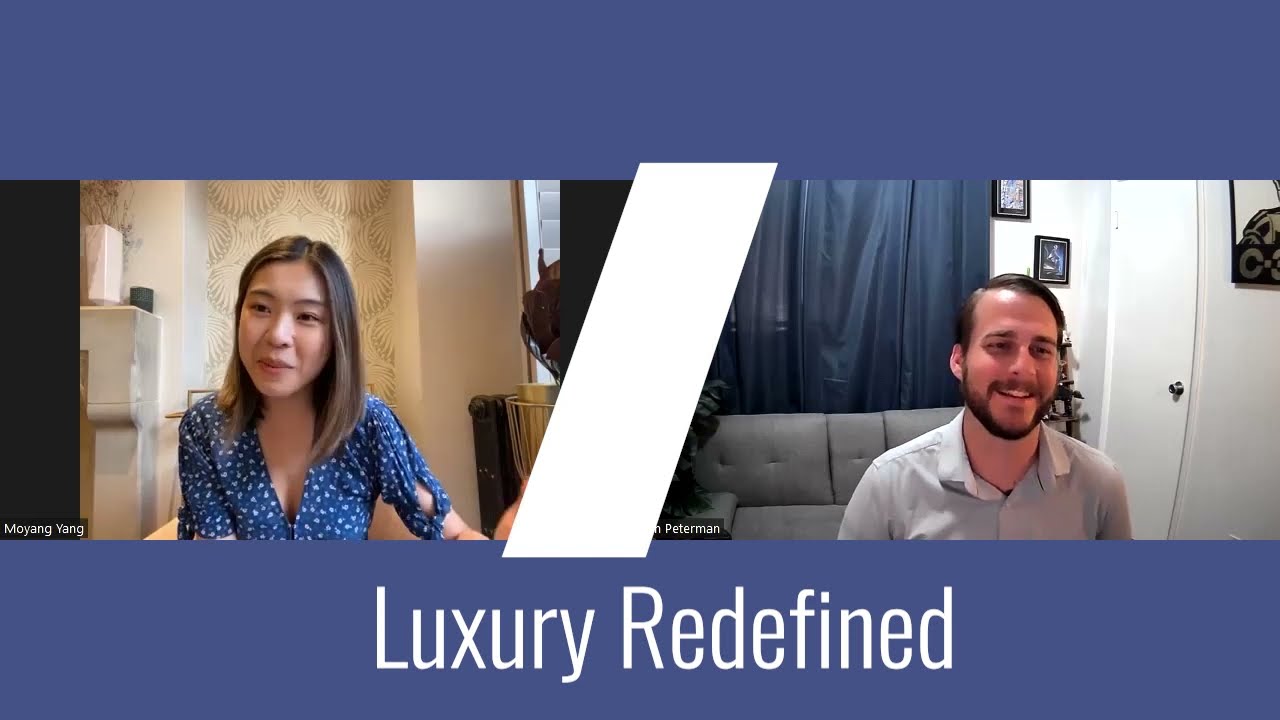
In this episode of Conscious Design, host Ian Peterman interviews Moyang Yang, founder of MOYA London, about her journey creating a sustainable luxury handbag label that uses crochet and up‑cycled leather. Moyang explains how a maternity‑leave experiment led her to experiment with materials, how a former Harrods buyer encouraged her to pursue crochet handbags, and why she sees crochet as a way to challenge the leather‑centric notion of luxury. She details MOYA’s supply chain: sourcing end‑of‑line leather scraps from tanneries, which makes each bag unique and limits waste. The brand operates on a small‑batch, pre‑order model to produce only what is sold, dramatically reducing inventory risk and garment‑level waste (cited at ~35%). Moyang describes how the brand engages customers before purchase through Instagram, sharing transparent stories, voting on design tweaks (e.g., label style, detachable badge), and allowing buyers to feel part of the creation process. She walks through the technical challenge of making a luxury bag washable, iterating through magnets, buttons, and finally a snap‑on leather badge that can be removed for cleaning. The conversation also touches on broader industry challenges: fast‑delivery expectations, impulse buying, and the illusion of efficiency in mass‑production, contrasting this with a slower, more thoughtful fashion philosophy that values longevity, personal finance, and environmental impact. Moyang shares contact details and invites listeners to follow MOYA on Instagram and engage with the brand’s evolving sustainable practices.
Chapters
Hello and welcome to this episode of Conscious Design. I'm your host, Ian Peterman, author of the Conscious Design book, and I'm here with Moyang, founder of Moya. Then what she works in is sustainable tote bags in the fashion industry. Welcome to the episode.
Hello. Hi everyone. Um, it's a, it's a Pleasure to be here. Thank you for hosting.
Yeah, I'm really excited to dive into what you're doing, but I'd like to step back first a little bit into how you got into this role. What, what got you to really start Moya and being thinking about sustainability? And we talked about a lot in our previous calls, so we'll just start there and, and go from there.
Cool, okay. Well, yeah, sustainable, I mean sustainable handbags is a topic that's been around for ages and I've personally also been working in the fashion, luxury fashion industry for the last 10 years, so it's always been there and I've been actively involved in my previous work as well, so it's always been something that really It holds a very special place for me. And so when I sort of decided to kind of try doing something myself and, you know, make— try some designs myself and starting a new label, sustainable aspect is sort of already there. So whatever it is that we have to do, it has to first of all make sure that it's sustainable. But, you know, I've, in terms of my own experience from the past, I'm not a traditional designer myself. And I've just, you know, I've worked in luxury fashion businesses, mostly in e-commerce businesses and fashion technology related. So I'm more, my experience is more focused on the marketing side of it, you know. But last year, last year, I basically had an opportunity. I was on my mat leave and had an opportunity to sort of play around with materials and really wanted to dive into this whole sustainable fashion thing and I wanted to have it hands-on. I wanted to have that hands-on experience of understanding what it is to take to make something like that because everyone was saying it's difficult, you know, it's messy markets, you know, it's greenwashing all going through. I just wanted to really get my hands dirty and fully understand what that means. So that really kind of started when I was on my mat leave and having that opportunity, I just bought some materials over and started trying it out and turned out I felt like I I felt quite good with my own designs. And until one point, it was through a contact, I got to meet a fashion buyer from Harrods, well, an ex-fashion buyer from Harrods. And I got her over and she had a look at the design, like really crappy prototypes that I made at home with beginner tools. And she was like, those are amazing, like you should really try to sell those and I think there would be a really good market for it. And she was particularly interested in the crocheted handbags and those are quirky, those are things that you don't really see from a design perspective, you've not seen them on the market. At the same time, I actually felt like these crocheted handbag designs Or actually more sustainable as well. Because when I was trying to design, I actually learned a lot about leather making. So I had leather models as well as crochet models and fabric bags, etc. I've tried on many things myself, but I think that conversation with people from the industry really gave me that encouragement that crochet handbags are very unique. You don't see them everywhere. and the designs are great as well, that the sustainable aspect is absolutely amazing. So yeah, that's when it really just started, kind of starting from there. And I was thinking, right, maybe I should do something about it.
Yeah.
And then, you know, a month later, I started my own label.
Amazing. And one of the things that we talked about this a little bit before is And you mentioned it, is the crochet part. And luxury, right? When most people think of a luxury handbag, there's, there's, well, automatically it should be leather.
Leather.
And that's, that's just kind of a, nobody's really challenged that idea.
Exactly. Yeah.
Ever. And so I think it's really great that you're, you're kind of challenging that idea. Like, well, it's not the only material, right? There's, There's a lot of great materials. And what you brought up too, it was like, this is very unique. I think that's, that's something that's great to see that you're, you're kind of pushing that envelope and going, well, actually, let's, let's think about what is luxury and really define it in a little bit different way and expand the idea of what materials could really be used.
Completely. And I think that's what You know, okay, I still find it strange to call myself a designer, but I guess I am. And I also felt—
I would say you are.
I also felt a great responsibility of, you know, being a designer. I think it's our responsibility to bring new ideas onto the table, especially if those ideas will give us the greater good. And I think the crochet, it's an absolute part of it. You know, from the very beginning of my business, I realized that, you know, specializing in crochet is such a niche. And at the same time, it's just not traditionally seen as luxury because, you know, people feel like, you know, my grandmother can make those and that's one. So why do I pay for it?
Right.
Some people definitely still feel that way. And there is also the aspect where crochet as a technique in itself, seen as old-fashioned, it's seen as something that grandmothers do, or something I would get into when I retire. There were lots of presumptions held around crochet and design around crochet itself, whereas I felt like it's an opportunity because it's different. Everyone's already doing leather, and then what's the fun? joining that party? Why don't we do something different?
Right.
And especially, I think, especially that was, again, it was conversations that I've had with my, you know, the people that I know from the industries. And, you know, having chats with them and really discussed the opportunities and, you know, the potential risks, everything all evaluated together. And I think it's worth risking that to just sort of bringing just, but you know, but the most important thing to risk, to take that risk is in the first instance, you need to bring something different, something new onto the market. So with our designs, why don't I just show you?
Yeah.
So this is one of my first models that is on sale at the moment. And this is also a Mon— well, this one is our like a proper produce from the factory, so it's actually really high quality. Whereas, you know, when I was having those conversations in the beginning, I only had my very scrappy prototype that I made at home myself with the retail yarns. It's not even anything that special, but then people straight away picked up, and the design of it being very— it's actually quite luxurious and it's very unique. It's just very different to take on how crochet, you know, other sort of crochet bags you tend to see on, say, Etsy, for example.
Right.
And that's what I wanted to create because I think for a luxury, what is, you know, at the end of the day, what is luxury design? You can't really put your finger on it, but you just need to look at the products and you need to feel, okay, it makes me feel great. It's something that I wanted to pay for and it makes me feel a better version of myself. Imix especially has the sustainability aspect to it as well. This entire bag is made from organic or recycled materials, as well as the leather. Our leather is a super nice luxury leather, but those are end-of-the-line materials, which means they were part of a larger production for another brand, often very luxury brands, and but they They have a few pieces that's left over, so they don't— they don't got— they no longer need it. So it was left from— to the tanneries, and then we go around to several different tanneries and ask if you have any single pieces that you can't really use anymore, and we kind of just sweep those up.
And that makes it a little unique, each one too, right? Because you're, you're taking—
Exactly.
Part of a run, so it means you'll use up that material, and then once it's done, The next batch you get could be totally different.
Exactly. So in the beginning, we were obviously a bit worried about, is this going to be a problem? Because, um, with people, we can only take, you know, 1 or 2 photos with these materials. We can't take a photo of every single piece that is different. But most likely, you know, the pieces that reach customers would likely to be a bit different, and/or it's just uncontrollable, you know. Sometimes You know, we get 2 or 3 hides per type of product if they have that many left, but sometimes we'll just get 1 or 2. And, you know, it's very difficult to say which one that the customer is going to get. But, you know, we've done some research around that in particular, and it looks like people love that. Actually, they really do love that factor.
I feel like it almost plays to the luxury part.
Yeah, definitely. It's like, you know, I own this piece which has a part of the material that is unique just to myself and that no one else has that exact type of texture or, you know, look or, you know, just the finishing on the material itself. So like, yeah, people really do love that fact. So some people would say, you know, we would prefer if it's very, very different from the photo that you've shown on your website, and I prefer to have a look at it to decide. And some people would say, surprise me.
Amazing.
Yeah, so that actually became a really good factor in itself. And yeah, I'm very excited. I think personally, I'm one of those surprise me, please.
Right.
Yeah.
Yeah. Oh, I love the idea. And it's Because people will pay extra to be unique oftentimes, right? You pay, you're like, oh, well, I want, you know, I want my name engraved on it or something like that. Like, makes it yours and not mass-produced, which I also feel is like how people measure luxury. It's like, well, did you make a million of these? Because then can you really say it's actually luxury? Because there's a million of us that own the same exact thing. Whereas—
Absolutely.
Like what you're saying here, I don't know how many you make, but I'm assuming you can't make a million out of one piece of leather, so you're, you're really limiting that already.
Yeah, absolutely true. And that is why that we're staying with, you know, small batch production. We operate by pre-orders only. That again, that is to reduce waste and so that we would be able to produce to the exact demand amount that's been ordered. And yeah, so that sort of helps on the sustainability aspect. You just, you know, seeing how much waste that there is. I think the data on fashion garments, like on average, the waste to produce per garment is around 35%. So if you think about like buying a top and the amount of waste that is generated by creating this top is about 35% of this entire product. And it's just, it may really make me feel very sad when I'm thinking about it and just really worried about the future if that is how much waste that we're going in just by purchasing one. So it's way beyond money or anything. So, you know, when I, in the first instance, when I decide, when I tell people that we're going to go for pre-orders only, and there are many people were saying, That sounds a little bit crazy. Because why would you want to miss out? You know, there are loads of theories about, especially around luxury shoppers, who are, you know, often they are impulse shoppers. So you would want to really grip into that moment when they wanted to buy the bag, they want it now. Because everything's about being fast these days. And anybody who buys something online, they want it next hour. They can't even wait for 3 days. And now, and you are creating a brand that makes people wait for months. And so obviously, like, there are people, many people would have that sort of doubt, including myself in the very beginning as well. But I think evaluating everything, I just can't, I just can't even pass through the thoughts of having to, you know, having to have part of my orders all gone into either like a massive sale or just end up on landfill, or, you know, for me, I probably wouldn't let my products finish in landfill. I would probably have to take it apart and try to do something like recreate something with it. But then again, as such a young business ourselves, we are just muddling through. We need to survive.
Yeah.
So that's another— obviously, that's a very realistic concern as well, keeping stock and inventory. And not being able to sell it all. That is a very big concern, obviously, from the health of a business perspective. So balancing out everything, I sort of in the end just decided, let's just, you know, we've been taking risks, let's take one more.
Well, it's funny because I actually see preorders as making it less risky because you don't want to order 10,000 and only have 1,000 of them sold. Like, that's especially as a startup, that's super risky because now if you're gonna buy that many, you're out the money. The manufacturer's not gonna take it back.
Um, absolutely.
How have you, like, in your experience in running this now, how have you seen— have you, have you had any issues or have you been able to do the preorder and it just worked? Like, what, how's your experience with that process been?
It's been fun.
That's good.
Yeah, honestly, it's been fun. Obviously, it was— I'm not saying, you know, we figured it all out. We are still in that process. We're just in the beginning, very, very beginning of this whole process. But it was definitely a very steep learning curve. And but at the same time, it really positively surprised us in many ways in terms of how much that people actually wanted to get involved with the brand. And it's almost fun for our customers as well to, you know, when in the moment when they know about, when they saw the bag, it's the product that attracts them in. However, instead of, you know, traditionally what people would think, like people are attracted to a product, they just want it straight away, they want to get it, they want to own it straight away, we found loads of customers actually wanted to interact with the brand, they want to learn more about our stories. And it's almost like they were like, oh, I'm really committed, like I love this product even though I don't get it straight away, but if I, you know, get to learn and get to interact with the team, with the producers of the bag, learning more about the stories, it feels like I am more part of it as well. Especially, you know, we really carry and commit to our sustainability. Ethos and our values. And we love sharing stories about how we started something, how we made decisions with the leather, how we source the yarns. We've actually changed the yarns a couple of times while we're developing the products. And we were already in marketing for our bags. And however, you know, our customers are actually surprisingly forgivable. Like, they're very forgiving. And they understand—
Mm-hmm.
processes we have to go through. And a lot of the effort is because we're trying to be sustainable and be more sustainable. And we share those stories on our Instagram, you know, 100%, literally. Sometimes I feel like it's dangerous how much information we're actually telling our customers about, but we don't want to hold any back. We want our customers to be in the same line with us. and fully understanding what we're going through. So we had this 100% transparency approach when it comes to communication, and that became altogether became a very nice story filler and interaction that is formed between, in the time between the purchasing that the customer has purchased the bag as pre-order and the time they're going to receive The actually receiving the order.
Hey, it's Ian here. So glad you're enjoying this episode of Conscious Design. If you want the full scoop on Conscious Design, what it is, how we do it, how you can do it, then check out our book. We wrote it so creative entrepreneurs like you can code social and environmental responsibility right into your brand's DNA. You can download the first chapter for free. Link is in the description. Enjoy the rest of the episode. Don't forget to like, subscribe, and share. It sounds like you're, you're doing basically relationship building through the process and you're able, you're able to connect with these customers on a much deeper level. And they're more, like you said, they feel like they're more a part of it. They, and you're, it sounds like you guys are aligning much more on like a mission basis. Like They are attracted to the brand because they're like, we really care about being sustainable. We care about what you're doing and we want, we wanna see that happen. And so now they're like—
I think there is the interesting part with this is, you know, you see traditional brands, I say traditional, as in like every other brand, when they sell a product, it's that they, many brands will still host that story. And they do that storytelling and interaction with their customer. With their customers, they do it really, really well. But that tends to happen after the purchase. Usually, it's after the customers receive the products, they love it, they post pictures, and you see sort of interactions happening in the post-purchase part. Whereas, you know, the interesting thing for us is that we are doing a lot of that interaction before the customer actually receives the product. And that's what personally I found it very interesting as well. Because you would see how much people actually commit from an idea. And even without having to receive the products, but they wanted to involve more. Because before we start the production of these products, we actually give— there are lots of opportunity points and lots of change, like things are still changing. So we literally already started selling while we're still tweaking the design of our product. And you will see that, and our customers actually see it as an opportunity to influence the design itself. And I'm not talking about like huge difference, like changing the size of the bag or the, you know, changing a large part of it, changing the design of it entirely.
Right.
It's not like that, just small tweaks. The design is there, but there's small tweaks. For example, this, for this bag, So what you're seeing, this is still not the final model. Actually, we're still developing it.
Amazing.
Follow our Instagram if you wanted to. So we're kind of exchanging stories about this all the time. So the latest one that we haven't posted, but very soon, it's all about— so we want this bag actually to be washable. So again, a washable bag is something that's very, very new, especially not, you know, it doesn't happen, especially if it's leather, Definitely.
You can't put leather in a washing machine.
Yeah, but we want this bag, especially it's a white model. We have a black model as well, but anyway, this is a white model and we really want people to be able to use it over and over again. You know, again, this is about the sustainability. You have to allow people to use it more and that's always, you know, it's better.
And then clean it.
And have a way to take care of it, and so that really extends the life. lifespan of a product. So we were putting so much effort into making this bag washable, which means this leather badge has to come off. We actually have straps, shoulder straps in leather as well, and those are— we already have a way to sort of let it attach to the crochet part, but those can be removed. So this one is already removed. But the badge was a problem because we need to find a way to let people be able to detach and attach it very easily, and it needs to be secure enough. And so we've actually gone through about 5, or actually a lot more than, at least 5 different ways to do that detachable mechanism. And the latest one, finally, we figured it out about just 2 weeks ago.
Amazing.
And it's a little snap Button. So the look of this bag is still going to change a tiny bit from this model. It will— the final one would have little gold studs.
Oh, for the snaps?
Yeah, yeah, exactly. So that is where the snaps will attach. So this one is actually sewn on because this is my photography model, so I just had it sewn on. But the actual customer version would have these removable. So it's like on a snap, so you can just snap it in or just yank it off. Yeah, so just for that, that's just an example of how, you know, we've been— we have already been selling our products, but we've been very honest with our customers that we're doing our best to make it washable. We're going to make it happen. But we do have challenges. And we've gone through many of our older customers. I say customers, it's So like people who have been following us from the beginning, they've seen our very first model, which had a sambra, which is like one of those things you kind of push it through a hole in order to attach.
Mm-hmm.
And so those little, we had those buttons, but those don't work 'cause they were like very difficult to push through. And then the second model was magnets. So we had magnets attached to it and then some magnets on the other side of the bag and sort of the 2 parts would come together. But then we realized that it's just not secure enough and people might be losing the badge all the time. It just— because it's very easy to just, you know, attach.
It's pretty easy to steal.
However, it doesn't stay in place. Yes, it's a bit too easy. So that one didn't work out either. Yeah, and then we tried, then we were thinking about the snaps. However, the snaps, the problem is there are snaps that can't be washed. So that's a material choice as well. And there are different types of snaps that it's just all about how easy to attach it, how secure it really is, that it has to evaluate the weight and the texture of the materials and to kind of figure out the best way to have it on easily, but at the same time, like, stay in the place. So that was actually— it's, you know, when I was designing this product, I thought it was so easy. But it's always easy on paper.
And then, and then it gets harder.
But you know what, that's what I'm telling myself is, you know, no innovation supposed to be easy, I guess. So, and we're talking about a bag that can be washed. So potentially, Because it's all made from— the crochet part is made from organic cotton. So if it's wool or something, it might be really not worth trying to make it washable. However, we chose this material because it's easy care, and then, you know, just this tiny little step further, we would be able to let people wash it. So I've been trying very, very hard to really make that happen. And yeah, in the end, well, it is happening and we're really excited. So hopefully next week we'll be able to have a final, final sample to show to everyone. But anyway, yeah, so I went on a really long story there, but I think, yeah, so the point is though, it was to my surprise as well how well our customers are taking this, the sort of getting involved way of buying a product and having to wait for months. But in the process of that, they actually get to— they feel like they're really involved with our design process. They get a vote. We do votes on Instagram all the time. So, and we actually listen to those. Oh, that's awesome. Yeah. And we really do listen to those opinions. And let me see if I actually— no, I don't have that particular—
Well, that's great because you really are involving them and you can see like, oh, I voted for this option and they liked it.
To give you that example, we've had this label that's just the easy like wash label that all the bags or your garments would have. Just the design of this label is a choice. From our communities on Instagram. And we've had the label, you know, the traditional label where it's sewn on one side and it's kind of flappy. So you can have it like gum, like what you have on your clothes. So that is the easiest way to just have it done. But we wanted to create again something different and something more, you know, fashionable. And so we gave those choices to our customers. And we're just like, whatever you guys choose, we're gonna— that's, that's gonna be the one that we go for. And so this one actually won 100% out of about 50 or 60 votes altogether on Instagram. So yeah, 100%, like not even a single person.
Not even a waiver. It's just all— no, apparently we all hate that tag then, which I feel is accurate. I don't know anybody that likes That tag. Yeah, we all want to cut it off.
Yeah, exactly. And it makes you, it makes you wonder, like, why are all the tags in that way? Right? Once you ask the question, everybody chose this one. It's like 100%. So we're like, okay, easy decision.
Right. That's amazing. That's such an amazing connection, right? Because that's, that's something that a lot of companies Even if they have some of, they don't take advantage of, hey, we can get feedback from our customers to make sure. Because that's, that's something that I feel like more companies need to do is figure out what do their customers want before you go make a product, rather than feel like the kind of the old way is like, well, here's the product. We hope it sells. We asked a few people and they said yes. So we'll, we'll make it rather than. This process of, hey, we're gonna be— we're improving it. How about you help us improve it in the way that you like? Since you're the one who's already spent the money, you're invested in it.
Well, exactly, exactly. You're already invested in it. You're like part of it. And that's what we— that's what we— how we want our customers to feel in that way. Because, you know, we don't see them just people who buy our products. And we want, we actually, we want their opinion. We want to know who they are. We encourage them to come and introduce themselves to us on Instagram so that we get to stalk them as well. And it's really, it brings, I think this is how, this is where I really see the future of fashion labels. In the end of the day, fashion represents that community. You represent the people. And fashion, because fashion exists to help people express themselves.
Right.
And, you know, traditionally, I guess, it's all about, you know, an inspiring creative person who had a vision and a view and they made something and then they put it out there for people and then people follow and they purchase, they interact with it. Whereas I really feel like in this day and age, people wanted to be involved a little bit earlier. They want to be heard. They want to be, you know, if you're creating a product for me, I want my opinions as part of it. So, but, you know, again, I can also see that there had been— it's not like every decision point is suitable for this. You can't just, you know, throw something blank out there and let people throw whatever they want out there. And you're not going to get anything creative other than a bunch of mess.
No, you might just get the magnets only and then nobody— we're like, well, but it doesn't work. So it's not—
Yeah, exactly. So it's still, you know, I'm saying that, but I can totally see the difficulties and risks and everything. And like I said, we are just in the very beginning of this and it gets me very excited, but at the same time, We are still just figuring things out ourselves. And, but yeah, but at least we get some funds so far.
Yeah, well, I see. And I can see, that's right. I've talked to like 6 people in the fashion industry just in the last week. And, and like, there's, there's all this waste, but it's all in the high production. So I'm looking at what you're doing. And I'm This would be great if we could get all mass-produced products to shift to this model. It would fix that. And it would still, it would allow that co-creation and people would be more interested in it, right? You wouldn't have clothing that people were just like, well, nobody wants that, right? And then I also see like, what are they called? Couture and like custom. Like if you want to do crazy artwork clothing, like that's, we're not, nobody's saying don't do that. But for this mass-produced stuff, that what you guys are doing, what you've come up with, is I think an amazing approach to reducing the waste. I think somebody earlier today was saying it's a dump truck every second around the world is what we lose and throw away from the fashion industry. And it's like, well, that's a lot. That's a lot of wasted material.
It's scary. Yeah, it's scary.
And so like, just as just how you've done preorder, I mean, it just makes so much sense. You've had such a good response from people. It's— people can input and you're not gonna make 10,000 extra bags that you're gonna have to— even if you did, you know, recycle them, it's, it's work. It's a process to recycle something. It's not free.
So definitely, I think You know, I've seen loads of people attempting to do this because they see the commercial benefits out of it, like what you're saying. You know, we don't keep stock, so, you know, we don't have the inventory problems, which is still one of the largest problems that could kill a startup ecommerce business.
And you have to pay for it. You have to pay for like a warehouse and stuff.
Yeah, you pay for it. And yeah, especially if it's luxury, you paid a lot of money upfront to produce, have it produced, but then you're not able to sell it all, it's almost like it's a sure loss in the money. And so, you know, a lot of people are seeing the benefit of that. However, I also feel like people are not doing it because they are afraid of missing out on purchases. And I'm pretty sure I am missing out on purchases.
Right.
I'm sure that there are loads of impulse shoppers and, you know, people who who love your product so much, and they just can't wait to have it the next day. Otherwise, they might just straight away move on to something else, because that's how this world makes us believe this is how it's run. It makes us, you know, there are companies like Amazon that does, I know that in the US, Amazon does like 1-hour delivery or something. In the UK, it's—
1 day is normal, and then you can get faster.
Yeah, exactly. And I think there are just competitions and capabilities of these giant corporate, and then they are able to— they can enable these great things. Not, you know, I'm not saying it's bad, it's great, it's very convenient. So, and, um, but at the same time, it's creating that, that urgency of having to deliver that straight away. And it's like your business can't survive if you don't deliver something straight away. And I think, I really think that this is, it's an illusion in itself. And, you know, people are talking about slow fashion these days, but what does slow fashion actually mean? Again, for a lot of, you know, I'm serious, like if you ask people what does it actually mean, and most people would tell you slow fashion, it means things that you will— you buy now and you get to keep for longer. So they're more, you know, you're talking about more classic styles, more wardrobe staples. So things that will never go out of style, like a nice button-down shirt or a, you know, a nice logo t-shirt or things like that that would never go out of style. Those, you know, you will get to wear them over time. And people those things slow fashion. But for me, I feel like slow fashion really means is the pace of everything, the pace of the purchasing, the pace of managing your life. You don't need to feel like you are, you know, you need to get everything now straight away.
Right.
It's about, you know, taking that time. You don't see, oh, there's nice jewelry or hairbands that you're like, oh my god, I'm gonna try it on straight away. Don't feel the urgency, but just give it time. And actually talking about it, I felt like it reminded me of how when I was little and, you know, my family is just very, you know, middle-class family that I grew up in China. And my mom, whenever I want as a girl, I love, you know, buying little things, even when I was a very little girl.
Yeah.
But my mom would always tell me, just go away, go away and think about it. Stay on it overnight, and if tomorrow you still feel that you can't live without it, you can come back and buy it. But, you know, otherwise, I think— It's very strange how I'm just remembering it as we were talking about it, because I really think that is the right approach, whereas growing up, you kind of forgotten about all that. I mean, you're just like, I want this and I want it now. I want to try it on. If it doesn't suit me, I'll just return it.
Right.
They make you, you know, the businesses, the way that the businesses run these days and the way they compete with each other, they create that sort of illusion that this is the way we work, we live our lives. But that's so not true. And actually buying and returning things, it's already, it's like for everyone. But if you think about the carbon emission as associated to this purchasing, so ordering things, say you have it delivered to your home and then you have to return it if it doesn't suit you, this sort of action is very costly. It's costly for the companies and it's costly for the Earth because of all the environmental pollution and everything, all the impacts associated to it, but many people don't consider it. Yeah, so again, for me, slow fashion, it actually means less about the styles or the number of purchases you make. Yes, those are relevant, but it's also about an entire lifestyle. You've got to think about, do you actually need things straight away? Is there meaning to what you're doing? And eventually, actually, I think that's good for your own personal finances as well.
Yeah.
So, you know, my label exists not to encourage people to buy more. We want to provide better options when people are purchasing, when they have that need to purchase a bag, we want them to have this alternative that is better for the world, but at the same time, we want them to interact with us, create stories with us, understand where it comes from, How the products were made, and all the sort of all the stories behind it, so that when they own this product, they can fully appreciate it. They don't just hold the bag and thinking, okay, this is a nice bag, but they actually understand the full story of it. And I think that is very, very meaningful to me.
Yeah, I think that's really important because it also makes you value It more when you have— when it's like, oh no, this— I like, I helped, you know, give some input on making it. I took the time to commit to getting it. You're much more likely to be like, no, I'm going to take care of it. I'm going to maintain it, use it for a long time. Then if it, if it is something immediate, like you said, we just have such a return policy culture. Just, well, just return it. And It doesn't really— yeah, that speeds up the fashion in that way. It just speeds it up to you're not thinking about the decision as much. You're just going, well, I can always undo it, right? It's like it's an easy undo button.
Yeah, exactly. Yeah, definitely. I think we were encouraged to think that is more efficient. It's all about, you know, it's making our lives efficient, but actually You know, at what cost is the question.
Right. Yeah. I wouldn't, if you look at all the costs, it's not really efficient. It's actually inefficient.
Not at all. Yeah, definitely.
Which is crazy to think about that we misinterpret that. Right. So it's definitely something that we need to work on undoing. Yeah. Before we wrap up, this has been super amazing. I just wanted to give you the opportunity to share if there's anything else you wanted to talk about or best way to find you, things like that.
Yeah, definitely. So we— well, our website is just moyalondon.com, is our name. And find me personal, I can leave my email address. It's just my name, Moyang. at moyalondon.com. So feel free, anybody who are interested in discussing more about sustainability or starting a new label or anything as an entrepreneur or just generally wanted to have a chat, I love meeting people. So feel free to drop me a line.
Definitely.
My email is just my name, Moyang, at the business name moyalondon.com. And yeah, so I think that was all. Instagram as well, so come and say hi to us. And that is, again, our Instagram handle is just @moyalondon.
Perfect. And we'll make sure that there's links in the description for everyone. Definitely check out Instagram and follow the journey that you guys go through. It's great. I think it's really great to show that there's the process too, right? It's such a story and it's good to share You know, it's not an instant, oh, there's the product, here you go. That doesn't exist for anyone. So it's great to share that with people and have them be able to follow what you guys are doing.
Yeah, definitely. And if anyone is on that path, already started something or thinking about it, or just generally loving to get involved in this kind of topics, and I'm here, I'd love to hear you know, what people think about, you know, I've shared a lot of details about how we operate. And if you feel like that inspires any ideas or wanted to give us suggestions, please come forward because we do still have, there are lots of kinds of things we're still trying to figure out ourselves. So we would love to get some feedback, you know, especially around this kind of preorder models, interactions. Check out our Instagram page and our stories. And let us know any kind of feedback you have. That would be so, so valuable too.
Amazing. Amazing. Well, thank you so much for your time. I really appreciate you taking some time out of your day to get on, get on the show and make this episode.
It's great. It's a great pleasure to be here, Ian. I think you're doing amazing work promoting eco-design and sustainable businesses. We really need more people and more platforms like this to be out there and just, you know, send a strong message.
Well, thank you. I, I really appreciate that.
Thank you.
More from Ian


You Didn't Know a Shampoo Could Do This #Shorts #shampoo #ecofriendly #haircare





The Biggest Misunderstanding About Bioplastics - Sustainable Materials Consultant Joanna Pool

A Polymer Scientist Explains the Truth About Bioplastics #podcast #sustainability #science



NASA is testing this on Mars… why not Earth? #Shorts #GreenTech #NASA #science