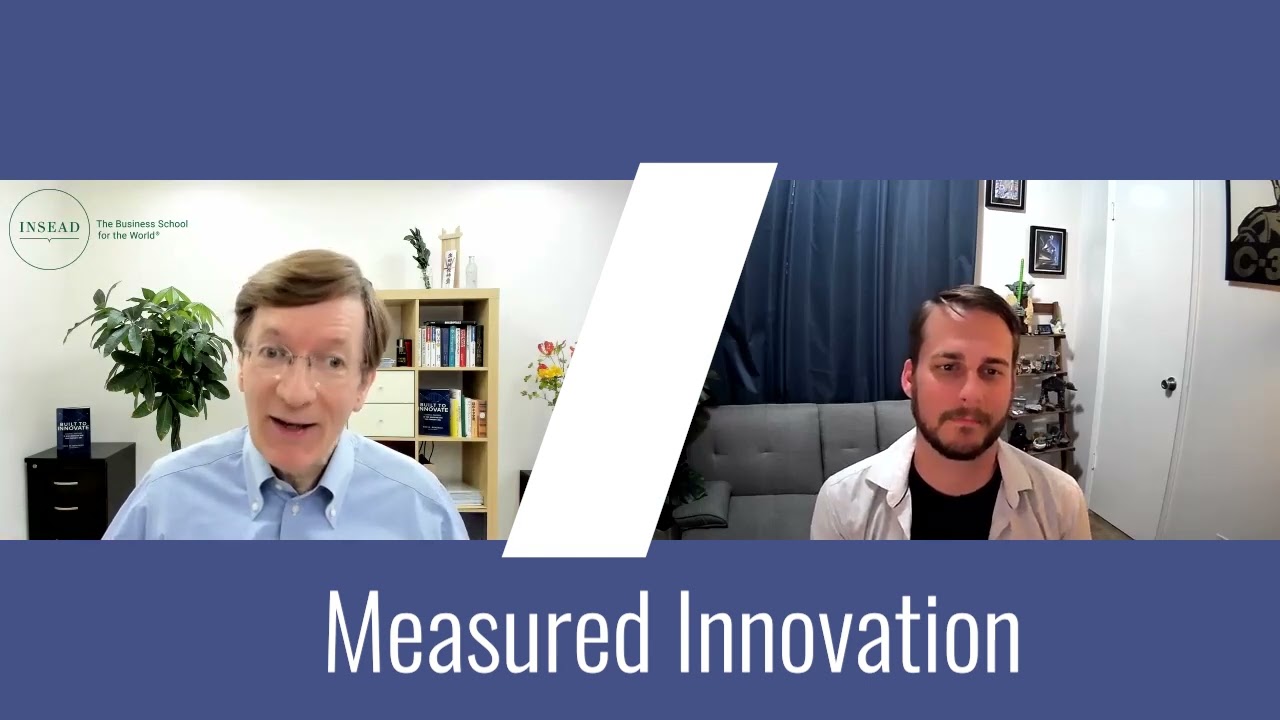
In this episode of the Conscious Design podcast, host Ian Peterman interviews INSEAD professor Ben Bensaou about his new book Built to Innovate. Bensaou traces his personal journey from engineering in France, through a decade in Japan, to a PhD at MIT and a faculty role at INSEAD, explaining how his exposure to Japanese management shaped his view of innovation. The core argument of the book is that innovation is not a rare talent reserved for geniuses or startups; it is a habit – a verb – that can be cultivated across an entire organization. Bensaou distinguishes “innovation” (the visible outcome, the iceberg tip) from “innovating” (the underlying capability, the mass below water). He stresses that every employee can innovate in products, processes, services, and internal functions, and that the key to unlocking this potential is a systematic “innovating engine” that runs parallel to the execution engine. Middle managers are identified as the “forgotten heroes” who must be empowered, protected, and motivated to coach frontline staff. The conversation illustrates these ideas with a detailed case study of Bayer: the board took collective responsibility for innovation, senior “innovation ambassadors” were appointed, a network of 1,000 certified innovation coaches was created, and a digital platform (We Solve) engaged 40,000 employees, with two‑thirds of solutions originating outside the requestor’s department. The episode repeatedly reframes innovation as a collective, structured capability rather than a sporadic, genius‑driven event, offering practical levers (leadership commitment, middle‑manager coaching, digital platforms, cultural permission) for firms seeking continuous, organization‑wide innovation.
Chapters
Hello and welcome to this episode of Conscious Design. I'm your host, Ian Peterman, and author of the book Conscious Design. And today we have Ben Banzhao, professor at INSEAD Business School. They're focused on MBA and executive education, and he's also the author of Built to Innovate: Which is why we're here. We're going to be talking more about, which just recently launched. Welcome to the show.
Well, uh, thank you, uh, Ian. Thank you for having me. It's a pleasure. Uh, and, uh, I don't know if I should say good morning here where I am or good afternoon for you there in Los Angeles, correct?
Yes, yes, I'm in LA and you're, you're actually calling from Japan, but you're—
Yes, I'm in Japan.
Trained in France, so you've, you've made a journey across the globe in your So far in your professional world. So I— we can, we can talk about that, but also let's talk about, you know, how, how have you gotten here where you're in Japan, you've launched a book, you're, you're a professor at the executive level. It's quite a— your resume is quite outstanding. So how, how did you get here and what, what got you to write this book? to build, to innovate?
Well, actually, as you mentioned, I'm in Japan, well, for kind of professional and somewhat personal reasons. I mean, I've been involved with Japan for a long time, actually. So I'm, as you said, I'm from France, I was trained as an engineer. But after my grad school, I went to Japan initially just to kind of learn the language and be kind of exposed to the culture. I liked it so much that I I stayed there and I started to actually change fields from engineering to actually management. This was a time, if you may remember, where the world was really curious about how— what was the secret of Japanese management. And I stayed there, I actually ended up even getting married there, which is the reason why I'm here now for my sabbatical. And I was really into understanding how Japanese firms were so competitive at the time. And so then after Japan, I went to the US. Actually, I went to the Sloan School at MIT to do my PhD, and then went back home in France after traveling for 10 years and joined this business school called INSEAD. And what was interesting is that— so I was part of this group of people at MIT who looked at how Japanese manufacturing was operating. And then the next step was really to try to understand what else could we learn from Japanese firms, and this was in the field of innovation. So I've been researching and working with companies and executives, MBA students, on innovation for a very long time now, almost 20, 25 years. And why the book? Where does the book come from? Well, teaching innovation for a long time, I kind of had noticed a couple things. One is that many people have a tendency to think that you need to be a genius leader or a startup to be innovative.
Right.
And again, in my work and my research, I found that many established firms, even centuries-old firms, can be innovative. How? Well, in a sense, they don't necessarily kind of look for huge disruptive, industry-disruptive kind of effects, but they tend to look for small changes, very often in unexpected places, in unexpected places, and become very innovative. So what they use is rather what I would call continuous innovation. innovation of all kinds and driven by everyone in the organization.
Right.
So this is kind of the main kind of focus of the book. I mean, I said one was that people think that only geniuses can innovate. That was one of the first kind of things that came to my mind. And then the second one, very often people associate innovation with products, with technology. What I discovered again is that not only everybody can innovate, and it should be everybody's job, but second, you can innovate in everything you do. You can innovate in your processes. You can innovate in your services, of course, but you also can innovate in your internal functions. This is really what the book is about, is how do you again, using some sort of a systematic approach, can build what I call an innovating engine in parallel to your execution engine. So this is really what the book is about.
Right. So what you're kind of pulling out is— it's great you're pointing out that everybody can innovate, first off, because it's true, right? There's There's been situations where innovation has come from, you know, people in places where we didn't think it could, but that's because we, we like to put it into this box of, you know, only Einstein can innovate and create new things, which is, which is definitely a huge— obviously they can innovate too, but it's, it's kind of removing the ability for us to think about, well, I can create something As well, which is not a good place for us to be mentally. So that's a great point. And then what you're looking at, because you're really looking at innovation, not as we can, kind of a public view, right? The public view is, oh, well, there's this startup and they're disruptive, right? There's disruptive innovation. And that's the attention headline grabbing news, really likes it.
Absolutely.
PR loves it. It's what, you know, marketing loves it. It's all really great. It's super shiny and gets us—
Absolutely.
Gets our attention. And it is innovative, but it is, it also can be really hard. And I've worked in the startup world for almost my entire career. And it is, it is brutal because you have to do that and you have to make it work. And it's not incremental. But there's also this innovation that you're talking about, which is this more measured innovation of going, okay, well, let's— how do we improve it without stepping so far that we wonder whether the branch is going to break or not? Right.
I mean, yes, absolutely. I think I like the way that you frame it, is that there's some sort of a narrative out there, which is interesting because it gets attention on innovation. It's this glorification or even mystification, mystification of these genius people, uh, or these people who have a special talent that they can come up with like grandiose stuff. I mean, you know, blockbuster products, uh, uh, you know, revolutionary, uh, business models. And I, and I, and, and, and I think that this is kind of, uh, something that creates a sense of fear about innovation, as a matter of fact. That's what I found out teaching people for many years. As soon as I walk into a room and we say, okay, this is a program about innovation, there's this sense of anxiety and fear in the room. And I wondered what this was. And I realized again, you know, by accident, that what was happening is that very often people, when they hear the word innovation, they think that their boss, when they go back after the training, their boss is going to expect from them some new product or some, some, some, some outcomes, some results. So there's this notion that innovation is about a product, is about an outcome. And then by accident one day, a long time ago, I started to kind of talk about not innovation as a noun, but about innovating as a verb. or to innovate or to become more innovative as a state. And then I realized that the fear, the anxiety would go away. And the reason for that, I found out, is because when you talk about innovating— you notice the book is about how to build to innovate, it's not about innovation— then people understand that this is more about a process. This is more about action. It's about attitudes. It's about a behavior. It's about a set of activities. It's about— as a way I define it, innovating is about looking for new ideas. It's not about innovation per se. It's about getting into that attitude, into that behavior of looking for new ideas.
Right.
So if you were to think about the metaphor that a lot of people know about, about the iceberg, Innovation as a noun is what is the tip of the iceberg, is the outcome. And what the book is about is what is under the water level, the thing that we don't see, this huge mass under the iceberg, which is the innovating capabilities.
Right.
And when you talk about innovating, then suddenly it's not about being a genius leader. This is about a skill. It's not a talent. It's something that can be learned.
Right.
It's something that can be supported with tools and methodologies. In a sense, if I were to repeat again, the objective of the book is not on innovation. It's about how do you build this innovation, this innovating capability that can rally and leverage the individual capability of the whole collective. It's— I mean, Linda Hill at Harvard called it the collective genius. This is how do you build not the individual genius of the founder, but the collective genius of the whole organization, and how to do this in some sort of a systematic way, structured way.
Right. So you're taking the concept of innovating and you're going, well, yeah, it can result in something. It will eventually.
Yes, it will.
Absolutely. It's almost, it's almost a given, right? If you start innovating, you will eventually come up with something new, right? That's, that's just kind of—
right?
If you start walking, you will get somewhere. You're not gonna, you're not gonna be still standing in the same spot. And you're letting people focus on, well, we're walking.
Right, right, right. So I had somebody actually the other day give me a very interesting analogy. It's, it's, it's a little bit like a muscle. Innovating is about a muscle. I mean, of course, if you get— again, people, I don't want people to confuse. I'm not saying that if you have a genius in the company, or if you have like a fantastic R&D capability, and people, you know, churn up this, this, this wonderful ideas all the time, of course, leverage them, put a lot of, you know, focus and attention on that.
Right.
But, but this is simply saying that there's, there's a missed opportunity of, of all the other people in the company who could— who actually, they have ideas every day. Every single day they have ideas, and it's just a question of liberating them, creating a formal, protected, totally legitimized space where everyone has the permission to innovate. So anyone can innovate. As I said, you can innovate in everything you do, and innovating becomes a habit. And it's like the athletes who train.
Right.
So it's about training your muscle. Then, of course, if you train your muscle, I mean, some people, when they're successful, they might go to the championship.
Exactly.
That's the innovation. Or, some people might get to the Olympics. That's the disruption. The book is really about creating this culture, this capability in the organization. Maybe giving an example can give a sense of what I'm talking about. There's one company— I mean, another thing I wanted to mention also, Ian, is that in the book, there's a— of course, you can't avoid talking about the usual suspects, the tech companies, the Amazons, the Netflix of this world, and highlight what we can learn from them. But actually, the book is much more focused on usual companies, traditional companies, very established companies in industries that are not necessarily known for innovation, like the sales cement industry, the tire industry, the tool industry, where you realize, like, take a company like Bayer in pharmaceuticals and pharmacology and life sciences. So this is— everybody knows Bayer and aspirin, and they're formidable. They have a huge and formidable R&D capability that churns up new products all the time.
Right.
But what was interesting is that I found that in 20— actually, they started in 2014. This was a corporate initiative to build what, you know, I refer in the book as the innovating engine. And the objective was to enlist the capabilities of the 100,000 employees they have in the company. Maybe to just—
That's a lot of brainpower.
That's a lot. Exactly. This is a lot of brainpower. And in a sense, it's a When people kind of think that innovation is about the geniuses and it's about the R&D capabilities, they are overseeing this latent capability because everyone can become innovative. For people to be innovative, in a sense, I discovered that there are 3 things they need. One, they need to feel that they're able to do it, that they have permission. As a matter of fact, and I can talk about many examples, companies are very often astonished to the level of creativity and ideas that even their frontline people have. It's very easy to understand, as a matter of fact, because these people are face-to-face on a daily basis with customers and non-customers, so they ought to see things that can lead to innovation. So everyone can innovate.
Yes.
As I said before, you can innovate in everything you do. So people are so obsessed by the next product, and they don't realize that there are very powerful innovations that can happen in your HR department or in your logistics. And these might not generate a product, but they might generate efficiency or cost reductions that could be, in some cases, equivalent to the revenues of a new product. And then coming back to the analogy, the sports analogy, if you kind of make it part of everybody's job, that they feel that they are able, that they feel they are capable because they are supported, they have, they have the time that is created for them, they have the space, they have a set of tools, and they're protected politically, then people feel that they're capable. And third, they need to feel motivated. And this is where, in a strange way, I discovered that the most important people for innovation, in a strange way, are not the innovators. It's in fact the middle managers. Because if people don't have this sense that they are enabled, that they are protected, and that they are recognized for it, They're praised for it, sometimes in very simple ways. I mean, it is not going to happen. So I've discovered that the middle managers, in some ways I call them the forgotten heroes of innovation. Without them, innovation does not happen in large organizations.
Hey, it's Ian here. So glad you're enjoying this episode of Conscious Design. If you want the full scoop on Conscious Design, what it is, how we do it, how you can do it, then check out our book. We wrote it so creative entrepreneurs like you can code social and environmental responsibility right into your brand's DNA. You can download the first chapter for free. Link is in the description. Enjoy the rest of the episode. Don't forget to like, subscribe, and share. Yeah, and I've, I've done some reading on it. There's usually the middle manager because they have, they have enough oversight, they're close enough to the actual action to actually understand, and they can, they can get more direct feedback from the team that they work with, but they're also not too high up, so they're not— their goals are a little bit different. Their goals are usually more around efficiency than, than long-term planning and things like that.
Yes, yes, absolutely. I mean, again, let me, let me lay out the whole example of Bayer. So I said, you know, they had fantastic R&D capability. Then they decided in a very proactive way in 2014, they had a strategy. They said, we want to build this innovating engine. Let me explain what they did very briefly, and then we can poke further if you're interested. The first thing they did, and I will explain how it relates to the book, but the first thing they did is that they made the whole board responsible for innovation. So I'll come back to why this is important, but the whole board, not only— I mean, many companies have one board member who is kind of Mr. or Mrs. Innovation responsible for it, but here they made the whole board responsible for innovation. Then they selected, I think it was about 80 senior managers across all country groups and global functions to support this board. as what they called innovation ambassadors.
Okay.
So these people in all the businesses, they were spending most of their time focusing on middle managers. So they were spending a lot of time explaining, in some cases training middle managers, advocating, sponsoring innovation. And they did something very important for these middle managers, and that goes to the core of what you were saying, actually, Ian. They created a superstructure, an infrastructure of about 1,000 trained and certified innovation coaches whom they activated across the whole organization. As you were saying, the middle managers, very funnily enough, senior leaders, they're dealing with a very impractical, unpredictable volatile, competitive environment. For them, innovation is an imperative.
Right.
On the other hand, people who are facing the customer on a daily basis, hearing the pain points, the dislikes, the wishes, I mean, it's a no-brainer. As a matter of fact, they have a lot of ideas about how to help these new customers and how to come up with innovations. As you said, the middle managers, the ones they are the ones who are shielded from this external pressure. And on top of it, they are indeed responsible for execution.
Yes, it's their job.
So it's their job is to take care of execution. So what was really fantastic about Bayer is that they created this pool of 1,000 coaches that were spread around the company to support the middle managers. So when a middle manager had an individual or a team who wanted to kind of, uh, had an idea that they want to pursue, then they could call upon these totally trained certified coaches and specialize in innovation and, and, and, and, and support them. So this was, this was really, uh, and this is again something that I, I've seen in quite a number of examples that I feature in the book of companies that created a formal structure, often centralized, at the disposal of the middle managers who needed some support to train and coach and follow their teams. Because the middle managers, they don't necessarily know how to help other people innovate. I mean, as we said, they're here.
Right.
And then one more level about what Bayer did. So I was trying to highlight a couple things here, is that to create this innovating engine that I'm talking about, You need to have a contribution from all levels. The senior level, and we can go back into the detail of it. You saw the Bayer board being very active. The middle managers are very essential. Then the frontline, because, of course, the key ideas are going to come from the frontline, the people who are facing the customers.
They are.
They are. Bayer created— they created a digital platform. Of course, it's supported by in-person events and activities, but they created a digital platform. They call it We Solve, and any employee at Bayer can freely post on the platform information about an issue they're dealing with. and invite people from across the whole company to propose ideas or solutions or recommendations for this. So what is interesting is that as soon as they created the platform, it became very active. They have now about 40,000 people who have participated in— I mean, you're smiling.
That's amazing.
It's a company— the platform, actually, I've been invited to look at it is in English, and you have only 50,000 people in the whole company who speak English, but you have 40,000 people who've already participated. So it's a huge participation rate. But they showed me a statistic that really baffled me. They explained to me that when people submit a problem or a question, they get lots of responses, you know, and what they found out is that 2/3 of the solutions that are proposed for a problem or a request come from a department or unit different from where the question originated.
Actually, it doesn't surprise me at all.
I think this is formidable. This is where I say they have been able to systematically enlist people from across the whole company It's not only the people from your department. It's not only— it's not the R&D people, for sure. It's people across the whole company who are engaged actively in innovating. And I think this is a very nice example of a systematic way. As I said, it's not contradicting or in conflict or in competition with R&D. R&D are doing their thing. They're coming up with the products and all that, but they have this innovation— innovating engine that gets everybody involved in innovation, and they get ideas pumped up into that. This is more what I'm talking about. It's not about— I mean, it is about fundamentally acknowledging that most companies, established companies in particular, have been designed and organized to execute. This is about executing today's strategy.
Right.
It's really about developing the products and manufacturing them efficiently to deliver on what the customers want today. You need to have another engine functioning in parallel at the same time, which I call here the innovating engine. Other people call it differently, but I call it the innovating engine. Everybody gets involved in that. This innovating engine is really about the innovation, I mean, the strategy of the future, the organization of the future to come up with improvements to existing products and services but also think about the new problems and the solutions that customers haven't even told you yet. This is the key, that everyone in the organization has a role to play in both engines. And this is really the tricky part.
Right.
I mean, we know about companies like 3M, you know, Gore, W.L. Gore, who have like 10% of the time or sometimes 15% rule where people can spend time, you know, on blue sky projects. But this is really about making it systematic, that everybody has to get involved in innovating activities. They have a space and a time that is totally legitimized and protected where they can do that. That the ideas— there's a clear structure for the ideas to be winnowed and channeled and selected and prototyped and put back into the execution engine. There's this strong corporate sense that this is part of the company. This is, this is at the core of the company.
More from Ian


You Didn't Know a Shampoo Could Do This #Shorts #shampoo #ecofriendly #haircare





The Biggest Misunderstanding About Bioplastics - Sustainable Materials Consultant Joanna Pool

A Polymer Scientist Explains the Truth About Bioplastics #podcast #sustainability #science



NASA is testing this on Mars… why not Earth? #Shorts #GreenTech #NASA #science