Social Responsibility with Doug Woodring of @OceanRecoveryAlliance
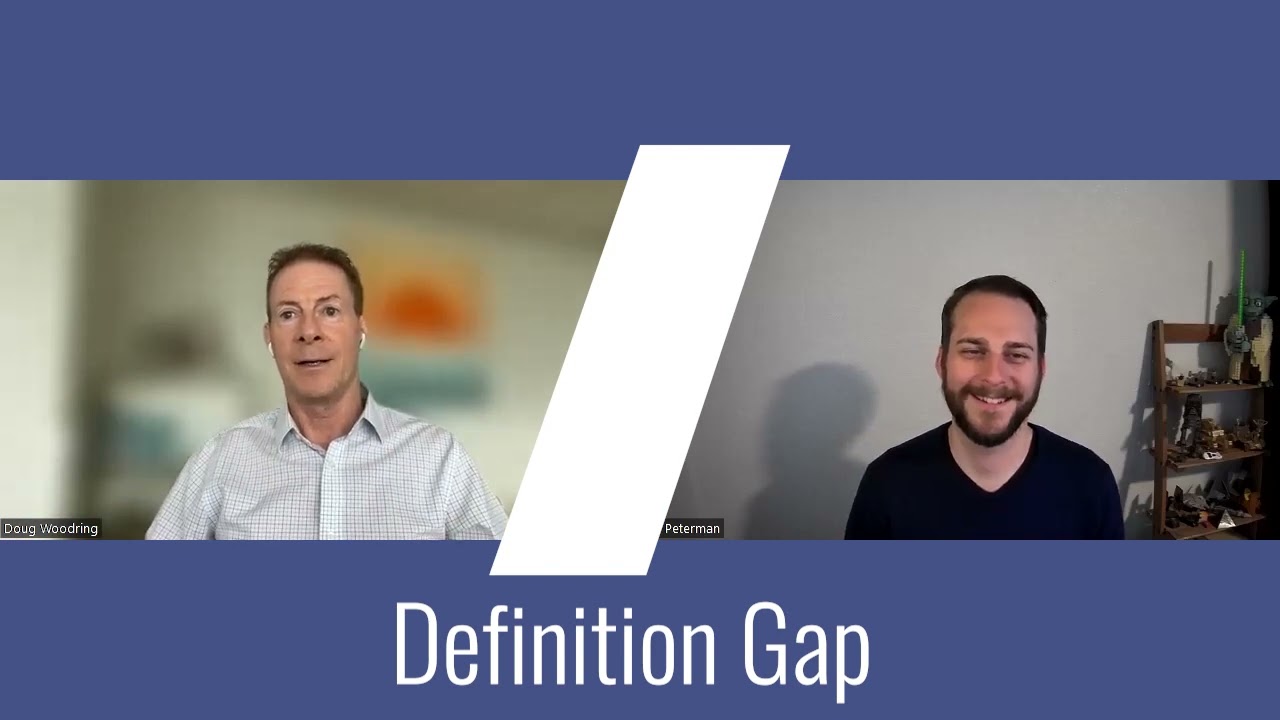
In this episode of the Conscious Design podcast, host Ian Peterman interviews Doug Woodring, founder of Ocean Recovery Alliance (ORA), about the multifaceted challenge of plastic pollution in the world’s oceans and the strategies his organization employs to address it. Woodring explains how framing the water body as a single "ocean" creates a sense of collective stewardship, and recounts his personal journey from witnessing overfishing in Japan to seeing suspended plastic while diving in Palau, which sparked his focus on plastic. He describes the scientific reality that ocean‑bound plastic is not a massive island but dispersed micro‑particles, making cleanup difficult and shifting emphasis to upstream prevention. The conversation moves to the river‑to‑ocean continuum, introducing ORA’s World‑Bank‑funded Global Alert app that crowdsources trash‑hotspot reports, and the use of booms, nets, and community‑led clean‑ups such as the successful river project in Cambodia. Woodring critiques the current recycling system – low recovery rates, confusing bin labeling, lack of infrastructure, and the fallout from China’s import ban – and proposes a simpler wet/dry sorting paradigm, small‑scale shredders and densifiers, and a decentralized network of local recycling machines to create economic value and reduce transport emissions. He stresses the necessity of legitimate international trade of plastic feedstock to meet corporate recycled‑content targets, noting a projected 6 million‑ton shortfall. The interview also covers incentive mechanisms (reward programs, reverse logistics), social stigma around recycling, and the Plastic Disclosure Project (PDP), a corporate‑level plastic‑footprint methodology modeled on the CDP that helps companies audit production, use of recycled content, and end‑of‑life pathways. Woodring shares concrete case studies (airline magazine packaging, hotel amenity reduction) and highlights educational outreach such as a multilingual recycling play featuring “Uncle Roo.” Throughout, Woodring emphasizes community ownership, scalable low‑tech solutions, and the need for coordinated policy, funding, and trade to build a global circular economy for plastic.
Chapters
Hello and welcome to this episode of Conscious Design. I'm your host, Ian Peterman, owner and founder of the Peterman Design Firm and author of the Conscious Design book. And with me today, I have Doug Woodring. He's the founder of Ocean Recovery Alliance, which is focused on bringing innovative solutions, technology collaborations, even policy together to help the health of the ocean and get more plastic out. Welcome to the show.
Thank you, Ian.
Nice to be here.
Yeah, I'm excited. This is a, as you have spent a lot of time working on this, this is a large issue that we need to address. Stepping us a little bit back though, where, what was your kind of spark that said, yeah, let me get into fixing the ocean?
Well, yeah, good, good question because it's a big thing, as you said. And I'm glad you said ocean because some people say oceans.
And when you think about it, there's actually only one body of water.
And we just name it different.
We name the regions, you know, different. But by calling it ocean, we all have stewardship for it. We all own it.
If you, if you say oceans and you say, oh, well, that ocean over there, It's not mine. So, you know, I don't really need to worry about that one. Someone else will do that. So I think it's a psychological thing. Even people have been, including us, hoping to get the UN to even change that wording because ocean is more powerful in terms of ownership and pride for the water that we're trying to protect.
So I got inspired 2 ways.
One was sort of through a negative channel. And in some aspect, I worked in Japan Right after university, and I was one of the first foreigners working in the biggest fishing company in Japan, or one of them. And I didn't see anything bad, but I just learned so much about how much we all take out of the ocean in the fishing industry, all countries. And we as consumers who want choices and different types of exotic fish and seafood don't really realize the impact that all of the catching and the production and all of that has on our ocean ecosystem. So in my heart, in my head, I said, hmm, someday when I get older and have the angle, I want to be able to slow this down and do something to raise awareness about it.
So we still do work on overfishing issues.
I live in Asia. I've been based in Hong Kong for almost more than 25 years. And so that is a big issue in that part of the world, overfishing, shark fin, different ecosystem, dolphins, pink dolphins.
But primarily we work on plastic. And I got the inspiration on that one, among other things.
I do a lot of water sports. I organize open water swim races and outrigger canoe racing. But I was diving in Palau, which is in the middle of the Pacific, and there was no big land masses anywhere nearby.
And I found plastic suspended in the water column at 20 meters down, that's 60 feet, in crystal clear, perfect blue water.
There was plastic almost like it was hanging off a tree, and you could grab it and put it in your wetsuit. And That really made me think, where, where does this stuff come from? And how is it getting there? And why is no one really talking about it? This was 12 or 13 years ago. And so that kind of started my really thinking about it. But I didn't know about the gyre at that time. And we were one of the first groups to really do real science out there. We did an expedition in 2009 in the middle of the Pacific. We brought Scripps Oceanography along with us, and they did all kinds of science experiments over 3 and a half weeks. And lo and behold, like you hear, we got plastic in every single sample for the entire trip, you know, microplastic, but you could see it floating.
But, but contrary to what everyone says, it's not a big island.
It's not a big mass of material. And if it was, people would have gone out there and, you know, scooped it up and done things with it, but it's not. So cleaning that is, is incredibly difficult. And that's why what we work on is a lot of prevention and upstream programs.
Yeah.
And that's something that you, when we were talking before, is that there's kind of a delineation, right? Even if we say ocean, we're still segregating freshwater and ocean, even though it's all still connected. Kind of what are, I guess, on that, what have you done? You've been working on trying to bridge that gap and say, hey, we're working on 2 sides of the coin here. How has that evolved as you've gone through that process of this project?
Right. So that's a good point. So, you know, interestingly, a lot of the scientists and ecologists and people who work on ocean issues, whether it's acidification, coral bleaching, animals, They all study in saltwater environments.
Then you go to an ocean conference, it's all about saltwater environment. When you go to a water conference, it's usually all about freshwater, and that could be desertification, damming, wells, drinking water, agriculture, but it's not about the ocean.
And the 2 groups, fresh and salt, we rarely ever connect.
But in fact, of course, we all know that the pollution that comes out of any river or waterway goes into the ocean, unless it might go into a lake.
And people used to say the solution to dilution is pollution. So you dilute it.
The ocean is so big to fail, you know, like the big banks were too big to fail in the economic crisis. The ocean was too big to fail. If it goes out, it spreads out, doesn't harm anyone, and it's gone. And You know, we don't have to worry.
Well, now we realize that's not the case.
The population of the world is expanding quickly. And a lot of the plastic, most of the plastic that gets into the ocean comes from waterways and storm drains, especially in countries that don't have proper, which is most countries, facilities and capacities and infrastructure and spending on waste containment, if you want to just call it containment, to not let it bleed.
So if you think of the river systems as arteries, think of the ocean as the heart, and think of plastic as cholesterol.
It's easier to catch the cholesterol when it goes through the arteries before it gets to the heart because it's going downstream and there's 2 riverbanks or creek banks, whatever. But that's really where we can get these, this, a lot of this stuff that's bleeding from our landscape, especially when there's big rains and water events, which a lot of the world has.
So we created an app years ago called Global Alert. It's in Spanish and English.
It was partly funded by the World Bank, and it lets everyone in the world in any watershed report trash hotspots, much like Waze for traffic. Hotspot meaning a lot of garbage, not one candy wrapper.
Right.
Because they, A mayor or a minister of tourism or a minister of waters isn't going to go get a truck and go pick up the can wrapper.
But the people would mobilize to do cleanups, either one-offs or regular events to clean up, you know, the rivers or waterways or coastlines.
And what we really want to do is put in booms, nets, and catchment devices. And this discussion about rivers and booms and catchments Really only started getting, uh, more publicity, um, in the last couple of years, uh, when the ocean cleanup has been happening and they realized the stuff they're doing in the ocean wasn't really working and they moved into the rivers.
Uh, but they're just in the big tributaries.
But you, you have to think of the millions of smaller tributaries that come out of our communities, and those all can be effectively, um, managed in a better way. When you do that, then you build trust in the community.
Just taking the surface layer of trash off a waterway really changes the dynamic.
It's like repainting a house and fixing the windows, what they call the broken windows theory. The community in the neighborhood then becomes proud of their ownership of the property, the space. They don't graffiti things and throw things through the windows again.
Same with the river.
Once you clean it, You can say, you know, do not, do not put your stuff in there and people don't want to be the first to throw a garbage bag or let stuff get back in there. And that builds trust in that environment.
Yeah, you don't want to be the one to ruin it, but if it's already ruined, then clearly you don't care, right?
So we did this project in Cambodia.
We cleaned one of the rivers a year and a half ago. The monks, it was right across from a monastery and the monks were standing on the side just smiling. Because they had tried to tell people not to throw their garbage in the river. But people, as you said, didn't even believe the monks, didn't trust them because it was all dirty. So there was no reason not to do it. As soon as it was clean, they said, you will have bad karma if you put that in the water. And that means a lot, especially in the Buddhist communities.
And people really then took pride of that. Waterway.
In fact, the government after one week said we're gonna put a fine now on anyone who puts a garbage bag on the water side of the road. There's roads on each side of the river. And of course, if your garbage bag is on that river side and the rain comes or the wind, it will go right in the water.
Right.
So they fined people and, but they didn't do that until it was cleaned initially to have a baseline starting point.
Right. It wasn't, it wasn't worth maintaining if it was, since it wasn't maintained.
Right. It took someone else to come in and motivate the village chiefs and the fishermen, you know, which is what we did with our Global Alert app. It's a pretty neat story.
That's awesome. And kind of this, this all ties in. Love to talk about, you mentioned a little bit on You know, circular economy trends, right? And how we're— a lot of things can be local, especially stuff that's super easy to recycle, metals, glass. But plastic is such a huge— it's a global thing. And you mentioned a little bit like countries, you know, we try to like not let it go out, right? We try to not let it go out of the ocean, but that just means you're containing it. It doesn't, it doesn't You're now gonna have what blocks of useless plastic heaped up. So I'd love you to talk a little bit about that and how it's not— I think people think about circular economy and they're like, oh, well, I just recycle and do this little thing here, but it doesn't. There's other things that need to be a little bit more global. And I think this plastic one is something to really think about from an infrastructure standpoint. of, you know, these smaller countries, they don't have the financial position to build all the infrastructure to do something. If they sequester it, it's still waste.
Right.
That's exactly a great point. And since you're in design and innovation area, you know, this is the whole thing that we think needs to be readdressed, unfortunately, which is the recycling.
Infrastructure around the world.
Unfortunately, because in the last many decades recycling, particularly for plastic, hasn't been so great, even in the U.S., our plastic bottles, which are the easiest thing to recycle, is only at 28% of the total production.
That's because some states have bottle bills, which means you get a refund refund or rebate on your bottles. And in those states, the recovery rate of the bottles is 75 to 95%.
Wow.
In the states that don't have those bills where there's no incentive, the recovery rate is under 20% or it can be.
And so if we, the US, can't even do this, you know, the right way, in the past, the waste management systems were set up basically to handle your waste streams, which is paper, glass, metal, and food. Plastic came along decades back and the whole systems and even the machinery equipment wasn't really set up to handle all of the thin films and flexible packaging that gums up the machines and the sorting systems. So when you go to the circular economy, well, back to the recycling. So a lot of the environmental world now says recycling doesn't work, hasn't worked.
It's a big scam.
And in some ways it's not a scam, but it hasn't really worked.
I think we haven't readjusted our system.
You have 3 bins in many cities.
People don't know what the bins are for, and they're only for outdoor things so that you're not necessarily aggregating each material in the right way, which is where the recyclers can use it.
And if you even get 3 bins, I live in places where you get a garbage and a recycling and you just I guess put it all, put it all in. Like there's no, there's no sorting at all.
Right. Some cities do the sorting back of house, you know, not your house, but when they deliver it to a facility, it's called an MRF, a material recovery facility.
But many cities don't have those. And at the, some of them are meant to handle sloppy, gloopy, wet waste.
And some are meant to handle drier waste and some are by hand and some is optical.
But the cost of labor in the US and developed countries is high.
So it's hard to do the hand sorting and therefore get a lot of the good material.
So fast forward that to all the other countries.
And in the meantime, China, a number of years ago, banned the import of plastic waste for recycling from all countries. And that sent a shockwave through the world because the US and Europe and even Japan were all capturing their material through these bins and the recycling programs, but we weren't processing it onshore very much. We were sending it to someone else to do the final sorting and the final economies of scale cleaning and processing.
China— We hadn't invested any money into the actual technology. To do the job.
That's correct.
Of course, there's some here, but not at the scale of what we produce and use.
Right.
And so we have, we hollowed ourselves out like we did with many other industries, but not really knowing it was going to cause this kind of issue.
We now don't have the capacity domestically to handle most of our waste, of our plastic for recycling.
And again, it's coming down to sorting and cost and the way we collect it.
So if you bundle your waste, like you said, with food and grease and all of that mixed together, a great analogy for recycling is unscrambling or reconstituting an omelet. So if you make an omelet of eggs, cheese, ham, peppers, mushroom, and I said, Ian, thanks for making me that omelet, but Please put them back in their original form.
Right. That's pretty much what recycling is and how difficult it is.
So the cost is in reconstituting that omelet. And what we're really trying to promote is sorting by wet and dry because the world gets confused. I live in, I mean, live in Hong Kong, but I'm now in San Francisco.
The bins just say recycling.
Yeah.
And I'm kind of in this space and business, but I don't know what they want to recycle in that bin.
I don't know if it's meant for paper, meant for straws, meant for plastic, or is it meant for cardboard.
And so I don't know what to put in there.
And people, because they don't really know or they just feel like throwing their things away, they contaminate those batches and there's food in there and that adds to the cost. If we can sort things by just wet and dry, which is basically organic and non-organic, doesn't have to be perfectly dry, but, you know, get all the gloopy food and drink out of it, then it'll be much, much easier for people to recover the materials, whether that's paper, glass, metal, and plastic.
And then you can hand sort that much easier. And the value then is much greater because you'll get economies of scale.
You can sort the plastic into the different families. There's 7 families that plastic has, all with different melting points and different colors, different chemical additives. Those need to be aggregated into their own types because you can't just batch everything together and make a new product. Right.
So when you bring all these things together and then you have a discussion on the trade of plastic waste for recycling, Much of the world has stopped the trade of waste, which of course is a good thing. But unfortunately, the trade of plastic for recycling has been very quickly determined to be also waste because there was some illicit shipments and sometimes people weren't, they weren't checking, the officials weren't checking the quality of the material.
And it would end up in a country who didn't have the ability to process it.
But it's not as if people were blatantly shipping to do that and get it offshore because in a trade, there's always a buyer and a seller. So that means someone is buying a batch.
It's not just coming onto the shore into a country, you know, to be getting rid of. Someone bought it. It means they have a vested interest in making some quality out of that and being able to sell it. But if it's not a good batch, then, then it becomes waste and that becomes an issue.
But now with circular economy, a lot of this trade has dried up and it's not being allowed. And so what that ends up doing is locking all of the products and packages that get exported around the world.
Imagine some of the big multinationals export to 200 countries. Their product and package might be recyclable in California or in Japan or in London, but it may well not be recyclable in 90% of the other countries because they don't have the capacity, they don't have the resources, they don't have the machines, they don't have the sorting.
And this is where if we don't have trade to go to countries in a legitimate manner, where the trade and the material, the feedstock, is checked and it is approved. But now it goes to the bigger countries that do have the machines and the capacity to process. If we don't do that, then we're forcing every country to have its own domestic circular economy for plastic, which is a huge undertaking. Cost, they have to have machines to process it, and they also have to have manufacturing to absorb the new products that they just made or the new feedstock.
Right.
And that's tough. And so if we want to alleviate plastic pollution, we can't shut the door on trade, legitimate trade of feedstock. And this is a big opportunity when you look at all the brands, the big brands who have commitments globally today to add 20 or 30% recycled content in their packages, in the next 3 or 4 years, there will be at least a 6 million ton shortfall of recycled content to meet the demands of those big companies because—
Wow.
They can't get their hands on it today. So talk about design and innovation and opportunity. This is a big one.
Hey, it's Ian here.
So glad you're enjoying this episode of Conscious Design. If you want the full scoop on Conscious Design, what it is, how we do it, how you can do it, then check out our book. We wrote it so creative entrepreneurs like you can code social and environmental responsibility right into your brand's DNA. You can download the first chapter for free. Link is in the description. Enjoy the rest of the episode. Don't forget to like, subscribe, and share.
Yeah, so we're talking about the equipment side of things, and we've talked about a lot of, a lot of it. But as far as being able to do it, you're— you don't have the belief that we need huge equipment in every single tiny country on the planet in order to be able to build a circular economy, right? As long as there's trade. So what are your— what is your approach to those small countries?
Yeah, so a good question that we all should ask ourselves is when you just say circular economy, I'm not sure everyone really thought about it before, but does it mean domestic or international?
Global.
Some products and materials could be domestic or even localized within a county or a state, but in other cases like plastic, unless we make it global, we need— we're going to need every single country to have their own capacities and machinery and equipment, and that might happen in 30 years, but it's not going to happen that quickly for sure. And so what we don't need in all of these countries is giant big processing plants like a big city of New York or London or, you know, Tokyo might have. Waste is distributed.
It's in every village, every town, every community.
And if you were going to only put one big plant in a small country, you'd need to ship by truck or barge or something all of the waste from all over the country and communities into that one machine.
And that's not very effective for many, many reasons. Right.
But what we do need is thousands of smaller machines to let communities get into the value chain of recycling.
Again, I'm talking about plastic, but when you, when you start doing this and plastic is the main focus and you're sorting things, of course, You will, in localized sorting, you will get paper and glass and metal, and if those are valuable in that country, you can do that, even organics.
But grinders, shredders, small sorting units, which could be optical, and, or they can be hand, hand processing conveyor lines, and they can be small.
It could be the size of a 20-foot container footprint even.
This then gets that local community into the value chain of, of the bigger recycling system. So if you can shred material and decrease the volume that you take up in your waste of rigid material, then you bring more value. And if you've sorted it into the different types of plastic, it's a higher value to sell.
So 1 kilo or 1 ton or 1 pound will be worth a lot more than if you just give them the scrambled omelet, and now what I said before, which is a big mess.
And if you now say, okay, I have plastics number 3 or plastics number 2 in some aggregated fashion, then you can sell that kilo or ton onto the next aggregator and processor.
Once that happens, everything can go into the recycling stream.
One interesting thing is the idea about air and space. If you take a bottle, this bottle is very difficult to compress. So basically, you have packaged air in your waste system taking up this entire space. The weight of this is very small. So if you just take, fill a truckload of this, you're going to only get a value of a few hundred dollars.
because basically you've got too much air and space and it's not compressed.
If you have shredders and grinders in your town or community, you can densify this and basically get the air out.
Right. And that's what we should be thinking about, get the air out, at least for the rigids.
Once you get the air out, we've done studies, you can save 8 to 9 times the amount of, material, or put it the other way, you could have one truck taking 8 or 9 times more material in one shipment to the next place. So if a ton of PET bottles, one ton is about 40,000 normal bottles, not the size I just showed you, drink bottles, 40,000, that's maybe worth, say, $500 in today's market.
Unprocessed, fairly unprocessed.
If you compress that and/or shred it and you put 8 or 9 times that amount on the same truck, you then have a value of $4,500 and only one truck. That means 9 times less traffic, 9 times less diesel, 9 times less bad roads and bad tires and pollution that goes along with moving all that stuff around.
And that's something that people don't even really talk about today.
So a few of these pretty simple changes in thinking of sorting and getting the machinery out there, the smaller-scale machinery, will create jobs, will get all of that localized waste into the recycling stream in a much more effective manner than what's happening today.
And then we need the trade to get to the guys who have the bigger machinery equipment to do it. If we leave it to everyone to do themselves, you will have more illegal dumping, more open pit burning, and that's more into our rivers. And that's what we have today, which we don't want to have anymore.
Right. Well, and I love the idea of it because it right now, right, we're you ship a product out to some country that doesn't have it right now, they just have trash. But if you install this, like you say, you're putting them into this value chain. So then now it becomes valuable. It becomes something that can actually help their economy instead of being something that they have to secretly burn so that other people don't say they're bad, right? I mean, that's, that's kind of the thing is there's a lot of like Shame, right? Oh, well, why are you doing that? Well, there's nothing else to do with it. There's, there's no, there's no way for them to try, even try to process it. And, and like you said, if there's no trade, well then there's, it basically is—
Then there's no value.
There's zero value to it, even though it is very valuable. It's still a material, right? It's still a recyclable material that we could absolutely use. It's, it's, Yeah, we've cut off that part of it. So now it has no value. So I think that's a, that'd be a great approach too.
Yes.
And this is where, you know, there'll be money to be made in these smaller size localized machinery and equipment processing, you know, capacities.
Of course, that means a lot of people need to start selling them and exporting them and getting them into local markets. Some can be made locally, of course, you know, once the right system is designed that is easy for people to use, easy to maintain.
But it doesn't, you know, sometimes it's not high-tech, and that's one reason why it's also gotten maybe glossed over or forgotten, because trash and waste is not really sexy.
And no, it's not glamorous and it's not like building giant beautiful wind turbines and— Right.
It doesn't look cool on a magazine cover.
Right. So, you know, these machines which just need to be practical and working aren't something that the sort of VCs and the investors are scrambling to fund. And at the same time, the banks and the multilateral institutions aren't really funding things that are so small.
They like to look for big, large project, large-scale projects. So there's a mismatch between the deployment of thousands of smaller machines and the funding or the needs that might be that need to go with that to complement the build out of that. So that's another challenge that's happening right now.
Yeah. And that reminds me, there's a, I interviewed a company called Bauer that started and I think you talked about this other side to it as well of helping people sort. And basically the idea is, you know, you have eat your candy wrapper, right? Well, hopefully you don't eat the candy wrapper, you eat the candy and you have the wrapper left. But then you go to these stations and you can scan it and it'll tell you, where to put it. Because, you know, some of those things you have no idea. It doesn't, it's not necessarily super clear where or how, how to deal with it. And then you get some sort of, you know, whether it's a point system or a cash system, but some sort of value. And then now you're, you're addressing the issue you mentioned earlier of, well, we have all this stuff, but it's not sorted. It's very, right, unscrambling the omelet. That's, that's the hard part. And Incentivizing people, that's another approach I've seen of saying, hey, here's, there is value in the packaging, right? It is a material, it's recyclable, somebody can use it. Here you go. It's, you know, it's not gonna be worth hundreds and hundreds of dollars or anything crazy, but, you know, it is worth something and getting that value again into it. And also on the tracking side, because it's something that, like you mentioned earlier, a lot of these companies have goals, right? There are these environmental goals that they're trying to achieve. But if the trash just ends up in a river out to the ocean and you find it while diving, nobody knows. Like, I'm sure you weren't going through and labeling and going, oh, M&M's, this is yours. Hey, this Walmart, this was yours. Amazon, this was your— like, we're not, we're not doing that when we clean up. We're just trying to clean up. So being able to get an idea of where How does it get from we manufactured it to it's sold to where it is can also help us figure out how to deal with it better.
Right.
And I think what you're also alluding to is something again on innovation and design, at least social practice is, well, it's the reverse use of the reverse supply chain and bring back programs or reward programs.
As a retailer, you can get people back in your store if you have a reward program for packages or any containers, any recovered recyclate that you want to recycle, which is yours or something that you sell. That's a competitive advantage to get people because usually when people come back for that reward, they'll go buy a few more things in your store. You accomplished a big feat, which is increasing footfall.
Right. Then what also happens is you've aggregated the material into its own like type, and that's what recyclers want.
So when you have more volume and the like type of the material, it's much easier to recycle and therefore easier to get someone to come pick it up and buy— and someone to buy it from you.
And that all then helps the whole system.
So I believe there will be a lot of great innovation and thinking in how to change society and in the ways of recovering the material that they used in the packaging and even home delivery. You know, there's a lot you could do with home recovery material. I wanna pick up reverse side.
Right. Well, I love you mentioned the social aspect, right? Because it's, I feel like especially even, even in places, states that allow you to recycle your bottles, there's still quite a bit of stigma. Like it's the bums who go do that. It's usually tucked away in the dirty area. Like it's just not, you know, it's, it's not something that you see people in suits or dressed nicely or drive fancy cars do. It's not something that's really accepted in, in general society. There's like pockets of people that do it because there's cash value, but it's not— this socially accepted positive, right? Cool to do thing, right? It's not a, there's not that social yes paired with it.
Right.
Well, that's what easily could change if people did it.
People meaning the retailers or the brands did it in the right way. There's a huge PR opportunity for the ones who get this right. We've been working on a couple of programs like this in different countries that haven't got started because of different reasons and the brand and the retailer. But once that's shown to really work well, then there'll be copycats and the whole, it's like pushing the snowball down the hill. It will start to get gravity, but no one's done it really well or the right way in my view yet to get that gravity. But some programs are out there and they're working, but within their you know, specific type or product and some things are easier, you know, a piece of clothing bringing back or bigger bottles is easier maybe than candy wrappers. But there's still ways to actually, if you're creative, get a lot of things back in their sorted form, which means that they're more aggregated in their material types. And Yeah, that's a— in some countries that will be easier to do than others. In some places it will be super effective because that bit of value will mean, you know, like you said, might mean more to a bigger population who's not as developed as other countries where they don't have time and they're fairly well off. they don't feel the need to, to get some rewards for, for spending time to sort things out of their house and having them picked up.
Right. Well, and that, this kind of leads me into the, well, last big thing I really wanted to talk to you about, which was the Plastic Footprint project that you've been working on. And, you know, it's been, it's been a while. You're ahead of the curve often, but This is something that, you know, companies are wanting to— I'm not really, I don't know how much they want to, but they're being dragged into tracking, right? We have carbon footprint tracking. We've kind of gotten used to that. Companies are doing that. There's, you know, a lot of, a lot of resources put towards that. And you guys have developed a plastic footprint process. I'd love you to talk about that and where you're taking that.
Sure. So as you said, we were a bit ahead of the curve on that. We announced the Plastic Disclosure Project, that's the name, PDP, modeled after the Carbon Disclosure Project in 2010.
We announced that at the Clinton Global Initiative, and we were probably 9 years too early because there wasn't a terminology of circular economy then. And plastic wasn't as big an issue, so companies didn't feel the need to know what they have and reuse and recover. So our methodology is like putting a mirror up to your face and looking at what you do. How much do you make? How much do you recover? Do you know where it goes if it's being recycled? Do you really truly know what the contractors are doing when they take it away?
Are you using recycled content in your products and packages?
If not, why not? Particularly for government and large companies who have tenders or, you know, big purchase orders for 1,000 chairs, 1,000 desks, you know, they could put right in the specs that we want these products that have 10%, 20%, 30% recycled content in them. if there's plastic. And that really drives the demand and brings the value up, tells the recyclers, oh, these guys need, you know, 1,000 tons of this stuff to meet their product demand.
And that's the pull we need in the system.
So by doing the PDP, we've had universities, airlines, hotels, any institution, company, or municipality can undertake this process. And you need a baseline to be able to then evaluate yourself the year later and the year later, the year later. Of course, you'll find the low-hanging fruit, the easy things to reduce or remove or alleviate, replace can be done quickly. So you maybe save 5, 10, 20% of your, of your waste.
You'll plateau at some point. But the point then is to say, okay, well, I'm using this stuff, I have to use it for my product or package, but what can I do better to get it back, or at least get someone else to get it back?
It doesn't mean that you have to reuse your package again, but you have to help get it into the system so that the material can be aggregated and recycled and someone else can use it for the second life and third life of that material type. Reincarnating that material is very important. We need the second life, third life, fourth life to happen, even though if it's not perfect quality, you can blend it in with other virgin and start decreasing the use and the need of the virgin material all the time. That will make a big difference in the pull in the recycling system and the demand and the value.
I feel like that will also start a pull for people to want to do trade, right? Because then they'll go, oh well, this country has this many tons of material sitting there. We need it because we need— we can't improve anymore. We've plateaued. We need another source. And I feel like it'll start to pull those in and start to open up trade, especially when you—
And interest when you know you know, the feedstock types and how to qualify.
And again, aggregating and economies of scale are important.
So when a company looks at themselves in the mirror, does the PDP, you know, we've had airlines, they looked at and said, wow, you know, we use— and this was in the days of magazines, and the magazine packaging was a very thick plastic wrapper around every single magazine.
in every single seat of an airplane.
Now, that might not seem like much, but when you add it together on thousands of flights, that's a lot of weight. It's a lot of need for extra fuel. It's a lot of disposal effort, cost, everything, cost of just buying the package in the first place. And they got rid of them, you know, just from doing this analysis.
They said they got rid of all those packages on the outside of the magazine. Same with blankets on the airplane and the blanket packages.
Of course, the food and utensils is an ongoing issue, you know, with airlines. Hotels, a lot of them have had single-use amenities, soaps and shampoos and things, lotions. And a lot of them, bigger hotels now have the pumps and the bulk product in the bathroom.
So you don't have all those small—
Pieces.
Some people would like to take them home, but as soon as you send those out into the world, they will never get recovered and recycled again.
No, they get thrown into that one bin you have and then maybe, maybe if they do that and then somebody has to deal with sorting it again later.
Right. So it's great during COVID last year, we were working with the UN in Bangkok and we were training 20 companies 10 in Thailand, 10 in Malaysia, and 2 municipalities on doing the plastic footprint analysis. And it's not overburdensome, burdensome where, you know, there's a fine line between hitting someone on the head and saying, we want you to know every single, you know, piece of product you have in your whole retail outlet. That's a big lift.
But you can start people down the road by saying, well, if you're a hotel chain with 800 properties, why don't you start with 2 properties or, you know, one state or one county and see what their metrics are and then you can decide how to move that into the other ones.
If you're a retailer or brand owner, you maybe start with one line, one product line and one product and do some analysis on that and then you can expand out. The point is, We're not trying to say don't use plastic because we, you need it inevitably for so many things.
But the point is, can we use less virgin?
Can we use more recycled content, maybe more biomaterial, and at least make there less waste at the end of the first life of use? How do you get it into the second life and the third life with that material? That's the challenge.
Right. Well, and I love you said, you know, start with one product line or one thing because I think there's a lot of like, well, do it all and it instantly becomes overwhelming. And then, you know, small companies, small countries, small counties, towns, they go, well, that's a lot, we'll just not do anything. And so I think it's really important to point out like these baby steps are okay. As long as we're, you know, keep taking them, you gotta keep going. But it's okay to have those baby steps and it will add up just like, you know, those magazine bags.
Yeah. I mean, that's the impact.
And the thing is when we found already in Malaysia and Thailand, when you did this and the company management was behind it and the employees started to know that this methodology was happening and people were counting, so they'd go to different departments.
What do you have?
What do you have? What do you use?
And people started to realize, and then they all got engaged and they said, oh, we could reduce that.
Oh, in my department we can reduce that.
Oh, we should have this. And it's amazing to see that, that snowball pushing over the hill does get its momentum once you just start that one little journey.
So that's why I have no problem starting with one piece, because I know that it will expand quickly once people start knowing what, what's going on.
Right. The rest will come.
They like it.
Yeah.
Amazing. Well, I really have appreciated you taking the time to, to talk with me. Just in wrapping up, is there anything you wanna share or, you know, especially let people know how to find you guys, be able to be part of this PDP, things like that?
Right. So we, we have a separate website, theplasticdisclosure.org.
for the PDP.
Global Alert is the app that allows for community reporting of trash hotspots.
That's on both app stores, as I said before, in Spanish as well as English.
The challenge with that, to be fair, is we built the app and the platform for people to report, but we don't have the access to every watershed and river manager around the world to say, hey, there's an alert in your town. So if someone's using the app, they have to be responsible to introduce this to other stakeholders in that community who can help them take action.
Could be the Rotary Club, the volunteers, could be university, could be 8th grade school kids who go out and do the reporting. And then you might have a government department who helps with the cleanup or the management of a boom or net, or a nonprofit.
But you need a couple of those things to be put together.
Once they know that there's some reporting going on, you don't need everyone to use the app, even a couple people in one, one creek and river zone is enough a couple times a month to get more data.
Once you do that, then all the pieces can, can start working together. Ocean Recovery Alliance is our main NGO.
The mothership, if you want to call it that. And it's oceanrecov.org. We've got really neat programs in Cambodia and Indonesia, Kenya. All of our programs are meant to be replicated. And so we're always looking for some funding, but also like-minded thinking people we can trust and work with in a, in a one of these areas that can take our programs and Use them again. Quick example, we made a play, we wrote a play about recycling using a rooster as the main character called Uncle Roo, the Recycling Rooster.
And we call this eco-repetition when the rooster crows, because every morning he's repeating his crow.
Cuckoo, cuckoo.
And when the kids understand that the rooster in the play is talking about recycling and sorting your waste.
If it's done in an inspiring way, when the kid hears the rooster the next day, the next week, you know, he'll remember, oh, Mom, Uncle, I have to go recycle my waste because I heard the rooster.
And so this play links into nature as to become the messenger.
And we have it in 8 languages already. So again, anyone who's got a theater group or a youth group who could perform it, we can give it to them and they can, they can do some shows in the area. It's a great story.
That's awesome. I love that idea. Amazing. Well, again, I really appreciate your time. You're doing some amazing work. It's a huge, huge undertaking, but somebody needs to be doing it. So I'm glad you guys are Doing everything you guys are doing and we'll definitely be sharing this. Excited to have this episode go live and yeah, appreciate it.
Thank you very much for your time, Ian. We look forward to sharing too. So let's keep in touch.
More from Ian


You Didn't Know a Shampoo Could Do This #Shorts #shampoo #ecofriendly #haircare





The Biggest Misunderstanding About Bioplastics - Sustainable Materials Consultant Joanna Pool

A Polymer Scientist Explains the Truth About Bioplastics #podcast #sustainability #science



NASA is testing this on Mars… why not Earth? #Shorts #GreenTech #NASA #science