Space for All: How to Build an Inclusive Career in STEM
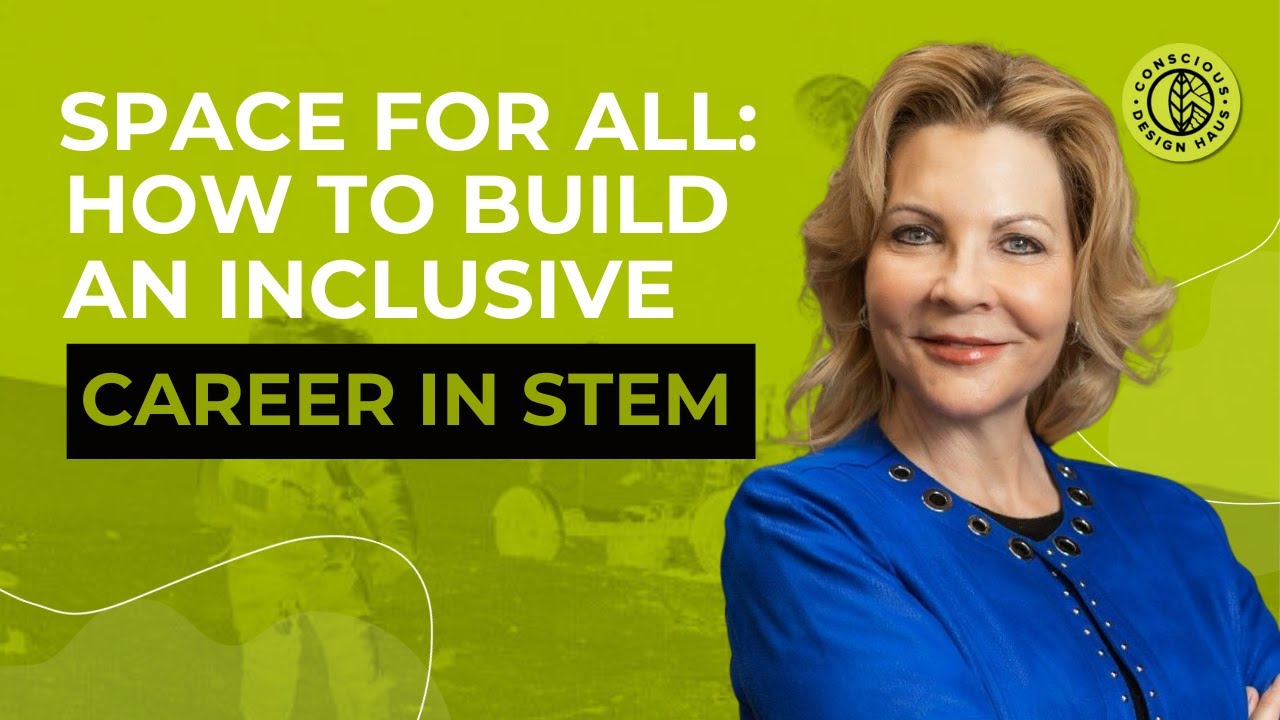
Shelley Brunswick, a space industry veteran, discusses how careers in space now extend beyond traditional STEM roles to business, legal, and communications fields. Lower launch costs from SpaceX and Blue Origin are opening manufacturing and research opportunities, while satellite technology addresses global internet access and agriculture. She shares concrete steps like free courses and networking groups for aspiring space professionals.
Chapters
Hello and welcome to the Conscious Design Podcast. I'm your host, Ian Peterman. I help turn product ideas into sustainable 7-figure businesses. Join me for another episode where sustainability meets innovation and business savvy and space. Today, I'm excited to have Shelley Brunswick. She's the author of What Space Got to Do It: 10 Life Lessons for Personal Growth. from her years of working in space industry and others. And she's— we've actually had you on before where we talked about more of the space and sustainability stuff. So it's great to have you back.
Well, thank you for having me back. It's exciting to be here with the new chapter of my journey as well, where I started my own company, SB Global LLC. So it's exciting to reconnect and share what's been going on.
Yeah, let's dive into the book. I've written a book, so I know it's a journey. We talked a little bit about it. There it is. Looks amazing. Let's start with what got you to go, let's pull this stuff out of my brain and get it on paper in a book. How did this all start?
Well, as you have been and I have been, we've been mentors for many years. And many times protégés would say, oh, this is so great. Do you have it written down? Or I would give a keynote talk and people would come up from the audience and say, oh, that was great. Do you have this written down besides your slides? And what really drove me to write the book was I was invited to be the commencement speaker at Colorado State University Pueblo in 2022. And the president of the university said, you know, our students may not know what they're doing tomorrow, so keep it real. And what he meant by keep it real was write down those things that you learn from. A lot of times on social media, you only see the triumphs, but there's a lot of up and down in careers. You know, it's, it's like a sine wave. It's not just straight up and to the right. And so the first 3 lessons in the book actually were from the speech from 2022. Take advantage of every opportunity, try anyways, even when the odds are against you, and don't fear the unknown. Those all were in the original speech. And from that, I realized, you know what, I can take this and I can write a book. And that's exactly what I did. I just started writing things down and then I added a little, a little change to it or a little update is I also interviewed 200 global thought leaders that I've known throughout my career. Some are former presidents of countries, some are in the space industry, men, women, all age groups, all regions of the world. And I interviewed them and I realized that their lessons, even if they weren't in the military or they weren't in the space industry, their life lessons were the same life lessons that I took away. So in each chapter, not only do you hear my story, but you hear 3 global thought leader stories and they all tie in to that life lessons. which makes them a universal lesson. This book will work for anyone.
I love that. And I think it's a great point, right? It's never up and to the right only. That's, we wish every, you know, every investor, everybody wishes that was the case, but there are so many downs as much as ups as you're going through and it's the general trend you're aiming for. So it's a great point to bring up. That, you know, especially as I work with startups, they all like to think about all this nice, nice hockey stick growth where it's just up and right. That's all, that's all you want to do. And it's good to have things like your book to go, hey, it is actually normal and okay and part of the process to have the ups and downs. It's not realistic to just go up.
Exactly. And it's good to have those ups and downs because what I've also learned is, you know, when you try anyways, that's kind of the failure, you know, and failure is just F-A-I-L, first attempt in learning. And the best lessons I've ever learned are when I didn't make it the first time or the first opportunity didn't pan out the way I thought. I learned the biggest when I didn't quite achieve what I thought I would.
Yeah, something I've— people have said, and I think it's said a lot but not always listened to, is that if you always win easily, you don't really learn anything. It's easy, but it's not a learning experience. And so I fully agree. You need to have those to really learn and, uh, be able to grow, which is, which is the goal right now. Tell us a little bit about this book. You have 10 life lessons. You interviewed 200 people to do this. Who is this book? I know it can go to a lot of people, but who did you have in mind specifically that would be able to get the most value out of this as far as, you know, when you're sitting down and writing this? Who were you thinking about for this book?
So I really was thinking about the young professionals who are still motivated and eager and trying to figure out how do they make their way? What are the things they need to do? And that was part of how I focused the book as well. Again, having been a mentor and a coach, what's the advice you give people? And how could I write that in a way that would empower people to take the next step? So how I structured each chapter was, you know, the general theme, My story, then the 3 thought leaders' stories. And then instead of a conclusion, I called it Turning Insights into Action. It's real actionable steps that somebody reading it could do next. What are free courses they could take online? What are organizations they could join? How can they find a mentor? What are webinars they could watch, obviously including yours? And what could people do? And so if they were just talking to me, these are things that I would give to anybody That these are great next steps. And so actually writing it down and then providing the references. Here's all the links and everything. So the book is really an action plan for somebody, and probably somebody who's either starting their career or even, I'd say, mid-career. I've coached a lot of mid-career individuals who maybe were in the oil and gas business or the healthcare industry, and they always wanted to be in the space business, but they didn't know how. And 30 years ago, there was no way to come into the space business. For them because it was very government-run. But now they could pack up their little skills that they've learned through their career being in sales or leadership, and they can now come into the space industry. So the book is really designed for somebody who's looking at something new, whether you're starting a new career, transitioning careers, or even for senior leaders who are thinking about how do I reconnect with my workforce, my team, how do I motivate them. Because the workforce dynamic has changed as well. So it's just some fun things that could even be for senior leaders to embrace and learn.
I love that. That's awesome. And I love that you bring up the space industry because, one, I love it. I've always been fascinated with space. But it's also an interesting industry to try to get— wrap your head around and get involved with because, like you said, it's been heavily government military for So long, and it's only recently that this has transitioned into something where your everyday work skills can actually go into and be used in that industry. There's not many times I feel like in somebody's lifetime really of a new, completely new industry appearing like that and becoming accessible. And so I love how you're helping to address some of that and going, this is how you can start to get into that, how you can leverage these quote unquote, normal life skills that you get in working out in industry and be able to bring it to this new and very exciting, growing, taking off, as you were saying, early industry that's here now.
Absolutely. A lot of times when people think about space, they're still thinking back to 60 years ago, the Apollo era, 2 countries in a space race, government workers, STEM professionals, primarily male. And now we pivot forward 60 years, and there's more than 90 countries that are operating in space and many more that want to. You still need STEM professionals. We still need rocket scientists and astronauts, but we also need all the skill sets in between— historians, teachers, technicians, communications policymakers, program managers, investors, entrepreneurs, and I could go on and on. Then it's how do we really create the pathway for individuals to come into the space industry? Because a lot of times when I meet with young people or investors, they all think, oh, space, like space is this thing on a shelf, that's over here, and then we put space down and it's like rockets and astronauts. But they're not really thinking about how space in 2023 was a $630 billion industry. And by 2035, according to the World Economic Forum, it's going to be $1.8 trillion. And that's not just things off planet, that's actually applications of space on Earth.
Right. I think that, yeah, most people still think of it as that It's space. It's, it's far away. It's up there. You look through it to see the stars and it's really, the astronauts are the only ones get to be involved really, because they're the ones going there. But there are more and more, and I've talked to more and more people too. There's more startups. There's more companies operating in space or using something that has been produced or worked on in space. And that was just like, you know, the research side. And then the application is they're actually using it. down here on the planet. It's not anymore this separation between space and Earth. There's a lot of crossover and more and more companies are leveraging space assets to benefit earthbound ground-level work and opportunities.
Absolutely. I mean, right now we're doing this, you know, using communication technology and all this type of technology from Zoom and Microsoft Teams and all of these communication platforms were all a genesis from the Apollo era to be able to talk to astronauts. So, you know, all that technology has been commercialized. You know, one of my favorite forms of space technology from the Apollo era is fire retardant clothing, because my husband was a firefighter for 30 years. And thanks to that Apollo era technology, he was able to come home every night. So a lot of this space technology we've been using, we just have no idea that the origins of it.
Yeah, one of the things I love is Velcro being invented to be able to tie things down. And that was— that came out of NASA, which, you know, at this point, like, every kid's shoes use Velcro, right? It's everywhere. Everyone knows it. Everyone uses it. But again, you know, people don't think about, oh, this is technology that was developed for space application and just how valuable it can be when you, when you take that and you begin to commercialize it and use it, use it for the rest of the world and other applications.
Well, I know another one that you'll probably be a fan of— WD-40. You know, most people don't know, you know. So again, there's all these applications from Apollo era, but there's other things. If you go to the NASA Tech Transfer Office, there's thousands of patents that NASA has that they've gained through space applications that are waiting to be commercialized. So any of your audience, you said you, you know, coach young entrepreneurs, if they're looking for ideation ideas, go to that NASA Tech Transfer Office, look at the different applications, whether it's healthcare or energy, communications, agriculture. There might be something in there that either A, you've already thought about it and this might give you something to do, or you might decide to apply for that patent and maybe you could commercialize that technology and bring it to market.
Yes, that is very important. I've known some people that that's what they do is they go through that because there's a literal treasure trove of ideas and patents in there that people can grab. I wanted to talk a little bit about, you know, you mentioned obviously more and more women are getting into space and you, I know you've done a lot of work, you've spoken, you talk about helping get more, more women involved and as a father of 3 girls, This is important. I think this is really important that this opportunity is available and people know about it. So I would love for you to talk a little bit about how that's changed, because people do— I mean, most of the time you think about astronaut, it's a guy. Space rocket engineer, it's a guy, right? How has that been changing? And maybe even how people could leverage your book into helping get over that and moving moving into that space as a woman?
Well, I will share in the book I have men and women because it's open to all, and I like to call it underrepresented groups. So yes, women are an underrepresented group in the space industry, but so are inner city or rural community or regions of the world. So the book was really designed for those underrepresented groups. But what I also did, in addition to the different backgrounds and regions of the world, I did include in every chapter 3 stories, and 2 of the stories are from women and 1 is from a man. So that way there's a little more diversity. And then there's also a lot of role models, because I think it's really important that we highlight the importance of role models as we're trying to create these different pathways into the space industry. So I hope that kind of helps that there's lots of opportunities. You know, we in the United States have an aging workforce, good, bad, or indifferent. And so it's really important that we're inspiring the next generation to think about careers beyond beyond this Earth, what they might have not thought of. And, and their careers have an intersection in space. So yes, there's space, NASA astronauts and rockets, but then there's all these adjacent careers. You know, there could be space and healthcare, space and AI, space and, uh, manufacturing, advanced manufacturing, orbital debris removal, space and energy and energy storage, space and biotech. So there's a lot of ways that individuals could have a passion for something But it can intersect with space. I was traveling to Saudi Arabia earlier this month to attend their annual LEAP conference. And I was sitting next to a woman and we were talking about space. And she goes, oh, my son would be so excited to be here and talk to you about space. But, you know, he's— it's too late for him. And I go, well, what do you mean it's too late? He goes, oh, he's 27 and he's finishing his residency. He's going to be a doctor. And I said, it's just beginning. We need medical doctors who want to look at space application. And apply that here on Earth. There's all these things we're learning about living in microgravity environment, living in space, that causes challenges to the human body. Or we're using space to research cancer and solve challenges. So I said, if he's interested in space, we will absolutely love to have him join us in figuring out how we can create new cures for challenges here on Earth using space, artificial intelligence, and that microgravity environment.
I love that example. I think it kind of goes back to what we were talking about where people think that other degrees don't apply yet because they still think of space as, oh, well, you have to go become a pilot and then you're there. And that's like the only path. But to what you're saying, right, it's we need the doctors, we need all these other people that have different degrees, and you need to use it in space.
Absolutely.
And you need to think about It's, you know, it's, it's no different. It's kind of transitioning people's thinking of it from, you know, there's like water, ocean, right? You can have somebody that's studying that same degree. You can have the same degree, do it on land, do it on ocean, do it in the air. Space is just another location. It's like an office location. It's not a different category that you have to have some crazy special degree and be a pilot and go fly a spaceship in order to go out there. And do something.
Absolutely. And so one of the people I like to highlight is Dr. Nicole Wagner, who is a medical doctor who's very passionate about macular degeneration, which is a form of blindness that comes on as you get older, and there's no cure right now. And what she's doing is 3D printing a lens replacement that would solve that, you know, that could be used to return people's vision. But what she's doing is she's 3D printing this on the International Space Station because the way The protein 3D prints in microgravity environment is far superior to how it prints here on Earth. So she's not a space person, she's a doctor trying to solve a real healthcare application, but because of the way space and that environment can help create the solution, it's a better and more cost-effective solution than doing it on Earth. So there's lots of opportunities for medical doctors and biotech and health solutions. to be part of the space industry in a vertical that's maybe not directly space, but that's using space to help solve real Earth problems.
I love you mentioned that because the microgravity environment is just something that's unique, right? You can't— the reason that she's doing it there is you can't achieve that anywhere on Earth.
Exactly.
You just can't.
You say we seem to get more anomalies or flaws when we try to 3D print organic material on Earth, and obviously for the FDA and for putting something in someone's eye, you don't want flaws. So it's— so then you have waste, and then that's, you know, that's a loss for a business. So you can really 3D print more efficiently on the International Space Station, which again opens up the opportunity for manufacturing in space. Not only a government-owned space station like the International Space Station, but commercial space stations for real-world applications that companies could now Do work on a commercial space station.
Hey, it's your host, Ian. I'm really glad you're enjoying this episode. I absolutely love highlighting amazing brands and founders for the awesome things they are doing. I've helped hundreds of entrepreneurs and businesses like yours turn their boldest ideas into powerful, purpose-driven brands. So if you're serious about building a brand people love, like our guests and clients do, and one that you're proud to stand behind, I invite you to dive a bit deeper with our book Conscious Design. Inside, you'll discover the exact framework and steps we use to help entrepreneurs like you turn purpose into a powerful, impact-driven brand. A brand that stands out, attracts loyal customers, and drives sustainable growth with social and environmental responsibility woven into its DNA. Grab your copy today. You can find it on our website, consciousdesignhouse.com, or just find the link below in the show notes. Enjoy the rest of the episode and don't forget to like, subscribe, and share. Yes. And I think that's where, and you're probably even more familiar than I am with, there's more and more space station plans now because of projects like hers where they're realizing, yeah, it may be expensive to get the material up there and back, but you have this other thing of way less waste, which cost analysis, hey, that's required, FDA approval, things like that. But you can actually start to see some potential cost savings even when your efficiency goes up by that much, then compared to the cost to get up there. And it'll always get cheaper to get something up there the more we go up.
Exactly. And we are seeing the cost curve. You know, SpaceX was the first launch provider that really lowered that opportunity for cost. Lowered the cost, and by lowering the cost, created these opportunities for businesses like Dr. Nicole Wagner, her company LambdaVision, but also for universities or emerging space nations to have access to space, to even put up CubeSats or small communication satellites so they can improve communication for their countries. So lowering that cost curve allows this opportunity to create new businesses here on Earth. And the other thing is, is That what's so exciting is by lowering that cost curve, yes, we have SpaceX, but now you have multiple launch providers from Blue Origin and Rocket Lab and many more that are continuing to look at certain payloads. So SpaceX is definitely the rocket that wants to take us to Mars. And they're also doing that work to the International Space Station. But you have other launch providers that are smaller payloads, low Earth orbit, and again, keep the cost down. So there's lots of opportunities now for for individuals, for companies to look at research and product manufacturing in space.
Yes, which I'm excited about. I want to see, I want to see where this goes, and the opportunity I think is massive. From where you stand and, and your involvement in all this, where do you see areas that are more, I guess, maybe growing quicker, getting more interest space-wise that draw on you know, doctors or other degrees. Like, if someone was, was looking at, at this and going, hey, I have a degree, what are the areas you think are, are getting the most attention right now that might pull in the most, you know, quote unquote, civilian people into this industry more?
One of the fastest growing areas is the one that we're most familiar with, and that is the communication sector. There's a lot of opportunity for communication, whether it's DirecTV, how you get your internet, And the thing that's most alarming that people don't realize is there's still billions of people on the planet that don't have access to the internet, to communications. They're living primarily around the equator, and they may be living in island nations, and you just cannot lay fiber optic cable to all those nations. So you have this group of people that still don't have—
Mm-hmm.
Good weather prediction, help with agricultural, transportation using GPS, opportunities to be part of the global economy. And so there are companies that are partnering with nonprofits to create that satellite telecommunication opportunity for these countries to bring them into the global— or the— I was going to say the global space community, but the global economy, have better access to healthcare and all these activities with communication and Earth observation. And then that allows them to grow their GDP and create a better standard of living for their constituents. So that is an old technology, communication, but how we're able to Instead of looking at laying fiber optic cable and use the internet from satellites, which was really expensive before, but now you're seeing the costs come down. So you're seeing the opportunity to be able to provide it. You're also seeing that opportunity for travel because I'm seeing even United has recently said that they're offering now satellite connectivity so you can hook up to your Wi-Fi, you could have business meetings on the plane.
I've seen that.
It is. So exactly. So for people like us who travel, that's a wonderful benefit. But for people who are in these remote islands, this is creating a benefit that can exponentially help elevate their standard of living and bring them into the global economy. So that is, I'd say, a really short-term— fix is a strong word because there's, again, quite a few billions of people that are waiting for this. But telecommunications in low Earth orbit is an area where we as humanity have been in for a long time. It's an exciting area. Another area that's really exciting is Earth observation. The ability to do better weather predicting, especially for farmers and agriculture. You know, there are some countries, you know, we are seeing wide weather swings, you know, droughts, floods, or all the rain in one day. This better weather predicting can help farmers know, do they plant their crops or do they know that that year's going to be a drought and they don't plant their crops and invest that money and save their resources for other activities? To offset that. So really, that Earth observation with weather prediction can be really helpful. It's also, I think, as we look at, as we continue to grow with telecommunications and the infrastructure, you can look at how— so we talked about agriculture, think about the financial sector. You know, fintech is really taking off. All of the financial sector is running on space and cybersecurity, right? Because you go to an ATM, You take out some money, there's a date timestamp. That's a GPS satellite that shows that that was a legitimate transaction. Or you use your credit card to get gas, you're using GPS satellites. So all this financial technology, and I saw that the current administration is very excited about making the United States like the hub for financial technology, fintech, blockchain, that's all going to run on cybersecurity. So I think that's a really exciting area. As well. And then you can also look at education, you know, education that we think about. You know, I remember going to school and you sat in a room and the teacher wrote stuff on the board and you read things and you recited things.
Yep.
You know, because of technology, it's changed the way young people now process information. They process it in a different way. This cell phones and everything has changed their brain and how it processes information. Differently than how— I don't know about you, but how I grew up.
I had books.
Exactly. So now we're seeing how we can take space technology and help to use artificial intelligence and really create a different type of educational system. Now again, this is going to be dependent on having good telecommunications from satellites because there are parts of the world, even parts of the United States, you know, think about tribal lands, remote parts of the United States that don't have access to the internet. So the only way that you could pivot to this more personalized education that benefits the rapid change of technology is if you have access to satellite communication. So again, just a few areas, but you can also think about public safety, transportation, healthcare. We talked about one application, but there are a myriad of applications that are using health applications that can help humans right now on Earth solve challenges life-threatening diseases. So it's a really exciting time for people to see what am I passionate about? How do I want to contribute? And is there a way that space intersects that, that I can bring those 2 passions together?
What you listed is great. That is amazing, right? And every time I, I talk to you or other people in the space industry, the more it's just, well, every— basically everything touches space almost in some way, you know, our day-to-day lives. And I appreciate you bringing up, you know, the fact that not everybody has that too. And there is still a lot of work to connect the planet as much as we, you know, where we live, where we work, we're just used to it. We know, oh yeah, internet pretty much everywhere. Phone always has it. But the whole globe is not quite there yet. We still have these large, large amounts of population that is not connected like Like we are, and it's easy to forget that and go, "Oh well, if I have it, of course everybody has it. Like it's a satellite, so of course, of course it's there." But it's not. But people are working on it, and I think that's a great thing to to think about as something that should be solved. I think in really helping those countries and areas get get connected and have have the option. They don't have to use it, but if they have the option at least, then it lets them be a choice, right? Instead of just being stuck without.
Absolutely.
Compared to the rest.
Well, and we— I was just going to say the next wave of technology is already happening. We're seeing AI, artificial intelligence. And again, artificial intelligence with space is great, but artificial intelligence is also one of those technologies that's going to ripple through every vertical economic sector and change things. And so it's really important that we're not leaving a large part of the population behind in technology Because they're not connected to the internet or telecommunications.
Right. I agree. I agree with that. I'd love to bounce back a little bit more to your book, uh, and talk about— yes, there it is. Great. So you've written this one. It's going well. I know you've, you've just launched it, but the launch is going well. You're talking about it all over the place and it's gone well, so well that you are writing another book. And I'd love for you to talk a little bit about that. If you have a launch date, what that'll be about, kind of give people a sneak peek into what's coming down the road as you're growing your author journey now.
Absolutely. A new chapter in my journey as well. So life has, you know, those careers are ups and downs, you know, deciding to become an entrepreneur and become a writer and motivational speaker, you know, learning as we go. So it's, it's great. It's wonderful. So the book series is called What Space Got to Do with It, and the title originated from my 2022 TEDx Manitou Springs talk. I was working with my TEDx coach, and he was, you know, I was wanting to talk about space, and he was just like, what are we going to call this? And he goes, I know, What Space Got to Do with It.
I love that title.
Oh, thank you. So I, I have to give credit to him for coming up with the title, and then I pulled that as to the series of the books because most people I meet are all about, you know, what does space have to do with it? Why do we care about space? How does space help me in my daily life? And so that was a great overall series. And then each book will have a subtitle. So the first book, 10 Life Lessons for Personal Growth. The next book I'm working on is called An Interstellar Guide to Success. And it covers 4 main focus areas. And that's leadership, because everything happens because of leadership, whether that's in the boardroom, the C-suite, frontline supervisors, or even self-leadership. The next main section is on awareness. Without building awareness, you can't create anything new. I mean, citizens have to understand why the space industry is important to them. You have to build that awareness. Then you have to create access points. You know, how do you come into it? And again, we've shared a lot of those today in the talk, as well as I shared in the book. In this first book, I included the insights into action. What are those access points? And then the 4th section is called taking action, and that includes training, networks, and mentoring. And training can be formal or informal, could be volunteering. Networks are building your networks, whether it's joining formal organizations like Space Generation Advisory Council, or I'm also a program manager, so I'm part of Project Management Institute. You know, joining those networks of like-minded individuals. And then finding a mentor. There are some great programs out there for mentorship, such as Women Tech Network, because when you can find a mentor, they can help you leapfrog a lot of the other things and help your career continue to go, you know, up and to the right, or have less ups and downs, right? The next book— so I've outlined it, I have most of the interviews done. Again, it will include, you know, 30 interviews from global thought leaders, 3 per chapter. And again, starting with that leadership. And since I kicked off the first book with the interview from Her Excellency Dr. Rosalía Arteaga, who is the first woman president of Ecuador who was deposed by military coup. I, of course, in the second book, will kick off the book with an interview from another former president. So I'll leave that a secret at the moment. But it will start with a story of a female president. And then it will have those 30 stories that tie into the chapter. And again, it will also have— each chapter will have those insights into action. How can you take what we've read in the story? What are the next steps? What are books? What are articles? What are webinars? What are groups you can join to help you continue your journey and development?
I love it. I'm excited to see when that one comes out. Do you have an estimate when you think you'll be able to launch, or?
Well, the goal would be during World Space Week, which is the first week of October. I'm targeting that, but, you know, anything can happen over the next 6 months to, you know, you get a new contract or you get a new opportunity comes along. But right now we are on target for the first week of October, which is World Space Week. The book is outlined. We have the COVID artwork is already done and ready to go. So it's just a matter of I'm almost done with the last few interviews and then I'm ready to start writing. So I'm excited. The stories for me as a writer, I'm excited to write. Okay. I don't love the process of writing. You and I talked about that. Writing is a job. For those who maybe—
It is.
For those who think it's easy, it's really not. Sooner you get it kind of out of your head and on paper, and there are so many great ways you can do that now. One, some people just like to write on a blank sheet of paper. The other thing, you can record it and then transcribe that recording into transcript, and then you can enhance that. So there's a lot of ways to write. So for people in your audience, writing is a good way of reflecting on what you've learned and then just putting it down. What I've learned is by writing, it really helps reinforce my learning of an idea. Going through the process of writing a book, Not only enforce my understanding of how you write a book, like there's a business in writing a book, but then how I actually process the information in each of the chapters and how I grew through the process. So I will share with your audience who are looking for opportunities for professional growth, it's great to read something, but actually they call that breathing in. Reading is like breathing in, but when you write it, that's like exhaling. So What did you read and can you write like a paragraph about it? And that helps solidify it for you in your—
You're closing that loop right there.
You're closing the loop.
Ah, okay. That makes sense. I mean, I've always— writing things has always helped, but I love that description of it's inhaling and reading and exhaling is writing. It makes perfect sense. Great visual for that. I love that one of the things you said about your book reminded me and our book is that we, we started our process for conscious design is starting with observation. And because you have to be aware, you have to be aware of everything before you start just jumping into something. You have to spend that time. So I love that you brought that up. Being that awareness part portion is, is really key because I've found that invaluable in my career designing things is if you're going to do anything really, and especially in designing product, you got to do that, become aware of everything. Observe things. And then when you have that information, then you can go and create a solution and aim towards your goal.
Well, and even for me writing the book, you know, people were like, we want to hear your story. And I wanted to share my story. But, you know, I, I don't think my story is exciting as maybe other people do. But what I realized is I had a certain journey, like my journey into the space industry was both traditional and non-traditional. It was traditional in the sense that I came into the space industry as a US Air Force officer. You know, I was a space acquisition procurement officer. I purchased the satellites and launch vehicles from companies like Boeing and Lockheed and Northrop Grumman and so on. But it was non-traditional because I don't have a STEM degree. I have a business degree. I have an undergraduate in business and an MBA. So I was both a traditional and non-traditional person coming into the space industry. But by interviewing the 200 global thought leaders and then including the diversity of interviews in the book, it highlights that even though my story may not resonate with somebody in South America or Africa or Asia or the Middle East, I included individuals from those regions. And then that helps tie in, like you said, that observation, that awareness piece that I'm one story, but when I add it with these other stories, now we kind of create a universal truth of that awareness.
That ties in, and I love your point earlier of it. You really should have somebody to look up to, an example, right? It's much easier. And if they're relatable, whether it's the same region, same culture, same, whatever makes it relatable to you, right? Really helps you understand the path and understand how to go about it because you see, you get to look in a mirror a little bit and go, oh, they're like me. And this is how they did it. And that, I think, is super important, especially if you're trying something brand new and you're trying to— or trying to make big changes or get that growth that you're really looking for. Finding someone who's relatable, who's achieved something similar in the general area of you, or you're trying to, really, really makes a difference compared to somebody who's not like you.
Exactly. And that's why it was really important for me to find individuals to interview that were all ages, genders, regions of the world, background, so that sometimes it is hard to find a role model depending on what's on TV or movies. It could be hard to find a role model in Zimbabwe, Africa, but I interviewed a space lawyer from Zimbabwe. And now other individuals in Africa who might say, I want to be a space lawyer, can now say, well, I know there's a space lawyer from Zimbabwe. And that person made it and so can I. So the goal was to, like you said, not only provide the stories, but also create a cadre of role models.
Amazing. Well, I'm super excited for you. I'm glad you took this leap and decided to get into the author side of things. This has been amazing chatting with you. For people that are wanting, I want to make sure we tell everyone where to find your book, how to reach out. I know you do speaking, you've done TEDx, you've done all these things. So For everyone listening, if this is something you want to have somebody on, have Shelley come talk, have— do all this. So for any of those people, where can they go? What are the best places?
Absolutely. Well, if you're interested in the book, it's available on Amazon and it's available in all their stores globally. So it is available. The other thing is I have created a keynote speech on the book. So if you just want to have me come and talk about the keynotes and the key takeaways, I've also created a workshop where we go through each chapter and we can do a workshop together. So that's a little bit about the book. But again, I talk about a lot of things from space in our daily lives. Obviously, the book, 10 Life Lessons for Personal Growth. The next book I've already outlined as a talk as well, An Interstellar Guide to Success, where we talk about leadership awareness, access, and action. And then the next book in the series is going to be Out of This World Leadership, where I talk about, you know, being inspirational, being authentic, and having gratitude. And that's also designed as a talk. So I'm a real universal player where I can talk about a lot of things from motivation to space and just make it a fun, dynamic discussion. You can go to my Shelley Brunswick website, or you can find me on Shelley Brunswick LinkedIn, X, Instagram. I'm there, and I look forward to connecting with your audience.
Amazing. Well, thanks, Shelley, for being on and sharing everything you're doing. And it's great to have you on again.
Absolutely. And until next time, I look forward to seeing you around the galaxy.
And that wraps up another episode of the Conscious Design Podcast. If today's episode inspired you to bring your product idea to life and turn it into a sustainable 7-figure business, visit petermanfirm.com or click the link below. Your ideas have the power to change the world, and we're here to help make that happen. Thank you for joining us, and I'll see you on the next episode.
More from Ian


You Didn't Know a Shampoo Could Do This #Shorts #shampoo #ecofriendly #haircare





The Biggest Misunderstanding About Bioplastics - Sustainable Materials Consultant Joanna Pool

A Polymer Scientist Explains the Truth About Bioplastics #podcast #sustainability #science



NASA is testing this on Mars… why not Earth? #Shorts #GreenTech #NASA #science