Stop Ocean Pollution with GPS Buoys Against Ghost Gear
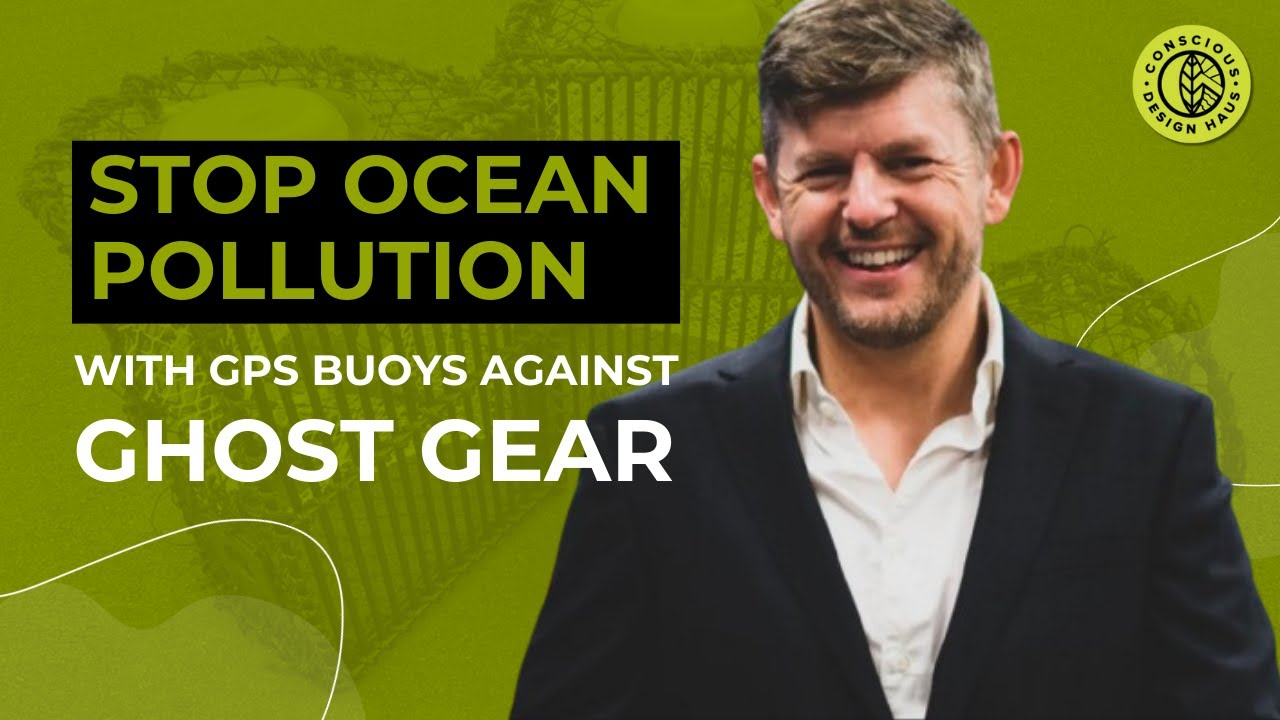
Helge Olsen, CEO of Rescue Unit, discusses ghost fishing gear lost in oceans and RescueNet, a backup buoy system for trap fisheries. The device automatically releases lost crab and lobster traps after a set time, reducing ecological damage and economic loss from abandoned gear.
Chapters
Hello, and welcome to this episode of Conscious Design. I'm your host, Ian Peterman, and author of the Conscious Design book. And today, I'm excited to be here with Helge Olsen. He's the CEO and co-founder of Rescue Unit, where they are preventing fishing gear loss out in the ocean. Welcome to the show.
Thanks. And thanks for having me.
Absolutely. Well, before we dive into everything, let's start with what got you to decide to tackle, I know, this very large problem of fishing gear going lost to the ocean. How'd this start?
It was kind of an illogical place for me to end up. If I just take it from my side of the story, I founded my first company back in 2004, went through— the first went bankrupt, the second one I had a successful exit on, and the third one I had a successful exit on. And then there was this guy in my proximity who is a recreational fisherman. And he, like all fishermen, sometimes lost his gear. And he started thinking that there has to be some type of solution out there to prevent this from happening, but he didn't find anything. So then he started thinking and came up with a few sketches and ideas. And I had just sold my second company, so I was kind of open to new ventures. And he reached out to me with a couple of business ideas. One was actually a software for monitoring the brewing process of homebrewing beer. And the other one was, was the thing that is now known as RescueNet. So I came into this strictly from a type of business development perspective, had not much to do with the invention itself and the origin of that. But I did my due diligence before entering into this. And what I realized was, to me, staggering. I had heard about people losing fishing gear, of course. But when I started looking into the magnitude of the problem and the havoc it wreaks on the ecosystem, I was baffled. And I thought, this is not just a small Norwegian thing. This is a global So I got more and more enticed with the idea. I got more and more engaged with it because I saw this is a huge problem and that some type of solution is needed. So I said yes, and we jumped on a ship together, and here we are today.
Yeah, it's amazing. I've dived down this topic a little bit before. Actually, I was just mentioning to you, we interviewed a company called Ocean Aid that's approaching it from the search, and it's the numbers they were sharing is Staggering. It's amazing how much, you know, we think of as the average person who isn't out fishing and seeing how much is actually lost. We go, oh, there's, you know, the Pacific Trash Islands, like, oh, that's a lot. And that's a small amount compared to fishing gear alone, right? It's a huge problem. And it's, yeah, like you said, it's staggering if you actually dive into the numbers. So fishing gear, kind of to dive into this, You mentioned, right, there's commercial fishing and then there's recreational fishing. Where does your product— obviously commercial has more. Is this something that you're thinking of approaching both? Like if I'm a recreational, I have a boat, I go out quite a bit, is it worthwhile? Is this something that could be valuable or is this really more towards heavy and commercial fishing?
I would say that fisheries are very diverse and it's not the same in any place and in any country and It's a huge variety of circumstances that makes it someplace suitable for us, other places not. So if I take Norway as an example, we have in Norway a huge recreational fishery. And it's, if you think about crab and lobster, of course, you have the offshore kind of opilio crab fishing, which is a huge industry that happens far out on deep ocean. That is not for us.
Okay.
Our product is for the inshore fisheries. So here in the inshore fisheries, the recreational part is much bigger than the commercial part. Then if you look at countries like Canada and US, there is a huge lobster fishery and there is a stone crab and blue crab fishery close to shore. Just the eastern seaboard alone, 10-15 million traps in the Atlantic Canada and US East Coast. And Ocean8, I'm assuming it's Ocean8 360 you had on with perhaps Neil Holland, was it?
It was Andrew was the partner I talked to. They're based out of Canada. They're in Western Canada.
Okay. Yeah. All right. Then I mixed up because there is a, there is an organization called Ocean Aid 360 in Florida. They are doing these ghost gear rodeos where they clean up lost fishing gear. And just in the region around Tampa area in the stone and blue crab fishery, there is a, I think, 3, 4 million traps just in that area. So it's, it's enormous. And that is kind of in our sweet spot in waters, I would say up to 120 feet deep, no, 150 feet deep in crab and lobster fishery. That is kind of our sweet spot where our product can really be of assistance. To talk about the product, because your viewers may not know what we have yet, so I can just go through the solution, how it works, if you'd like.
Please do.
So it is a backup buoy system. The design is meant for mounting it on the trap wall. So this is for traps mainly. We have some customers using it for nets and other types of equipment as well, but the design is made to easily install with only 10 zip ties on the side of a trap wall. And this is a buoy that is held in place by an electronic locking mechanism, and you set a timer to that locking mechanism. So if you fish on a 1-day soak, 2-day soak, you set our timer to like 3, 4, 5 days or whatever. And only when the equipment remains underwater for the amount of time that it has been set to, That's when it releases the backup buoy. So when you set your equipment to, let's say, 5 days, you go out fishing, you throw your trap, you haul your gear, you empty the catch and you throw it back in. Through all these operations, it resets automatically every time you take it out of the water. So after the initial setup, there's nothing for the fishermen to do. You don't have to reset anything or press any buttons, anything. You just do what you do and that is fish. And only when you have lost the gear, so maybe a boat drove over your propeller, cut the line, maybe you set it too deep, a lot of things can happen. Then the equipment remains underwater for those 5 days. The timer releases the buoy, it floats to the surface with the line still tethered to the gear, and then you can easily retrieve it.
Amazing. Yeah, it's ghost gear. Ghost gear is a huge, huge piece. A lot of people don't know about that.
Yeah, I can, I can talk a little bit about that too. The numbers, we said it was staggering, but there has been some numbers floating around for many years. I think it was the WWF in a report maybe 7, 8 years ago said that there was 640,000 tons of fishing gear lost at sea every year. That was upgraded 3, 4 years ago to 1 million tons in a new study. And that was again hugely upgraded. It was not a matter of tons anymore, but it was in terms of our market, which is trap fisheries. A study from Germany, I think it's a couple of years old now, concluded that 25 million traps are lost at sea every year. And if you know anything about ghost What it means is that lost fishing gear is, of course, fishing gear is designed to catch and kill fish. That's what you do when you're a fisherman, you catch and kill fish. And when you lose it, it doesn't stop doing that, so it continues to catch and kill. And a lot of these equipment, like nets, for example, they do a lot of damage at first, but then they bundle up into these small bundles and they stop doing that much harm. While traps, actually, they maintain their structural integrity for decades. And dead animals is perfect bait for new animals to come in. in and this goes on in a perpetual cycle of death actually. And huge amounts of valuable and delicious seafood is wasted to just no one's benefit.
Yeah, one of the numbers I heard, I think it was like 10 or 15% off of Western Canada, I believe, was the estimate of how much crabs were lost every year in population numbers Just to ghost gear. And that was like just Western Canada, just like 2 kinds of crabs. Not including fish or anything else, that was just crabs. And that's a lot. I mean, that's bad. That's a lot. That is a lot.
And when you think about these numbers, it sounds much, but then you add every year, right? This is something that is added every year. It's not a single event where you lose a million tons of fishing gear. This happens every single year. And then you have these companies that are doing cleanup operations and you have technology there as well with side-scan sonars scanning the seafloor and mapping it out and marking fishing gear. And then you have another vessel coming behind with divers going down and attaching air balloons to them and getting to get them to the surface and to facilities on land to recycle and all that good stuff. If you look at the numbers, and that's what I've been doing, and I was kind of baffled by that too. That was in Norway that I did a deeper dive into this, where you have these operations going. We have one in particular that has gotten particularly a lot of funding here in Norway. It is between a company and the Marine Institute. They've gotten around $7 million over the last 5 years. And with those money, they have managed only to retrieve 5,000 traps.
If you then think about that—
Wow, that's really low. It's really low. And the annual loss here in Norway is around 30,000 to 50,000. And then with, with $7 million, you only managed to retrieve 5,000 of those over 5 years. To me, it became quite obvious that we can't solve this problem by cleaning up. We will never get to a point where we can dedicate that much money that we will clean up more than we lose. So all the better for us, you need to stop losing gear. That's just the way it is.
Right. Well, and, you know, you mentioned like the lifespan of the product, right? If it If it survives 10 years underwater by itself, I'd imagine, you know, with some maintenance, you're talking about traps that when you buy the trap could last you 15, maybe 20 years if you take care of it and don't lose it. I'd imagine it's a big financial loss if you're the fishery to be losing that many. Maybe, maybe I'm wrong on that.
You'd think, but the return of investment case as it is now It's kind of— you have to take several things into account. So what most fishermen intuitively think is that, okay, what's the value of the trap and what's the cost of this device? And then they compare that to each other and just think if it's worth it or not. But you also have to convince them that when you lose a trap, you also lose your rope, you also lose your buoy, but maybe most of all, you lose the catch inside, which is the most valuable thing. So you have to take all this into account. And only then you'll start to see that it's economically viable to spend money on a device like the one we have. But then if you look further into the future for the fishing industry, like you said, these ghost fishing gear, they eat off the future catch that is the livelihood of the fishermen. So you have to get them to think about that as well. If you want to have a profession in the fishing industry 5, 10, 15, 20 years from now and your kids after you, there's not going to be any fish left if we keep losing traps at this rate. So there is kind of a long-term also return on investment if you look at it that way. And you have to convince the fishermen to take all these aspects into account for it to be reasonable. But fishermen are not, they are pretty much here and now. They're kind of on a fiscal year and have their focus there. So it's not always that easy to convince them. And then when you look at all these costs that I've mentioned now, unfortunately, that's just a Tiny part of the actual cost of lost gear, because the biggest cost is the cleanup cost that comes after. And the problem is that the cleanup cost is socialized. The smaller costs are the fishermen's cost, but the large cost is socialized. That's through organizations and governments funded operations. So why would the fishermen buy equipment to prevent society from a huge expense in the future? So I think there has to be some kind of shift in the way we think about this. Of course, it sounds extreme, but what if we had the fishermen pay for the cleanup cost? Now you have to mark your gear with your name and license ID and everything. So if a cleanup operation finds your trap 5 years after, maybe the fishermen should pay for that. I'm saying maybe because this is kind of a touchy point, but if it were, that would definitely create the incentive for fishermen to think more about how they can prevent gear loss. On the other side, you could also think about maybe governments should subsidize these solutions for the fishermen, because after all, they are the one taking the cost of the cleaning up that happens after. So governments will save most money on preventing gear loss. So either it's from one or the other end, I think the actual gear loss cost and the cleanup cost needs to be kind of looked at under the same umbrella, we need to find incentives on those 2 together to create the right environment for people to start utilizing technology to prevent gear loss. Makes sense?
Yeah, on that, just for like a comparison, right? If it costs $7 million to recover 5,000 pieces of gear, how much would your device cost to save To recover 5,000.
1/6.
1/6 the cost. So even if the government just hypothetically paid for it all, they'd save 5/6— what is that, 80%?
Yeah, they save 5/6.
Yeah, yeah, on their cost just by using this. Now you mentioned, right, there's, there's deep sea and there's nearshore where shallower reaches. What do you know? Do you know the ratio of— right, there is obviously deep-sea fishing and trapping. Is it more inland? Is that where most of this gear is? Or do we even know kind of what that difference is?
Probably it's possible to find those numbers. But what's important to think about before that is that the inland losses are much more harmful to the ecosystem than the ones at deeper waters. If you just look at the biodiversity of different species living in shallow waters compared to deep waters, then you'll see that the most urgent thing is to stop the problem near shore. And if you see a ghost trap that is in only 10 feet of water, because we have some fish here in Norway that are fished in only 10 feet of water, and when you find a trap like that, They are packed with all types of fish and shellfish and everything. They are. So, so the more inland you go, the more they catch and kill.
Right. And it sounds like they catch, right? You might start to aim to catch a certain species, but if it sits there long enough, like you said, that it just becomes—
it starts to trap more, a lot more than what you're supposed to be Yeah, because some species are attracted by rotten fish, others by fresh fish, and a ghost trap will go through all these phases and will catch whatever because there's a lot of, a lot of smell eventually in a ghost trap and it'll attract just about everything as well.
Hey, it's Ian here. So glad you're enjoying this episode of Conscious Design. If you want the full scoop on Conscious Design, what it is, how we do it, how you can do it, then check out our book. We wrote it so creative entrepreneurs like you can code social and environmental responsibility right into your brand's DNA. You can download the first chapter for free. Link is in the description. Enjoy the rest of the episode. Don't forget to like, subscribe, and share. And maybe you know the answer to this, but when it starts to do that, I would imagine that there's probably some endangered species that start to get caught and things like that. Is— does that ever play Apart from like the regulatory side that you've seen where it becomes a— now you're technically trapping endangered species. And that's a— does that have any consequence? Or is it still kind of this murky, it's been lost, so it's the government's issue?
Yeah, you know, the governments take time to change. And they have had some tools that they can play with for decades. And that is the quotas and the seasons. It's kind of a whole system around there where the Marine Institute go out and sample and try to measure the biomass, and they give their quotas and they give their season based on that. So for such an old system to change, I think it's going to change, but it's going to take a lot of time. But they are playing with these. If you look at Norway, the lobster is endangered, actually. It has fallen 92%, I think, since the 1950s. And we've struggled for years trying to get it back up. And the lobster season is actually now only 2 months, but still no sign of increasing the population there. And I think one big reason is all these ghost traps out there that is fishing, and they're not fishing just those 2 months that it's in season. They're fishing all year, 24 hours a day, 7 days a week.
And 10 years of 12 months a year fishing, that's a lot. Yeah, that's a lot more than 2 months a year. With the numbers you gave too, feels like there's almost enough ghost equipment out there now that There's probably more ghost equipment than functioning equipment.
Yeah, I would assume so too, for sure. I think the global average is around 10% of gear loss every year. So then mathematically, 10 years, you've outcompeted the active fisheries with the ghost fishing happening. So yeah, definitely there, there has to be much more gear fishing in a ghost fashion than there is in a recreational or commercial fashion. And actually, I think it was the University of Delaware that did research. They had 2 traps fishing crab. One was kind of isolated in an area without any other traps, but one was next to a ghost trap. And the trap that was next to the ghost trap didn't catch anything because the ghost trap was more attractive for the species than the active fishing trap. And that just goes to show that these smells and the death happening in these ghost traps are more attractive to a lot of species than the active fishing traps.
If you accidentally or unintentionally laid down new traps next to some ghost traps, you would actually have a worse harvest.
Yeah, precisely.
Possibly nothing even.
Possibly nothing. Yeah. Wow.
That's a lot. That's big.
You have these studies and there is a rising awareness and a lot of work is being done. But I think, again, back to the political system, it takes time to kind of get this into the woodworks of the right institutions. But it's definitely coming, I have no doubt, because now it was a problem, now it's a crisis. If we continue, there's not going to be any more crab and lobster fishery left, then we have to farm those as well. And I know people are working on that too. But it is the projected highest increased wild fishery over the next decade is actually shellfish and trap fisheries.
Wow, kind of jumping over, you can obviously build a case if you look at everything, right, you can build a financial case and go, hey, You're going to lose 10% of all what you're catching over the next year, right? For the next decade for trap losses. How have you, like, who's been willing to go, yeah, I'm going to buy your equipment, put it on? Like, what's been the driving factor? Is it more, I want to do good looking down the future? Is it purely financial? Kind of how have you— gotten traction with this?
I would say financially, next to nothing. I would say the younger fishermen, they get it. They have been educated about these things since they were at school. They are more environmentally aware, and they are more prone to let this issue affect them emotionally. And they want to do whatever they can to help. But the more seasoned fishermen, they are kind of, they are more fiscal business-minded and, and look at the numbers within this year. But the most sales we've had is actually through, I would say, projects funded by different marine institute universities that are actually giving or subsidizing fishermen to have them use it, give some feedback, measure how it's going to perform. And I think that's a very good approach. If you want any type of numbers back so you can start evaluating the impact of the product, you have to do it that way. I think if we If we were to do it just on pure sales, it's going to be too dispersed, too far between for it to create any valuable dataset for us to work off of. So yeah, it's been mostly funded projects, but you have some younger fishermen here and there. Recreational fishermen are also not in it for the business, they're in it for recreational, and they have boats and they have cabins on the shore, and they are typically also more environmentally aware than the commercial fishermen.
Got it. That's kind of interesting. I wouldn't have guessed that there was so much recreational versus commercial in Norway. That's a pretty big flip from being in the States where commercial definitely dominates almost any kind of fishing. But I think that's a good point that you bring up, that more those people that live and really just have fun, they're more likely to really care. And they have, you know, as you said, it's not a— they can be an emotional decision. They don't have any business. They're not fishing to make money. They go make some money somewhere else and then fish for fun. And that's kind of an easy— obviously you're working in Norway. Where else have you expanded outside? Where has been interesting or interested in this so far?
Australia, for example, that is the only country outside of Norway that has a really big substantial recreational fishery, Australia and New Zealand. We have some sales over there. I would say the most we've had is in Canada, where up in New Brunswick, Atlantic Canada, lobster fishermen, we've been there visiting several times and promoted the product with the local fishermen because you reach a lot of fishermen just traveling around the Atlantic Canada coast. So we have a distributor up there and we did a tour with them and we got to speak to a lot of fishermen. And that was a learning experience. We sold some products, but we also got all the kind of the counterarguments from these traditional conservative fishermen. But that is good to take with us as well. But it's really spread. I would say we are a member of Global Ghost Gear Initiative. I don't know if you know them. It's a global organization working on ghost fishing. They have projects that they fund. So we did a larger project in Jamaica a couple of years ago where a few hundred units were purchased and given to the local fishermen. They loved it, absolutely crazy about it. They didn't use it to prevent gear loss. They used it to fish concealed because their biggest problem is poaching, people stealing each other's catch and gear and everything. So they actually used our buoy as the primary buoy so that nobody could see anything on the surface. And only they knew when the timer, when the buoy was going to pop up so they can go out and retrieve their gear.
It's a whole different problem. I wouldn't have thought of poaching, like poaching. But yeah, I guess that's a— I guess it's a security feature.
Yeah, to them it is. And also talking about Canada, you have an ongoing fight between the indigenous fishermen and the settlers where the indigenous fishermen have some— I'm not steady on the history of it, but they have some licenses from way back in time where they can do some fishing outside of the the settlers' seasons. And this creates a lot of conflict and envy. So they end up cutting each other's buoys and sabotaging all the time. So there too, we have some interest around being able to fish concealed. If you can throw your gear in with the buoy attached to the trap, and only you would know what's going to pop up, then to them, it was a way of fishing secure. I don't know if it's legal to fish that way. I don't think it is. I think you have to have a visible marker. But if it's between doing it Illegally, and or or if you lose, I think there was somebody who lost like seventy eighty percent of their gear every year just from people cutting their buoys on purpose. So it was a horrible problem.
That definitely doesn't help with ghost gear numbers if if you're losing.
That's a lot.
Seventy that's really bad. That's seventy yeah seventy to eighty percent. That's that's an insane amount of your gear.
Yeah, I talked I talked to one one older indigenous guy who. The week before had bought, I think it was 100 traps, and he had been out setting them and only 20 he found. 80 of them were gone. And obviously somebody had been cutting the lines or stealing the traps or whatever. But to him, yeah, this is normal. Normally it doesn't happen the first week. Normally it happens during the season, but this is our life.
Wow. It's always interesting when you develop a product and you go, hey, it solves this problem. And then you take it out into the market, almost always it seems you'll find other people that go, hey, I want to use that for this other reason that you didn't initially think of, but it's still very helpful for.
I will tell you about another one of those because that was really mind-blowing. The Norwegian Marine Institute, like I said before, they do surveys every year to measure the biomass to set the annual quotas. And they go out in the Barents Sea on deep waters, and they put out snow crab traps around a big area, and they let them fish for exactly 24 hours, and then they pick it up and they count the catch. But that is very resource demanding of them because they have to be there on all places after exactly 24 hours. And timing-wise, that is hard. So they came up with the idea of using our timer mechanism So they made a stretched-up mechanism that when our timer released, it actually closed the trap so no more species could enter. So then they could spread these traps along the seafloor, and they knew that they would stop fishing at exactly 24 hours because of our timer mechanism. And then they could come out and get them a day later, 2 days later, 3 days later, didn't matter. And that way they could all build only one vessel, they could scan or they could do the survey over a large area. So that was also something that we didn't think about, of course, but it ended up being used that way. And to us, that's great.
I guess, yeah, timer with your trap probably saves them quite a bit of money too. And knowing too, if you're trying to have a set exact 24 hours, it's really hard to do that in the middle of an ocean. Storm comes, right? There's so many things that could come in and ruin your ability to go do that. So that would That, I would imagine, is probably helping them get more accurate data every year rather than, oops, one trapped for 30 hours and we don't know how accurate that attack was.
Yeah, then you can't use that data, right? Then you have to discard it and look at the other ones.
Hopefully, maybe, I'm sure there's some more research institutes out there that might want to use that then to make it so their data is good. You can actually, you would hate to lose 10%, 20% of your data just because the trap kept going and you weren't there. Oh, that's great. I love those things where you just have these new uses that you didn't think about, but it's super helpful. With your product, you have a depth that you can operate at. Now, do you do really inland? Because we actually worked on a project a while ago helping develop Like a catfish trap. They're very much like streams, rivers, you know, they don't go super deep, but if you had a storm go through or something like that, it was pretty, pretty easy to lose, especially they're usually the color of the dirt. They're not— they blend in pretty well. Have you seen that, like, your product get used in more really inland, like lakes and things like that, or is it more— You know, nearshore ocean type application?
So far it's ocean, but I would love to see it. It works just as well in freshwater as in saltwater. So I'd love to see that as well. People discovering it and using it in lakes as well. That would be awesome. You talk about storms. That is a different approach that we're working on right now, because if you lose your gear due to storms, then they move to a different location. And today we don't have the GPS functionality where you can see where the equipment is. Now it's kind of So visually, you know where you set your gear. And most of the places, the reason for gear loss is that the buoy has been cut off or lost just through wear and tear. But when gear is lost due to storms or such circumstances, you need a GPS and an alert system to know where it is. And we are close to partnering up with another Norwegian company that has a fantastic product for that. It's reasonably priced. We can easily attach it to our gear. It's physically small and very robust.
Yeah.
That will kind of open up more for us, especially the Gulf of Mexico, because the hurricane seasons there can be pretty rough. And I know they lose— I think the average loss in the Gulf of Mexico is more around 30% than the global 10%. And much of that is due to the storms.
Yeah, those hurricanes are not nice to anything, anything in the water there.
So that's kind of the next important step for us in our product development. And in that, you'll also have a theft notification, because if you get alerted every time the buoy comes to the surface, So if you get a notification on your phone that your equipment is on the surface and you're not there doing it, then you know that somebody else is. So you can hopefully drive out there and catch the guys.
I could see that even adding more value, right? Because if you're worried about theft or losing, you would be able to capture that. You'd be able to recover that catch potentially.
Yeah.
Rather than losing, losing the trap and the catch.
So it's going to increase the cost, of course, of the product, and there's going to have to be a subscription plan for— because there is traffic and cell phone signals and everything. But I think despite of that, I think it'll actually be more attractive for the fishermen. And then, because then you're solving something that really irritates them, which is stealing and poaching and such. Of course, it's annoying to lose traps, but as long as you're not responsible for the cleanup cost, you can absorb that extra cost of having to buy a new trap and some buoys and rope But the stealing, I think, is an easier sell.
I would imagine, yeah, stealing and anti-theft, right? That's always a big business. But then also, I would imagine, like, hurricane rips through, you lose everything, right? All of your catches are gone, which means you also are losing that entire catch. And now you have to wait, you have to wait, wait for the storm to go away, and then lay a catch. Layer new traps. So there's also time lost, especially— I don't, I don't know how bad the storms get in Norway, but if you're only— if you only get 2 months and you lose 4 weeks to stormy weather, that's, you know, pretty, pretty detrimental. Even if you lose 1 week, that's what, an 8th of your entire, entire time just gone, just, just from a storm. So I could see a huge value Well, that's great. I love that that's your next iteration. Hopefully that really helps people see the value in it and be able to get more adoption to this technology. Yeah.
And that is also actually my background. Before I started this, I had a company that developed fleet management systems for for companies' vehicles based on GPS and cellular. So I know the tech very well and we can very quickly and easily set up a good functioning system there.
Yeah, that directly jumps over to this new feature here. That's great. You already know how to do it. It's just implementing it to some traps instead of probably putting them down on sea instead.
Yeah.
Oh, it's amazing. Amazing. Um, before we, before we kind of wrap up here, 2 things. First, I just want to make sure if there's anything else you want to mention, talk about, add, add in anything you like. Um, and then of course, how people can find you. What's the best way to reach out? For finding, buying, partnering with your technology and you guys.
I have to mention, of course, one of our biggest shareholders and one that has been helping us since the beginning, Sig Hansen. I don't know if you know him, but he has been a celebrity TV star for 20 years in the Discovery series Deadliest Catch. And having him, of course, has helped a lot in our company history. And I think will even more come into play when we continue to evolve our product. And because we are going to develop something for deeper seas as well. We're not stopping with the inshore stuff because it is a big problem also offshore where he fishes. So that'll give us another opportunity of promotion, of course, having him use it on the TV show and show it there.
Oh, that would be great. You'll cover— you'll be able to cover everything, all the whole ocean at that point.
Exactly. Yeah. And if we come on again, then I will surely bring him with me. He is actually in Norway right now. And yeah, I think that would be maybe something extra for you. Yeah, exactly. Yeah. And to find us and what we do, I recommend our website, of course. Rescunit.com, R-E-S-Q-U-N-I-T. We also have a video channel on YouTube. We have LinkedIn, all these platforms, Facebook, LinkedIn, Instagram, Twitter, everything. Me personally, I have only LinkedIn. I didn't jump on the Facebook bonanza back in the day, so I'm only on LinkedIn, but feel free to connect with me if you have any questions. So yeah, that's where we are.
Fantastic. And for everyone listening and watching, we will have links in the description for you so you can easily click through on things. And, you know, I really appreciate your time, Huggy. It's been great chatting with you. Love your product. It's solving a not very well-known but huge, huge problem. So kudos to you on tackling such a big thing and really with your future product development. I think you'll— hopefully we'll see these on all traps. Hopefully that's your— that's the goal, is to get all traps tracked and GPS'd and then recovered.
That would be—
I would love to see that.
Fingers crossed. That's the goal. Yeah, no, thanks. I appreciate you having me on, and it was great talking to you.
And that wraps up another episode of the Conscious Design Podcast. If today's episode inspired you to bring your product idea to life and turn it into a sustainable 7-figure business, visit petermanfirm.com or click the link below. Your ideas have the power to change the world, and we're here to help make that happen. Thank you for joining us, and I'll see you on the next episode.
More from Ian


You Didn't Know a Shampoo Could Do This #Shorts #shampoo #ecofriendly #haircare





The Biggest Misunderstanding About Bioplastics - Sustainable Materials Consultant Joanna Pool

A Polymer Scientist Explains the Truth About Bioplastics #podcast #sustainability #science



NASA is testing this on Mars… why not Earth? #Shorts #GreenTech #NASA #science