Sustainability and Woodworking with Dennis Marechal
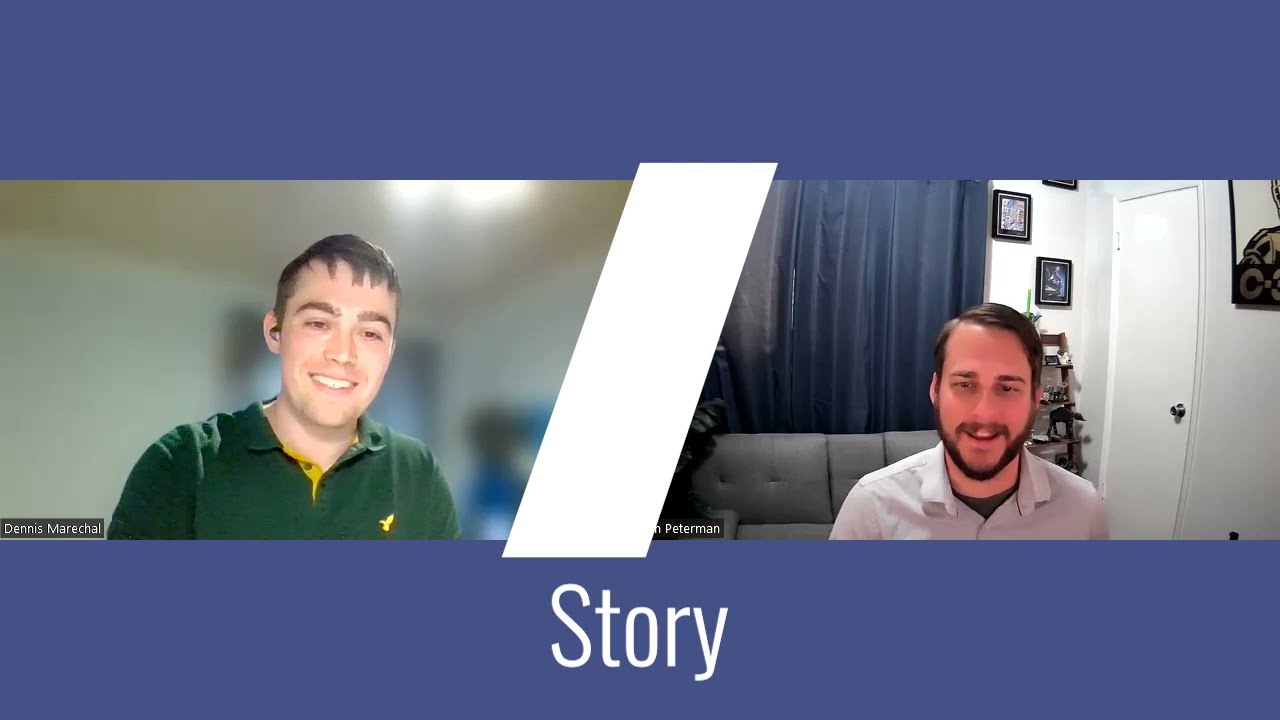
Dennis Maréchal turned a teenage hobby into Wooden Gifts and More, crafting pens and gifts from reclaimed wood like fallen trees and old whiskey barrels. He sources locally, ships with low impact, and gets 40 to 60 percent of sales from organic search. He's studying sustainability in university while experimenting with recycled plastic and planning to move into renewable energy or recycling projects.
Chapters
Hello, and welcome to this episode of Conscious Design. I'm your host, Ian Peterman, and author of the book Conscious Design. And today I have Dennis Maréchal, founder of Wooden Gifts and More. Welcome to the show.
Hello. Thank you.
Yeah. So you started this company. I know it's been, been a few years. But you're really focused on sustainable products.
Yes, absolutely.
Expand a little bit on that. How did you get into that? What made you decide, oh, I want to make, you know, sustainable products? And how do you, how do you go about that?
Yeah, exactly. So, um, I started about 6 and a half years ago, um, back in my parents' backyard. I was a bored teenager, you can say, and I was looking at ways to maybe express my creativity and also earn some money. And I came with woodworking, experiment a lot around with that, made a lot of sawdust along the way. And then I looked for like fun small things I could make, and I in the end came out to like small pens, fountain pens, or like personalized gifts. And then later on, I started to look at like what material could I use. Like, should I use normal wood from the stores? But then I quickly wanted to really use sustainable wood, like wood from trees that have fallen down or have been sick for a long time, because one, it tells the, the story of the whole tree, how it's been growing for decades, but also it just has a special feeling to it and often also special colors. So that's why I like to work with material that's repurposed in that way.
Amazing. And so you do— it sounds like primarily wood. Have you expanded into other materials? Do you find, you know, other reclaimed things? Are you— or is wood really—
wood is like my core material also because I really love the, the story behind it, how it how you work also with it. But I also have been experimenting making recycled pens from like old washing bottles or jerry cans, and there I melt the plastic down myself into the shape of a pen and then turn it on my lathe. So that's like an experiment, but the core is really around wood. That's also what I, what I just love working with, working with wood.
You said you're experimenting with with other materials on this sustainable journey here, right? You started off with making this. Are there any other things you look at besides just the material and how you craft these? And, and, and, uh, well, we'll start with that.
Yeah, um, I think I, I try to look at sustainability completely also along the way from the shipping of the The items, the way I do that, and also how I design the products along the way, like using local suppliers also for the non-wooden parts, and also for like the more technical parts. I also try to really keep sustainability in the core focus. It's also what I'm—it's a part what I'm studying at the moment. So I try to keep it everywhere. Got it.
And and you talked a little bit about the journey, right? The story of. the products you make. Is that part of what you, you know, put out there? Kind of how do you tell that story and what does that look like from your perspective, right?
I try to show people the passion that I have for the product or what I find so fun about it also to them, like that the tree has fallen or that I've used an old whiskey barrel from their favorite whiskey brand, like Reclaiming the material, also telling where the tree has grown, often like which country, which environment, to show that story a bit. And also not that they just buy a pen or just a wooden pen, but a special sort of wood and a special story behind it.
Got it. Have you noticed whether, like, is that a draw for people? Is that something that Really catches people's attention? And how does that relate to, you know, sustainability is obviously important. People do shop for that, but do you find that story part really— does that help? Does it kind of— how does that work together to get people interested in the products?
I think it strengthens each other. Like, I think people are drawn maybe by first the nice colors of the pen or like the special figures in it. But then they read the story or they, they see me talk about it and they see the passion about it, but also the sustainability aspect that it was a local tree, for example, that have fallen. And I think both those get people convinced about the products and also it makes it for them like a unique gift to someone or make it special.
Right. That makes, that makes sense. I think it's a great, I think it's a great thing to have a story attached to your Your object. Now with that, because you're sourcing, obviously if you're working with, you know, a dead limb from a tree or one that's fallen down, that makes it really hard. You're not like mass producing, you know, a million, a million of one exact same thing.
Yes.
So how does, how does that work for you in terms of how you work? Do you How does— yeah, just how does that work?
Yeah, well, my business is not the most scalable model because of that, but that's for me also really okay. Um, but how it often goes, it's like I, I'm in a lot of like wood communities or Facebook communities, and people contact me, oh, we have a tree there, we have a tree there, or they know a company somewhere that only sells something like that. And so that's how I get my wood. But still, because I make all the items myself, indeed, I will never make a million of them. It's also not what I'm— what I want to do. I want to make really unique items for people and also give still the story behind it. If it will be a million of them, then the special thing also a bit disappears, in my opinion.
Yeah. Once, once, once it's that, there's not really a story. It's just a production line and not, not as well, not a story anybody cares about. How about that? Yeah.
Exactly.
Now you mentioned size, right? A lot of people, they try to scale as much as possible, but you're— that's not your goal. You're, you're really looking for— it's not like just being able to create the story and, and make really great products. Kind of what do you— what's your long-term goal with your brand? Like, where do you, where do you see yourself taking this?
Forward. Yeah, I think the, the first 5 years of my story was just like experimenting and understanding a lot about running a business, also scaling up from like very small to a bit larger amount, also being more efficient. And I think like the next 5 years I'm in now, I'm trying to really create a brand, like create products that you can't buy anywhere else. And also just give it an identity, not only the products but also me as the story behind the brand. Like, create a really unique story. That's what I'm trying to do on like a, a level where I have still time over, where I don't have to be 24/7 in the workshop but still enjoy what I'm doing. So that's where I'm going at the moment. It will be more luxury pens maybe, and like more the high end. But that's how the long term—
Long term. Awesome. Well, that's, that's super great. Yeah, definitely. There's a space, right? There's, there's space for mass-produced sustainable products, which are good, but it's, it's nice to see these more custom. You know, like you said, we're getting into that luxury space, so, you know, that, that can totally be sustainable as well. We don't have to Exactly. You know, both is good. We should just make everything sustainable. You mentioned, you know, your first 5 years you've been figuring out the business and everything, and you're also studying still. Is there anything, you know, for anybody else that's like, oh, I want to go out and create my own sustainable product brand or something like that, is there anything that you would give as advice? Like, what would be the one thing if you could go back and help yourself figure out something a little bit more key, you know, what would that be for you?
I think the one thing is just keep on making, like keep on experimenting, but also the other one is like keep creating content or keep creating videos of it and be comfortable behind and in front of the camera. Like I think all those skills, like to keep on creating things, will help you also in any other adventure. And also the, the confidence you gain from keep on trying and failing with both making products but also making like videos, pictures, and everything. I think that's what you will really take away. And also that's maybe a bit more unique about like the creator space, like you can make so much yourself and you— it's, it's a very good thing for like a TikTok, YouTube, or Instagram. So I think that's one of those things that I wish I would have started earlier and like be more comfortable out there.
Yeah, it definitely takes some practice to be comfortable getting in front of a camera as much as it seems like we should now. Is that— the follow-up to that is that where most people find you? Do you find your social media and that kind of stuff is where, where you get a lot of customers from?
I think it's now, um, like a 40-60, maybe. Like, mainly it's like organic traffic via SEO for my website, um, then a small portion is sometimes from news articles, uh, and then the, the remaining part is from social media. Um, we're growing very small and steadily, but, uh, We're working on it. I'm trying to, as I say, get myself out there, do more content, um, and it's going, uh, along the way.
Right. Well, perfect. And that's always— it's always good. Slow and steady progress is, is, uh, better than none. So it's, uh, it's stable. Stable growth is good. Um, yeah, well, looking forward to it. And product-wise, do you have any And I know you do a lot of pens and things like that. Are there other products that you feel lend itself to kind of what you can do with wood and things like that that you're, you know, maybe thinking about or tinkering with, that you're looking at?
I'm experimenting and thinking like to make one, like some items for coffee lovers, like to where they make their own coffee and they use the fancy handles on things. That's one of the parts I'm branching out to. But another one I really want to experiment is to make as many things out of a whiskey barrel, like an old oak barrel from a whiskey, and make just all kinds of gifts out of it and see what I can do with one barrel. Like, one challenge myself, but also, um, that's, that's a great market for people, like, gift-wise, and it's also, uh, fun to work with. So That are 2 where I'm really like, that there's a lot of potential in that.
Awesome. Yeah, that sounds like an interesting process to see what you can make out of something else. That's a good exercise to go through. I'll be curious to see what you come up with because I imagine there'll be quite a few things you can do with that material.
Definitely, definitely.
Hey, it's Ian here. So glad you're enjoying this episode of Conscious Design. If you want the full scoop on Conscious Design, what it is, how we do it, how you can do it, then check out our book. We wrote it so creative entrepreneurs like you can code social and environmental responsibility right into your brand's DNA. You can download the first chapter for free. Link is in the description. Enjoy the rest of the episode. Don't forget to like, subscribe, and share. This is— I think this has been really great. I love what you're doing.
Thanks.
Great that you keep doing this, and hopefully it just keeps growing steadily, but, you know, to the size that you are looking for. And yeah, is there anything else you want to share before we wrap up?
Maybe we can like talk quickly about like combining a side business while studying.
Absolutely.
And also the sustainability aspect of that in part, like I'm in my final year of my bachelor at the moment. And I think it's been a fun like challenge for myself to like get the highs of the education, combining them with the lows of the work or the highs of making the products myself. And I think it's something where also people might take something from. Like, I think planning in one way is really important, of course, but also just, um, being okay with not every day doing, uh, so much. Like, sometimes you have to focus everything on school, or sometimes you have an off day. It's okay to not do, um, so much. Like, I mean, when you run a business, you You always think you can do more, but you also sometimes really have to think about your health, the friends around you. So that's one of the things I want to give with that one.
Yeah, I think it's definitely a business owner thing. I still do it. I've been running businesses for a long time. My calendar is more full than it should be. I always think I can get it all done and then You know, behind.
I think everyone who runs a business can relate to that one.
Yeah, yeah. And how do you think your journey— because you're a student right now and you started this business— how do you think it will shift for you? Is this something that you'll just keep doing as a side? Is this just kind of always that side thing for you, or Or will it shift in some way?
It's one that defers a lot to me. It's like sometimes I say I'm gonna go full-time for it and really believe in myself and do it, but on the most days I'm like, I keep it at a side business for a couple more years, and maybe if I see it goes really good, I keep it. Or if I maybe like lose the passion to make so many items for people, I, I stop it. But I really would like, after the education, to work on like renewable energy projects, ideally recycling projects in like the energy industry to keep the sustainability going. Maybe even something with like giving wood a new life, keep that circle going. For me, that would be really fun and also it would give me a lot and I could hopefully also apply the things I've learned in the past 6 years to that job.
Yeah, well, I would imagine you have quite your experience with working with reclaimed materials would be pretty valuable for, you know, maybe a product company that wants to use reclaimed materials more. And I see that more and more companies are looking at, well, how can we get a material that's reclaimed or recycled? Partly because it's all getting more expensive now to have new material.
Yes.
And so now I feel like there's more and more like, well, how do we get something that's not brand new? How do we reuse something? So I think that experience is really great and more companies should rely on that type of—
I also think like for people in my age or students at the moment, like it's a huge opportunity, like do something with sustainability. As you say, like work or with reclaimed material or just doing the sustainability aspects for companies. I mean, When you're at this young age, you often have maybe like a different opinion about it or a different viewpoint at it. And sometimes in companies it can be good to have fresh air floating in for that part. Not always, definitely not, but I think it's good too that young people would really get involved with this. I mean, everyone is concerned about it and talks about it, but I think the best way that most people can do is just to get really active with it.
So yeah. Yeah. Well, how do you— I guess that would lead to a question of how do you feel it's different being a student, right? You haven't been working for 40 years in an industry. So kind of how do you feel like that's different for people in your position that are wanting to enter and looking at things? How does that— seem different, at least from your perspective?
Yeah, I think first, yeah, you have the academic viewpoint now at the moment, so that's more like on the theories-based. But I think most people have the very, like, the, the more urgency that I see with people in, uh, that are studying at the moment. They see how urgent it is and how the climate is affecting around them, and I think that's why they are perhaps more motivated. I don't know, but They see maybe the urgency, or they see that they will be working with it for a very long time. And maybe they also come with more out-of-the-box ideas, because as you say, someone who has been working in an industry for 40 years, they, they see something certain ways, and they know to trust the old way. I think like the combination of the practical with the academic, that then they come freshly on the, on the labor market could, could really give some great ideas along the way for, I think, both like on the engineering aspect, but also marketing, financial. I think there are a lot of exciting things that can happen there.
Absolutely. New ideas are always good to at least look at and see if they can help. So fresh ideas are good. Yep. Amazing. Amazing. Well, I really appreciate your time taking to talk about what you're doing and your journey as, as someone who's been running a business like this for a few years. It's, it's great to have your experience. And, uh, yeah, any last, last comments or thoughts before we wrap up here?
No, not really. Just want to say thanks that I could come on. Really like what you're doing with the show. getting more attention for sustainability. Um, and also just in general, what you're doing, Ian, is great.
Um, thank you.
For the rest, I think, um, if people want to ever try something creative, I would really advise to just try something with old pallets or wood that's laying around. You can make so much out of nothing, essentially, and also have just a blast. I mean, you can be creative, you can fail along the way, no one really cares, but you're gonna want to get inspiration for other projects you're doing, for the work environment. That I think it's something that people can really enjoy generally.
Awesome. Well, and for anybody who's wanting to buy something from you, uh, where is the best— where's the best place to find you?
Um, you can find me almost on all the socials and on, uh, on the internet, just Wooden Gifts and More. And then you will come to me in any way, and I'm always happy to hear from you, um, help you with some custom requests. I love to make some special items. Um, amazing. Yeah, amazing.
Well, thank you so much for your time. It's been great having you on the show.
Thanks, Ian. Have a nice day for the rest, and thanks to all the listeners also for listening.
More from Ian


You Didn't Know a Shampoo Could Do This #Shorts #shampoo #ecofriendly #haircare





The Biggest Misunderstanding About Bioplastics - Sustainable Materials Consultant Joanna Pool

A Polymer Scientist Explains the Truth About Bioplastics #podcast #sustainability #science



NASA is testing this on Mars… why not Earth? #Shorts #GreenTech #NASA #science