Sustainable Audio Tech for the future with Karoline Müller of Nomono
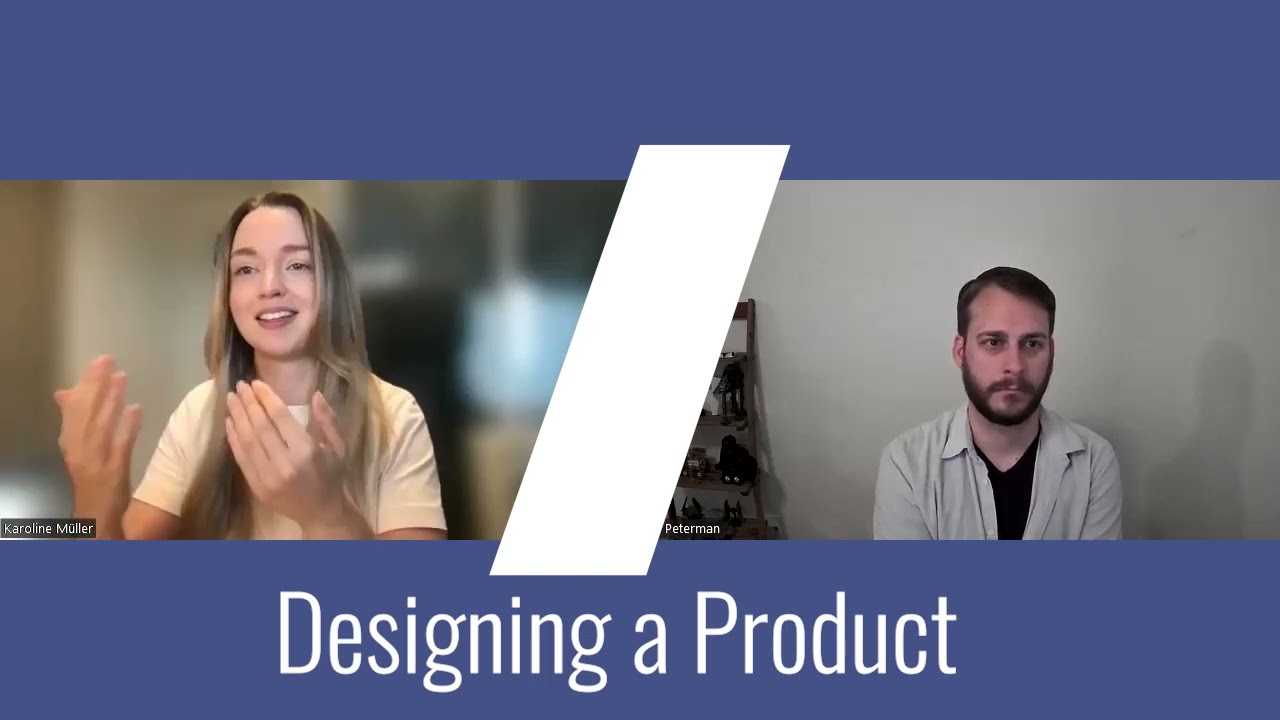
Karoline Müller of Nomono built a spatial audio system that turns 20 years of research into a one-button workflow. The company prioritizes emotional durability and repairability, with an internal Ethics League guiding decisions. Their design philosophy makes complex 3D audio recording accessible to anyone.
Chapters
Hello and welcome to this episode of Conscious Design. I'm your host, Ian Peterman, an author of the Conscious Design book. And today I'm excited to have Caroline Mueller. She's the lead designer for the ecosystem of Nimono. They're a winner of the 2023 South by Southwest Innovation Award, which is very exciting. You have a beautiful design. And welcome to the show.
Thank you, Ian. Really, really glad you're having me here.
Yeah, well, I'd love to, if you could super briefly talk about, you know, the start of the company, but then I, you know, you and I, we really wanna talk about how you started in the sustainability and the design process, which is a lot, but have you just start kind of at the beginning?
How did you join Yeah, so I think for me, it's always been like a journey through all of this. There hasn't been like a clear— or there have been many clear goals throughout my like path through university and work life. For me, it's always been like this balance, you know, between the theoretical part and the practical part. And I'm a very practical person, really, but I really enjoy doing the theoretical stuff as well, because it lets you kind of explore the limits outside of what's practically feasible, and it often leads to a bit more creativity and so on. So for me, that's always been a struggle. So I've been bouncing back and forth between industrial design, which seems to kind of combine the two, but then also like more theoretical subjects like politics and linguistics and For me, that has really shaped the way I think about things. And I think that's how I landed in the whole sustainability side of things as well. Because when we think about sustainability, we usually think about the eco-friendly kind of part of it. But really there's this huge ethics part of it, which is in a way very abstract and very theoretical, right?
Yeah. Yeah.
And, but still something we need to solve because we can all go around and recycle and think about what materials we use in a product. And then in the end, we don't really think about how the larger effect on people and the larger effect on like, how do we drive change more efficiently than to change small habits one by one, right?
Yeah. That is, that is a big, a big thing. I think a lot of people are, are really thinking about, and it's— we'll figure out. I think we will. It's a big— that's a very big topic.
It's a big question.
To tackle. Um, really quick, for those that don't know what Nomono is, could you give just a brief summary of what your technology is, because I think it's fascinating. I think you've— everything you just said, you guys have applied and you've created something that I don't think a lot of people have thought about as being even possible. So yeah.
That's actually one of our main challenges, that sometimes it's a bit too good to be true. That's really hard to sell because people won't believe you. Essentially what we do is we make hardware and software a full ecosystem, which not just because of my title, but you will hear me talk about that a lot because we are a bit obsessed with making a workflow rather than a product in a way, so that we can cover the entire workflow instead of covering specific points or specific product needs. And what we do is Or I can go back a bit. We started out in 2019, right before the pandemic, as though we knew podcasts would be a huge thing during the pandemic. And we, yeah, we started out as a research project, which actually was over 20 years of research and a lot of patents that came out of that from one of our co-founders.
Mm-hmm.
Then from there, this was this little spin-out, which was going through some transformative stages. They were like exploring the whole 3D audio thing and how that could be applied in a good way on technology today. And in 2019, that was a really vague topic for most people. The whole Dolby Atmos thing was kind of up and coming, but like normal people like me wouldn't, wouldn't know what actually is behind there. It's like, oh, you place a few more speakers in your living room. Right. Forever. But otherwise it was just like this abstract concept. And yeah, 3D audio is, or like as we call it now, spatial audio, which is probably more known because of Apple and Mercedes and Sonos and so on that have actually adapted that terminology as well. wasn't really there yet, but there was definitely potential and everyone could see that. So fast forward, now we're 4 years into our startup journey and we have developed— I actually have one next to me in the wrong colors though, for the designers. We have developed this hardware and software platform that interact with each other. And they really work as one ecosystem. So we have created like a full workflow. It's everything from just recording professional audio by pressing literally one button. So you don't set any levels or gain or anything. And then all the way into the cloud where you can again press one button to enhance and do all the like cleanup and everything. And then you can edit soon, which is developing, but, and then download, and then you publish. So that's the whole premise behind this. And obviously all of this you can do in spatial audio if you want to, since our product is laid out for that.
And that's amazing, right? Because they're— it's in a box, it's one, one product. You pop up, you do, you do your recording, And you're able to create that spatial audio, which, yeah, I think, and I think it's still a right, right? Most people think about it and they're like, oh, spatial 3D audio. Like it's a couple more speakers. And I still think a lot of people are, we're more aware of it, right? Because your AirPods could have spatial, right? The spatial setting on it. But there's a difference between clicking spatial and going, oh, that sounds cool. To actually knowing what, what is really happening to make, make that happen, which is great. And it's crazy, you guys, 20 years. I mean, that sounds right for, for a lot of people, like that's a very long time to be working on a, a technology. But it seems like it's paid off, right? 20 years later, it's the 29th. 20-year overnight success of research. But that's, but it's great. And I would love to, and you touched on this a little bit, the design approach, right? Because there's definitely, there's the heavy research side where it is that theoretical, nothing practical, right? You're just like, oh, it's a cool idea. And there's probably lots of math.
Yeah.
And that's, that's it. How have you guys been able to, because you've taken that technology, but you, you guys are really thinking through that process of how to practically turn it in. You're adding more features, you're growing that system. I'd love for you to talk a little bit about your design process and how you've taken that. idea that no one would know what it means into this practical, here's a thing and it does this and you can understand it.
Yeah. So I think even during the research years, there was a lot of practical stuff just to give Audun that credit that he definitely deserves from that time, even though I have very little knowledge about that part of the development. So he could probably talk a lot about that in a different episode. But for us, it's really been about making something that you and I can understand in an instant. So for us, it's really been about democratizing spatial audio in a way that is like more than knowledge democratizing, right? Because we see huge potential in the technology as such. Obviously, you can see the potential in having like, yeah, a big cinema experience where you would like the voices and the noises to come from different sides.
Right.
To have like a more immersive experience. But there is so much more to it. And one of the things is That we've been very obsessed with during this design process as well is the accessibility. And what research has been showing is that spatial audio does make it easier to distinguish voices. And if us two—
Okay.
We would like talk over each other right now and we would like say 2 different things if we were in the same room. Together with the listeners, then they could say, okay, I'm now I'm tuning in and listening to Ian, right? Because we have spatial abilities. And that is something that we lose as soon as we go into a, into a mono mix and publish it online. And suddenly we have this pancake effect, right? Where you're just stacking. Noises on top of each other and you can't really distinguish it anymore. So that's been our, yeah, our main goal. And it's not just because for the rare instances where we would talk over each other, but it's also for all of those instances where you're commuting, which is a huge platform for people to actually listen to, for example, podcasts. So that you would be able to listen to podcasts and maybe don't have to put the volume all the way up just because you can't understand them. But spatial audio makes it actually easier to listen to content in general and to actually understand it. Not to mention people who are hearing impaired, like, without having the extra buzz from From public transport or whatever it could be. But for us, that has really been one of the main pillars. And this whole thing has been grounded very much in design. So one of the first employees was our CDO. And now we have a team of 6 designers in total on a team of— 30— oh God, 38, I think, employees, which is quite a big ratio for a small startup.
Right.
But a lot of that has been because we are looking for creating that experience and creating that understanding of a technology that is just not mainstream yet in that sense.
Yet, yet it will be. Yeah, it's— I hadn't thought about audio because, you know, most people don't even think about this stuff of how flattening audio makes it harder to understand what you're actually listening to. Like, that's a huge, huge component. I'd imagine it makes it easier to edit and it makes it easier if you have You have all these, you can actually listen to it better. You, you'll, you know what's going on better and you're able to, yeah, that's, I hadn't thought about that at all, which is, which is crazy thinking about like accessibility to audio. 'Cause we all just think like, oh, well, of course. I mean, except for unless you're, you know, hard of hearing in, in some way, the automatic thought is, well, of course we have audio, we have You know what, we're not limited. Why, why, why would we, we think that? Um, but yeah, and I understand the compression process. So yeah, it flattens, flattens that audio out horribly. And I guess we have stereo, but that's still really narrow compared to a full 3D experience, right?
It's still Yeah, and it also, like, when you have noises from around, like now you and I, we're sitting in fairly noise-cancelled environments in here.
Yep.
But as soon as you have any background noises, they have to be mixed in on one or the other track, right? And so they get flattened out with one or the other voices as well. So even in stereo, you have your... Problems with that.
Yes. Yeah. The noise gets, I guess it would be added, right? It would pick one channel and that's where it gets stuck on.
Yeah.
It makes it a worse channel for that instance. I would love to talk about a little bit on the sustainability and partly, well, also the design-driven part. Like the fact that you guys have so many designers. I mean, you guys have won an award, South by Southwest. Like, that's no small feat. I think it really comes through. Like, your product is really well designed. Like, and I have a design background. It's great to see that you guys are taking this technology that's hard to understand and designing it in a way So the average person who's like, I don't know, spatial audio, it's a cool AirPod setting that they told me about, and turning into this thing in that process. And you've helped run, among your many, many hats, some of the sustainability efforts. How has that played into the design and the design thinking process? Because there's accessibility on one hand, making it Actually usable, and then sustainability as well.
Yeah, I would say that accessibility somehow is a category in sustainability because that's how we actually create a sustainable product that is usable for, for people in general and like many, many generations ahead. But yeah, for us, I think we started very early. This was our second year when we established the sustainability committee, and that was when I joined as well. And what we tried to do with that is to create something that is anchored in the organization because what I at least always feel, I don't know if you agree with me on this, but there is a spokesperson for sustainability and one person who makes the report, and they will go around and get information from the company for sure. But there is more like the need to report to someone rather than the ability to change something that will be reflected in a report, right? I would agree with that. That's at least how I've been experiencing it. And I feel like, yeah, we should have some kind of shift in that. We have a very, like, we are very aware about, like, how you structure companies in general. And we have people who are very passionate about that in our company. And so a lot of that, like, thinking about having a flat hierarchy and all of that, was kind of inspiring this work as well. So, what we tried to do was to create this, we call it the Ethics League to sound a bit cooler. To create this group of people who are coming from different sides of the company and who all have skills that would fit into this group. But there shouldn't be like, we wanted it to make, obviously we were 20 people at the time or something when it was established. So we couldn't have everyone in there for like many reasons and also because we're a startup and we have limited resources, of course. But we tried to make it like a mix. And so what our goal was, was to create like that everyone who has somehow a decision power that could be affected by a sustainability thought or ethics thought, that that person, that one of those people would be in that. So we started out with 5 people that were representing supply chain, mechanical engineering, software. Let's see. I hope I don't forget anyone. No, we were actually 4, maybe. I really hope I didn't forget anyone. That was in the start at least. But we were very focused on having all the corners. And then I was there from design just to ensure that we would follow through from start to finish as well, so that we would— the first concepts that we would make would be coherent with the story that we tell at the end, right? Um, so that was—
yeah, otherwise you lose, you fall off path somehow every time.
Yeah, and, and it is hard to keep track even if you have that person because there are a lot of thoughts, and there are a lot of good thoughts, let's be honest, uh, that you have to throw out along the way, and some that come in you. And it's, uh, it's such a like messy process when you're first starting out to try and make a whole company somehow sustainable, not just the product, right?
Right. So that's, um, that's a lot more work than just— yeah, I feel like the product is, is, uh, not that it's easy, but definitely easier than trying to do the whole company and every part too. Like, that's a whole— there's a lot of moving parts.
There is. And so what we tried to do was to create this hub where people could come and get information, but also them to go back to their teams, because we have product teams, and go back and feed that information in there and come with information back and so on. So, that was our main goal with that. And what we landed in was kind of this discussion around what is our guiding principle in all of this? where do we start? Because, I mean, obviously you can do 100 different things. We go back to the practical side. You could do so much, right?
Right.
But resources like people, money, time, it's all limited and you have to start somewhere to make an impact. And we started in the term emotional durability, which is A super fluffy term. And this is where, like, this is where the theoretical side came in, where we just sat down and we kind of figured out what does that term mean to us? What do we see in that and how can it guide us? Because if it's just a fluffy term, it can't, right?
Yeah.
So we need to find out what that is and What we tried to, or what we defined it as for us at least, was to find a balance between extremely professional technology, which like this is an extremely high-end product in the end, and getting that together with like a human-centric approach, something that is like basic in its how it works, right? So what we try to create is, yeah, I mean, sorry, it's both basic, but it's also something that is, that you can get a connection with in a way that you would— desirable is maybe the term that I'm looking for, but something that is like, that's giving you something back that is more than just, I'm going to use this for this recording. And so what we tried, what we narrowed it down to is we tried to make a tool that is basically giving you the same feelings or emotions towards it as if it was an instrument, but without taking away the professionality of a tool. So that was the idea.
I love that idea.
That was kind of where we, where we started and creating some kind of slow tech with very high professional, as like very high professional gear.
Hey, it's Ian here. So glad you're enjoying this episode of Conscious Design. If you want the full scoop on conscious design, what it is, how we do it, how you can do it, then check out our book. We wrote it so creative entrepreneurs like you can code social and environmental responsibility right into your brand's DNA. You can download the first chapter for free. Link is in the description. Enjoy the rest of the episode. Don't forget to like, subscribe, and share. Yeah, and I think we talked about that a little bit when we first chatted, is the idea, and I love it because a lot of companies don't think this way, is really, really long-term, right? Your approach to sustainability, because a lot of people are like, oh, it needs to be biodegradable, it needs to be recyclable. And it's like, well, Sometimes, yes. And then sometimes what you need is this product that's going, is going to last a long time and you gotta think really far into the future and future-proof it as much as possible so that it can be upgraded and it can grow with technology and with things as we progress. Because I would imagine that Spatial technology is cool now, but in 10, 15 years, it's probably gonna be even cooler. It's gonna be more, but thinking, just thinking that through that process is a design approach that we— not everyone looks at. So I really love that you guys are looking at it and going, this is how we can be sustainable, is that we're We aren't just this, use it and then it, you know, dissolves and it's gone. We're really future-proofing it and adding that level of thinking through that process to go, how can we make, you know, not just because I feel like sometimes we're like, oh, just make it last forever. And then we're like, well, but technology does not forever. Like, we're thinking about what technology Where audio was 50 years ago. It was not, or even 10 years ago. We talked about Atmos. What, when did Atmos come out? In like 2019, 2015, somewhere. I guess it's pretty, I feel like it's pretty recent. It's everywhere now, but it, yeah, but it actually isn't old. It's fairly new. So like we have these leaps. In technology. Um, and yeah, you're, you're, you're thinking through that process is unique. I think it's good. More people need to do that, but it's great to see you thinking through it.
I agree.
How, how have you kind of, 'cause that's a lot, a lot of forward thinking to sit and go through. How have you been able to like put that into your workflow and your design process of thinking? Is it— how are you guys approaching that, that concept?
So if we're thinking very like hardcore industrial design side and like the mechanical engineering side, um, then our approach has been, um, to interpret this, um, what we've made of the emotional durability term, uh, has been Twofold. One has, of course, been very like what you would think, like classic sustainability thoughts. So we minimize gluing or like other permanent joining. We instead use screws and hide them well so that it still looks exclusive, but it's easy to access and exchange the batteries, for example. And all of that so that you have like a good foundation for us to build that platform on. And if we were to make other products in the future, we have already the learnings behind us for that. But then we also have emotional durability since it has this side of the, like the emotional side, which also again is a bit more like a theoretical side. That's a bit like you're saying, it's a bit like foreshadowing. It's a bit looking into the future, which you can't, but you can make some guesstimates, right?
Yes.
And so our goal was to make it something that you would form a bond with beyond, as I said, like a bit more like an instrument than a tool. And so that is actually one of the things why it's round. So that was a very leading thought for that, that we wanted to make something that you can gather around where it's not you are the interviewer, so therefore you're sitting with a board full of knobs and fancy tech and stuff like that.
Right.
But rather we are making a conversation together and that conversation is centered like around this item, this portable studio, I guess. And then there are a lot of like small things. Like, I don't know if this is gonna be— if you can hear this, I'm gonna open the clamp next to the microphone. So it's like, it's a lot of like small things. Where we have tuned a lot and made like these, yeah, so that it sounds right, that the resistance is right. And the same goes for the microphones, which are like inserted into this tray. And that also, let's see, let's do this again. That also click in, right?
Mm.
Into the, Because they have a little magnet inside, and it's like it's a lot of these like tiny interactions that we've been very very detailed and very thorough about to make it work. And the same goes for for this one. It's also like it's it's small things, but it's really important for like or for me at least for like the overall impression. The pogo pins on the bottom side of the space recorder. This is the Ambisonics microphone. Those go like in any direction into this, into this tray. So you could place it like in any direction you want into it, which also is this like making it accessible to anyone, right? To put it in there.
Nice.
So that is really a few things that we've been thinking about, like from the mechanical side and then also from the Like emotional design side.
Yeah, I love, I love that term. I love the term emotional durability because it's, yeah, and tying it to an instrument because you think about, because I grew up playing instruments. I played the piano and I played the violin, which I still have my violin and I will probably, I will forever. But it is that emotional, it's more than just Like if I lost a hammer, I'd be like, yeah, whatever. But I would be very, I would actually be sad if something happened to my violin. Like that's very, there is that emotional tie to it in, in some way. So I love that, that how you described it is, I understand it perfectly, which is great. I love that idea of thinking of how do you make something a product Because it is like, right, we have what you're willing to throw away too, right? That, that is part of sustainability. If you don't care about it, then you're not going to worry as much, right, about do I recycle it, do I keep it, do I take care of it? Because it's going to last a long time. If you don't, if you don't care about it, you're not gonna, you're not gonna do anything.
Yeah.
Or, you know, it'll be just a By rote, like, oh, I recycle it because I recycle it. Not, I love it and I want to keep it and it does what I want it to do and I get used to the sounds and the interaction and I enjoy, right? Because you're all, you're thinking about like, how do we make it enjoyable? Like just put, pulling it apart, putting it back together. How do you make that enjoyable so that You're like, yeah, I wanna, I wanna do this. This is, this is fun. I, I always enjoy even just the act of popping off the COVID Like, that's just cool. And tying it, which is, which is great. I mean, it's, it's very few people go through that design thinking process. So it's great to have you guys, have you sharing what you're doing and how you're thinking through it, because I think a lot of brands would really benefit from thinking through this emotional attachment side of how do you— and it ties in with sustainability— how do you care, right? You got to care about the product. Yeah, otherwise you don't. Yeah.
Yeah, exactly, Hendrik. Um, it's very noticeable when you get a product, a new product, and you notice very fast if the people that made it cared about it coming out right for the user, right? It's, it's in an instant.
Yeah.
That is like one of the, yeah, one of the first things I notice at this point, at least when I, when I get a new product of any sort, and especially tech products, and especially, especially when it comes to sound equipment, there is still this Now, this is a bad example because this prototype is black, but I will tell you in a second that that's also a sustainability factor. But you always have these like black, very advanced looking gear types when you talk about audio tech, right? So the more advanced it looks, the more professional you are in a way. And I mean, that's something that we've had, we've seen it in most tech industries, right? And nowadays, like, the sleeker a laptop or a phone is, the better, because it means you don't have to do extra work to get to the same place as somebody who does the extra work.
Right.
Just because they have the knowledge, right? So, that is something that We definitely got inspired by. And then it's like, it's in the team. What you notice is not just the, like, how much do they care, but also how much do they think about the future. And I mean, I can sit and like theorize about emotional durability for half a year and share my findings and all of that. And they will be like, okay, yeah, I guess. But as long as it's not like anchored that we are making this product to be around in 10 years, and if somebody breaks it, they want to go and fix it, not return it or throw it away in the worst case, right?
Right.
Then if you anchor that part, then people will start making decisions based on that. Then it's not like, hmm, should we, for example, should we go for like a a battery that will last for half a year? That's an understatement here. But let's say a battery that lasts at best 5 years or a battery that lasts at best 10, 15 years. Like, what is the span we're looking at? And the same with components and everything. And if every little decision is made to be future-proof, then The experience obviously will be— or obviously— the experience hopefully, as we all hope, will be that people see that or notice that, even if just subconsciously, and will be like, okay, if they offer a repair service, then I would rather get it repaired than throw it away or just leave it be.
Right. Yeah, I feel like that's— there's some brands that have that. I think like KitchenAid products are pretty well known because they're very durable and you just repair them, right? They're—
Yeah.
Whatever they've done in terms of explaining their brand and showing people and having it available, you don't usually just see those thrown away. You see them, they get shipped and they get repaired. It's like, oh, we've had this for 25 years. Yeah, the motor might have been replaced, like this, you know, whatever, but it's still there. And there's this thought that when you purchase it, like, this is, this is an investment too. And I think that kind of—
Yeah.
Thought process is right. You're not just like, oh, I'm just gonna buy this cheap thing and it's gonna whatever. It's like, oh no, I'm, I'm gonna save up, I'm gonna do whatever, I'm gonna buy this thing. And I'm going to repair. If it breaks, I'm not gonna throw it away. I'm gonna repair it. And I think you've, you've summed up like they've done that and other brands have done that, but I think you've summed it up in a very— I, I just love your term for it because I think it captures, it captures that, right? The, the just the idea, the intentionality of I'm going to Take care of, maintain. There's more emotion attached to it than just the, I bought whatever, I bought a spoon, I lost the spoon, like, and it's not important at all, which is great. It's, it's great. I love it. Yeah. Yeah, I think we could talk about that a whole lot. I think there's a lot of design thinking around how you can do that.
Yeah. For sure. And just like as a side note, some people will say because this is a high-end product, it is in an upper range for the price if you compare it with like consumer products. But, and then they will say, oh, okay, but people will take care of it because it has cost them something. But like you were saying with the KitchenAid, things. It's usually not because of that. If you buy a MacBook, there will be a certain time where you take very good care of it, like approximately a week. And then you start to realize that this is an object that I use, so I'm gonna start using it, right?
Right.
And Then of course, Apple has done a good job at like making a really good user experience as well. But to a certain degree, we will always be a bit like this. Okay, even if it's an expensive object, it is something we use. And we want this to be something that you use just like a laptop or whatever. You want this to be something that does something good and not just stand around and is like pretty, right?
Yeah.
That's not something we want either. So that's why we kind of want the tool in there as well, because like with an instrument, you make beautiful music and the experience is in the using. But we also want the outcome to be something great and something desirable in this case.
Right. Yeah. Because you kind of have a few different users, right? If you're, you have the people who are actually making whatever podcast audio, but then you're also creating, you are helping to create what everybody who listens to that actually gets to hear, right? So like technically everybody that listens to a podcast made on your product is also experiencing your product in some way. Which is, yeah, you know, I think that's a good way to think about it too, right? There's, there's, it's very rare you have, and I think a lot of designers, I don't know about your school experience, but it was mostly about, oh, the one user, like whoever initially used the product was like, that's the user, that's your focus. And not thinking so much about, well, yeah, but if this is making a thing, What's the experience like? Is it gonna make it really well? Like, is it gonna, is it gonna make the, all the other experiences, those, those tangential experiences, are those gonna be good too? Or are you, are you gonna enjoy the audio when you listen to it? Or is it just cool because, you know, you push a button and it, and it makes it for you? Like, it's gotta think through that. So it's, I'm glad you mentioned that.
For sure.
Yeah, that's, it's important to think about those. additional experiences attached to your product.
And for us, this has been like, like, obviously the listener is like a customer of a customer in a way, right? But we also have the different steps within the first customer, which is, um, like, and I'm sure you're very aware of how a podcast production works, uh, But for those who don't know that, there are so many steps and so many people involved in, like, in a big production, you will have a lot of people along the way that guide different aspects of this. And for all of them to be able to come together around something, that has kind of been our goal, right? So to make a user experience that is Somewhat the same for everyone rather than having this— I don't know if you've experienced this, but if you share your recordings, for example, with a guest because the guest has said, oh, I said something that was a bit off, I don't think I want that to be out there. I don't know if that has happened.
It has. It has.
It has. Yeah, I can imagine, because if you have like a flowing conversation and you're comfortable, Then you start saying things and it's not always things that you want to be on the record for later on.
Yes.
And those kind of moments, especially because we create a setting where, like, just like us two right now, we can, like, with these microphones that we have, we can just talk very freely. We don't have, like, big microphones in our face where you're very aware that you're being recorded.
Right.
So because we create such a setting for natural and somewhat like, not private, but like an intimate conversation, right? Where you can let the barriers down a bit. You do want to have the opportunity to say in hindsight, oh, okay, that was really not something I wanted to say. And then, uh, uh, then it starts, right? Because then you have a file of like an hour and I want to delete something in the middle and I don't know where it was anymore. And you don't remember which exact part.
Right.
Uh, and so you will either share the entire file with me or you will go through and then you will share like a section with me. Uh, alternatively, when I have received the file, I will come back to you with a timecode. And you have to go in, find the timecode and all of that. Like the experiences around making a podcast that aren't necessarily like the part that we're doing right now. Right. Which is— No, this is the fun part. So much fun. Yeah. Right. So this is really what we want to focus on and that is why we kind of say, okay, we delete all of the setting up parts. We delete all of the parts where the tedious forth and back, because our platform lets us communicate directly. You could share it with me as a reviewer. I would just be like commenting on the sections that might not be good, if there's anything that I want to take out. And then you can do that and you can comment back and be like, nah, Caroline, that's okay. Nobody will notice you slipped up. And that's, uh, that's kind of the— it's since podcasts are a group effort in most cases, uh, at least between host and guest, right? We really aimed to make that experience for everyone involved as good as possible.
Wow, that's awesome. Yeah, there's definitely a lot of back and forth. There's even— and we have a small team, but it still takes, uh, Or including me, plus however many guests are on just to, just to make the podcast for everyone who's listening, who's gonna end up listening to this. Uh, it's been at least 5 people on, on including you, the guest, to, uh, bring this episode to life. So yeah, it's exciting you guys are, are tackling because there is a lot, there's a lot that goes into it for sure. Well, this is, this has been really amazing. There's, you guys are doing so much. I love the design focus that you guys have. You guys put a lot of thinking into your process, your design, the experience. I can easily see why you guys were able to win at South by Southwest. And thank you. Yeah, it's just been great having you here. I really appreciate it.
Thank you.
Before we kind of wrap up though, I just wanted to give you the opportunity to share if anybody wants to reach out to you guys, if there's anything else you want to mention. I just want to make sure you have, have that time to add anything that you want to.
Yeah, I mean, we're always welcoming people reaching out with anything that they're thinking of when they hear this. Like, for me personally, obviously I am always intrigued by anyone who has any thoughts that could lead us further with our sustainability work and our design work and everything. I always think it's fun to hear from other designers, but also every other discipline that has any sort of input is really fun to hear. Yeah, it could be mentioned that we are selling our product now. And we do have our cloud, so the solution where you can enhance and edit soon, but you can comment and share already. All of that is available in our beta version right now, and that means that it's completely free for the time being. So, you can run through other— Let's check it out now. Yeah, you can run through anything. It doesn't have to be from our gear. It works best with our gear, but our enhancement is— I'm not going to say it's the best, but you know.
It's up there. It's up there.
It's 20 years of research. I think that's most enhancements can't say that.
Yes, that is probably the most research-backed enhancement. I've ever heard of.
Yes.
Amazing. Amazing. Well, thank you so much. I really appreciate your, your time, Caroline. It's been, it's been a pleasure talking to you and talking through your process and what you guys are doing. And for listeners, we will have links and everything in the description. Definitely check them out. Amazing products available now. So do check it out. And yeah, thanks again. I— yeah, it's been a really great conversation. Thanks for being on the show.
Thank you, Ian. Thank you for having me.
More from Ian


You Didn't Know a Shampoo Could Do This #Shorts #shampoo #ecofriendly #haircare





The Biggest Misunderstanding About Bioplastics - Sustainable Materials Consultant Joanna Pool

A Polymer Scientist Explains the Truth About Bioplastics #podcast #sustainability #science



NASA is testing this on Mars… why not Earth? #Shorts #GreenTech #NASA #science