The Future of Makeup Zero Waste, Refillable, and Circular
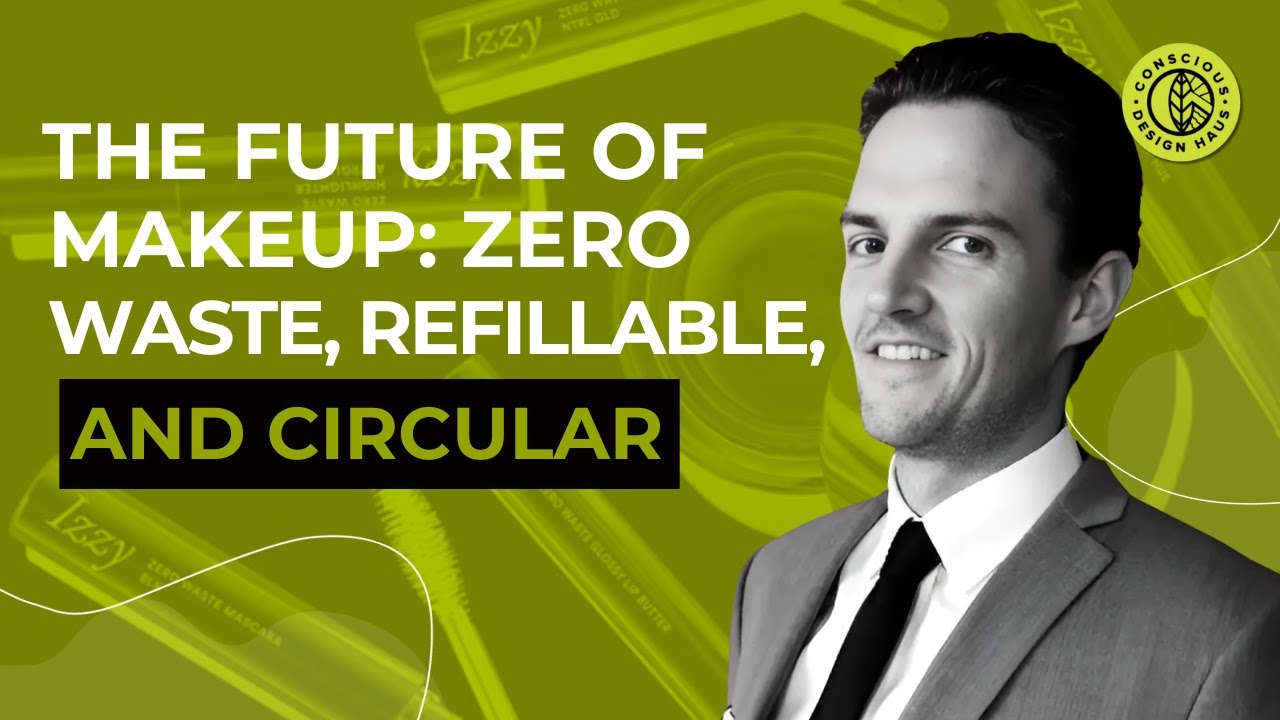
Chris Tarley, founder of Izzy, built a sustainable cosmetics brand using reusable medical-grade stainless steel mascaras and refillable seaweed-based skincare pods. The company operates closed-loop supply chains within 150 to 200 miles and uses medical-grade sanitization to recycle products customers return.
Chapters
Hello and welcome to the Conscious Design Podcast. I'm your host, Ian Peterman, and I help turn product ideas into sustainable 7-figure businesses. Join me for another episode where sustainability meets innovation and business savvy. Today, I'm really excited to have Chris Tarley. He's the founder of Izzy, a brand focused on Sustainable Cosmetics. Welcome to the show.
Thank you. Great to be here. Thank you so much for your time today. I'm excited to chat with you. Yeah.
So I guess I'll start all these episodes. Let's dive into your origin story a little bit. I read it. I know we've talked a little bit about it, but for everyone listening, what got you to take— I know you've worked in this field for a long time— decide you wanted to actually launch your own brand and get into that side of things?
Great question. Izzy actually came around— it's named after my wife and I's beautiful daughter, Isabel, is the truth. That's where Izzy comes from. Originally, she was called Pain in the Ass because she didn't let us— she just didn't sleep at all at the beginning for the first 2 years. And so Izzy came about because I was getting my teeth cleaned, which is strange for English people to talk about because obviously the joke in America is our teeth are a bit dirty. And the machines that we use, I was like, how do you reuse the tools from one person to the next? And I'm an engineer, we can go into it later, but I know a lot about machines. I was like, how do you just move from one person to the next? There's sometimes blood, there's sometimes like dirt and other stuff, and they'd show me the machine. So our first part, which I have tucked away behind the screen here, is the first ever Izzy that was made and sterilized using a dental machine. And that's how the idea came about, from teeth cleaning. I was like, oh, you can use these from one person to the next. And they do every day within America and most countries. And it's amazing that, oh wait, we could actually do this. So that's kind of how the reuse idea came about of using medical-grade products to move from one person to the next.
I love how you look at one industry and they've figured it out in some way, and you just have to take that and go, oh, well, this could apply over here. This is a whole, you know, it's not a dental product, but you want to achieve that reusability.
Yeah, because like a lot of products that are made in America, or I think America, when you go get your teeth cleaned, they polish and they put that polishing product on it. That's made in Tennessee. That's made in the same factory that makes nail polish brushes, because I know, because I've been in makeup for 20 years, and they make nail polish brushes and they also make then a dental brush. And so it's— I was that— so I was like, oh, I know that polish machine does this, let's take a look at it. So yeah, like most consumer products, the best thing is customers don't realize what goes into doing them. They can be actually detrimental to the environment because people don't ask enough questions about it too.
So I would never have guessed that that same kind of factory would have made both. Poor things.
Well, the fun of the Izzy mascara brush is it's actually quite different to most. Like, L'Oréal does a lot of mascaras too in North America, where I did work before, and it's a great company to work at. The place that invented the twisted-wire mascara brush is actually in western Massachusetts. It's called Sanderson McLeod. They invented the first twisted wire in 1964, '65. And basically, there's a guy called Howard Mellon, and it was for a makeup artist in LA, and she wanted to apply mascara differently than the old spit-polish-brush technique, or they used to use screws, like a screw from a hat, like screwing into a wall was another technique. They were like, oh, wait, how can we use something different? And they went to Western Massachusetts. So, Izzy's mascaras are made at the same facility, which is an hour from where I am located. And it's made at the facility that invented twist-of-wire mascara brushes. So, not enough people realize that tons of products are, like, again, the history behind a product can be, well, they were using a screw from a wall to apply mascara, and then this company which is still family-owned, makes Twister Wire brushes for L'Oréal and Izzy. So it's kind of cool.
That's awesome. Let's dive into the product. And how did you go about taking something that we don't think of as reusable? What are the things you had to think about to take that and make it actually a sustainable, reusable product?
My co-founder, or the original co-founder, Shannon, I used to drive her nuts because we first started with a female founder and became a founder. And basically, I drove her nuts because it was all about the details of the product. Because most makeup— and I'll show, like, this is just a blank component, like, this is a lip gloss from China— you don't think about, like, the size. And when you throw most recycling, especially in the US, as you've spoken about in some of your podcasts, like, you know, they don't end up in— even if you've got separate bins, they still don't end up in there. People think they do. Or if they wash their glass, no, that doesn't really help either. That, like, you know, washing your dirty jam jar doesn't really do anything. Like taking the— what would be the existing product with the medical, like I said, the tooth came about. And I was like, how can I really do this but do it to like an extreme? So we pushed the boundaries of using medical steel, medical grade, only domestic steel. Everything for the US brand, for the Izzy brand, is done within 150 miles from this house. 200-mile closed-loop system. Now, does that mean really easy? We launched— What's the value? It launched during COVID which was not planned, and April '21, and we were able still to drive through our supply chain on one tank of gas to get the steel, to get it clean, to get the molding done, to get the brushes done, to get the formula done.
Hmm.
So there was some advantages to having, like, that closed-loop system that came about from all of it. That's really what stands IZZY apart, is the steel, because it's never thrown away. I mean, I've got a Yeti here, like, you know, stainless steel. Luckily, I think some of this is made in the US. Swell is another drinks bottle that people know probably. That's some of like some of that's made in China still, but some of it's domestic US. And we went the opposite side of going really expensive. It's 10x of any mascara in the US probably for component cost of what the steel is to get it made. Again, you can drive to Pennsylvania and pick the steel up. The other thing we did was we don't have paper in our supply chain, so we use bags. This was all done and the QR codes are all done before they became popular, because we started this probably a year and a half ago, a year and a half before we launched. And just sick and tired of wasting plastic, because I've designed enough of it for MAC, for NARS, for all these brands. And I was like, you know what, I don't want to keep making plastic. How can we actually be sensible about stuff? And so we didn't have any paper, so we used these bags. Like a company called Rent the Runway is a good reference, a dress company. And so we have these bags that Izzy comes in that sets us apart too. As you receive your product, your return label, there's more QR codes inside. And yeah, the product is always collected back. We have a 98% return rate, which keeps increasing because people become more understanding of how the process works. And yeah, but that's kind of the key thing is materials to an extreme and the closed-loop systems to— there's many things that we, I think we do well, but having a closed-loop system is really hard. And that's why it's so expensive and people can't really do it.
The user experience, right? Because it isn't just, you know, buy it off the shelf, use it, throw the whole thing away, right? That's kind of, kind of the standard, right? Now with yours, with the reusability and there's a return component, how kind of, what's, what's that consumer user behavior like now?
Yeah. Oh, good. I was like, I think I've usually got stuff randomly around the screen. So here we go. What happens is a user, when they go to Izzy, You have either a subscription-based or a non-subscription-based because there's still some people who just don't quite get it and have to do a one-time purchase, which is fine. You know, that's human nature. You might be too scared to commit, you might just not get it, so you just want to find out, dip my toes in the water. So we have a much lower price for members when you get in, subscribe, because we can control your memberships. And so you order the— if I stated that you order the Izzy and it comes to you within like the shipping, the 5 to 10 10 days, you get your ISY product. Now you can use it, and once you finish using it— this is the ISY mascara, it's our number one seller by miles. It's like Netflix, how it used to be with the DVDs, when you used to send your DVD back for a new rental.
I remember that.
So what we do is we send you a new one while you still have your old one. You get a fresh one delivered to you within 3 months because products— people use their products for too long, they can get eye infections, they can get pollution from the air. Dry out the formula. You can get really bad eye infections too. That's why people like don't do testers as much in Sephoras and stuff because people get eye infections all the time. We used to. We then send you the new one. You swap your label over and you send the old one back to us. Now when it gets back to our facility, bags, the labels, there's just obviously one label, one way and return label. They're taken out and ground up and then we have the bags that are sanitized. The products themselves, again, where we're different is we disassemble everything and it costs us A lot of money to disassemble this. So it's done for the pain and the sweat and tears. We— this is a mascara, for example— is the steel is reusable and the bottle is reusable. We will take these and sanitize them through a 7-step medical-grade process that's used currently by Estée Lauder and other people to either repurpose— like fragrance glass is one, like fragrance glass can be rewashed and reused. Or some people will use, like, a wine bottle. There's, like, a small percentage of wine bottles that are reused. Not as to medical-grade standard, but they are cleaned and sanitized, so they do some of the steps that we do. And so we will then sanitize the steel. Let's disassemble the stems. Can't get this one because I've jammed it in the— oh, yeah, I can. See that? It will eventually come out with, like, a— for the 5— I think 10-pound pull strength. So you take the wiper off. You'll— I've got 2 wipers on here, but you'll take the wipers, and the wipers, which is the thing that cleans the product off and gives you the performance of the deposit to the brush, that will then be washed and reground into new wipers. The stems, we cut the brushes off. These are then— the brushes are melted back into steel and remade into brushes again, so the steel doesn't get wasted. Plastic for the stem is washed, reground, all within the same state that it's injected into, all within Connecticut. The applicators are made in Massachusetts. This is injected in Connecticut. Aduca, it's still washed, reground in the same state, and reinjected in the same state. So it never— it comes back to where it's— where it started, which is kind of fun.
You have a very, very closed-loop controlled supply chain, both on raw initial material but then also the recapture and reintroduction of that material that you put back in as recycled material.
Yeah, we really did go extreme with it, and it does actually help for The tracking stuff, like, we, we have every single wiper and brush ever in our first 4 years of production. It's all been catalogued, stored, because you need about £10,000 worth of raw plastic to grind up to make the plastic cost-effective to almost like a brand new bag of resin again. So you need a lot of it to make it. And if you use like a MRF or normal recycle chains, there's a certain size, as has been explained on your podcast before, There's certain sizes that you need for recycling that can't be used, and so it's 2 by 2 by 2. I think most cosmetics will fall through that. So most cosmetics, even if it's collected by most companies— I won't name them, but there are companies that say they collect in the US and recycle— you usually find out that they're ground up and burnt. In Long Island City, there's one that burns a lot of consumer— a lot of stuff is just ground up and burnt or put into the ground. That is the truth of cosmetics products. Just, I'll stick to cosmetics, but a lot of consumer products end up where people don't expect them to be even. So yeah, that's why we really go the extreme route of collecting everything, catalog everything. It drives my wife and my wife mad and probably some other people, but we do it to be good and we've tried our best. That's all we can do.
Right. Well, I think that's— I love that you brought that up. There's so many things that are industry-specific, like you said, the, you know, cosmetic industry, it's hard to recycle those components with the machines that are out there, right? And that's just— I think I probably shared on an episode before some of, you know, the 3D printing powder. It's technically recyclable material, but the machines that are used to recycle, which nobody wants to, to reinvest the hundreds of millions of dollars to do that, they gum up the machines. And so it doesn't, it doesn't actually get recycled, even though it is technically recycled. So I love that you're taking this approach and going, we know exactly, we know exactly what our product is. We're going to be able to take it back because we figured out how to recycle our product and then put it back into our, into our raw material supply stream, which I think is maybe the big system will get fixed at some point, but I think companies like you doing this and showing that it's worth it is a big piece to maybe eventually having the regular system work.
Yeah, I mean, like you said, the regular system is so big that having the small boys actually be the guinea pigs to test it, to prove it works, like, is it useful to people to test? And I don't mind. One thing I do actually try and do is I speak to other founders, like Plain Products, Lindsay from Plain Products. I have her bottles, I have that whole collection off to the side, and they use Lumen. And I think it's cool when, if we could get enough companies to merge together, that you could actually then do this together because individually Izzy does okay. But I think that actually the bigger message would be to, fine, I could use my fibers from Delta Airlines. You could collect all the plastic from Delta Airlines and you could actually use those water bottles to grind up to make mascara brushes. I know you can do that. You can make fibers out of water bottles. So you could actually, instead of wasting plastic, you could be making stuff from other people's waste. And so it's just interesting how you could maybe work together to do stuff as a bigger company. So who knows what the future holds, but I think it's interesting to try and help each other out instead of sort of fight the big— the stream against yourself.
So you guys are relatively new. Love what you guys are doing. You guys are doing well, it seems. Product-wise, so I know you have a few different products that you work with. If you could just run through kind of what those are and if there's bigger strategy, if you're going to get into more that you want to do or where you see, you know, product-wise, this is an opportunity for IZI.
Yeah, it's a great question. Thanks. We have 11 SKUs of makeup from— we have mascaras, we have 4 eyeshadows. Less is more. I worked at L'Oréal and we know that, like, the The 50-shadow eye palette is a complete waste of time, like, or the— I mean, there's other things. The 30 shades of foundation, yes, they apply to everybody, but it's that you only sell about 30% of those shades, really. So Lizzy is staying very focused. We also have a lip butter that sells really good. It's like a generalized lip product. There are 2 lip shades, but you're able to change them over. The good thing is we— because it's reusable, we can actually change our SKUs over. So If we want to relaser everything, for 10 cents you can relaser every pack we have, so you don't have to throw it away. You can just change it to a different SKU. So Izzy's built like Lego. It's the same cap for everything. It's the same collar, 2 different bottle types. That's why it's really clever. So we have those 11 SKUs. Our skincare is really clever too. We actually are partnering with a new company called Nocla. They won the Earthshot Award to do from the Prince of Wales. They raised a million pounds from him. And our pods are made of bio-based seaweed with them that you add water to and you shake it up and it emulsifies. So it comes to you as a pod, looks like a dish pod, and you fill it up to the line like Blueland. You shake it up in the water and then give it, I don't know, 5-10 minutes and it emulsifies itself. If you shake it in your hand within like less than maybe a minute or two, you notice in your hand it suddenly goes— it stops. You can't hear any water going. And you'll go and you'll unscrew it and it's gone from the pod to a very beautiful skincare moisturizer. So all our skincare is zero waste too, which is kind of interesting. We've only just started it last year, but interesting avenue where you— we don't, again, we don't have much waste because the pods are refillable. So we ask you to wash the jars, are washed at home in your dishwasher, so they're dishwasher-proof. So it's like a higher grade. I'm sure you notice when you put stuff in the dishwasher. That isn't supposed to be in it melts, which changes the bottle colors. SodaStream, like you put them in the thing, the top of the bottle won't screw on again. And it's a certain grade you have to go of plastic or glass that's dishwasher-proof. And so our glasses, the idea is people receive these pods and I've cleared my desk, I don't have one, but you put the pod in and they're bio-based and you add water and emulsifies and then you wash it again like a baby bottle and you refill it again. So you never— you just need a fresh pod every time. The package stays at your house, you get to reuse it again and again and again. That's what's, I think, fascinating too, because my wife's been using it for a while now, and it's really amazing to see that, that system, it does work. And obviously we've got hundreds of other customers that use it too, and it's quite interesting to see people are a little bit like, what is this, at the beginning, but it really is interesting to use it.
Yeah, I love that idea because it Some of the numbers, if you look at it, like shipping water is one of the biggest issues that we have, especially when you're dealing with most of your customer base is in somewhere like America where we have tap water, we have access to water pretty easily. And it's a little bit of a learning curve for the user to get used to my soap or my hair care product or Skincare, whatever it is, right? Doesn't come in this nice liquid; it comes in a cube or a little packet or something. But I think as something that I've seen, it's started to get more traction as people move to being understanding that and knowing what to do with it. I think that as we get that hurdle past people, then it's going to be a huge, a huge impact to just.
Agreed. Yeah, water, that's a great one. Yeah, because there's so much you can do with that. And it's just that, yeah, think of all the cans, the soda cans you get. I mean, of course, SodaStream— SodaStream water is a refill mechanism, so you get the steel and you just refill the gas. But there's so much you could do with water alone. That's why doing stuff like with other companies and cross-pollinating ideas, you can actually play off each other. And you can actually— because then they, you know, I don't have to worry about making plastic. There's enough plastic made, I'm sure, in Multiple of those, you could reuse it somewhere else.
Right. Yeah, I think that is a really important part of, and, and what I think of like a circular economy and this, using those kinds of principles. It also is more efficient because if you can find out a way of, hey, this person's trash, right, their waste of some kind is actually feedstock for you, everybody wins.
Yeah, like there's so much around that you can do that with. You mentioned that Izzy obviously is in within 200 miles of itself, which is really hard to do. The interesting thing that we We are launching in Europe, which is great. It's happening in March, so in a few days' time in England. So quite proud of that, being English originally. And we will be going to Germany soon too. And all the supply chains in those are done within 200 miles. We've already pre-done our supply chains in Korea, Japan, all within 200 miles, ready to activate as and when we grow with investors. Which is really, again, it's just supply chain is the hardest thing to get. But that's where lucky I've started— I grew up as an engineer, so that's kind of what I've always done.
Hey, it's your host Ian. I'm really glad you're enjoying this episode. I absolutely love highlighting amazing brands and founders for the awesome things they are doing. I've helped hundreds of entrepreneurs and businesses like yours turn their boldest ideas into powerful, purpose-driven brands. So if you're serious about building a brand people love, like our guests and clients do, and one that you're proud to stand behind, I invite you to dive a bit deeper with our book Conscious Design. Inside, you'll discover the exact framework and steps we use to help entrepreneurs like you turn purpose into a powerful, impact-driven brand. A brand that stands out, attracts loyal customers, and drives sustainable growth with social and environmental responsibility woven into its DNA. Grab your copy today. You can find it on our website, consciousdesignhouse.com, or just find the link below in the show notes. Enjoy the rest of the episode and don't forget to like, subscribe, and share.
Right.
So you're, you're really adopting the model of every region that you're going into, you're finding that 200-square-mile area that you can get your supply chain and then that's what you use to supply the area.
Yeah. Think of how much stuff like goes around the world. Like, there's obviously— when we had like the Suez Canal get blocked, so much happened. When you have like boats blocked, certain things, or things break down, and like the environmental footprint of shipping. Like, I know Izzy's domestic in the US and we use USPS, which is great because it's such a local— I mean, yes, it's a big horse, but it's like local to local communities. And nothing leaves the country. Like, nothing's made outside the country. Nothing is sourced— like, it's just really hard to do because— And why we can't do that, and nothing against— well, we employ local people here. You could do it somewhere else. You don't have to employ or bring stuff in from somewhere else. You could redo it again. Yes, like, you know, you don't take advantage sometimes of tooling made here, but sustainability-wise, eventually if you grow a business, you're not shipping anything. There's no delay with anything. With tariffs going on, we don't— there's no tariff changes. There's no, you know, there's no price changes with the stock variation. You are in that country, you stay in that zone. It does help a lot. Right.
You're minimizing a lot of the financial impacts of a large multinational distribution that way.
We hope so. But again, sustainability for the environment is like, with the carbon footprint, is what's key. Um, one of my investors was, um, challenging why we have the logos on everything. On all our PDPs, you have the carbon footprint, which is certified by an outside company, by the Capital Carbon Neutral Partners. And yeah, we will literally work out— we have a document done by a lady, Ali, who used to work at EcoVadis, who started her own company. And we certify all our products by filling in this document that literally pulls down— not pulls down your trousers, but allows someone in the back end of the company to see all the details so that then you can actually certify the true carbon footprint. I just think it's different. I think it's nice to show. Some people don't understand it, which takes a lot of storytelling. That's what storytelling is key. I don't think storytelling will ever be finished with sustainable, but I think there's a lot of storytelling that needs to be done, especially with ESG, for example.
Yeah, well, I think that people like to not say shortcut, but they go, hey, here's the data, look, it's here. And, you know, as a species, storytelling is how we learn and understand stuff. So I think you're right, like the story, you're always going to be telling a story, there's always going to be that component, and that's That's, I think, one of the things that helps people stay connected with it and interested. If you can follow the story, you can be invested in the story. Whereas if it's just a data table, like, yeah, there's the 10% that get excited. It's a data table. And then everyone else goes, well, I don't get it. What's the story?
What tends to happen sometimes, especially with consumer products and makeup, is if you tell too much of a green story, people can be like, well, that's, that's really not why I'm buying the mascara. That's not why I'm buying the lip gloss. So the key factors we have to push home when you go up against some of the big boys, especially if you can't do it around Christmas or you can't do it around certain days because marketing is just like they're spending. It's like the Super Bowl of like, you know, trying to fit in an advert and spend on advertising. If you go up against the big boys when you're trying to use certain tag words and certain SEO like words to gain an advantage, you really have to somehow play the fine line of boost. Make sure that just make sure that the consumer has a good. Performance. So our mascara, our lip butters, brow, all our products— there's not many, but they are really well thought out and they really perform. Because at the end of the day, they could stand alone and the brand could be called Elephant, doesn't really matter, you know. But as long as they, as long as they perform, that's what matters. Now, does it have also the green sustainability background to it? Yes, which is key. And again, the key message we have here, and kind of have to play that game to at least get consumers what they want But also make sure that it's actually delivering on the backend of things too.
Yeah, and that's something that's come up multiple times and we have a couple PR agencies that we work with on sustainable products specifically. And that's, that's something that we've noticed with my design firm and our clients and that 15 years ago, 10 years ago, you could have launched and be like, hey, it's sustainable and people would've bought it. They would've paid a premium, they bought it, and that'd be, could be your number one kind of reason to purchase. And now it's, it's really moved into this expected category. Like if you're a new brand, why are you not sustainable? Why are you trying to launch something that's not sustainable? Oh, I'm gonna assume and expect you're gonna be sustainable in some way. And what I really want is like what you said, it's, it's gotta perform. I'm using this to solve a problem.
Yeah.
And, you know, makeup is, I want a look. Well, if your mascara can't do that, it doesn't matter how sustainable it is. It doesn't achieve what they want.
Yeah, you won't get, you won't get the people, uh, the first-time purchase. You'll get them in the door once and they won't then stay. And that kind of then negates the whole— you wouldn't then, you wouldn't be sustainable from the get-go. You've got to try and really make sure it performs for them. And they almost feel it's like the seatbelt. It's like Mercedes with their airbag. When they first launched the airbag, it was like, oh, What's this strange thing? Now it's like you know it's a given in every car, like the seatbelt. Like it's a given; you take it for granted. I'm sure we'll take for granted like the automatic driving one day, you know. But like, I know I I actually prefer older cars because they're less easier to fix. But yeah, the I think that Izzy should be like the sustainability should be almost like become the seatbelt and airbag of things. Now we're always going to have to have improvements to make. Izzy still has things to work on, as does many other brands. So yeah, at least. Trying your best and always looking for new things is good. So we spend a lot of time researching new stuff.
So yeah, well, and I think that's important, right? You, if you stop innovating and you stop researching and stop trying to improve, you have a certain shelf life, right? As a, as a brand, you are just not going to last very long. And so having that mentality of, hey, we're doing the best we can right now, we're doing what we know is good now. And if tomorrow a new piece of information appears, then we'll integrate that and figure out a way to do better. Yeah. I know you, you mentioned you're working on some partnerships already. The cosmetic skincare space is huge. There's, I've worked with a few clients in this space. There seems to be an endless number of products that fall under this. You guys focusing really on some specific areas that you think we can make the most impact, or do you see it as the market's wide open, ready for this kind of change?
I think that the market is, is here now. Like, working with wholesalers is important. So we work with like Grove.co as a great wholesaler for sustainability. And so building out, working, because a lot of wholesalers, the hardest thing is they don't know how to deal with sustainable products. So for us as a company, working on our partnerships with wholesale is key. Like, we'd love to do more with Ulta or Sephora, but as much as they say they're ready, they're not. That's nothing against the big boys. I just feel that if we could work, I think one of our targets would be to work on wholesale to improve these systems for people. Like, so having someone, if they go to any website and allow them to click a QR code and print a label to return it, doesn't— I'm just picking Izzy, of course. Allowing the product to come back to our facility, then that's fine. Like, you know, at least there's an interaction through the PDP or through some email chain to get the product back. People are used to doing that. Like, if you go to Amazon, like, everyone loves to talk about Amazon, is— well, they don't love to, but it's kind of stuck with you. When you go to do your returns, you know, you just go into Whole Foods or you create a QR code and it sends you to Whole Foods and to UPS, sends you to all these different places. People are used to doing things. So I think what Izzy is going to do is help to try and work with our wholesale partners to increase that ease of people, because it should be easy for customers. The hardest thing about sustainability can be that the people have to go out their own way. So doing something different to your routine can be a bit awkward. So that's why Izzy tries to do it by shipping back and forth. So you don't really have to do anything. You put it in your mailbox, you forget about it. There's other ways where we will— I think working on wholesale for us is the key thing product-wise. You have to be really careful. Like, eyeliners are interesting to us, or the more eye products, but I think that if you actually put eyeliner on a car, it might actually eat through the carbon based on the chemicals. So you have to really look— what people put on themselves needs to be less is more. I mean, I wouldn't physically say— I've been in makeup for 20 years. I wore more makeup than any straight guy. And I do think less is more anyway, and I don't wear it, like— but that's just general in life, like, from products, from clothing. So Izzy just needs to stay focused on less is more and just do it right. And that would be, that'd be okay for us. I think if we can partner then with, uh, we're doing our skincare, but maybe there's, you know, some other brands that would love to like partner with us or come together with us who does shampoo, body care, why not? You know, because if you think you're too big, in theory, the L'Oréals of these worlds have access to multiple brands. Why wouldn't we go together and come together with other brands who do clothing? Clothing brand might want to work with us and say, fine, we'll merge with you. Your bags that you're shipping can be made of our clothing. That can be another thing, you know, so our bags can then have an eco story to them. Oh, and then it's tied to another thing, and you just become this bigger engine together. So staying focused, I think, for the next year, especially as a— we, we— I have a very close partner called Terry Maxwell from Ignite, and she's family for life, and she helps us a lot. And staying focused on our marketing and directions of the company is something that really is key, and you can definitely get lost. I've been through a lot personally in the last 9 months.
Definitely.
Yeah, last 9 months was pretty brutal for me, but I think that startups have that. So if we can stay focused on the highs—
Oh yeah, it's up and down.
It really is. It's like, it can drive you to addictions, it can drive you crazy. But yeah, I think if the highs become low and the lows become high, so it's kind of become smoother, the ride. Nothing's going to be perfect and just live today for today. There's a lot you can do. And I think that with focus, we can be okay. So Yes, we're going to Europe, which is great. Izzy is doing great with helping local— like, not in the US domestically. We've had nothing thrown away in 4 years. That's just crazy. Nothing has ended up— it's still in drums and we collect all the drums of plastic, but they are washed, ready to go to be reground. And when you then have enough, you regrind it. So it's thousands of products, but it's done the right way. And the hardest thing also is customer service, I think, with us, because we find that when customers don't know the story, sometimes they get frustrated. So I will admit that Customer service has been tough for us with a small team. Sometimes me just by myself. Startups have that where you raise all this money, then you go and spend hundreds of thousands on this marketing company, this ad company, and you're like, well, that went quick. If you can stay focused and do things right, I'm hoping that customer service people understand more of our story, and we do our best there because you're just a small team. You're just trying to trying to do your best, right?
So well, I was talking to somebody else, and we were talking about this whole startup path. Everybody has this idea like, oh, we're going to start. And then it's gonna go up. It's just this nice line up and to the right, right? And really, it's it's going up and down, and just you're hoping that the ups and downs just go up together, and maybe maybe smooth out some. That's always a goal, but you're just gonna have stuff, and you're especially someone like you. You're diving into a space that there aren't super easy answers to it all because it. It's been done a million times before. You're figuring out things like, how do you produce a product in a 200-mile range? Like, that's not an easy solution necessarily. It's great, it's good, but you don't have this playbook you can find somewhere and just like download and go, oh, I do steps 1 through 72 and done. It's true.
The funny thing, the interesting thing about Izzy though is like, is because I've worked as an engineer, I've run injection molding machines. I've assembled 10,000 Izzy products myself on the line. I still to this day can assemble and disassemble every single product. I've been to the filling lines, I wore my first, like, Izzy, the best thing is also we knew the supply chain because of my engineering experience. So I was able to go to the plastics plant, I was able to go to the mold. So hopefully knowing supply chain and knowing operations actually helps us. Marketing, you know, there's obviously it's not my skill, but I think that there's people who we use who are really good at that. And that's where you can sell it to people because it's a different thing. Marketing is such a different skill, and I admire people who are good at it. I sometimes get driven crazy by people who sometimes tweet about something or TikTok about something and somehow things sell out. And I'm like, how did that happen? Like, we just spent 10— we spent 5 grand on this video, didn't do anything. It's the trials and tribulations of a startup. But I think Yeezy's got some good growth. The best thing is we've, uh, what we call our— to our investors, we call them— we beta tested everything. We've done a lot of beta tests, uh, like through Shipping through supply chain, through cleaning, through refilling. We've really like people are getting Izzy products that have been through the system once. This the the best thing about the steel, it goes ten thousand washes. That in a product use cycle, people use four mascaras a year. That's sixty generations based on thirty years of use. So people sixty generations from now, in theory, could still be using it. That's crazy, right? It's the longest use case and it's the only generational makeup light. So it's the only one— yes, you can say your grandma gave it to you. That's the old school way because makeup used to be made in metal containers more. You can probably still find lots of them, but that's for the Antique Roadshow. Izzy itself is an amazing system where you can actually— and we're going to start putting reference codes on the packs, so we will then be able to track 4, give it a decade from now, fingers crossed we're still here, which I believe we will be, you'll still be able to track the entire Izzy, where your product's been. That's just like, no one can do that. We're very different, and I hope we can, we can tell enough story for people to see that we do care. We give performance as our first thing, and then Izzy at core is something you've never, never used before. It's like, it's, it's easy with Izzy because we do all the hard work behind the scenes, but it's, it's a pleasure to do it, and it helps Right.
I love the story. I love the idea of making material last so long. I can't think of any other product where they could come and tell me, hey, this material's still gonna be used in over a decade of what's currently, you know, we think of those kinds of products as single use, right? You use it, you throw it away, and your, your solution, you're going, oh, it's not just sustainable. This is gonna last decades. This, this thing that you buy, this will— someone else 10 years from now is still gonna be buying this, using it, and it'll keep going, which—
It's gonna outlast the original Izzy it's named after. She turns 7 in April and it will outlast her. That's what's crazy. Like, she's been involved in some of the videos where she's helped move Daddy's boxes and stuff like that, and she's done some stuff. But I think that, um, all the other— we've got 3 daughters— that all the other girls are like, oh, where's my project? The Izzy project will outlast my daughter. And that's what I hope the people listening, or people who want to learn more, that's why we are different, because it's something that you will pass to generations. And it's the same, like, luckily people are already testing it. People use the same product that's been used by someone else already, and it's perfectly fine. It was just daunting to try it. That's why we were the first company to try it. But if you look back at it, it's been done before. You know, the milkman? I don't know how old you are. You're younger than I am, 40. But my milk was delivered in England as a kid. And that noise of the electric— well, actually, it was electric, the milk van. I can remember the noise, which is ahead of its game. This is years ago. The milkman came, you heard the milkman, and if you didn't get down in the morning, the milk had popped its top because it was too cold in the winter. It would sometimes freeze and pop its top on the milk cart.
Mm-hmm.
So if you got down in the morning, you could bring the milk in before it popped. Now, those milk bottles were passed back to the milkman the next day, the next couple of days when he came back to refresh the milk, and they were washed. sanitized and resealed. The milkman, and even in the States, it existed for years before, and Izzy just takes that in a makeup direction. And so it's really not out of like too crazy, it's just people aren't used to it in cosmetics.
That kind of like the milkman with the reusable milk jars has not been in the US for a long time. So it's— but it is one of those things that, you know, like we were talking about, we know that the behavior is possible because we've done it before. So it's just helping the consumer get back to that kind of behavior of, okay, how do we just swap this out? So you're using the same material, same, same thing, and it's getting cleaned and brought back.
Yeah, you'd end up with lots of localized cleaning stations. Like, I know Coke and Pepsi and some other companies are trying this, and there's been a couple of meetings I'm on where— because Izzy's part of a group trying to change the New York legislation. Which we take seriously too. And so part of these big— we're lucky to be with Pepsi and Coke on some of these things for sustainability, where we're able to then look at systems for sanitizing. So really what you'd need is all your stuff to be within the same town, state, so you can actually just in theory keep everything as localized. Like your milk, fingers crossed, could come within the same— it should be— should come from within the same state. And so the carbon footprints and refilling, you could in theory wash and refill within your same state, and you pass— no plastic would have to come come in for milk bottles. Yeah. So it's kind of interesting what, what's been done before and then gone away from it. And then it's going to come back again.
Yeah. Well, as they say, there's nothing new under the sun.
No, there's not. There's not. It's so crazy. It's all been done before. Innovations and ideas have all been done before. It's just how you realize them and bring them, bring newness to them or bring them back to life. So I also do think that closed-loop systems will not be everything and consumers should always have the right to a first-time experience and maybe a throwaway that will exist, but that's where great chemists and great scientists can work on material science to make something that throws away and is maybe made of seaweed like, like Nocturne or other things that is, you know, there's enough bamboo, maybe everything's made of bamboo, but there's still glues that hold things together. So you've got to think about the bigger picture. People think, oh, bamboo plates. Oh, what's the glue that holds it together? That chemical still lasts for ages and still damages the planet. So it's just education storytelling, but there's lots of fun things to do. And that's why Izzy is a great company and it's a great sounding board to do collaborations with people. So we love doing that.
Yeah. Well, and I'll have to also look that up, the bottle cleaning, like that idea of having a centralized station, because I've actually worked with some clients that we looked at taking back glass containers and washing them and then reusing them. But what they ran into is the cost of shipping because there aren't— they would have had to resend it all back to their one factory. Glass is super heavy, and if you don't put a product in it, the value is, is not, not enough. So we couldn't figure out a good way to do that. But if people are interested in making some cleaning stations, then that whole concept becomes a lot more doable. because you have that localized cleaning rather than having to ship it off to a cleaning place and then back somewhere else and then back again, or build a cleaning facility yourself.
If you took the, um, like the Amazon, obviously you get stuff within like same day sometimes. It's kind of crazy, but it's because Amazon has so many locations now across the US, say for that, that they're able to get the distribution to you all within a few days. Like, and it's sometimes slower, which is, you know, I don't mind it taking Like a few days to get it. But if you could have small stations that did cleaning within a network like that, yes, that took millions of dollars to get there. But you then save millions of dollars worth of shipping because shipping's gone so crazy since COVID Like, we used to price in $2 for a USPS label. Now it's $4.50. Like, Izzy spends $9 to get its products to someone and back again every time. And we eat that cost.
Yeah, that's a lot. That's a lot to pay.
But we do it because the steel is worth a lot of money too. And you want that back.
Right. Right. This has been, this is amazing talking to you. I love what you guys are doing. Hope this continues, which I think it will. Last couple of things. First, where can people find you, reach out? What's the best way of any, you know, if there's brands or anything like that that want to connect and partner with you or? Just the average customer who wants to try it out and buy it. And then anything else you want to add?
Sure. The website is brand new. We just redid it because of the European launch. So that's brand new. It's yourizzy.com, which I'm really pleased about. That took like 3 weeks of blood, sweat, and tears. It's the full form we've done, but you know, you always just keep evolving. And then we have social media. It's @izzyzerowastebeauty, which we have about over 40,000 followers, which is great. 37, I think, or 36. And so yeah, we'd be open to— you can either, if you have any questions, you can email support@eurizzy.com. I do get the emails. My email is chris@eurizzy.com. You can feel free to reach out. I don't mind sharing that. And yeah, we're just, again, we're here to educate, to help support, and we'd love to partner with other brands. I do honestly truly believe that if we could merge with other brands, we've done great. Our sales are 3x. And we're about to go global, but I think if we could actually work with more brands, I am totally willing to put my skin in the game to merge with other brands because it takes a village, takes a town, takes more than one person to do this. So the willingness to say, hey, can I— can these 6 brands come together? I am totally willing. And I think that's what— that will help a lot of people. It'll help the customers because you'll get a lower price. It will help the brands Like become more valuable and it helps the environment. That's the core thing here we're talking about. It's deep down, we'll be able to do more domestically across the US and around the world of just helping people. So yeah, thanks for letting me, uh, thanks for having me today. I'm really pleased to meet you and hopefully I didn't waffle too much for your listeners, but hopefully that's interesting. Yeah.
Thanks for being on the show, Chris. This has been great.
You're welcome.
Take care. And that wraps up another episode of the Conscious Design Podcast. If today's episode inspired you to bring your product idea to life and turn it into a sustainable 7-figure business, Visit petermanfirm.com or click the link below. Your ideas have the power to change the world, and we're here to help make that happen. Thank you for joining us, and I'll see you on the next episode.
More from Ian


You Didn't Know a Shampoo Could Do This #Shorts #shampoo #ecofriendly #haircare





The Biggest Misunderstanding About Bioplastics - Sustainable Materials Consultant Joanna Pool

A Polymer Scientist Explains the Truth About Bioplastics #podcast #sustainability #science



NASA is testing this on Mars… why not Earth? #Shorts #GreenTech #NASA #science