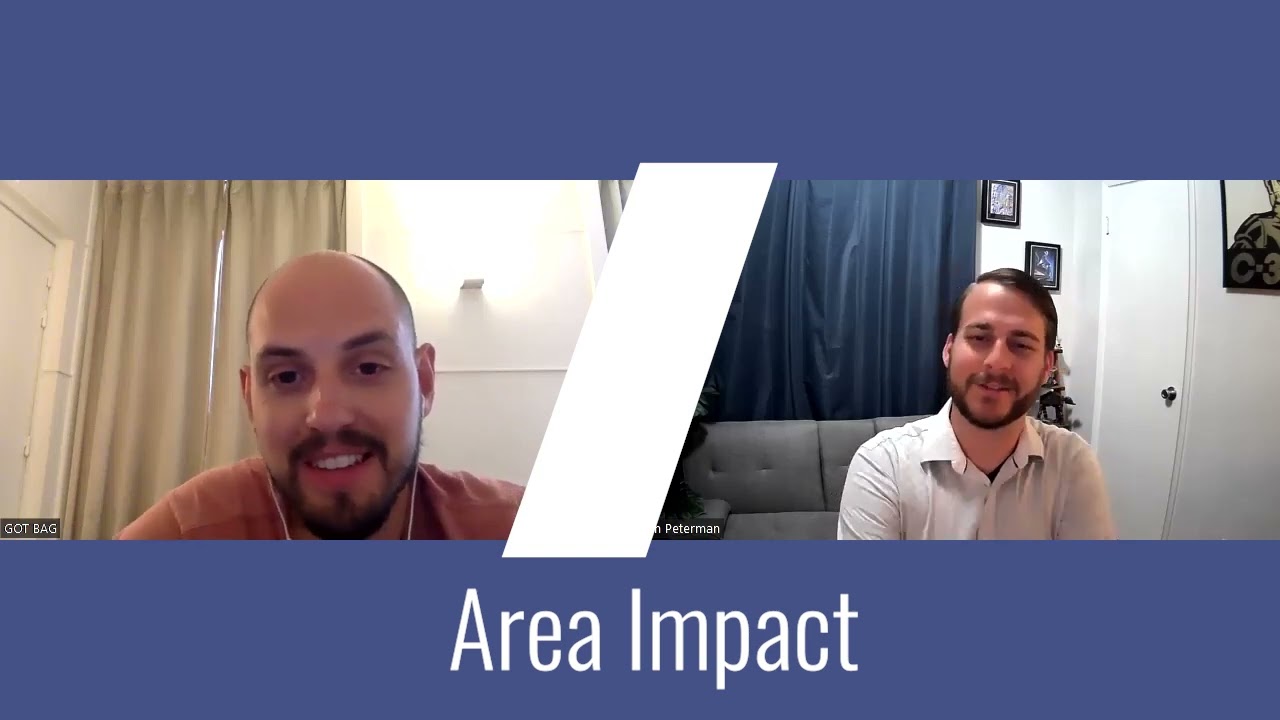
In this episode of Conscious Design, host Ian Peterman interviews Ben Mandos, co‑founder of GOT BAG, about the company’s mission to turn ocean‑borne plastic into high‑performance backpacks and other products. Mandos explains how his childhood connection to the sea and a shared passion with his co‑founder sparked the idea of creating the world’s first backpack made from recovered ocean plastic. After early pilots in the Mediterranean, the team shifted focus to Indonesia, establishing a network of about 2,500 Java‑based fishermen who collect plastic as by‑catch. They also work on land‑based interventions such as mangrove clean‑ups and community waste‑management stations to stop plastic from entering rivers. The interview delves into the technical challenges of recycling PET that has degraded in the marine environment. Only roughly 30 % of the collected material can be turned into high‑quality yarn; the remaining 70 % is diverted to thermal recycling in a cement plant for energy generation. Mandos describes the extensive sorting, cleaning, and quality‑control steps required to produce a waterproof, roll‑top backpack that is minimalist, modular (removable laptop sleeve), and suitable for work, travel, and outdoor activities. GOT BAG’s impact is quantified by the recovery of 400 tons of plastic in the previous year, and the company is now scaling its cleanup operations to other countries, expanding its product line with new materials, and internationalising sales across Europe and the United States. Mandos invites collaborators and customers to connect via LinkedIn, Instagram, or the company website.
Chapters
Hello and welcome to this episode of Conscious Design. I'm your host, Ian Peterman, and author of the book Conscious Design. And today I'm excited to have Ben Mandos, founder of GOT BAG. They make bags that are using recycled materials from the ocean. They've partnered with a huge network of fishermen to use recovered plastic that would normally get thrown out, which is great, a great idea for you guys, and really good to have you on the show.
Yeah, thanks so much.
Yeah, so first I'd love for you to share a little bit about the story of like how, how you got into deciding let's, let's pull some plastic from the ocean and make, make some bags and start addressing a A huge issue that we all are aware of pretty much at this point.
Yes, so I think with that, I have to start it right at the beginning. And the beginning is that my father used to pull me on a sailboat even before I could walk. So I have like a connection to sailing, to the ocean. And it's, yeah, it's just part of my upbringing and part of my childhood. It's really good memories I have and I combine with the ocean. So, and my co-founder, who I, he's a classmate of mine and he was a classmate of mine and we started the company together. And he also grew up close to the ocean in Tel Aviv. He started surfing at a really young age. So both of us founders had like, we're just this kind of connection to the ocean. So that's, I think it's important to mention because then we stayed in contact to the matter and to the ocean. We witnessed plastic pollution when we were traveling, when we were on the water, at the water. And at some point when— yeah, so the first idea actually was on a long car ride we had together to the Alps. And we were talking about all different matters in life and everything what's going on. And then it was not that we had like right away this idea, okay, let's start a company and let's produce backpacks made from ocean plastic. But it was more like that we said, okay, we wanted to do something together and we wanted to do something different and we wanted to to do something that's important for us. And then I think just a period started where we were talking about different ideas. And then at the end of this period and of this phase, we had the idea of setting up cleanup structures and creating the world's first backpack made from ocean plastic.
Amazing. That's so— it's so important. I think that there's, there's been a kind of like surfers and, and people that are on the ocean a lot have recognized how big, how big of a problem the plastic is because you, you're there, you see it every day. And more and more people are starting to figure that out. It's nice, nice to see the difference in knowledge. Um, but that's a huge, huge impact on, on you. Seeing— you see a problem, uh, as often as you probably did, it becomes much more— oh, something you're much more aware of. Uh, when you're— when you guys started, so obviously there's plastic everywhere, but you guys, you built a huge network, um, in Indonesia. How did that come about in deciding, like, what— is there more plastic there? Is there kind of— kind of how did you determine which, which area of of lots of plastic to start pulling from in order to be able to make a bag from it.
Yeah, so yeah, our first steps actually took place in the Mediterranean and Atlantic Ocean in France and in Spain. We became members of a network that was already starting to build a fishing for litter project, which is the term for that. basically fishermen getting plastic as bycatch and bringing it ashore instead of throwing it back into the ocean. And we were a part of that for a year or so. And we had our first test runs and our research and development phase was actually there. But then at some point we realized that the biggest impact that we can have is actually not there. It is at the epicenter of plastic pollution, which is in Asia. And then we start looking out, setting up a structure there. And Max joined the team, who was one of the first members of the team, and he went down to Indonesia. Again, he was there for a couple of years before that working on biogas projects and had a good network there already. And then we did set up the structures and what we learned from Europe, we started doing it there. And yeah, and we grew over the years. And now there's 2,500 fishermen involved in Java, Indonesia, in the center of Java. And yeah, these guys are pulling out plastic from the sea. And besides that, what we are currently focusing on is also building up structures on land to prevent plastic from entering the ocean. So we're cleaning also the mangrove forests, we're setting up waste management structures on land for people to bring their trash so that we can stop Yeah, the littering and the flow of ocean through the rivers into the ocean, actually. So that's what we're also doing. And that's becoming our mission in the moment also as well.
And is it— because you mentioned littering and the mangrove forests, but also the rivers. So is it you're trying to capture it at the— I'm guessing it probably just starts to pile into the river and then head towards the ocean. Is that like a pretty— the most plastic, is that like the best place to capture it, I guess?
Yeah, rivers are actually— so there's various studies. I mean, still a lot of the studies are quite young, and I think there's still a lot of work that needs to be done to be more sure of where like plastic is entering the ocean. I think it's really hard to measure plastic that's entering the ocean from coastlines. But nevertheless, what we can say with a lot of certainty by now is that there is a lot of plastic transported through rivers into the ocean. So what happens, for example, in Indonesia is that plastic is into coastal communities, for example, plastic is exported from Western countries into those countries. And then you have all this plastic there and you don't have any waste management whatsoever. So what started to happen, started happening is that all this plastic and all this trash would end up on landfills. So basically just big dump sites where people throw their trash. And then what's happening is when you have the rainy season and all of this plastic trash is swamped up and it's flowing into the rivers, and then the rivers actually transport all of this trash from the landfills into the ocean. And then you have it there, it stays in the coastal waters for a couple of months or years, and then at some point it sinks down or becomes part of the great garbage patches, or it travels from beach to beach, from mangrove to mangrove, but it stays in the ocean then. And that's what's happening actually.
That's great. That makes sense. It makes logical sense, but that is crazy how much gets put in a landfill where you think it's going to stay and then it It doesn't. It leaves and goes straight to the ocean. Uh, when you're— are you guys looking at different— like, that's a huge project to take under, right? Trying to clean up and capture, um, just in one, one small country. Is that— are you guys really focused on just that region for now? Is that, that really just— is it— is there more plastic just as a waste that gets thrown away there because of production and things like that? Is that kind of— Part of the reason why that area is so plentiful in plastic that you can use?
Yeah. So first part of your question, I think, yeah, we are focusing in the moment to expand our cleanups in Indonesia, but we also trying to— or starting in different countries as well and trying to do this, to set up the same kind of structures and same projects there. But yeah, of course, it's a huge problem and still also in Indonesia, it's a big problem. And what we can achieve is not to— I think there will not be the case that we will be the ones stopping all the pollution of the oceans. It's just that we thought, okay, we cannot look at it and do nothing and we just wanted to start. And I think that's what we're still doing up until this day because nobody, no single person, no company can end this problem by themselves. It's just us just doing something about it and trying to scale. And we have some success. I mean, last year we have recovered 400 tons of plastic from the sea. So that's something, a number I would never have imagined we'd be able to do that.
Yeah.
And yeah, we're still small, we're still young, we're still growing. And I think our impact can get bigger over the years, but it's really global and really international and a really big problem. that has to be tackled on various things and lawmaking on exports of trash to different countries. And yeah, then to your second part, I think, yeah, what is the problem there and why this country actually is drowning in trash plastic is that they don't have a waste management system in place. So basically, there's nobody to pick up the household trash. And it just stays there. to some degree. And then, as I said, it's ending up in the environment, it's ending up in the rivers, it's ending up in the ocean. And then, yeah, what I also already said is that there's exports still going into these countries. So up until today, on a global scale, it's only about 10% of plastic gets recycled, and all of the rest stays somewhere and needs to go somewhere. So then it goes somewhere, and that somewhere is then basically the environment most of the time. Um, and, um, yeah.
Right. Now let's talk about the bags you guys designed. I'm guessing you started off with just one bag, but now I see you guys have, have a few different bags here. You've expanded. You talk a little bit about your products and, and kind of the design thinking that goes into this and, and why this particular bag, because there's, there's millions of different bags you could make. Obviously, so what kind of lent itself into this particular bag and the bags you have now?
Yeah, so the first bag was our roll-top backpack, and the idea behind this bag was a bag actually for all your needs, so a bag for every day, and which is really variable, which you could use for work, but you can also use on the weekends, for traveling, for hiking, for all your daily needs basically. And then what we also wanted to do, us having like a water sport background, we wanted it to be waterproof. And so that's why there's like this roll-top top and the fabric is waterproof and the bag is sealed. So all the seams and everything is is sealed, so it's completely waterproof. It was important for us. And then, yeah, you have a laptop case in there, but it is removable. And as I said, because we wanted to have a bag you can ride your bike with to work, and then on the weekend when you don't need a laptop with you, you can remove the inner laptop pouch and pull it out, and then you can have more space in there and you can use it for for hiking, for traveling, for your weekend trip, whatever. So that was the first idea about the bag. And besides that, I think the design is really minimal. There's not a lot of fancy features or stuff. It's really just down to what you need. And I think it's our design philosophy or concept, which we want to have for all our products to be really danced down on what you really need on a product.
Yep. Awesome. And I'm curious, because you, you guys talked about the PET plastic, right? That's one of the most recyclable ones that you get. Did that help direct your design? Like, did you, did you look at the plastics that could be recycled first and then decide what you could make, or kind of how, how did that work?
Yeah. No, we knew that it is possible to recycle PET, and that is something that is around from, I think, started already in the '90s or something, that companies were using recycled PET bottles to make yarn from it, make products from it. But what we've done is actually then to create yarn which is recovered from the environment. That was new, and it's a much harder process to do because the PET bottles, the quality of the bottles gets worse over time when it's out there, when it's in an environment, when it's together with salt water, with the sun, everything. So the quality gets worse. So you have to— we need to find a way to use this type of materials anyway and to control the quality. And in the design process, it was actually Yeah, we knew that we would have like a fabric in the end, and we had like a target or a pretty precise vision of what the fabric would look like. And we knew like, okay, it's going to be a polyester fabric, and then we have a coating on it. So we knew to some degree how the fabric would look like. And then I think the design of the backpack in the first place was not like that we needed to look at a certain direction when it came to the design of the product because of the fabric. It just went together in a way. So all of the research and development phase was around 2 years. And so for the first product, and we were working simultaneously on Setting up the supply chain and trying to figure out a recycling process and the yarn manufacturing process. At the same time, we were working on the design of the backpack, actually.
Hey, it's Ian here. So glad you're enjoying this episode of Conscious Design. If you want the full scoop on Conscious Design, what it is, how we do it, how you can do it, then check out our book. We wrote it so creative entrepreneurs like you can code social and environmental responsibility right into your brand's DNA. You can download the first chapter for free. Link is in the description. Enjoy the rest of the episode. Don't forget to like, subscribe, and share. Got it. So you're kind of working in all 3 areas at the same, at the same time to make it happen. Now, on the— because you mentioned the material starts to degrade and things like that, how, how complicated of a process did you have to go through to figure out how to take— because I, I would imagine some of, some of the plants that you get is Fairly old that gets pulled up. And so is that— yeah, how—
No, yeah, absolutely. And so also what's important to mention is that we can't— it's impossible to use all of the materials that we get from the environment. So up until today, there's about 70% of the plastic that we can recover is not suitable for recycling anymore. And that's actually like the biggest problem we also have in a way, because we don't want to just focus on obviously just the materials that we can recycle, but we want to take care of all of it. So like have a really holistic impact on what we are doing down there. So what we are doing with the 70%, which we cannot recycle, is actually to use it for thermic recycling. So it's used for electricity in a big— in a cement factory, which we have a partnership with.
Okay.
They burn it for energy production, and they're doing that instead of using coal or other fossil fuel. And for us, by now, that's the best solution we can have for this type of materials. And it's important for me to mention that because it's always underestimated. especially like this multi-layer plastic, which you can find a lot when you have, for example, aluminium together with plastic for a candy bar or something. That's some stuff that's really hard to recycle. And then also with the PET, you cannot recycle it. So you have this non-recyclables, which are multi-layers, and then you have plastic, which is just— the quality is just too worse or gotten too worse over time, and you cannot recycle it. And so that's 70%, and it's important to mention because this portion is actually the biggest problem because the recyclable portion is, yeah, you can recycle it, you can reuse it, and it's fine and it gets back into the cycle. But non-recyclables are really a pain. And then, yeah, with the recyclables, it is still, I mean, there's, as I said, you have different things that are attached over time to the plastic, like you might have sand or dirt or stuff. So, and it's the most important steps is then to have a proper sorting process, where you have like different grades and different qualities. And then have a— and that's the most important and the most crucial step is the cleaning process and to really get the plastic into a shape where you can then use it again for recycling. And that was the most critical point in the research and development phase. And we worked together with partners on that and, and, and yeah, people who knew much more about the thing. And then at some point, we were able to achieve it. Yeah.
Awesome. Yeah, well, with that kind of stuff, you definitely need to bring in some experts to be able to work with that kind of stuff. It's definitely beyond I'll design for it, but not as far as all the chemical engineer things that need to happen to make sure it's recycled and usable. That I will let them do that. Well, that's amazing that you're able to do that. And I didn't realize it's such a low percentage of it can be used. Like, that's a huge amount 70% is not— it's over 2/3 is just not usable. But you found a way to have it get used, which is also important. Like, that's a huge thing. You're not just taking the 30% and then leaving the rest to sit there or do whatever. So you really created like a whole system for taking it all and dealing with it. At least.
At least it's the best solution for now. Yeah, so, um, yeah, in the end it's not ending up on a landfill again and then in the ocean again. Um, so that's, that's off right now. It's the best solution we can find. Yeah.
Right. Well, if a new, if a new solution comes along, you know, you can always, you can always pick that too. So, and that can be, but you have a solution which is better than none, and that's, that's, that is great to have.
Um, yes.
Is, is there anything else, you know, before we kind of wrap up? You guys are doing amazing work. It's, it's great. I hope you guys expand way beyond. Um, is there anything else you, you'd like to share, kind of your future plans, how you, how you want to grow this? And, and because you mentioned getting into new countries, there's lots of countries with beaches that we can we can clean up plastic on. So kind of what's that look like?
Yeah, I think, yeah, as I said, I think we are still at the beginning. I think we want to expand our cleanup activities to other countries. That's important for us. And then I think the second important thing is to try to use other plastic types and other materials which we have and create products from that. And we are working on that in the moment. So Amazing. Just expanding the product line and using other recyclable materials to design those products. That's what we are working on. And then, yeah, what we are also doing in the moment is internationalizing our sales activities. So going to other European countries. We started in the States with really great success and great response. And we're looking forward to do that. And I think That covers what we're trying to do in the next years, and that's a big, big task and a lot of work to do. So, yeah, looking forward, everybody's happy, everybody's excited, but it's still, yeah, still a big body of work for the next years.
Yeah, well, you did what, 400 tons of plastic last year? So there's going to be more, more and more. You get into more countries, you're going to have a lot to do. But it's great, somebody needs to start tackling this issue, which is great that you guys are taking this on and, and figuring out ways to use other plastic as well. I know that there's so much plastic that gets, gets put out there that it'd be great to capture and reuse. So, you know, where's the best place to, you know, if somebody wants to work with you or possibly collaborate on cleanup and pulling in these plastics or just buy a product, where's the best way for people to find and get ahold of you?
Yeah, I think me personally, you can find on LinkedIn and happy to connect all the time. We are on other social media, like our biggest platform is Instagram where you can find us. Or just shoot us a mail via our website and we're happy to connect, happy to help, and looking forward to do something together.
Fantastic. I'll make sure there'll be links in the description for everyone so they can get to those quickly. And yeah, I really appreciate you taking some time out of your day to talk about your— what you're doing. And yeah, thanks for your time.
Thank you so much.
More from Ian


You Didn't Know a Shampoo Could Do This #Shorts #shampoo #ecofriendly #haircare





The Biggest Misunderstanding About Bioplastics - Sustainable Materials Consultant Joanna Pool

A Polymer Scientist Explains the Truth About Bioplastics #podcast #sustainability #science



NASA is testing this on Mars… why not Earth? #Shorts #GreenTech #NASA #science