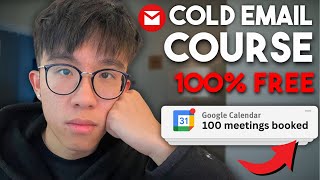
Jimmy Fung walks through cold email from start to finish: building sender reputation with proper domain setup, finding and verifying the right leads, writing emails that convert, and scaling with automation tools like SmartLead and Instantly. The course covers subject lines, personalization, follow-up sequences, and how to track what works through A/B testing.
So how do you actually book sales calls? By using cold emails. And in today's video, I'll be walking you through everything I know about how to send effective cold emails. That actually gets you good results after sending well over a million cold emails for myself. Awesome. So in today's video, this will be a full cold email course where you will learn everything you need to know. By the end of this YouTube video, you will be able to go out and build your own cold email infrastructure. Build out the entire cold email system that I'm sharing with you today and you will be able to successfully built book three to five sales calls every single day using cold emails. Because I personally I see the exact same cold email videos as you do. I've made a lot of cold email videos in the past and my goal of this video is to make it the best one on YouTube. Right? And the goal is so you don't need to go out pay thousands of dollars for a course, talk about cold emails. Because I'll be giving to you everything I know completely for free. Right? I sent over 1 million cold emails, booked thousands of sales calls, and the vast majority of those sales calls came directly from cold emails. So this video will be presented by me, Jimmy Fung. I'm the founder of Inbox IO and Salesway IO. And here are the six things that we will be covering in today's video. The first is what is a cold email and why do you need to be using cold emails to actually book sales calls? The second is how do you set up the right cold email infrastructure? Number three is how to define your ICP number. Number four is how to write cold emails that actually get responses. Number five is how to use VSLs so video sales letters to warm up and then nurture cold leads from cold emails. And number six is how do you actually send cold emails at scale and scale the infrastructure so that you can make a lot of money with their business all through cold emails. So let's start with this. Why should you listen to me? Because this is a picture of me sitting in Greece. But for me, I'm Jimmy Fung and I've worked with over 50 plus clients at this point over the last two years for my own lead generation agency. So I run a lead generation agency that helps B2B businesses Book sales calls using cold emails. And I've worked in industries such as recruitment agencies, marketing agencies, software companies, PR firms, logistic companies, law firms and driving schools. So you know, I've had a lot of success booking cold emails in just a Bunch of different industries and different niches. And, and I'm very confident that what I'm sharing with you today will apply for you as well. Because the process of using cold emails to generate sales calls not only works, but it works extremely well. And it works so well that by using cold emails, I was able to help my very first client from our own lead generation agency land a sales call with VMware, which is a publicly listed billion dollar tech company. Right. Because using code emails, you're able to reach out to quite literally anyone, including people at these billion dollar companies. So what I'm able to share with you today, it just works. It just does. And if you want even more proof that what I'm sharing with you today works, if you stick to the end of this video, I include proof of other people who are using what I'm sharing with you today talk about the cold email stuff. And they're getting a ton of replies, booking sales calls and just signing clients and making money all through again, using cold emails. So the very first thing is what is actually a cold email. You have to understand that a cold email is essentially an email that you send to someone who you don't know with the goal of starting a business relationship. And the most important thing to remember here is that this person hasn't interacted with you before, meaning they don't know who you are, they don't know anything about your business or your company, and they don't know anything about the product or the service that you sell. So when you think about a cold email, the best way to think about it is think about it like you're just kind of introducing yourself to a stranger at a party, except this is happening completely over email and inside of their email inbox. So before we move forward, I first want to make a massive point talking about what are the differences between sending cold emails versus sending spam? Because a lot of people kind of confuse the two. A lot of people really do confuse the two. And I get a ton of comments every single day talk about this. But a cold email is an email where you've done research on the person that you're emailing and your message is tailored specifically to that person. You're offering something of value and it should be something that is relevant to their business. Meanwhile, a spam email is literally an email that is sent to anyone and everyone. You probably received a bunch of these spam emails. Talk about like a Nigerian prince or something like that. And essentially people are blasting these emails just to every single person under the sun without any personalization or care for, or whether that person actually needs what that spammer is offering. It's a mass blasted email that is just very irrelevant. Because the goal of a cold email is to start a conversation. That's the ultimate purpose of a cold email. You're not trying to sell your product or sell your service right away. Your only goal is to get the person that you emailed to reply back to your email and start engaging with you. And the best way to think about it is think of it as opening a door to a potential relationship. So instead of trying to immediately go for the sale of or close a deal, what you're doing is you're slowly warming up a lead and creating an opportunity for them to learn more about what you actually do and what you actually have for sale. And this might eventually lead to a sales call, a product demo, or even a closed deal. But it all starts with that initial conversation. Or in this case, it all starts with that initial email that you sent out. So again, this is what a cold email isn't. A cold email isn't a newsletter. Right? Because a cold email is a one to one message. The person who's sending or who's receiving a cold email should feel like it was sent specifically to them. It's not a one to many type of message like it is with a newsletter. You're addressing the recipient directly. The cold email is also not a pitch because you're not giving them the full sales pitch in the very first cold email. Instead, you're offering a solution to a problem that they may or may not have inside of their business. And you're seeing if they're interested in learning more. So why should you actually do cold emails for your business? Why do you need to use cold emails to book sales calls for your business? So now you know what a cold email is. Let's actually talk about why you should care about using cold emails as part of your strategy to book sales calls. There's a couple of different reasons. The biggest one is a cold email is direct because a cold email allows you to reach decision makers directly. So imagine trying to call a CEO of a large company like my client who was able to sign VMware. Imagine calling the director of sales at VMware. You're probably gonna get stopped with an assistant or a gatekeeper, or like a secretary or a receptionist, someone like that. But when you send a cold email, it goes straight to that person's inbox. So what this means is a cold email is a direct line of communication with potential clients and the people you want to sell. So as an example, let's say you run a lead generation agency. I run a lead generation agency. And let's say you want to help software companies grow by offering your lead generation services with a cold email. You can send an email directly to the CEO or the head of growth at that software company, pitching your expertise and helping similar companies get more leads and get more demo calls, get more sales calls. So instead of trying to get past assistance or receptionist or any of those things, you're able to schedule a meeting directly with that person because you're emailing them directly. The next major reason why you need to be using cold emails is the factor of scalability. Because cold emails actually allow you to reach a large number of prospects without spending a lot of money or a lot of time. Because you can actually automate the entire cold email sending process, which will allow you to send hundreds or even thousands of cold emails every single day using automation tools such as SmartLead, AI or instantly AI. We'll talk a little bit more about that as we go further down this video. The next point is cold emails is extremely targeted because cold emails gives you the power to be hyper targeted. So instead of casting a wide net and just hoping for the best like you would be if you are running paid ads like Facebook ads or YouTube ads or Google Ads, with a cold email you can research specific businesses and research specific decision makers who are likely to benefit from your service. So as an example, let's say you specialize in helping ecommerce companies increase their sales through through, you know, Klaviyo email marketing, right? Like those email marketing that you might get from like Nike or Lululemon, you can actually use cold emails to target specific e commerce companies that have over 50 employees that are based in the US and that use Spotify as the e commerce platform. And what this will do is this will allow you to focus on people who are most likely to actually need your service rather than just wasting your time reaching out to companies that wouldn't be a good fit or or who wouldn't even be interested at all. The next point as to why you need to be using cold emails is it's extremely cost effective because compared to other marketing channels, cold emails is incredibly cost effective because you don't need to spend thousands of dollars like you would need to if you are running paid ads or sponsorships or attending conferences. Once you set up your cold email infrastructure, which we'll talk more about later in this video, the Cost is relatively low, right? And here's kind of like a brief little breakdown of, of the cost where every single domain that you purchase, it might cost you 10 to $15 a year. Every single individual email account will cost you somewhere between six and ten dollars per month. And the automation tool that will allow you to just send out these emails without you having to manually write them out, it'll cost you somewhere between 50 and $100, depending on the tool that you're using. So in summary, for less than $500 a month, you'd be able to send thousands of cold emails. Now, in contrast, if you were running paid ads, you would easily have to spend thousands of dollars with no guaranteed results. The next point with cold emails is it's super, super measurable. So one of the largest advantages of cold emails is that it's super measurable. You can track literally every single part of your cold email funnel. You can track open rates, you can track reply rates, you can track bounce rates. And that will allow you to make informed decisions and optimize your cold email campaigns over time. For example, if one subject line is performing better than another, you know right away, if one cold email template is getting you way more responses and positive interest, then you can lean more into that one. So for example, if you sen 1,000 emails and you see a 50% open rate and a 5% reply rate, that tells you that your subject line is working well, since you know 50% of people that you emailed actually open the email. But maybe your body copy needs to get tweaked a little bit more just to get a little bit more replies. And what you can do is because you could track this, you're able to adjust the email, copy the content inside your cold email, send it again, and maybe now you see a boost and you see a 7% reply rate. That's progress and that could help you keep on improving. The next point is cold emails. It helps you build lasting long term relationships. Because cold emails aren't just for short term gains. Because while many of your cold emails might be geared with the goal of booking sales calls, a lot of people that you email might not be ready to engage and buy immediately. However, by starting a conversation and just keeping in touch, you can build long term relationships. So as an example, let's say you cold email the founder of a marketing agency, or while they might not need your services right now, they're going to be nurtured through your emails and a few months down the line, when they're ready to work with you or buy what you have for sale, they might reach out to you because they'll remember that you reached out a few months earlier. Right? So cold emails is kind of like planting seeds. Not every single cold email will result in an immediate response or a reply, but the ones that can do lead to long term lasting client relationships. And, and finally, I think this is the biggest reason why you would want to use cold emails is rejections are just way easier to handle because unlike cold calling where you have to deal with a direct rejection over the phone because you're calling people with a cold email, it allows for a softer approach because if someone's not interested, they'll just simply ignore or maybe delete your email. There's no awkward conversations, no wasted time on long phone calls. So in a summary for beginners, cold emails is a very low barrier with a high reward strategy. You don't need to have a massive budget and you don't need to have fancy marketing skills. You just need the ability to send a good message. So the very first thing in order to actually set up your cold email campaigns is you need to set up the right infrastructure. And I like to think about this as the foundations. So why is that infrastructure so important? Because before we talk about sending cold emails, you need to understand why the infrastructure matters. Because if you send cold emails from a brand new email account without the proper setup, while using email providers like Google or Outlook, these algorithms will flag your emails as spam because they will assume that you're sending unsolicited mass spam emails. So by setting up a proper infrastructure, it will ensure that your emails get delivered to the inbox, so it won't be in the spam or junk folder. It'll be seen as trustworthy by email providers like Google and Outlook. And, and you will maintain a good sending reputation so that you can continue to send cold emails over time. So let's actually break this down step by step. So the very first step you need to take is set up your email domains. Because an email domain is simply part of your email address that will come after the symbol. If you look at your email account after the symbol, that is what's known as your sender domain. For example, with the email johneadspro.com the domain is leadspro.com and here's why and how to set up the right domain for your cold email campaign. So the very first thing you have to understand, and this is super important, is you should never use your main domain. You should never use your main business domain like your business.com, whatever, is connected to your main website to send cold emails. Because if too many of your emails bounces or people mark them as spam, what that will do is it will damage your entire domain's reputation. So what this will mean is your regular emails, like sending customer service emails or sending invoices or contracts and agreements. It will also start lining in spam. So instead what you need to do is you need to create a secondary domain specifically for cold emailing. Or another word to explain. This would be a burner domain. So a burner domain is a variation of your main domain used solely for cold email purposes. It will look professional, but it's separate from your main business domain. So. So if anything goes wrong, your main domain will still be safe. So how do you actually set up secondary domains or burner domains? The first step is to choose and buy your domains. So buy domains that look similar to your main domain. So for example, if your main domain for Your website is leadspro.com, your secondary domains could be some of these examples where I'm jiggling around with the letters, I'm adding an extra word, I'm removing an E, I'm adding an A. All of these different things is how you set up burner domains. So where can you actually buy burner domains or secondary domains? Well, you can buy domains from regular domain registers. So a place that sells domains. So for example, what I like to use is pork button. You could use namecheap, you could use GoDaddy or Squarespace domains. You could just type out your domain, see if it's available, and purchase that burner or secondary domain. So how many domains should you actually buy? Well, what I would do is I would Recommend Starting with 3 to 5 burner domains to spread your email sending across multiple domains. Because you can't just buy one domain and rip 100 cold emails right off of that one domain. Because that's exactly how you align in spam. You need to split up the total sending across multiple domains and multiple email accounts. And this will help you stay under the email provider's radars and lowers the risk of your stuff getting to spam. So that means that people actually see your actual cold email message. So again, that's super, super important. Make sure you're buying multiple burner domains. Now avoid these common mistakes when it comes to buying domains. Make sure you don't use any numbers or use any dashes or other symbols, right? So don't make your burner domain leads 1, 2, 3,.com or leads-pro.com because it looks super, super spammy and it just doesn't look that professional. Right? And make sure you stick to dot com domains. So don't buy domains that end in net or dot org or CA or uk, whatever the case is, or even a weird extension like XYZ.com because they're just not as trusted in terms of domain providers by email providers. So make sure you stick with dot com. So the next step is setting up your email accounts. So once you bought your secondary domains or your burner domains, what you need to do next is you need to buy multiple email accounts to send your cold emails from. So think of each email account as a separate salesperson, like an individual salesperson who will be reaching out to your prospects. So why should you set up multiple email accounts? So again, it all comes down to safe sending practices. Because if you only use one email account to send hundreds of emails per day, email providers will think that you're just spamming people because it's just very unnatural sending behavior. But by splitting up your email accounts across multiple accounts, you can send a high number of volume without triggering spam filters. So how do you actually set up your email accounts? So the first step is to use a business email provider. So you need to create multiple business email accounts with your new domains that you just bought. So you can do this with Microsoft Outlook or Google Workspace, right? Microsoft Outlook, pretty straightforward. Google Workspace or they rebranded it to Squarespace Workspace or no Squarespace domains connected to Google Workspace. That's the paid business version of a Gmail account. So I personally right now, for all of my clients, for my own lead generation agency, I use both Outlook and Google. Both are really, really well. And I would recommend splitting your total volume across both Outlook and Google Workspace. So how many email accounts should you actually buy per each individual domain? So for each domain, I would recommend creating three to five email accounts to spread the load of your email. So for example, if your domain is leadspro.com you can set up three email accounts that might be johneadspro.com, helloadspro.com and contact leedspro.com or what I do that's even more effective is just using your name. So for example, mine would be jimadspro.com, jimmyadspro.com and jimmy fungspro.com so how many emails should you send per one individual email count? So you can actually safely send about 25 to 35 cold emails, but per day from each email account without risking Spam filters. So for example, if you have five email accounts on three separate domains, what that means is you could safely send 150 cold emails per day per individual domain, right? So 30 emails per one email account and you have five of them for each domain, which will mean if you have three domains, it will lead to 450 cold emails per day if you use all of the three domains that you set up. So why should you not use a personalized email? So never ever use a personal email or generic free email service like Gmail, Yahoo or Hotmail. Because sending cold emails from these free services really looks unprofessional and you're just not going to see any results. So after you set up your domains and your email accounts, your very next step is to warm up your email accounts. So once you set up your email accounts, you can't just start blasting cold emails right away because if you do, your cold emails will all land in spam. Because email providers like Gmail or Outlook, they will see that your accounts are suddenly sending out a lot of emails and just assume that you're spamming. So you need to use a process called warming up. And what that means is warming up will let you gradually increase the number of emails that you send from each account over time. So that cold email, so that email providers just trust your accounts and don't flag your emails as spam. So how do you actually warm up your email accounts? So the first step is to use a warm up tool. So instead of manually sending cold emails to warm up your account, use a tool that automates the warm up process. Use tools like SmartLead, AI and instantly AI. I personally use Smart Lead AI at my own lead generation agency for all of my clients. And these tools will send small amount of emails from your account and kind of just mimic real life conversations by sending replies to Usually this will lead to building a positive sending reputation. So you want to warm up your accounts for 14 days. So during this 14 day period, you won't be sending any actual cold emails. You're just letting the emails warm up using these softwares that will allow you to send low volumes of emails to make your accounts just look legitimate. And the next thing is you want to gradually increase the sending volume. So even after the 14 day warm up period, what you need to be doing is you need to be slowly sending cold emails. And here's how you might want to ramp up your sending volume. So on week one, each email account for the first seven days, you might only want to send five to 10 cold emails per day. And week two, that might be 15 to 20 cold emails per day. And in week three, you could send it at the max volume, which is 30 to 35 cold emails per day per individual account. So this is important because the goal is to build a reputation for each individual email account. Because if you try to send too many emails too soon, email providers will flag your account as suspicious and your emails will end up in spam. So in this picture, like the spam in the Gmail, which I'm sure everyone here, if you're watching this video, you've probably seen it yourself, that's where your emails will go if you don't do this process correctly, meaning no one will see your actual cold emails and you're just not going to see any results. So how do you actually improve your email deliverability? Because email deliverability will dictate the whether you land in the inbox or the spam folder. So email deliverability refers to how likely your emails are to land in the recipient's inbox rather than the spam folder. So good deliverability means more people will actually see your emails. So there are a couple of steps that you want to take in order to improve email deliverability. The first thing is set up your authentication as you are setting up your domains, so setting up spf, dkim and dmarc. So these are technical settings that will authenticate your emails, showing email providers that your emails are legitimate and not spam. So again, you need to make sure you're setting up your spf, your dkim and your DMARC records. And you can actually use tools like mxtoolbox.com to help you set up these records correctly for your own email domains. And because most domain registrars like Porkmin or Namecheap actually create guides that will teach you how to set up all of these records. So make sure you go and read that up and set it up the right way. And the second point is make sure you're keeping your bounce rates low. So an email bounce will happen when you send an email to an address that just simply doesn't exist. So if you write the wrong email address, you spell it wrong or something, that email obviously doesn't exist, right? And if you send to that email account, it will lead to a bounce and a high bounce rate. The higher the bounce rate, the more likely your emails will go to spam. So use email verification tools like Million Verifier or Neverbounce to to clean your leads list and remove invalid emails. And finally, the most Important part is to make sure you're using spin tax. So spin taxing is a strategy that will make each email you send unique by switching up the specific words or phrases that you use, which will lead to preventing spam filters from detecting that your emails are just copy and paste messages. Right. So here's an example of how you want to set that up, where rather than saying, hey, John, I say hi, hello, and John. Right? So even each email, if I send three emails, one of them will say hi, the next one will say hey, and the third one will say hello. So overall, what are the best practices for maintaining email deliverability? The first is make sure you warm up your email accounts before sending cold emails. The second is send a mix of cold emails and real conversations via tools that will warm up your email accounts. The third one is keep your bounce rates below 3%. And finally, make sure you use spin tags to vary up your email so they don't just look like copy and paste spam. So, in conclusion, why is setting up your cold email infrastructure the right way? Why is this important? Because setting up your infrastructure properly is kind of like laying the foundation to your house. You just can't skip these steps even if you want to, because if you rush it, all of your emails will go straight to spam, and your entire cold email campaign will fail before it even gets started. But if you follow these steps correctly and you do it carefully, where you buy, instead of multiple secondary domains, you. You create several email accounts per domain. You warm up those accounts for at least 14 days, and you set up your records like SPF, DKIM, and DMARC. Once all of these things are set up, you'll be ready to start the next step, which is building the leads list and sending out cold emails with confidence, knowing that the emails that you send will actually make it inside your recipient's inbox folder. So your very next step is to define your ideal customer profile. Because before you start building your leads list, you need to know exactly who you're targeting. And this is called your ideal customer profile, or icp, because the more specific you are with your icp, the easier it will be to find the right leads and create emails that just resonate with them and are just super relevant. So what is an icp? Well, your ICP is a detailed description of the type of company and the key people within that company that are most likely to benefit from your service or product that you sell. So think of it as a blueprint of. Of your perfect client. So why do you need an icp. Because without a clear icp, you end up targeting too broad of an audience, leading to poor response rates, wasted time, and just a ton of frustration. But with a clear icp, your cold emails will be highly targeted, they'll be very relevant, they'll be personalized, which is the key to getting responses. So how do you actually define your icp? So let's actually break it down with some simple questions that you want to have answered about your icp. So their first question is what industry or niche are they in? So you need to figure out what industry and overall niche they're in in order to answer this question, right? Do you offer services for SaaS companies, software as a service companies, right? Is that your icp? Are you targeting E commerce stores or are your clients mainly B2B companies or are they B2C? Those are some basic questions. The next question is who are the decision makers? Is it the CEO? Is it a cmo? Is it the VP of sales? And the third is what size companies are you targeting? Are you targeting enterprise level companies like VMware, like really large billion dollar companies that are publicly listed? Are you targeting medium sized companies or kind of startups and smaller companies, or even like solopreneurs type of companies? You need to understand that the next question is what problems do these people face? What problems do these companies face? You need to identify main pain points that your icp, your ideal customer, thinks that your service will solve. So for example, if you're selling lead generation services, you have to realize that many companies struggle to consistently generate leads. And if you offer lead generation services, that's a key pain point that you can target. Meanwhile, if you're working with E commerce businesses and you realize that the number one pain point is customer retention and keeping customers engaged, you can offer email marketing services to solve that problem. And finally, the fifth thing you have to understand is what languages or what jargons or kind of key phrases that your industry and your niche uses. Because every single industry has its own specific language or jargon. So for example, if you're targeting software companies, you might use the term mrr, which stands for monthly recurring revenue. Or you might use the term churn rate or demo calls versus if you're reaching out to marketing agencies, they wouldn't call it demo calls, they might call it sales calls, right? So that's a little bit of a difference that you just have to understand. So as an example of a detailed icp, let's say you run a lead generation agency that works as software companies to Help them bookmark sales costs. Here's what a clear ICP might look like. So the niche is SaaS companies job titles is the CEO, founder, head of growth and the VP sales. Company size 20 to 200 employees revenue 1 mil to 20 mil annual revenue. And the key pinpoints is, is they're struggling to generate leads or book sales costs and they're looking to grow the customer base. And the key phrases, the keywords and the jargon would be mrr, churn rate, customer acquisition cost or sales pipeline. So that's how you want to build your detailed icp. The next step is collecting leads or building your leads list. So now that you have a clear icp, it's time to start collecting the actual leads. So the names, the email addresses, the contact information of the decision makers that you'll be sending cold emails to, and this is the core of your leads list. So it's super, super important that you build a good leads list because a list is kind of like the fuel for your cold email campaigns. If you have a low quality or just the wrong leads, your campaigns just won't take off, you won't see any results. But if your leads are well targeted, they're relevant to your offer, then you will see much better engagement, you see much higher reply rates, and most importantly, you will book a ton of sales costs. Because building a good leads list means finding people who are decision makers at companies that could benefit from your product or service. They will match the exact type of client that you want to work with and they will have a high probability of meeting what you're offering right now or in the near future. They'll just need what you have for sale. So let's actually break this down into a series of actionable tasks to help you build a targeted, high quality leads list. So the first thing is where do you actually find leads? Well there are several ways to find leads and it all starts with using lead databases, which are just the best for beginners. And lead databases will allow you to search for companies and decision makers based on specific filters like the industry, the company size and job titles. And a really great tool, a really great database that I recommend you use is Apollo I.O. because this is one of the best lead databases available. You can search for specific companies, decision makers and filtered by industry revenue, company size and more. And you could get email addresses directly from Apollo. So when you use Apollo, all you have to do is set up a free account, log in and you will see kind of like your screen looking something like this on the Left side over here is the filters that you just want to set up right, and you want to input whatever you determined from your icp. And on the right side over here, it'll spit out a giant list of individual contacts and at these companies where you could pull their email addresses for them. And you obviously want to export the list. So you could use a tool like leadsmagically.com to export your list for much cheaper than what you will need to pay Apollo. So you don't need to pay the $99 a month for Apollo IO. All you need is a free Apollo account. And to use these tools like leadsmagically.com to scrape that entire list. A more advanced strategy is using something like LinkedIn Sales Navigator, which, which is very similar to Apollo, but I find the UI to be a little bit less user friendly and a little bit more advanced if you know how to DO Boolean searches. LinkedIn Sales Navigator is a really good tool and you could use that to build your leads list. And a really advanced method which I'm using for some of my clients is using web scraping tools. And again, this is really, really more advanced because you need to build custom stuff and stuff like this. But if you want to scale up quickly, using web scraping tools can help you pull leads lists from databases or different websites. So you could use tools like, like Phantom Busters, which will automate the LinkedIn scraping to collect leads information or set up and create scraper APIs that will allow you to extract data from websites and export it into a CSV file. So after you build your leads list, it's going to be a giant CSV file or a Google Sheets file or Microsoft Excel file. It's very important that you verify your leads list because once you build your leads list, you need to make sure that your email addresses are valid because again, when you we talked about this earlier. If you're sending emails to the wrong email addresses or ones that just simply don't exist, those emails will bounce and it will damage your sender reputation, which will cause all the rest of your cold emails just land in spam. So how do you verify your leads list? Use a tool like Million Verifier, which will verify your email addresses in bulk. It's super, super important to do this because email providers will track your bounce rates, which is the percentage of emails that you send to that just bounce back because the address is just simply invalid or just doesn't exist. And if your bounce rate is higher than 3%, it's a massive red flag. To email providers and it will tell them that you're just sending a bunch of spam, right? You're not doing your research, you're just blasting emails into the unknown. And all of your emails will start landing in the spam folder. So what you could also do is after you verify your leads list and you have your leads list, you can actually segment your leads list. Because once you have a verified list of leads, and it's important to segment your list based on different criteria such as industry, company size, or even specific pain points. And by segmenting your list, this will help you send more personalized and relevant cold emails, which will 100% lead to much higher response rates. So segmenting is pretty important because you're not going to be sending generic emails to just everybody at that company. If you're sending out to the CEO, you're going to have a specific message to the CEO of a company. If you're sending to the BP of sales, you're going to, you might have a slightly different variation of your overall cold email message. And by segmenting your list, you will be able to separate your Leads list from CEOs and the VP of Sales, meaning your emails as a whole will be just be way more relevant to the individual people that you're sending cold emails to. So in conclusion, why is building a high quality leads list, why is that critical? Why do you need to do that? So the quality of your leads list is quite literally everything. That's kind of what one of the largest lessons that I've taken away after sending well over a million cold emails. Because if you build a targeted relevant leads list that's clear on your icp, your cold emails will just resonate really, really well with the recipients and you get more replies and you will book just way more sales calls. But by skipping this step or rushing through it and you build a poor quality leads list, it's going to be, you're just going to be wasting your effort and wasting your time and you just get next to no results. So to recap, make sure that you define your ICP. Make sure you use tools like Apollo YO or LinkedIn, Sales Navigator and scraping tools to collect your leads. Make sure you're verifying all of your email addresses using a tool like Million Verifier and make sure that you're segmenting your leads list to send more personalized relevant emails. And once you built a solid leads list, you'd be ready to start writing and sending cold emails that will actually reach the right people and just get you More responses. So your next step is writing cold emails that actually get responses. Because the email itself is pretty obviously pretty important, right? It's the first impression that someone will have of you and your business. And a good cold email, again isn't about selling right off the bat. It's about starting a conversation, getting someone to engage in conversation. You're offering value and you're building trust. That's what a good cold email it's all about. So there are five key components to a good cold email. And every successful cold email is built off of these five components. And these ensure that your message is both clear and it's engaging. So let's actually break them down. The first is the subject line. The second is your opening line. The third is the offer slash, your value proposition. So kind of what you do, the number four is the proof or case studies or guarantees if you have available. And the fifth is your call to action. So the very first thing is your subject line. So the subject line is arguably the most important part of your cold emails. Because if the subject line just doesn't grab your prospect's attention, then they just simply won't open your email and it won't matter how great the rest of your message actually is. So here's some tips for creating a great subject line. Make sure you keep it short. So aim for three to six words because most people check the emails on mobile devices, so on their phone, on a tablet, whatever the case is where long subject lines will get cut off, make sure you're being specific. So use their company name, mention their own personal name, or mention a problem that you can help solve or ask a relevant question. The third is make sure you're sparking curiosity. So the goal is to make someone who sees your subject line curious enough to want to open the email right. Again, there's an art where you don't want to reveal too much, but hint at what you're talking about. So here's some examples of effective subject lines. Quick question about company names growth first name here's how we help client name Looking to solve a specific client problem at company name increasing company name sales by 20% in 90 days. So do you see how all of these are very short? Two of them are questions, but the goal of it is it sparks curiosity where you're not giving away telling people right off the bat exactly what you do, but you're just opening up that conversation. So each of these subject lines create intrigue. It's relevant and it prompts the recipient to click into the Email and see what you're actually saying inside. Number two is the opening line or the personalization. So after the subject line, the first line of your email is what hooks the reader. Because personalization, or in this case, relevancy, is the key. It shows that you're not sending the same generic email to just every single person and, and you've actually done your homework on their company. So here's some best practices. The first is always use their name. Always start with a hey first name or high first name. And adding their name adds a level of personal touch and it makes your emails just feel way less like spam. The second point is mention something specific about their company or why you're reaching out. So personalizing the opening with something that's relevant to the business or a reason why you're reaching out will help build rapport and make your emails stand out. So here's an example of a personalized opening line. Hey Jimmy, I saw you the founder at Salesway, so figured I'd reach out. So in this example, you're explaining why you're reaching out, which kind of just breaks the ice and also shows that you've done a tiny bit of research. The next point is where you offer value. So kind of talk about the offer or your value proposition. So now that you hook someone in with the intro line, this is the part of the email where you actually explain what you do and how it could benefit them. So what is a value proposition? Well, a value proposition is a clear, concise statement about how you can solve a problem or deliver a benefit to the recipient's business. It should focus on what's in it for them and it shouldn't talk too much about you. So how do you actually write an effective value proposition? The very first point is focus on the result. Because the most important thing is how the product or service provides will benefit their business. Make sure you're specific. So avoid using vague promises like we will help you grow, we will help you make more money. Those are vague promises, but instead make sure you're clear about the specific result you can deliver with specific numbers and timelines. And again. Right. The third point, which kind of piggybacks off the second point is use numbers whenever possible. So metrics like a 20% increase in leads or a 30% higher conversion will make your offer more concrete and, and just way more believable. So examples of a really good value proposition is saying something like, we specialize in helping SaaS companies increase their monthly recurring revenue, so MRR by 20% in 90 days through our targeted outbound lead generation. And here's why this example works. Well, the first is it's clear. So the recipients knows exactly what you do, which in this case is outbound lead generation. It's specific. So you've included a quantifiable result with numbers that, that will tell them what you do, which in this case is a 20% increase in MRR. And the third point is it's focused on them. So you are talking about how they will benefit, not about how great you are or your business or your company. So it's focused on the reader. The next point is the proof or case studies, which is optional but extremely powerful. So including some form of proof or a case study in your cold emails can massively increase your credibility because it shows the recipient that you've successfully helped businesses like theirs before, which will make them more likely to trust you. So what actually counts as proof? The first one will be case studies, it'd be testimonials and it'll be data or results. And if you don't have testimonials or case studies, use data talking about your own business or research that you found. So as an example, here is an example of using proof in a cold email. We recently worked with Meta and other SaaS. Companies like yours increased their MRR by 25% in just three months using the same strategy that I just outlined or I'm suggesting for your company. So the reason this works is because it's relevant, it's specific and it builds trust by name dropping people. Now the next point of your email is your call to action. So the call to action is the part of your email where you actually tell the recipient what you want them to do next. So in a cold email it's crucial that, that you're not too pushy. You're reaching out to a prospect, someone who doesn't know who you are. So asking for a 30 minute conversation just right off the bat might be just too much. You're putting too much on them. It's too big of an ask. So what actually makes a good call to action? Well, the three points, the first is make sure it's low commitment. So start small. Instead of immediately asking for a call, you can ask if they're interested in just learning more. Make sure it's clear and simple. So don't make the person think too hard about what to do next because if they need to think too hard, they're just simply ignore it inside their mind because they just don't know you. They don't have that level of trust to the point where they're down to spend five minutes thinking about what you're asking for. And the third is make sure it's value based. So make sure you're framing your call to action in a way that shows that that person will get something valuable in return. Again, what's in it for me? Right? That's the most important mindset to have when it comes to having writing cold emails. What's in it for that person? What's in it for me? It's not about what's in it for you, if that makes sense. Right. So here are some examples of good call to actions. The first is things like would it be cool if I sent over a quick video explaining how we did this? Or is this something you're interested in exploring? Or do you have 10 minutes this week to chat about how we can help you achieve this result? And obviously this last one is more of a hard call to action which I don't necessarily recommend to people upfront. So the reason why these call to actions work super well is because the first two, they're what's called a soft call to action. So you're not immediately asking for a big commitment like a 30 minute sales call and you're offering value. So you're focusing on the interest and offering something useful like a video or more specific information. And finally they're all easy to respond to. The prospect can literally reply back with a simple yes or, or sure or send me more information. So very simple. So how do we put in, so putting all of this together, how do we actually write a complete cold email? So now that you understand the key components of a cold email, let's actually put it all together in a complete example. So here's an example of a full cold email. You can actually pause the video right here. Screenshot this, take some notes, just read through this. I'm going to just chill for like three to five seconds so you can read through this. So here's why this cold email works. Again, think about the overall framework that we talked about. In this section of the video we have a subject line which is specific to their business and sparks curiosity. Quick question about company names growth. We have a good opening line that references something specific about their company, showing you done your homework. I saw you the title at Company Name so figured I'd reach out to you have a strong value proposition so it's very clear what you can do for them. So in this case it's increasing MRR by 20% in 90 days. You have proof, which is a case study that shows you've done this before for a similar company. And you have a call to action which is low commitment and offers value in return for the time. So you're offering to send them a quick video that explains how you did this for some other companies. So in a way this email, especially with the call to action, is written in a way where someone will kind of, especially if they have the problem, they kind of feel stupid saying no. They'll feel dumb not responding back to you because you're not coming off like you're selling something. You're telling someone, hey, we can help you solve this problem. We've done it for this other company, solve this exact same problem as you. And I have a quick resource or video that outlines exactly what we did to solve this problem. Do you want to see it? Someone who, who actually has that problem, It's a no brainer for them to be like, yeah, sure, I want to see what this looks like. So here are some more best practices for writing code emails. Again, keep it short and to the point. Don't write an essay, you're not writing a paragraph. Personalize wherever possible. So use their name, company names, be specific wherever you can. Make sure you focus on the problems and not your solution. So this is a massive mistake that a lot of people actually make. Again, what's in it for them? Keep that in mind. Make sure you're following up right. So don't be discouraged if you send a cold email and just don't receive any responses. You hear crickets. Because oftentimes, statistically speaking in a sales like there's actually a research done on this that you can find online. But the average sale, B2B sale, it takes five to seven touch points. And finally, make sure you're testing and iterating with your actual cold email copy. So don't be afraid to experiment with different subject lines or a different opening line or a different call to action. Again, with cold emails it's extremely measurable and extremely trackable. So track your open rates, track your reply rates and optimize your emails over time based on the data that you're getting now. In this section I want to talk more, a little bit more about follow up emails because most cold emails won't get a response on the first try, which is completely normal. And this is exactly why you need to be following up with prospects. So in fact by following up you will 100% get higher response rates than the first email because they kind of like, they're like bump messages or they remind the recipient of your offer without being too pushy. So again, here's an example of a follow up email. You can take a look again, I'm just going to pause for like three to five seconds so that you can actually take a look at this follow up email. So this follow up email is a simple reminder that and it just reiterates the value that you offer without being too aggressive. So in conclusion, here are the five things you need to keep in mind to write a cold email that just actually works. The first is a compelling subject line that gets them to number one, open the email. Number two is a personalized opening line that breaks the ice and shows you've done your research. The third is a clear value proposition that explains how you you can help them. The fourth is proof or case studies to build trust and credibility. And finally, the fifth is a soft call to action that's easy for them to respond to. And by following this step by step approach and tailoring each email that you write to be specific to the recipient, you will dramatically increase the chance of getting responses and booking sales calls. So step four is using what's called a video sales letter, or VSL for short, to warm up and nurture cold leads from cold emails. Because when it comes to cold emailing, the biggest challenge that you will face is your prospects. The people you're emailing have no prior knowledge of who you are or what you offer. They just haven't built enough trust with your business, which means they won't be comfortable responding back to your cold email right away. And again, this is where your video sales letter will play a crucial role. Because a VSL are super powerful because they will allow you to nurture cold leads. But by providing educational, valuable content in a format that's just easy to consume, they will bridge the gap between a cold lead who just received a reply for the very first time, received their email for the very first time, and a warm prospect who is ready to book a call and make a purchase with your product or service that you sell. So here's why a VSL is effective for cold email leads. Well, the first is a video sales letter which has the word video. It captures attention way better than text. A video is just way more engaging. Think about what you're watching right now. If I just sent you this entire doc, which is like 70 pages long, you're probably going to get really bored reading through it. But because I have this video, it's just way more engaging. The Second is a video just builds trust way faster because people can see and hear you. The third is a VSL educates the prospect. So depending on what you're talking about in video, if you're actually teaching people something of value, people are learning stuff. So in a way, you're educating the prospect on your specific service that you sell, why it's important to them, what solutions, what problems can your service solve, and why is it important that they look into this. The next one is a VSL can overcome objections because obviously in a cold email, because you're not writing a paragraph or essay, it could be hard to anticipate and address every single potential objection that a prospect might have. But with a vsl, you can actually talk about some of those objections because it is a video. The fifth is a VSL is extremely scalable because once you created a high quality vsl, you can kind of just use it in an evergreen way. You upload it onto YouTube and you can send that YouTube link to quite literally a million people if a million people want to see it. And finally, a VSL will set the stage for an actual sales call because by the time a prospect finishes watching your vsl, they should be already pre sold on the idea of working with you. And this will make your sales call way easier because prospects are already familiar with you, what you do, and they're just more likely to be interested in learning more or moving forward. So how do you actually create an effective VSL for cold leads? Well, a VSL is not a generic video. It's not some random video that you just put on YouTube and you call it a day. It should be a highly targeted piece of content designed to educate, engage and convert cold leads. That's your goal. You're not talking about random bs, you're not talking about the news. You're educating people, engaging people and converting people so that they are ready to buy your product or service. So here's kind of a step by step guide on how to create an effective VSL that just resonates with your audience. I have another video that I upload on my YouTube channel talking about VSLs, which goes into way more detail. I think it's like a 30 minute video. So I encourage you to watch that video after this video if this is something that you want to learn in more detail. So the very first thing is your introduction where you need to be capturing the attention early because the first 10 to 15 seconds of your VSL is critical. This is where you need to kind of just hook your audience and give them a reason to keep watching. Right? So you could do this by addressing specific pain points or challenges or even just hinting at how you can solve them. So as example example hook might be, are you struggling to consistently generate high quality leads for your business? Because in the next few minutes I'll be showing you how we help businesses just like yours increase their lead flow by 30% in 60 days. So with this hook, you're immediately addressing common pain points, which is obviously lead generation, and you're hinting at a solution. The next part is to identify the problem. So next, you obviously need to go way deeper into the specific problems that your prospects face. You want to make it clear that you understand the pain points and, and what they're struggling with. So as an example of a problem statement is that you could say something like, and if you're like most businesses, you're probably spending a ton of time right now spending a ton of money on lead generation with little to nothing to show for it. You're not alone, because many companies actually struggle with generating consistent leads and it's holding back the growth. So you're emphasizing a problem and you're making the prospect feel like they're not alone and that their challenges are valid and it's just super common. The next part is to actually introduce your solution. And obviously this should be relevant to what you're selling, the product or service that you're selling, and it's time to present your solution. So this is where you want to explain what you do and how your product or service can solve the problem that you outline. So here's an example. So at our company, we specialize in helping businesses just like yours build an automated lead generation system that could deliver a consistent flow of qualified leads so that you can stop chasing prospects and start focusing on closing deals. So again, make sure you're focused on the outcome of using your solution. So in this case, it's a consistent flow of qualified leads rather than just like the features we've all heard, always sell benefits and not features. And this is exactly what you want to be doing. The next part is to showcase results or case studies. So if you have case studies, this is the most powerful part of a vsl. If you don't have case studies, that's completely fine. Just make sure you go into a little bit more detail and actually teaching people the mechanism of what you do and why it's important for them. The next part is actually explaining how your process works. So this will be incredibly important, especially if you don't have case studies, so keep this part simple, but make it clear how your service or product delivers the promised result. So this is kind of like proof that what you do works. So again, right here's an example of it. You can say something like a process is straightforward. The very first step is we do XYZ. The second step was to do 1, 2, 3. The next step is ABC. So you're kind of just teaching people and dropping straight value and dropping insights into why your service is important and how someone could do it themselves. After that, you want to address common objections. So at this point in the vsl, by the time someone's got to this point, the viewer might have some questions, concerns, or even some objections. And anticipating these objections and and addressing them head on will help you alleviate their fears and move them one step closer to booking a sales call. So as an example of objection that you could address is and I know what you might be feeling right now, or I know what you might be thinking, this sounds great, but will it work for my business? That's exactly what this other company so case study thought before we helped them achieve this exact same result. So you're able to address that objection live. That will move them one step closer to a sales call. And finally, the final part of VSL is a strong call to action. So the last part of your VSL should include a clear and compelling call to action. You're telling the viewer exactly what to do next, whether that's booking a sales call, signing up for a demo, or filling out a form. So that's exactly what I do. And similar to the call to action from your cold email, make it simple. Don't make it like some super complex question where someone will need to spend 10 minutes thinking about whether they want to do it or not. Just make it a very simple yes or no. If you found value from this video and you want to work with us to implement the system, then the first link in the description is a link to set up a time where we'll chat about this in way more detail. That's an example of a really good call to action. So how do you actually use a VSL in your cold email campaigns? So now that you have your vsl, let's actually talk about how to effectively use it in your cold email campaigns to warm up cold leads and turn them into booked sales cost. So again, make sure you're including your VSL in your cold email. So remember how in the previous section when we talked about cold emails, I mentioned about sending A video that outlines how someone did something right. Whatever outcome that you are selling, that's your vsl. The video you send should be the video that walks through the specific process that you are selling. So again, a call to action in your previous email might be, I put together a short video that walks you through exactly how we do X, Y and Z. Would it be cool if I sent it over and obviously someone's going to reply, yes. And that's where you send the vsl. That's exactly what you want to be doing. And that's kind of the workflow because you can't be sending the video link upfront, otherwise your deliverability will be bad because you're sending links and it just looks really suspicious from the email provider's point of view. So once someone replies back and they're like, sure, Jimmy, I would love to see that video, you want to send them an email including a link to your vsl. So something like, hey John, here's the quick video that explains how we help businesses just like yours achieve the specific result. It's very important that you reiterate the specific result that you mentioned in your initial quote email because you'd be surprised. A lot of people probably forgot why they even replied to you in the first place. Maybe it's been a few days, maybe their life is very busy, whatever the case is. So you always want to reiterate what the overall outcome of the product or service that you're selling. And this is again, obviously after this you want to insert your VSL link and you just want to say something like, take a look. And if you think this could be helpful for your company, I'd be happy to jump on a quick call to walk you through how we can help you achieve a similar result. So that's your call to action, which will help you book sales calls. You can also include the VSL on your booking page. So. So that's kind of like your landing page where you'd be sending someone to book the actual sales call, your calendly link, whatever the case is. And you could also include a copy of this BSL on that page to increase the chance that someone will actually watch through this video and they'll jump onto the sales call just with a way better understanding as to who you are, what you sell, and how you can help them. So here's some best practices for a VSL in a cold email campaign. There are five key best practices. The first is keep it short. The second is make it personal. The third is use visuals to enhance your messages. So add images, stuff like that. Include a clear call to action. So always end your BSL with a clear call to action and track your engagement. Right? If you're uploading it to YouTube, you can see where most people drop off in your video and then with that data you go and make a new BSL that's just way better. If 95% of the viewers drop off at the two minute mark, maybe at the two minute mark you're seeing something that is just turning people off and go back and make the video, optimizing it and fixing that two minute mark. That's exactly what you want to do. So why are VSLs a complete game changer for Cold Emails? So I've never seen or heard of a single person talk about using VSLs for cold emails. A lot of people use VSLs for ads, but I've never seen someone talk about this for cold emails. And I don't want to say I invented it because but I'd say I kind of just discovered it and I tested it and it just worked extremely well for my own cold email campaigns. Because using a VSL and your own cold email campaigns can make a huge difference in converting cold leads into warm prospects. They will allow you to build trust, provide value, and explain your offer in a way that's just way more engaging and easy to understand. And with the right vsl, if you do this process correctly, you will be able to nurture leads and move them one step closer to booking a sales call and then one step closer towards collecting cash and getting the sale. And if you're serious about using cold emails to grow your business, then you need, I repeat, you need to incorporate a VSL into your strategy because it's just a must. So step five, which is how to send cold emails at scale. Because scaling your cold emails campaigns effectively means means being able to find a balance between sending enough emails to get results, but making sure that your emails are getting delivered and actually read by your prospects and with the ultimate goal of booking sales calls. And this step is where volume meets strategy. So why is it important that you need to send a lot of volume? Because when it comes to cold email outreach, the phrase volume negates slug is essential to remember because sending a high volume of emails is increases your chance of landing in front of the right prospect at the right time. Now this doesn't mean sending a million emails, a bunch of mass emails, to just every single person or to anyone. It means sending targeted emails at scale. So why is volume the key the first is probability, right? This is just a game of statistics. The more emails you send, the more chances of reaching out to someone who's actually interested in what you have to sell. The next is timing. You might send an email to a prospect on the exact day that they're looking for a specific solution which makes them more likely to reply. And sending more emails increases the odds that your email hits someone's inbox at the right exact time. And finally the market size. So in B2B cold emailing, your target audience can be massive. It could be huge. So sending emails at scale allows you to reach a significant portion of your market in a timely manner. So there's actually tools that to help you send cold emails at scale. So when you're scaling your cold email campaigns, automations are your best friend, right? Manually sending emails is impossible at scale. I don't recommend anyone do that. I've done that in the beginning and looking back at it, I just wasted so much time. So you need to find tools that can automate your entire sending process, that can handle your follow ups and that could track your responses and your KPIs. So there are two tools that are really great for this. The first is called Smartly AI. The second one is called instantly AI. I personally use Smart lead AI right now at my own agency for all of my clients, but I've used both before. I just think smart lead is a little bit superior in terms of the customer support aspect. But both of these tools will allow you to automate cold email sending, warming up, managing inboxes and tracking KPIs like open rates and reply rates. So you can kind of choose between the two. I think the price pretty similarly as well. And these tools will allow you to send hundreds or thousands of emails per day on your behalf, while ensuring that your messages are personalized and that follow ups are automated. Right. So again, here are some key reasons why you need automation. The first one's efficiency. So saving you time consistency, meaning your emails will still go out even when you don't want to be. When you're busy, let's just say, or you have a dinner, you could go to dinner happy knowing that your emails are still being sent. And finally tracking. I can't state the importance of this. You can't scale if you don't know your numbers. So how many emails should you actually send per day? So when you're first starting out, you don't again, right? You don't want to go from zero on Monday to 1,000 emails by Tuesday. Right. You don't want to do that. What you need to do is slowly scale up gradually to protect your email deliverability. So there's a kind of like a gradual scaling plan that I put together. So the first week, let's say across all your email accounts, these are just general numbers, right? So you gotta apply this number for your own specific use case. But let's say on week one, you start sending 50 to 100 cold emails per day across all your email accounts. That's where you start. Week two, you might increase that from 50 to 100 to 200 to 300 per day. Week three, you might start to scale it from 500 to 1,000 emails per day. And after that period, because you slowly ramped it up and you're looking at your deliverability, all of it is fine. You're able to get it to, let's say, 1500 per day or more or whatever it is that you're trying to get to, and you're slowly ramping it up. So here's kind of like a quick little way to calculate how many number of email accounts that you actually need. So if your goal by the end of this all is to send 1500 emails per day, and each account could safely send 35 emails per day, if we divide 1500 total sending divide by 35, it means you need 43 email accounts needed. And if you're using three email accounts per one domain, 43 divided by three means you need 15 domains to support this level of volume. So the next part of this video, I want to talk about automating follow ups, which is again super, super important as well, because again, statistically, just research on this, most sales happen after five to seven touch points, meaning you really shouldn't expect a reply after just sending one cold email. And this is why automated follow ups are essential to the success of your cold email campaign. So why are follow ups important? The first is timing, so making sure that people actually see your message because people are very busy or they just honestly might have just missed your first email. So follow ups give them a second or third chance to see your message. And the second point is persistence, right? Sending follow ups show you're serious about reaching them without being too pushy. So again, you can set up follow ups using the automation tools, using Smart Lead or, or using Instantly, and it will allow you to automatically follow up based on whether the recipient opened your email or even replied. So what I like to do is I like to set up a follow up sequence which is somewhere between three to five follow up emails long that are all spaced three to five days apart. So a first follow up might be a gentle reminder that you reached out previously. The second follow up will be a mention of a benefit that maybe they missed or a secondary benefit of whatever you're selling. And the third follow up is just to reiterate your offer and suggest a time to talk. So here are some examples of follow ups of two the first follow up and the second follow up that you could just take a look right here. Again, I'm just going to stop talking for five seconds and let you read through this follow up sequence. Okay, awesome. So the next part is analyzing and optimizing your cold email campaigns. So once you started sending cold emails at scale, it's super important to continuously analyze your results and optimize your campaign for just way better performance. So here's some general KPIs and metrics that you want to track. The first is your open rate. So again, this is the percentage of recipients that open your email. It's a really good KPI for deliverability as well. And a good open rate is generally between 40 and 50%. Your reply rate, which is the percentage of recipients who actually responded back to your email. And a good reply rate is usually at least above 5%. Your bounce rate is the number of emails that just couldn't be delivered. This will master your deliverability. Keep this below 3% and the final one is unsubscribe rate, which you could track in Smart lead. And that's the percentage of recipients who just unsubscribe from your message. So keep this below 1%. And here's how you want to improve each of these results. Right? For obviously open rates test different subject lines. Because if your open rate is low, then your subject line might not be compelling enough or you just have a deliverability issue. So make sure you're testing different types of subject lines. If you're not Getting at least a 5% reply rate, then improve your email copy. If your reply rate is low, try tweaking your email's value proposition. So kind of how you can help them your core offer the core outcome and make it more personalized. And finally adjust your call to action, right? If your call to action is too aggressive. So for example, if you're sending cold emails right now and you're just pitching a call right at the end of that first cold email, try offering something with a lower commitment like sending over a quick resource. So in conclusion, how do you scale cold emails for maximum results? So sending cold emails at scale is where you can start seeing major results, but it needs to be done strategically to avoid issues like hitting spam filters or damaging your domain reputations, right? If you do this wrong, all your emails will just land in the spam and you might as well have not even sent any of those cold emails. Right? And you could fix this and make sure that doesn't happen by gradually increasing the number of emails you send. By using automation tools to manage large scale email campaigns, carefully monitoring your own email deliverability and bounce rates, automating follow ups to ensure you stay top of mind with prospects, and continuously optimizing your campaigns based on key metrics. And by doing all of these things, you'd be well on your way to booking hundreds of sales costs and growing your business. Because with the right balance of volume, relevancy and automation, cold emails is one of the most powerful growth engines inside of your business. So the next step is step six, which is managing your replies and booking sales costs. Because managing your replies and setting up meetings effectively is critical. Because this is where the real work begins. Turning those initial responses, that initial interest, into meaningful conversations that could lead to sales and collecting cash. So why is managing replies so important? So when running a cold email campaign at scale, you begin getting responses from different types of prospects. Some are interested, some are curious, some are skeptical, and some just aren't interested at all. So how do you actually handle these replies can actually make or break a campaign because responding quickly and appropriately will help you build rapport and increase your chance of converting leads into sales costs. So let's actually go through some of the different types of replies that you encounter and how to handle them. So the first one is handling positive replies. And this is actually a screenshot of someone who replied back to a cold email I sent them that was interested and wanted to book a call right away. So obviously a positive reply is exactly what you're aiming for. These are prospects who are interested and want to learn more or are ready to take the next step. However, just because you got a positive reply doesn't guarantee that people are ready to buy your stuff or even get on a sales call to start with. You still need to guide that conversation and book a call. So, for example, a positive reply is exactly what you think it might be. It might be someone saying, this sounds interesting. Can you tell me more? They might say, I'm open to learning more. What's the next step? So how do you actually respond to positive replies? So your goal is, with a positive reply is to book a Sales call ASAP as soon as possible. That's what your overall goal of getting a positive reply is. Timing is critical and you need to be Replying quickly within five to 10 minutes if possible, because the faster you respond, the more likely they are to just stay engaged. So here's some key elements of a good response to a positive reply. The first is you want to thank them for the response. The second is propose a specific time for the call. And the third is to kind of just reiterate the value. Again, you'd be surprised. A lot of people just forget why they even reached out. So here's an example. Hey John, I know you're busy, so I'll keep this quick. We've been helping businesses like your company name increase their lead flow by 30% in just 60 days by using our unique mechanism. I put together a short video that walks through exactly how we do this. Would it be cool if I sent it? So here's a pro tip on how to actually offer time slots. So always offer two specific time slots inside of your reply and this will make it easy for prospects to choose one instead of going back and forth and trying to figure out when you're available or when they are available. So example saying something like are you available for a quick chat on Wednesday at 2pm or Thursday at 10am? Now the next part is handling neutral replies. So neutral replies are from prospects who aren't ready to jump onto a sales call yet, but they're not outright rejecting you. So someone saying I'm not sure if this is the right fit for us right now, or can you send me more details before we set up a call? Or someone even saying I'm interested but I need to learn more about before committing to a call. So here is the framework to respond back to neutral replies. The first is to acknowledge their concern, the second is to offer additional value to move them closer towards the next step and the third is to suggest a follow up. So here's an example of a response to a neutral reply. Hi John, I completely understand that you might want more information before committing to a call. I've attached a short case study from one of our most recent clients in their industry to give you a better idea of how we help them achieve XYZ result. Feel free to take a look and if it seems like something that could work for you, I'd love to schedule a quick chat to see how we can help you as well. I'm available at X, Y and Z, date and time. So in this response you're acknowledging that they just want more information and you end up providing case study and and you also offer a specific time for a follow up call or even to set up that initial sales call which is your call to action, right? So as a pro tip, make sure to offer something tangible. So when replying back to neutral leads, providing something tangible like a case study, a short PDF or even your VSL can help make the can help move the conversation forward. This will demonstrate the value of your offer without requiring them to commit to a call to immediately. And for handling negative replies. Well, not every single person will be interested in what you're offering and that's completely normal. Some people are also kind of rude as well. Just don't take it personally. Again, this is a cold email, so it's a little less harsh than getting outright rejected on a cold call or from talking to someone in real life. But a negative reply might be someone just saying thanks, but we're not interested right now. This isn't a priority for us and it's up to you if you want to respond to negative replies. I personally do not. But if you want to to potentially keep that door open, you obviously can. And you could thank them for the time, acknowledge their position or the reason, and leave the door open. Right? So saying something like hey John, thanks for letting me know. I completely understand that your company may not be looking for this right now. If things change in the future or you ever need help with whatever specific service, feel free to reach out and I'll be happy to chat. And this is a friendly way to soften that rejection while leaving the door open. Again, I personally don't respond back to negative replies anymore because it's just not the best use of my time inside of my business. However you 100% can. So here's how you want to follow up. Unresponsive leads so a large portion of your prospects won't even respond to your first email. And again, that's completely normal. But that doesn't mean they're not interested. It could just mean that maybe they missed your email, they were typing it and something came up or they forgot to reply or they're just busy. And follow ups are essential because again, most sales happen after five to seven touch points. I keep on talking about this because it's super, super important and if someone just hasn't replied back to you, you can send a polite reminder to nudge them towards responding. So again, send out some follow ups. Give them at least three to five days between each of the follow ups Keep following up short. So again, don't write a paragraph, don't write an essay, you're not spamming people and add value in each additional follow up. So don't just reply back with double question marks or just bumping this up. Just seeing if you've seen this, then you get my last email. Don't use that. Offer a new piece of value like an additional insight or a piece of content or another VSL that they might find helpful. And here's an example of a follow up email hey John, I wanted to quickly follow up on my previous email. I know you're busy, but I really think what we do can make a significant impact on company name. Would you be open to a question? Quick 10 minute chat this week to explore how we can help in this follow up. You're polite and you're respectful of the time. You're reminding them of the value and you're suggesting a low commitment call as a pro tip. Make sure you're automating your follow up. So using a tool like Smart Lead or Instantly or even other email providers like e.g. milkshake, although I don't necessarily use them, you can automate your follow up sequences. You can schedule three to five follow ups and the tool will automatically send them based on whether the recipient is has opened a reply back to your email. Now the next type of reply is someone who just wants to book a sales call with you directly. So once you've handled the reply, whether it's a positive neutral or after a follow up and someone's like all right, sure Jimmy, let's hop on a call. This is where you have the chance to schedule a call to dig deeper into the needs, really showcase a solution and move closer, one step closer towards closing the deal. So how do you book a call effectively? Again, be specific about the time. Always offer at least two specific time slots to make it easy. So for example, are you available on Tuesday at 10am or Wednesday at 2pm EST? Use a scheduling tool like calendly. That's what I like to do. I just send my calendar link. That way I don't even have to have that back and forth and make sure you confirm the call. So once they agree to a time and they set up a time using your calendly, let's just say send them another email. Be like hey John, just noticed that you booked a call for Next Tuesday at 10am, excited to talk soon and you can send up additional resources if you like. So again, as a pro tip. Make sure you use a Calendar tool, I like to use Calendly. It's a really good tool to do that, and it makes scheduling smooth for both you and the prospect. So that's a really good way to do that. And in conclusion, turning replies into booked calls, that's the overall conclusion of what you want to do. That's also the overall goal. Managing replies and booking sales calls is a critical step in your cold email campaign. So whether you're dealing with positive, neutral or negative replies, the key is to handle each response professionally and effectively, to keep the conversation going and move towards booking a call. So as a key takeaway, make sure you respond quickly, make sure you're providing value, make sure you're being polite, make sure you follow up, and make sure you use tools like scheduling tools like Calendly and Smart Lead to automate the entire process. So by handling responses effectively, you can convert more cold email prospects into sales calls and ultimately into more clients. So step seven is optimizing and scaling your campaign. Because once you started sending cold emails and you're getting responses, then what you want to do is track your performance, experiment with different strategies, and ultimately scale your campaign so that you can book a bunch of sales calls and make a ton of money from primarily using cold emails to book those sales calls. So let's actually break down exactly how to do that in detail. So why is optimizing and scaling so important? So when you first start your cold email outreach, it's unlikely that you see results right away, right? That's just not likely to happen. But by tracking key metrics, split, testing different variables, and improving your approach and your strategy, you will dramatically increase your open rates, reply rates, and booked sales calls over time. And once you discovered and found out what just works really well, you can scale your efforts to send thousands of emails per day and generate hundreds of sales calls and every single month. But to scale effectively, you need to make sure your process is dialed in at first. So you need to make sure you're tracking and analyzing key metrics. So again, open rates, that's a really good indicator of deliverability and your subject line. So if your open rate is below 30%, you probably have a deliverability issue if it's over 30%. So let's say your open rates is like 40%, then that means that you might want to test a different subject line to see that increases your open rate reply rates. If your replies are below 5%, it just means that your copy is just not that good. So like the specific words that you're writing inside Your cold email campaigns are just not good. And you got to test different variations of what you're trying to say in your cold email bounce rates. If your bounce rate is over 3%, it's going to lead to deliverability issues. So make sure you're cleaning your leads list and you're doing that process the right way and gathering your leads. And finally, unsubscribe rates. If you your unsubscribe rate is higher than 3%, you could also run into some issues. It just again means that maybe your leads list, the people you're reaching out to, just isn't that relevant, which is why they're not interested. Or maybe you're just saying the wrong thing. So those are some general KPIs and key metrics that you want to just look at. Now I want to talk a little bit more about split testing or AB testing. So once you started collecting data on your campaigns, the next step is to run split test. So a B test to see what works best. And this means so what an a B test is, it means testing two different versions of a single element. So if you have two subject lines, you're testing them against each other to see which subject line might perform the best. So here are some of the things that you want to split test. The first is obviously your subject line to increase your open rates. The second is your first sentence. So maybe talking, opening up with a different question, the personalization, your icebreaker line, test different versions of that. The next one would be the actual message. So your value proposition. So try testing different ways of presenting your offer. Most offers, there are three to five different ways to present that offer, just even right off the bat. And the final thing to test is going to be your call to action. So test between sending a video, sending more information, are you open to learning more, are you open for a quick chat? Those are kind of like four major call to actions that you could test and test all of them and see which one works best. So how do you actually run a split test? So the very first thing you want to do is choose one individual element to actually test. So for example, start with the subject line or the first sentence. The second one is create two different variations. So two different variations of a subject line. The third one is split your email list. So you could, if you have a total lease list of 10,000 leads, so split it by half and just manually test it that way. Although that might take a little bit longer, you could use tools to automate that. And the fourth one is track results and then determine the winner. Right? Let your data tell you which one performs best. Don't be emotional about it, just look strictly at the data. If one subject line is 52% open rate and the other one's 41, then go with the one that's 52, because it's probably better. Now, in terms of scaling your campaign, how do you actually scale your campaign effectively? Here are some key ways to do that. The first is by adding more email accounts and adding more domains. Just setting up that infrastructure by adding more and making sure you're warming up and setting everything up the right way. The next one is after you set up more email account and domains, increase the email volume that you send gradually. Right. If your first batch of emails you set up to test this, you are sending 500 emails per day and you double the amount of email accounts. Now you're sending 1000. Or if you triple it, it might be 1500, whatever the case is. And that allows you to send more email volume gradually. You can segment your leads list so that way you're able to reach out to different types of people. The CEO, the head of sales, the VP marketing, different types of people and you're going to get more results. And the final thing you could do, which is a little bit more of an advanced strategy, is using multiple campaigns. You could work with different types of industries. If your offer your service, your product that you sell is relevant for different groups of people, you can do that as well. Now the next thing that a lot of people have questions about is how do you manage inbox replies at scale? Well, it's very simple because if you use a tool like Smart Lead or Instant Lead, there's a centralized email inbox. So if you connect 50 email accounts to it, and let's say every single day, all of those 50 email accounts are just getting, let's say five to 10 replies. There's a centralized hub that will show you all of the total replies that you get across those 50 accounts. And is a great way to do this because you don't have to manually log into the individual email accounts to keep track of replies and reply back to people. And there's actually ways where you could tag and categorize replies, set up follow ups and automated follow ups and stuff like that using SmartLeak AI. And again, automating your process for efficiency is super important because as you scale, automations will become essential to managing your cold email campaigns effectively. And again, here's some areas where, where automations can save you a ton of time. And increase your productivity. The first is the actual email sending and follow up. That way you don't have to manually send stuff out one by one. And the next one is scheduling sales costs. So again, using a tool like Calendly, it will allow prospects to book costs directly on the calendar, eliminating the need for a back and forth. So in conclusion, here is how to optimize and scale for long term success. Make sure you track important metrics right, make sure you run AB tests, make sure you maintain high deliverability. Scale up gradually if you are scaling by adding more email accounts and make sure you automate as much of the process as possible to save yourself time and to help you manage your email inboxes efficiently. That's what you want to do, right? And by following these steps, you will be able to send thousands of cold emails every single day while maintaining high engagement and consistently book bunch of sales costs and closing a bunch of deals for your own business. So we are at the end of the video and here's just kind of like additional proof that what I'm sharing with you works today. Because for me, I run a lead generation agency where I help businesses book sales calls by using cold emails. But I also run a second business, it's a consulting business where I help people start their own lead generation agency. And again, the primary mechanism to do that is choosing cold emails. And, and all of these people that you're seeing today are all people who were able to implement exactly what I shared in today's video with you into their own business to get a bunch of replies, get a bunch of book calls and close deals for their own business, right? So for example, we have Brian sy, who made $11,000 a month using this, he's closing a bunch of deals. We have Spencer, he's closing a bunch of deals. Kevin, he went, I did a YouTube interview with him. He went from zero to $9,500 in 30 days from with his own lead generation agency with Tyler went from zero to $6,500 in 28 days. I also have a YouTube interview with him. I have Chino who's from the Philippines. And by using the cold emails because you know you can send cold emails to anywhere in the world really, he's in the Philippines, he was able to sign clients from the states and he was able to make $2,000 for his very first client, fifteen hundred dollars for his second client. And you know, he sent me another message, but a few weeks later where he has six clients and he signed his sixth client for $3,000. Right. So I just have a ton of proof. I'm not gonna spend too much time going through this in detail because I have so many and this video is probably gonna be pretty long as it is, but I'm just slowly scrolling through this. You could go through this and read through this in a little bit more detail if you'd like, but that's basically it. So to wrap it up, how do you actually master cold emails to book sales calls? So cold emailing is one of the most powerful ways to to grow your business, but it requires the right strategy and consistent execution. And from setting up your infrastructure and building a targeted leads list to writing personalized emails and scaling your campaigns, each step will play a critical role in your success. So everything I share with you today, if you need to go back and rewatch this video, pause the video as you're going through it and take some good solid notes. But here's a quick summary of the key takeaways. The first is make sure you're setting up the right email infrastructure. The second is building a targeted list. The third is writing an effective cold email that actually gets you replies. The fourth is scaling your campaign strategically, managing replies, booking sales costs, and finally optimizing and scale. So that's what you want to do as you optimize and scale your cold email campaigns again with the goal of booking hundreds of sales calls every single month so that you can make way more money for your own business. So that's pretty much it for today's video. If you found this video valuable, make sure you drop me a like make sure you drop me a subscribe. Make sure you share this video with someone else who you think could watch this video and gain value from it. Now the first link in the description is a link to Work with me where I will work with you to help you start your own lead generation agency and scale it to $10,000 per month in the next 90 days. It's a one on one consulting program. It's not a course. It's a consulting program where I will work with you. I will literally help you write your code email campaigns, put together your vsl, review your sales calls and help you start and scale your lead generation agency to $10,000 per month in the next 90 days. Now the second link in the description below is a link to a full step by step free lead generation agency course that I recently put together on YouTube. It goes over everything you need to know to actually start your own lead generation agency. If you want to go out and do it on your own, but that's pretty much it for today's video. Hope you like this video, and I'll see you in the next one. See ya.






