how i run a $50k/mo business working 4 hours/day
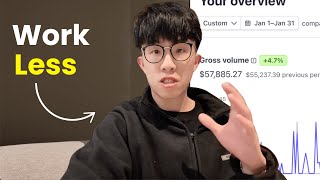
Jimmy Fung walks through scaling his service business to $50k monthly by outsourcing inbox replies, lead-building, and sales calls over three years. He learns each process hands-on for 2-3 weeks before hiring someone, uses Loom videos to train VAs, and focuses sales calls on transparency and energy to close deals without raising doubts.
Sorry, my mic was off.
All right. Yeah, yeah, my bad. I thought it was on me from my side. Oh, man.
It's going good. Going good. How are things with you?
Pretty busy week. Pretty busy week. Just. Just getting ready for Q4, honestly. Right. And doing a lot of trainings with my, like, the internal team, making sure, like, everyone's on board, sales rep, and, um, hired a couple people. Right. So, uh, just honestly just hopping across this entire week just like, with them, making sure they're, like, up to speed and then by the time, like within like next two weeks. Right. Just ready to go out and get some new business basically.
Right, right, right, right. Oh, wow. Okay. So you're running. So you have like a bunch of employees that take care of running your business? Pretty much.
Yeah. I wouldn't say a lot of employees, but how I like to think about it is, can I find someone who is. Who can do this job? Right. So, for example, I remember when I first got started, literally like almost three years ago now at this point, or like in two months, it'll be three years from now. I was doing everything. So, like, the sales calls, building the leads list, setting everything up, my smart lead. Once I had clients, communing clients, you know, I'd wake up, it had some issues, let's just say. Right. And I would have to fix it. And I mean, it worked for a bit because, like, the margins were super high, Right. Because I was kind of like doing everything myself. But I also knew it wasn't sustainable, Right. And if I did that for, let's say, a year, I might end up burning out because I had multiple clients, Right. Because I went from no clients to having 4, 5, 6 clients in literally a matter of like, weeks. Right. So it became very overwhelming. And then I remember the first person I hired was a virtual assistant who managed my inboxes. So replying back to people. So that took me a little. That took me out of like the day to day. And I remember after I did that, they were like, in the beginning at least, I'd wake up every single day with like three to five calls in the calendar. And in my mind I'm like, oh, shit, I'm not really doing anything, right? Because, like, the emails are being sent out and people are being replied to. So it was relatively automated, but I was still in charge of, like, the list, building campaign strategy, writing the copy, dealing with clients. The next part that I outsourced after that was, okay, I have a guy replying back to my stuff, but building the leads list and Managing the smartly was really, really annoying, right? So at that time, Smartly didn't come up with the feature of setting up the emails for you. So I was, like, buying everything through pork bun, setting up, like, The Deacon Records, DMARC Records. Like, it'll legitimately take three hours to set up, like, 30 email accounts, like, manually, too, right? So I was like, all right, the next thing I'm gonna outsource is this, because I don't really need to do it. And I kind of documented my entire process of how I was doing it, and it was very easy for me to find a va, give them those. Because what I did is once I got a few clients, like, as I went through that process of setting up new email accounts, like, everything like that, I would just. When I was doing the actual work, I'll just open loom and I just record myself doing it, right? And I like a couple of those. So it's really easy for me to hire a VA and just be like, hey, here's like, three videos that are, like, 40 minutes long of me doing this actual stuff. Make sure you study this. And this is how you want to do it, basically, right? So that was the second person that I hired. After a while, I was getting a lot of sales calls, and I was like, all right, so the majority of my time, it's. Where's it going? It's going towards taking sales calls, right? But obviously with sales, not every single person on the calendar is, like, a good lead or closable too, right? So what actually happened was I'd spend maybe, like, five to six hours a day on, like, these sales calls, but maybe, like, four of them would be, like, unqualified, right? Stuff like that, right? And I was like, all right, this is probably not the best use of my time, especially since I'm already making money and I already have clients. So I got sales rep and I got a sales, and that's basically what it is, right? And then. Yeah. And then basically that left me with just client fulfillment and client strategy, which was mainly me for the longest time. But then now we're, like, looking for, like, copywriters, things like that. I have someone who builds my leads list. So really, for me, like, even today, the main things that I focus on is literally client strategy, working with clients and things like that. Like some BAs that help them fix, like, common issues that come up, like disabled email accounts, stuff like that. And, yeah, that's kind of like that journey for sure.
That's incredible, man. And then you free up a Lot of your time, too. Wow, that's so cool.
Yeah, yeah, exactly. But I think the biggest thing is I don't remember if you were here on a call that I was talking. Like, I think it was, like, last week. But I think a issue that I definitely had early on was I think I hired too quickly. Right. Like, obviously, I don't think it was, like, that bad, all things considered, like, looking back at it now, but I definitely had times where, like, I was just hiring people for the sake of hiring people. Like, for example, I'd hire people too early, and I didn't understand that process that well. But then I just realized that in order to hire effectively, I think it's important for me to know how the process works. Right. I don't have to be like, salesperson or the best at building leads list or the best at setting up email accounts, but I need to do it a couple of times where, like, if the VA that I hire, he comes to me and is like, hey, Jimmy, I'm having this error pop up with my email accounts as I'm sending them up. How do I fix it? Obviously, the VA is not going to know, right? So it's up to me to figure it out. And that's kind of what I realized, that it's important for me to just be in the trenches for a little bit. Right. I don't have to be there for half a year or something. Right. But for a couple weeks, right? Two, three weeks, until I understand the process and then I can hire out, if that makes sense.
Right, right. That does make sense. Yeah. Wow. It. It would be really cool to get to that point. That's like, however long that takes.
But yeah, yeah, yeah. 100%, man. And I think it's a lot of it. It's just. It's not that hard. I think it's just about how you want to, like, think about these things where. The way I think about it, like my mentor told me, or the. One of the most important lessons my mentor taught me was thinking about your business. Kind of like a machine, like a robot type of thing, right? Or like a car where, like, there's individual parts that make up the car. Like, obviously, when the car works, it's just like driving stuff like that, right? Driving straight. But then what are the individual components that makes that car drive straight? Right? There's, like, the wheels, there's the brakes. There's, you know, I don't know, the gas. Like, there's all these different. Different parts that all come together, right? And then Just thinking about your business like that, like a series of systems, a series of parts, and, and then just asking yourself, okay, is this something where only I can do it or is this something where if I wanted to, I could find someone else to do it? So a lot of things inside this business, right. It doesn't require too much creative thinking. So for example, setting up email accounts, like you don't really have to do that anymore because of smart lead.
Right?
But like buildings list, once you understand how to do it, how to set up like the filters, how to scrape it, technically anyone could do it, right?
Yeah, you could just pay someone to do it.
Yeah, exactly. Right. Or setting up your smart lead, right? Like obviously if you have like the doc with your, your email copy on it, right. It's not that hard, right. You could get someone to set up the email campaigns for you. Right. And that, that buys back, let's say half an hour.
Right.
Of your time. Right. But these little things add up, right? And it won't cost you that much if you're hiring virtual assistants, let's just say. Right. So that's kind of how I thought about it. And I think the hardest person that I ever hired was probably salespeople because I think I had like a massive limiting belief where it's just like it's pretty hard to hire good salespeople, right? That's what a lot of people told me. And I think it's like objectively true. But it's also not because there's so many salespeople, Right. And at the end of the day, it's just not a good use of time because that does become the largest, like the thing that takes up the largest amount of your time versus anything else inside of the business. Right. At least in that phase where you're going from zero to let's say 20 grand a month, right. It's taking sales calls, Right. That's probably the most time consuming part. Oh, and replying back to people, which can also be. You don't have to do that basically.
Right, right, yeah. And categorizing emails and all that, like inbox management pretty much.
Yeah, yeah, exactly. Right. It's like, it just, it's not hard to do at all.
Right.
It's just tedious. And I think it's also the idea where I think at the end of the day a lot of success in, I guess this stuff or even business in general just comes down to consistency, right. Are you able to do it every single day? It's kind of like, for example, another Analogy, right. Is if someone is trying to like blow up on social media, the most important thing is posting consistently. So what happens is a lot of people, when they first get started, they'll be hella motivated, right? And then they'll be posting for like the first two weeks, but are doing everything. They're writing the content script, the filming the script, the editing the script, the posting, running the captions. And after like that two week period, they burn out because they're doing everything by themselves and then they just drop off and they don't post again for another three months. Right? But on the other hand, if, let's say someone had different team members doing different parts of that process, they had someone maybe writing the script, someone else editing the script, obviously they have to film it, right? And someone else who posts it for them to come up with the captions. It's a lot easier for them to be consistent now because they have someone else doing the majority of like the tedious work that requires someone to be consistent. Right. Because they're paying someone every day. And as a result, that's how like some of the largest like people in this space, like Alice, her mosey things, people like that, right? How they have, they've been able to consistently post every single day for like literally the last three years, right. Or however long. Right. It's because they're not the one doing every single thing basically. Right, right. And that's kind of one of the most important things that I personally learned as well.
Right? For sure, right? Yeah. Delegate tasks as much as you can and automate everything. You just save back your time and then you can focus on whatever else.
Yeah, yeah, 100 man. But it's definitely like, I think one step at a time, right? And I think one of the best things that you could do right now is even like what you're currently doing, like this process where you're going out and you're starting to book some calls, you are, you know, going to get, get some clients, right? Get a few clients. You want to kind of document it in a way where even something simple where like you open a Google Doc and you're like, okay, so here's that process, like high level, right? It doesn't have to be like press this button, press that button. But it's just so that you remember it. So then when you do feel like you need to hire, you don't have to. You're not going to waste a lot of your time going back like, oh shit, is this the process? Is that the process? Because you already have. Right. Because I think that's also one of the things too. Right. Is like, you will go, or for me at least. Right. I went from not having anyone to needing to hire really, really quickly. Right. I took on a bunch of clients in a very short period of time, and suddenly I didn't have any time left to, like, do anything else. And it just became zero stress to, like, pretty stressful, like kind of like overnight, if that makes sense. Right?
Yeah, that makes sense.
100%, man.
For sure.
For sure. But how's everything go for you, man?
It's going okay, I think so. I'm. I'm checking my inbox every day, at least like two or three times a day. I'm also keeping an eye on my deliverability. I know, like, I just restarted on Monday, so it's not going to be like that updated. I guess it's going to take a while. But I did get. I did get. I don't know if you saw my message on Discord. One of the replies I got back was about a tool called Mixmax, and apparently it's a cold email shield. I don't know if you have any experience with that, like, dealing against that.
I have not. Not specifically for this tool, but I have seen, like, for example, we'll be sending cold emails and it'll be kind of like an automated message that's just like, oh, you got to press this button for the message to go through, or some variation. It looks very similar to the, you know, this screenshot that you sent me personally, I just ignore it because it's not. It shouldn't be a large percentage of replies. Right. It doesn't. It comes up. It comes up enough where, like, it just happens, but it shouldn't be like, oh, yeah, every single person that you email gets this. I wouldn't be too concerned about this, basically.
Okay. The. I did have another question. So I did. I did send someone. Someone was interested in seeing the video, so I sent him the video. But my question was about. During a sales call. So right now. So during my. The sales call that I took last time, I was maybe a little bit too honest. Like, I told the guy, I told the team, the potential team, that they would be my first client and all. I also told them that is my side business because I'm also working a job right now. Yeah. So is that something I should be this. Do you think I should be disclosing during a call?
Yeah. Well, I wouldn't, like, randomly say it basically. Like, I wouldn't just Be like talking about the coding randomly say, oh, yeah, by the way, you, uh, you'd be my first client. This is like my side. I wouldn't say.
Well, they. They were asking about proof, like if I had any proof, and I told them they would be my first client because that's the reason why I didn't have, like, a previous client proof.
For sure. For sure. Yeah. I think if it comes up naturally, like, kind of like what you talked about. The most important thing is just be transparent. Like, literally tell them like, oh, yeah, by the way, you would be my first clients. However kind of how I got into this is right now I'm working as a software engineer. I was working as a software developer. And let's say you're working with software development agencies, right? It bridges really well, right? You might be my first client, but right now I'm a software engineer. And one of the biggest problems that I realized inside the software engineering space is most people are really good at engineering and programming and coding, at building the product. But a lot of people, especially in the space, they really struggle with lead generation, and that's kind of where our services build that gap. Right? So I think the most important thing is be transparent.
Yeah.
Don't. Don't lie about it and be like, oh, yeah, by the way, I'm like, 10 different clients. I've been in business for the years. Right. I have 50 different. But be transparent, but always tight. Like, don't just say, oh, yeah, by the way, you're my first client. And it ended like that. Right. Don't leave it as a cliffhanger.
Sorry. You also brought up. So you brought up the experience that I had, and then you brought up the pain point and how it relates to that and how I can use my experience to resolve that.
Yeah, yeah, exactly. Right. Is you never want to. It's the same as the pricing, right. You never just want to tell people, oh, yeah, by the way, this costs three grand. Because if they just hear it like that, that's all they could focus on, right? But instead what you want to do is you want to price drop and then add value, right? The price is three grand. But what you get for three grand is you get this, you get this, you get this other thing, right? And exact same thing with any of these objections, right? Is you want to acknowledge it, you want to. You want to answer it, but then you also want to tie it to some form of pain point or outcome that they're looking for. Right? That's the most important thing. I mean, you know, everyone. Everyone inside the group, myself included. Right. We all started with no case studies or clients as well. So it is possible. I think the most important thing is they just have to view you as a. As a source of credibility, as a source of authority. Easiest way to do that is through the vso. But another portion that a lot of people don't really realize is even on the sales car, too, Right. Obviously, most people, when they're first getting started, they don't have sales experience, right? And butchered the first sales cost. I mean, I butchered my first sales cause. But I think a lot of it is just how you come across, right? Like, for example, do you come across as someone with a lot of nervous energy? Right. That's a lot, right. Especially for people who's never done this before. And the only way to get better from that is just by taking more sales or practicing a lot. Right. And after a while, you just come across in a way where a lot of times people won't even ask you. Right. Sometimes people ask you, hey, do you have proof? They have case studies because of something that you said in the sales call, like in the prior sections that's coming up, like, making people have these, like, red flags. Oh, should I. Does this guy sound like he knows what he's doing? They sound like a wookie, right? These are different things that happen. And you'd be surprised, right. After a while, a lot of people don't even ask, right. If you come across the right way, if that makes sense.
Right, Right. Okay. So would you say that at some point I gave off that sort of energy or something like that, and then so it, like, brought doubt into their heads?
I mean, potentially. It's hard for me to say without looking at your call. If you have the sales call recording, you send it to me, right? Like, upload it to Google Drive or something, or put on YouTube unlisted and send me the link. I can take a look for you potentially. I don't. I don't know if that is true. Right. Some people just naturally ask, right? So I can't, like, say that won't happen. But I think I told you this too, like, as a voice memo, actually, that a lot of the times for sales calls, it's not necessarily about what you say, it's how you say. Same as the job interview, right? If people ask you, hey, Hugo, tell me about yourself as the job interview question, there's a million different ways to answer that. There's no universal right way. But how you come across, do you Come across as confident as someone who knows what they're talking about, as high energy. Do they see themselves wanting to work with you? Right, that's in a job interview setting. Right. But the exact same thing with these sales costs. Right. There's no universal right way to ask the right questions or answer the questions more. So do you come across the right way? Like it's not about what you say is how you say, if that makes sense.
Right, right. That does make sense. Yeah. Unfortunately I didn't record it. I think for the most part I felt good about it. Like I felt good during the call and I think I was given a good vibe. There was only one moment where it was like, whatever. But most of the time I knew what to say. I knew the system, I set it up. I have the belief so I could talk to them pretty confidently. Also, their business model didn't really work with like they didn't have high ticket sales. What they did was like they had a. So they were a logistics company and they would give tools to their trucks or whatever to keep track of like hardware. And that was a loan pretty much to the client. And the client would be like on a subscription model and they wouldn't make profit until like eight months in. So I don't think it would have worked anyways.
Yeah, yeah. 100. Yeah. Sales cycle, you want to be aware of that. Like usually a lot of. I don't think it's super applicable to you, but I know like for example, IT firms, right, like their sales cycles are usually super long. Especially if the deals are like massive, like 100 grand, 200 grand, sometimes even more. Obviously I can make a decision really quick, so that is something you want to factor in. But I think basically everything that you are going through right now, it's just experience, right. Because it's going to get you in the mind of understanding what is what you like doing, what you don't like doing, what works, what doesn't work as well. And obviously I'm here to like support you at every step of the way as well and give you like pointers, point you in the right direction, making sure that you're not like doing certain things that like common mistakes, I guess is the best way. Right. But yeah, man, keep it up.
Right. Thanks, man. Absolutely. I'm very excited. I can't wait for the next call. It's going to be fun.
Yeah, for sure, man. And I guess even as a question then, I guess, I mean, we've been working together now for, for a while. How do you like, kind of like, like if you were to do like a review, I guess, or like review on like the service itself. Like kind of like how I. I support you and things like that kind of. Where you at with that?
Well, I've been following literally every single. Eh, Sorry. Every single, Every single. Every single thing you've said. And I am getting so like I'm in my own time frame because I do work and I do have to do a lot of different things, but I am. I got a sales call. Like, that's just insane to me. I never thought I would be at that point. So honestly, following you and your. The program that you created has been working out for me at least. And I don't know, 10 out of 10, five out of five, I don't know, 100.
But I mean, I think that's the most important thing, right? Is I think a lot of people get caught up because they're thinking of like, okay, how do I go from 0 to 10k? Right? But it becomes too overwhelming. But the better question should be what are like the micro wins that I need to go at each step of the way in order to see the massive success at the end, right? And obviously the first step is like, okay, I'm at zero. I need to learn how it works. That's the first micro win. After that I got to launch my campaign. That's the second micro win, right? And you get some replies. Third, microwave. And you get a sales call after. You get some sales calls. I need to close a deal right after. And you get multiple of these people, right? And I think just looking at it from like series of microwinds is probably the best thing that you can do. Right? But yeah, I love that, man.
For sure. Yeah. It. And I knew that it was going to take time. Like, I know it's going to take time to learn skills and do everything.
So 100, man. For sure. Cool, man. But yeah, keep me updated on your progress.
For sure.
You are the only one here today. If there's. Do you have any other like, questions, comments, anything else you want to talk about today?
No, that's. Those are the questions I wanted to ask.
All right, for sure, man. All right. Thanks for your time, man. And yeah, thank you.
For sure.






